


 Claim Ownership
Hump Day Hormones
Subscribed: 10Played: 146
Subscribe

Description
This is a podcast about all things hormones! Dr. Jill Jennings and Kortney Spann, APRN are so excited to share their knowledge and expertise about menopause, perimenopause, and hormone imbalances.
48 Episodes
Reverse
You finally did it.
You survived perimenopause.
You found a provider who listens.
You started hormone therapy…
And then you started bleeding.
And suddenly the questions spiral:
Did I break something?
Is this cancer?
Should I stop HRT immediately?
Take a breath.
In today’s episode of Hump Day Hormones, we’re breaking down bleeding on HRT — why it happens, when it’s completely expected, and when it needs evaluation — without panic or fear-based advice.
We start with a real patient story that perfectly captures how scary this experience can feel, especially when no one warned you it might happen.
Then we get into the science.
We break down:
• How common unscheduled bleeding is after starting HRT (spoiler: very common)
• Why 30–50% of women experience spotting or bleeding in the first 3–6 months
• Why this is usually a normal adjustment — not a complication
• What The Menopause Society actually says about bleeding on hormone therapy
• Why bleeding does not automatically mean something is wrong
We explain why bleeding happens, including:
• How estrogen stimulates the uterine lining (that’s part of its job)
• Why progesterone dose, timing, and consistency matter — a lot
• How missed doses can lead to breakthrough bleeding
• Why the route of estrogen (oral vs transdermal vs pellets) changes bleeding risk
• Why perimenopause itself is hormonally chaotic and unpredictable
We also clarify:
• What bleeding is considered normal early on
• When bleeding should be evaluated
• What a typical work-up looks like (and why evaluation doesn’t mean danger)
• Why most cases are solved with simple, boring adjustments — not stopping HRT
Most importantly, we want you to hear this:
Bleeding on HRT does not mean you failed.
It does not mean your body “can’t tolerate hormones.”
It means your uterus is responding — and that response can be managed.
If you’re bleeding on HRT and spiraling, pause.
Talk to your provider.
Adjustments are part of the process, not a sign that something has gone wrong.
If this episode helps, share it with the woman who just texted you:
“Is this normal?!”
Menopause care should come with information — not fear.
If you carry a BRCA mutation, chances are you’ve been told two terrifying things:
Your cancer risk is higher.
And hormones are dangerous.
But here’s the question women are almost never given a straight answer to:
If you remove your ovaries early to reduce cancer risk…
are hormones truly off the table — or are we harming women by withholding them?
Today on Hump Day Hormones, we’re breaking down BRCA mutations, breast cancer risk, and hormone therapy — with data, nuance, and clarity instead of fear and headlines.
This episode is a natural follow-up to our conversation on surgical menopause, because for many BRCA carriers, risk-reducing surgery means abrupt, early menopause.
We break down:
🔥 Why BRCA1 and BRCA2 carriers are often advised to remove ovaries in their 30s–40s
🔥 Why surgical menopause is not the same as natural menopause
🔥 How sudden estrogen loss increases risk for heart disease, bone loss, cognitive changes, sexual dysfunction, and overall mortality
🔥 The real fear driving hormone avoidance — and where it came from
🔥 Why older hormone studies don’t apply to young women thrown into menopause overnight
🔥 Why BRCA carriers are biologically different from average-risk populations
Then we get into what the science actually shows.
We walk through:
🔬 Landmark studies showing hormone therapy does not undo the breast cancer risk reduction from ovary removal
🔬 Why estrogen-only therapy appears most reassuring when possible
🔬 Why progesterone type matters — and why “not all progesterone is created equal”
🔬 What large cohort and meta-analysis data really say about breast cancer risk
🔬 Why context matters: age, timing, dose, route, and duration
We also cover:
✔ What ACOG and international menopause societies actually recommend
✔ Why short-term hormone therapy after early or surgical menopause may be appropriate — and protective
✔ How symptom control, bone, heart, and brain health factor into the decision
✔ What we still don’t know — and why individualized counseling is essential
Hormone therapy in BRCA carriers is not:
❌ An automatic “no”
❌ One-size-fits-all
❌ A decision driven by fear alone
It is:
✅ Nuanced
✅ Evidence-based
✅ About balancing risk, quality of life, and long-term health
For women with BRCA mutations, the real danger isn’t hormones —
it’s oversimplified advice.
If this episode helps bring clarity where there’s been fear, share it with the woman who’s been told “you just can’t” — without ever being told why.
If you’ve ever been told,
“Once you have a hysterectomy, you’ll go straight into menopause,”
this episode is for you — because that statement is not always true.
Today we’re breaking down one of the most misunderstood topics in women’s health: hysterectomy, surgical menopause, and what actually happens to your hormones — without fear, confusion, or outdated advice.
This episode was inspired by a powerful listener story and tackles the questions women are rarely given clear answers to:
• Does removing the uterus automatically cause menopause?
• Do ovaries still make hormones after hysterectomy?
• What’s the difference between surgical menopause and natural menopause?
• Why do symptoms after ovary removal feel so intense — and why are they often undertreated?
We explain why hysterectomy is not one single surgery, and why lumping all procedures together causes unnecessary fear and misinformation.
We break down:
• What menopause actually is (hint: it’s about ovaries, not periods)
• Why losing your period does NOT automatically mean menopause
• The difference between hysterectomy with ovaries left in place vs ovaries removed
• Why surgical menopause feels more abrupt and severe than natural menopause
• How sudden estrogen loss affects the brain, joints, sleep, mood, sex, and metabolism
• Why many women in surgical menopause are excellent candidates for hormone therapy
• What “replacement-level” estrogen really means for younger women
• Why “lowest dose for the shortest time” doesn’t make sense for everyone
• How labs, symptoms, and history should guide care — not fear
We also talk honestly about:
• Why hormone needs after surgical menopause are different
• Why underdosing is so common — and so harmful
• What major medical societies actually recommend
• How to know if you’re truly in menopause when you no longer have periods
If you’ve had a hysterectomy…
If you’re facing ovary removal…
Or if you’ve been told “this is just how it is now” after surgery…
This episode is here to remind you:
Your uterus is not the hormone factory — your ovaries are.
Surgical menopause is real.
And your symptoms deserve real treatment.
Fear should never replace facts — and menopause care should never stop at dismissal.
If this episode helps you, share it with a woman who’s been given more warnings than answers.
If your joints ache when you get out of bed…
If your hands hurt opening jars that never used to be a problem…
If your muscles feel weaker, softer, or harder to maintain — even though you’re trying…
You’re not imagining it.
You’re not broken.
And no — this is not “just aging.”
Today on Hump Day Hormones, we’re talking about joint pain and sarcopenia — two of the most common (and dismissed) complaints in perimenopause and menopause.
This episode is part of our Head-to-Toe Menopause Series, and it tackles what’s now being recognized as the musculoskeletal syndrome of menopause.
We break down:
🔥 Why up to 70% of midlife women experience new or worsening joint and muscle pain
🔥 Why perimenopause is a uniquely vulnerable time for musculoskeletal symptoms
🔥 How fluctuating and declining estrogen affects bones, joints, cartilage, tendons, and muscle
🔥 Why inflammation increases — and recovery slows
🔥 Why muscle loss accelerates in menopause (and why that matters for metabolism and insulin resistance)
🔥 Why symptoms often worsen with poor sleep, stress, or under-fueling
🔥 How to tell hormone-related pain from red flags that need further workup
If your knees, hips, hands, shoulders, or feet suddenly hurt — this is a real, recognizable pattern.
And then we get practical about what actually helps.
We talk about:
✔ Why resistance training is non-negotiable in menopause
✔ How much protein women actually need to preserve muscle
✔ Why even distribution of protein matters more than total grams
✔ Creatine and collagen — what the evidence actually shows
✔ How estrogen therapy can reduce joint pain for some women
✔ The role of testosterone in preserving lean mass (and why it’s not magic on its own)
✔ Why thyroid, vitamin D, iron, and inflammation labs matter
✔ When pain is not hormonal — and should not be ignored
Joint pain and muscle loss in menopause are not:
A personal failure
A lack of motivation
Something you should “just get used to”
They are:
A physiologic transition
Influenced by hormones, inflammation, sleep, nutrition, and stress
Highly responsive to the right, layered strategy
If you’ve been told, “This is just aging,” that’s outdated medicine.
Your body isn’t betraying you.
It’s asking for a different approach.
And the good news?
This is a season where small, consistent changes make a big difference — in strength, function, and how you feel in your body.
This episode is part of our Head-to-Toe Menopause Series, and it tackles one of the most underdiagnosed and undertreated menopause conditions out there — GSM. This is a menopause symptom that’s incredibly common, highly treatable, and somehow still whispered about like it’s a secret.
If you’ve ever thought:
“Why does sex suddenly feel like sandpaper?”
“Why am I peeing all the time?”
“Why do I feel irritated down there for no reason?”
You’re not broken.
You’re not “just getting older.”
You may have Genitourinary Syndrome of Menopause (GSM) — and today, we’re talking all about it.
We break down:
• What GSM actually is (and why it replaced the outdated term “vaginal atrophy”)
• Why symptoms often persist and worsen without treatment
• How low estrogen changes vaginal, vulvar, and urinary tissue at a structural level
• Why this is about collagen, blood flow, pH, and microbiome — not “just dryness”
• Why GSM can affect sex, bladder control, UTIs, irritation, and pelvic floor health
• Why common doesn’t mean normal — and why we should be talking about this more
And then we get very clear about what actually helps.
We talk about:
• The difference between lubricants and vaginal moisturizers
• Why vaginal estrogen is not a lubricant — and why that matters
• Why low-dose vaginal estrogen is the gold standard for GSM
• What the research really says about systemic absorption and safety
• Vaginal estrogen vs DHEA — and why “not estrogen” doesn’t mean safer
• What ACOG, AUA, and menopause societies actually recommend
• When pelvic floor physical therapy can be a game changer
• Why lasers and energy-based devices deserve a cautious conversation
GSM is not:
• Rare
• A personal failure
• Something you just have to live with
It is:
• Common
• Progressive without treatment
• One of the most treatable menopause conditions we see
If you’re dealing with dryness, irritation, pain with sex, urinary urgency, or recurrent UTIs — bring it up.
If your clinician doesn’t ask, you can.
And if your symptoms are dismissed, it’s okay to get a second opinion.
Menopause symptoms don’t need to be miserable — and this one is especially fixable.
New Episode of Hump Day Hormones is LIVE!
You didn’t suddenly lose discipline.
You didn’t forget how to eat or move.
And no — this is not a willpower problem.
If you’ve hit midlife and thought:
“I eat the same. I move the same. Why is everything going to my stomach?”
This episode is for you. 👖➡️😩
Today on Hump Day Hormones, we’re talking about menopause metabolism — and why fat suddenly packs up and moves straight to your belly.
This episode is a deeper, science-backed follow-up to our fan-favorite Menopause and Muffin Tops, because this topic deserves more than “eat less and move more.”
We break down:
🔥 Why perimenopause is the phase when women gain the most weight (yes, it’s proven)
🔥 Why estrogen loss alone is an independent risk factor for weight gain
🔥 Why menopause shifts fat toward the belly (visceral fat) — and why that matters
🔥 Why this fat is metabolically active and inflammatory (not the pinchable kind)
🔥 How cortisol, insulin resistance, and sleep disruption fuel the belly-fat loop
🔥 Why muscle loss quietly slows your metabolism behind the scenes
🔥 The evolutionary reason your body is choosing hormone survival over a flat stomach
And then we get real about solutions — not punishment.
We talk about:
✔ Why strength training is non-negotiable in menopause
✔ How protein becomes a hormonal tool, not a diet trend
✔ Why chronic calorie restriction backfires (hard)
✔ How sleep and stress directly influence belly fat storage
✔ How estrogen, testosterone, and properly dosed HRT can support metabolic health
✔ Why transdermal estrogen matters more than most people realize
And yes — we go there.
Belly fat in menopause is not:
❌ A personal failure
❌ Proof you’re “doing it wrong”
❌ Something you fix by eating less
It is:
✅ A hormonal adaptation
✅ A metabolic signal
✅ A clue about insulin, cortisol, muscle, and estrogen
Menopause doesn’t break your metabolism.
It changes the game.
And when the rules change, the strategy has to change too.
If this episode hit home, share it with the woman who keeps asking:
“Why is it all going to my stomach?”
Because now — you know. 💥
It may be freezing outside — but if you’re in midlife, it might feel like your body is on fire. 🔥
In this episode of Hump Day Hormones, we continue our Head-to-Toe Menopause Series by turning up the heat and tackling one of the most misunderstood (and dismissed) menopause symptoms: hot flashes.
If you’ve ever gone from “I’m fine” to “why am I radiating like a space heater?” in under 30 seconds — this episode is for you.
We break down:
• Why hot flashes start in the brain, not just the ovaries
• How estrogen stabilizes your internal thermostat — and what happens when it drops
• Why hot flashes are neurologic and vascular events, not just “being warm”
• The role of KNDy neurons and why they’re the real stars of the show
• Why you can swing from sweating to shivering within minutes
• The difference between hot flashes and histamine flushing
• Why night sweats are especially disruptive to sleep, cortisol, and metabolism
And here’s where it gets really important:
Hot flashes may be an early signal of vascular stress.
They don’t cause heart disease — but growing evidence shows they may act like a check-engine light for cardiovascular health during menopause.
We also cover:
• The connection between hot flashes, cortisol, insulin resistance, and inflammation
• Why more severe or frequent hot flashes deserve attention — not dismissal
• FDA-approved hormonal treatments and why they work so well
• Non-hormonal treatment options (SSRIs, gabapentin, and newer neurokinin-3 receptor antagonists)
• What lifestyle strategies help — and what won’t fix the root cause
Bottom line:
Hot flashes are real, biologically meaningful, and treatable.
They are not “just in your head,” not something you have to live with, and not a rite of passage you’re meant to suffer through.
Your body is communicating with you — and it deserves to be listened to.

Preventative Care Can Save Your Life—and Your Daughter’s Too!
In this week's eye-opening episode of Hump Day Hormones, we’re diving deep into the world of preventative care, revealing essential insights every woman—and parent—should know!
✨ What You'll Discover:
-What exactly happens during a preventative care visit? From routine checks to personalized health screenings, we'll walk you through exactly what to expect and why each step matters.
-When should you begin preventative care for your daughter? Learn when and why to start paying attention to your child's female health, ensuring a healthy future from the start.
-Prevention is power: Do you know the effective preventatives against cervical cancer? We'll discuss vaccines, screenings, and lifestyle choices that make all the difference.
✨ Did You Know?
Most insurance companies cover preventative cancer screenings—early detection saves lives!
Family history matters! Do breast, ovarian, or pancreatic cancers run in your family? We'll tell you why this matters and what steps to take next.
Tune in to empower yourself and protect those you love most. Your health is worth it!

🔥 "Am I losing my mind, or is this just PMS…again?" If you've found yourself suddenly feeling anxious, moody, or just "off" in your late 30s or 40s, it might not be what you think—it could be perimenopause creeping in.
This week, we are diving deep into the reality of perimenopause with my lifelong BFF, Laura, as she shares her personal journey navigating the unexpected, frustrating, and totally confusing symptoms of this transition.
🚨 Here's the truth: Many women start experiencing perimenopause 10 years before menopause! We're talking in their mid-late 30s to early 40s—but because symptoms like anxiety, mood swings, insomnia, and brain fog are often mistaken for PMS, depression, or even stress, many providers fail to recognize the hormonal shift at play. And let's not even get started on the hot flashes, weight changes, and exhaustion that sneak in, too!
💡 In this episode, we're breaking it all down:
✔️ What perimenopause really is & when it starts
✔️ The surprising first symptoms (hint: it's not just hot flashes!)
✔️ Why anxiety and mood swings are often dismissed as PMS
✔️ What you should do before, during, and after this transition
✔️ How to advocate for yourself when your doctor isn't listening
If you've ever thought, "Why do I feel so different?"—this episode is for YOU. It's raw, relatable, and packed with the info you need to take control of your health. Chances are, you'll feel like we're talking about YOUR life!
💬 Got questions? We'd love to hear from you! Drop a comment on our socials or email us!

Did you know Kegels aren't the ultimate solution to pelvic health? 🤯
This week on Hump Day Hormones, we're honored to be joined by Beth Anne Travis and Bethany Blake, esteemed certified pelvic floor specialists from Arkansas Pelvic Health.
They're here to debunk common myths and take us on a deep dive into the intricate connection between hormones and pelvic health. Because let's be real—pelvic floor issues aren't just about weak muscles, and they should never limit your lifestyle!
From painful intercourse, incontinence, and postpartum recovery to the often-overlooked role of hormones, we're breaking it all down. Did you know that estrogen plays a significant role in the strength and function of your pelvic floor? Or that hormonal shifts from pregnancy, menopause, and even birth control can impact your bladder, bowel, and sexual health?
Beth Anne and Bethany walk us through real solutions beyond Kegels, including:
💡 Pelvic floor therapy tailored to your specific needs
💉 Trigger point dry needling to relieve pelvic pain
🩸 Blood flow restriction therapy to improve strength and recovery
✨ Pessary fitting for pelvic organ support
Whether you're navigating postpartum changes, menopause, or just want to improve your pelvic health, this episode is packed with practical, empowering information.
Tune in now and learn how your hormones and pelvic floor are more connected than you think! Don't miss out on this empowering episode. 🎧
HRT & Cardiovascular Protection — The Heart of the Matter
Let’s clear something up once and for all:
Heart disease — not breast cancer — is the leading cause of death in women.
In today’s episode, we dive deep into the relationship between estrogen and cardiovascular health, including:
🫀 Why heart disease risk rises sharply after menopause
🧠 How estrogen protects blood vessels and cholesterol balance
⏰ Why timing matters when it comes to HRT
⚖️ Oral vs. transdermal estrogen — and how each affects the heart
🪑 Why estrogen may act like a “seatbelt” for your cardiovascular system
❌ The risks of starting hormones too late — not too early
This is not fear-based medicine.
This is evidence-based, woman-centered education that every midlife woman should hear.
Are Your Hormones Gaslighting Your Thyroid?
The Thyroid–Hormone Connection All Midlife Women Should Understand.”
If you’ve ever been told:
✨ “Your TSH looks perfect!”
while you’re over there freezing, exhausted, gaining weight, losing hair, foggy, anxious, or constipated…
This episode will change EVERYTHING.
Today, we’re breaking down:
💥 Why thyroid labs can look “normal” while your cells are starving for T3
💥 How estrogen dominance, low progesterone, and stress affect thyroid conversion
💥 Why perimenopause shifts you toward reverse T3
💥 How your gut, liver, and muscle mass control thyroid activation
💥 The nutrients your thyroid MUST have to function
💥 Why many women need more than a TSH test
We explain the science in real-woman language — no med school required.
Just answers. Just validation. Just truth.
If you’re tired of feeling dismissed or misunderstood… this episode is your permission to dig deeper.
Season 2, Episode 51 of Hump Day Hormones is here — and this one is WILD.
Have you suddenly become “allergic to life”?
Sneezing out of nowhere… flushing after one sip of wine… itching… bloating… random anxiety… sinus drama… reactions to foods you’ve eaten forever?
You're NOT imagining it — your hormones and histamines are in a full-blown loop together.
This week, we break down:
🔥 Why histamine sensitivity skyrockets during perimenopause and menopause
🔥 What MCAS (Mast Cell Activation Syndrome) actually is
🔥 Why wine, tomatoes, leftovers, or charcuterie suddenly wreck you
🔥 Why “hormone chaos” = mast cell chaos
🔥 How histamine triggers can mimic panic attacks or hot flashes
🔥 The estrogen → histamine → estrogen loop no one talks about
🔥 The role of progesterone, testosterone, and cortisol in calming (or firing up) mast cells
Plus, we talk symptoms across:
✔ Skin
✔ Gut
✔ Respiratory
✔ Heart rate & blood pressure
✔ Brain fog & mood
✔ Temperature regulation
And most importantly…
💡 What you can actually do to calm the histamine storm
—from supplements to foods to medications to hormone regulation.
If you’ve ever felt like your body is “overreacting” to EVERYTHING lately… this is the missing puzzle piece.
Did you know estrogen affects more than your mood and metabolism?
It actually influences your airways, voice, and hearing! 🎤👂
As estrogen levels drop, mucous membranes dry out, your voice may change, and ringing in the ears (tinnitus) can increase.
In Episode 50 of Hump Day Hormones, ENT specialist Dr. H. Graves Hernsberger joins us to explain why menopause can feel like “allergies that never go away” — and what you can do about it.
This week, we’re stepping out of our Head-to-Toe Menopause Series for something big — one of the most important updates in women’s health in more than two decades.
On November 10, 2025, the FDA officially removed the black-box warning from hormone therapy. If you’ve ever felt confused, scared, or dismissed when asking about HRT… this episode will feel like justice.
We break down:
• Why the black-box warning was added in 2002
• The huge misunderstandings from the original WHI study
• What current research actually shows about the safety and benefits of hormone therapy
• The difference between oral vs. transdermal hormones
• The truth about breast cancer risks
• Why starting HRT under age 60 or within 10 years of menopause matters
• How this change empowers women and clinicians moving forward
You’ll learn why this decision is long overdue, what it means for your health, and why it may finally open doors for women to get the relief they’ve been denied for far too long.
If you’ve felt unheard, unsupported, or scared away from hormone therapy — this episode is your green light to start the conversation again.
Resources Mentioned:
– FDA Fact Sheet (email us for a copy)
– Episode 33: “HRT After 65”
Listen on Apple Podcasts or Spotify — and share with a friend who needs to know the real story about hormones and menopause.
As always, nothing in this episode is medical advice. Talk with your provider about what’s best for you.

Are you thinking about what supplements you may need but don't know where to start? Don't worry; we've got you covered! This week on Hump Day Hormones, we're diving into the world of supplements! From boosting mood, sleep, hormones, heart health, and cognitive function to supporting vaginal health and even supporting your body through serious health journeys like cancer--we're talking about it all in this two part segment.
🎯 Here's the scoop:
Are multivitamins good for you?
How Vitamin D, probiotics, and fiber could be your new best friends!
Magnesium and Omega-3 for mood, sleep, heart, and brainpower!
What's what when it comes to supplements for vaginal health?
Supplement secrets: Should you eat first? Best times to take them?
Ready to clear up the confusion and feel your best? Let’s get supplement-savvy and answer some questions. Learn the science behind each supplement, their surprising connections to hormone balance, sleep, mood, and overall health, and actionable advice on how to incorporate them effectively into your daily routine.
Plus, discover how simple dietary tweaks could naturally boost your supplement intake, and where to safely and confidently source the best products.
Don’t miss out on leveling up your wellness! 🎧 Tune in and join the conversation on Hump Day Hormone and share your thoughts with us! We'd love to hear about your supplement experiences.
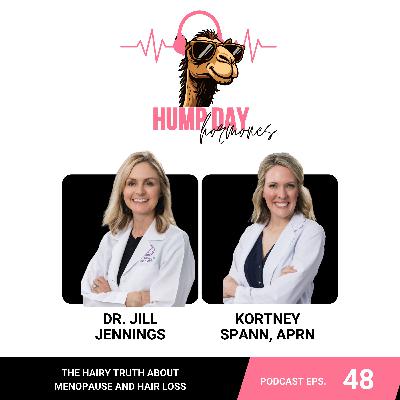
It’s time to get to the root of the problem — literally. 💇♀️
This week on Hump Day Hormones, we’re diving into The Hairy Truth About Menopause and Hair Loss.
From hormonal shifts to nutrient deficiencies, we’re breaking down what’s really behind thinning hair — and what you can do to strengthen those strands from the inside out. 💪
💡 Hint: Estrogen, iron, and stress all play a bigger role than you think.
Did you know that women make testosterone?? In this episode, we discuss the role of testosterone in women.

Listen in as we discuss all things puberty and periods with our very special guest Ella Jennings!

Learn all about progesterone and how it can be helpful in PMS, PMDD, PCOS, perimenopause, and menopause.

Comments

Download from Google Play

Download from App Store
 United States