DiscoverThe GTMnow Podcast
The GTMnow Podcast
Claim Ownership

The GTMnow Podcast

Author: GTMnow

Subscribed: 725Played: 48,874
Share

Description

The GTMnow Podcast interviews well-known tech executive, VC, and founders - the expert operators in the trenches who have ‘been there, done that’ to build some of the fastest-growing software companies. Every week, a guest joins Sophie Buonassisi to dissect their stories, revealing expert insights around what worked, what didn’t, and how things actually went down.

This podcast is produced by GTMnow, the media brand of GTMfund - sharing insight on go-to-market from working with hundreds of portfolio companies backed by over 350 of the best go-to-market executives. GTMfund is an early-stage VC fund focused on investing in the most exciting, up-and-coming B2B SaaS companies across the world. The LP network consists of VP and C-level Sales, Marketing, and Customer Success leaders from companies like DocuSign, Salesforce, LinkedIn, Snowflake, Okta, Zoom, and many more.

Visit gtmnow.com for more details and to sign up for our newsletter and other content resources.

610 Episodes
Reverse
Lou Shipley (three-time CEO, Harvard Business School professor, and author of Unlikely Entrepreneurs) joins GTMnow to break down why most founders struggle to turn good ideas into great companies.Lou has led companies through acquisitions, teaches sales and go-to-market at Harvard, and has spent decades studying what actually separates companies that scale from those that stall.In this conversation, we unpack why understanding customer pain and learning how to sell are still the two most important founder skills, especially as product moats decline and go-to-market becomes the real differentiator.In this episode, we discuss:- Why understanding customer pain matters more than having a great idea- Why early selling should optimize for learning, not revenue- Why founders can’t outsource sales too early- How distribution becomes a competitive advantage at scale- What makes “unlikely entrepreneurs” outperform expectations- Why small, high-quality teams beat large organizations- Why churn is a symptom, not the root problem- How product-market fit quietly changes as companies grow- Why founders must evolve from heroic sellers to system builders- How culture becomes a real go-to-market assetLou also shares lessons from teaching sales at Harvard, profiling 13 unlikely entrepreneurs, and working with founders who realized too late that they were building the wrong company for the wrong customer.If you’re a founder, operator, or investor trying to avoid costly early mistakes and build a company that actually scales, this episode will give you a clearer mental model for what matters most.Timestamps:00:00 – What actually makes a company great00:26 – Why early selling is about learning, not revenue01:47 – Why founders misunderstand customer pain02:06 – “If you build it, they will come” is a lie02:33 – Distribution as the real moat02:58 – What makes an “unlikely entrepreneur” succeed06:15 – Why age and experience increase founder success07:01 – Curiosity, coachability, and risk elimination09:29 – Why founders can’t outsource sales too early15:26 – Pattern recognition vs short-term ARR21:10 – Founder-led sales vs scalable systems29:12 – Leadership, culture, and delegation33:18 – Founder evolution from $1M to $100M38:24 – When product-market fit starts to break39:15 – Why churn is a lagging indicator39:54 – Why small teams outperform large ones44:22 – Lessons from Unlikely Entrepreneurs45:23 – Final advice for foundersSponsors:HockeyStack - the AI platform that unifies GTM data to help teams convert, expand, and scale. Learn more at hockeystack.comGuest links:LinkedIn: https://www.linkedin.com/in/loushipley/X: https://twitter.com/loushipleyHost (Sophie Buonassisi) links:LinkedIn:  https://www.linkedin.com/in/sophiebuonassisi/X (Twitter): https://x.com/sophiebuonaNewsletter: https://thegtmnewsletter.substack.comHost (GTMnow) links: https://gtmnow.comFollow us on LinkedIn:https://www.linkedin.com/company/gtmnow/Follow us on X (Twitter):https://x.com/GTMnow_Follow us on YouTube:https://www.youtube.com/channel/UCGQM23b5lZbcfLtHAe87J_AFollow us on TikTok:https://www.tiktok.com/@gtmnow_Follow us on Instagram:https://www.instagram.com/gtmnow_/
Healey Cypher (multi-time founder and CEO of BoomPop) joins GTMnow to unpack one of the fastest growing channels for company growth: in-person events.As AI floods digital channels with perfectly personalized messages, trust is becoming harder to earn online. Healey explains why events, dinners, and in-person experiences are becoming a premium GTM channel, not a nice-to-have, and how founders can use them intentionally for distribution, alignment, and acquisition.In this episode, we discuss:- Why in-person events are becoming a premium GTM channel in an AI-first world- How founders can de-risk distribution before building the product- The most common internal missteps that derail startups early- Why offsites are the new HQ for remote and hybrid teams- How to design offsites that drive alignment, not just fun- What makes a dinner actually work — including overlooked details like acoustics- How teams use events for customer acquisition and partnerships- Why kindness and positivity can be a real leadership advantageHealey also shares a powerful insight from Sam Altman that reframes how we should think about AI’s impact on trust and human connection.If you’re interested in scaling events as a growth channel, this episode will give you all the details you need and an understanding of what is working in today’s world.Timestamps:00:00 – Why founders underestimate distribution03:30 – Product vs distribution: what actually matters early06:45 – Why most startups fail from internal misalignment10:30 – Culture, communication, and focus as scaling constraints14:40 – Hybrid work broke alignment17:45 – Why offsites are becoming the new HQ21:30 – Events as a go-to-market strategy25:00 – AI, outbound fatigue, and inbox trust collapse28:40 – “In-person experiences are becoming a premium”32:30 – How to use events for customer and partner acquisition36:15 – What makes a high-impact event vs a wasted one39:50 – Dinners, summits, and unforgettable experiences43:30 – Leadership, kindness, and “don’t be a jerk”47:40 – Mental state as a competitive advantage52:30 – Final reflections and advice for foundersSponsors:HockeyStack - the AI platform that unifies GTM data to help teams convert, expand, and scale. Learn more at hockeystack.comGuest links:Instagram: https://www.instagram.com/healeycypher/?hl=enHealey’s podcast: https://www.dontbeajerkpodcast.com/Mentioned Resources:Host (Sophie Buonassisi) links:X (Twitter): https://x.com/sophiebuonaNewsletter: https://thegtmnewsletter.substack.comHost (GTMnow) links: https://gtmnow.comFollow us on LinkedIn:https://www.linkedin.com/company/gtmnow/Follow us on X (Twitter):https://x.com/GTMnow_Follow us on YouTube:https://www.youtube.com/channel/UCGQM23b5lZbcfLtHAe87J_AFollow us on TikTok:https://www.tiktok.com/@gtmnow_Follow us on Instagram:https://www.instagram.com/gtmnow_/
Why do so many go-to-market motions fall apart right when a company starts to scale?In this episode of GTMnow, Sophie Buonassisi sits down with Jeanne DeWitt Grosser, former GTM leader at Google and Stripe and now COO at Vercel, to unpack why GTM fragility is one of the most underdiagnosed risks in startups and scaling companies.This is a deep, operator-level conversation about what actually breaks in sales, why AI won’t magically fix it, and how the best teams treat go-to-market like a product that must be designed, tested, and iterated.If you are a founder, operator, or investor navigating growth, this episode will give you clearer mental models for building GTM that actually holds up under pressure.In this episode, we cover:Why most GTM motions fail at scale, even with strong productsWhat it really means to treat go-to-market like a productHow AI changes execution without changing fundamentalsThe rise of the forward deployed engineerWhy “lost on price” is usually a lieWhat great sales reps still do better than anyone in the AI eraHow to think about joining companies “early” without getting timing wrongListen if GTM feels fragile, unpredictable, or overly dependent on heroes.Timestamps00:00 – Introduction01:00 – “Yes is great. No is great. Maybe will kill you.”02:00 – Why go-to-market should be treated like a product04:45 – Designing the experience of being sold to06:30 – Using AI to debug GTM process failures09:00 – Why “lost on price” usually isn’t about price12:00 – What go-to-market engineering actually is16:00 – The rise of the forward deployed engineer20:45 – AI, agents, and what still needs human judgment25:45 – What great sales reps do differently in the AI era29:30 – Why GTM roles are becoming more consultative33:30 – Will there be an AI reckoning?38:00 – What “joining early” really means42:00 – Career lessons from Google, Stripe, and Vercel44:00 – Closing thoughts
Mark Goldberg is a Managing Partner and Co-Founder at Chemistry, a new early-stage venture firm with a $350M debut fund backing standout software companies from Seed to Series A. Prior to Chemistry, Mark was a Partner at Index Ventures, where he led early-stage investments across software and fintech for nearly a decade. Before Index, Mark was one of the first business hires at Dropbox, helping the company navigate hypergrowth. Discussed in this episodeWhy Mark studied international relations, and why venture feels like “the liberal arts of jobs”Index’s US “invisibility” era and what that taught him about building a new firmThe Chemistry spinout thesis: “take great multi-stage DNA, reconstitute it with focus”Fund design: pre-seed → seed → A, light reserves, and concentrated doubling-downHiring strategy: network access > spreadsheet diligenceCulture principles: excellence, performance, “no one takes themselves too seriously”Conviction-based investing vs consensus IC, and why omissions are the real killerThe hardest lesson in venture: managing co-founder dynamics (and when to just listen)Episode highlights00:00 — “A+ people want to work with A+ people.”01:46 — GTMfund’s 2026 prediction: big players come roaring back (Google, Meta, Microsoft, Uber/Waymo).14:51 — GTMfund platform metrics: thousands of support items, intros, hires, and fundraising connects.26:29 — Why Mark left Index to build Chemistry: big-fund lessons, rebuilt with focus.33:39 — Chemistry’s strategy: early-stage focus, light reserves, and building for “product-market discovery.”44:05 — “Venture doesn’t scale well.” Why Chemistry stays small to avoid bureaucracy.49:59 — Events that actually work: chess tournaments, surfing, and hobby-driven gathering > happy hours.54:56 — Investment process: conviction, not consensus—optimize for outliers, not averages.1:10:32 — Hardest lesson in venture: co-founder dynamics, and learning when to listen (not “advise”).Brought to you by: AngelListFrom starting as a small, operator-led rolling fund, to evolving to an institutional platform, AngelList has been a core partner in every phase of GTMfund’s growth. Their software-first fund admin infrastructure allowed us to scale without sacrificing agility — from onboarding hundreds of LPs seamlessly to handling compliance, capital calls, and reporting as our fund size evolved.As we expanded from Fund I to Fund II, AngelList took care of the back-office operations, allowing us to stay focused on what matters most: investing in world-class founders and building the strongest go-to-market network in venture. They’ve scaled with us across funds and into the future.If your fund is growing in size or complexity, check them out at www.angellist.com/gtmfund.Follow Mark GoldbergLinkedIn: https://www.linkedin.com/in/mark-goldberg-25458110X (Twitter): https://x.com/Mark_Goldberg_X (formerly Twitter)Chemistry (website): https://www.chemistry.vc/ChemistryThe GTMnow Podcast The GTMnow Podcast is a weekly podcast featuring interviews with the top 1% GTM executives, VCs, and founders. Conversations reveal the unshared details behind how they have grown companies, and the go-to-market strategies responsible for shaping that growth.Visit gtmnow.com for more episodes and other interesting content.
Abbas Haider Ali is SVP of Customer Success at GitHub, where he leads a 550+ person post-sales organization supporting a $2B+ ARR business serving over 150 million developers, including more than 90% of the Fortune 100.Previously, Abbas was VP of Customer & Partner Success at Twilio following its acquisition of Segment, and has held executive roles at xMatters, Opnet Technologies, Managed Objects, and IBM. He is also a General Partner at GTM Operators Network, investing from seed through growth, and is deeply committed to mentorship and advancing underrepresented leaders in tech.Discussed in this episode:Why “AI-led growth” can hide churn and value erosionLagging vs leading indicators for retention enduranceWhy the CS investment benchmark is shifting from 10% → ~7%A simple “waterfall” for allocating post-sales budget: support → onboarding → outcomesHow to “lever up” the envelope with premium support + professional servicesWhy expansion (not renewals) is the early signal of product-market fitThe rise of AI-powered specialized generalists in post-salesWhen forward deployed engineers make sense (and when they’re just a fad)Episode highlights00:00 — Why customer expansion is the real signal of product-market fit00:50 — Lagging revenue vs. leading indicators of endurance04:11 — Why the CS benchmark dropped from 10% to 7%08:41 — How AI moved from internal efficiency to customer-facing leverage11:41 — Why retention cost matters more than CAC in the AI era14:17 — The simplest framework for allocating the 7% CS budget18:53 — Founder-led CS, design partners, and early-stage PMF myths23:16 — The rise of AI-powered specialized generalists30:00 — When forward-deployed engineers actually make sense49:31 — The one rule for building a durable SaaS companyThis episode is brought to you by our sponsor: HockeyStackIf you run go-to-market, you already know the problem: your data lives everywhere. Spreadsheets, CRMs, sales calls, ad platforms… yet you’re still guessing what to do next.HockeyStack is the AI platform for modern GTM teams. It unifies all your sales and marketing data into a single system of action. Built-in AI agents help teams prospect the right accounts, improve conversions, close and expand deals, and scale what works. That’s why teams like RingCentral, Outreach, ActiveCampaign, and Fortune 100 companies rely on HockeyStack to eliminate wasted spend, take better decisions, and make space to think.Learn more at hockeystack.comFollow Abbas Haider AliLinkedIn: https://www.linkedin.com/in/abbashaideraliX (Twitter): https://x.com/abbashaideraliGitHub: https://github.com/AbbasHaiderAliFollow Sophie Buonassisi (Host)LinkedIn: https://www.linkedin.com/in/sophiebuonassisiX (Twitter): https://x.com/sophiebuonaNewsletter: https://thegtmnewsletter.substack.com The GTMnow Podcast The GTMnow Podcast is a weekly podcast featuring interviews with the top 1% GTM executives, VCs, and founders. Conversations reveal the unshared details behind how they have grown companies, and the go-to-market strategies responsible for shaping that growth.Visit gtmnow.com for more episodes and other interesting content.
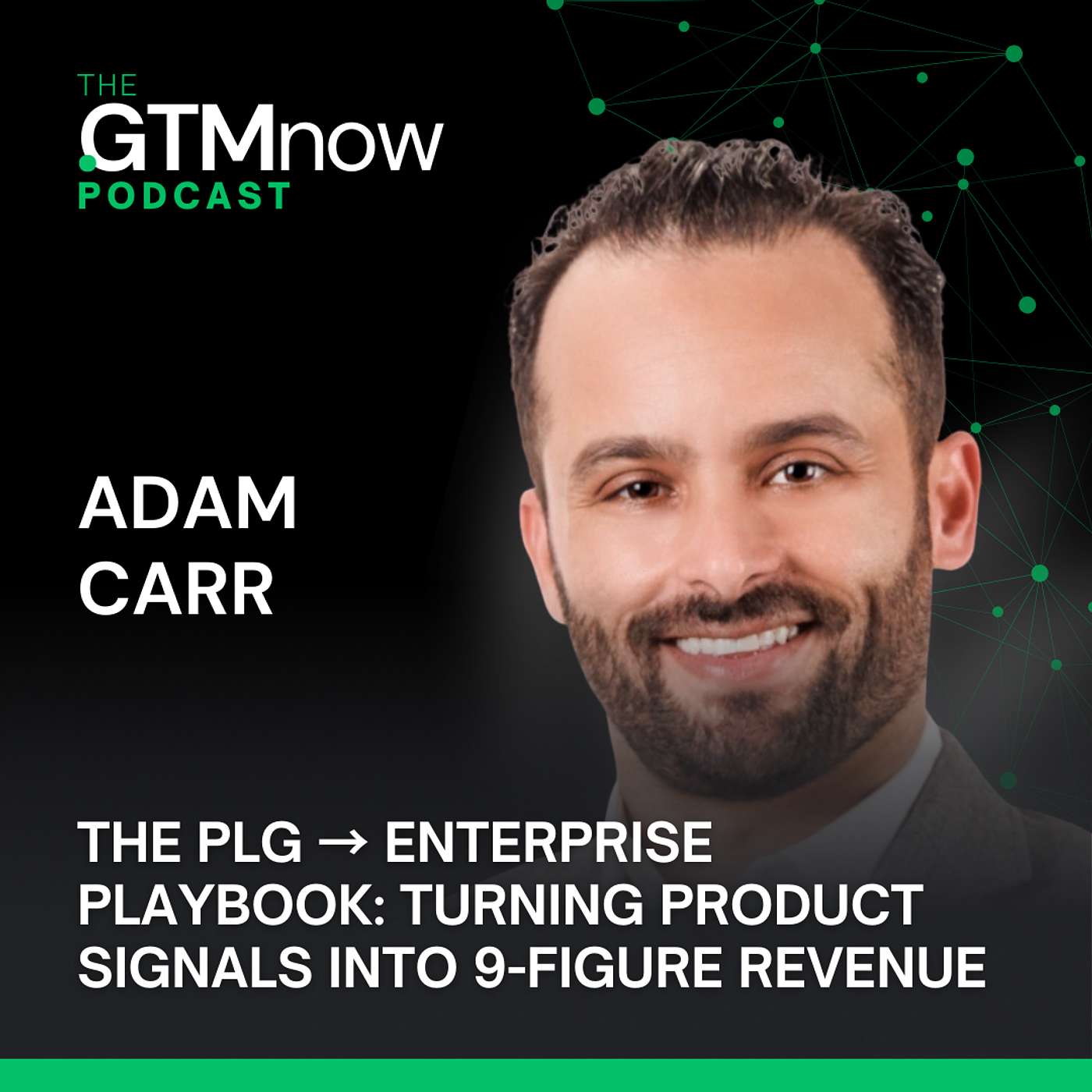
Adam Carr is the Chief Revenue Officer at Apollo, where he’s scaling revenue by layering sales on top of a $150M+ ARR product-led growth engine. Previously, Adam helped scale Miro from a PLG-led company into a global sales organization, contributing to its growth into a $17.5B business. He’s known for building systems-driven GTM teams that turn product signals into durable revenue.Discussed in this episodeWhy PLG is gravity (signals + acquisition) and sales is the monetization layerThe “one-team” model to prevent PLG vs. sales cannibalizationBuilding talent density (and why slowing hiring can be the fastest path)Hiring for curiosity, coachability, ownership, and team-first executionThe “architect / systems thinker” profile for modern sellersA new post-sales model: CSMs → technical GTM Engineers + intervention-led journeyUsing customer journey milestones to drive expansion and prevent churn proactivelyAI in GTM: streamlining manual work so humans focus on better conversationsEpisode highlights00:00 — PLG is about signaling + acquisition (not monetization)01:30 — “PLG isn’t the monetization way… it’s layering sales.”02:41 — Talent density: hire for the next 12–18 months, not just “today”04:50 — The soft skills that scaled Miro: curiosity, coachability, ownership08:38 — Why Adam hires “architects” (system thinkers) instead of just sellers10:41 — The mindset shift: celebrate value realized, not contracts signed15:41 — Replacing CSMs with “go-to-market engineers” + an intervention model19:14 — Turning PLG signals into PQA/PQL routing (and reducing the “noise”)29:26 — “100M ARR is late” — when to start layering sales into PLGGuest linksLinkedIn (Adam Carr):https://www.linkedin.com/in/adamhcarrFollow Sophie Buonassisi (Host)LinkedIn: https://www.linkedin.com/in/sophiebuonassisiX (Twitter): https://x.com/sophiebuonaNewsletter: https://thegtmnewsletter.substack.comWhere to Find GTMnowWebsite: https://gtmnow.comLinkedIn: https://www.linkedin.com/company/gtmnowX (Twitter): https://x.com/GTMnow_YouTube: https://www.youtube.com/@GTM_nowPodcast Directory: https://gtmnow.com/tag/podcastThe GTMnow Podcast The GTMnow Podcast is a weekly podcast featuring interviews with the top 1% GTM executives, VCs, and founders. Conversations reveal the unshared details behind how they have grown companies, and the go-to-market strategies responsible for shaping that growth.Visit gtmnow.com for more episodes and other interesting content.
Cassie Young is a General Partner at Primary Venture Partners, a $1B AUM early-stage firm in New York backing category-defining SaaS, fintech, and vertical software companies. Before investing, she spent 15 years as a GTM operator, serving as Chief Revenue Officer at Sailthru and later Chief Customer & Commercial Officer at Marigold (Campaign Monitor, Sailthru, and other martech brands), where she scaled global sales, marketing, and customer success organizations.Today, Cassie leads investments while also running Primary’s Impact program, giving founders access to a 30-person team across talent, GTM, and strategic finance, and she continues to teach operators through programs like Pavilion and Duke’s Innovation & Entrepreneurship board.Discussed in this episode:How Cassie “accidentally” became a VC after 15 years in GTM leadership.The career advice Bill Gurley gave her that changed her trajectory.Why Primary refuses to say “platform” and instead built a 30-person Impact team.How she actually sources pre-seed/seed founders before they leave their jobs.Primary’s 5-part Founder Outcomes Framework (vision, talent, JDCE, and more).The difference between real traction vs. “happy ears” and fake design partners.Why she’s picky on GTM/AI tools and looks for step-change, not incremental gains.How operators can actually break into VC (hint: it’s all about doing the work).Episode highlights00:35 — Clay, usage-based pricing, and the $100M ARR rocketship09:10 — The real story on AISDR: where AI reps actually work (and where they really don’t)14:02 — Inside “The Gross Retention Apocalypse” and why AI experimental budgets are a ticking time bomb22:46 — How Cassie accidentally became a VC and the Bill Gurley advice that changed her career path27:17 — Why Primary hates the word “platform” and how Cassie built a 30-person Impact team for founders36:10 — Cassie breaks down her 5-part founder outcomes framework (including “jaw-dropping customer experience”)46:01 — Avoiding “happy ears”: how founders should really use design partners and MedPick-style rigor57:48 — Time to value as the new north star and why nailing a tight wedge beats peanut-buttering features1:01:29 — So you want to be a VC: Cassie’s playbook for operators to break into venture (without delusion)Brought to you by: AngelListHow did we build the GTMfund back office? Easy!We leveraged AngelList’s Rolling Fund product for Fund I, which was the perfect vehicle to scale up GTMfund in its first iteration. This structure allowed us to build our network, and add revenue leaders while we raised and deployed capital simultaneously, which was crucial for getting early points on the board and building relationships with founders.For Fund II, we transitioned to a traditional closed-end fund structure through AngelList. This time with institutional investor support. This model allowed us to be more intentional about our portfolio construction. We worked closely with the AngelList team throughout this process, and they were incredible — always there to support us and our LPs every step of the way.If you’re raising a fund or are looking to migrate your fund, we highly recommend you check them out. You can do so at www.angellist.com/gtmfund.The GTMnow Podcast The GTMnow Podcast is a weekly podcast featuring interviews with the top 1% GTM executives, VCs, and founders. Conversations reveal the unshared details behind how they have grown companies, and the go-to-market strategies responsible for shaping that growth.Visit gtmnow.com for more episodes and other interesting content.
Dave Boyce is a go-to-market–focused technology executive, author of Freemium, and longtime SaaS operator and board member. Over two decades leading and advising B2B companies, he’s helped founders navigate the shift from sales-led to product-led, from gut-driven to instrumented, and now from manual GTM to AI-assisted systems. Today, Dave teaches revenue architecture and PLG through Winning by Design’s Growth Institute, works with leadership teams on Bow Tie–based growth models, and is all-in on how AI will reshape GTM as a true engineered system.Discussed in this episodeWhy classic sales & marketing playbooks haven’t caught up to how modern buyers actually buy.How the Bowtie model exposes the real levers of growth that funnels hide.Why PLG-style thinking is now essential even for sales-led and enterprise motions.The 3 first principles of freemium: empathy, generosity, and metrics.Where AI can reliably outperform humans across the customer journey, and where it absolutely shouldn’t.How to design hybrid human + AI workflows using a clear data model, not vibes.What RevOps should own in a modern revenue architecture (and why it can’t just serve the CRO narrative).Hard-earned founder lessons from Fundly on reinvention, calling bets early, and letting go of old branches.Episode highlights00:00 — GTM is still running 20-year-old playbooks01:29 — “Sales, marketing, CS… the last unengineered engine”03:20 — The myth of “just add more heads”05:50 — The Fundly story: reinvention, too late08:30 — Why Freemium had to be written11:01 — Three first principles of freemium15:25 — Mapping AI across the entire customer journey19:29 — “Automate the predictable, humanize the exceptional”25:18 — What the Bowtie exposes that funnels hide27:25 — Building a “minimum viable BowtieThis episode is brought to you by our sponsor: ZoomInfoZoomInfo is the GTM Intelligence Platform built for sales, marketing, and RevOps.By unifying data, workflows, and insights into a single system, ZoomInfo helps revenue teams find and engage the right buyers, launch go-to-market plays faster, and drive predictable growth. With industry-leading accuracy and depth of data, it gives your team the intelligence advantage to win in competitive markets.It’s trusted by the fastest-growing companies and has become the category leader in GTM Intelligence.Learn more at zoominfo.com.Follow Dave Boyce (Guest)LinkedIn: https://www.linkedin.com/in/boycedaveSubstack: https://daveboyce.substack.comWhere to Find GTMnowWebsite: https://gtmnow.comLinkedIn: https://www.linkedin.com/company/gtmnowX (Twitter): https://x.com/GTMnow_YouTube: https://www.youtube.com/@GTM_nowPodcast Directory: https://gtmnow.com/tag/podcastThe GTMnow Podcast The GTMnow Podcast is a weekly podcast featuring interviews with the top 1% GTM executives, VCs, and founders. Conversations reveal the unshared details behind how they have grown companies, and the go-to-market strategies responsible for shaping that growth.Visit gtmnow.com for more episodes and other interesting content.
Brian Weinberger is the Chief Revenue Officer at Sisense, a leading analytics platform helping companies embed intelligence into every product experience. With over 30 years in sales leadership across New York’s tech scene, Brian has built and scaled go-to-market teams at every stage—from early-stage startups to category-defining giants like Yext, Segment, and Salesforce.Discussed in this episodeThe evolution of partner selling — from VARs to SIs to ecosystemsHow to know if partner selling fits your GTM modelThe delivery-first mindset that drives retentionDirect vs. partner motion: Microsoft vs. SalesforceWhy enablement is the #1 green flag for partner successPartner marketing: how to make resellers self-sustainingUsing AI to power future-ready GTM modelsThe case for hybrid work in high-performance sales culturesEpisode Highlights00:00 — The “year four” moment when partners are selling for you01:07 — 30 years of selling through partners in New York03:22 — Start partner strategy with delivery, not distribution06:32 — Why partner selling creates “superhuman” sellers09:59 — Salesforce vs. Microsoft: direct vs. reseller — and why the future is hybrid12:13 — The startup hack: sell delivery on your paper, subcontract partners17:16 — A 90-day playbook for integration partnerships21:39 — Hiring the right people to build a partner business27:18 — How Sisense runs delivery partners and an Australian reseller29:55 — White-labeling Snowflake: using resell to get the giant’s attentionThis episode is brought to you by our sponsor: BoomPopWe’re deep in event planning right now, as no doubt many of you are.Whether it’s an offsite, conference, or any other kind of event, BoomPop makes that happen with end-to-end planning all in one place.They handle everything from venues to experiences, so you can focus on the delights of meeting in person, not the logistics.Being part of GTMnow, you’re eligible for full-service event planning for just $99 per person (terms apply). Head to boompop.com/gtmfund to explore seamless support for your events.Follow Brian WeinbergerLinkedIn:https://www.linkedin.com/in/brianweinbergerRecommended BooksWhat Great Salespeople Do by Michael Bosworth & Ben Zoldan — The power of storytelling in salesThe Power of Nice by Linda Kaplan Thaler & Robin Koval — Why kindness compounds in businessSacred Hoops by Phil Jackson — Coaching and leadership lessons from the Bulls dynastyReferencedSisense: https://www.sisense.comSnowflake: https://www.snowflake.comAWS: https://aws.amazon.comSalesforce: https://www.salesforce.comMicrosoft: https://www.microsoft.comAccenture (SI example): https://www.accenture.comThe GTMnow Podcast The GTMnow Podcast is a weekly podcast featuring interviews with the top 1% GTM executives, VCs, and founders. Conversations reveal the unshared details behind how they have grown companies, and the go-to-market strategies responsible for shaping that growth.Visit gtmnow.com for more episodes and other interesting content.
This bonus episode dives into how Cristina Cordova (Stripe’s 20th hire, early leader at Notion, now COO at Linear) spots exceptional talent early, and how she pressure-tests whether a team and product are truly worth betting on. It’s a crisp, tactical look at evaluating “spikiness,” finding beloved products (even with limited data), and building GTM the right way from day one.Cristina Cordova is a seasoned operator who has scaled some of the most iconic companies in tech. At Stripe, she built and led partnerships that became a foundational revenue engine, including the pivotal deal with Shopify. At Notion, she helped turn viral adoption into a durable distribution strategy powered by community. Today, Cristina is the Chief Operating Officer at Linear, where she’s applying her experience building high-velocity GTM engines to the next generation of developer-first tools.This is a clip from the full episode with Cristina (an inside look at the judgment frameworks behind Stripe, Notion, and now Linear) and the practical filters every GTM leader can use to pick winners early.Discussed in This ClipHow to recognize “exceptional” even outside your own domainFinding early proof a product is truly beloved (signals > vanity metrics)Starting with a sharp market wedge, then earning the right to expandWhy founders who excel at something—anything—tend to excel at company-buildingWhat to expect from early operators: founder mode and bias to executeSales hiring for technical buyers (and why quotas can help earlier than you think)Aligning tightly with founders as an exec: relationships drive outcomesHow to assess GTM on day one: ride-alongs, raw customer feedback, ground truthHighlights00:00 — The difference between good and great—and how to spot it across functions00:12 — Why this clip hit: Cristina’s framework for identifying exceptional people early01:17 — Looking for skills you don’t have—and recognizing greatness outside your lane03:38 — Evidence a product is beloved (Stripe on Hacker News, Notion on Twitter)04:49 — Start with a wedge; win big later (why early enterprise skeptics don’t matter)07:54 — “Spikiness” and unconventional signals of excellence (Minecraft servers to sales)12:52 — What great early leaders do: see problems, create strategy, then execute16:45 — Sales at product-led companies: hire technical sellers, set quotas sooner21:31 — How Cristina assesses GTM on day one: ride-alongs, direct customer observationThis episode is brought to you by our sponsor: BoomPopWe’re deep in event planning right now, as no doubt many of you are.Whether it’s an offsite, conference, or any other kind of event, BoomPop makes that happen with end-to-end planning all in one place.They handle everything from venues to experiences, so you can focus on the delights of meeting in person, not the logistics.Being part of GTMnow, you’re eligible for full-service event planning for just $99 per person (terms apply). Head to boompop.com/gtmfund to explore seamless support for your events.The GTMnow Podcast The GTMnow Podcast is a weekly podcast featuring interviews with the top 1% GTM executives, VCs, and founders. Conversations reveal the unshared details behind how they have grown companies, and the go-to-market strategies responsible for shaping that growth.Visit gtmnow.com for more episodes and other interesting content.
Alex Clayton is one of the clearest minds in growth-stage investing, the person elite founders turn to when the market is noisy and the stakes are high. A General Partner at Meritech Capital, Alex has built a reputation for breaking down complex businesses with uncommon clarity, from his legendary S-1 teardowns to his frameworks on power laws, secondaries, and AI-native growth. Before Meritech, he honed his craft at Spark Capital and Redpoint, backing breakout companies like Braze, JFrog, Outreach, Pendo, Duo Security, and RelateIQ. A former ATP tennis pro and Stanford team captain, Alex brings that same discipline, pattern recognition, and competitive fire to evaluating the next generational companies.Discussed in this episodeWhy GAAP revenue and cash burn are the two metrics that quietly govern everything.How AI is changing growth rates, margins, and what “good” looks like in SaaS.The rise of secondaries, and why they now rival or exceed IPO volume.How to read an S-1 like a pro (and what Alex looks for first).Founder ownership, fund lifecycles, and how long companies really stay private.Why power laws in venture are getting even steeper in the AI era.How AI is reshaping pricing models from seats to usage and outcomes.Which iconic private companies are most likely to go public in the next 3 years.Episode highlights02:40 — Is the IPO window really back? 05:10 — Secondaries quietly outpacing IPOs08:10 — The only two metrics that matter10:56 — AI growth that breaks SaaS mental models26:20 — From “software” to “SaaS” to “AI”… and back again29:25 — Seat-based pricing vs outcome-based AI pricing34:55 — The capital tidal wave & longer private lives44:00 — Bubble vs biggest opportunity of our careers57:17 — What the rest of the 2020s look like1:03:41 — Why GAAP revenue + cash burn still winBrought to you by: AngelListHow did we build the GTMfund back office? Easy!We leveraged AngelList’s Rolling Fund product for Fund I, which was the perfect vehicle to scale up GTMfund in its first iteration. This structure allowed us to build our network, and add revenue leaders while we raised and deployed capital simultaneously, which was crucial for getting early points on the board and building relationships with founders.For Fund II, we transitioned to a traditional closed-end fund structure through AngelList. This time with institutional investor support. This model allowed us to be more intentional about our portfolio construction. We worked closely with the AngelList team throughout this process, and they were incredible — always there to support us and our LPs every step of the way.If you’re raising a fund or are looking to migrate your fund, we highly recommend you check them out. You can do so at www.angellist.com/gtmfund.Follow Alex ClaytonLinkedIn: https://www.linkedin.com/in/aclaytonX (Twitter): https://x.com/afcFollow Max Altschuler (Host)LinkedIn: https://www.linkedin.com/in/maxaltschuler/The GTMnow Podcast The GTMnow Podcast is a weekly podcast featuring interviews with the top 1% GTM executives, VCs, and founders. Conversations reveal the unshared details behind how they have grown companies, and the go-to-market strategies responsible for shaping that growth.Visit gtmnow.com for more episodes and other interesting content.
Chris Degnan is the former Chief Revenue Officer of Snowflake, where he helped scale the company from pre-product to over $4B in ARR and more than $100B in market cap. Over his 11-year tenure, Chris built Snowflake’s go-to-market engine from the ground up, from personally running the first outbound campaigns to leading a global sales organization through four CEOs and one of the largest software IPOs in history.Today, he advises founders and revenue leaders on how to build high-velocity GTM teams, hire with grit, and scale with discipline. Chris is also the co-author of Make It Snow, the definitive playbook on Snowflake’s go-to-market journey, co-written with CMO Denise Persson.Discussed in this episodeThe early days of Snowflake: selling a stealth startup with no productHow to hire and identify truly self-motivated, gritty sales talentThe lessons from John McMahon that shaped Snowflake’s leadership DNAHow to build sales-marketing alignment that actually scalesThe near-death experiences that almost killed SnowflakeWhat great CEOs do differently, from Muglia to SlootmanThe power of focusing on new logo acquisitionThe evolution of sales methodologies: MEDDPICC, culture, and curiosityThe truth about AI’s “bubble”, and what’s real beneath the hypeEpisode highlights00:02:21 — Why join Snowflake pre-product and in stealth.00:05:36 — The original outreach script and what resonated with prospects.00:06:49 — Scaling from lists to SDRs; Degnan’s “8 meetings per week” rule.00:09:11 — Hiring for self-starters; the interview opener: “Tell me your life story.”00:12:49 — The feedback loop that kept a CRO in seat for 11 years.00:24:46 — The outage that almost killed Snowflake, and how leadership showed up.00:28:34 — New logo gates every quarter and why it mattered more than anything.00:34:05 — “Customer success is everyone’s job”: removing CS, monetizing PS, driving adoption.00:36:40 — Databricks: where Snowflake ceded ground and what they’d do differently.00:39:19 — Why going public was the right move for enterprise trust.This episode is brought to you by our sponsor: BoomPopWe’re deep in event planning right now, as no doubt many of you are.Whether it’s an offsite, conference, or any other kind of event,BoomPop makes that happen with end-to-end planning all in one place.They handle everything from venues to experiences, so you can focus on the delights of meeting in person, not the logistics.Being part of GTMnow, you’re eligible for full-service event planning for just $99 per person (terms apply). Head to boompop.com/gtmfund to explore seamless support for your events.Follow Chris DegnanLinkedIn:https://www.linkedin.com/in/chris-degnan-524470Make It Snow (book):https://makeitsnowbook.comThe GTMnow Podcast The GTMnow Podcast is a weekly podcast featuring interviews with the top 1% GTM executives, VCs, and founders. Conversations reveal the unshared details behind how they have grown companies, and the go-to-market strategies responsible for shaping that growth.Visit gtmnow.com for more episodes and other interesting content.
Michel Tricot is the co-founder and CEO of Airbyte, the open-source data movement platform he launched in 2020. Before Airbyte, Michel led integrations and served as Director of Engineering at LiveRamp, where he scaled the teams and pipelines that synced massive data volumes. He also helped build rideOS as a founding engineer and Director of Engineering. Michel has spent 15+ years in data infrastructure, with a focus on commoditizing data pipelines and giving teams control and sovereignty over their data. Discussed in this episodeWhy Airbyte launched open source first (catching engineers “at the search”)Project-market fit vs. product-market fit, and why they’re differentThe content engine: founder-led writing, shipping slides, and radical transparencyTurning interest into community: 25k+ Slack, champions, and hiring from withinThe near-misses: hiring ahead of PMF, support-heavy community, cloud complexityGoing upmarket: enterprise motion, longer cycles, and team ramp realitiesAI wave → agents as “data consumers” and what it means for pipelinesReplatforming for control & sovereignty, not just “more connectors”This episode is brought to you by our sponsor: ZoomInfoZoomInfo is the GTM Intelligence Platform built for sales, marketing, and RevOps.By unifying data, workflows, and insights into a single system, ZoomInfo helps revenue teams find and engage the right buyers, launch go-to-market plays faster, and drive predictable growth. With industry-leading accuracy and depth of data, it gives your team the intelligence advantage to win in competitive markets.It’s trusted by the fastest-growing companies and has become the category leader in GTM Intelligence.Learn more at zoominfo.com.Follow Michel TricotLinkedIn:https://www.linkedin.com/in/micheltricotX (Twitter):https://x.com/MichelTricotWebsite:https://airbyte.com/AirbyteHost linksLinkedIn: https://www.linkedin.com/in/sophiebuonassisi/X (Twitter): https://x.com/sophiebuonaNewsletter: https://thegtmnewsletter.substack.com/Website: https://gtmnow.com/Where to Find GTMnowWebsite: https://gtmnow.comLinkedIn: https://www.linkedin.com/company/gtmnowX (Twitter): https://x.com/GTMnow_YouTube: https://www.youtube.com/@GTM_nowPodcast Directory: https://gtmnow.com/tag/podcastThe GTMnow Podcast The GTMnow Podcast is a weekly podcast featuring interviews with the top 1% GTM executives, VCs, and founders. Conversations reveal the unshared details behind how they have grown companies, and the go-to-market strategies responsible for shaping that growth.Visit gtmnow.com for more episodes and other interesting content.
Tessa Whittaker is the VP of Revenue Operations at ZoomInfo, where she leads a 70-person global team powering one of SaaS’s most efficient $1B+ revenue engines. Over the past decade, she’s helped architect the systems, cadence, and AI workflows that underpin how ZoomInfo operates at scale.Tessa is known as one of the most thoughtful operators in tech, bringing structure, clarity, and rigor to how GTM organizations run. Her work sits at the intersection of data, process, and execution, proving that with the right operating cadence, even the most complex go-to-market systems can move in rhythm.Discussed in this episodeBuilding a personal operating system (Salesforce's V2MOM, Notion, weekly reviews) that maps vision → methods → measurable actions.“Operating rhythm” for GTM: the meetings, reviews, and enablement that create predictable execution.Color-coding calendars to align time with quarterly KPIs (and fixing misallocation).Counterintuitive up-market move: automate down-market so scarce humans focus on enterprise.AI intake & prioritization agent: compressing 10–15 hrs of RevOps scoping into one interaction.Democratizing creation: org-wide agent “hackathons,” usage leaderboards, and adoption lessons.Health OS during sprints: cut alcohol, protect sleep, simplify to sustain output.What to buy vs. build; auditing tech stacks; avoiding (and accepting some) agent sprawl.Episode highlights00:00 — Systems beat motivation; why cadence creates consistency.01:36 — RevOps as connective tissue of SaaS; the “invest earlier” regret.03:58 — From EA to SVP-level ops leader to VP RevOps: the long workback.06:51 — Why operators obsess over simplifying complexity.12:24 — Time as the scarcest resource: color-coding calendars to goals.20:05 — The RevOps operating rhythm at ZoomInfo (and how AI slots in).21:48 — Going upmarket? Automate downmarket first to free resources.31:19 — Intake agent: collapsing 10–15 hours of back-and-forth into one interaction.36:48 — Democratizing creation: internal agent hackathons and a usage leaderboard.44:30 — The Alchemist and reframing growth: get uncomfortable to keep climbing.This episode is brought to you by our sponsorsThe best talent isn’t actively job hunting. Pursuit helps companies hire elite go-to-market talent on a non-retainer basis. As a key GTMfund partner, they equip sales and marketing teams with top performers.If you’re hiring for sales or marketing roles, reach out to Pursuit at pursuitsalessolutions.com/gtm or message a GTMfund team member.Guest links LinkedIn: https://www.linkedin.com/in/tessa-whittaker-44903940Where to Find GTMnowWebsite: https://gtmnow.com/LinkedIn: https://www.linkedin.com/company/gtmnow/X (Twitter):https://x.com/GTMnow_YouTube: https://www.youtube.com/@GTM_nowThe GTM Podcast: https://gtmnow.com/tag/podcast/The GTMnow Podcast The GTMnow Podcast is a weekly podcast featuring interviews with the top 1% GTM executives, VCs, and founders. Conversations reveal the unshared details behind how they have grown companies, and the go-to-market strategies responsible for shaping that growth.Visit gtmnow.com for more episodes and other interesting content.
Peter Grant is the Chief Revenue Officer at You.com, the AI search and productivity platform reshaping how people find and create information. A veteran GTM leader, Peter has built and scaled revenue engines at some of tech’s most iconic companies — from Siebel Systems to Salesforce to C3.ai — working directly under legends like Tom Siebel and Marc Benioff. Today, he’s leading You.com’s charge against giants like OpenAI and Google, bringing precision, storytelling, and speed to the most transformative era in technology.Discussed in this episodeHow Peter defines “the biggest opportunity of our lifetime” in AILessons from working under Tom Siebel, Marc Benioff, and Rishi KhoslaHow to hire SEAL-Team-Six-level GTM talentWhy belief and speed are non-negotiables when competing with giantsYou.com’s differentiation strategy against OpenAI and GoogleHow to operationalize AI literacy and agentic workflowsThe ROI gap in generative AI adoption, and how to fix itBuilding products that stand on truthEpisode Highlights00:14 — The biggest opportunity in technology this century05:25 — Lessons from working directly with Thomas Siebel06:41 — How to hire “SEAL Team Six” sales talent10:24 — Why “train hard, fight easy” defines great enablement20:08 — The new sophistication bar for AI literacy in sales25:14 — How You.com differentiates against OpenAI & Google30:00 — Peter’s personal AI productivity system: 40 agents40:12 — Speed, truth, and trust: You.com’s go-to-market culture48:30 — The “war room” story: building a sales plan overnight59:45 — No easy days: why startup life mirrors special forcesThis episode is brought to you by our sponsor: BoomPopA quick pause to spotlight a partner that helps GTM teams actually connect—BoomPop.Your next big unlock might not come from another meeting… it’s from getting your team in the same room. BoomPop makes that happen with end-to-end offsite planning all in one place.They handle everything from venues to experiences, so you can focus on the delights of meeting in person, not the logistics.And as a listener of GTMfund, you’re eligible for full-service event planning for just $99 per person (terms apply).Head to boompop.com/gtmfund to start planning your offsite.Guest LinksLinkedIn: linkedin.com/in/peterkgrantCompany: you.comRecommended BooksThe Hard Thing About Hard Things by Ben HorowitzElephants Can’t Dance by Louis V. Gerstner Jr.The Master Algorithm by Pedro DomingosNo Easy Day by Mark Owen — a favorite for its lessons on grit and resilienceThe GTMnow Podcast The GTMnow Podcast is a weekly podcast featuring interviews with the top 1% GTM executives, VCs, and founders. Conversations reveal the unshared details behind how they have grown companies, and the go-to-market strategies responsible for shaping that growth.Visit gtmnow.com for more episodes and other interesting content.
This bonus episode dives into how Rick Kelley helped scale Meta’s global sales organization (from 900 employees to 90,000) and the playbook behind building high-performing international teams.Rick Kelley is the former SVP of Gaming and App Monetization Solutions at Meta and Managing Director of Meta Ireland, where he led a $1B+ revenue organization and played a pivotal role in building out Meta’s go-to-market teams across North America and EMEA. Over his 15-year career at Meta, Rick was instrumental in driving international expansion, especially across Europe, the Middle East, and Africa—helping to localize strategy, scale high-performing sales teams, and bring new ad products to market. Today, he advises founders on global GTM execution, sales hiring, and how AI is reshaping the future of commercial organizations.This is a clip from the full episode with Rick, an inside look at how Meta built its $1B EMEA business and the lessons every GTM leader can apply to scale globally.Discussed in This Clip:The exact framework Rick used to decide which EMEA markets to enter firstHow Meta built a $1B+ regional business from just three salespeopleThe power of centralization in early-stage go-to-marketWhy you should plan every headcount allocation before hiringCreating “optionality” in your sales org to weather changeHow gaming became Meta’s fifth global regionWhen to localize sales teams versus staying centralizedWhy AI can make sales more efficient—but can’t replace relationshipsHighlights00:12 — Scaling Meta: from 900 to 90,000 employees01:22 — How Rick Kelley built Meta’s mid-market sales org from scratch02:15 — The data-driven framework Meta used to prioritize global markets04:50 — Why startups should build expansion plans before executing07:52 — Centralized vs. in-country hiring: Rick’s take for startups09:49 — The importance of sales ops and forecasting discipline13:32 — Hiring leaders who scale with you, not limit you14:59 — How AI will reshape (but not replace) sales relationships16:09 — From zero to $1B: lessons in efficiency, cost, and cultureThis Episode Is Brought to You ByZoomInfo is the GTM Intelligence Platform built for sales, marketing, and RevOps. By unifying data, workflows, and insights into a single system, ZoomInfo helps revenue teams find and engage the right buyers, launch go-to-market plays faster, and drive predictable growth. With industry-leading accuracy and depth of data, it gives your team the intelligence advantage to win in competitive markets.It’s trusted by the fastest-growing companies and has become the category leader in GTM Intelligence.Learn more at zoominfo.com.Follow Rick KelleyLinkedIn:https://www.linkedin.com/in/rickkelley/The GTMnow Podcast The GTMnow Podcast is a weekly podcast featuring interviews with the top 1% GTM executives, VCs, and founders. Conversations reveal the unshared details behind how they have grown companies, and the go-to-market strategies responsible for shaping that growth.Visit gtmnow.com for more episodes and other interesting content.
Guy Yalif is Chief Evangelist at Webflow and a veteran B2B marketing leader with 20+ years across Twitter, Yahoo, BrightRoll, and as co-founder/CEO of Intellimize (acquired by Webflow). He champions AI-driven optimization for sites and content, bringing a rare blend of aerospace-engineer rigor and operator experience from four successful exits to help teams win the shift from SEO to AEO.Discussed in this episodeWhy AEO is an evolution of SEO (and what truly changes)The shift from keywords to “clusters of questions” as the new topic modelWebflow’s four-part AEO framework: content, technical, authority, measurementTactics that moved the needle: adding FAQs + schema; prioritizing freshnessWhy PR/brand and plain-text mentions matter more to AI enginesHow to measure AEO: presence in questions, share of voice, and sentimentWhere to start: two moves any founder can ship this weekRisks of ignoring AEO and the early-adopter advantageEpisode highlights00:21 — “Your SEO resources are your AEO resources. This is an evolution, not a reset.”01:15 — Webflow’s AEO promise: answer engines are a massive arbitrage—akin to early SEO/SEM/mobile.03:00 — Why “ranking for keywords” is obsolete; topics = clusters of questions across the funnel.07:49 — The 4-part AEO framework: content, technical (schema & structure), authority, measurement.10:11 — Case study: Add ~6 FAQs + inline schema to product pages → half of new citations came from 6 pages; +24% organic in 2 weeks.15:23 — If you only do two things: (1) answer questions comprehensively, (2) add schema metadata.21:46 — Webflow data: AI-search traffic converts ~6x better than non-branded organic; unbranded share grew from 0% → 42% in a year.24:02 — How buyers actually use LLMs in-flow; why your website still matters (to humans and machines).29:58 — The learning curve is back: why AEO is resetting the playing field and rewarding curiosity.This episode is brought to you by our sponsor:ZoomInfo is the GTM Intelligence Platform built for sales, marketing, and RevOps.By unifying data, workflows, and insights into a single system, ZoomInfo helps revenue teams find and engage the right buyers, launch go-to-market plays faster, and drive predictable growth.With industry-leading accuracy and depth of data, it gives your team the intelligence advantage to win in competitive markets.It’s trusted by the fastest-growing companies and has become the category leader in GTM Intelligence.Learn more at zoominfo.com.Follow Guy Yalif:LinkedIn: https://www.linkedin.com/in/gyalif/X (Twitter): https://x.com/gyalifX (formerly Twitter)Webflow author page: https://webflow.com/people/guy-yalifThe GTMnow Podcast The GTMnow Podcast is a weekly podcast featuring interviews with the top 1% GTM executives, VCs, and founders. Conversations reveal the unshared details behind how they have grown companies, and the go-to-market strategies responsible for shaping that growth.Visit gtmnow.com for more episodes and other interesting content.
Kieran Flanagan is the SVP of Marketing at HubSpot and Co-Host of Marketing Against the Grain. A longtime operator and investor, he’s at the forefront of how AI is reshaping go-to-market. With a background in engineering and years leading growth and marketing teams, Kieran now spends his time building, experimenting, and sharing lessons on how prompting, agents, and personality-led growth will define the next era of software companies.Discussed in this episodeWhy prompting and context engineering are the most important skills for GTM operatorsHow “vibe prompting” accelerates learning and output with LLMsThe three keys to building AI fluency inside teamsMeasuring ROI from AI across sales, marketing, and operationsWhy every professional is now a manager (of AI agents)How websites will evolve into multimodal closing mechanismsThe rise of personality-led growth in B2B marketingWhy curiosity and persistence matter more than ever in an AI-first worldEpisode highlights00:46 — The 100x difference between good and bad prompting03:57 — The rise of “context engineering” as a GTM skill07:22 — Kieran’s 3-part framework for AI fluency inside teams09:31 — Why “vibe prompting” is as powerful as vibe coding11:00 — How AI boosts conversions & deal velocity in sales workflows15:10 — Using ChatGPT memory as a personalized prompting coach22:19 — Everyone now manages a PhD-level AI intern31:12 — The 3 biggest shifts coming to GTM: influence, AI optimization, multimodal37:42 — Why AI makes human creativity more valuable than ever43:06 — The grind, reps, and curiosity as the ultimate AI skillsBrought to you by: MutinyAre you a B2B Marketer running campaigns for target accounts? Then you know the struggle: tedious and manual processes, endless delays to get things live, and sales feeling like you’re not doing enough.That’s where Mutiny comes in. Mutiny is the fastest place to launch breakthrough campaigns for your target accounts. AI agents research your accounts, build personalized landing pages, and scale everything from LinkedIn ads to sales handoffs, all in one seamless workflow. No more stitching tools together. Just smarter, more impactful campaigns powered by real data. Launch in days, not weeks.See why teams who use Mutiny generate 3X more account engagement.Book a demo at mutinyhq.comGuest linksLinkedIn: https://www.linkedin.com/in/kieranjflanagan/Newsletter (The AI Marketing Generalist):https://www.kieranflanagan.io/Podcast (Marketing Against the Grain):https://www.youtube.com/@MATGpod/videosHost linksLinkedIn: https://www.linkedin.com/in/sophiebuonassisi/ X (Twitter): https://x.com/sophiebuona Newsletter: https://thegtmnewsletter.substack.com/ Website: https://gtmnow.comThe GTMnow Podcast The GTMnow Podcast is a weekly podcast featuring interviews with the top 1% GTM executives, VCs, and founders. Conversations reveal the unshared details behind how they have grown companies, and the go-to-market strategies responsible for shaping that growth.Visit gtmnow.com for more episodes and other interesting content.
Cristina Cordova is a seasoned operator who has scaled some of the most iconic companies in tech. At Stripe, she built and led partnerships that became a foundational revenue engine, including the pivotal deal with Shopify. At Notion, she helped turn viral adoption into a durable distribution strategy powered by community. Today, Cristina is the Chief Operating Officer at Linear, where she’s applying her experience building high-velocity GTM engines to the next generation of developer-first tools.Discussed in this episodeWhy Cristina joined Stripe without knowing what an API wasBuilding Stripe’s early partnerships and salvaging the Shopify dealHow Notion pioneered community-driven growthLessons on brand, design, and investing for the long termWhat Cristina looks for in exceptional founders and operatorsHow Linear is scaling GTM with AI-driven prioritizationThe difference between “keeping the lights on” and transformative leadershipCristina’s frameworks for evaluating product resonance and customer loveEpisode Highlights00:43 — The rare superpower behind Cristina’s career: joining breakout companies early2:46 — Why Cristina joined Stripe without knowing what an API was12:22 — On Cristina’s first day, Shopify walked away from Stripe’s deal — and how she won them back16:55 — How Notion scaled by making consumer use free and fueling community-driven growth20:52 — Why investing in brand early is a leading indicator of durable growth25:27 — Cristina’s framework for spotting beloved products in the market37:53 — How Cristina applied lessons from Stripe to build Linear’s GTM from scratch47:30 — Where AI fits into GTM: prioritizing opportunities, not replacing humans56:01 — Why Linear built high-quality swag kits for early customers58:28 — Where to follow Cristina’s journey todayThis episode is brought to you by our sponsorHarmonic helps you discover the best startups way ahead of the competition. We use it at GTMfund, as do thousands of investors at firms like USV and Insight. GTM teams at companies like Notion and Brex also rely on the platform to stay ahead.Harmonic tracks millions of startups and lets you search using simple filters or natural language to match exactly what you’re looking for. When you find a company that looks interesting, Harmonic pulls everything into one place (founder backgrounds, traction, and market data) so you can quickly evaluate and understand if it’s a fit.At GTMfund, we even have a private Slack channel called #companywatchlist powered entirely by Harmonic.Get 2 dedicated sessions with their team to help you test and structure the perfect searches here.Guest LinksLinkedIn: https://www.linkedin.com/in/cristinajcordovaX (Twitter): https://x.com/cjCThe GTMnow Podcast The GTMnow Podcast is a weekly podcast featuring interviews with the top 1% GTM executives, VCs, and founders. Conversations reveal the unshared details behind how they have grown companies, and the go-to-market strategies responsible for shaping that growth.Visit gtmnow.com for more episodes and other interesting content.
Kyle Norton is the Chief Revenue Officer at Owner, the fast-scaling restaurant SaaS platform valued at over $1B. Since joining from Shopify, Kyle has helped grow the company from $2M to $50M+ in ARR by instilling a high bar for sales talent, building RevOps early, and driving a disciplined go-to-market strategy. A podcast host himself, Kyle shares deep expertise on sales hiring, leadership, and GTM AI, while keeping his focus on building a generational company.Discussed in This EpisodeWhy Kyle let go of half the sales team just 45 days inThe importance of setting a high bar for sales talent and cultural fitInvesting in RevOps and data foundations far earlier than conventional wisdomHow to reduce churn by narrowing ICP and saying no to misfit customersLessons from running hiring retros to assess interview process effectivenessThe balance between remote vs. in-office roles for scaling GTM teamsHow Owner approaches AI in go-to-market, starting with data over “shiny tools”Kyle’s leadership philosophy: servant leadership and building for growthEpisode Highlights00:44 — Owner’s journey from $2M ARR to unicorn02:01 — Kyle explains why he fired half the sales team just weeks into the role04:56 — Why Owner set a sky-high bar for early sales hiring08:13 — Kyle’s case for bringing in RevOps “too early” and why it paid off12:39 — Reducing churn by saying no to 30% of potential customers15:57 — Why hiring fit matters more than a candidate’s “pedigree”21:49 — What Kyle learned from running hiring retros on interview data30:25 — Owner’s AI GTM transformation: starting with third-party data48:34 — Kyle’s take on the remote vs. in-office debate for sales teams54:53 — His leadership philosophy: servant leadership + relentless coaching59:19 — Kyle’s essential reading list for sales leadersThis episode is brought to you by our sponsors:QualifiedPiper is the #1 AI SDR on G2.AI SDR agents are changing the future of sales. And Piper is leading the way.Piper is the top-ranked AI SDR on G2, trusted by hundreds of high-growth GTM teams — including many in the GTMfund community. She works around the clock to follow up with every lead, book meetings, and qualify prospects, all by reading real buying signals.That means your team spends less time chasing and more time closing.Piper isn’t just automating repetitive work — she’s transforming pipeline generation at scale.Discover how AI SDRs like Piper can help you build pipeline faster at qualified.com.PursuitThe best talent isn’t actively job hunting. Pursuit helps companies hire elite go-to-market talent on a non-retainer basis. As a key GTMfund partner, they equip sales and marketing teams with top performers.If you’re hiring for sales or marketing roles, reach out to Pursuit at pursuitsalessolutions.com/gtm or message a GTMfund team member.Guest LinksLinkedIn:https://www.linkedin.com/in/kylecnorton/Podcast: https://therevenueleadershippodcast.com/The GTMnow Podcast The GTMnow Podcast is a weekly podcast featuring interviews with the top 1% GTM executives, VCs, and founders. Conversations reveal the unshared details behind how they have grown companies, and the go-to-market strategies responsible for shaping that growth.Visit gtmnow.com for more episodes and other interesting content.
loading
Comments (2)

Alexandre Chaves

see

Jan 24th
Reply

Graham Locklear

great great stuff.. actionable info and great perspective on future of sales

May 22nd
Reply
loading