


 Claim Ownership
Three Boneheads
Subscribed: 2Played: 10
Subscribe

© Howard Luks MD
Description
A physician /longevity author's take on midlife health, movement, and resilience.
I write about fitness, longevity, mindset, and the quiet cost of stillness.
Sometimes, it is orthopedic and always focused on living stronger—on purpose.
I write about fitness, longevity, mindset, and the quiet cost of stillness.
Sometimes, it is orthopedic and always focused on living stronger—on purpose.
17 Episodes
Reverse
Episode TitleLabral Tears After 40: Why Your MRI Is Lying to YouPodcastThe Three BoneheadsHoward Luks, MD · Jeffrey Berg, MD · Jonathan Hirsch, MDEpisode SummaryIf you’re over 40 and have shoulder pain, there’s a very good chance your MRI report mentions a labral tear. And there’s an even better chance that tear has nothing to do with your pain.In this episode, three experienced orthopedic surgeons unpack one of the most common—and most misunderstood—MRI findings in adult shoulders: superior labral (SLAP) tears. Drawing on decades of surgical experience, they explain why these findings are often age-appropriate, why MRIs frequently create unnecessary fear, and why surgery is almost never the right answer for adults with non-traumatic labral tears.This is a candid discussion about judgment, restraint, and knowing when not to operate.Key Topics Covered1. What the Labrum Actually Is* A 360-degree ring of tissue around the shoulder socket* The superior labrum is where the biceps tendon attaches* Age-related changes are extremely common and often mislabeled as “tears”2. Why MRIs Overcall Labral Tears* Most adults over 40 will have a “SLAP tear” reported on MRI* Radiologists often describe normal age-related changes as pathology* The word tear creates anxiety and drives overtreatment* MRI findings frequently don’t correlate with symptoms3. MRI Quality Matters More Than You Think* 3-Tesla MRIs are far more accurate than 1.5-Tesla scans for labral pathology* Contrast (arthrograms) improves detection but is invasive and often unnecessary* Fellowship-trained musculoskeletal radiologists provide more reliable reads* Not all MRIs—or interpretations—are created equal4. When a Labral Tear Actually Matters* Rare in adults without trauma* More relevant after:* Shoulder dislocation or instability* Clear traumatic events* Clicking, catching, or mechanical symptoms alone are not enough to justify surgery5. Why Labral Repairs in Adults Often Fail* High risk of post-operative stiffness and prolonged pain* Long recoveries with questionable benefit* Literature consistently discourages SLAP repairs in patients over age 406. What Surgeons Actually Do If They See a Tear* Most labral findings are ignored during surgery* Minor fraying may be gently debrided (“a haircut”)* If the biceps is truly involved and symptomatic, biceps tenodesis is preferred* True labral repair is exceedingly rare in adults7. The Real Sources of Shoulder Pain* Subacromial bursitis* Rotator cuff tendinopathy (without a tear)* Age-related tissue changes* Many people improve without ever identifying a single structural cause8. Why Time and Re-Examination Matter* Shoulder diagnoses often evolve* Multiple visits help clarify what actually provokes pain* Healing, physical therapy, and patience often outperform early surgery* Sometimes the pain resolves—and the “diagnosis” never mattersKey Takeaways* A labral tear on MRI in adults over 40 is usually a normal finding* The likelihood that it’s causing your pain is close to zero* The likelihood that you need surgery for it is even closer to zero* MRIs should inform—not replace—clinical judgment* Treat the patient, not the pictureWho This Episode Is For* Adults over 40 with shoulder pain* Anyone confused or alarmed by an MRI report* Clinicians navigating imaging-driven anxiety* Patients told they “need surgery” for a labral tearFinal WordSometimes the hardest part of being a surgeon isn’t operating—it’s knowing when restraint, patience, and experience are the better tools. This episode is a reminder that wisdom often means doing less, not more. This is a public episode. If you'd like to discuss this with other subscribers or get access to bonus episodes, visit howardluksmd.substack.com/subscribe
Rotator cuff tears. MRIs. Fear. Surgery.Three words that often get tangled together—and usually in the wrong order.In this episode of The Three Boneheads, we unpack why MRI findings often matter far less than people think, how age-related “abnormalities” are frequently normal, and why pain, function, and real-life goals should drive decisions—not radiology reports.Please leave a comment. We need to know your thoughts about these podcasts. We would also like to know which topics interest you. We talk about:• Why many people with massive tears have little pain—and others with tiny ones can’t sleep• How MRIs can sometimes do more harm than good• When surgery truly changes outcomes—and when it doesn’t• Why rotator cuff care should be a conversation, not a knee-jerk reaction• How rehab, load management, and time often outperform the scalpelIf you’ve ever been told, “You have a tear—you need surgery,” this episode is for you.Howard, Jeff, and Jon This is a public episode. If you'd like to discuss this with other subscribers or get access to bonus episodes, visit howardluksmd.substack.com/subscribe
After more than 30 years in practice, one truth has become impossible to ignore: a technically successful surgery does not always lead to a successful outcome.In this episode, we unpack why “failed surgery” is often the wrong question—and why outcomes are shaped by far more than what happens in the operating room. From biology and inflammation to expectations, secondary gain, recovery, and communication, we explore why surgery should be viewed as an opportunity, not a guarantee.This is a candid, nuanced conversation about what really determines success after surgery—and how both patients and surgeons can do better.What We Cover in This Episode* When technical success ≠ patient success* How decades of surgical experience change how you view outcomes* Why many “failed surgeries” begin before the first incision* The role of:* inflammation* metabolic health* diabetes and insulin resistance* smoking, sleep, and stress* Why expectations matter as much as anatomy* How pain perception and the nervous system influence recovery* The difference between fixing structure and restoring function* Why recovery—not surgery—is where outcomes are decided* The uncomfortable truth about post-op instructions:* When patients don’t follow them* and when the instructions themselves are the problem* How prolonged inflammation can derail an otherwise good repair* Why timing matters—too early vs too late* Why surgery rarely addresses just one problem* Reframing “failure” as insight, not blameKey Takeaways* Surgery is one moment in a long biological process* Outcomes are multifactorial, not binary* Biology, expectations, preparation, and recovery all matter* Surgery creates an opportunity, not a guarantee* Better outcomes start with better conversations—before surgery This is a public episode. If you'd like to discuss this with other subscribers or get access to bonus episodes, visit howardluksmd.substack.com/subscribe
Meniscus tears are among the most common reasons people walk into an orthopedic office, and also among the most misunderstood. The word tear carries a psychological weight that often sends people straight to panic mode—and straight to a surgeon—before anyone has examined them, before we know if the tear even matters, and before they understand that many tears have nothing to do with their pain. In this episode, the three of us walk through what meniscus tears really mean, what they don’t mean, and why the overwhelming majority of these findings do not require surgery.We also get into the nuance that rarely shows up in MRI reports or quick clinic visits: degenerative tears that coexist with arthritis, meniscus findings in people with no symptoms at all, and the small subset of tears that actually compromise knee function—like bucket-handle or true radial tears. We talk about why so many people are told they “need surgery” based on imaging alone, why that approach fails patients, and how good clinical evaluation changes everything. And toward the end, we cover biologics like PRP, where they fit, and where they absolutely do not.If you or someone you know has been given an MRI report with the word "meniscus tear" highlighted, this conversation will help you understand what matters, what doesn’t, and how to make decisions that align with your symptoms. Not with fear, quick assumptions, or rushed recommendations.Key Topics Covered* Why “meniscus tear” is one of the most misleading diagnoses in orthopedicsMost tears seen on MRI—especially in people over 40—are age-related changes, not injuries and not sources of pain.* Degenerative vs. traumatic tearsHow to tell them apart clinically, why degenerative tears rarely require surgery, and why symptoms—not MRI findings—should guide decisions.* MRI pitfallsWhy imaging often overcalls pathology, why radiology language can scare patients unnecessarily, and how to interpret findings in the right clinical context.* When a meniscus tear actually mattersThe small subset that truly cause mechanical dysfunction, including:* Bucket-handle tears with loss of extension* True radial/root tears that destabilize the meniscus* Acute traumatic tears in younger athletesEverything else is typically non-operative.* Pain generators that mimic meniscus tearsIncluding early arthritis, synovitis, patellofemoral overload, and deconditioning.* Non-operative managementActivity modification, loading strategies, strengthening, neuromuscular work, and time—plus why most patients improve without surgery.* PRP and other biologicsWhere they fit, where they don’t, and what current evidence actually supports.* When surgery is reasonableClear criteria: loss of extension, true locking, mechanical block, or failure of adequate conservative care in clearly defined traumatic tears—not degenerative fraying.Takeaways* The presence of a tear on MRI does not mean it’s causing pain.* Most degenerative tears behave like wrinkles—common, expected, and not surgically correctable.* Good clinical evaluation matters far more than imaging.* Surgery is for mechanical problems, not MRI findings.* The right rehab plan resolves symptoms for most people.-Howard, Jeff, and Jon This is a public episode. If you'd like to discuss this with other subscribers or get access to bonus episodes, visit howardluksmd.substack.com/subscribe
The Three Boneheads sit down to answer one question: What would you tell your 25-year-old self about building a career that lasts? The answer isn’t what you’d expect. It’s not about technical skill or case volume. It’s about protecting your humanity while doing hard work for decades. It’s about the sleepless nights that never stop, the weight of worrying about every patient, and learning that you can’t pour out compassion endlessly without refilling yourself. It’s about holding onto your values when the healthcare system shifts around you, learning to listen in a way that makes people feel safe, and understanding that vulnerability isn’t weakness - it’s what keeps you human.It’s about the loneliness of practice and why you need a resource group from day one. It’s about how psychology matters more than you thought - because anxiety and depression magnify pain, and most patients need reassurance they’ll be okay. The complicated cases fade. The titles fade. What sticks are the small moments: a patient dancing because their knee works, someone serving at tennis because you fixed their shoulder, a family who felt heard. A sustainable career isn’t about being invincible. It’s far more than that. Show Notes: This is a podcast episode from “Three Boneheads” - three orthopedic surgeons (Howard Luks, Jeffrey Berg, and Jonathan Hirsch) with 75+ years combined experience discussing what they’d tell their younger selves about building a sustainable career in surgery.Central Theme: Success in orthopedic surgery isn’t about volume, speed, or accolades - it’s about sustainability, maintaining humanity, and protecting what matters while doing hard work for decades.Key Insights from Jeff Berg:Loneliness of Practice* Training is collaborative, but practice is isolating - everything falls on you alone* Early advice: Build a resource group of trusted colleagues immediately* This group becomes essential for support throughout your careerPsychology Matters More Than Expected* Initially, I thought orthopedics was “anti-psychology.”* Reality: interpersonal relationships are crucial - doctor-patient, doctor-family dynamics* Anxiety and depression are pain magnifiers - understanding psychology is essential for treating orthopedic patients* Many patients just need reassurance that they’ll be okaySleepless Nights Never End* Expected during training, but persists throughout the career* Constant worry about patients, questioning decisions, self-blame when outcomes aren’t perfect* Patients don’t realize how much surgeons worry about themThe Job is Hard - Don’t Be Hard on Yourself* Bad outcomes happen despite your best efforts* Self-compassion is essential for longevity in the fieldKey Message from Howard Luks:You Can’t Pour Endlessly Without Refilling* Protect patients, but protect yourself too* Can’t absorb everyone’s fear and expectations without boundaries* Serve patients best when you’re steady, rested, and supported - not carrying the world aloneValues Are Your Compass* Hospitals, administrators, chiefs change - your values must stay constant* Hold onto them when efficiency crowds out empathy, when paperwork overwhelms purpose* The healthcare landscape is complex and evolving, but values keep you from losing your wayListen in a Way That Makes People Feel Safe* At 25, you think being a good doctor is about knowing things* What patients remember decades later: whether they felt heard, seen, understood* Listening is the most powerful (and cheapest) intervention - but most straightforward to forget when busyVulnerability Isn’t Weakness* You’re allowed to be human, say “I don’t know, but I’ll find out,” and ask for help.* Trying to be invulnerable makes you brittle; staying human keeps you flexible and connecte.dIdentity Beyond the Job* When you die, no one cares about titles, papers published, or patient volume.* They care about how you made them feel.* Build life outside hospital walls: relationships, interests, physical health, purpose, play.* You’re a person who practices medicine, not just a clinicianBurnout is System Failure, Not Personal Weakness* You can love medicine and feel drained by how it’s delivered* Burnout isn’t about resilience - it’s about unreasonable load* Recognize early signs, don’t ignore them out of prideSmall Moments Matter Most* Complicated cases fade; even successes fade quickly* What sticks: patients dancing because their knee works, seeing someone serve at tennis, a smile from reassurance* Don’t always need the answer, but always need to be therePurpose Over Prestige* Titles and accolades fade; purpose doesn’t* Never regret doing the right thing, making a patient feel safe, defending a colleague.* Will absolutely regret bending values to fit someone else’s prioritiesYou Get to Write the Story* At 25, the path looks fixed - it’s not* Can pivot, slow down, speed up, redefine success, walk away from what doesn’t align* Meaningful career isn’t found - it’s actively, passionately craftedFinal Message: A promising career is built with intention. Patients don’t need a perfect doctor - they need an honest one. The people you help and the values you hold matter far more than accolades. If you take care of yourself along the way, you’ll still love this work decades later.Bottom Line: This is about sustainable humanity in a profession that can hollow you out if you let it. Technical skill matters, but protecting your humanity, building community, setting boundaries, and staying anchored in purpose are what allow you to thrive for 25+ years. This is a public episode. If you'd like to discuss this with other subscribers or get access to bonus episodes, visit howardluksmd.substack.com/subscribe
A month or so ago, I wrote a post about why our tendons hurt. The most common reason is a process known as tendinopathy. It can be caused by excessive or insufficient use. Believe it or not, insufficient use is more common. Your metabolic health plays a significant role in whether you experience tendon pain, how severe it is, and how long it lasts. Read the post below for some background information. In today’s podcast, we touch on this topic. It’s not a small topic, and there’s a lot of nuance. We’ll have a lot more to say on this topic when we dive into particular diagnoses in the future. Howard, Jeff, and Jon This is a public episode. If you'd like to discuss this with other subscribers or get access to bonus episodes, visit howardluksmd.substack.com/subscribe
Pain is not a linear equation. This is an incredibly complex topic. I think you’ll like it. At least you’ll learn something about a subject that all three of us think about a lot. We can see the same pathology in various people, yet their expression of pain will be vastly different. Why is that? Is pain more prevalent today? Is pain more severe today?When is pain adaptive? When is pain maladaptive? Furthermore… is pain always dangerous? Do we always need to rest? Why do the three of us, all of us with fairly spicy back pain, exercise when our backs hurt? These are just some topics of the asynchronous conversation we’re having today. We often say the same thing during our previous episodes. That was not the case today. This is probably one of our best episodes to date. This is a public episode. If you'd like to discuss this with other subscribers or get access to bonus episodes, visit howardluksmd.substack.com/subscribe
The emergence of a high-tech, low-touch healthcare environment is not beneficial to the human condition. The second quote from my portion resonates deeply… but it’s at the end of the pod ;-). “… Visits have become transactions and volume is the currency… but volume without value is noise…”“… We (3) still believe in traditional medicine… where visits go back to where it belongs… in a space between two people, one who is suffering and one who is listening…That’s where the art still lives. And if we don't protect that… all the AI, robotics, and precision medicine won’t make up for what we lost… … because medicine isn’t just about fixing what’s broken… It’s about understanding what’s human…” 26 min. This was a deeply personal episode. I’m not sure many people see what’s emerging and recognize what it means. Medicine has never had more technology.We can see deeper, measure more, and diagnose faster than ever before.And yet… patients aren’t necessarily doing better.We’re drowning in data, but starving for meaning.We image too much, diagnose too much, treat too much — and often, we listen too little.Somewhere along the way, the practice of medicine shifted from conversation to transaction. Twelve-minute visits. Click boxes. Pre-filled templates. The pressure to move faster, see more, bill more.But the heart of medicine was never in the imaging suite or the EMR. It was in the exam room — in the pause before the next question, in the hand on a shoulder, in the act of truly listening.This episode is about what happens when high-tech replaces high-touch — when algorithms replace intuition — and how we can take medicine back to where it belongs: between two people, one trying to help the other. This is a public episode. If you'd like to discuss this with other subscribers or get access to bonus episodes, visit howardluksmd.substack.com/subscribe
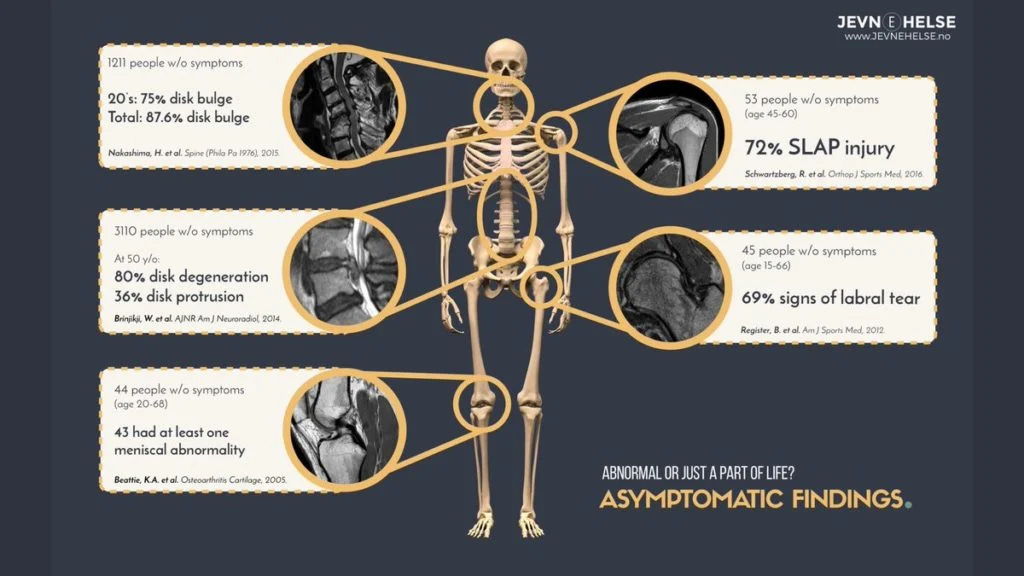
Only a handful of you received this yesterday, so I am republishing it to everyone this morning. Sorry… Your comments will drive the topics and quality of this podcast. So, thank you, and keep them coming.Many people come to the office expecting… or even insisting on an MRI. It seems like a high-tech tool worth considering. But sometimes it’s not. Can you be harmed by seeing a result? Yes, many can. Can it alter how you feel about playing in your evening tennis game? Yes. Can a musculoskeletal MRI tell us what hurts? Nope… Not usually. When are MRI scans useful? When do we order them? How do we explain the results? Why do we talk to you before the MRI to set expectations? Have we ever seen an MRI from a 50+ year-old, and the results say ”normal? You know… You might be running on a meniscus tear now and don’t even know it.This was a solid podcast… This is an important topic. We hope you enjoy it. Here’s the post that I mentioned earlier in the introduction to this episode: Howard, Jeff, and Jon This is a public episode. If you'd like to discuss this with other subscribers or get access to bonus episodes, visit howardluksmd.substack.com/subscribe
In episode 3, Jeff, Jon, and I start to peel back the layers on what wisdom looks like at the tail end of our orthopedic careers. We see things far differently than we used to. We operate far less than we used to. We discuss the reasons that have led to this realization and perhaps teach you how to think about your own orthopedic issues when confronted with the option for surgical intervention. As we continue to evolve this format we look forward to your questions, comments and suggestions. This is for you! This is a public episode. If you'd like to discuss this with other subscribers or get access to bonus episodes, visit howardluksmd.substack.com/subscribe
We’ve been doing this for decades. We talk to each other a lot. We are surgeons. We were taught to operate and trained accordingly. But decades later, we operate far, far less than we used to. Why is that? The first reply is from Jeff Berg. He’s a sports medicine doctor in Northern Virginia. The second reply is from Jon Hersch. He’s a sports medicine doctor in Boca Raton, Florida. This is a public episode. If you'd like to discuss this with other subscribers or get access to bonus episodes, visit howardluksmd.substack.com/subscribe
Jon, Jeff, and I are three Orthopedic Surgeons with 75+ years of experience between us. We have a lot to say… but finding time for all three of us to sit together to record a podcast is challenging. We wanted to gauge your thoughts on this format. In this format, I posed a question to them. They each answered asynchronously, then I answered. The podcast contains our answers, but with no back-and-forth between us. Please… Please take a moment to share your thoughts on this format. We could continue like this… or, if necessary, try to have a podcast in a more conventional format. Your replies will determine what we do next. Thank you. This is a public episode. If you'd like to discuss this with other subscribers or get access to bonus episodes, visit howardluksmd.substack.com/subscribe
This should be interesting. 3 Orthopedic Surgeons with 60 years of experience between us. We have a lot to say… and a lot to share. This is the welcome message about the format and structure. Stay tuned for our first episode coming soon. This is a public episode. If you'd like to discuss this with other subscribers or get access to bonus episodes, visit howardluksmd.substack.com/subscribe
Attention to detail before surgery has a significant impact on your ability to recover and your risk of complications. This is a public episode. If you'd like to discuss this with other subscribers or get access to bonus episodes, visit howardluksmd.substack.com/subscribe
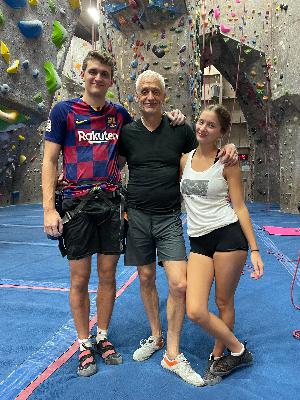
Exercise is the risk you take to avoid the consequences of being still. In the past, I often had issues or injuries related to improper load management, either ramping up too quickly or adding too many activities into a day. Some folks tolerate amazing load rates…, but that’s never been me. I learned many lessons in the past because of these injuries… but I still have some work to do. My middle son got me into rock climbing a while back. It’s a lot of fun… a terrific challenge… and a great way to maintain full-body fitness. I monitor my load often… using my watch and a HR strap to record most exercises. But heart rate isn’t a great way to assess the load of a workout or a climbing session. I ended up sustaining a tear in a tendon of my elbow. And it wasn’t healing— although it’s safe to say I wasn’t allowing it to heal. I ignored it for as long as I could. The red in the US picture is the tendon. The blue is the bone that the tendon should attach to. The yellow is the tear. I had a PRP injection last week… those hurt ;-)! But in a few months, I’ll be back climbing. Hopefully, with lessons learned about technique, how often I should climb and what positions I should try to avoid. Built to Move, Born to Heal: Notes on Midlife Fitness is a reader-supported publication. To receive new posts and support my work, consider becoming a free or paid subscriber. This is a public episode. If you'd like to discuss this with other subscribers or get access to bonus episodes, visit howardluksmd.substack.com/subscribe
Zone 2 training is an overused term. It is important, especially for people with poor endurance abilities. More importantly, low heart rate training is the best way to improve overall health and limit the consequences of metabolic diseases such as type 2 diabetes and insulin resistance. Google recently released NotebookLM, a fascinating AI platform that can synthesize various sources and produce a two-host podcast. I fed NotebookLM my writings on low heart rate training, which resulted in this 20-minute podcast. As I improve how I utilize this technology, these will be for paid subscribers only in the future. I hope you enjoy this. Please leave a comment. Your comments will determine how much I will use this in the future, which will be essential. This is a public episode. If you'd like to discuss this with other subscribers or get access to bonus episodes, visit howardluksmd.substack.com/subscribe

This is a public episode. If you'd like to discuss this with other subscribers or get access to bonus episodes, visit howardluksmd.substack.com/subscribe
Comments

Download from Google Play

Download from App Store
 United States