


 Claim Ownership
Agora Cosmica
Subscribed: 1Played: 2
Subscribe

© 2026 ChipMates gGmbH
Description
Wisdom. Not lectures. Not biographies. Memories.
First-person audiobooks inspired by remarkable people from history.
Each Echo is a twelve-part journey of awakening, struggle, and discovery.
For reflection. For meditation. For the quiet hours before sleep.
Created in human–AI collaboration.
We're a small nonprofit. We use synthetic narration so these stories can be free, without ads — and reach you in multiple languages.
Facts and wisdom behind every echo: agoracosmica.org
A project by ChipMates gemeinnützige GmbH.
First-person audiobooks inspired by remarkable people from history.
Each Echo is a twelve-part journey of awakening, struggle, and discovery.
For reflection. For meditation. For the quiet hours before sleep.
Created in human–AI collaboration.
We're a small nonprofit. We use synthetic narration so these stories can be free, without ads — and reach you in multiple languages.
Facts and wisdom behind every echo: agoracosmica.org
A project by ChipMates gemeinnützige GmbH.
22 Episodes
Reverse

Wisdom. Not lectures. Not biographies. Memories.
First-person audiobooks inspired by remarkable people from history.
Each Echo is a twelve-part journey of awakening, struggle, and discovery.
For reflection. For meditation. For the quiet hours before sleep.
Created in human–AI collaboration.
We're a small nonprofit. We use synthetic narration so these stories can be free, without ads — and reach you in multiple languages.
Facts and wisdom behind every echo: agoracosmica.org
A project by ChipMates gemeinnützige GmbH.
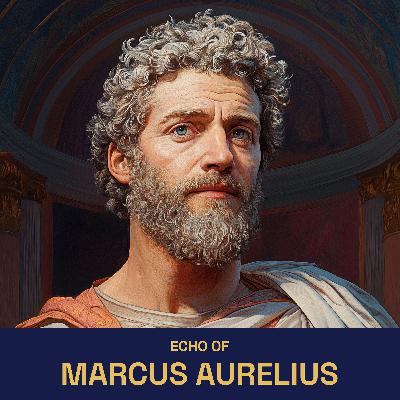
A preview of "Echo of Marcus Aurelius" — a 12-part first-person journey through the life and philosophy of Rome's philosopher-emperor.
From a boy watching cypress trees bend in the wind to a dying emperor seeking peace, discover how Stoic principles moved from abstract study to lived practice.
A Note on Marcus Aurelius
Marcus Aurelius wrote the Meditations not for publication but for himself — private notes on how to remain decent under pressure. That he spent his evenings questioning his own anger, vanity, and fear of death may make it the most honest self-examination that survives from the ancient world.
But he was also the ruler of an empire built on slavery and conquest. His philosophy held that all people share the same rational nature — yet he did not abolish the institutions that denied it. That tension between ideal and reality runs through the Meditations themselves.
These stories follow the philosopher, not the emperor — though the empire is never far away.
Created in human–AI collaboration.
We're a small nonprofit. We use synthetic narration so these stories can be free, without ads — and reach you in multiple languages.
Facts and wisdom behind every echo: agoracosmica.org
A project by ChipMates gemeinnützige GmbH.
The Stoic Path — Echo of Marcus Aurelius (Part 1/12)
Cypress trees bend in the evening wind and recover—twelve-year-old Marcus Aurelius watches them do what his painting teacher's canvas cannot, and begins learning that Stoic philosophy isn't something you study but something you practice every hour.
Young Marcus struggles with his toga, shouts at a slave for spilling ink, and recites arguments he's never actually tested—until his painting teacher Diognetus shows him that the trees bending outside the window hold more wisdom than any memorized rhetoric. By evening's end, Marcus has three practices to try tomorrow: observe one desire, perform one selfless action, question one inherited belief.
133 AD. Marcus Aurelius is 12. Near Rome.
Created in human–AI collaboration.
We're a small nonprofit. We use synthetic narration so these stories can be free, without ads — and reach you in multiple languages.
Facts and wisdom behind every echo: agoracosmica.org
A project by ChipMates gemeinnützige GmbH.
Control of Impressions — Echo of Marcus Aurelius (Part 2/12)
Three taps of a stylus on wax, and fifteen-year-old Marcus Aurelius learns that the shame burning through his chest isn't truth—it's a story he's telling himself about sounds that traveled through air.
After his rhetoric teacher Fronto dismisses his Cicero recitation as "mere accuracy," Marcus walks Rome's streets burning with shame—until Epictetus's words reveal the space between what happens and what we make it mean. He writes an angry response, then sets it aside. By morning, he sends something different.
136 AD. Marcus Aurelius is 15. Rome.
Created in human–AI collaboration.
We're a small nonprofit. We use synthetic narration so these stories can be free, without ads — and reach you in multiple languages.
Facts and wisdom behind every echo: agoracosmica.org
A project by ChipMates gemeinnützige GmbH.
Living According to Nature — Echo of Marcus Aurelius (Part 3/12)
A crumpled scroll, numb fingers, and a gardener pruning bare trees in February—this is how Marcus Aurelius first learns that Stoic acceptance is not surrender.
Marcus receives word that Emperor Hadrian has arranged his adoption—making him heir to Rome. Standing in the cold colonnade, watching a gardener work methodically through winter-bare trees, he discovers that cosmic nature does not ask for passive endurance. The freedom is not in the circumstances. It is in the response.
138 AD. Marcus Aurelius is 16-17. Rome.
Created in human–AI collaboration.
We're a small nonprofit. We use synthetic narration so these stories can be free, without ads — and reach you in multiple languages.
Facts and wisdom behind every echo: agoracosmica.org
A project by ChipMates gemeinnützige GmbH.
The Four Virtues — Echo of Marcus Aurelius (Part 4/12)
Incense hangs beneath the Senate ceiling as Marcus Aurelius watches a ruined man find peace while a powerful governor crumbles from within.
A corruption trial in the Roman Senate becomes Marcus's lesson in distinguishing true virtue from its counterfeits. As beautiful rhetoric masks self-interest and a trembling exile speaks plain truth, Antoninus reveals the four questions that guide every judgment—wisdom, justice, courage, temperance.
146 AD. Marcus Aurelius is 25. Rome.
Created in human–AI collaboration.
We're a small nonprofit. We use synthetic narration so these stories can be free, without ads — and reach you in multiple languages.
Facts and wisdom behind every echo: agoracosmica.org
A project by ChipMates gemeinnützige GmbH.
What Truly Matters — Echo of Marcus Aurelius (Part 5/12)
Three weeks after the fever took his daughter, Marcus Aurelius kneels beside his sleeping children at midnight and discovers that Stoic "indifference" never meant what he thought it meant.
Marcus stands in a doorway between his philosopher's study and the nursery where his surviving children sleep. The empty cradle where Domitia lay still sits in the corner. Tonight, watching his daughter Lucilla breathe, he finally understands what the Stoics meant: the reservation is not in the loving—it is in the demand.
151 AD. Marcus Aurelius is 30. Rome.
Created in human–AI collaboration.
We're a small nonprofit. We use synthetic narration so these stories can be free, without ads — and reach you in multiple languages.
Facts and wisdom behind every echo: agoracosmica.org
A project by ChipMates gemeinnützige GmbH.
Emotional Clarity — Echo of Marcus Aurelius (Part 6/12)
Three letters burned before dawn—each one written from a rage that Marcus Aurelius must trace to its roots before he can write the fourth.
A trusted advisor has betrayed Marcus to a rival faction, and the rage that follows resists every Stoic technique he knows. With Rusticus's help, he dissects the emotion thread by thread—discovering that his suffering comes not from the betrayal itself, but from judgments about what he was owed, what he should have known, and what the betrayal means about him. When those false beliefs fall away, what remains is not numbness but clarity.
~154 AD. Marcus Aurelius is 33. Rome.
Created in human–AI collaboration.
We're a small nonprofit. We use synthetic narration so these stories can be free, without ads — and reach you in multiple languages.
Facts and wisdom behind every echo: agoracosmica.org
A project by ChipMates gemeinnützige GmbH.
Morning Preparation — Echo of Marcus Aurelius (Part 7/12)
Before dawn breaks over Rome, Marcus Aurelius rehearses every difficult soul he'll face today—the angry delegate, the hostile senator, the grieving widow—not to armor himself against them, but to discover they are occasions for the Stoic virtue he's spent decades learning to practice.
In the cold darkness before the second horn, Marcus lies awake on the hard pallet he's kept since boyhood, mentally walking through the day's trials—an impossible delegation, a senator's calculated provocations, a petitioner whose grief he cannot fix. What emerges is not armor but recognition: these difficult people are not obstacles to virtue but the very occasions that call it forth.
159 AD. Marcus Aurelius is 38. Rome.
Created in human–AI collaboration.
We're a small nonprofit. We use synthetic narration so these stories can be free, without ads — and reach you in multiple languages.
Facts and wisdom behind every echo: agoracosmica.org
A project by ChipMates gemeinnützige GmbH.
Duty and Service — Echo of Marcus Aurelius (Part 8/12)
Incense rises from the pyre where Antoninus Pius becomes ash, and Marcus Aurelius realizes that twenty-three years of Stoic preparation have not made him ready—yet he must begin anyway.
At the funeral of Antoninus Pius, Marcus watches an eagle carry his adoptive father's soul skyward and feels the weight of an empire settle onto his shoulders. A dust-covered centurion delivers three sentences and twenty-three years of wordless wisdom: "There is no difficulty in being what one is." By nightfall, Marcus understands that Stoic philosophy was never meant to be a retreat from duty—it was preparation for full engagement with it.
161 AD. Marcus Aurelius is 40. Rome.
Created in human–AI collaboration.
We're a small nonprofit. We use synthetic narration so these stories can be free, without ads — and reach you in multiple languages.
Facts and wisdom behind every echo: agoracosmica.org
A project by ChipMates gemeinnützige GmbH.
Universal Humanity — Echo of Marcus Aurelius (Part 9/12)
The fever does not read Epictetus—it takes Marcus Aurelius and Syrian merchant alike, and in a dying stranger's grip, the Stoic emperor finally feels what he has known for thirty years.
Marcus walks where his advisors forbade him—through Rome's plague districts where pyres burn and bodies lie sorted by citizenship. When a dying Syrian merchant reaches for his hand, the philosophical argument he has studied for decades becomes something he feels in his body: all humans share the same rational nature, and their suffering makes the same claim on us.
166 AD. Marcus Aurelius is 45. Rome and surroundings.
Created in human–AI collaboration.
We're a small nonprofit. We use synthetic narration so these stories can be free, without ads — and reach you in multiple languages.
Facts and wisdom behind every echo: agoracosmica.org
A project by ChipMates gemeinnützige GmbH.
View from Above — Echo of Marcus Aurelius (Part 10/12)
Ten thousand campfires shrink to sparks as the Stoic Emperor Marcus Aurelius climbs a watchtower and lets his mind rise until Rome itself disappears into the hills that hold it.
On the Danube frontier, Marcus climbs a watchtower and practices the Stoic meditation of viewing from above—watching his empire shrink from the ground, from the sky, from the stars, until the scroll of military concerns in his hand becomes smaller than his palm. What he discovers is not insignificance but proper proportion: the same logos that orders the cosmos is the faculty that lets him comprehend it.
171 AD. Marcus Aurelius is 50. Danube frontier.
Created in human–AI collaboration.
We're a small nonprofit. We use synthetic narration so these stories can be free, without ads — and reach you in multiple languages.
Facts and wisdom behind every echo: agoracosmica.org
A project by ChipMates gemeinnützige GmbH.
Providence and Acceptance — Echo of Marcus Aurelius (Part 11/12)
The messenger waits thirty paces behind him with news that Faustina is dying—but Marcus Aurelius sits by the river, listening, because he must find what Stoicism has to offer before he can bring it to her.
A messenger brings word that Faustina is dying in the camp at Halala. Before Marcus can go to her, he sits beside a river in the failing light, tracing the thread of providence through every loss—Verus, Cassius's betrayal, his daughter Domitia—searching not for comfort but for truth. What he finds is the distinction between what he cannot change and what he can: the freedom to respond.
175 AD. Marcus Aurelius is 54. Near Halala, Cappadocia (Turkey).
Created in human–AI collaboration.
We're a small nonprofit. We use synthetic narration so these stories can be free, without ads — and reach you in multiple languages.
Facts and wisdom behind every echo: agoracosmica.org
A project by ChipMates gemeinnützige GmbH.
Death as Teacher — Echo of Marcus Aurelius (Part 12/12)
The watchword takes nineteen years to arrive at its final form: "Go to the rising sun—I am already setting."
Marcus Aurelius lies dying in a military camp at Vindobona, tasting bitter medicine and watching cold northern light fall across his blankets. As advisors press succession matters and guards request the daily watchword, he traces backward through four decades of teachers—Diognetus with ochre-stained fingers, Fronto whose criticism burned, Antoninus whose hand briefly touched his shoulder. The examination he prepared for his entire life has arrived, and he discovers the preparation was sufficient.
180 AD. Marcus Aurelius is 58. Vindobona (Vienna).
Created in human–AI collaboration.
We're a small nonprofit. We use synthetic narration so these stories can be free, without ads — and reach you in multiple languages.
Facts and wisdom behind every echo: agoracosmica.org
A project by ChipMates gemeinnützige GmbH.

A preview of "Echo of Harriet Tubman" — a 12-part first-person journey through the life and wisdom of the Underground Railroad's most famous conductor.
From a child finding strength in her mother's spirituals to the "Moses of her people" leading hundreds to freedom, discover how faith, courage, and community became weapons against injustice.
A Note on Harriet Tubman
Harriet Tubman escaped slavery, returned thirteen times to lead others to freedom, and never lost a passenger. She did this while suffering seizures from a head wound inflicted when she was thirteen — guided by visions she trusted with her life.
Her story includes the reality of enslavement — violence, separation, and the threat of death. These stories do not look away.
The details draw on the earliest accounts of her life, particularly Sarah Bradford's conversations with Tubman herself.
Created in human–AI collaboration.
We're a small nonprofit. We use synthetic narration so these stories can be free, without ads — and reach you in multiple languages.
Facts and wisdom behind every echo: agoracosmica.org
A project by ChipMates gemeinnützige GmbH.
Inner Freedom First — Echo of Harriet Tubman (Part 1/12)
An iron weight cracks a twelve-year-old's skull, but while the overseer calls Harriet Tubman "damaged goods," her mother's spirituals are building something unbreakable inside.
Young Harriet lies in darkness after a brutal head injury, hearing the overseer dismiss her as worthless through the cabin walls. But her mother's songs and whispered truths—"You belong to God, not to any man born"—become a counter-voice she carries inside. By the time she speaks again, she's already building the inner freedom that will one day carry her north.
~1834. Harriet Tubman is 12. Dorchester County, Maryland.
Created in human–AI collaboration.
We're a small nonprofit. We use synthetic narration so these stories can be free, without ads — and reach you in multiple languages.
Facts and wisdom behind every echo: agoracosmica.org
A project by ChipMates gemeinnützige GmbH.
Spiritual Vision — Echo of Harriet Tubman (Part 2/12)
Two summers after the iron cracked her skull, fourteen-year-old Harriet Tubman collapses in a tobacco field—and wakes having seen a hidden path through the marsh she's never walked, a crooked tree she's never passed, three white stones she's never seen.
When Harriet's vision reveals an escape route through the Blackwater marsh, her father takes her to test it—and every detail proves true. In the mud beside three white stones, she prays words that will guide her for decades: "Show me where to set my feet, and I will follow."
~1836. Harriet Tubman is ~14. Dorchester County, Maryland.
Created in human–AI collaboration.
We're a small nonprofit. We use synthetic narration so these stories can be free, without ads — and reach you in multiple languages.
Facts and wisdom behind every echo: agoracosmica.org
A project by ChipMates gemeinnützige GmbH.
Courage Before Clarity — Echo of Harriet Tubman (Part 3/12)
The North Star pulls at her like a rope tied around her heart as Harriet Tubman walks past the exact spot where, three weeks ago, she let fear turn her around.
September 1849. Harriet sings her farewell song where only those who know her will understand its meaning, then walks alone into the Maryland woods—past the tree where her brothers grabbed her arm and turned her back. She carries two names, a partial route, and the star her father taught her to follow. Not certainty. Enough.
1849. Harriet Tubman is 27. Dorchester County, Maryland.
Created in human–AI collaboration.
We're a small nonprofit. We use synthetic narration so these stories can be free, without ads — and reach you in multiple languages.
Facts and wisdom behind every echo: agoracosmica.org
A project by ChipMates gemeinnützige GmbH.
Moving from Midnight — Echo of Harriet Tubman (Part 4/12)
The frozen marsh that should have swallowed them became a road—Harriet Tubman's first rescue taught her that what looks like death to the hunter is life to the hunted.
Three months after the Fugitive Slave Act turned every Northern state into hunting ground, Tubman returns south to rescue her niece Kessiah and two small children from a Baltimore safehouse. When slave catchers block the planned route, December's bitter cold reveals an unexpected gift—a frozen marsh that becomes their path to Delaware.
1850. Harriet Tubman is 28. Baltimore to Delaware.
Created in human–AI collaboration.
We're a small nonprofit. We use synthetic narration so these stories can be free, without ads — and reach you in multiple languages.
Facts and wisdom behind every echo: agoracosmica.org
A project by ChipMates gemeinnützige GmbH.
Environmental Wisdom — Echo of Harriet Tubman (Part 5/12)
Frost on a holly leaf tells Harriet Tubman what the patrol routes cannot—whether tonight's ice will hold seven souls or betray them.
Seven passengers huddle in December darkness as Harriet leads them across frozen marshland, using knowledge passed down through generations—her mother's herbal remedies, Indigenous wisdom about reading ice, her own mental maps built during twelve years of forced labor. When patrol dogs close in, she realizes the truth: the masters thought they owned her work, but her work was teaching her escape.
Early 1850s. Harriet Tubman is ~30. Maryland/Delaware borderlands.
Created in human–AI collaboration.
We're a small nonprofit. We use synthetic narration so these stories can be free, without ads — and reach you in multiple languages.
Facts and wisdom behind every echo: agoracosmica.org
A project by ChipMates gemeinnützige GmbH.

Comments

Download from Google Play

Download from App Store
 United States