


 Claim Ownership
DCAF - Geneva Centre for Security Sector Governance
Subscribed: 0Played: 0
Subscribe

© DCAF
Description
DCAF - Geneva Centre for Security Sector Governance is dedicated to making states and people safer through more effective and accountable security and justice. Since 2000, the Centre has facilitated, driven and shaped security sector reform (SSR) policy and programming around the world. Good security sector governance (SSG), based on the rule of law and respect for human rights, is a cornerstone of sustainable development.
27 Episodes
Reverse
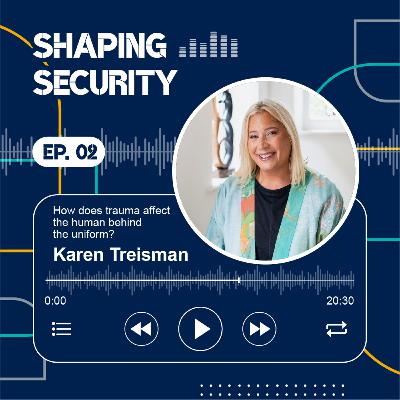
In this episode, we speak to Dr Karen Treisman, a Clinical Psychologist specialised in trauma. She has worked with former child soldiers, survivors of the Rwandan genocide, refugees, asylum-seekers and more. We think about the human behind the uniform, clarify what are the different forms of trauma that any police officer or soldier could face in their daily work, and why it is important to talk about it rather than hide it. Link to Karen Treisman website: www.safehandsthinkingminds.co.uk Shaping Security puts security governance at the heart of the conversation, offering a clear and accessible way to understand today’s security challenges and what is truly at stake. Link to the episode page with all resources: https://www.dcaf.ch/shaping-security-s01-e02 Direct link to the resources mentioned in the episode What Trauma REALLY Does To Your Body? https://www.youtube.com/watch?v=6PzroZA4PCk Police Officer PTSD & Trauma Recovery | First Responder Mental Health from OC87 https://www.youtube.com/watch?v=jOUziW6SwT4 Subscribe to our newsletter: https://www.dcaf.ch/subscribe
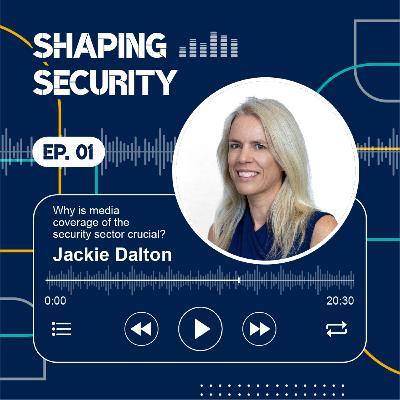
In this episode, we speak to Jacqueline Dalton, Head ofeditorial content at Fondation Hirondelle. For over 30 years, this non-profit organisation has been building and supporting local media and journalists in fragile contexts to ensure that people facing crises have access to reliable, local, independent information.Link to Fondation Hirondelle: https://www.hirondelle.org/fr/Shaping Security puts security governance at the heart of the conversation, offering a clear and accessible way to understand today’s security challenges and what is truly at stake. Link to the episode page with all resources: https://www.dcaf.ch/shaping-security-s01-e01Direct link to the resources mentioned by Jackie Dalton - Anatomy of a killing: https://www.youtube.com/watch?v=XbnLkc6r3yc Subscribe to our newsletter: https://www.dcaf.ch/subscribe
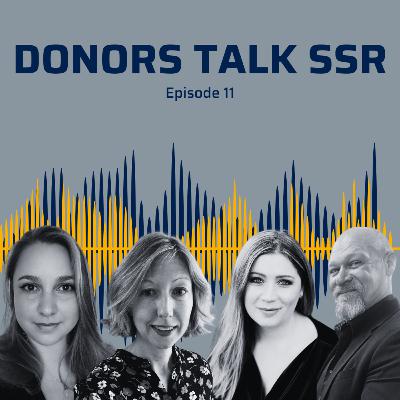
This episode features Petra van Oijen, security sector governance and reform expert.
It reflects on Petra’s significant contribution over the past 20 years to our sector, through
- national security strategy development,
- gender equality,
- civil-military relations,
- trainings, and beyond - as one of the women who has helped build the field that we work in today.
Security sector institutions are exposed to high levels of stress and trauma. The second part of this two-part episode delves deeper into the concept of trauma layering, the role that culture plays in understanding what trauma is, and what it means to take a trauma-informed approach to security sector reform and governance programming.
Featured on the episode are Abigail Robinson (independent expert in security sector governance and reform), Dan Hales (Head of the DCAF Honduras Office), and Dr. Karen Treisman (clinical psychologist, organisational consultant, trainer and author).
Security sector institutions are exposed to high levels of stress and trauma. This two-part episode explores how trauma in security institutions, in particular the police, affects the wellbeing of its individual members, the organization as a whole, and relationships between communities and security forces.
Featured on the episode are Abigail Robinson (independent expert in security sector governance and reform), Dan Hales (Head of the DCAF Honduras Office), and Dr. Karen Treisman (clinical psychologist, organisational consultant, trainer and author).
Featuring Michal Mlynár, UN Assistant Secretary-General and Acting Executive Director of UN-Habitat, this episode recognises his significant contributions to the field - spanning almost 30 years - working on issues related to international organisations, security sector governance, development cooperation, and humanitarian aid.
This episode features Thammy Evans, Non-Resident Senior Fellow at the Atlantic Council GeoTech Center, and reflects on Thammy’s significant contribution over the past 20 years to the fields of defence reform and governance, conflict prevention, and climate security - as one of the women who has helped build the field that we work in today.
Featuring Brendan Schulman, Vice President of Policy and Government Relations at Boston Dynamics, this episode unpacks the potential and challenges of integrating robotics and AI in law enforcement.
In this episode of Cyber Talks, hosted by Laylo Merali, we focus on ways forward - exploring what can be done to make cyberspace more secure and combat online gender-based violence.
Joining us are Dunja Mijatović, Human Rights Commissioner at the Council of Europe, and Ena Bavčić, editor and co-author of the publication, 'Online Actions, Offline Harms: Case Studies on Gender and Cybersecurity in the Western Balkans', which has been a focal point in our previous discussions.
This episode has been produced following the launch of the publication mentioned above.
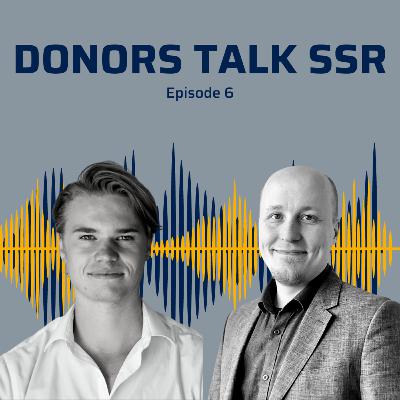
This episode features Ville Savoranta, Policy Officer with the Civilian Planning and Conduct Capability (CPCC) of the European External Action Service. Reflecting on youth, peace, and security, Ville recalls his experience working on the Finnish National Action Plan on youth, peace, and security at the Crisis Management Center in Finland, and the importance for youth organizations to drive forward negotiations, as well as how critical it is to integrate youth, peace, and security in the planning and design of EU civilian CSDP missions, including identifying opportunities for entry-level experts in missions.
In this episode of Cyber Talks, hosted by Laylo Merali, we discuss the complexities of non-consensual intimate image distribution and the real-world impacts of this digital-age challenge.
This episode has been produced following the launch of the publication "Online actions, offline harms: Case studies on Gender and Cybersecurity in the Western Balkans," co-authored by our guests Aida Mahmutović from the Balkan Investigative Reporting Network and Valdrin Ukshini from the Kosovar Institute for Policy Research and Development.

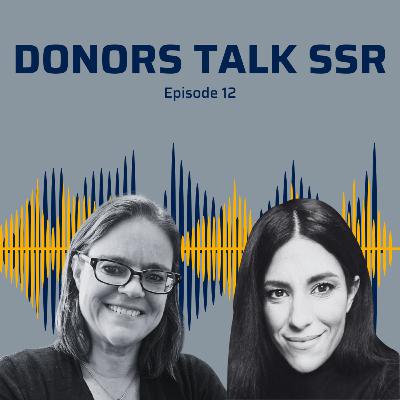
Hervé Auffret, Senior Security Sector Reform advisor with DCAF, joins us in this podcast episode on the subject of defence reform. Hervé's expertise as an SSR advisor, and as a former member of the French Navy, guides the discussion on a people-centred approach to defence. This podcast series, “Donors Talk SSR”, is hosted by DCAF’s International Security Sector Advisory Team and it aims to unpack different themes and practices within security sector governance and reform.
In this episode of Cyber Talks, hosted by Laylo Merali, we explore the impact of cyber violence on women and LGBTQ+ human
rights defenders, as well as the diminishing cyber civic space for activists in these communities.
This episode has been produced following the launch of the publication "Online actions, offline harms: Case studies on
Gender and Cybersecurity in the Western Balkans," co-authored by our guests Ivana Ranković from the Belgrade Centre for Security Policy (Serbia) and Megi Reçi from the Institute for Democracy and Mediation (Albania).
In this episode of Cyber Talks, hosted by Laylo Merali, we delve into challenges that women and girls often encounter online - being targeted and subject to abuse and sexism, often leading to self-censorship - even among influential women, such as politicians.
This episode has been produced following the launch of the publication 'Online actions, offline harms: Case studies on Gender and Cybersecurity in the Western Balkans', co-authored by our guests Darvin Murić from the Center for Democratic Transition in Montenegro and Mila Josifovska Danilovska from Metamorphosis in North Macedonia.
This episode features Georgia Hinds, Legal Adviser on New Technologies of Warfare in the Arms and Conduct of Hostilities Unit at the ICRC. Through the lens of her work at the ICRC, Georgia unpacks the “black box” of artificial intelligence, looking at the challenges of integrating AI in autonomous weapons systems, and what this means for the conduct of warfare and security governance.
This episode features our Justice Advisor, Shahzada Ahmad. Shahzada has over 15 years of experience in development and has worked across many contexts on legal framework reforms, rule of law, and access to justice.
In this episode, Shahzada explores the emerging role of digitalisation and new technologies in justice reform, looking at success stories, challenges, and what international partners need to consider when supporting digitalisation projects related to justice reform.
The third episode of Donors Talk SSR features DCAF ISSAT’s Head of Advisory Field Support and Senior SSR Advisor, Dr. Anicia Lala. It is hosted by DCAF ISSAT’s Head of Outreach and Knowledge, Elsa Salame Dazin. This episode pays tribute to Anicia’s significant contributions over the past 25 years to the fields of security, justice, governance, democratisation, peacebuilding, and conflict prevention, particularly in Africa. As one of the women who has helped build the field that we work in today, she recalls her engagement as an advisor at the Mozambican Ministry of Defence, her contribution to founding the African Security Sector Network, as well as her role as a key expert in African civil-military dialogues that pre-dated the emergence of SSR. Her expertise contributed to so many organizations' achievements, including the first-ever global facilitation network on SSR (GFN-SSR), and to multilaterals such as the AU, EU, UN, OECD, ECOWAS, and SADC. Through this podcast, Dr. Lala reflects on how SSR has developed in the African continent, including the persisting opportunities to continue to build momentum for change, and create opportunities for innovative solutions.
To commemorate International Women’s Day on 8 March 2023, DCAF created a podcast that discussed the importance of gender equity in security, via a conversation with two senior operational commanders in the Honduran National Police. Both of these commanders underwent training from DCAF in 2022 on the subject and have been tasked by the Police Education Department to cascade the training within their operational units. The officers discuss why it is important for men to stand up and champion gender equity, demonstrating why International Women’s Day should be commemorated by all.
IN SPANISH
The episode recognizes the history of women police officers and their role in gender equality's expansion and consolidation in the Honduran National Police. With the participation of Comisionada Sulma Reyes and Sub-Comisionada Persis Zaldivar, their stories and more than 20 years of experience in the Police help us understand that gender equality depends on the daily actions to respect human rights of all persons regardless of their gender, sexual orientation and identity.

In this episode, Katharine Millar describes the relationship between gender and cybersecurity.
This podcast series has been produced following the launch of the publication “Gender Equality, Cybersecurity, and Good Governance” (https://www.dcaf.ch/gender-equality-cybersecurity-and-security-sector-governance) co-authored by experts Katherine Millar, James Shires, and Tatiana Tropina. Each of them will share insights and answer questions related to Gender Equality, Cybersecurity, and Good Governance.
You can follow Katharine Millar on Twitter @DrKMillar
Dr. Katharine Millar is an Assistant Professor of International Relations at the London School of Economics and Political Science (LSE) and holds a doctoral degree from the University of Oxford, United Kingdom. Her research interests lie in the relationship between gender, sexuality, politics and violence. Her current research examines gender and cybersecurity; gender, race, militarism, and contemporary populism(s); and the transnational components of death associated with COVID-19. Dr. Millar is a member of the Millennium journal Board of Trustees and of the Centre for Women, Peace and Security at the LSE. She has participated in consultation processes regarding the United Nation’s Women, Peace and Security Agenda for several national governments and international organizations, including the United Kingdom, Canada and the North Atlantic Treaty Organization (NATO).

Comments

Download from Google Play

Download from App Store
 United States