



 Claim Ownership
The African Imaginary Podcast
Subscribed: 2Played: 0
Subscribe

© The African Imaginary
Description
The African Imaginary is a platform of contemporary culture spotlighting creativity born and raised on the continent. This is the home of our podcast.
The African Imaginary Podcast seeks to discover, through conversations with Africa’s top creators, how being born and raised on African soil affects our imagination and creativity.
Show host Khangi Khoza engages deeply with writers, musicians, artists, business builders and others, and in so doing helps listeners connect with their own imaginations. The African Imaginary Podcast reminds us that we are part of a common humanity which began and thrives on this continent.
The African Imaginary Podcast seeks to discover, through conversations with Africa’s top creators, how being born and raised on African soil affects our imagination and creativity.
Show host Khangi Khoza engages deeply with writers, musicians, artists, business builders and others, and in so doing helps listeners connect with their own imaginations. The African Imaginary Podcast reminds us that we are part of a common humanity which began and thrives on this continent.
3 Episodes
Reverse
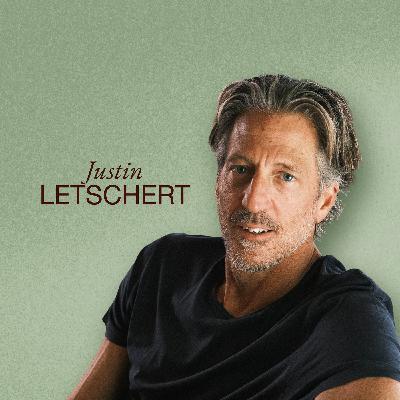
In our third episode of The African Imaginary Podcast, guest Justin Letschert and host Khangi Khoza talk about skin, the beauty industry, and why Africa is precisely the right place from which to launch a brand to the world. A rich and deep exploration into running a global business by leaning into humanness and instinct.
Justin Letschert is the owner of Africa’s most global and well-known skincare brand. Since 2000 he has navigated Bio-Oil from selling a handful of products a year in South Africa, to a product a second in over 160 countries - the fastest global rollout of all time.
So how does a 4-product brand from the tip of Africa generate a cult following? Justin credits Bio-Oil’s success in no small part to the fact that he and his brother (who is also his business partner) were born and raised in Durban, South Africa. ‘Being African gives you internal strength, tenacity and creativity. Exactly what is needed to navigate the international waters of taking a brand global,’ he says.
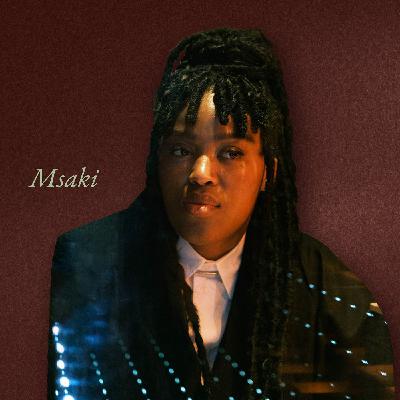
In this, our second episode of The African Imaginary Podcast, Msaki in deep conversation with host Khangi Khoza, reflects on her ancestral energies, salutes her icons, dissects the music industry, and lets us into her creative process.
Msaki is an award-winning South African singer-songwriter. Her voice is one of the most distinctive in the business, delighting club kids in Kenya, folk festival-goers across the USA, and her huge fan-base in Mzansi.
Msaki trained in fine art, graphic design, film photography and curation at Rhodes University, Leeds University, Nelson Mandela Metropolitan University and East London Technikon.
She is a South African Music Award (SAMA) winning musician, who contributed to Black Coffee’s Grammy Award winning album as writer, composer and artist. She has also collaborated with Sun-EL Musician, Carlo Mombelli, Nduduzo Makhathini, Simmy and Ami Faku, Kabza De Small, Diplo, Ry X others. As a writer and facilitator, she is sought after for writing camps around the world.
At the core of her practice is a commitment to catching and preserving ‘the soul of the song’ as it travels through the music value chain. In this way she shines a light for other independent artists across the continent, including those whose careers she supports through her collective ALTBLK.
Msaki’s practice now merges installation and performance. Her visionary archetype extends to how she parents her 3 kids. She’s a ‘free range mom’ who co-creates their education and play . “Kids are incredible…I don’t know how to explain the things that I’ve seen,” she tells The African Imaginary.
We are thrilled to have her take her rightful place in the African imaginary, which she sees as ‘a circular, communal intelligence’. The African Imaginary on Substack
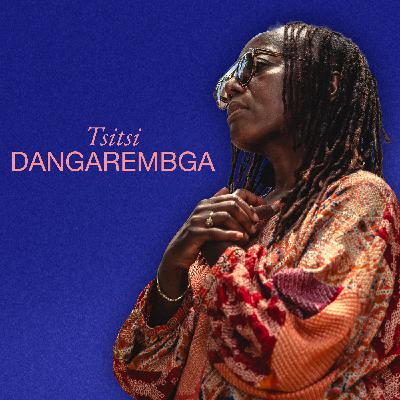
In this, our first episode of The African Imaginary Podcast, host Khangi Khoza and writer Tsitsi Dangarembga dive into the importance of the African imagination, Tsitsi’s African icons, spirituality in her later writing, advice to writers, and more.
Tsitsi Dangarembga is one of Africa’s key literary voices. She has been writing for four decades and is best known for her trilogy of novels set in her home country, Zimbabwe. Nervous Conditions was the first novel by a black Zimbabwean woman to be published in English, and was praised by the late Chinua Achebe for being ‘as natural as the grass grows’.
In 2020, Dangarembga’s novel This Mournable Body was shortlisted for the Booker Prize – something she has described as ‘absolutely immense’ and life-changing. Two years later she was named by The Financial Times as one of the 20 most influential women in the world after she was arrested in Harare for inciting public violence. Her crime was walking with a placard that read ‘We Want Better. Reform Our Institutions’.
Among Dangarembga’s other awards are the English PEN Pinter Prize, the German Peace Prize, Yale University’s Windham Campbell Prize and the PEN Catalan Free Voice Award. She is a former fellow of the Rockefeller Bellagio Centre, the Stellenbosch Institute for Advanced Study and the Radcliffe Institute at Harvard University, and she was the International Chair in Creative Writing (Africa) at the University of East Anglia, and is an honorary fellow of her alma mater, Sidney Sussex College, Cambridge.
She says that the subject of the African imaginary has ‘been on [her] mind, waking and sleeping, for the last 30 years’, because she believes that ‘no significant human advancement has ever taken place without tapping human creative potential’.
Comments


Download from Google Play

Download from App Store
 United States