


 Claim Ownership
Liknayan Podcast: Usapang Physics with Pinoy Physicists
Subscribed: 0Played: 0
Subscribe

© Philip, Reggie, and Cherrie
Description
Liknayan Podcast shines a spotlight on Filipino physicists and the paths they’ve taken in science. Beyond research, we share the real journey of pursuing a career in academia: the discipline, sacrifices, doubts, and breakthroughs that shape a life in physics.
Hosted by Philip Flores, Reggie Bernardo, and Cherrie Olaya, Liknayan Podcast aims to inspire the next generation of Filipino scientists to see that a place in academia is possible, and worth striving for.
Hosted by Philip Flores, Reggie Bernardo, and Cherrie Olaya, Liknayan Podcast aims to inspire the next generation of Filipino scientists to see that a place in academia is possible, and worth striving for.
51 Episodes
Reverse
Samahan kaming pagusapan ang bagong paper ng ating host na si Philip. Ang kanyang papel ay pinamagatang "Enantiosensitive molecular compass". Ito ay tungkol sa spin-polarization ng mga na ionize na electrons sa mga chiral molecules gamit ang mga laser. Samahan kaming pagusapan kung ano ang ibig sabihin ng mga salitang ito at kung bakit importante ang chiral molecules.
Samahan kaming pagusapan ang bagong paper ng ating host na si Cherrie. Ang kanyang papel ay pinamagatang "Enhancing angular photonic spin Hall effect at surface plasmon resonance" at paguuspan natin kung ano ba ang spin Hall effect, ano ang plasmon resonance, at bakit niya ito pinag-aaralan.Ang papel na ito ay open access at pwede ninyong basahin sa link na ito: https://www.degruyterbrill.com/document/doi/10.1515/nanoph-2025-0206/html
Welcome sa bagong series ng Liknayan Podcast kung saan sasagutin natin ang tanong sa mga comments. Sa episode na ito ay sasagutin ni Philip ang tanong kung posible ba ang time travel gamit ang quantum mechanics!
Samahan kaming kausapin si Darwin Putungan, PhD, ang unang director ng Institute of Physics sa UPLB at president ng Samahang Pisika ng Pilipinas para pag-usapang ang kaslukuyang research groups at physics graduate school programs ng UPLB pati na rin ang parating na conference ng Samahang Pisika ng Pilipinas
Samahan sina Philip, Reggie, at Cherrie pagusapan kung saan nila gagamitin ang 1 bilyong piso para sa science sa Pilipinas
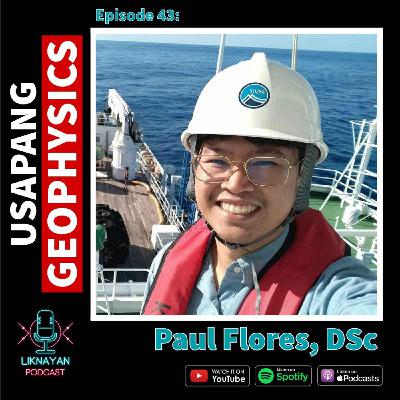
In this episode of #LiknayanPodcast, we are joined by Dr. Paul Flores, a Filipino geophysicist whose research focuses on active faults, slow earthquakes, and tectonic processes beneath the ocean floor.He completed his D.Sc. in Earth Science at Yokohama National University (Japan) as a MEXT Scholar, where he studied the mechanism of slow earthquakes in the Nankai Trough.Dr. Flores is currently a JSPS Postdoctoral Fellow at the Japan Agency for Marine-Earth Science and Technology (JAMSTEC). Prior to this, he worked at the University of the Philippines Diliman, conducting research on marine geophysics, fault mapping, and coastal hazards in the Philippines.Here, we discuss Dr. Flores' paper entitled "Shallow structures, interactions, and recurrent vertical motions of active faults in Lingayen Gulf, Philippines" (https://www.sciencedirect.com/science/article/pii/S2590056023000178).
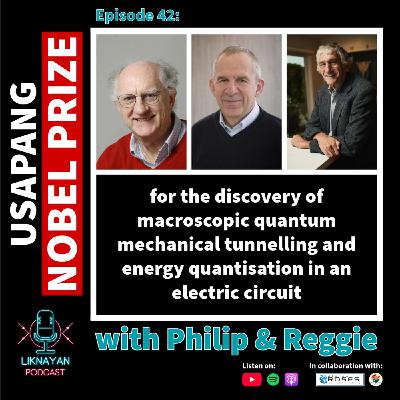
In this episode of #LiknayanPodcast, we break down the 2025 Nobel Prize in Physics, awarded for the discovery of macroscopic quantum tunneling and energy quantization in an electric circuit. You’ll gain clear insight into:What is quantum tunneling?Quantized energy levels — how quantum systems absorb/emission in “steps”Why this matters in electrical circuitsThe relation to superconductivityMacroscopic quantum effects — quantum mechanics at visible scale
100 years old na ang quantum mechanics ngayong 2025. samahang niyo kami dito sa liknayan podcast para pagusapang ang history nito at ang exprience ni Philip nung nag-attend siya ng conference sa Gottingen in celebration din ng International Year of Quantum Science and Technology
Merry christmas!
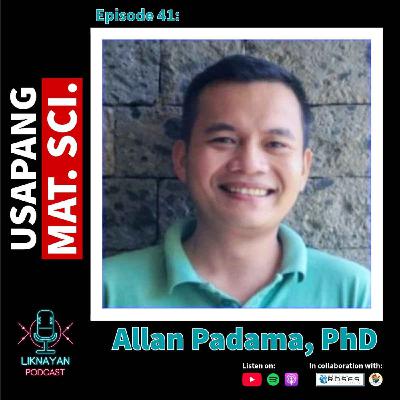
In this episode of #LiknayanPodcast, we sit down with Dr. Allan Padama, an expert from the Institute of Physics at the University of the Philippines Los Baños, to dive into the fascinating world of Computational Materials Science.Dr. Padama discusses the significance of Density Functional Theory (DFT) in understanding materials at the atomic level and explores the challenges and opportunities for young researchers eager to enter this field. Discover how computational approaches are driving innovation and shaping the future of science and technology.Whether you’re a student, early-career researcher, or just curious about the intersection of computation and materials science, this episode is packed with insights and inspiration!
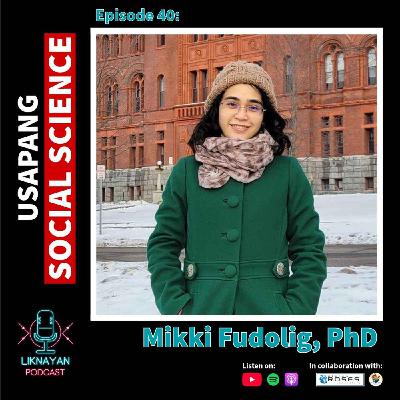
In this episode of #LiknayanPodcast, we sit down with Dr. Mikaela Fudolig, a Research Assistant Professor at the University of Vermont, to explore the innovative field of Computational Social Science. With a unique background in physics, Dr. Fudolig applies scientific and computational principles to the study of society, examining how digital traces and cultural artifacts can offer insights into human behavior.Dr. Fudolig's academic journey is nothing short of extraordinary. At just 11 years old, she entered the University of the Philippines Diliman through an experimental Early College Placement Program. By 16, she had earned her Bachelor of Science in Physics, graduating summa cum laude and as valedictorian of her class. She continued her studies at UP Diliman, obtaining both her Master's and PhD in Physics, completing her doctoral degree at the age of 24.From understanding the big questions and objectives of the field to its practical applications in today's world, this episode offers a fascinating look at how computation is transforming social science research.
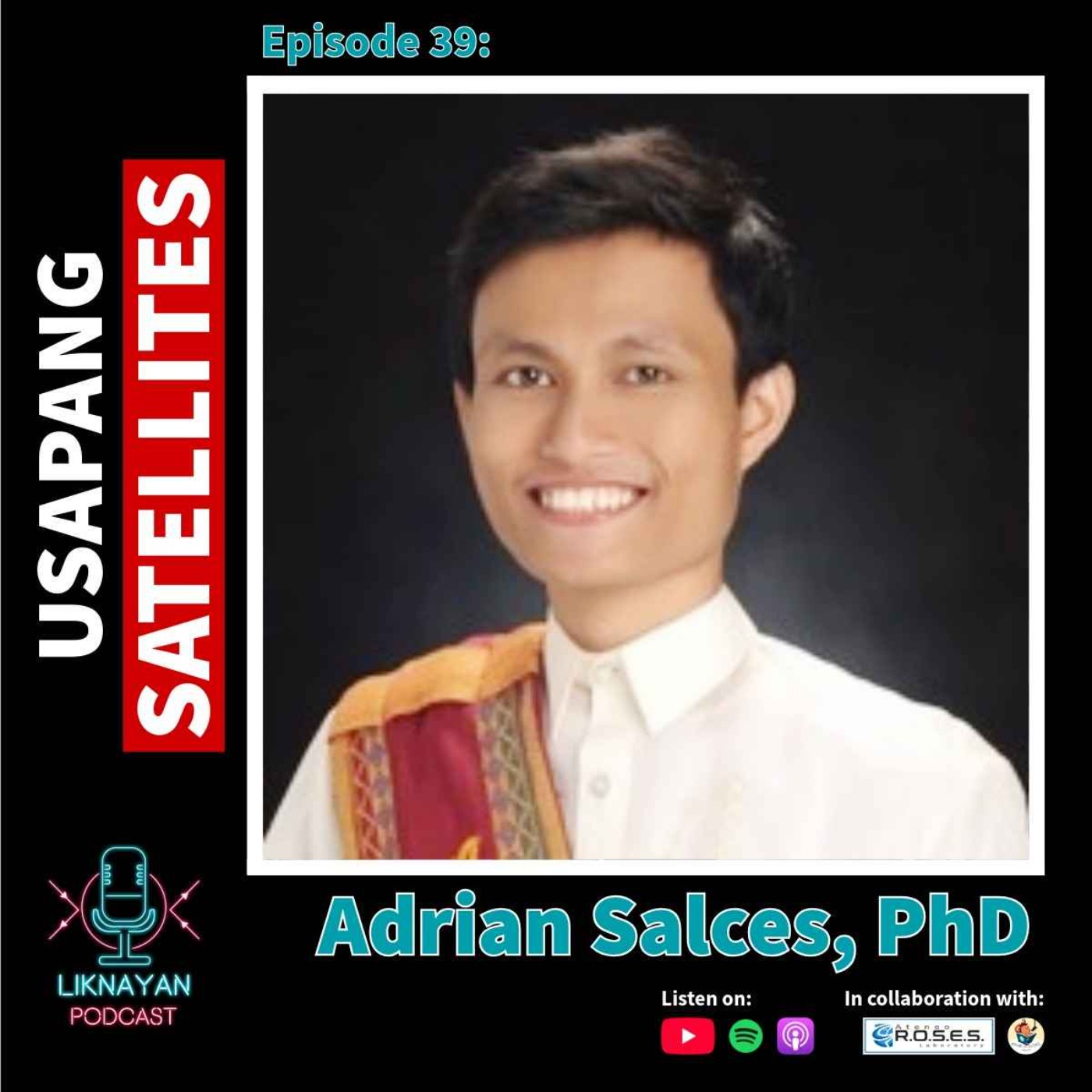
In this episode of #LiknayanPodcast, we sit down with Dr. Adrian Salces from the Philippine Space Agency (PhilSA) for an exciting conversation about space! Discover the story behind the Philippines’ space missions, including the creation of the country’s first nanosatellite, the Maya Satellite.We also explore PhilSA’s programs for advancing space technology, share updates on SpaceX developments, and dive into other innovations in the field of space exploration.Join the Liknayan Team on this special space adventure as we uncover how the Philippines is contributing to the global space community!
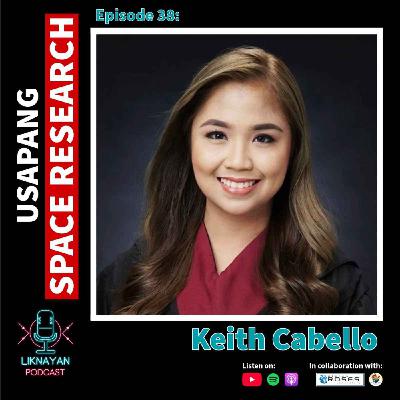
In this World Space Week episode of #LiknayanPodcast, we sit down with Keith Cabello, a Project Technical Specialist from the Philippine Space Agency (PhilSA), to explore the exciting world of space research and its growing relevance to the Philippines. 🇵🇭From enhancing disaster preparedness to advancing agriculture, climate monitoring, and national security, PhilSA’s work shows just how much space science impacts our everyday lives.In this episode, we talk about:The science objectives of PhilSAWhy space research is vital for developing countriesKey challenges in advancing space scienceHow we can align education and curriculum to prepare future space scientistsKeith’s favorite math/physics/engineering conceptsThe diverse skillsets PhilSA is looking for—from coding and engineering to biologyPractical advice for aspiring scientists who dream of working in space researchWhether you’re a space enthusiast, a student, or just curious about the future of Philippine space science, this episode is packed with insights and inspiration. 🌌
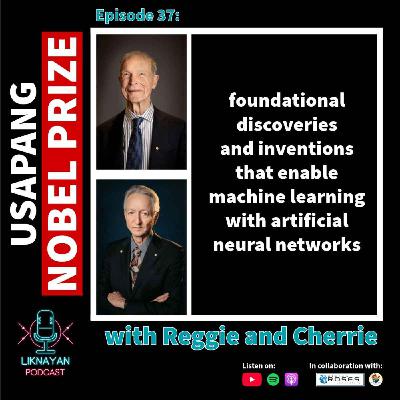
In this episode of #LiknayanPodcast, we unpack the groundbreaking news that the 2024 Nobel Prize in Physics was awarded to John J. Hopfield and Geoffrey Hinton, recognized “for foundational discoveries and inventions that enable machine learning with artificial neural networks”.We dive straight into how this year’s Nobel marks a pivotal moment—highlighting how AI, once a mere tool, has now become foundational enough to shape the future of physics itself. This opens up exciting questions: How does this recognition reflect AI’s growing role in science? What does it mean for future discoveries?In this episode, we tackle:How the recent Nobel Prize makes you feel—from a scientist’s perspectiveExciting ways machine learning is pushing the boundaries of physics and enabling new insightsThe role of machine learning in future scientific breakthroughs, from speeding up research to opening up entirely new ways of exploring the universe
In this episode, we take on a topic that resonates deeply with many in academia and research—impostor syndrome. From students to seasoned scientists, that nagging feeling of “not being good enough” is more common than we think, and it often shapes how we navigate our careers in physics and beyond.We share personal experiences with impostor syndrome, discuss how prevalent it is among physicists and researchers, and explore the ways institutional culture can either ease or worsen the struggle. Finally, we offer practical advice for students and early-career physicists who may be facing these same challenges, and how to remind themselves that they truly belong in the scientific community.If you’ve ever felt like you don’t measure up, this episode is for you.
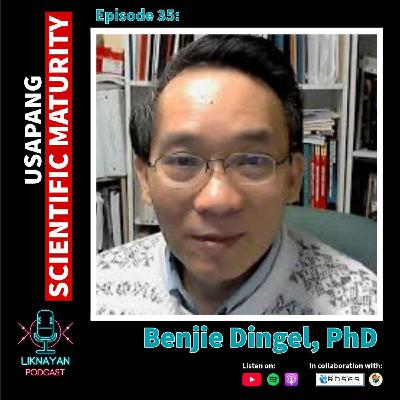
Dr. Benjamin B. Dingel is the visionary behind AIC-ROSES (Ateneo Research on Optical Science, Engineering, and Systems), which he conceptualized and launched in 2017 as a publication-driven, education-by-research model for engaging undergraduate physics students at Ateneo de Manila University. Remarkably, he spearheaded the group remotely from New York, while serving as R&D Director of Nasfine Photonics.Under his leadership, AIC-ROSES quickly grew into a thriving research community. Officially recognized as a research group under the Ateneo Innovation Center in 2020, it now has around 20 student members and has produced dozens of publications. The group’s work spans both theoretical and experimental research, focusing on:Multilayer optics and photonics through scientific analogues and implementationsOptical engineering in microwave photonics and network sensingPhotonic integration and hybrid optic-electronic systemsApplications of mathematical physics methods in optical scienceThrough AIC-ROSES, Dr. Dingel has built one of the Philippines’ pioneering online-based physics research groups, equipping young scientists with the skills, mentorship, and global exposure needed to thrive in cutting-edge optics and photonics research.
🎙️ In this episode of #LiknayanPodcast, we take a closer look at the crucial role of peer review in scientific publishing—why it’s considered the backbone of credible research, and how it shapes the way knowledge is built and shared.Whether you’re a researcher, academic, or simply curious about how science works behind the scenes, this episode unpacks the systems that help ensure quality, accuracy, and integrity in published studies.🔍 We discuss:What peer review is and why it’s essential in research.How peer-reviewed publications uphold the credibility of science.The challenges, controversies, and evolving practices in the peer review process.💡 If you’ve ever wondered how scientific work gets validated—or if you’re looking for practical insights on navigating the publishing process—this episode is for you!
In this episode of #LiknayanPodcast, we delve into a topic that resonates deeply within the academic community: burnout in academia. Join us as we explore the unique challenges faced by physicists and the toll that academic pressures can take on mental and physical health. We share our personal experiences and insights, shedding light on the causes, consequences, and solutions to burnout in the field of physics.🔥 Personal Experiences with Burnout in PhysicsWe open up about our personal journeys with burnout, sharing the emotional and physical impacts we faced during our careers in academia. Hear our stories of struggle and resilience, and discover how we navigated through the toughest times.📊 Factors Contributing to Burnout Among PhysicistsWhat are the primary causes of burnout in the field of physics? We discuss the pressures of publish-or-perish culture, grant funding challenges, and the often overwhelming workload. Learn about the systemic issues that exacerbate stress and what can be done to address them.🏫 Institutional Support and PreventionHow can academic and research institutions better support their staff and students to prevent burnout? We offer our suggestions on policies and practices that can create a healthier, more sustainable environment for researchers.💡 Advice for Overwhelmed PhysicistsFeeling overwhelmed by your workload? we share practical advice and coping strategies for those currently experiencing burnout. From time management tips to mental health resources, discover ways to regain control and find balance.
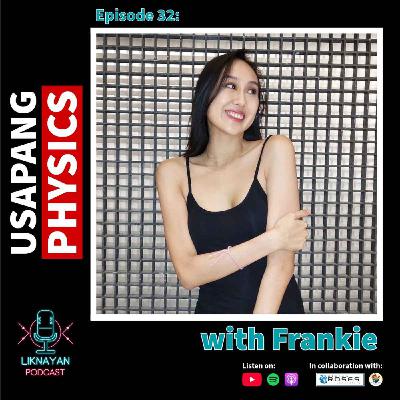
🎙️ Welcome Frankie Palabrica to the #LiknayanPodcast Team! 🌟In this episode, we’re excited to introduce Frankie Palabrica, our newest team member! Frankie brings with her a strong background in science communication and is currently pursuing her Master’s degree in Physics at Ateneo de Manila University. She’s also an active researcher with the Ateneo ROSES Laboratory, where she continues to explore her passion for physics and push forward innovative research.Frankie shares her journey in physics, her experiences in the field, and her vision for making science more accessible and engaging. Whether you’re a student, a physics enthusiast, or simply curious about the world of research, this episode has something for you.🧑🔬 About the Ateneo ROSES Laboratory The Ateneo Research on Optical Science, Engineering, and Systems (ROSES) Lab is one of the seven official research groups under Ateneo’s Department of Physics. Originally part of the Ateneo Innovation Center (AIC), the lab transitioned to the department in January 2020. Conceived in 2017 by Dr. Benjamin Dingel, the lab was built on a remote research model years before the pandemic, making it one of the first purely online physics research groups at Ateneo.
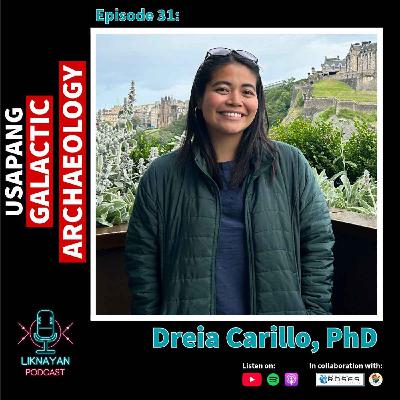
In this episode of #LiknayanPodcast, we sit down with Dr. Dreia Carrillo, a Filipina astrophysicist at Durham University whose work is reshaping our understanding of the Milky Way. 🌌Hailing from Baliuag, Bulacan, Dreia takes us through her journey from the Philippines to the international stage of astrophysics. Her research focuses on the chemodynamics of accreted halo stars, combining data from Gaia, APOGEE, and GALAH with simulations like FIRE and AURIGA to uncover the history of our Galaxy’s formation and evolution.Dreia completed her PhD at the University of Texas at Austin under the mentorship of Keith Hawkins, specializing in stellar populations and Galactic Archaeology. She also shares stories from her early research experiences at the University of Michigan, and how these shaped her scientific career.Beyond research, Dreia is passionate about teaching, mentoring, and outreach, inspiring the next generation of scientists while continuing to explore the mysteries of the cosmos.

Comments

Download from Google Play

Download from App Store
 United States