


 Claim Ownership
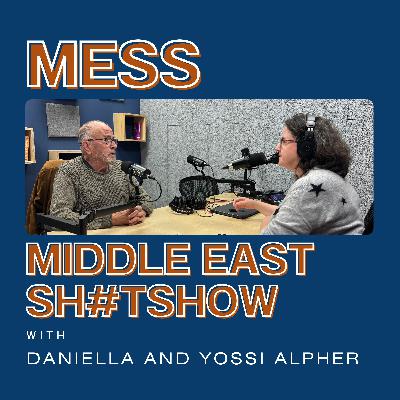
Middle East Sh#tshow - MESS
Subscribed: 0Played: 4
Subscribe

© Daniella Alpher
Description
Yossi Alpher is a former Mossad operative and analyst, now in his eighties. His daughter Daniella is a Tel Aviv tech executive. In their weekly podcast Daniella interviews Yossi on Middle East issues of the day, with emphasis on the strategic dimension and the occasional anecdote from Yossi's Mossad days.
10 Episodes
Reverse
In this episode, Daniella and Yossi Alpher record remotely in the middle of the war with Iran after Yossi suffers a mild heart attack and undergoes emergency catheterization under missile alerts. From the hospital, the stairwell, and even the side of the road, they reflect on how Israel and Iran went from quiet partners to bitter enemies, the deeper Persian-Arab rivalry shaping the region, and why some of the war’s central assumptions are failing. They end with a grimly ordinary wartime question: how do you host Passover when your safe room has to fit 15 people?
In this episode, Daniella and Yossi look past the daily headlines to examine the deeper strategic patterns shaping the Middle East. They discuss the hidden vulnerability of the Gulf states, the weakness of Lebanon in the shadow of Hezbollah, and the recurring fantasy that war can quickly produce a new Middle East. The conversation also explores political credibility, war fatigue, and the gap between military success and lasting regional stability that emerged during the second week of the war.
In this episode, Daniella and Yossi unpack a set of questions that go far beyond the current news cycle: why outside powers so often overestimate what the Kurds can deliver, how proxy relationships break down, what war does to civilian infrastructure and refugee flows, and how Iran uses missiles, drones, and regional pressure to shape the battlefield. They also explore the deeper ideological roots of the Islamic Republic, and what Iranian strategic culture can tell us about sacrifice, leadership, and decision-making in prolonged conflict.
Day 4 of the Iran–Israel–US war, and the arena is getting bigger by the hour. Daniella and Yossi break down what’s changed since the opening strikes: Iran’s push to regionalize the conflict across the Arabian Peninsula, Hezbollah fire reaching as far as Cyprus and UK assets, and the growing risk of more states being pulled in, from the Gulf to Europe.They also unpack the confirmed death of Ayatollah Khamenei and what didn’t happen next: no instant regime collapse, no “Bastille moment” just an institutional succession process kicking in, which raises hard questions about what leadership targeting actually achieves.Finally, they look at the political narratives forming around the war in Washington and Jerusalem (Trump vs. midterms, “Bibi pushed him,” and Israel’s election timing rumors) while asking the uncomfortable strategic question: is this headed toward a short campaign or an ugly war of attrition, with Hormuz and the regional economy in the crosshairs?
Recorded remotely from Tel Aviv during repeated air-raid sirens, Daniella Alpher and veteran strategist Yossi Alpher unpack the first hours of a direct Israel–U.S. military campaign against Iran and Iran’s immediate missile response across the region. They dig into why diplomacy collapsed, what Washington and Jerusalem appear to be aiming for, and why “regime change” is an appealing slogan but a highly uncertain strategy when you are relying mostly on air power.The conversation breaks down several early surprises: Iran targeting Gulf states that previously pushed for de-escalation, the geopolitical stakes around the Strait of Hormuz, and the notable (so far) absence of Iran’s proxy forces from the battlefield. They also debate the strategic wisdom and potential blowback of attempting to assassinate Iran’s top leadership, and what chaos inside Iran could mean for the wider Middle East.Finally, they ask the question nobody seems eager to answer on day one: what is the realistic endgame and what does “victory” even look like if Iran keeps firing and negotiations are off the table, or only paused.
Discussion focuses on the geopolitical implications of the US military deployment around Iran and the potential timing of a U.S. attack. Yossi recounts his role as Israel's chief intelligence analyst for Iran in the late 1970s, detailing the complexities of understanding the Iranian revolution and the challenges of predicting its outcome. He reflects on a strategic decision not to assassinate Ayatollah Khomeini, emphasizing the unpredictability of revolutionary situations and, moving to the present, the potential consequences of military actions. They also discuss the uncertainties surrounding President Trump's strategic thinking, such as it is.Episode summary:What revolutionary situations look like Intelligence gaps with friendly regimes and why access doesn’t equal insightA historical assassination requestWhy removing leaders sometimes changes outcomes and sometimes doesn’t
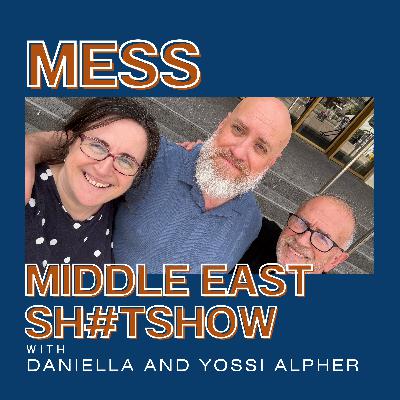
The discussion integrates a guest, a conflict resolution expert and visiting family member. He and Yossi discuss the link between intelligence, clandestine operations, and peacebuilding, emphasizing the credibility Yossi's security background lent to his efforts. Yossi illustrates by recounting a pivotal moment in 1977 when he was considered for a role in peacemaking between Israel and Egypt. The conversation shifts to the current situation in Gaza, criticizing the effectiveness of UN peacekeeping and stabilization forces, particularly UNRWA, and the surprising role the European Union is currently playing at the Rafah crossing.Episode summary:A historical story: diplomacy, timing, and why security backgrounds enable dialogueStabilization vs PeacekeepingForce protection and why deployments underperformUNRWA is a mandate problemWho feeds, shelters, and treats people when systems vanish?
In this episode of the Middle East Shitshow, Yossi and Daniella move from the recent Iran-US negotiations in Oman to the historical and current geopolitical dynamics in the region. They touch on the Palestinian issue, noting the slow evolution of the Trump administration's Gaza plans. The conversation then moves to the highly fragmented Bab al-Mandeb region: the historical ties between Israel and Oman, including Israeli support for the newly independent Sultanate in the 1960s and 1970s; Israeli aid to Yemen and today's Houthis back then, and the potential for Israeli strategic ties with Somaliland to counter current Houthi threats.Episode summary:Why Oman is a preferred venue for indirect negotiationsWhat “facilitation” really means in Middle East diplomacyYemen’s north/south fracture and how the Houthis fit into itRed Sea shipping chokepoints and why global trade gets dragged inHow history repeats: past proxy patterns echoing in modern alliances
In their second pilot episode, Daniella and Yossi Alpher discuss Iran, Gaza and Syria. They focus on the potential for a U.S. attack on Iran, the impact on Israel, and the regional dynamics involving Saudi Arabia, the UAE, and Jordan. They debate the likelihood of regime change in Iran and the preparedness of the Revolutionary Guard. The conversation shifts to the Gaza ceasefire, the role of Trump, and the challenges of disarming Hamas. They also explore the Kurdish situation in Syria, the potential threats from Turkey, and the complexities of U.S. troop withdrawal and the imprisonment of al-Qaeda forces in northeast Syria.Episode summary:Why regime change is improbable in IranGaza: how wider escalation could derail ceasefire implementationThe stabilization force problem: who would actually do it, and whyKurds in Syria: autonomy, Turkey’s pressure, and risks to Israel’s security
Yossi Alpher and his daughter, Daniella Alpher, discuss the strategic aspects of the Middle East in their pilot episode. Yossi, an Israeli with extensive experience in the Mossad and a strategic thinktank, explains the complexities of the Israel-Arab conflict, including the role of Iran and the US. They delve into Trump's peace forum for Gaza, criticizing its structure and potential members, particularly Qatar and Turkey, who support Hamas. Yossi recounts historical attempts to resettle Gazans and shares personal experiences in Gaza, highlighting the region's challenges and the lack of a viable strategy for its governance.Episode summary:Introductions: Israeli strategic lens, intelligence-to-think-tank backgroundQatar/Turkey/Egypt: competing interests and unintended consequencesUNRWA: what it does, what it doesn’t do, and why its mandate mattersGaza’s structural reality: resources, governance, and recurring conflict cycles
Comments

Download from Google Play

Download from App Store
 United States