


 Claim Ownership
Chosen Tongue
Subscribed: 7Played: 178
Subscribe

© 2023
Description
A podcast about translingual writers and their journeys.
45 Episodes
Reverse
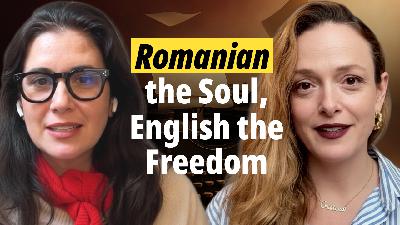
An award-winning author, theatre artist and spoken word poet, Dr. Cristina A. Bejan has published books in all of her genres (history, poetry, playwriting). Her plays have been performed in 4 countries and her hit play DISTRICTLAND was bought for TV development. She has appeared as an expert on A&E's The History Channel, C-SPAN, and multiple Romanian TV channels. Her work has been featured in the Washington Post, Times Literary Supplement, Foreign Policy, Libertatea and ELLE Romania magazine ... among many more print and audio outlets. In NYC she has performed at La MaMA Experimental Theatre Club and launched 5 published plays at The Drama Book Shop. Bejan is the only Rhodes Scholar (since the establishment of the scholarship in 1903) to hold Romanian citizenship and the recipient of the the George Parkin Distinguished Service Award 2025 (Rhodes Trust). She earned her Masters and PhD at the University of Oxford, fully funded by merit-based Rhodes and Fulbright scholarships and many grants. Bejan is also the Executive Director of Bucharest Inside the Beltway, a multicultural arts & culture platform that she co-founded in 2014 to promote local and international inclusive voices in the arts. She is currently working on a number of writing projects while auditing classes at the Sorbonne. In this conversation, Cristina reflects on Romanian identity and on the tension between sentiment and practicality that runs through both the culture and the language. We talk about her evolving relationship to Romanian, the weight of national narratives, and what it means to move from emotional inheritance toward conscious choice. The poem we mention during the interview is part of the book Green Horses on the Wall: https://www.finishinglinepress.com/product/green-horses-on-the-walls-by-cristina-a-bejan/
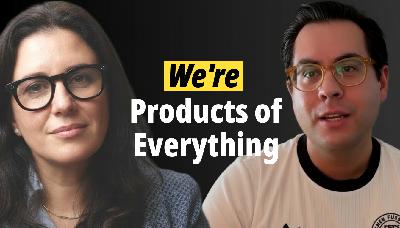
Daniel Peña is a Pushcart Prize-winning writer and Associate Professor at the University of North Texas where he teaches in the PhD Program in Creative Writing. Formerly, he was based out of the UNAM in Mexico City where he worked as Fulbright-Garcia Robles Scholar. A graduate of Cornell University and a former Picador Guest Professor in Leipzig, Germany, his writing has appeared in Ploughshares, The Rumpus, the Kenyon Review, Texas Monthly, NBC News, and The New York Times Magazine among other venues. He's currently a regular contributor to the Guardian and the Ploughshares blog. His novel, Bang, is out now from Arte Publico Press. He lives in the beautiful Dallas-Fort Worth area. In this conversation, Daniel reflects on identity as something multiple and shifting, shaped by language, movement, and lived experience. We talk about race and belonging in the United States, the role of art as a form of resistance, and the ways language — and even something as ordinary as soccer — can become a bridge between worlds.
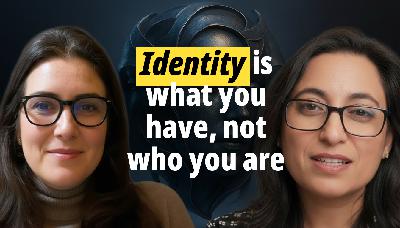
Tayyba Kanwal is a Pakistani-American writer from Houston, TX. Her short story collection, Talking with Boys, has been published in January 2026 by Black Lawrence Press. Her award-winning work has appeared in journals such as Wasafiri, Witness, Gulf Coast and Meridian. She holds an MFA from the University of Houston where she was an Inprint C. Glenn Cambor Fellow, and an MS from the University of Oregon. She serves as Literary Director at Inprint, Houston's premier literary arts organization, and Senior Editor at Conjunctions. In this episode, Tayyba reflects on her journey from Pakistan to the US, the role of Urdu and Punjabi in her life, and how these languages influence her storytelling. She also emphasizes the importance of authentic representation in literature and the evolving landscape of literary voices. Finally, Tayyba shares her insights on the intersection of mathematics and storytelling, and the emotional depth captured in her writing, particularly through the concept of 'dardh'.
My guest today is Heidi Marjamäki, a Finnish author based in Berlin. She studied in Scotland, worked in Oxford and London, and now serves as Associate Fiction Editor at Okay Donkey. Heidi's stories have appeared in ergot., Crow & Cross Keys, and others. She won the 2022 Ghost Story Supernatural Fiction Award and a 2023 ThrillPit mentorship. We discussed writing in a second language, the influence of her Finnish heritage, and the creative freedom found in Berlin's literary community. Heidi also spoke about translingual storytelling, her editorial work, and the value of embracing mistakes in the writing process.
Sneha Subramanian Kanta is a poet, academic, and editor born in Mumbai and based in Mississauga, Canada. She's the author of five chapbooks and the 2025 Woodhaven Artist in Residence at the University of British Columbia. Her collection Hiraeth, an honouree for the Bronwen Wallace Award, was published by Apple Books and Penguin Random House Canada. Her work has been supported by Tin House, Granta, the Kenyon Review Writers Workshop, and others. We discussed her journey as a bilingual poet writing in English and Hindi, the emotional weight of ancestral exile, and the cultural memory that shapes her work. She spoke about translating her own poems, navigating identity across languages, and offered advice to writers working between linguistic worlds.
Lidija Hilje is a Croatian writer and book coach. After earning a law degree, she spent a decade practicing in Croatian courts before transitioning to writing and coaching—this time in English, her second language. Her work has appeared in The New York Times and other publications. She lives in Zadar, Croatia, with her husband and two daughters. Her debut novel, Slanting Towards the Sea, will soon be published by Simon & Schuster in the US and Daunt Books in the UK. In this episode, we discussed Lidija's journey from law to literature, the shift from writing in Croatian to English, and the cultural expectations that shape storytelling. She spoke about the evolution of her novel, the complexities of translation, and the imposter syndrome she sometimes faces as a non-native English writer.
Leila Farjami is an Iranian-American poet, translator, and psychotherapist based in Los Angeles. After nearly three decades of writing in Persian, she has in recent years turned her focus to poetry in English—a shift shaped by her experiences of censorship, exile, and a search for expressive freedom. Her work has appeared in Ploughshares, The Cincinnati Review, Pleiades, Mississippi Review, The Penn Review, and many other journals and anthologies. She's the recipient of The Cincinnati Review's Schiff Award in poetry and has been recognized as a finalist for the Prufer Poetry Prize and the Perugia Press Prize. We discussed the complexities of writing across languages, the emotional labour of translation, and how her poetry navigates identity, displacement, and heritage. Leila also shared how her work honours her ancestors and what it means to write as a woman shaped by—and resisting—a patriarchal world.
Balsam Karam is a writer and university lecturer of Kurdish heritage who has lived in Sweden since childhood. She made her literary debut in 2018 with the critically acclaimed novel Event Horizon, which was shortlisted for the Katapult Prize and won the Småland Literature Festival's Migrant Prize. Her second novel, The Singularity—originally published in Sweden in 2021 and released in English by Fitzcarraldo Editions in 2024—was shortlisted for the European Union Prize for Literature, the August Prize, and Svenska Dagbladet's Literature Prize. We discussed her experiences as an immigrant, how she brings her mother tongues into Swedish, the prejudices and obstacles she has had to overcome, and her sense of home as a place where she can cry in peace.
Thea Lenarduzzi is a writer, broadcaster and editor. Her debut, Dandelions, a family memoir and cultural history of migration between Italy and England, won the 2020 Fitzcarraldo Editions Essay Prize and was shortlisted for the Ackerley Prize for 'literary autobiography of outstanding merit'. The Tower, a story about storytelling, blends history, fiction, memoir, fairy tale and folklore to explore power and its abuses (forthcoming, October 2025; preorder: bit.ly/42kdRI4). She is working on a biography of Natalia Ginzburg, Collapsing Houses: Pieces of Natalia Ginzburg. We discussed Thea's experience of living and writing between two cultures and what it means to of it, a British-Italian identity. Thea reflected on the legacy of her family history in Dandelions, the feeling of being at home in two places and the influence of her European schooling. She also spoke about her deep admiration for Ginzburg, the challenges of bilingual writing and the richness of embracing multiple languages in her creative life.
Ani Gjika is an Albanian-born writer who moved to the U.S. when she was eighteen. She is the award-winning author and literary translator of eight books and chapbooks of poetry, among them Bread on Running Waters (Fenway Press, 2013), a finalist for the 2011 Anthony Hecht Poetry Prize and 2011 May Sarton New Hampshire Book Prize. Most recently, she is the recipient of the New Immigrant Writing Prize for her memoir, An Unruled Body, (Restless Books, 2023), which was a 2023 Foreword INDIES winner and on the 2024 Massachusetts Book Award longlist for nonfiction. Gjika is a recipient of awards and fellowships from the NEA, English PEN, Robert Fitzgerald Translation Prize, the Robert Pinsky Global Fellowship, and others. For more, visit her website at: https://www.anigjika.com We discussed Ani's journey as a bilingual writer, her shift from Albanian to English and the complex layers of identity that come with writing across languages. Ani spoke about womanhood in her work, the struggle with verbal expression and the freedom she finds in writing. She also shared the importance of a mother tongue, the challenges of translation, and advice for fellow translingual authors.
Julie Irigaray is a French-Basque poet based in Birmingham. Her pamphlet "Wailer, Witches and Gouches" was featured on BBC Radio 4, and her work has appeared in over 60 publications, including The Realtor, Ambit and Magma. A finalist or winner in 19 poetry competitions, most recently the 2024 Bridport Prize, she also teaches creative writing at City Lit. We discussed language, identity and belonging, the loss of Julie's cultural roots, the creative freedom of writing in English and the shifting experience of being both outsider and insider in the UK. Julie also opened up about her writing process navigating feedback and an upcoming memoir on language and love for England.
Elizabeth Torres, known as Madam Neverstop, is a Colombian-American poet, translator, and multimedia artist residing in Denmark. With a background in Media & Film and Fine Arts from Kean University, NJ, and an MFA in Performing Arts from Den Danske Scenekunstskole, her work spans poetic journalism, artistic installations, film, soundscapes, and visual arts. She explores themes of displacement, identity, and minority representation through various media and has authored over 20 poetry books in multiple languages, contributing to numerous anthologies worldwide. In 2022 Elizabeth was the recipient of the Ambroggio Prize by the Academy of American Poets for her book Lotería: Nocturnal Sweepstakes. As a cultural organizer, she is the founder and director of The Poetic Phonotheque, Red Door Magazine & Gallery, the Nature & Culture: International Poetry Film Fest, Resonans Fringe Festival, and is the host of the Red Transmissions Podcast. We talked about Elizabeth's journey from Colombia to the to the US; how war, migration and language shaped their voice. She also talks about the healing force of poetry, the complexity of translation, and her life now in Denmark as a bilingual artist working across borders and forms. www.madamneverstop.com
Sulaiman Addonia is an Eritrean-Ethiopian-British novelist. As a child, he lived in refugee camps in Sudan and Saudi Arabia. His third novel, The Seers, has been published in 2024. His first novel, The Consequences of Love, was shortlisted for the Commonwealth Writers' Prize. In 2021 he published Silence Is My Mother Tongue. His work has been translated into more than twenty languages. Addonia now lives in London, where he runs a creative writing school for refugees and asylum seekers. In Brussels, he founded The Asmara Addis Literary (in Exile) Festival (AALFIE), a vagabond, multilingual celebration rooted in pan-African and feminist values. It aims to showcase the rich linguistic wealth and diversity of European artists with international backgrounds.
Ruben Quesada is a Costa Rican-American poet and translator based in Chicago. His latest poetry collection, Brutal Companion, winner of the Barrow Street Press Editors Prize, was published in October 2024. He edited the anthology Latinx Poetics: Essays on the Art of Poetry, which won an Independent Publisher Book Award in 2023. Quesada's work appears in Seneca Review, American Poetry Review, the Best American Poetry series, Harvard Review, and The New York Times Magazine. We discussed the influence of Ruben's Costa Rican background on his poetry and the importance of storytelling and translation in bridging cultural gaps, as well as his desire to preserve his family's culture through his work.
Noémi Kiss-Deáki is a Hungarian author living in Finland. Her début novel, Mary and The Rabbit Dream, was published by Galley Beggar Press in 2024. Noémi currently lives on the Åland Islands with her daughter. We discussed her creative process, the challenges and joys of navigating languages and cultures, and how Noémi found her writing voice in English.
Viviana Fiorentino is an Italian poet, novelist, and translator living in Ireland. Her poems in English appeared in anthologies (Dedalus Press, Salmon Poetry, and Arlen House), magazines (Banshee, The Stinging Fly, Southword, The London Magazine) , on public transports in Dublin (Poetry in Motion, Poetry Ireland), on air for RTÉ 1, in the The Irish Poetry Reading Archive. She translated into Italian the Irish poets Freda Laughton (Arcipelago Itaca, 2022), Doireann Ní Ghríofa (VersoDove, rivista di Letteratura, n. 23, 2024), Paula Meehan (Il Pietrisco, 2023) and Lakota poet Layli Long Soldier (Verodove, rivista di Letteratura, n. 22, 2023). She published an essay on Anne Carson with translations in the volume Trasparenze 8/22 of San Marco dei Giustiniani (2022). In Italian, she published a novel (Transeuropa Edizioni, 2019) and two poetry collections (Controluna Press 2019, Zona Contemporanea 2021). Viviana's short stories, poems, interviews and essays have been published in Literary Journals and online magazines such as Italian Poetry Review, Nazione Indiana, Nuovi Argomenti, Balena Bianca. She is the 2022 Irish Chair Of Poetry Student Prize winner and finalist in the Gregory O'Donoghue Poetry Competition 2024. Viviana is currently a PhD candidate at the Seamus Heaney Centre (Queen's University Belfast.) We discussed Viviana's journey as a poet and writer who transitioned from Italian to English after moving to Ireland, the role of translation in her creative process, and the emotional shield English has given her.
Yael van der Wouden is a writer and teacher of creative writing and comparative literature in the Netherlands. Her debut novel, The Safekeep, has been shortlisted for the Booker Prize in 2024 and has been translated into over fourteen languages. Her essay on Dutch identity and Jewishness, "On (Not) Reading Anne Frank", has received a notable mention in The Best American Essays 2018. We discussed the role of displacement and otherness in Yael's work and how English gave her a sense of control over her experiences. Yael also reflected on the challenges of writing in multiple languages and the differences in tolerance towards foreignness in English and in Dutch.
Pegah Ouji is an Iranian American writer who writes in Farsi and English. Her work has appeared or is forthcoming from Joyland, Epiphany, Fugue, Split Lip among others. She has been a scholarship recipient from Kundiman, Sarah Lawrence Writing Institute, Hudson Valley Writer's Center, Literary Arts, Grub Street, and Shipman Agency. She was a 2024 Emerging Writer Fellow at Smokelong Quarterly. She is currently an editorial fellow at Roots, Wounds, Words where she is working on an anthology of creative work by BIPOC justice-involved and impacted artists. We discussed the challenges Pegah encountered as an outsider in America, as well as the complexities of language and Pegah's desire to create a space that blends both Farsi and English. You can read Pegah's story, Is It Too Late? here.
Sumitra Singam is a Malaysian-Indian-Australian writer and psychiatrist living in Melbourne. Her work has been published widely, nominated for a number of Best Of anthologies, and was selected on Best Microfictions 2024. She works in mental health. We discussed how Sumitra incorporates words from different languages into her stories and the impact of her Malay literary tradition on her writing style. Sumitra also explores the connection between trauma and language, highlighting the power of putting traumatic experiences into words and emphasizing the importance of language in shaping our understanding of ourselves and our experiences.
Aleksandar Hemon is the author of The Lazarus Project, which was a finalist for the National Book Critics Circle Award and the National Book Award, as well as The Question of Bruno; Nowhere Man, Love and Obstacles, The Book of My Lives, The Making of Zombie Wars, as well as a couple of non-fiction books. His most recent novel is The World and All That It Holds (2023) Aleksandar Hemon has worked as a writer for Radio Sarajevo Youth Program, and then as a waiter, canvasser, bookseller, bike messenger, as well as a supervisor at a literacy center, and a teacher of English as a second language (all in Chicago). His work has been featured in The New Yorker, Esquire, Granta, The New York Times, Playboy, McSweeney's, TriQuarterly, The Baffler, The Wall Street Journal, Tin House, Ploughshares and The Paris Review, among others. He's written for film and television, most recently The Matrix Resurrections. He produces and releases music as Cielo Hemon. He has been the recipient of a Guggenheim Fellowship, a "genius grant" from the MacArthur Foundation, the Jan Michalski Prize for Literature, the PEN/ W.G. Sebald Award, a USA Fellowship, PEN/Jean Stein Oral History Grant etc. He has taught at Northwestern University, University of Illinois at Urbana/Champagne, Columbia College Chicago, University of Chicago, New York University. He finally settled at Princeton University, where he teaches now. We discussed the changes a second language brings to the author's voice and perspective, as well as Hemon's connection to his native Sarajevo and how he translates the city for a foreign audience. Hemon also shared his experience of writing columns in Bosnian as a diasporic person and how writers should allow themselves to write in as many languages as they wish because languages are superpowers.

Comments

Download from Google Play

Download from App Store
 United States