


 Claim Ownership
Bionic Planet: Reversing Climate Change by Restoring Nature
Subscribed: 85Played: 2,296
Subscribe

© Copyright Steve Zwick
Description
We've entered a new epoch: the Anthropocene, and nothing is as it was. Not the trees, not the seas – not the forests, farms, or fields – and not the global economy that depends on all of these. What does this mean for your investments, your family's future, and the future of man? Each week, we dive into these issues to help you Navigate the New Reality.
97 Episodes
Reverse

A tree grows out of the ground. But does it come from the ground? Four hundred years ago, Jean-Baptiste van Helmont planted a willow tree in a carefully weighed pot of soil to find out. His experiment produced evidence he couldn't fully explain—and helped open a trail of discovery connecting forests, fuels, and the atmosphere. In this episode of Bionic Planet, I revisit the prehistory of the voluntary carbon market, from the ancient Greeks' four elements to Francis Bacon's assault on dogma and the experiments that helped turn alchemy into chemistry. Along the way, we meet people who got the experiment right and the explanation wrong, discovered gases they couldn't identify, and challenged theories that had seemed to explain everything. Their stories bring us to two recurring themes on Bionic Planet: the science behind climate change and the challenge of acting under uncertainty. Right-wing climate science deniers exploit uncertainty to undermine trust in climate science. Left-wing opponents of carbon markets exploit it to undermine trust in climate solutions. The targets differ, but the maneuver is familiar: turn the limits of knowledge into an excuse to dismiss what we do know. In The Carbon Paradox, my co-authors and I explore a related dilemma we call the Science Paradox: methods improve, evidence accumulates, and yesterday's best practices can become tomorrow's targets. Waiting for the perfect methodology means waiting forever—while the forests we're trying to protect disappear. This episode explores: Francis Bacon's challenge to dogma, bias, and distorted public discourse. Van Helmont's willow experiment and the mystery of where trees get their mass. Joseph Black's "fixed air," now known as carbon dioxide. Phlogiston, Joseph Priestley, and Antoine Lavoisier's competing explanations of combustion. Jan Ingenhousz and the role of sunlight in photosynthesis. The connection between Black's work on latent heat, steam engines, and modern heat pumps. Read further The Carbon Paradox, by Renat Heuberger, Steve Zwick, and Marco Hirsbrunner—a story of three young idealists confronting the practical and political contradictions of climate finance. Novum Organum, by Francis Bacon—free to read through Project Gutenberg. The Life and Letters of Joseph Black, M.D., by William Ramsay. Lavoisier in the Year One, by Madison Smartt Bell. Help support independent reporting on climate and biodiversity finance: become a Bionic Planet patron. For sponsorship inquiries, contact [email protected].

Season 12 of Bionic Planet begins by going backwards. Climate change has fallen off the public radar just as the need for workable solutions has become more urgent. I've long argued that the great tragedy of climate and biodiversity finance is that those who understand it most have their noses to the grindstone, while those who understand it least have their mouths to the megaphone. That's one reason I'm bringing back Episode 35, which originally aired on October 31, 2018. It became one of the most popular episodes of Bionic Planet, and listening to it now, I'm struck by how directly it speaks to the mess we're in today. The guest is Reverend Dr. Gerald L. Durley, a veteran of the U.S. civil rights movement who marched with Martin Luther King Jr. and later became a psychologist, minister, and environmental advocate. I first encountered him at the 2018 Global Climate Action Summit, where he did something few speakers manage to do in a room full of climate-policy wonks: he electrified it. Durley argues that the civil rights movement succeeded not because the facts were sufficient, but because people learned how to organize around them. They took risks. They made sacrifices. They connected moral conviction with strategy and turned outrage into action. That lesson feels especially relevant now. Those of us working on viable climate solutions knew that many of the mechanisms being built were imperfect, but we also knew they were improving and generating results. Too often, we kept our heads down and continued doing the work while purists, propagandists, and opportunists took over the public conversation. Once the public lost faith in viable solutions, they shut down on the problem as well. That failure to defend workable solutions — and the consequences of ceding the megaphone — is a central theme of The Carbon Paradox, and it will be a recurring theme of this season of Bionic Planet. In this conversation, Durley talks about what climate advocates can learn from the civil rights movement: how to communicate beyond statistics, why fear alone doesn't mobilize people, how faith communities can contribute, and why movements ultimately need more than good arguments. They need strategy. They need sacrifice. And they need energy. 00:00:00 - Introduction to Season 12 and Climate Challenges 00:01:39 - The Carbon Paradox and the Need for Strategy 00:02:34 - Disconnection Between Activists and Experts 00:03:44 - Reverend Dr. Gerald L. Durley's Electrifying Speech 00:04:58 - The Interconnection of Civil Rights and Climate Change 00:06:17 - The Moral Dimension of the Climate Crisis 00:08:00 - The Anthropocene and Our Responsibility 00:09:15 - Engaging Emotionally in Climate Solutions 00:10:25 - The Need for Enthusiasm in the Movement 00:12:33 - Sacrifice and Commitment in Activism 00:13:57 - Lessons from the Civil Rights Movement 00:16:15 - The Power of Belief and Thought 00:18:55 - Inspiring Change in Disenfranchised Communities 00:20:27 - Connecting Climate Issues to Everyday Lives 00:22:51 - The Role of Faith-Based Communities 00:25:58 - Addressing the Influence of Powerful Interests 00:28:35 - The Importance of Personal Accountability 00:30:02 - The Role of Organizations in Driving Change 00:32:51 - World Pilgrims and Interfaith Collaboration 00:35:35 - The Importance of Hope in the Climate Movement 00:39:40 - Reflections on Personal Experiences and Activism
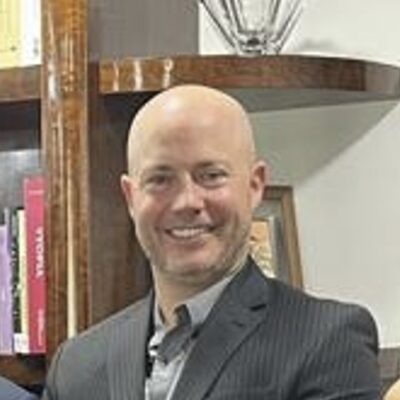
In this episode of Bionic Planet, we finally catch up with Michael Greene — the carbon developer branded a "land grabber of epic proportions" in The Washington Post, and now at the center of an unfolding saga that feels more like a political thriller than a conservation story. When Greene began building carbon projects in the Brazilian Amazon, he didn't expect to end up battling organized crime, corrupt officials, and a $220 million land grab. But that's exactly where the trail has led. You'll hear how a businessman who thought he was protecting forests found himself targeted by powerful interests — his properties invaded using forged documents, his bank accounts frozen, and his reputation attacked by the very institutions meant to enforce the law. Along the way, Greene describes the human cost of the fight — from schools he built that became flashpoints for local politics to community programs twisted by rumor and manipulation. This is a story about how conservation collides with corruption — and how one man's attempt to save forests spiraled into a struggle for survival in one of the most dangerous frontiers on earth.
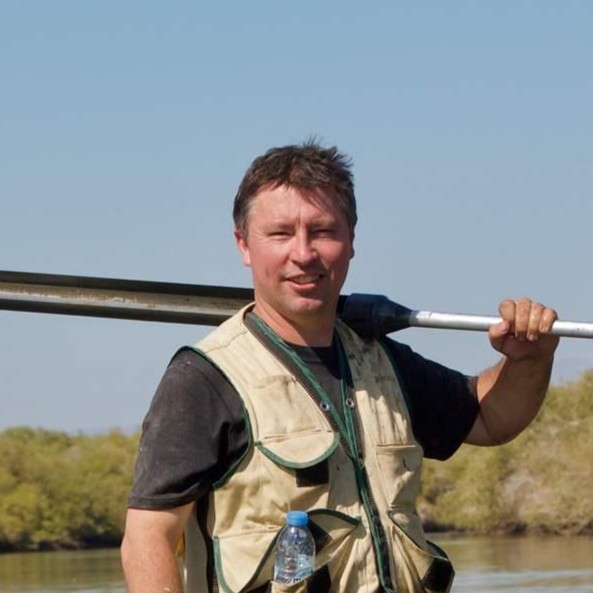
In this episode of Bionic Planet, we delve into the pressing issue of climate change and its profound impact on coastal ecosystems, particularly focusing on blue carbon. We kick off the discussion by highlighting Indonesia's monumental decision to relocate its capital from Jakarta to Borneo due to the city sinking under the dual pressures of climate change and land subsidence. This serves as a stark reminder of the urgent need to address climate change, which is reshaping our world in ways that often go unnoticed. Our guest today is Dr. Steve Crooks, a leading expert in coastal ecosystems and blue carbon. He shares insights into the critical role that mangroves, salt marshes, and seagrasses play in mitigating climate change by sequestering carbon and acting as natural buffers against rising sea levels. We explore the unique characteristics of mangrove forests, which can sequester up to four times more carbon per hectare than traditional forests, and discuss the importance of preserving these ecosystems to combat climate change. Dr. Crooks also provides an overview of the blue carbon system, a term that has gained traction over the past decade. He explains how coastal ecosystems have historically been overlooked in climate discussions, with a predominant focus on terrestrial forests. However, recent developments, including the recognition of blue carbon in international climate agreements like the Paris Agreement, have opened new avenues for conservation and management. Throughout our conversation, we touch on various projects aimed at restoring and managing coastal ecosystems, including the Indus Delta Red Plus mangrove project in Pakistan, which aims to restore 350,000 hectares of degraded mangrove forest. Dr. Crooks emphasizes the importance of using verified methodologies to ensure the success of such initiatives, contrasting them with less rigorous tree-planting efforts that may not yield lasting benefits. As we navigate through the complexities of blue carbon, we also discuss the challenges and opportunities presented by marine protected areas and the potential for mariculture to contribute to carbon sequestration. Dr. Crooks highlights the need for integrated management strategies that consider both adaptation and mitigation in the face of climate change. In the second half of the episode, we take a virtual flyover of the Indus Delta project, where Dr. Crooks shares insights from his experiences and observations. We discuss the delicate balance between local livelihoods and environmental conservation, as well as the importance of community involvement in these initiatives. This episode serves as a call to action, urging listeners to recognize the significance of coastal ecosystems in the fight against climate change and to support efforts aimed at their preservation and restoration. Join us as we explore the interconnectedness of our planet's ecosystems and the vital role they play in creating a sustainable future. Timestamps 00:00:00 - Indonesia's Capital Relocation and Climate Change 00:01:17 - Vulnerability of Coastal Cities 00:02:55 - Importance of Coastal Ecosystems 00:04:10 - The Anthropocene and Climate Change 00:05:38 - Introduction to Dr. Steve Crooks 00:06:52 - The Indus Delta Red Plus Project 00:08:27 - Overview of Blue Carbon 00:09:49 - Support for the Podcast 00:10:02 - Revisiting the Meeting with Steve Crooks 00:12:20 - The Katoomba Meeting and Blue Carbon 00:14:13 - Challenges in the Red River Delta 00:16:09 - Comparing Red River and Indus Delta Projects 00:17:40 - Focus on Oceans at COP25 00:20:28 - Emerging Concepts in Blue Carbon 00:22:08 - Mangrove Carbon Storage Dynamics 00:24:38 - Differentiating Coastal Ecosystems 00:30:10 - Impact of Thawing Peatlands 00:32:08 - Carbon Storage in Coastal Ecosystems 00:35:17 - Lateral Movement of Carbon 00:40:23 - Interventions in Coastal Ecosystems 00:43:56 - NDCs and Blue Carbon Integration 00:50:45 - Virtual Flyover of the Indus Red Plus Project Quotes "Indonesia is literally moving its capital out of Jakarta." - 00:00:11 "Mangroves are coastal woods, like those in Florida's Everglades, Kenya's Ghazi Bay, and all along the coasts of Indonesia." - 00:02:02 "Saving mangroves is key to reversing climate change." - 00:03:37 "Earth. We broke it, we own it. And nothing is as it was." - 00:04:47 "The emissions part of the curve is much steeper than what it is the gradual sequestration under a natural system." - 00:28:10 "Mangroves account for something like 0.7% of all forests, but at 1.10% of all emissions associated with deforestation came from mangroves." - 00:29:45 "Coastal ecosystems are a continuum, and it's a mosaic of habitat that goes down from the terrestrial." - 00:30:10 "If we don't deal with keeping things, temperatures under control, we're just going to have this massive outflow of both methane as the soils warm." - 00:33:05 "The first thing we can do is manage them more holistically." - 00:41:58 "The important thing is to continue to make progress." - 00:50:35
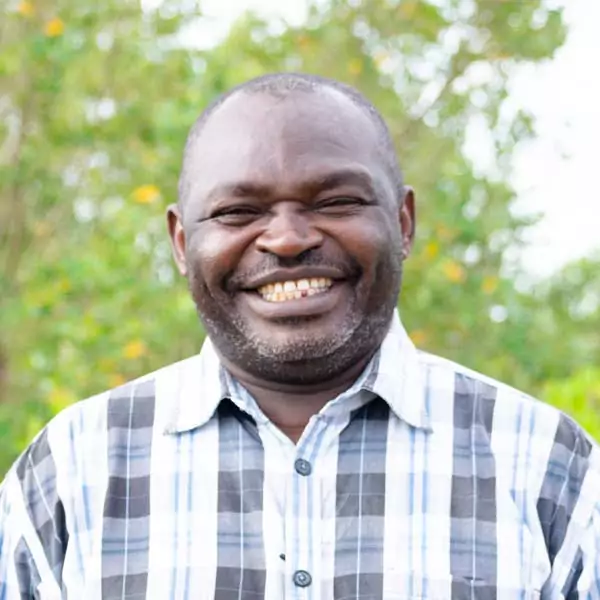
Like what you hear? Support us at patreon.com/bionicplanet. Today's guest, Blue Carbon Pioneer James Kairo, brings us into the fascinating world of mangroves and their immense economic and ecological value. Our journey begins with a brief overview of mangroves, which, despite covering only 0.01% of the sea surface and just 1% of Kenya's land area, play a crucial role in carbon sequestration and coastal protection. I had the privilege of recording this episode on location at the world's first blue carbon project, Makoko Pomoja in Gazi Bay, Kenya. This project not only aims to restore degraded coastal areas but also emphasizes the importance of education and community engagement in conservation efforts. Throughout our conversation, Dr. Kairo highlights the multifaceted benefits of mangroves, including their role in shoreline protection, habitat provision for marine life, and their capacity to capture and store carbon dioxide. He explains how mangroves can sequester carbon at rates significantly higher than terrestrial forests due to their unique growing conditions in anoxic environments. We also discuss the challenges faced by mangrove ecosystems, particularly the pressures of climate change, over-exploitation for wood, and the impacts of shrimp aquaculture. Dr. Kairo emphasizes the need for innovative solutions that allow communities to benefit from mangroves without degrading them. This includes alternative livelihoods such as ecotourism and sustainable fishing practices. As we explore the concept of blue carbon, we touch on the importance of scientific research and data collection in demonstrating the value of mangroves. Dr. Kairo shares insights into the methodologies used to measure carbon sequestration and the significance of community involvement in carbon trading initiatives. In addition to Dr. Kairo, we are joined by Basco Juma, a Kenyan social entrepreneur and founder of the NGO Big Ship, who shares his experiences in promoting sustainable practices and community engagement in mangrove conservation. Together, they illustrate the collaborative efforts required to protect these vital ecosystems and the potential for scaling similar projects in other regions. As we wrap up the episode, we reflect on the broader implications of blue carbon initiatives for climate change mitigation and the importance of integrating local knowledge and community needs into conservation strategies. This episode serves as a powerful reminder of the critical role that mangroves play in our environment and the urgent need to protect them for future generations. Join us as we embark on this enlightening exploration of mangroves, blue carbon, and the innovative solutions being implemented to safeguard our planet's coastal ecosystems.

Comments

Download from Google Play

Download from App Store
 United States