DiscoverCommon Sense with Chad Law | Political Commentary
Common Sense with Chad Law | Political Commentary
Claim Ownership

Common Sense with Chad Law | Political Commentary

Author: Chad Law

Subscribed: 18Played: 78
Share

Description

Common Sense with Chad Law is a political commentary podcast focused on American politics, media narratives, and public policy explained in plain English.

Each episode breaks down the biggest stories in politics and current events, offering clear analysis of government decisions, political messaging, and media coverage shaping the national conversation. Instead of repeating partisan talking points, the show focuses on examining the facts, the policies behind the headlines, and the real-world consequences for everyday Americans.

Hosted by political commentator Chad Law, the podcast combines political analysis, news commentary, media criticism, and occasional satire to challenge narratives that dominate modern political debate.

Listeners can expect discussions covering:

• American politics and current events
• government policy and economic decisions
• media narratives and political messaging
• political hypocrisy and accountability
• commentary on culture and public debate

Many listeners first discovered Chad Law through his commentary as “The Last Gay Conservative.” With Common Sense with Chad Law, the mission expands to focus on a broader goal: bringing common sense, clarity, and honest discussion back to political conversation.

If you’re looking for a political podcast that explains complex issues clearly and challenges the narratives shaping the news, Common Sense with Chad Law delivers commentary grounded in logic, context, and common sense.

New episodes break down the week’s biggest political stories and help listeners make sense of the headlines.

124 Episodes
Reverse
Following several recent violent incidents involving transgender-identified perpetrators, media and lawmakers are increasingly proposing firearm restrictions based not on criminal conduct — but on identity.But what happens when investigators begin examining digital footprints instead of demographic categories?In this episode of Tranny Tuesday, Chad Law walks through:Why status-based firearm bans are analytically flawedWhat investigators are actually finding in online ecosystemsThe role of AI alignment discourse in emerging ethical radicalizationThe difference between academic long-termism and downstream extremismThe rise of the Zizian network within rationalist subculturesAnd why policymakers may be designing solutions to the wrong problem entirelyBecause banning a demographic group may feel decisive —but it does nothing to address a worldview.📞 Call in with your (formal) complaint:866-LAST-GAY00:00 Cold Open — The Wrong Explanation01:05 The Push to Ban Transgender Americans from Owning Firearms02:30 Identity vs Conduct-Based Restrictions04:10 What Investigators Actually Look For in 202606:00 Online Radicalization Environments08:05 Rationalism & AI Ethics Communities10:30 Long-Termist Moral Frameworks Explained12:50 When Harm Becomes an “Optimization Variable”14:30 Enter: The Zizian Network17:00 Moral Heuristics vs Absolute Ethics19:30 Alienation & Philosophical Permission Structures21:00 Silicon Valley’s Rationalist Influence23:15 Why Media Hasn’t Covered This25:00 Optimization Ethics in AI Governance27:15 Identity Is a Clean Narrative29:40 Collective Punishment & Constitutional Rights31:00 Reagan’s Warning on Due Process32:20 Final Close#SecondAmendment#AIEthics#FreeSpeech#DueProcess#PoliticalPodcast#PolicyDebate#GunRights#TechEthics#LastGayConservative#ChadLaw
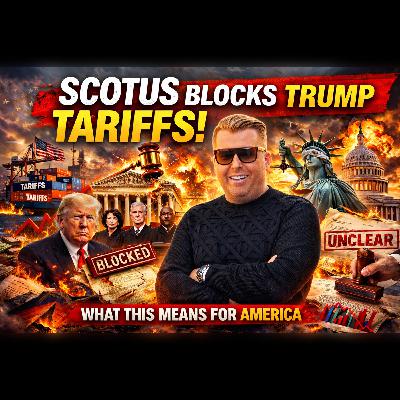
Last week’s Supreme Court ruling on Trump-era tariffs didn’t declare tariffs unconstitutional.They didn’t say the President lacks trade authority.They didn’t say Congress delegated too much power.Instead…They said they were “uncomfortable.”And in doing so, they may have quietly replaced constitutional separation of powers with something far more dangerous:👉 Government by injunction👉 Litigation-driven policy👉 Judicial pre-clearance of executive actionWhen courts refuse to draw clear constitutional lines, the rule doesn’t disappear — it gets outsourced to:• Compliance committees• Risk officers• District courts• Emergency stay calendars• And whichever five justices feel comfortable that dayThis episode breaks down:⚖️ What the Court actually ruled📉 Why markets hate ambiguous precedent🏛️ How gray-area decisions create downstream policy paralysis📜 The Commerce Clause confusion around tariffs🌎 Why every major country uses tariffs as industrial policy📉 And how popularity-based rulings create decades of litigation chaosFrom Wickard v. FilburnTo KorematsuTo NFIB v. SebeliusWe’ve seen this before.Short-term moderation.Long-term doctrinal disaster.📞 Call in and weigh in:866-LAST-GAY (866-527-8429)Did the Court protect the Constitution?Or just protect its reputation?00:00 Cold Open – When Institutions Choose Popularity01:45 Supreme Court Blocks Trump Tariffs Explained04:20 No Test, No Rule, No Doctrinal Anchor07:15 Governing by Litigation Risk10:50 Government by Injunction14:30 Justice Roberts’ “Meaningful Connection” Problem18:45 Concurrences Without Limits22:10 Gorsuch & Thomas on Delegated Authority26:30 Why Courts Must Be Binary29:40 Wickard v. Filburn & Regulatory Gray Zones33:20 Korematsu & Institutional Moderation36:40 NFIB v. Sebelius Revisited40:15 Litigation-Driven Governance44:00 Retail Theft Policy Whiplash47:10 Immigration Enforcement Cycle50:20 Cash Bail Reform Reversal54:30 Tariffs vs Taxes58:45 Tariffs as Industrial Policy01:03:10 Administrative State vs Trade Authority01:08:30 The Post-2016 “Receipts Era”01:12:40 Agency Fees vs Congressional Tariffs01:16:55 Popularity → Policy Paralysis01:20:20 Ed Meese Reminder01:22:10 Final Thoughts & Call-In#SupremeCourt#TrumpTariffs#TradePolicy#Constitution#SeparationOfPowers#AdministrativeState#Tariffs#SCOTUS#PoliticsPodcast#GovernmentOverreach#EconomicPolicy#CommerceClause#LastGayConservative#PublicPolicy#JudicialReview
Tonight on The Last Gay Conservative Podcast, Chad Law breaks down one of the most overlooked dynamics in American foreign policy:➡️ Neighbor behavior.Why does it feel like America is the only country maintaining the roof while everyone else critiques the gutter?We examine:Joint U.S.–Mexico military training targeting cartel threatsMexico’s rejected gun lawsuit against U.S. manufacturersThe Rio Grande 1944 Water Treaty disputeMexico’s 50+ consulates operating inside the U.S.Anti-ICE protest coordination allegationsThe $4.7B Canada-financed Gordie Howe International BridgeTrade leverage and U.S. market dependenceCanadian illicit trade and money laundering warningsNorthern border criminal networksFrom fentanyl deaths and cartel drone incursions…To trade imbalance and infrastructure leverage…This episode explores how:Burden-sharing has shifted across North AmericaSecurity obligations are distributed unevenlyTrade reciprocity expectations are changingAlliances function as cost-sharing arrangementsAnd why contingency planning is not provocation — it’s adulthood.📞 Call in your worst “bad neighbor” story:866-LAST-GAY00:00 – HOA Diplomacy Cold Open01:02 – Show Intro & Theme: America’s Bad Neighbors02:11 – Story 1: U.S.–Mexico War Games & Cartel Threats04:29 – Cartel Drone Incursions & Border Security05:40 – Mexico’s $10B Gun Lawsuit Tossed by SCOTUS06:57 – 1944 Water Treaty Obligations Explained09:19 – Mexico’s 53 U.S. Consulates11:36 – Security Planning vs Political Theater13:57 – Cartel Incentives & Enforcement Challenges16:20 – Canada: The Polite Neighbor17:02 – Gordie Howe International Bridge Dispute18:32 – Chinese Financing & Trade Tensions20:53 – Canadian Crime & Illicit Trade Warning23:15 – Quiet Northern Border Concerns25:37 – Alliance Incentive Structures27:50 – Reciprocity vs Generosity30:09 – Reagan Reminder31:25 – Final Thoughts: Shared Responsibility32:40 – Viral Close#ForeignPolicy#BorderSecurity#USMexico#USCanada#TradePolicy#Geopolitics#Cartels#InternationalRelations#NorthAmerica#LastGayConservative
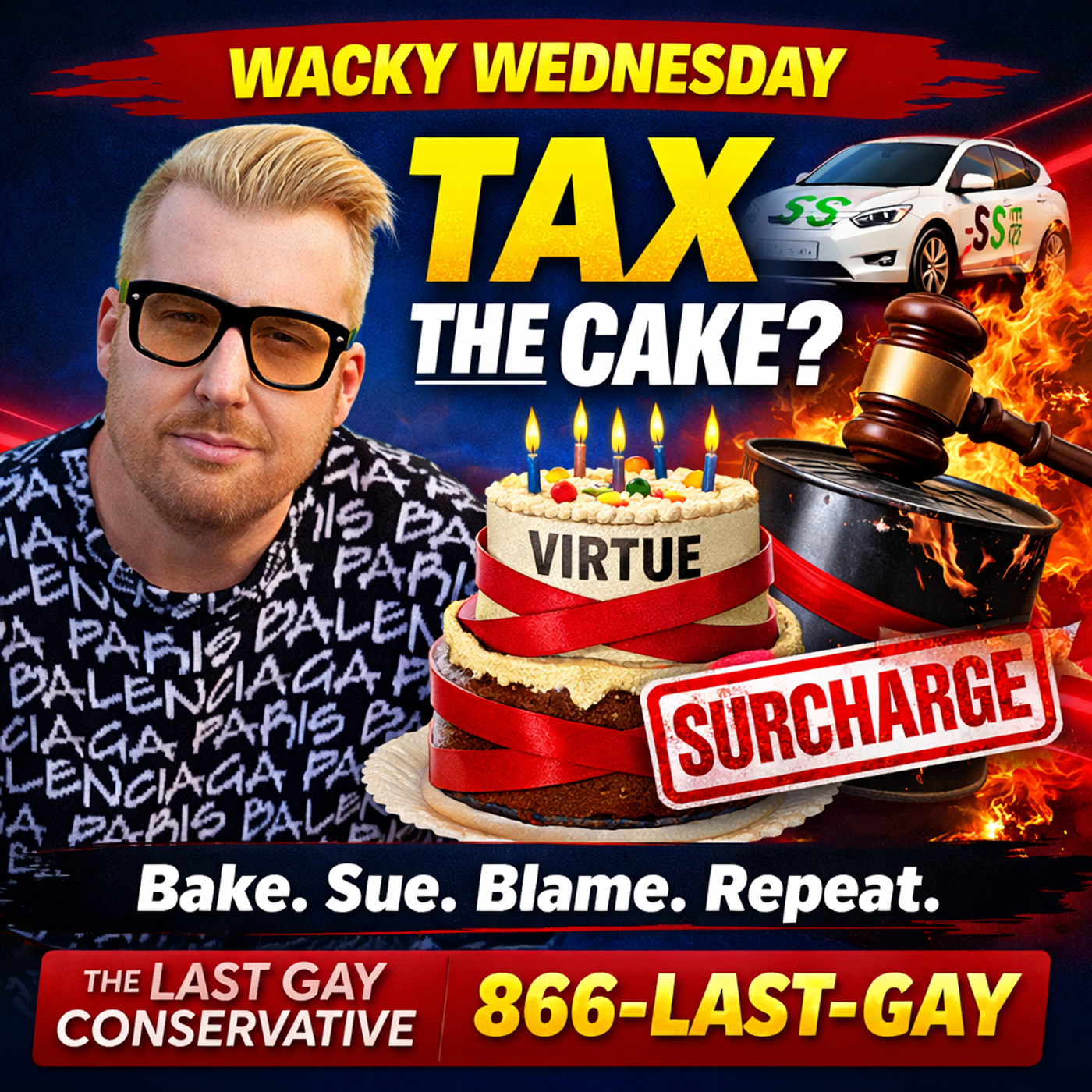
Welcome back America — it’s Wacky Wednesday.This week we break down the political magic trick of 2026:✔️ Taxing electric vehicles… to prove they’re affordable✔️ A “pro-oil” governor enabling lawsuits against oil companies✔️ Eric Swalwell’s resurfaced violent poetry & national security irony✔️ Blaming Trump for sewage spills✔️ Claiming married women would lose voting rights under the SAVE Act✔️ AOC rewriting horse history on national televisionModern politics wants virtue without cost.They want the applause of morality without the discipline of consistency.They want to bake the cake, eat the cake… and bill you for the plate.Tonight we roll the tape, apply common sense, and verify the math.📞 Call the show: 866-LAST-GAYLeave a voicemail — best calls get featured.00:00 – Cold Open: Bake the Cake, Eat the Cake01:05 – Show Introduction + Call to Action (866-LAST-GAY)02:15 – EV Surcharges to “Prove” Affordability05:10 – The Government Overhead Black Hole09:00 – The Affordability Doom Loop Explained12:05 – Louisiana: Pro-Oil Governor, Anti-Oil Lawsuits16:40 – Capital Flight & Energy Risk Premium21:45 – Eric Swalwell: Persona vs Private Record25:10 – Fang Fang & National Security Irony30:40 – Virtue Without Cost: The Bigger Pattern33:30 – Left’s Biggest Lie #1: Trump & the Sewage Spill38:20 – Left’s Biggest Lie #2: SAVE Act & Married Women Voting44:40 – Left’s Biggest Lie #3: AOC & Horse History49:50 – The Pattern of Narrative Over Reality52:25 – Reagan Reminder: Trust, But Verify54:00 – Final Close: Reality Checks the IngredientsThe EV “affordability surcharge” explainedThe administrative overhead doom loopEnergy litigation and capital flightPersona vs. record in political brandingThe Left’s Biggest Lies of the WeekReagan Reminder: Trust, But VerifyIf you’re tired of narrative theater replacing arithmetic — this episode is for you.
In this episode of The Last Gay Conservative Podcast, I make a confession:I drive a 2025 Hummer EV.And I love it.So why am I saying the climate bubble has burst?Tonight we break down:• California importing foreign gasoline after refinery shutdowns• The Trump EPA rollback of major climate regulatory authority• The lawsuit response from climate activists• Why manufactured demand creates economic bubbles• Why innovation succeeds through choice — not coercionThis episode isn’t anti-EV.It’s anti-distortion.When mandates replace markets…When subsidies inflate demand…When litigation replaces results…Eventually, the math wins.And math doesn’t care about slogans.📞 Call or Text: 866-LAST-GAYThis is The Last Gay Conservative Podcast — where we don’t just read headlines… we audit them.0:00 – Cold Open: Yes, I Drive an EV2:10 – The Problem With Forced Demand6:45 – California Imports Gasoline After Killing Refineries15:30 – The Regulatory Rollback Explained23:40 – Why Lawsuits Replace Results32:20 – The Climate Bubble Defined40:00 – Manufactured Demand vs Real Markets47:15 – Reagan Reminder52:30 – Viral Close: If It Works, It Wins#ClimateBubble#EnergyPolicy#EVDebate#FreeMarket#LastGayConservative#ReaganReminder
This week on The Last Gay Conservative Podcast, we connect three seemingly unrelated stories that reveal the same dangerous pattern: performance replacing governance.• American politicians campaigning in Munich• A Senate candidate’s radical past rebranded mid-campaign• Congress fumbling the Farm Bill• A federal judge redefining what counts as a constitutional burdenDifferent arenas. Same instinct: control optics, adjust definitions, avoid friction.When diplomacy becomes content, campaigns become cosplay, and courts start redefining thresholds, the guardrails don’t collapse loudly — they move quietly.This episode breaks down:✔ Why international political theater carries real geopolitical risk✔ The danger of “wolf in sheep’s clothing” candidates✔ What’s really inside the new Farm Bill✔ How subtle judicial redefinitions shift power✔ Why performance culture erodes accountabilityThis isn’t about outrage. It’s about incentive structures.📞 Call or Text: 866-LAST-GAYLike, subscribe, and share if you’re tired of audition culture replacing leadership.00:00 – Cold Open: “Everything Is an Audition Now”01:15 – Show Intro & Theme Setup03:40 – The “Barack Obama Fountain of Youth” Satire (DC Sewage Story)09:15 – Munich Security Conference: Campaigning on a Global Stage12:40 – Obama vs. Newsom/AOC: Signaling vs. Spectacle16:55 – Exporting Doubt & International Risk Signaling18:30 – The Wolf in Sheep’s Clothing Senate Candidate22:10 – Tattoo Controversy & Rebranding Politics24:45 – Selective Outrage & Accountability Standards27:45 – Farm Bill Breakdown: What’s Actually in It29:50 – Solar Farms vs. Real Farms31:15 – Climate Compliance & Carbon Scoring Debate33:30 – Regulatory Creep & Mid-Sized Farm Pressure35:45 – Food Production as National Security40:00 – Federal Judge Rules on Kindergarten Opt-Out Case42:15 – “Substantial Burden” & Quiet Definition Shifts46:30 – Tocqueville & Soft Despotism Explained48:45 – Judicial Restraint vs. Cultural Engineering52:00 – The Pattern: Branding, Optics & Threshold Manipulation55:30 – Final Thesis: When Performance Replaces Restraint57:00 – Closing & Call to Action#Politics#PerformancePolitics#FarmBill#JudicialActivism#ParentalRights#MunichConference#PoliticalCommentary#CultureWar#USPolitics#Podcast
The Last Gay Conservative Podcast is back—where we don’t just read Sacramento’s slogans… we read the fine print underneath them.In this episode, I break down the California “Billionaire Tax” narrative and why it looks less like “fairness” and more like revenue expansion—the kind that never stays “temporary” and never stays “for the rich.” Then we pivot to a story Washington refuses to celebrate: a January jobs report signaling the kind of boring, durable stabilization that actually helps the middle class (wages, participation, steady hiring).After that, we hit the “Disappearing Strategists” scandal cycle—why insider accountability always seems to evaporate the moment it gets real—and why victims are too often buried under political theater. We also cover the “Everything Is An Emergency” governing reflex (including California’s $90M funding replacement) and the sudden demand for judicial warrants for ICE—why it’s symbolic, logistically impossible at scale, and suspiciously “urgent” only when the president changes.Finally: The Rise of the Revenge Candidate—why voters keep hiring flamethrowers to run spreadsheets, and how protest politics turns into policy pain.Theme of the night: performance over governance. Outrage over execution. Vibes over results.📞 866-LAST-GAY — Call or text your story (especially if you’ve been politically homeless watching both parties audition for your emotions while ignoring your bills).👍 If you agree the country needs more receipts and less theater, like, subscribe, and share.💬 Comment: Which is the bigger con—“temporary taxes” or “symbolic reforms”?00:00 – Cold Open & Tonight’s Theme01:05 – California’s “Billionaire Tax” Breakdown02:30 – The Historic Tax Bait-and-Switch (Income Tax, AMT, Prop 30)04:31 – The “Millionaire” Mirage in California06:56 – The Doom Loop: Revenue Volatility & Tax Flight09:08 – “Accountability Before Expansion” Strategy11:20 – Strong Close: Show the Receipts12:00 – Pivot: January Jobs Report13:45 – Why Stabilization Beats Spikes16:04 – Real Wage Growth & The Reagan Trifecta18:25 – Why Washington Isn’t Cheering20:42 – Big Picture Indicators & 40-Year Context22:15 – Disappearing Democrat Strategists23:00 – Epstein Fundraiser Fallout24:20 – Scandal Theater vs Accountability25:24 – The Synchronized Forgetting Olympics27:50 – No Evidence Against Trump (Context)28:00 – Everything Is an Emergency: $90M Funding Replacement30:15 – Emergency Politics vs Real Management32:39 – When Crisis Becomes Strategy34:20 – ICE Judicial Warrant Demands Explained35:02 – Administrative vs Judicial Warrants37:23 – The Math Problem (1,000 Arrests a Day)39:43 – Is It Law or Politics?41:20 – The Rise of the Revenge Candidate42:11 – What Is a Revenge Candidate?44:27 – Seattle & New York Case Studies46:48 – Why Revenge Candidates Fail48:30 – The 5-Question Test for Phony Candidates49:12 – The Dopamine Loop of Protest Voting50:30 – Final Warning: Don’t Confuse Vibes with Leadership51:40 – Full Episode Wrap-Up54:03 – End✅ Subscribe for weekly episodes: policy + punchlines📞 866-LAST-GAY — Call/Text your story for a future episode💬 Comment with your state: “Is your government addicted to emergencies too?”#California #Taxes #MiddleClass #Politics #Conservative #Economy #Immigration #Podcast
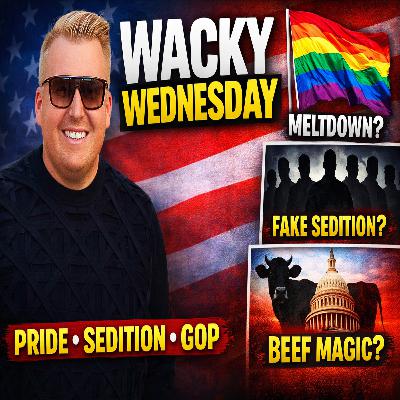
Welcome back to the Last Gay Conservative Podcast with Chad Law — where performance politics gets exposed and common sense still matters.This week’s Wacky Wednesday breaks down five headline-grabbing stories that prove Washington is addicted to outrage while real governance gets ignored:✔️ The bipartisan FIGHT Act targeting animal cruelty, illegal gambling networks, trafficking, and biosecurity risks — and why nobody in media wants to cover it.✔️ The so-called “Seditious Six” viral video that triggered grand jury drama… over speech that wasn’t illegal.✔️ The White House claiming it can import more beef while “protecting” American ranchers — and why you can’t manipulate supply and demand without consequences.✔️ The Pride flag removal meltdown at the federally managed Stonewall site — and what federal flag code actually says.✔️ Three Republicans (Massey, Bacon, Kiley) siding with Democrats to weaken tariff leverage — and what that signals to global competitors.The through line?Performance over policy. Outrage over execution. Vibes over results.We discuss:Organized crime and animal fighting networksGrand jury theatrics vs constitutional lawTariffs as leverage vs tax policy experimentsRegulatory burden and rancher consolidationFederal flag code vs symbolic politicsParty unity and strategic fractureIf you’re tired of governance being replaced by viral theatrics, this episode is for you.📞 Call or text the show: 866-LAST-GAY0:00 – Welcome to Wacky Wednesday1:45 – The FIGHT Act: Real Enforcement Nobody Covered8:30 – Organized Crime, Biosecurity & Avian Influenza Risk14:00 – The “Seditious Six” & The Grand Jury Circus20:30 – Viral Traps & Weaponized Overreaction26:00 – Importing Beef While “Protecting” Ranchers?31:40 – Regulatory Burden & Market Distortion36:30 – When Government Becomes Ranch Hand & Referee40:00 – Pride Flag Removed at Federal Site: The Meltdown45:00 – Stonewall History & The Shrine Narrative50:00 – Unity Under One Flag vs Permanent Segmentation53:00 – Three Republicans Side With Democrats on Tariffs56:30 – Debt, Leverage & Party Fracture58:00 – The Real Takeaway: Performance Over Policy#WackyWednesday #ConservativePodcast #Tariffs #FIGHTAct #PoliticalTheater
The conversation delves into the conservative homelessness crisis, the exploitation of disasters for political gain, and the decline of Reagan's conservative coalition. It highlights the impact of disasters on political agendas and the challenges faced by conservative Republicans in the current political landscape. The conversation delves into the challenges of congressional decision-making, particularly in the context of voter ID protections and the SAVE Act, highlighting the disconnect between public opinion and legislative action. It also explores the role of independent journalism and podcasts in countering viral narratives, the impact of tariffs on price hikes, and the importance of global unity and sovereignty. Additionally, the conversation addresses the use of major events for political narratives and the influence of Hollywood and celebrity endorsements in shaping public opinion.TakeawaysConservative Homelessness CrisisDisasters and Political ExploitationReagan's Conservative Coalition Congress struggles to act on issues with widespread public supportThe role of independent journalism and podcasts in countering viral narrativesChapters00:00 The Conservative Homelessness Crisis17:54 Reagan's Conservative Coalition38:43 Congressional Paralysis50:36 The SAVE Act and Voter ID58:11 Political Narratives in Major Events01:03:20 Tariffs and Price Hikes01:10:23 Global Unity and Sovereignty
Chad Law Exposes the Truth: Marriage Equality, Trump's Tariffs & The Scammy GrammysIn this episode, Chad Law, America's self-proclaimed 'binary brother' and 'gayest conservative,' dives deep into today's pressing topics. He tackles the divisive issue of marriage equality, condemning religious groups attempting to reverse it under a guise of conservatism, arguing instead for a conservatism rooted in freedom and limiting government influence. Chad also delves into the recently released Epstein files, claiming they expose more about elitism and Democratic figures than about Trump. Finally, he scrutinizes Hollywood's desperation for relevance, branding the recent Grammys as the 'Scammys,' pointing out that celebrity politics are more about staying in the spotlight than genuine activism. Tune in for Chad's unfiltered take on these headlines and more.00:00 Introduction and Show Information00:42 Family Visit and Health Update01:18 Grammys and Hollywood's Virtue Signaling01:59 Christian Conservative Groups and Gay Marriage07:07 Scientific Evidence on Same-Sex Parenting14:26 Epstein Files and Media Bias23:12 Trump's Tariffs and Economic Impact31:06 Celebrity Politics and the Grammys35:49 Conclusion and Final Thoughts
Send us a textHeadlines say crime is down and wages are up, but they rarely ask why. We dig into the data and argue that consistent immigration enforcement is quietly shifting the country toward order: fewer repeat offenders on the streets, tighter labor markets that finally reward hourly workers, and public services that are no longer bursting at the seams. It’s not about cruelty; it’s about incentives. When rules are clear, chaos recedes—and the people who rely most on schools, hospitals, and safe streets feel the gains first.Culture sets the tone, too. We react to Michelle Obama’s bleak framing of womanhood and make a different case: empowerment without agency is just intimidation. Younger women aren’t asking for a battle plan; they’re asking for options. Real freedom means choosing career, family, both, or neither without apology—and recognizing that seasons change. Choice beats grievance, and optimism beats burnout.Then we open the black box of ride-hail safety. Court discovery shows Uber logged more than 500,000 sexual misconduct reports since 2017—far beyond public summaries. We break down the vetting gaps, the “review before suspend” policy that keeps accused drivers on the road, and the limits of background checks without fingerprints or international records. Safety has a standard in high-risk industries: suspend first, investigate fast, and publish transparent stats.Finally, we unpack Canada’s move to lower tariffs on Chinese EVs. On paper it’s small; in practice it risks undercutting Canadian auto jobs, straining U.S. supply chains, and giving Beijing fresh leverage in North America. Subsidized imports and contested IP don’t just move cars—they move power. Guardrails like enforceable caps, strong rules of origin, and firm reciprocal measures aren’t optional if we want to protect workers, innovation, and security.If you value common sense over spin, tap follow, share this with a friend, and leave a quick review. Got a thought or tip? Text the show from the link in the description—we read everything.Support the show
Send us a textIf taxpayer money can buy votes, what happens to principle? We open the books on Congress’s revived earmarks and track how billions in “community funding” quietly shaped two explosive outcomes: preserving money tied to child gender procedures and normalizing the idea that Washington can remotely disable your car. This isn’t abstract. When pre-directed dollars replace real debate, policy gets traded like currency and national priorities stall while deficits balloon.From there, we turn to the headlines surrounding actor Tim Busfield and walk through the legal standards that actually matter. Detention is about risk and evidence, not press clippings. We separate adult harassment claims from child abuse charges, explain why those categories can’t be conflated, and outline how weak, narrative-driven advocacy backfires—poisoning juries and undermining legitimate child protection cases. Presumption of innocence isn’t a slogan; it’s the guardrail that keeps justice from becoming a spectacle.Finally, we take a hard look at universal healthcare through the brutal realism of “This Is Going to Hurt.” British clinicians say the series mirrors their daily reality: understaffed maternity wards, rationing by wait times, junior doctors pushed to breaking point, and incentives that reward tenure over outcomes. Free care is not the same as available care. If a smaller, healthier UK struggles, imagine scaling that model to a larger, sicker United States. Central planning can’t conjure capacity, and it cannot replace the accountability and innovation that markets generate.If you care about how laws get made, how justice should be done, and how healthcare actually works when politics takes the driver’s seat, this conversation brings receipts and clarity. Subscribe, share with a friend who follows policy, and leave a review with your biggest takeaway—what would you cut first: earmarks, car mandates, or the illusion that “free” fixes everything?Support the show
Send us a textA governor with a shrinking tax base and overflowing crises lecturing the world’s elite on economics? That’s where we start, but the real story is what happened next. Scott Bessent steps up and delivers a pointed, data-backed reality check on Gavin Newsom’s record, and we unpack why that moment resonated across Davos and beyond. From outmigration and deficits to the larger shift in how government spending distorts markets, we draw a line between political theater and measurable results—and why productivity hope can’t replace fiscal discipline.We then follow the paper trail on a post-Parkland school safety program and discover how millions were redirected into soft-services for immigrant integration instead of hard security. Voters expected alarms, training, and reinforced doors; they got abstractions and bureaucracy. With OpenTheBooks data in hand, we explain how grants became a welfare proxy, why nonprofits so often absorb funds before they reach students, and how mission drift puts kids at risk while congratulatory press releases pile up.Politics keeps intruding. The Clintons face contempt for skipping testimony on Epstein, while Ghislaine Maxwell’s incentives could upend narratives if she trades testimony for leniency. We map the power dynamics inside the modern Democratic coalition and why shedding old patrons often precedes a platform shift. Then we torch the week’s worst lies: why comparing U.S. detention centers to Nazi death camps is historically bankrupt and harmful; how viral clips fake crowd reactions with audio compression, tight crops, and selective timing; and why the “ICE is more criminal than detainees” claim collapses under basic screening and data asymmetry.By the end, we’ve separated heat from light, traced how spending loses its mandate, and argued for accountability you can measure. If you’re tired of narratives engineered in edit bays and policies that morph midstream, this one’s for you. Subscribe, share with a friend who loves receipts, and leave a review with the moment that made you hit rewind.Support the show
Send us a textHeadlines love a pledge; taxpayers deserve a receipt. We dig into the U.S. decision to exit dozens of international organizations, including marquee UN climate bodies, and ask the only question that matters: what measurable results did all that money buy? We separate weather reality from bureaucratic theater, unpack why uneven global participation erases gains, and explore smarter ways to invest at home—think science-driven research, grid resilience, wildfire prevention, and honest metrics that aren’t propped up by pandemic anomalies. If the aim is cleaner air and stronger communities, funding should follow outcomes, not slogans.From there we take the wheel—literally—through California’s commercial driver’s license scandal. Tens of thousands of unlawfully issued CDLs, identity fraud, compromised training schools, and employers looking the other way have put unsafe drivers in charge of heavy rigs. The fixes are straightforward: real-time federal ID verification, English proficiency enforcement, permanent revocations for proven fraud, and accountability for schools and carriers. Even USPS audits are now rejecting suspect licenses, proving this is a will problem, not a tech problem. If the state can run rigorous checks for firearms, it can do the same for commercial vehicles that can kill.Finally, we dig into how rhetoric shapes reality. When powerful figures toss around “sexual harassment” or “Nazi” to score points, the terms that protect victims and anchor our history lose meaning. Research shows sensational misuse raises skepticism toward real victims and normalizes extreme analogies. Precision isn’t nitpicking—it safeguards justice and keeps policy grounded.Come for the receipts; stay for the solutions. If you care about where your dollars go, how roads stay safe, and why words matter, you’ll want to hear this one. Subscribe, share with a friend who loves data over drama, and leave a review with the one reform you’d pass tomorrow.Support the show
Send us a textStart with the numbers, end with the people. That’s the throughline as we tear into a 15% global minimum tax, a bold plan to stabilize Venezuela through oil, and the myth that bigger budgets automatically mean better outcomes. We make the case that sovereignty—of nations, companies, and voters—beats distant bureaucracies and one-size-fits-all mandates every time.First, we break down why exempting U.S. multinationals from a global top-up tax matters for jobs, prices, and retirement accounts. The pitch for “fairness” collapses without universal participation, and nonparticipants like China and India tilt the playing field. We walk through the real math on margin erosion, the ripple effects on investment, and why democratic recourse over tax policy should stay close to home rather than migrate to a global board.Then we pivot to Venezuela with a pragmatic lens: prosperity creates peace. The fastest route to stability is rebuilding oil infrastructure with world-class private operators, backed by targeted incentives and strict transparency so revenue reaches citizens. Scale production, double GDP, open trade, and depress global oil prices to curb Russia’s war financing—this is energy policy as foreign policy, designed to deliver tangible gains while avoiding endless nation-building.Finally, we call time on use-it-or-lose-it appropriations that reward activity, not results. Whether it’s NASA, NSF, or sprawling agency portfolios, mission creep and earmarks thrive when dollars aren’t tied to outcomes. We argue for spending discipline that trims redundancy, funds what works, and returns control to taxpayers who demand proof of value. No grandstanding—just a clear framework that favors competition, accountability, and measurable impact.If you value sharp analysis with real-world stakes and practical paths forward, hit follow, share this episode with a friend, and leave a review with your take on the global tax debate and the Venezuela strategy. Your feedback guides what we tackle next.Support the show
Send us a textWe lay out why Venezuela’s turning point is about restoring balance in a complacent world, why selective leverage beats endless aid, and how China’s failed guarantee dents authoritarian credibility. Then we switch gears to rapid-fire listener questions on healthcare, taxes, EVs, and the conservative movement’s roots.• Cold War logic reframed for a modern power contest• Venezuela as a weak link in an autocratic chain• Limits of aid and the case for decisive leverage• China and Russia credibility hits and deterrence• America-first foreign policy without isolationism• Healthcare incentives and free market signals• Property tax, education value, and voter consent• EV mandates, solar credits, and distorted demand• MAGA’s Reagan roots and media double standards• Reagan’s trade principle and closing perspectiveHead over to the YouTube show, subscribe to the channel, watch a show or two, like and share so we can continue our movement, spreading truth and restoring common sense, conservative politics in the American householdSupport the show
Send us a textTired of leaders pretending the only fix is to “tax the rich” while the books keep bleeding red? We dig into why America doesn’t have a revenue problem—it has a management problem. From Mitt Romney’s New York Times push for more taxes to the grim math behind deficits, we break down what the numbers actually say, how incentives fuel entrepreneurship, and why voluntary contributions expose a gap between rhetoric and reality. If higher rates barely move the needle and drive capital away, what would? We point to spending discipline, transparent audits, and growing revenue through trade and investment instead of squeezing the same taxpayers.We also take on the week’s viral flashpoint: a petition to deport Nicki Minaj over her comments about boys and girls. If deportation is “inhumane,” using it to punish speech is pure hypocrisy. Free speech means tolerating views you dislike, and a functioning democracy argues back with facts, not exile. That same mismatch between values and actions shows up in Portland, where a newly revealed memo instructs city employees on obstructing ICE operations—even as services crumble, businesses flee, and the tax base shrinks. Economists call it a doom loop; residents call it daily life.Across each story, the theme is accountability. Representatives are proxies, not rulers. NGOs and agencies should be judged by outcomes, not intentions. Cities must fix the product—safer streets, working schools, clean governance—before raising the price. If billionaires truly want to pay more, the Treasury accepts donations today. If officials want trust, publish the receipts and deliver visible wins. Subscribe, share this episode with a friend who loves data over slogans, and leave a review with one change you want your local leaders to make this year. Your take might make the next show.Support the show
Send us a textCalifornia’s policy circus just raised the tent—and we brought the receipts. We open with Eric Swalwell’s headline-friendly promise to “unmask” ICE and charge agents with crimes, then lay out why the Supremacy Clause makes that a nonstarter. Beyond the civics lesson, we get into the damage that reckless rhetoric does in the real world: it inflames tensions, confuses voters, and targets the wrong problem when the immigration system itself needs serious, lawful reform.From there, we track the financial fallout of big promises meeting hard budgets: Medi-Cal’s reversal for undocumented adults after years of rapid expansion. We break down who’s still covered, where the loopholes are, and how sudden eligibility shifts destabilize hospitals, clinics, and patients. Then we follow the money to Sacramento’s most opaque construction site: a $1.1 billion Capitol Annex shrouded in thousands of NDAs. Security and bid integrity are valid concerns—but “broad information” gagged from taxpayers flips accountability on its head. If public dollars fund it, public scrutiny should frame it.We also confront the content mills that keep outrage alive. From claims of “illegal orders” in the military to AI-elevated health conspiracies, too many viral stories rely on insinuation over evidence. If there were real smoking guns, they’d land in court filings and major outlets, not cryptic livestreams. And yes, we call our own side to a higher bar: character matters, especially for those seeking power. Accountability beats spin, every time.If you’re hungry for clear arguments grounded in law, fiscal reality, and basic transparency, this one’s for you. Share it with someone who swallows headlines whole. And while you’re here, subscribe, leave a review, and tell us: which claim or policy in this episode deserves the most scrutiny next?Support the show
Send us a textThe loudest voices fixate on the border, but the real story is who benefits from the chaos. We dig into immigration with a scalpel, not a sledgehammer—why secular resettlement fuels isolation and fraud, how employer impunity drives illegal labor markets, and what happens when second-generation kids get culture without anchors and schools without skills. Phoenix’s integrated Iraqi community and the thriving Vietnamese small-business network in Orange County prove that assimilation works when communities take the lead and the law has a spine.From there, we shift to Iran, where protests swell as the regime’s economy buckles. We lay out a practical, limited path to support Iranians demanding change—tighten sanctions, deny the cash pipelines, amplify information flow, and provide discreet support to organizers—without plunging into another open-ended war. Persia’s long tradition of education and pluralism, combined with degraded regime capacity, creates a rare opening that could reset the region, starve proxies, and shrink the Red Bloc’s reach. A freer Iran isn’t a fantasy; it’s a strategic investment in stability and American prosperity.This conversation is blunt and solutions-first: expand legal immigration tied to work and language, prosecute employers who rig the labor market, and rebuild an education pipeline that outcompetes, not outrages. Abroad, stop writing checks to tyrants with oil to sell and propaganda to spread; stand with people ready to risk everything for a future they own. If you’re ready to swap slogans for strategy and trade performative anger for outcomes that last, you’ll want to hear this one. Subscribe, share with a friend who loves hard arguments, and drop us your take—what lever would you pull first?Support the show
Send us a textEver leave a holiday table with strong opinions and a stronger urge to fix things? We channel that energy into a focused look at leadership, immigration, and the choices that actually move the needle. From Arkansas to Austin to Phoenix, we trace how context—not slogans—shapes outcomes, and why the details of placement, process, and community design determine whether newcomers struggle or thrive.We start with a lively debate over Sarah Huckabee Sanders’ Christmas proclamation, pulling apart what’s constitutional, what’s cultural signaling, and why these fights feel bigger than a single memo. Then we dive into immigration with a clear lens: legal pathways support success through vetting and services, while illegal flows often create parallel systems that strain schools, healthcare, housing, and wages. Using Phoenix’s Iraqi resettlement as a case study, we show how intentional placement, English programs, employer partnerships, and faith-based networks lead to higher employment, faster language acquisition, and real civic participation. We contrast that with dense enclaves in blue metros where isolation and overwhelmed services slow integration, not as a blame game, but as a policy lesson about how to build bridges that work.There’s also a lighter—but telling—moment in college sports: Arch Manning’s choice to take less NIL money so Texas can recruit better talent. It’s a simple act with big implications, a Gen Z signal that leadership is service, merit thrives in teams, and long-term wins beat short-term shine. That theme returns as we tackle the “affordability” narrative around deportations. We scrutinize the claims and argue for a full ledger—one that weighs immediate enforcement costs against long-term burdens on housing markets, wages, and public services. The goal isn’t to score points; it’s to demand honest math so voters can judge tradeoffs without spin.If you care about assimilation that works, constitutional leadership, and practical policies that lift wages and lower pressure on families, this one’s for you. Subscribe, share with a friend who loves spirited debate, and leave a review with the one change you’d make to improve integration where you live. Your take could shape our next episode.Support the show
loading
Comments