



 Claim Ownership
Copenhagen Architecture Forum's Podcast
Subscribed: 8Played: 67
Subscribe

© CAFx - Copenhagen Architecture Forum
Description
You are listening to a podcast from Copenhagen Architecture Forum: A place that explores, discusses and communicates architectural and urban questions through a number of interdisciplinary initiatives.
67 Episodes
Reverse
We are back with a new podcast series! Listen to the first episode of Slow Down, a series investigating ways to slow down overheated sites, cities, and societies. In this episode, we follow a deep dive into the Køge Bay and explore the violent praxis of marine sand extraction. As part of her PhD, Emma Rishøj Holm descends to the seabed to experience firsthand the hidden consequences of marine sand extraction — a practice that is accelerating as land-based resources disappear, yet remains largely invisible. Together with Tideland Studio and marine biologist Stiig Markager, the conversation unfolds across ecology, infrastructure, and architecture, tracing a slow violence that reshapes the seabed — and exploring how architecture might play a role in bringing attention to it. In the episode you will meet: Emma Rishøj Holm: PhD Fellow at Arkitektskolen Aarhus. Focusing on sand extraction in the Køge Bay and sand-related proposals for material solutions in the construction industry. Tideland Studio: A research-based design studio merging architecture with artistic expression, technological innovation and holistic sustainability. Through a profound understanding of both our natural and built environments, we design solutions, stories and experiences that resonate, transform and enrich. Stiig Markager: Professor in marine ecology and biogeochemistry at the Department of Ecoscience at Aarhus University. A prominent voice in the Danish discussion about agriculture's impact on the marine environment.
Today we conclude Living With Other Species. A series exploring how to plan and live alongside other species in the cities of the future. The last episode is a talk on how microbes and human well-being is connected through soil ecologies, building materials, and urban planning—and how acknowledging processes of decay can inform healthier, more resilient cities. What happens when we begin to think of the city as a living microbial ecology? On the podcast you will meet: Marie Sainabou Jeng: Is the founder and program director of Madland. A food policy hub and community by and for the micro-level. Together, they rethink and transform food systems with social responsibility Adam Bencard: Researcher and curator at the The Novo Nordisk Foundation Center for Basic Metabolic Research and at the Medical Museion Lasse Antoni Carlsen: Is an urban farming expert and food system innovator, dedicated to advancing modular, sustainable farming that bring specialty ingredients like mushrooms closer to consumers - improving the accessibility to sustainable quality food.
Founder of BYGAARD. Gerd Laura Juul Dahl is moderating the conversation.
Living With Other Species is back! The second episode, "The Insect As Worker and Citizen", is a conversation on the role of insects as urban workers with - pollinators, decomposers, and ecosystem engineers. How might cities look if we began to think of insects not only as inhabitants, but as workers and citizens of the city? The episode asks how designing with (and for) them challenges aesthetic norms, maintenance culture, and anthropocentric planning. On the episode you'll meet: - Hjalte Calberg Ro-Poulsen: Biologist/entomologist/melittologist who conducts research, provides consultancy, and teaches about land and urban management based on the needs of wild bees and other insects at Department of Geosciences and Natural Resource Management, University of Copenhagen. - Studio Coquille: Marion de Lingua de St Blanquat and Frederik Mads Svendsen. The architects behind The Habitable Skin, along with TERROIR, in collaboration with Lasse Carlsen and MYCO.
The studio focuses on creating organic, sensory experiences that promote biological connections and co-creation between buildings and landscapes. "The Insect as Worker and Citizen" is a part of the podcast series Living With Other Species. The series explores how to plan and live alongside other species in the cities of the future. Moving across scales from regional planning to the secret lives of bats, ants, and microbes, we shift our gaze to imagine new forms of interspecies cohabitation.
This week we're taking a short break from the Living With Other Species podcast series to revisit our extensive archive. But we continue our focus on the lives and architectures of other species — and what we might learn from them. What follows is a conversation in which biochemist Irina Iachina shares her groundbreaking work on biomimicry, focusing on spider silk as a model for sustainable innovation. The talk was held as part of architect Pavels Hedströms exhibition Strange Adaptions, which was on display at Halmtorvet 27 from late 2024 into 2025. Next week, Living With Other Species returns — with a conversation on The Insect As Worker and Citizen.
From today you can listen to the first episode of Living With Other Species. A conversation on regional planning for all species, infrastructural imagination, and permaculture. Listen, as we dwell on a simple but far-reaching provocation: the city as a garden. What do we see when we conceive of the city as a garden? And how can we promote the garden-like qualities of the city? On the podcast you'll meet: Anna Aslaug Lund: Landscape Architect at Schønherr and author of The City as a Garden Skye Jin: Artist, educator, permaculture designer, and cultural sustainability advisor Studio Coquille: The architects behind The Habitable Skin, along with TERROIR, in collaboration with Lasse Carlsen and MYCO.
We conclude the Everything is Transformation podcast series — a three-episode deep dive into the thoughts, ideas, and methods behind Djernes & Bell's work on the Hedeskov Center for Regenerative Practice. In the last episode, we go fully interdisciplinary with Marie Stender—anthropologist and senior researcher at BUILD, AAU—and Torben Valdbjørn Rasmussen—civil engineer and senior researcher at BUILD, AAU. In a conversation with Justine Bell, they explore how Hedeskov can be perceived as a kind of "basic research," and how anthropology, physics, and a range of other disciplines informed the building process—and helped measure and test the finished building.
Tune in for a conversation between Ben Bosence from Local Works Studio and Justine Bell, of Djernes & Bell. Bosence is a artist turned conservator and an expert in vernacular building structures. He is a major capacity when it comes to vernacular construction and repair—and of uncovering the materials available on site, and their relations and possibilities. The conversation centers on Bosence's and Djernes & Bell's collaboration on the Hedeskov Center and investigates techniques and technologies of mapping and sourcing materials - as well questions regarding seasonality architecture and the topic of collective maintenance rituals.
The series podcast centers around one of the most remarkable architectural transformation projects and experiments with material localism in recent Danish architectural history: Hedeskov Center for Regenerative Practice, by Djernes & Bell. Across three episodes, relying on three conversations that took place at Copenhagen Architecture Forum in March 2025 in the exhibition of the same name, we investigate the knowledges, techniques, ideologies, and social relations shaping the project. In the first episode, we sit down with architect Justine Bell from the studio behind the project, and Sofie Aagaard, co-founder and co-owner of Hedeskov Center for Regenerative Practice. The conversation traces the origin story of the project, with a particular focus on the architectural ideas driving it, and on the client–architect relationship that made it possible. Central to the discussion is the question: What does regenerative actually mean in the context of architecture?
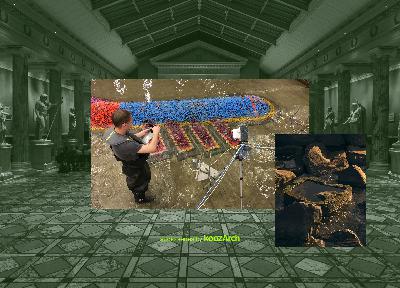
In this third episode on the policy proposal ADAPTATION REWILDING, drafted by landscape architect and founder of SCAPE, Kate Orff, we sit down with Kate alongside Copenhagen's City Architect Lars Jensen and legal adviser in the business association of Pensions and Insurances in Denmark, Thomas Brenøe to discuss Kate's proposal for the strategic rewilding of our landscapes as a tool for successful climate adaptation. Read the law proposal at this link. This podcast was produced by KoozArch in collaboration with Copenhagen Architecture Biennial.
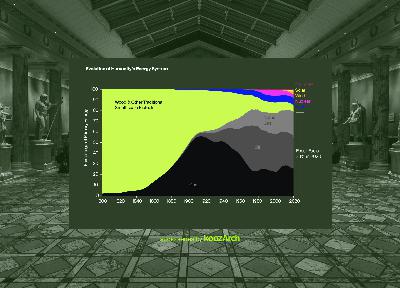
In this second episode on the policy proposal XO Policy – Extraction Zero Policy, drafted by architect and Dark Matter Labs co-founder, Indy Johar together with & Ivana Stancic, we sit down with Indy alongside architect and both Innovation Director and director and initiator of The Planetary Project at Sweco Karl-Martin Buch Frederiksen as well as director of the Regenerative Built Environment Network at BLOXHUB Jacob Rask to discuss Dark Matter Lab's policy which bans construction processes that are extractive to the point of endangering human and ecological systems. Read the law proposal at this link. This podcast was produced by KoozArch in collaboration with Copenhagen Architecture Biennial.
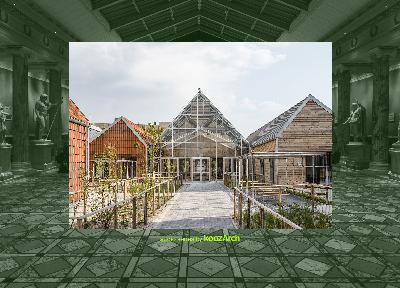
In this first episode on the policy proposal of Material Ownership, drafted by architect and founder of Lendager, Anders Lendager, we sit down with Anders alongside Co-Founder of both Home.Earth & Transformer.Build Kasper Guldage Jensen, Vice President of Global Sales at Fritz Hansen, Martin Scharff and Senior Adviser at construction company DI Byggeri, Jakob Thaysen Rørbech to discuss the proposal for the extended producer responsibility for construction products. Read the law proposal at this link. This podcast was produced by KoozArch in collaboration with Copenhagen Architecture Biennial.
Instead of demolishing and rebuilding, HouseEurope! calls for sustainable renovation and adaptive reuse, pushing for new EU laws that protect and prioritize existing spaces. Using the European Citizens' Initiative (ECI), they are mobilizing people across Europe to demand policies that favor preservation over demolition, with the goal of collecting one million signatures from at least seven countries. This live conversation features leading voices from architecture, urbanism, and activism: Søren Pihlmann (Founder, Pihlmann Architects / Danish Architecture Pavilion - Venice Biennale 2025) Lars Autrup (CEO, Arkitektforeningen) Jacob Blak Henriksen (Head of Sustainability Architect, Cobe) Tamara Kalantajevska (Head of Urbanism, Schmidt Hammer Lassen / KADK) Kasper Benjamin Reimer Bjørkskov (Founder, No Objectives) Erik Valdemar Eriksen (Activist, Den Grønne Studenterbevægelses Klimaaktivistisk Tegnestue) Dominique Hauderowicz (Founder, Studio Dominique Serena / Danish Architecture Pavilion – Venice Biennale 2027) Esben Thorlacius (Partner, Over Byen Arkitekter) The discussion is moderated by Enlai Hooi, Head of Innovation at Schmidt Hammer Lassen. Tune in to hear how architects, urbanists, and activists are coming together to rethink the future of Europe's cities — one renovation at a time.
Pil Thielst - arkitekt partner i Lundgaard & Tranberg Arkitekter - foreslår en lov, der kræver 30% af Danmarks areal som beskyttet natur. Fri natur skal fremover indgå som grundelement i byplanlægning – på lige fod med energiforsyning, drikkevand og infrastruktur. Kommissionens medlemmer er Rasmus Vincentz, CEO i Habitats og grundlægger af Vild med Vilje, og Holger Bisgaard, byplanlægger og tidligere planchef i Københavns Kommune. CAFx's Søren Nørkjær Bang modererer samtalen.
Sinus Lynge - arkitekt og partner ved Effekt - foreslår en lov, der pålægger byggeprojekter at reducere CO₂-udledning i overensstemmelse med fastsatte grænseværdier eller kompensere 1:1 for overskridende udledning gennem skovrejsning og naturbaserede løsninger. En lov, der skal dække alle nye byggerier og renoveringer. Kommissionmedlemmerne er Camilla van Deurs, Head of Urban Development i Nordic Office of Architecture og tidligere Stadsarkitekt i Københavns Kommune, og Annemarie Munk Riis, CEO for Rådet for Bæredygtigt Byggeri.
Justine Bell - arkitekt ved Djernes & Bell - præsenter et lovforslag om bevaringspligt, der skal sikre, at der prioriteres eksisterende strukturer og materialer i byggebranchen i Danmark. Bell foreslår et krav om bevaring frem for nedrivning. Komissionspanelet består af Camilla Van Deurs, partner i Nordic Office of Architecture og forhenværende stadsarkitekt i københavn, og Annemarie Munk Riis, Adm. direktør for Rådet for Bæredygtigt Byggeri. CAFx's Søren Nørkjær Bang modererer samtalen.
Niklas Nolsøe - arkitekt og Business Development Director ved Lendager - præsenterer et nyt forslag om materialeejerskab, der pålægger producenter ansvar for hele livscyklussen af byggematerialer. Nolsøe spørger, hvordan kan dette initiativ fremme bæredygtighed og cirkulær økonomi i byggebranchen? Komissionspanelet består af Lars Autrup, direktør i Arkitektforeningen, og Lau Raffnsøe, teknisk chef for DGNB hos Rådet for Bæredygtigt Byggeri. CAFx's Søren Nørkjær Bang modererer samtalen.
Søren Nielsen - ekstern konsulent hos Vandkunsten og professor på Arkitektskolen Aarhus - præsenterer et lovforslag om midlertidigt at nedlægge et nationalt forbud mod nyopførelse af byggeri og infrastruktur, samt et generelt forbud mod enhver nedrivning af eksisterende bygninger og infrastruktur. I denne podcast er Nielsen i samtale om forslaget med Lars Autrup, direktør i Arkitektforeningen, Annemarie Munk Riis, Adm. direktør for Rådet for Bæredygtigt Byggeri og Linda Nielsen, Juraprofessor og tidligere rektor for Københavns Universitet. CAFx's Søren Nørkjær Bang modererer samtalen.
How do we move beyond human dominance and toward true collaboration with other species? As part of the exhibition Strange Adaptations at Halmtorvet 27, bioethicist Mickey Gjerris, architect Pavels Hedström, and curator Søren Nørkjær Bang engage in a conversation about the evolving relationships between humans, nature, and technology. At the heart of the discussion is the idea of symbiosis—what does it truly mean to create mutualistic relationships across species? In an era defined by ecological crisis, the speakers confront the ethical dilemmas that arise when personal desires clash with collective responsibility. Gjerris reflects on the role of love and respect in interspecies interactions, questioning whether a radical shift in perspective—away from control and exploitation—might open the door to more meaningful coexistence. But how do we emotionally navigate the scale of the environmental challenges we face? The conversation explores the role of hope and fear in the age of ecological degradation, asking what emotional attitude we should cultivate to respond proportionately to the problems at hand. Should we embrace optimism, or does acknowledging fear drive us to act more decisively? What attutudes might help us move beyond despair and paralysis toward meaningful action?

What can nomadic cultures teach us about architecture, design, and our connection to the environment? In this episode, anthropologist Jeanette Lykkegård, architect Pavels Hedström, and Søren Nørkjær Bang, curator at the Copenhagen Architecture Forum, explore the relationship between nomadism, space and habitation. The conversation examines how nomadism fosters a deep connection to the environment through movement and exposure, contrasting this with the Western focus on controlled, comfort-driven environments that often distance us from the natural world. The discussion reevaluates the concept of control, questioning whether modern architecture has led us into a "comfort trap" that diminishes our sense of vitality and connection. Lykkegård, Hedström, and Bang reflect on how nomadism offers new perspectives for thinking about design and habitation—focusing on adaptability, responsiveness, and a more meaningful relationship with the world around us. This podcast is part of the event series 'Strange Adaptions' with architect Pavels Hedström.
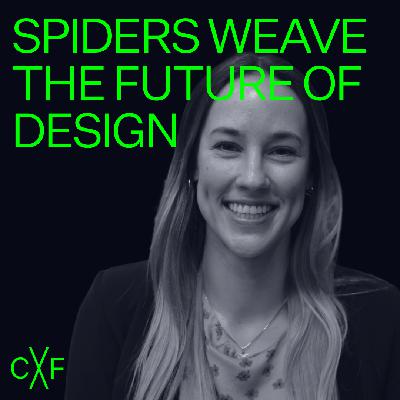
Biochemist Irina Iachina shares her groundbreaking work on biomimicry, focusing on spider silk as a model for sustainable innovation. From her studies at the University of Southern Denmark to her research at MIT, Iachina has investigated how spiders create silk using only salt water and proteins. This natural process provides a blueprint for developing recyclable and eco-friendly materials that could replace synthetic, wasteful alternatives. Her research underscores the power of looking to nature for solutions to modern challenges. In conversation with architect Pavels Hedström and curator Søren Nørkjær Bang, Iachina discusses the broader implications of biomimicry as part of the exhibition Strange Adaptations at Halmtorvet 27. The podcast explores not only the scientific aspects of her work but also the emotional and ethical dimensions of engaging with nature. Iachina emphasizes the importance of shifting from exploiting nature to learning from it, recognizing the intelligence and unique qualities of even the smallest creatures. The dialogue touches on how these principles can inform architecture, urban design, and sustainable development, underscoring the vital role of curiosity and playfulness in driving innovation.

Comments

Download from Google Play

Download from App Store
 United States