


 Claim Ownership
The Last Known
Subscribed: 0Played: 2
Subscribe

© The Last Known Podcast
Description
The Last Known is a narrative true-crime podcast that examines real cases through verified records, official reports, and trusted journalism. Each episode follows the documented timeline of a disappearance or unresolved crime—focusing on the last moment someone was known to be there, and what happened after they vanished.
No speculation. No dramatization.
Only the facts, the record, and the questions that remain.
No speculation. No dramatization.
Only the facts, the record, and the questions that remain.
9 Episodes
Reverse

On February 13, 2017, two young friends, Abigail Williams and Liberty German, set out for a hike on the Monon High Bridge Trail in Delphi, Indiana. What followed was a tragedy that not only devastated a small community but also fundamentally reshaped the landscape of modern crowdsourced true crime. In this episode, we move past the speculation to focus on the verified timeline and the specific pieces of evidence that have become central to one of the most scrutinized investigations of the 21st century.A Trail Captured in TimeThe core of this case rests on a series of brief recordings captured by Liberty German on her cell phone. We analyze the verified timeline of that afternoon, from the moment the girls were dropped off at the trail to the haunting final images of a figure—later dubbed "Bridge Guy"—approaching them on the high bridge. We discuss the impact of the "Down the Hill" audio clip, exploring how Libby’s quick thinking provided investigators with a direct link to the suspect, yet paradoxically opened the door for years of intense, often chaotic, online investigation.The Evidence in FocusWe break down the key elements that have defined the search for justice:The Digital Breadcrumbs: How the short video and audio recordings became the primary tools for public identification and police profiling.The Physical Site: A look at the geography of the Monon High Bridge and the logistical challenges it presented for both the victims and the perpetrator.The Verified Timeline: A minute-by-minute reconstruction of the girls' arrival, the final social media post, and the harrowing window in which the crime occurred.The Legacy of CrowdsourcingFinally, we examine how the Delphi case became a flashpoint for the true crime community. From "armchair detectives" to sophisticated digital mapping, we look at how the public’s obsession with the verified evidence helped keep the case in the national spotlight while also complicating the path to a legal resolution. Join us as we re-examine the facts of a hike that ended in silence, and the recording that refused to let the world forget.

In the early morning hours of June 3, 2011, a 20-year-old Indiana University sophomore named Lauren Spierer vanished after a night out in Bloomington, Indiana. It is a case that has come to define the nightmare of every parent and the frustration of every investigator: a young woman disappearing in "plain sight" within just a few blocks of her own front door. In this episode, we meticulously reconstruct the hour-by-hour timeline of Lauren’s final known movements, searching for the small crack in the foundation where the truth might be hidden.The evening’s reconstruction begins at 12:30 AM when Lauren first left her apartment. By 1:46 AM, she was at Kilroy’s Sports Bar, a popular student haunt. However, it is her exit at 2:27 AM that marks the start of the true mystery. For reasons that remain debated, Lauren left both her cell phone and her shoes at the bar, walking out into the humid night barefoot. This single detail has haunted the case for over a decade, serving as a chilling indicator of her vulnerability. We track her next steps to her apartment complex, where an altercation reportedly took place, and then into a nearby alley where her purse and keys were later discovered—discarded items that suggest a path fraught with confusion.The investigation’s center of gravity is 4:30 AM. After spending time at the 11th and College apartments, Lauren reportedly insisted on walking home alone. A witness watched her reach the corner and turn south toward her residence—a short journey that should have taken only minutes. She never arrived. We examine the points investigators return to time and again: the "ten-minute gap," the lack of a digital footprint due to her missing phone, and the haunting absence of CCTV footage on a street otherwise filled with cameras.Key Timeline Highlights:2:30 AM: Lauren enters Smallwood Plaza; a brief elevator ride and a reported altercation precede her departure back into the night.2:51 AM: Surveillance captures her exiting an alley where her keys and purse are later found.4:30 AM: The last confirmed sighting as she reportedly begins her final walk toward home from the intersection of 11th Street and College Avenue.The Investigation: We break down the early leads, including a white truck caught on camera that was eventually cleared, and the enduring silence from those who saw her last.This episode includes AI-generated content.

Bryce Laspisa set out on what should have been a straightforward drive home. Instead, his journey stretched across hours, then days—marked by unexplained stops, concerning behavior, and repeated check-ins that suggested something was wrong long before he vanished.This episode reconstructs the long drive leading up to Bryce Laspisa’s disappearance, focusing on verified locations, documented communications, and confirmed interactions with law enforcement and bystanders. It examines how Bryce remained physically present and traceable for an extended period, yet still managed to disappear without a clear explanation.Using phone records, witness statements, and official reports, the episode follows Bryce’s movements step by step—highlighting where time was lost, when concerns escalated, and how assumptions shaped the response. Despite multiple opportunities for intervention, the situation never reached a point of immediate resolution.Key points explored in this episode include:Bryce Laspisa’s background and circumstances prior to the driveThe planned route versus the route actually takenExtended stops and periods of inactivity that raised concernCommunications with family members during the driveInteractions with law enforcement and why no action was takenThe final known location of Bryce and his vehicleEvidence recovered afterward—and what was notably absentRather than advancing a single theory, this episode focuses on process, timing, and decision points. It examines how ambiguous behavior can be interpreted differently depending on context, and how delays—measured in hours rather than minutes—can significantly alter outcomes.The episode also addresses the challenges faced by responders when no crime is apparent and no laws are clearly being broken. Despite visible warning signs, Bryce remained legally free to continue traveling, leaving few options for intervention before the situation escalated beyond reach.Bryce Laspisa’s disappearance remains unresolved not because of a lack of documentation, but because of how much occurred without a definitive turning point. There was no single moment when events clearly crossed from concerning to critical—only a gradual accumulation of unanswered questions.By carefully rebuilding the timeline of the drive and examining what can and cannot be confirmed, this episode provides a grounded overview of a case defined by extended visibility followed by sudden absence—and why, even with significant information, certainty remains elusive.This episode includes AI-generated content.
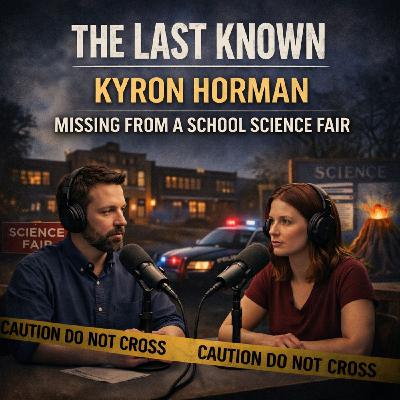
During a public event at an elementary school, a child disappeared without being seen leaving the building. The event was well attended, with parents, students, and staff moving through classrooms and hallways. By the time the absence was noticed, the opportunity to clearly identify what had happened had already passed.This episode rebuilds the documented timeline inside the school, focusing on verified movements, witness accounts, and the physical layout of the building. It examines how a busy environment, overlapping supervision, and routine assumptions combined to create uncertainty during a critical window of time.Rather than relying on speculation, the episode follows what can be established through records and testimony. It outlines when the child was last confirmed in class, what was occurring in the school during the event, and how attendance and supervision were handled that day. It also examines when concern was raised and how quickly the response unfolded.Key points explored in this episode include:The structure of the school day and the public event taking placeThe child’s last confirmed location and time seenMovement patterns of students, parents, and visitors during the eventSupervision protocols and where gaps may have existedInitial response by school staff and law enforcementEvidence that was documented—and what was never foundQuestions that remain unresolved despite ongoing investigationThis episode emphasizes the difficulty of reconstructing events in crowded, familiar settings where unusual behavior may not immediately stand out. It explores how the presence of many witnesses can paradoxically make certainty harder to achieve when no single person observes the critical moment.The analysis also highlights how early assumptions—such as believing a child had left with a parent or guardian—can delay recognition of a serious problem. Once that window closes, establishing an exact sequence of events becomes increasingly difficult.Years later, the case remains unresolved. The disappearance is defined not by dramatic evidence, but by missing clarity: no confirmed exit, no definitive witness, and no conclusive explanation for how a child vanished from a secure, public space.By carefully separating verified facts from unproven claims, this episode provides a clear, grounded account of what is known, what remains uncertain, and why definitive answers have proven so difficult to reach.This episode includes AI-generated content.
In the early morning hours following a quiet evening, three women vanished from a private residence without any visible signs of forced entry. Their personal belongings were left behind. The home showed no indication of a struggle. And yet, by morning, all three were gone.What initially appeared to be an ordinary night quickly became one of the most perplexing missing-persons cases on record.This episode reconstructs the last confirmed contacts with each of the women, carefully outlining the timeline of phone calls, in-person interactions, and routine activities leading up to their disappearance. It then examines the sequence of events that unfolded the following morning, when friends and family realized something was wrong—and the decisions that shaped the earliest hours of the investigation.Using police documentation, witness statements, and verified reporting, the episode separates established facts from assumptions that emerged later. It focuses on what can be confirmed: who was last seen, who made contact, what was left behind, and what was noticeably absent.Key points explored in this episode include:The events of the evening before the disappearanceThe last known communications involving each womanThe condition of the home when others arrived the next dayItems found inside the residence and their significanceEarly investigative challenges caused by the lack of physical evidenceHow initial actions may have affected later analysisThe core questions that have never been resolvedRather than advancing a single theory, this episode emphasizes process and uncertainty. It explores how the absence of forced entry complicates traditional investigative models and why the lack of physical clues has made definitive conclusions difficult.The episode also examines how time, routine assumptions, and early interpretations influenced the direction of the case. With no clear signs pointing to what happened overnight, investigators were left to work backward—attempting to reconstruct events based largely on what wasn’t there.Decades later, the disappearance of the three women remains unresolved. The case endures not because of dramatic discoveries, but because of the profound silence it left behind: a home unchanged, lives interrupted, and questions that persist without clear answers.By focusing on the verified timeline and the most critical unknowns, this episode provides a grounded overview of a case defined by absence—and by how quickly certainty can disappear without leaving a trace.This episode includes AI-generated content.

The last verified point in this case is a single-vehicle crash on a cold winter night in rural New Hampshire. After that moment, the timeline becomes fragmented—defined by brief sightings, conflicting assumptions, and large gaps that have never been conclusively filled. This episode reconstructs the minutes before and after the crash, using documented police reports, witness statements, and search records to outline what is known with certainty and where the record begins to break down. It examines how quickly a routine roadside incident turned into one of the most analyzed disappearance cases in the region. At the scene, the vehicle was found abandoned. No serious injuries were immediately evident. Personal belongings were present. Yet the driver was gone. Law enforcement responded quickly, and initial searches were conducted in freezing temperatures and difficult terrain. Despite those efforts, no clear trace of the individual was located that night. Over time, witness accounts emerged—some placing the driver near the scene, others suggesting movement away from it. Each account added detail while also introducing uncertainty. Rather than focusing on speculation, this episode follows the documented sequence of events, identifying which details are verified, which are based on secondhand reports, and which remain unconfirmed. Key points explored in this episode include: Events leading up to the winter drive and conditions on the roadTimeline of the crash and the immediate responseEvidence found inside and around the vehicleWitness sightings reported shortly after the incidentEarly search efforts and environmental challengesDiscrepancies between official reports and later recollectionsQuestions investigators have never been able to resolveThis episode emphasizes how quickly assumptions can shape an investigation—especially in rural settings and severe weather. It also highlights how timing, terrain, and incomplete information can complicate even an active response. Years later, the case remains unresolved not because of a lack of attention, but because critical moments occurred outside direct observation. What happened in the minutes after the crash—and where the individual went—has never been conclusively determined. By clearly separating verified facts from unconfirmed reports, this episode provides a grounded overview of the case as it stands today. It invites listeners to follow the evidence as it exists, understand why certain conclusions cannot be reached, and recognize how a single winter night produced questions that still have no definitive answers.This episode includes AI-generated content.
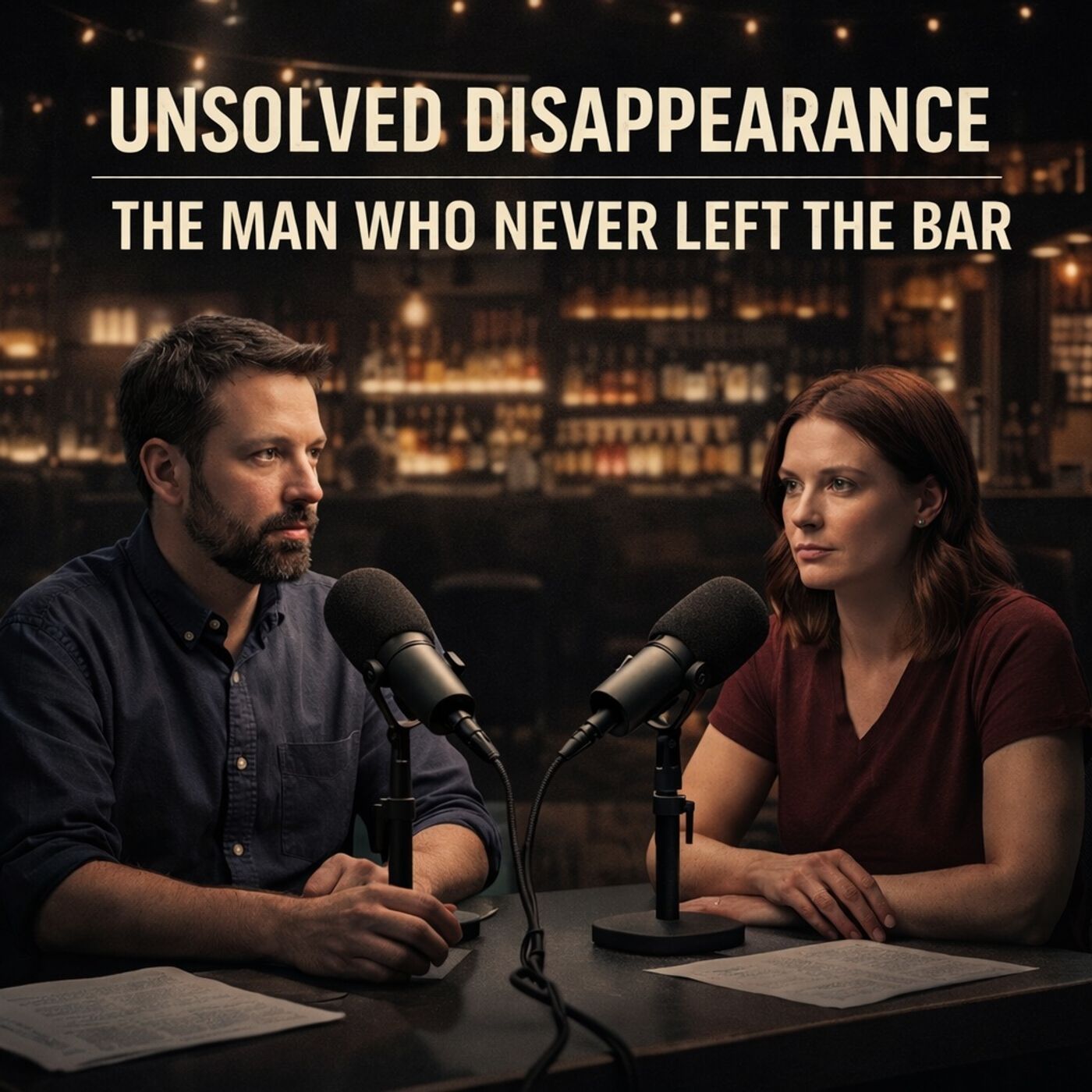
After a night out with friends in Columbus, Ohio, Brian Shaffer was captured on surveillance cameras entering the Ugly Tuna Saloona near Ohio State University. It was April 1, 2006, and Brian—then a 27-year-old medical student—had spent the evening bar-hopping following dinner with his father earlier that day. What makes this case especially unsettling is what never appears on camera: Brian is never seen leaving the bar. Despite extensive review of the available footage, no confirmed exit is documented. No verified sightings occur afterward. Brian Shaffer effectively vanishes from a crowded public space, surrounded by people, cameras, and multiple exits—yet without a clear explanation for how he disappeared. This episode reconstructs the verified timeline of Brian’s final known hours, focusing on confirmed facts rather than speculation. Using police reports, CCTV analysis, and witness statements, it examines what is known about Brian’s movements before entering the bar, what the surveillance footage does and does not show, and how investigators attempted to account for every possible exit scenario. The episode also explores how early assumptions, physical layout limitations, and incomplete video coverage contributed to long-standing uncertainty in the case. Key points explored in this episode include: Brian Shaffer’s background, personal circumstances, and plans at the timeThe timeline of events leading up to the night at the Ugly Tuna SaloonaSurveillance footage showing Brian entering the bar and interacting with othersKnown gaps in CCTV coverage and why they matterWitness accounts from friends, staff, and nearby patronsInitial police theories and how they evolved over timePhysical searches, follow-up leads, and evidence that failed to produce answersRather than presenting a single explanation, this episode focuses on process and documentation—how investigators analyzed the footage, why certain possibilities were ruled out, and which questions remain unresolved. It highlights the challenges of relying on surveillance evidence that appears comprehensive but contains critical blind spots. Brian Shaffer’s disappearance remains one of the most frequently discussed missing-person cases in the United States, not because of what was captured on camera, but because of what wasn’t. A man enters a bar. Cameras roll. And yet, no definitive record explains how—or if—he ever left. By revisiting the established facts and the known limitations of the evidence, this episode aims to clarify what can be confirmed, what cannot, and why the case continues to resist resolution years later.This episode includes AI-generated content.

On a cold, stormy night in February 2000, 9-year-old Asha Degree quietly left her home in Shelby, North Carolina. While the rest of her family slept, Asha stepped into the darkness during heavy rain and strong winds—an act that remains one of the most puzzling decisions in modern missing-person cases. What happened next has been the subject of extensive investigation, public speculation, and decades of unanswered questions. This episode reconstructs Asha Degree’s last confirmed movements, drawing from police reports, eyewitness statements, and physical evidence recovered in the years following her disappearance. Multiple motorists reported seeing a small figure walking alone along Highway 18 in the early morning hours. One driver even turned around to check on her, only to watch the child run into nearby woods. Despite immediate search efforts involving law enforcement, volunteers, and tracking dogs, Asha was never found. Rather than focusing on theories alone, this episode lays out the established facts of the case—what is known with certainty, what has been reported, and where the record becomes unclear. It examines the contradictions between Asha’s personality and the circumstances of her disappearance, as well as the significance of the items later discovered miles from her home. Key points explored in this episode include: Asha Degree’s family life, school routine, and known behavior prior to the night she vanishedWeather conditions and timeline of events during the early morning hoursEyewitness sightings along Highway 18 and their credibilityItems recovered during the search and what they suggestLaw enforcement response and early investigative challengesTheories considered by investigators over timeWhy the case remains open despite extensive public awarenessThis episode avoids sensationalism and instead focuses on evidence, documentation, and investigative context. It highlights how rare it is for a child to leave home alone under such conditions—and why that decision continues to complicate efforts to understand what happened. More than two decades later, Asha Degree’s disappearance remains unresolved. Each detail, from the storm to the sightings to the recovered belongings, raises new questions without providing definitive answers. By carefully revisiting the timeline and available evidence, this episode seeks to preserve the known facts of the case while acknowledging the uncertainty that still surrounds one of the most haunting child disappearance cases in the United States.This episode includes AI-generated content.

After attending a college graduation party in rural Minnesota, Brandon Swanson set out alone in the early morning hours, expecting a routine drive home. Instead, his car left the road and became stuck in a ditch near a remote stretch of farmland. Believing he was close to a familiar town, Brandon did what many would do—he called his parents for help. What followed was a nearly one-hour phone call that would become the last known contact with Brandon Swanson. As Brandon walked along dark gravel roads, his parents drove through the countryside, both sides convinced they were only minutes apart. They could hear his voice clearly. They believed they were following the same landmarks. Yet despite repeated attempts to locate one another, they never met. Then, without warning, the call ended. Brandon Swanson was never seen or heard from again. This episode carefully reconstructs the documented timeline of Brandon’s disappearance, relying on phone records, official reports, and firsthand accounts. It examines how small assumptions, limited visibility, and rural geography may have contributed to a tragic outcome—and why so many questions remain unanswered years later. Key points explored in this episode include: The events leading up to the graduation party and Brandon’s decision to drive home aloneThe exact timeline of phone calls between Brandon and his parentsConflicting assumptions about Brandon’s location and direction of travelThe challenges of navigating rural Minnesota roads at nightThe immediate search efforts and why locating Brandon proved so difficultEvidence found near the abandoned vehicle—and what was never foundTheories surrounding what may have happened after the phone call ended. Rather than speculate wildly, this episode focuses on what is known, what is documented, and what remains unresolved. It highlights how miscommunication, terrain, and timing can intersect with devastating consequences, even when help feels close at hand. Brandon Swanson’s case remains one of Minnesota’s most haunting disappearances—not because of what is visible, but because of what isn’t. A voice on the phone. Parents searching nearby. And a young man who vanished into the darkness without a trace. This episode invites listeners to follow the facts, consider the unanswered questions, and reflect on how easily certainty can give way to uncertainty—especially when the last clue is a dropped call in the middle of nowhere.This episode includes AI-generated content.
Comments


Download from Google Play

Download from App Store
 United States