Discover
AI to ROI (fka Metrics that Measure Up)
Author: Ray Rike
Subscribed: 44Played: 915Subscribe
Share
Description
AI to ROI is a podcast that shares how enterprises translate AI investments into measurable business value. Hosted by Ray Rike, Founder and CEO of Benchmarkit, the show features senior enterprise leaders and AI software executives who share how AI initiatives move from pilots to production, and how ROI is actually measured and achieved. In addition, each week, we publish a bonus episode with AI to ROI Newsletter co-author, Peter Buchanan to discuss the Big Story of the Week.
The AI to ROI podcast is the evolution of the original "Metrics to Measure Up" podcast.
224 Episodes
Reverse
Are we witnessing a productivity revolution or the greatest labor displacement in history?In this detailed episode of AI to ROI, Peter Buchanan and Ray Rike break down the "Great AI Jobs War," a period of massive upheaval where corporate gleefulness meets workforce anxiety. They move past the "AI washing" to find the real metrics that define success in the age of intelligence.Key Discussion Points:The Historical Context: Ray draws parallels between the AI revolution and past disruptions like the Industrial Revolution, the cotton gin, and the assembly line, noting that AI is moving with a magnitude and speed never seen beforeThe "Mother May I" Productivity Gap: While 47% of S&P 500 companies now discuss AI in earnings calls, only 10% are seeing meaningful ROI, leaving a "staggering" 56% of companies getting "little to nothing" out of their implementationsThe Million-Dollar Employee: A deep dive into Klarna’s radical transformation—reducing headcount from 5,000 to 3,000 through attrition while doubling revenue to reach the "magic number" of $1.1 million in revenue per employeeThe War on Early Careers: Why entry-level IT hires have plummeted from 25% to 7% of all hires, and the "structural problem" of junior roles requiring 2–3 years of experience because AI is now doing the "digital grunt work"Blue-Collar as the "Gold-Collar" Future: Why the CEO of NVIDIA suggests young people skip computer programming for mechanical trades, and how salaries for AI-related construction and electrical roles have doubledCustomer Service Autonomy: How Bank of America's "Erica" handled 2 billion interactions with a 98% resolution rate in under 44 seconds, signaling a massive shift in how businesses handle scaleActionable Insights for Leaders:Measure Revenue Per Employee: This is the ultimate metric for AI productivity.Bake AI Aptitude into Hiring: Every new white-collar job description should require "AI curiosity" and applicable tool skills.Strategic Augmentation: The goal isn't just headcount reduction, but using the "free cash flow" from AI efficiencies to build a war chest for growth and sales.To read more details and subscribe to the AI to ROI Newsletter for more data-driven strategies on turning AI hype into bottom-line results.See Privacy Policy at https://art19.com/privacy and California Privacy Notice at https://art19.com/privacy#do-not-sell-my-info.
In the second episode of AI to ROI: The Big Story, Ray Rike and Peter Buchanan analyze the critical transformation required for traditional SaaS companies to become AI-first organizations. With the SaaS industry generating $273 billion annually, the hosts warn that incumbents are under "two-front" attack: internal refactoring of legacy systems and external disruption from hyper-efficient AI-native startups.Key Highlights of the Episode:The "SaaS to AI" Pivot: Ray compares the current shift to the on-premise-to-SaaS transition of 20 years ago, noting that today’s change requires a fundamental rewrite of an operating culture rather than just adding "AI veils" like prompt enginesThe Rise of AI-Native Efficiency: Peter highlights companies like Lovable and Cursor, which have achieved hundreds of millions (or billions) in valuation in under a year with minimal staff, challenging the traditional SaaS model of linear employee growthThe Shift in Financial Metrics: The hosts discuss the new economic reality: forgetting 80% gross margins in favor of a 50-65% range to account for high token and inference costs. Success will depend on the "COGS to CAC" model, offsetting higher infrastructure costs with dramatically lower customer acquisition costs via AI automationA Roadmap for Success: To fight back, SaaS incumbents must re-architect around outcomes rather than features. This includes leveraging their "crown jewel data" and status as systems of record to build decision intelligence layers that AI-native startups lackThe HubSpot Success Story: Ray details how HubSpot successfully scrapped its 2023 roadmap within weeks of ChatGPT’s launch, shipping AI-native products in under 90 days and moving toward a "Results-as-a-Service" futureAdvice for Leaders and Employees: Ray suggests that CEOs must re-engineer every department to be AI-first, while employees should commit to learning new AI tools every month to remain employable in an increasingly automated landscape.Listen to the full episode for a deep dive into how to avoid becoming an "orphan" SaaS company in the age of Agentic AI.You can read the newsletter edition covering this topic by clicking here.See Privacy Policy at https://art19.com/privacy and California Privacy Notice at https://art19.com/privacy#do-not-sell-my-info.
In this episode of the AI to ROI podcast, host Ray sits down with Drew Laxton, CFO at Outreach, to explore the profound transformation of sales technology and financial metrics in the age of AI. Drew shares the strategic reasoning behind his return to Outreach, driven by a conviction that the company is uniquely positioned to lead the next era of agentic AI and automated revenue workflows.The conversation goes beyond the hype, offering a masterclass in how finance leaders must adapt to a software landscape that is moving from seat-based subscriptions to consumption-driven models. Drew provides an inside look at how Outreach is re-engineering its own financial playbook to account for the high compute costs and non-linear revenue growth associated with AI.Key discussion points include:The "Personal Productivity" vs. "Financial ROI" Debate: Why the initial wave of AI efficiency must eventually translate into higher quotas and lower OpEx to satisfy the board.Maintaining Margins in an AI-Native World: A deep dive into the "triumvirate" of Product, Engineering, and Finance that manages gross margins as compute costs replace traditional SaaS overhead.The Metric Recalibration: Why traditional SaaS snowballs don't work for AI, and how Outreach is using "spend-as-truth" to normalize data for NRR and CAC calculations.Agentic AI in Action: How Outreach's "revenue agents" are replacing manual prospecting with autonomous, data-tuned interactions that learn from previous customer engagement.Some Key Insights and Quotes pulled from the conversation with Drew:On the "Boring" Wins of AI: While many look for revolutionary shifts, Drew emphasizes the value in automating the mundane:"A lot of the AI tools that I’ve seen so far... there's kind of boring outcomes that are very impactful... like our QA process within the coding side has very much streamlined."On the Changing Economics of SaaS: Drew acknowledges that AI-native products fundamentally alter the 80%+ gross margin expectations of the past decade:"We do need to bring gross margin into our understanding of SaaS tools because it's just not the same... You've got to be more efficient on the go-to-market side to make the economics work."On the Rise of Consumption Pricing: The shift to variable pricing means the "snowball" metric of the past is no longer sufficient:"What is your ARR has become a lot more challenging question than it used to be... consumption is not linear on these products. It’s kind of zero, very little, and then a lot."On the Importance of Usage Over Revenue: In a variable world, product utilization becomes the primary indicator of a healthy business:"Product utilization... becomes a core signal to retention. It's not just revenue anymore, it's utilization month by month... spend is truth."Advice for Aspiring CFOs: For those looking to reach the C-suite in the AI era, Drew suggests one primary trait:"Be curious. Just be curious about everything... Ask questions, get time with the CFO or the leaders of the various organizations... wanting to understand their business has only benefited me."See Privacy Policy at https://art19.com/privacy and California Privacy Notice at https://art19.com/privacy#do-not-sell-my-info.
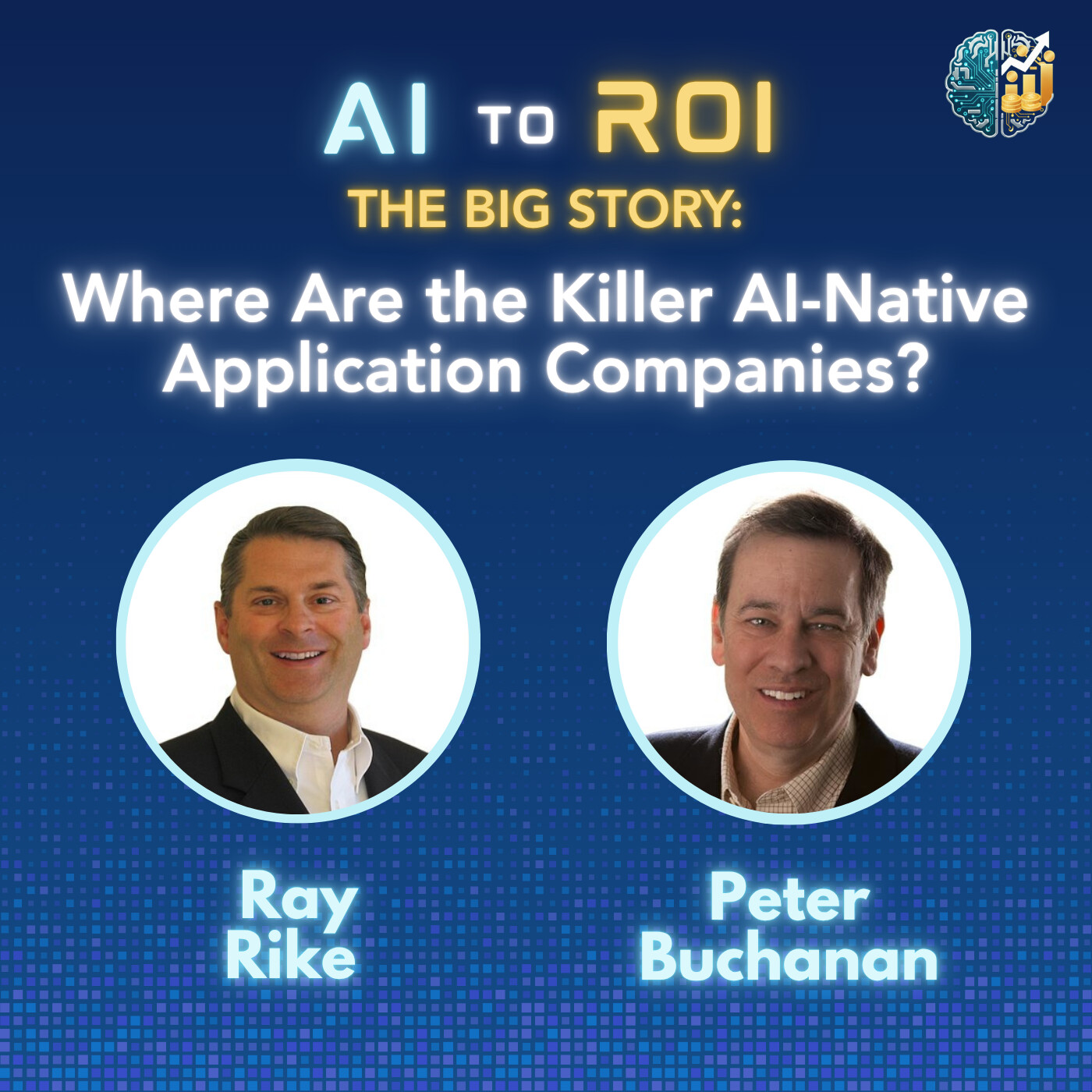
In the first episode of the AI to ROI: Big Story podcast, our co-hosts Peter Buchanan and Ray Rike discuss the emerging importance of Context Graphs in AI Software.Why are context graphs suddenly being called a trillion-dollar opportunity in enterprise AI? In this inaugural episode of The Big Story, hosts Ray Rike (CEO of Benchmarkit) and Peter Buchanan (Managing Partner of New Plan) dive into the "glue technology" that fills the missing gap in the AI stack.While traditional knowledge graphs tell you what happened, context graphs reveal the why! Context Graphs capture the decision traces, policy constraints, and precedents that make AI agents truly auditable and trustworthy. From preventing "data breakage" in regulated workflows to revolutionizing supply chain quality control, discover why context is the key to moving AI from experimental pilots to reliable production.Key TakeawaysThe Why Behind the Action: Context graphs provide the connectivity that agentic AI lacks, recording who made a decision and under what specific constraints.A Trillion-Dollar Value Add: Industry leaders believe context is a massive economic value driver for companies in the era of AI.Beyond Knowledge Graphs: Moving from simple data points to decision lineages that explain the "why" behind an event.Real-World Use Cases: Deep dives into data governance at firms like Vanguard and Prudential, and quality control in the automotive supply chain.The Vendor Landscape: Discussion on current players like Atlan, Neo4j, and Writer, and why tech giants like Microsoft and Salesforce are the "lurkers" to watch.Timestamps00:00 Introduction to the AI to ROI podcast series.02:40 Defining Context Graphs: The missing gap in the AI stack.04:15 The Trillion-Dollar Opportunity: Economic value vs. market size.06:30 Knowledge Graphs vs. Context Graphs: Moving from "what" to "why".09:20 Who should care? Roles from the CEO to the Chief Risk Officer.12:45 Use Case 1: Data Governance and preventing "downstream breakage".15:10 Use Case 2: Unifying the Go-To-Market (GTM) stack.18:30 Use Case 3: Supply chain visibility and automotive quality control.21:40 The Market Map: Current leaders and "Lurker" strategies from Big Tech.25:50 Executive Summary: Things every leader must do right now.Context graphs are a key component to turn Agentic AI software vision into Agentic AI explainability!Read the AI to ROI Newsletter on Substack to dive deeper into this week's Big Story!Subscribe at: ai2roi.substack.comSee Privacy Policy at https://art19.com/privacy and California Privacy Notice at https://art19.com/privacy#do-not-sell-my-info.
Welcome to the first episode of AI to ROI, the newly re-imagined evolution of the highly successful Metrics That Measure Up podcast. In this launch episode, our host, Ray Rike sets the stage for a new era of conversations focused on turning artificial intelligence from hype into measurable business outcomes.The inaugural guest is Todd Olson, Founder and CEO of Pendo, who joins the show for an interactive, unscripted discussion on how companies should measure the real impact of AI agents inside modern SaaS and cloud organizations. Together, they explore how AI-driven “digital workers” are reshaping productivity, workflows, and operating models across the enterpriseKey topics include how companies can measure the performance and business impact of AI agents, the emerging metrics that define agent adoption and activation, and why connecting usage data to tangible outcomes like time saved, cost reduction, and revenue impact is critical for ROI. Todd also shares his perspective on outcome-based pricing, why it remains rare in AI-native software today, and what must change for it to scale.The conversation wraps with a forward-looking discussion on SaaS and AI convergence, as agents increasingly appear on org charts and product roadmaps, followed by practical advice on developing AI competencies for the next generation of business leaders.If you care about moving beyond AI experimentation toward measurable economic value, AI to ROI is your new go-to podcast.Subscribe, rate, and follow AI to ROI on your favorite podcast platform.See Privacy Policy at https://art19.com/privacy and California Privacy Notice at https://art19.com/privacy#do-not-sell-my-info.
The world of FP&A is having its day in the spotlight. New pricing models, a new focus on near real-time business planning, the increased focus on balancing revenue growth and profitability, coupled with the dynamic impact that AI is having on the SaaS market, are all making the role of FP&A a more strategic asset. Albert Gozzi, is the founder and CEO of Aleph, a modern FP&A platform and company that recently raised $29M in their Series B financing from Khosla Ventures.During today's episode, our host, Ray Rike is joined by Albert Gozzi, Founder and CEO Aleph, to discuss the strategic future of FP&A including:The vision behind founding AlephThe evolution of AI in FP&AFP&A’s role in developing corporate strategyGrowth strategies being used in a crowded categoryIf you are a finance leader, FP&A professional or fellow B2B SaaS founder with a product purpose built for the Office of Finance, this conversation with Albert Gozzi is full of unique insights, ideas and opportunity to make your Financial Planning and Analysis organization a strategic asset!See Privacy Policy at https://art19.com/privacy and California Privacy Notice at https://art19.com/privacy#do-not-sell-my-info.
Think about the unparalleled growth that OpenAI has experienced since the public introduction of ChatGPT on November 30, 2022. Now, think about being in finance, or being the controller who had to scale their financial processes, including closing the books to keep up with a company that has scaled from less than $100M in revenue to $10B+ in less than 3 years!?!?That was the situation that Sowmya Ranganathan, Former Controller OpenAI and CEO, Lumera found herself facing in the early part of 2023.During today's conversation with Sowmya, our host Ray Rike discusses several important lessons and use cases of AI at OpenAI in the Finance department including:Why there was no existing playbook for scaling Finance in a company like OpenAIChallenges in one of the fastest growing software companies of all timeUnderstanding compute expenses is critical to understanding the financial performance today and tomorrow at an AI companyWhy excel could not work at the scale of OpenAI (1M+ rows)Using OpenAI to enable finance to write the python code to write the statistical model to analyze financial dataWhy historic analysis is not a good place to start for forecasting in a hypergrowth, compute intensive companyLeveraging AI in the Financial close process - leveraging data warehouse information to build a repeatable processTracking GPU costs in real-time throughout the month - not an excel scale requirementHallucinations are a real concern - but once your AI is encapsulated as standard code - the concerns are minimizedHuman review on any stochastic model is a best practice - such as contract data fields from signed contracts to establish billingA long description would not do the conversation justice - so jump in and be ready to pause the audio to capture the highlights.Sowmya has been in financial leaderships at Square and Rippling in addition to OpenAI, so she has a very unique perspective on not scaling finance to meet the unparalleled growth at OpenAI, and two other hyper growth companies. If you are interested in learning about real-life stories of using AI in Finance at the world's largest AI software company - this episode is a must listen!!!See Privacy Policy at https://art19.com/privacy and California Privacy Notice at https://art19.com/privacy#do-not-sell-my-info.
Christina Ross is the founder and CEO of Cube. Prior to founding a SaaS platform purpose built for everyone of those companies still using Excel (majority of companies) for business modeling but want to enhance the collaboration of business budgeting, planning and performance across the company, Christina was a corporate audit executive at GE, financial transformation consultant at Deloitte and a multi-time CFO at companies including Rent the Runway, Criteo and Eyeview.During today's episode, Christina and our host, Ray Rike discuss multiple aspects of the Financial Planning and Analysis role, department and the strategic opportunity for FP&A to materially increase the impact on business strategy and performance. Topics we discussed include:How the experiences at larger companies including GE and Deloitte shaped her view on the strategic role of FP&AThe biggest challenges facing CFOs with the FP&A function todayThe role of FP&A in business strategyThe impact of FP&A on business performanceIf you are a CFO, FP&A leader or even the CEO this episode is full of great insights and ideas on how to increase the business impact of your FP&A function!See Privacy Policy at https://art19.com/privacy and California Privacy Notice at https://art19.com/privacy#do-not-sell-my-info.
Exit Ready Analytics is a concept that any B2B SaaS company CFO and CEO should become familiar with before entering into any potential strategic company sell initiative, deal due diligence and/or data room preparation.During this episode, Will Sullivan, Managing Partner at Predictive Analytics Partners discusses his experiences from over $30 Billion in strategic acquisitions across 20 transactions. Topics discussed include:Exit Ready Analytics - the when, what, and howThe differences between a strategic Chief Revenue Officer and a Head of SalesWhen to hire a CRO and their responsibilitiesHow to bridge the CRO and CFO relationshipIf you are a CEO, CFO or CRO in a B2B SaaS company that is either considering a strategic sell process and/or want to increase the strength of the CFO and CFO relationship - this episode has something for you!See Privacy Policy at https://art19.com/privacy and California Privacy Notice at https://art19.com/privacy#do-not-sell-my-info.
Imagine leading Finance for a company that has made 31 acquisitions over the last six years. Then, imagine the challenges of having near real-time visibility into a recently acquired company to ensure the forecast accuracy that a Private Equity firm expects from their portfolio companies, specifically from their CFO.That is exactly the environment that Josh Schauer, CFO at insightsoftware, operates in every day! During today's episode, we discuss three main topics that are part and parcel to achieving near real-time insight into the data, performance metrics, and trends required to drive financial decisions - quickly. Those topics include:The challenges with fragmented data for financial decision-makingMoving from historic to real-time data for Financial decision-makingDeveloping a process to quickly integrate acquired companies into your financial systemsModifying budgets based on actual performance insightsIf you are considering private equity as a potential exit strategy, or are part of a company that is growing through acquisition, this is a must-listen-to episode!!!See Privacy Policy at https://art19.com/privacy and California Privacy Notice at https://art19.com/privacy#do-not-sell-my-info.
Casey Woo, Founder and CEO of the Operators Guild has a very interesting journey, from being a West Point cadet, a Harvard graduate, an investment banker at Goldman Sachs, a multiple-time CFO and now the founder and CEO of the Operators Guild, and General Partner at Fog Ventures. With this background Casey has been able to experience and identify the critical role of the "scaler" in companies.During the conversation with Casey we cover multiple topics including:The role of the scaler versus specialist in businessThe personality traits of a scalerHow process and performance interact from a scaler's perspectiveHow the Operators Guild became a community of scalersIf you have ever felt that one department, one role and doing the same thing day over day was not fully leveraging your skill set and talents - this conversation is thought provoking and inspirational.See Privacy Policy at https://art19.com/privacy and California Privacy Notice at https://art19.com/privacy#do-not-sell-my-info.
Melissa Howatson is the CFO of Vena Solutions, a $100M+ ARR cloud-based financial planning and analysis (FP&A) platform that helps companies streamline budgeting, forecasting, reporting, and financial modeling, with a strong emphasis on Excel integration.During the episode, we covered multiple topics with Melissa including:Latest trends in B2B SaaS FP&AAI in Finance - the importance of change managementMetrics that Matter at > $100M ARRMeasuring the Impact of a podcastThe 30-minute conversation hit upon multiple key trending topics including: 1) how FP&A is evolving as a strategic business partner to the other key functions; 2) why the CFO needs to lead a culture of experimentation with AI; 3) how EBITDA increases in importance as a company scales and; 4) how to measure the impact of a company sponsored podcast!If you are an aspiring CFO, or a CFO looking to scale your company beyond $100M ARR or are interested in how a world-class CFO came to be this conversation has something for you!!!See Privacy Policy at https://art19.com/privacy and California Privacy Notice at https://art19.com/privacy#do-not-sell-my-info.
Marcos Rivera is the founder and CEO, Pricing I/O. Marcos has a long career as a B2B Software operating executive and now leverages that experience to help B2B SaaS and AI-Native companies optimize monetization, pricing, and packaging.9 ingredients for a winning pricing strategy9 psychology concepts for pricingDifferences between SaaS and AI pricingThe value of pricing frameworksMarco was the head of pricing and packaging at Vista Equity, one of the top Private Equity firms in the B2B SaaS industry - an incredible foundation to see how leading companies leverage pricing as a strategic growth lever.Marcos started by sharing the key ingredients to developing a winning strategy, explains all nine, and highlighted why he believes the top four are most critical:Knowing the compelling value that our software deliversEstablish a clear market positionPricing that builds trustCase studies and ROI proof Have a pricing point of viewConsistent pricing messagingData-Driven pricing insightsSocial proof and testimonialsOngoing price optimizationAnother key topic discussed was the 9 psychological concepts for pricing, including:Halo effectLoss aversion (FOMO)Social proofConfirmation biasScarcity effectMere exposure effectAnchoring effectAuthority biasGoal gradient effectIf you are responsible for creating, testing, refining, or selling B2B SaaS or AI-Native products - this episode is a great way to understand the "why and how" of pricing - not just the what!!!See Privacy Policy at https://art19.com/privacy and California Privacy Notice at https://art19.com/privacy#do-not-sell-my-info.
Shane Murphy-Reuter, GTM President at Calendly, has been part of multiple B2B SaaS companies during their hypergrowth phase, including Webflow, ZoomInfo, and Intercom. He recently joined Calendly to integrate the Go-to-Market functions and continue to find new opportunities to increase growth and growth efficiency. Shane is responsible for creating a more seamless customer experience across each stage of the Calendly customer journey. During today's episode, the discussion covers a wide variety of topics including:The Primary Role of the GTM Executive in a PLG CompanyThe key inflection points in scaling a PLG companyHow to evolve a brand - from the buyer’s perspective How to build an integrated GTM team in a PLG companyOne of the key aspects of this conversation is that we dive deep into how to leverage and apply B2C best practices in a B2B and PLG environment - at scale. Another key insight here is the importance of becoming a multi-product company and evolving the brand of a primarily self-service, single-product company.If you are evaluating or recently transitioned to an integrated GTM organizational structure that begins and ends with the customer experience in a Product-Led Growth environment - this conversation is for you!!!See Privacy Policy at https://art19.com/privacy and California Privacy Notice at https://art19.com/privacy#do-not-sell-my-info.
Josh Aharonoff, better known as "Your CFO Guy" and the founder of Might Digits, a consultancy specializing in accounting, finance and fractional CFO services. Josh has amassed 450,000+ followers on LinkedIn, which is extremely rare for anyone, especially someone who caters to the corporate finance community!During Josh's appearance on the Metrics that Measure Up Podcast, he and our host, Ray Rike discuss a wide variety of topics including:The Role of the Fractional CFOWhen to consider an internal VP Finance or CFOWhy excel is a CFOs best friend…or NOTBuilding a LinkedIn following of 450K+ - the business case and the processIf you are a small or medium size business CEO, and are interested in when it might be the right time to bring in a VP Finance or CFO, or a finance professional looking to scale-up your personal brand, want to enhance your excel skills or considering starting your own business this conversation with Josh is chalked full of great insights, ideas and best practices!See Privacy Policy at https://art19.com/privacy and California Privacy Notice at https://art19.com/privacy#do-not-sell-my-info.
Dan Miller, CFO at RightRev, has been at the center of Usage-Based Pricing, having served as CFO at Fastly and previously as VP of Finance and General Manager at NetSuite. During today's episode, Dan and Ray discuss how Usage-Based Pricing and AI Outcome-Based Pricing are impacting ARR Reporting and Revenue Recognition Management.During today's episode, Dan and Ray cover several emerging trends in SaaS and Native-AI companies including:How variable pricing models impact revenue recognitionHow does the evolution of Outcome-Based pricing impact revenue recognitionHow AI is and will impact the Office of FinanceA few key takeaways from the episode that are worthy of a deeper dive and listen include:Understanding how contract modifications impact revenue recognition policy, process, and reportingBlended offerings including a fixed fee + usage are great for customers - but hard to manage revenue recognitionHow token and credit-based pricing impacts revenue recognition and gross profit calculation and reportingThe strategic impact and tactical challenges of transitioning from pure subscription or hybrid Usage-Based PricingIf you are a CFO or SaaS executive looking to better understand how pricing trends are challenging existing revenue recognition processes, infrastructure, and automation - this episode is a great listen!See Privacy Policy at https://art19.com/privacy and California Privacy Notice at https://art19.com/privacy#do-not-sell-my-info.
There is a famous saying that goes something like this "Half of my advertising (marketing) investment is wasted, the trouble is I do not know which half". This quote is credited to John Wanamaker over 100 years ago, and many marketers feel the same in 2025!Pranav Piyush is the founder and CEO, Paramark and they are attempting to make this quote not quite as relevant or correct in the future. Paramark is a marketing measurement and optimization platform designed to help businesses understand the true impact of their marketing efforts across various channels. By leveraging advanced statistical methods and machine learning, marketing and finance teams are better enabled to make data-driven decisions with confidence.During today's conversation with Pranav, we cover a wide array of topics including:Aligning Marketing Investment to Outcomes - that matter to a CFOThe concept of incrementalityHow to anticipate and measure channel specific diminishing returnsBrand vs Performance measurementsThe top 3 metrics a CMO should be sharing with their CFOIf you are B2B Marketing leader responsible for budget and delivering an ROI on that budget, or a CFO looking to better understand how to measure the ROI on marketing expenses, this episode is a great listen.See Privacy Policy at https://art19.com/privacy and California Privacy Notice at https://art19.com/privacy#do-not-sell-my-info.
B2B Marketing and AI Trends are evolving rapidly in 2025, and who better to discuss those trends with than Sydney Sloan, Chief Marketing Officer at G2 - the leader in B2B Software reviews!During today's episode we discuss a wide array of topics with Sydney including:Marketing Budget Allocation for B2B tech companies in 2025Peer reviews and their impact on B2B SaaS purchasesThe growth in AI - as measured by categories and vendors with G2 reviewsThe opportunity to exploit the power of AI for B2B MarketersIf you are in the B2B SaaS industry, a B2B SaaS Marketing executive or a B2B SaaS customer this episode has something for you!!!See Privacy Policy at https://art19.com/privacy and California Privacy Notice at https://art19.com/privacy#do-not-sell-my-info.
The Data and Sales Intelligence category includes a list of well known players such as ZoomInfo, Seamless and Apollo, and are now joined by new entrants like Clay and Lusha. But where does a pure play Data (Sales) Intelligence provider like People Data Labs fit - their CEO, Brian Eisenberg who has grown through the ranks at People Data Labs from Data Engineer to CEO provides his insights in how the Sales (People) Intelligence category is evolving.During today's episode, our host Ray Rike discusses multiple topics with Ben including:The top challenges customers are facing with today’s Data Intelligence solutions?How does People Data Labs ensure they remain compliant with the evolving data privacy laws and vendor specific Terms of ServiceHow will next generation Data Intelligence solutions address the current challengesBen’s personal career journey - from Data Engineer to CEO in 7 yearsIf your B2B SaaS or technology company uses Sales Intelligence Data to feed your outbound machine - this conversation is a must listen!See Privacy Policy at https://art19.com/privacy and California Privacy Notice at https://art19.com/privacy#do-not-sell-my-info.
Bill Koefoed is the CFO of OneStream which went public in 2024 after being acquired by KKR in 2021. The CFO journey from being a Private Equity owned company to preparing for an IPO and beyond, while also transitioning from a perpetual license model to a subscription business is a fascinating experience and story.During this episode, Bill and Ray discuss a wide variety of topics and experiences during this CFO journey including:How the role of CFO changes in a Private Equity majority owned B2B SaaS companyThe lessons learned in transitioning from a perpetual license to a B2B SaaS subscription modelThe preparation required to take a B2B SaaS company publicHow technology has changed the Office of Finance and the CFO roleThe journey to becoming a B2B SaaS CFO - the Bill Koefoed pathBill mentioned that he had previously been the CFO of a Private equity-owned company. Once you have the first experience under your belt, your reputation as a Private equity-experienced CFO will be the access ticket to the next CFO position.Bill highlighted the importance that pricing plays when first starting the transition from perpetual to subscription. The cross-over or break-even point was targeted at 5 years, which essentially says that beginning in Year 6 the benefit of operating in a subscription business model materially increase.Bill shared the metrics that he prioritizes, and he started with the 98% Gross Revenue Retention Rate which highlights their priority and focus on customer satisfaction. In addition, Net New ARR, Net Revenue Retention and how much of Net New ARR is coming from "new customers" versus customer expansion. In fact, new logo acquisition is a top focus for 2025, including going from 1,600 customer to 10,000 plus new customers. New customer ARR contributes about 60% of the total new ARR.What customer acquisition efficiency metric does Bill use - he really likes LTV:CAC Ratio and the CAC Payback Period which they currently stand at 24 months - but that is with a $340K ACV!If you are a CFO in a B2B SaaS company, or are an executive leader looking to evolve into a private equity acquisition or initial public offering - this conversation with Bill Koefoed, Chief Financial Officer at OneStream is an enlightening conversation that covers a broad variety of insights, experiences and inspiration!See Privacy Policy at https://art19.com/privacy and California Privacy Notice at https://art19.com/privacy#do-not-sell-my-info.


