


 Claim Ownership
The WELL Labs Show
Subscribed: 1Played: 1
Subscribe

© WELL Labs
Description
The WELL Labs Show features rich conversations on water, environment, land and livelihoods, from the people and partners of WELL Labs. Hosted by Pavan Srinath, each episode explores complex environmental and social issues and helps you understand the systems and the dynamics better.
New Episodes every other Thursday.
WELL Labs is transforming water systems at scale across India through research, partnerships, and collective action. WELL Labs is a part of the IFMR Society and is based in Bengaluru.
New Episodes every other Thursday.
WELL Labs is transforming water systems at scale across India through research, partnerships, and collective action. WELL Labs is a part of the IFMR Society and is based in Bengaluru.
9 Episodes
Reverse
In this episode of The WELL Labs Show, John Thompson , a leading researcher in development studies and sustainability, joins the host Arjuna Srinidhi, to unpack the idea of “Pathways Approaches” and what it means for building climate resilience in complex systems.The conversation explores how dominant development pathways in agriculture, water systems, or food systems often become locked in through policy, markets, and institutional incentives. John explains how the Pathways Approach helps researchers and decision-makers move beyond these lock-ins by opening up multiple possible futures and examining who benefits, who loses, and what trade-offs different choices create.Drawing on examples from food systems in Africa and ongoing work under the CLARITY, John discusses how diversification, experimentation, and stakeholder dialogue can help societies navigate uncertainty. The discussion also explores the idea of Transformation Labs, where researchers, communities, and policymakers co-design research, co-produce knowledge, and jointly explore pathways toward more equitable and climate-resilient futures.John also reflects on how researchers can make decision-making processes more transparent and accountable — not by prescribing solutions, but by helping societies understand the consequences of different development choices.CLimate Adaptation and Resilience In Tropical drYlands (CLARITY) addresses the critical need to identify equitable, sustainable and climate-resilient development pathways in tropical drylands. This Global South-led project will result in the creation of long-term assets (data and tools) and capacities to achieve transformational change.The WELL Labs Show features rich conversations on water, environment, land and livelihoods, from the people and partners of WELL Labs. Hosted by Pavan Srinath and occasionally guest-hosted by colleagues from WELL Labs, each episode explores complex environmental and social issues and helps you understand the systems and the dynamics better.Subscribe to the WELL Labs YouTube channel @welllabs and watch all episodes on the official playlist here.Recording by Nabina Chakraborty and Vraj Acharya. Video editing by Ranjith Kumar S. Graphics and artwork by Aparna Nambiar and Kanishka Goyal. Podcast production and management by Nabina Chakraborty and Pavan Srinath.
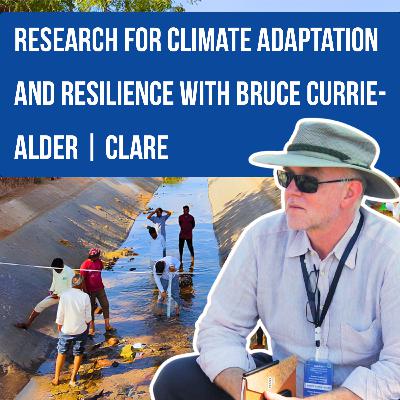
In this episode, Bruce Currie-Alder from the International Development Research Centre (IDRC), Canada, joins host Veena Srinivasan to unpack the vision behind the CLARE (Climate Adaptation and Resilience) programme – a global initiative supporting action-oriented climate adaptation research across Africa and Asia.As climate change unfolds in real time, Bruce argues that research can no longer operate at a distance from action. Instead, it must be embedded within development processes, communities, and institutions – shaping decisions from the next climate shock to the next two decades.The conversation explores why adaptation is no longer a future problem, the tension between short project timelines and long-term transformation, what “development under a changing climate” really means, gender equity and social inclusion in climate research, and the need to build the next generation of climate problem-solvers.Bruce reflects on what success would look like 20 years from now — not only in terms of project outcomes, but in the people and partnerships that continue solving problems long after the programme ends.CLARE (Climate Adaptation and Resilience) (https://clareprogramme.org/) is a global research programme funded by Canada’s International Development Research Centre (IDRC) and the UK’s Foreign, Commonwealth & Development Office (FCDO). It supports transdisciplinary, action-oriented research to strengthen climate resilience across Africa and Asia.The WELL Labs Show features rich conversations on water, environment, land and livelihoods, from the people and partners of WELL Labs. Hosted by Pavan Srinath, each episode explores complex environmental and social issues and helps you understand the systems and the dynamics better. For all references and further readings related to the episode, visit https://welllabs.org/twls-bruce-currie-alder/Subscribe to the WELL Labs YouTube channel @welllabs and watch all episodes on the official playlist here(https://youtube.com/playlist?list=PLrHB5gd1QIB_5Bt9nGOQkQRhbeXBEtU7M&si=c7D6GbQKA-8JWiNN) Recording by Nabina Chakraborty and Ritik Pathak. Video editing by Ranjith Kumar S. Graphics and artwork by Aparna Nambiar and Kanishka Goyal. Podcast production and management by Nabina Chakraborty and Pavan Srinath.
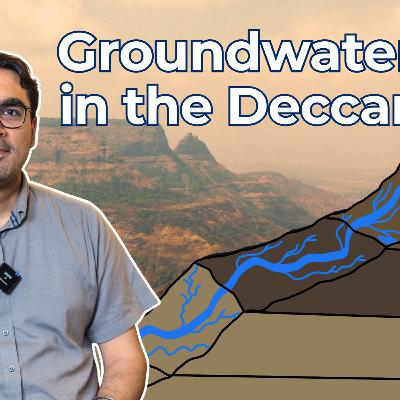
Hydrogeologist Vivek Grewal joins host Pavan Srinath to unpack how Maharashtra’s basalt geology shapes groundwater and why managing it requires thinking in layers.The conversation explores how the Deccan Traps were formed, how vesicles, fractures and weathered rock store water, and why groundwater in Maharashtra behaves very differently from granite aquifers in South India.Vivek takes us from mantle plumes and lava flows 65 million years ago to today’s seasonal and perennial aquifers, open wells versus borewells, recharge pits, farm ponds, and the delicate balance between upstream and downstream water security.The conversation also explores how farmers adapt cropping patterns under seasonal water constraints and why cities like Pune must identify and protect recharge zones to secure their future.Vivek Grewal is the managing partner with the Technical Consulting programme at WELL Labs. He has around 9+ years of experience in the water sector. He is passionate about taking the science of hydrology to the grassroots organisations.Pavan Srinath is the Managing Partner for Communications and Development at WELL Labs. Pavan is a communications and public policy professional who has spent over 14 years working in Bangalore's not-for-profit sector.This episode is essential viewing for anyone working on groundwater management, watershed development, agriculture, or urban water planning in peninsular India.The WELL Labs Show features rich conversations on water, environment, land and livelihoods, from the people and partners of WELL Labs. Hosted by Pavan Srinath, each episode explores complex environmental and social issues and helps you understand the systems and the dynamics better. For all references and further readings related to the episode, visit https://welllabs.org/twls-vivek-grewal-pt2/Subscribe to the WELL Labs YouTube channel @welllabs and watch all episodes on the official playlist here(https://youtube.com/playlist?list=PLrHB5gd1QIB_5Bt9nGOQkQRhbeXBEtU7M&si=c7D6GbQKA-8JWiNN) Recording by Nabina Chakraborty and Vraj Acharya. Video editing by Ranjith Kumar S. Graphics and artwork by Aparna Nambiar and Kanishka Goyal. Podcast production and management by Nabina Chakraborty and Pavan Srinath.
Environmental Engineer Deepthi Nagappa joins host Pavan Srinath to unpack what really happens to wastewater after we flush the toilet. The conversation explores how sewage treatment plants work, the difference between grey water and black water, what septic tanks actually do, and what nutrients like nitrogen and phosphorus do to our ecosystems.In the fifth episode of The WELL Labs Show, Deepthi takes us inside the science and engineering of wastewater treatment - from microbes and sludge to aeration tanks, filtration systems, and the operational challenges that determine whether an STP succeeds or fails.Deepthi Nagappa is a Senior Research Associate in the Urban Water programme at WELL Labs, with expertise in water quality management, she has worked on lakes in and around Bengaluru, and on safe water reuse in decentralised STPs.Pavan Srinath is the Managing Partner for Communications and Development at WELL Labs. Pavan is a communications and public policy professional who has spent over 14 years working in Bangalore's not-for-profit sector.This episode is essential viewing for anyone working on urban water management, sanitation, environmental engineering, sustainability, or anyone curious about the invisible systems that keep cities clean and lakes alive. The WELL Labs Show features rich conversations on water, environment, land and livelihoods, from the people and partners of WELL Labs. Hosted by Pavan Srinath, each episode explores complex environmental and social issues and helps you understand the systems and the dynamics better. For all references and further readings related to the episode, visit https://welllabs.org/wastewater-treatment-explained-with-deepthi-nagappa/ Subscribe to the WELL Labs YouTube channel @welllabs and watch all episodes on the official playlist here.Recording by Nabina Chakraborty, Vraj Acharya and Ritik Pathak. Video editing by Vraj Acharya. Graphics and artwork by Aparna Nambiar. Podcast production and management by Nabina Chakraborty and Pavan Srinath.
In the fourth episode of The WELL Labs Show, host Pavan Srinath is joined by Ashima Chaudhary (Managing Partner, Rural Futures, WELL Labs) to unpack how millets went from being seen as “poor people’s food” to becoming a serious solution for nutrition, climate resilience, and farmer livelihoods.Ashima previously worked with WASSAN, where she was the State Programme Coordinator for the Odisha Millets Mission. The conversation explores what millets are, how they are commonly classified (major vs minor millets), and why millet cultivation and consumption declined after the Green Revolution, especially due to the missing processing ecosystems and the dominance of rice and wheat in markets and public distribution.Ashima then takes us inside the story of the Odisha Millets Mission: a systems approach that moved production, processing, procurement, and consumption in parallel. She explains how farmer choice was protected in programme design, how incentives were used to support improved agronomic practices, how participatory varietal trials helped identify and strengthen local seed systems, and how procurement linked to PDS and ICDS helped scale demand alongside supply. We also hear about food festivals, recipe innovation, and what it took to make millets desirable again across rural communities and urban audiences.Ashima Chaudhary is the Managing Partner for Rural Futures at WELL Labs. She has spent over a decade at WASSAN (Watershed Support Services and Activities Network -Watershed Support Services and Activities Network - https://wassan.org/ ) working on millet revival across cultivation, value chains, processing ecosystems, and consumption, contributing to large-scale, government-led efforts such as the Odisha Millet Mission.Pavan Srinath is the Managing Partner for Communications and Development at WELL Labs. Pavan is a communications and public policy professional who has spent over 14 years working in Bangalore's not-for-profit sector.This episode is essential viewing for anyone working on food systems, climate-resilient agriculture, nutrition, rural livelihoods, public procurement, or systems transformation in government programmes.The WELL Labs Show features rich conversations on water, environment, land and livelihoods, from the people and partners of WELL Labs. Hosted by Pavan Srinath, each episode explores complex environmental and social issues and helps you understand the systems and the dynamics better. For all references and further readings related to the episode, visit https://welllabs.org/twls-ashima-chaudhary/Subscribe to the WELL Labs YouTube channel @welllabs and watch all episodes on the official playlist here.Recording by Nabina Chakraborty, Nanditha Gogate and Ritik Pathak. Video editing by Vraj Acharya. Graphics and artwork by Aparna Nambiar. Podcast production and management by Nabina Chakraborty and Pavan Srinath.
Hydrogeologist Vivek Grewal helps host Pavan Srinath understand the aquifers and the groundwater in South India's hard-rock landscapes. This is a third episode of The WELL Labs Show. The conversation explores why borewells keep getting deeper year after year, why wells dry up by January even after a good monsoon, and what it actually takes to address groundwater challenges in regions with hard rock.Drawing on simple analogies, field experiences from WELL Labs’ technical consulting work across rural South India, and years of hydrological research, Vivek explains what granite and gneiss are and why they matter for groundwater, how water is stored and moves through cracks and fractures in hard rock, and how the borewell revolution fundamentally altered groundwater use. The discussion also examines how traditional tank systems, and recharge processes shape water security, and how WELL Labs approaches diagnosing groundwater problems on the ground before designing interventions.Vivek Grewal is the managing partner with the Technical Consulting programme at WELL Labs. He has around 9+ years of experience in the water sector. He is passionate about taking the science of hydrology to the grassroots organisations.Pavan Srinath is the Managing Partner for Communications and Development at WELL Labs. Pavan is a communications and public policy professional who has spent over 14 years working in Bangalore's not-for-profit sector.This episode is essential viewing for anyone working on water security, agriculture, rural development, or groundwater governance, as well as for those trying to understand why South India’s water challenges are fundamentally different from those of the Gangetic plains.The WELL Labs Show features rich conversations on water, environment, land and livelihoods, from the people and partners of WELL Labs. Hosted by Pavan Srinath, each episode explores complex environmental and social issues and helps you understand the systems and the dynamics better. For all references and further readings related to the episode, visit the WELL Labs website.Subscribe to the WELL Labs YouTube channel @welllabs and watch all episodes on the official playlist here.Recording by Nabina Chakraborty, Nanditha Gogate and Vraj Acharya. Video editing by Nabina Chakraborty. Graphics and artwork by Aparna Nambiar. Podcast production and management by Nabina Chakraborty and Pavan Srinath.
In the second episode of The WELL Labs Show, host Pavan Srinath sits down with Syamkrishnan P Aryan, Senior Program Manager at WELL Labs, to unpack the world of cooperatives - from Amul’s legendary three-tier model to the future of digital platform cooperatives in India.In this episode, Syam shares how milk producers in Anand challenged exploitative supply chains and created the Amul movement, why cooperatives succeed when they stay member-centric, and how cooperative principles can help rural India transition towards more sustainable, resilient and diverse agrarian livelihoods.They explore how today’s farmer collectives, thrift & credit societies, worker cooperatives, and consumer cooperatives function- and why many fail. Syam also explains how WELL Labs is helping farmers in Raichur’s canal-irrigated regions build stronger Water User Cooperatives, federations, and service ecosystems for community hydrology, seed banks, bioresource centres, and more.Syamkrishnan P Aryan is the Program Manager with the Rural Futures programme at WELL Labs. He has around 8+ years of experience in working with governments, social enterprises, Civil Society Organisations, cooperatives and start-ups, including over three years of product management experience in the dairy-tech sector.Pavan Srinath is the Managing Partner for Communications and Development at WELL Labs. Pavan is a communications and public policy professional who has spent over 14 years working in Bangalore's not-for-profit sector.If you are curious about Amul, farmer producer organisations (FPOs), platform cooperatives, dairy systems, rural economies, or India’s agricultural transformation, this episode is for you.The WELL Labs Show features rich conversations on water, environment, land and livelihoods, from the people and partners of WELL Labs. Hosted by Pavan Srinath, each episode explores complex environmental and social issues and helps you understand the systems and the dynamics better. For all references and further readings related to the episode, visit https://welllabs.org/twls-syamkrishnan-aryan/Subscribe to The WELL Labs show on the WELL Labs YouTube channel @welllabs.Recording by Nabina Chakraborty and Nanditha Gogate. Video editing by Vraj Acharya. Graphics and artwork by Aparna Nambiar. Podcast production and management by Nabina Chakraborty and Pavan Srinath.
In this first episode of The WELL Labs Show, host Pavan Srinath sits down with Dr. Veena Srinivasan, socio-hydrologist and Executive Director at WELL Labs, to unpack the science behind these Bengaluru’s lakes.In this episode, they dive into lake hydrology, lake chemistry and biology and explore how urbanisation, sewage bypasses, wetland design, and silt/sludge management changes how lakes function today. Veena also suggests what could be the possible studies that need to be conducted to solve this problem.Dr Veena Srinivasan is leading WELL Labs’ mission to transform scientific research into real-world impact by designing solutions that simultaneously create livelihoods and conserve the environment. In 2022, she was listed as one of the top-cited scientists in the world.Pavan Srinath is the Managing Partner for Communications and Development at WELL Labs. Pavan is a communications and public policy professional who has spent over 14 years working in Bangalore's not-for-profit sector.If you care about Bengaluru’s floods, groundwater, lake rejuvenation, or simply love going for a walk to your neighbourhood lake - this episode is for you.The WELL Labs Show features rich conversations on water, environment, land and livelihoods, from the people and partners of WELL Labs. Hosted by Pavan Srinath, each episode explores complex environmental and social issues and helps you understand the systems and the dynamics better. For all references and further readings related to the episode, visit https://welllabs.org/twls-veena-srinivasan/Subscribe to The WELL Labs show on the WELL Labs YouTube channel @welllabs,Recording by Nabina Chakraborty and Vraj Acahrya. Video editing by Nabina Chakraborty. Graphics and artwork by Aparna Nambiar. Podcast production and management by Nabina Chakraborty and Pavan Srinath.
We are excited to share a brand new show featuring the people and partners of WELL Labs – where they talk about water, environment, land and livelihoods. Join host Pavan Srinath to learn more about the science, the systems and the stories behind complex issues. New Episodes out every other Thursday, starting November 20, 2025.
Comments

Download from Google Play

Download from App Store
 United States