


 Claim Ownership
The Spillover
Subscribed: 13Played: 38
Subscribe

© Copyright 2026 All rights reserved.
Description
How do critical international developments shape economic and financial markets worldwide? Each week, The Spillover traces the ripple effects of global events, exploring the intersection of policy, geopolitics, economics, technology, and finance. This podcast helps you better understand what’s happening, and why it matters to businesses, the markets, and the world.
5 Episodes
Reverse

The Hook: The war in the Middle East has effectively shut down the Strait of Hormuz, the channel through which nearly a quarter of the world’s oil passes, roiling global energy markets.
The Spillovers: The strikes have heightened geopolitical and economic uncertainty and refocused attention on energy supply and inflation. Oil and natural gas prices have surged, with knock-on effects across equities, bonds, currencies, and other commodities as investors reassess risks to their macro assumptions. Policymakers are weighing potential responses, while energy producers consider adjusting supply. Beyond the immediate volatility, shifts in production, demand, and global power dynamics over the past several decades have reshaped the way oil shocks transmit through markets and economies, and how governments can use energy as geopolitical leverage.
The Spillover is a production of the Council on Foreign Relations. The opinions expressed on the show are solely those of the hosts and guests, not of the Council, which takes no institutional positions on matters of policy.
Mentioned on the Episode:
“Outlook for Energy Demand,” International Energy Agency (IEA)
Ignacio Presno and Andrea Prestipino, “Oil Price Shocks and Inflation in a DSGE Model of the Global Economy,” Federal Reserve
John Kehoe, “Iran War Oil Inflation is a Nightmare for RBA,” Financial Review
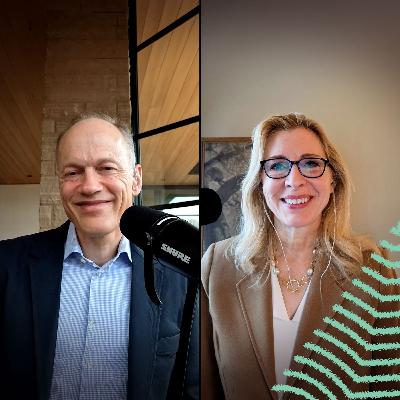
The Hook: AI inspires both promise and fear. It brings the promise of transformational technology that could boost productivity, alongside fears of industry disruption and fast-moving job losses.
The Spillovers: These debates are already moving markets. The risk is not a broad AI bubble, but an OpenAI bubble specifically, raising the question of whether U.S. capital markets can keep financing heavy investment before revenues fully materialize. Even if valuations hold, the real economic effects on jobs, productivity, and global competitiveness are just beginning to unfold, with young workers and slower-moving economies the most exposed. The window for smart AI governance is narrowing, and policy decisions made now could either stabilize expectations or amplify future market shocks.
The Spillover is a production of the Council on Foreign Relations. The opinions expressed on the show are solely those of the hosts and guests, not of the Council, which takes no institutional positions on matters of policy.
Mentioned on the Episode:
Sebastian Mallaby and Sebastian Elbaum, “The AI Trilemma,” Foreign Affairs
Sebastian Mallaby, The Infinity Machine: Demis Hassabis, DeepMind, and the Quest for Superintelligence
Alap Shah, “The 2028 Global Intelligence Crisis,” Citrini Research
Matt Shumer, “Something Big Is Happening in AI — and Most People Will Be Blindsided,” Forbes
Martha Gimbel, “An AI Productivity Boom? Don’t Count Your (Productivity Data) Chickens,” Yale Budget Lab
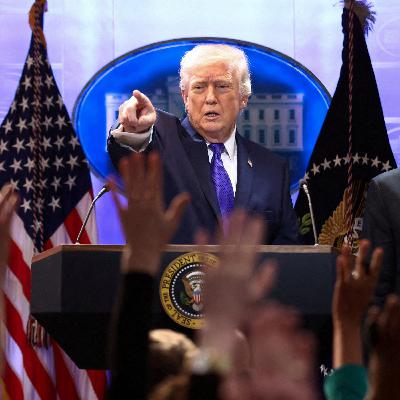
In a 6-3 decision, the U.S. Supreme Court struck down the government’s use of the International Emergency Economic Powers Act (IEEPA), holding that the statute does not authorize a president to impose sweeping tariffs. In this breaking news episode, host Rebecca Patterson is joined by Michael Froman, president of the Council on Foreign Relations and a former U.S. trade representative, to unpack the decision and discuss potential spillovers into financial and labor markets.
The Spillover is a production of the Council on Foreign Relations. The opinions expressed on the show are solely those of the hosts and guests, not of the Council, which takes no institutional positions on matters of policy.
Guest:
Michael Froman, President, Council on Foreign Relations
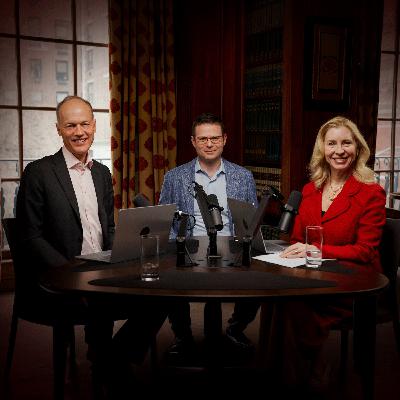
The Hook: Europe wields under-appreciated microeconomic strengths but faces significant macroeconomic challenges. On the micro side, it is home to critical and innovative firms that sit at the heart of key supply chains, an advantage that markets may undervalue. On the macro side, however, slow growth, gridlock, fragmented capital markets, and fiscal limitations have long held the region back. The incentive to get creative so Europe can grow faster and leverage its massive economy is substantial.
The Spillovers: European equities outperformed U.S. peers in 2025 for the first time in many years. Attractive valuations, hopeful sentiment around fiscal stimulus, and a desire to diversify away from the U.S. have helped propel that trend into 2026. For such optimism to be sustained, however, Europe needs to reform and better negotiate with the U.S., possibly taking a lesson from China, Brazil, and India.
The Spillover is a production of the Council on Foreign Relations. The opinions expressed on the show are solely those of the hosts and guests, not of the Council, which takes no institutional positions on matters of policy.
Guest:
Edward Fishman, Senior Fellow and Director of the Maurice R. Greenberg Center for Geoeconomic Studies; Author, Chokepoints: American Power in the Age of Economic Warfare
Mentioned on the Episode:
Edward Fishman, “Want to stop Trump bullying your country? Retaliate,” The Guardian
“MEPs propose new legal framework for innovative companies,” European Parliament
“How Polymarket Is Turning Bitcoin Volatility Into a Five-Minute Betting Market,” Yahoo Finance
“Why a dart frog poison believed to have killed Alexei Navalny points to the Kremlin,” NBC News
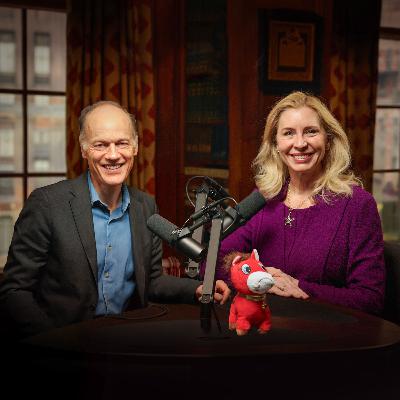
The Hook: Some of the world’s largest advanced economies—the United States, the United Kingdom (UK), Japan, and France—are increasingly vulnerable to market shocks due to a combination of high debt, aging demographics, rising defense spending, and stimulus-hungry populations at a time when inflation has become a structural challenge.
The Spillovers: More frequent political uncertainty is influencing government bond and currency markets, such as concerns over the unwinding of Japan’s “yen carry trade” following Takaichi Sanae’s reelection, scandal-driven market stress in the UK, and investor nerves around political stability in both the United States and France.
The Spillover is a production of the Council on Foreign Relations. The opinions expressed on the show are solely those of the hosts and guests, not of the Council, which takes no institutional positions on matters of policy.
Mentioned on the Episode:
“Accidental ‘crying horse’ toy wins hearts in China,” Reuters
“Economic Anxiety Is a Global Problem,” Gallup
Comments


Download from Google Play

Download from App Store
 United States