


Notebook of a COO
Subscribed: 0Played: 0
Subscribe

© Notebook Of A COO
Description
This isn't another business podcast. This is for operators.
Notebook of a COO delivers the systems, frameworks, and decisions that determine whether a business scales cleanly or collapses; from 15+ years of COO, CMO, and CFO experience.
Weekly episodes on marketing, operations, finance, AI, and the psychology behind real business growth. No hype. No hustle culture. Just operator thinking.
Start with the free assessment at notebookofacoo.com, then explore B3 courses and The Operator Academy.
85% of businesses fail due to operations. We fix that.
Notebook of a COO delivers the systems, frameworks, and decisions that determine whether a business scales cleanly or collapses; from 15+ years of COO, CMO, and CFO experience.
Weekly episodes on marketing, operations, finance, AI, and the psychology behind real business growth. No hype. No hustle culture. Just operator thinking.
Start with the free assessment at notebookofacoo.com, then explore B3 courses and The Operator Academy.
85% of businesses fail due to operations. We fix that.
32 Episodes
Reverse

You do not have time to build systems because the business is too busy. The business is too busy because everything runs through you. Everything runs through you because nothing is documented. Nothing is documented because you do not have time.That is not a time management problem. That is a loop. And loops do not break themselves.In this episode, we break down the 15-Minute System — three steps that build operational documentation inside the work that is already happening, without a free week, a retreat, or a consultant.The first step is The Capture. The mistake most operators make is framing documentation as a separate project that requires uninterrupted time to do properly. That is exactly why it never gets done. The fix is simpler than it sounds. After every repeatable task, before you move on to the next thing, record a 30-second voice memo describing what you just did. Not a training video. Not a polished explanation. Just your voice, out loud, describing the steps. A 2019 study from the University of Waterloo found that verbal recall immediately after completing a task captures 40 percent more procedural detail than written recall attempted hours or days later. You are not adding a new task to your week. You are adding thirty seconds to a task you were already doing.The second step is The Convert. Once a week, take one voice memo and turn it into a one-page written process. Rough enough that it shows the seams. Clear enough that someone else could follow it without asking you a question. That is the bar. The window is 15 minutes. Research from Harvard Business School found that the average manager spends 37 minutes per week re-explaining the same processes to different people on their team. That is more than two full Convert sessions. The 15 minutes exists. Right now it is being spent re-explaining things that should already be written down.The third step is The Compound. Every documented process reduces the number of interruptions that week. Fewer interruptions create more unbroken windows. More unbroken windows create more Convert sessions. The system builds itself once it starts. The first three processes are the hardest. After that it compounds. McKinsey research found that small and mid-size businesses that documented and standardized their core processes reduced owner time in operations by an average of 28 percent within 90 days. Not from a new hire. Not from a new tool. From writing things down.The action step for this episode is one voice memo tonight. Think about the last repeatable task you completed today. Open your voice memo app. Record thirty seconds describing exactly how you did it. That memo is the start of the system that gives you the time back.Take the free Operator Assessment: https://notebook-of-a-ecrfcf7j.scoreapp.comJoin The Operator Hub: https://notebook-of-a-coo.mykajabi.com/offers/BR5omPNa/checkoutThe Operator Academy: https://notebookofacoo.com/operator-academy.html
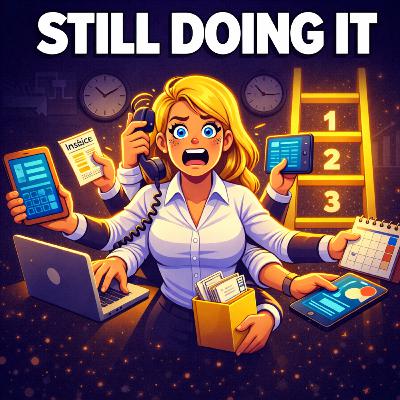
Most operators know they need to delegate. They have known it for months. The reason they have not done it is not laziness or lack of discipline. It is one belief that sounds completely rational until you run the actual math on it. The belief? They cannot afford to. The math says otherwise.In this episode, we break down the Delegation Ladder: three rungs, in sequence, at three different budget levels and explain exactly why the sequence matters as much as the spending.Rung 1 is administrative overhead: scheduling, inbox sorting, invoice tracking, data entry. Tasks where the required skill is following a clear process, not your judgment. This rung costs under $500 a month and is the one most operators skip. That is the wrong call. Research from Atlassian found the average knowledge worker spends 31 hours per month on administrative tasks. For a business owner filling every operational gap, that number runs higher. The business that says it cannot afford a $500 per month VA is almost certainly spending more than $500 in owner time on Rung 1 tasks every single month. The cost was always there. It just showed up on the calendar instead of an invoice.Rung 2 is repeatable client-facing tasks: follow-up sequences, onboarding steps, status updates, proposal delivery. Tasks that touch clients but follow a predictable pattern. This is where most businesses quietly lose clients they could have kept; not because the service was bad, but because the follow-up did not happen and the onboarding felt disorganized. Rung 2 runs $500 to $1,500 per month and has the same prerequisite as Rung 1: a documented process.Rung 3 is skilled execution: bookkeeping, content production, design, delivery support. This rung costs $1,500 and up, and it fails every time an operator tries to access it before Rungs 1 and 2 are stable. If your admin overhead is still consuming your mornings and your client-facing processes are still routing back to you, the capacity a Rung 3 hire creates gets absorbed immediately. More cost. Same bottleneck.The Delegation Ladder only works in order. Sequence is the system.The action step for this episode is the Time Audit: five business days, a running task list, three labels. Most operators find that 40 to 60 percent of their week lives in Rungs 1 and 2. Which means 40 to 60 percent of the week is potentially delegatable right now. Not after the next revenue milestone. Right now.Take the free Operator Assessment: https://notebook-of-a-ecrfcf7j.scoreapp.comJoin The Operator Hub: https://notebook-of-a-coo.mykajabi.com/offers/BR5omPNa/checkoutThe Operator Academy: https://notebookofacoo.com/operator-academy.html

Less than 4% of businesses in America ever cross one million dollars in annual revenue. Not because the market dried up. Not because the ideas were bad. Because of one specific design flaw that almost every founder builds into their business from day one, without knowing it.In this episode we break down the three operational reasons most businesses never scale past the owner, and the three moves that actually change it.The first reason is that the owner becomes the operating system. Every process, every decision framework, every piece of institutional knowledge lives in one person's head. The business cannot function without them in the room. The second reason is that the owner becomes the decision filter. Every significant choice runs through one person. By Thursday, decision fatigue has set in. By Friday, they are just surviving. The third reason is the absence of an operator layer. Growth without documented systems and accountability structures is not scale. It is acceleration toward a wall.The fix is not a new hire, a rebrand, or a morning routine. It is three operational moves: document the operating system, build a decision architecture, and either develop or install the operator layer your business is missing.This is Season 2 of Notebook of a COO. Operational frameworks for business owners who are done guessing. No hustle culture. No motivation content. Just the systems that actually scale businesses.
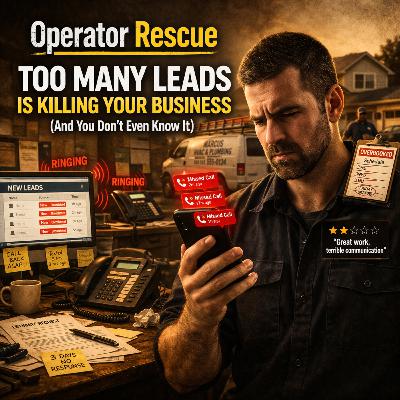
Most home services operators lie awake at night wishing their phone rang more. Marcus had the opposite problem. His phone was ringing constantly, leads were pouring in, and his business was quietly unraveling because nothing behind the scenes was built to handle the volume.In this episode of Operator Rescue, we walk through the real story of a six-year HVAC and plumbing operator whose marketing started working before his operations were ready for it. The result was missed calls, broken scheduling, slipping reviews, and a reputation that was starting to erode despite quality work in the field.We cover four specific fixes: building a real lead intake and triage system, separating the admin role from the field role completely, building a capacity model before increasing ad spend, and creating a communication SOP that turns every job into a potential five-star review.If you run a home services business and you are generating leads but not converting them cleanly, this episode will show you exactly where the leak is and how to close it.Operator Rescue drops one vertical per quarter. Real businesses. Real problems. Real fixes.
Most business coaches can't help you.That's not an attack on the industry. It's a clarity problem. And in this episode, we break down exactly why operators keep investing in coaching, feeling inspired, and then walking back into the same broken business on Monday.The issue is category. Most business owners don't have a belief problem. They have a systems problem. And no amount of mindset coaching closes an operational gap.In this episode:The one question that tells you whether you have a mindset problem or an operations problem. What the coaching industry is built to deliver and what operators actually need instead. The COO frame vs. the coach frame and why that distinction changes everything about how you build.Plus, a three-question business audit you can run this week to identify exactly where inspiration has been substituting for infrastructure in your operation.If you've ever finished a coaching program feeling motivated but still stuck, this is the episode that explains why and shows you what to do instead.Subscribe to Notebook of a COO for new episodes every week. No hype. Just operations.Visit notebookofacoo.com to take the free Operator Assessment and find out exactly where your business stands today.
If your business stops when you stop, you don't own a business. You own a job with overhead.In this episode, I'm walking you through the Operator Independence Audit, a five-question framework that tells you exactly whether your business can survive without you and what to build first if it can't.This conversation sits at the intersection of two of the biggest trends in business right now. AI automation and the business acquisition and exit market are both growing fast, and neither one works if your operation runs entirely on you. Investors want transferable systems. Buyers want businesses that don't walk out the door with the founder. And AI tools can only automate what already lives in a documented process.We cover five diagnostic questions every operator needs to answer honestly:Can your business generate revenue without you initiating it? Can your team make decisions without your approval? Does your client relationship live in a system or in your head? Is your fulfillment process documented or just done? And what actually breaks in the first 72 hours if you disappear?Every no is a build target. Every honest answer is a roadmap.This is operator thinking. No hype. No motivation. Just the framework you need to move from being the foundation of your business to being the owner of it.Notebook of a COO is built for operators, entrepreneurs, and business owners who want to run a business that actually works on the inside, not just looks good on the outside.New episodes every week. Subscribe so you don't miss what's next.

If you disappeared from your business tomorrow, what actually happens? Not forever. Just 90 days. Does revenue keep coming in? Does your team know what to do? Do clients stay? Most business owners have never honestly answered that question. And the ones who have... know the answer is uncomfortable. In this episode, I am running you through the Owner Independence Audit: 5 tests that will tell you exactly whether your business can survive without you, and where to start building if it cannot. This is the conversation that every operator needs to have before they think about scaling, exiting, or just stepping back from the day-to-day.Here is what we cover:The Revenue Test: Does money come in when you stop selling?The Knowledge Test: Is your business in your head or in a system?The Team Test: Can your team make decisions without you?The Client Test: Are your client relationships yours or the business's?The Time Test: What actually breaks when you walk away?Whether you want to sell your business someday, step away from the grind, or just take a real vacation without your phone blowing up, this framework is where that conversation starts.Drop a comment telling me which test your business failed. I read every one.The Operator Hub: https://notebook-of-a-coo.mykajabi.com/offers/MUWijiao/checkoutTake the Operator Readiness Assessment: https://notebook-of-a-ecrfcf7j.scoreapp.comSubscribe so you do not miss what is next.#BusinessSystems #OperatorMindset #SmallBusinessOwner #BusinessExit #AIForBusiness #NotebookOfACOO #Entrepreneur #BusinessOperations #SystemsThinking #ExitStrategy

How healthy is your business right now? Not how healthy does it feel. How healthy is it based on data you actually looked at this week?Most business owners are making daily decisions without looking at a single meaningful number on a regular basis. They check the bank account, check the inbox, and call that awareness. But a big deposit does not mean a healthy business. A full calendar does not mean a profitable one. And revenue going up does not mean you are keeping any of it.In this episode, I am walking you through the 5 metrics every business owner should be checking every Monday morning. These are not vanity numbers. These are not complicated dashboards that require an MBA to build. These are five specific data points that, once you start tracking them weekly, will change the way you see and run your business.We cover:Cash collected vs. revenue booked, and why the difference matters more than you thinkWhy leads are a leading indicator and revenue is a lagging oneThe conversion rate metric that almost nobody tracks but tells you everythingA simple traffic light system for monitoring client fulfillment healthOwner capacity, the metric no one talks about that determines whether everything else on this list holds togetherThis is data-driven operations content. No hype. No mindset platitudes. Just the five numbers that tell you the truth about your business every single week.If you want the frameworks, templates, and systems to build this into your business, check out The Operator Hub at notebookofacoo.com. Wherever you are, that is exactly where you are supposed to be. But that does not mean you have to stay there. Until next time.
You do not have a hiring problem. You have a systems problem.Every time something breaks in your business, the first instinct is to hire someone. An assistant. A VA. A coordinator. And then a month later, the same problems are still there. The payroll just got bigger.In this episode of Notebook of a COO, we break down why the smartest operators are not scaling with headcount. They are scaling with systems. And we give you a three-question filter to run every task through before you ever post another job listing.If you are a small business owner spending money on people when you should be investing in process, this episode will change how you think about growth.- Why hiring people to solve systems problems makes those problems more expensive, not smaller- The three-question filter every operator should use before adding headcount- How to tell the difference between a people gap and a process gap- Why automation, templates, and elimination come before a single new hire- The real cost of delegating chaos (and how to stop doing it)Take the free Operator Assessment: https://notebookofacoo.com/assessment.htmlThe Operator Hub (B3 Courses + Community): https://notebookofacoo.com/the-operator-hub.htmlThe Operator Academy (Founding Member Waitlist): https://notebookofacoo.com/the-operator-academy.htmlWebsite: https://notebookofacoo.comInstagram: @notebookofacooTikTok: @notebookofacooFacebook: Notebook of a COOWebsite: https://notebookofacoo.com#NotebookOfACOO #StopHiring #BusinessSystems #OperatorMindset #SmallBusinessOwner #BusinessGrowth #Entrepreneurship #ScaleYourBusiness #BusinessPodcast #OperationalExcellence #COO #BusinessStrategy #Automation #SystemsOverPeople #HiringMistakes
The way content reaches people online has fundamentally changed. And most business owners are still running a strategy the platforms stopped rewarding two years ago.In this episode of Notebook of a COO, we break down one of the most important shifts happening in digital right now: the move from social media to interest media. This is not about tactics. It is not about what to post or when to post it. This is about understanding why the old playbook, build a following, post to your followers, grow your audience over time, is no longer the dominant model for how attention moves online.We cover:The difference between the social graph and the interest graph, and why it changes everythingWhy reach now requires relevance, not relationship, and what that means for small business operatorsHow the algorithm is doing your targeting for you, for free, if you build content the right wayThe three things operators need to do right now to build for the interest graphWhy most of your competitors have not figured this out yet, and how that gap is your opportunityThe businesses that understand this shift first will build visibility their competitors cannot buy their way into. This episode gives you the framework to start.SUBSCRIBE for new episodes every week: operator thinking, no hype, no hustle culture, just real frameworks for running a real business.LINKS:Start with the Business Operator Assessment: https://notebookofacoo.com/assessment.htmlJoin The Operator Hub: https://notebookofacoo.com/courses.htmlLearn about The Operator Academy: https://notebookofacoo.com/courses.htmlWebsite: notebookofacoo.com
You can't afford a COO. So build one.In this episode, Johnny Taylor breaks down the five operational zones where AI functions at a COO level; when you build it correctly. This isn't surface-level "use ChatGPT" advice. This is a framework for systematizing AI into your lead follow-up, SOPs, client onboarding, decision-making, and communication workflows so your business runs without you in the room.If you're an operator who's dabbled with AI but never connected it to anything that actually runs your business; this episode is where that changes.Notebook of a COO drops weekly. Subscribe so you don't miss what's next.The Operator Academy launches Q2 2026. Founding member pricing available now at www.notebookofacoo.com.
Most business owners built their entire digital visibility strategy around one assumption - that customers search Google, Google shows a list of websites, and the best-looking one wins the click.That model has a serious crack in it right now.In 2026, search behavior has split into three distinct channels. A portion of your customers are still using Google the traditional way. But a growing portion is asking AI tools — ChatGPT, Perplexity, Claude, Google's AI Overview and getting a direct answer without clicking a single website. And another portion is using voice search, speaking into their phones or smart speakers and expecting an instant response.If your business is only optimized for one of those channels, you're invisible in the other two.In this episode, we break down three optimization frameworks every business owner needs to understand:SEO (Search Engine Optimization) | The classic. Still essential. But it's no longer the complete strategy it once was, especially as AI-generated answers increasingly appear above organic results.GEO (Generative Engine Optimization) | The one most businesses are completely sleeping on. This is about making sure AI tools actually reference and recommend your business when someone asks a relevant question. If you have no presence beyond your website, AI tools have nothing to pull from — and you simply don't exist in their world.AEO (Answer Engine Optimization) | The voice and snippet play. When someone asks Siri or Alexa a question in your space, one business gets named. AEO is the practice of making sure that business is yours.We also walk through a practical prioritization framework so you know exactly where to focus first based on where your business is right now; whether you're starting from scratch on SEO, trying to build authority for AI search, or going after voice and featured snippets.This isn't a marketing theory episode. It's an operator briefing.Your homework by the end: Google yourself, ask ChatGPT the question your best customer would ask before hiring someone like you, and then try a voice search in your category. Three searches. Three channels. Three quick audits.What you find might surprise you.Notebook of a COO is built for business owners who want practical frameworks and real operator thinking; not hustle culture and hype. New episodes every week.
Every January, the same cycle plays out.Business owners set goals, build plans, feel motivated — and then walk right back into the same operation with the same bottlenecks and the same broken systems that produced the results they didn't want. And somehow expect something different.That's not a mindset problem. That's an operations problem.In this episode of Notebook of a COO, where we deliver the operator's version of an annual reset; no vision boards, no word of the year. Just the 5 operational shifts that will actually change your business outcomes in 2026.THE 5 SHIFTS:1. Stop planning in goals. Start designing in systems.2. Build AI into your actual operations — not just your side conversations.3. Identify where you are the bottleneck. Then remove yourself from it.4. Stop tracking revenue. Start tracking margin and repeatability.5. Reset quarterly, not annually.These aren't ideas. They're commitments. And the operators who make these shifts in Q1 won't be talking about what they're going to do at the end of the year — they'll be showing you.────────────────────────────────The Operator Academy is launching April 2026. First 100 founding members get exclusive pricing. Get on the waitlist now:https://notebookofacoo.com/Take the free business assessment and find out exactly where your business is leaking:https://notebookofacoo.com/assessment.htmlNotebook of a COO is operator thinking for real business owners; the decisions, systems, and frameworks that separate businesses that scale from ones that stall. New episodes every day.
Every year, the same cycle plays out.Entrepreneurs set goals in January with real energy and real intention. Revenue targets. New habits. A word of the year. And then somewhere between Q1 and Q2, the business pulls them right back into the same patterns same bottlenecks, same chaos, same gap between where they wanted to be and where they actually are.Here's the part most people don't want to hear: that's not a discipline problem. That's a systems problem.The year doesn't change your business. Your operations do.In this episode of Notebook of a COO, we break down the 5 operational shifts that actually change outcomes not your mindset, not your morning routine, but the real underlying mechanics of how your business runs.THE 5 SHIFTS:1. Stop managing time. Start managing decisions.2. Fix fulfillment before you touch your marketing.3. Build one real metrics dashboard and actually use it.4. Eliminate your biggest bottleneck. (It's probably you.)5. Create a 90-day operating rhythm instead of a 12-month vision.None of these require a new tool. None of them require a rebrand. They require honesty about where your business is actually breaking down and the discipline to fix it before chasing the next shiny thing.This is your operator's reset for 2026. Not motivational. Operational.Learn more by going to the website: https://notebookofacoo.com/
You've been told the answer is to work harder. Wake up earlier. Push through. Grind it out.But what if that's exactly the wrong advice?In this episode, we go after the myth that effort alone drives results — and break down the real reason most hardworking operators still feel stuck: bad systems.We walk through three specific places effort leaks in most businesses — from decision fatigue and hidden bottlenecks to the gap between revenue growth and operational infrastructure — and give you one concrete audit to start fixing it this week.This is not motivational content. This is operator thinking for people who are serious about building a business that works without working them to death.B3 Free Courses + The Operator Academy: https://notebookofacoo.com/courses.htmlTake the Business Assessment: https://notebookofacoo.com/assessment.html
You've heard the message before. "You're not behind." It went viral for a reason and honestly, it's not wrong. But it's incomplete.Because the real question isn't whether you're behind. The real question is: why does it feel like you're always behind? And the answer to that, almost every single time, isn't mindset. It's operations.In this episode of Notebook of a COO, we get into the actual diagnosis. If you're an entrepreneur working long hours, carrying a growing team, and still ending the day feeling like you gained no ground this is the episode that names what's really happening.We break down three specific operations gaps that keep high-effort operators stuck: not having a clear daily operating system that protects your priorities, running your business on tribal knowledge instead of documented process, and operating without a feedback loop that tells you what's actually working week to week.This isn't a motivation episode. There's no hype here. Just the operator-level thinking that separates businesses that scale cleanly from ones that grow messy and burn their founders out in the process.By the end, you'll have three concrete action steps you can implement this week no new tools required, no consultants needed. Just a different way of working.Notebook of a COO is for entrepreneurs and operators who want to build businesses that run on systems, not stress.Learn more on our website (launching March 2026)https://notebookofacoo.com/
Most operators know they should charge more. They just don't know how to make the offer worth it.In this episode of Notebook of a COO, we break down the psychology behind why wealthy buyers spend without flinching and the five core motivators that drive every premium purchase: Status, Convenience, Exclusivity, Privacy, and Scarcity.We walk through the "Rule of Two" why your offer needs to hit at least two of these to land with a high-value buyer and how businesses like Delta, Hermes, and Tiger 21 have engineered demand at the highest level. Then we bring it back to practical: how do you apply this if you run a service business, a coaching practice, or any operation where pricing feels like a ceiling you can't break through?This episode is for operators who are ready to stop competing on price and start attracting clients who say "money sent" and actually mean it.Notebook of a COO is operator thinking for entrepreneurs who want to build businesses that scale cleanly; not loudly.
What's the most expensive mistake a business owner can make right now? Not investing enough in the one channel that costs them nothing.In this episode of Notebook of a COO, we're talking about attention where it lives, why it matters more than ever, and why most operators are massively underinvested in free reach even when the opportunity is sitting right in front of them.We break down three things every operator needs to understand: why attention is the core business asset (not just a marketing metric), what the science behind effective content actually looks like, and the real reason most people aren't showing up consistently on social; which has nothing to do with not having enough time.We also talk about platform shifts from Yellow Pages to Google, Google to AI and what that pattern should tell you about where to focus your energy right now.This is Notebook of a COO. Operator thinking for entrepreneurs and business owners who want to grow cleanly; without the noise.
You're spending money on ads but the leads aren't converting. Before you blame the creative or switch platforms, look at what happens after the click.In this episode of Notebook of a COO, we break down Conversion Rate Optimization: the most underutilized growth lever in business. With ad costs skyrocketing across every major platform, the operators who win aren't outspending their competitors; they're out converting them.We walk through the full CRO framework: the two-lever revenue model, the above-the-fold rule (60% of visitors never scroll past it), the 4-part Value Equation built around dream outcomes, perceived risk, time, and effort and the testing mindset that compounds results over time.Real numbers. Real framework. No fluff.If your website isn't converting, nothing else works at full capacity. This episode shows you exactly where to start.
The One Ratio That Predicts How Big Your Business Can GetMost business owners don't know the one number that determines whether they'll scale or stay stuck. It's called the LTV to CAC ratio; Lifetime Value to Customer Acquisition Cost. And if you don't know this number, you're flying blind.In this episode, I break down the fundamental economic unit of every business and show you exactly how to calculate it, improve it, and use it to make real decisions (not guesses).You'll learn:How to calculate your real LTV (not your revenue—your actual gross profit per customer)Why a Facebook ads agency turned $2,000 in revenue into $0 in profitHow Starbucks built a 1,400-to-1 ratio and scaled to 38,000 locationsThe two levers you can pull to improve this ratio immediatelyThe businesses that scale aren't the ones with the best ideas. They're the ones with the best unit economics.This is Notebook of a COO; real operator work for people building businesses that scale cleanly, not loudly.

Comments

Download from Google Play

Download from App Store
 United States