


 Claim Ownership
Matter of Fact: A play on "matter" (physics) and "facts" (news).
Subscribed: 0Played: 1
Subscribe

© Larry White
Description
Every story has a structure; every event has a cause. Matter of Fact dissects the latest trends in science, technology, and physics with rigorous analysis. We apply first principles to the news, helping you understand not just what is happening, but the mechanics of how and why.
90 Episodes
Reverse
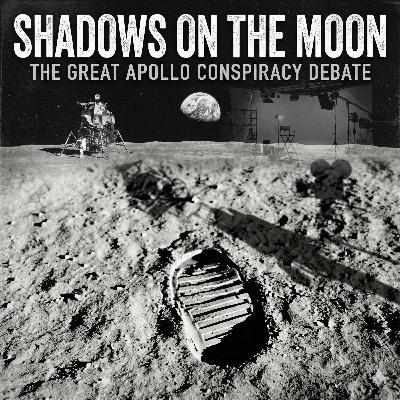
The video investigates moon landing conspiracy theories, starting with Buzz Aldrin's confrontation with a skeptic and examining technical doubts such as the lethality of the Van Allen radiation belts and visual anomalies regarding shadows and missing stars. Significant attention is given to the urban legend that director Stanley Kubrick faked the footage, with alleged evidence drawn from his special filming techniques and hidden symbols in films like The Shining. Despite these claims, the transcript presents scientific rebuttals concerning light reflection and radiation shielding, noting that third-party evidence and upcoming lunar missions aim to definitively verify the historical event.
Lucid dreaming is a state where the sleeper becomes consciously aware they are dreaming and can often control the narrative, a phenomenon distinct from sleep paralysis that was scientifically categorized by Frederik Van Eeden in 1913 and researched by experts like Stephen LaBerge,,. To induce this state, practitioners utilize techniques such as "reality testing" (checking if one is dreaming), keeping detailed dream journals, and the "Wake Back to Bed" (WBTB) method, while emerging technology companies are developing wearable devices that use ultrasound to stimulate the brain's prefrontal cortex during REM sleep. While often used for creative problem-solving and inspiration by historical figures like Nikola Tesla and Salvador Dalí, some speculative theories discussed in the sources suggest dreams might also function as connections to the deep subconscious or even portals to parallel universes.
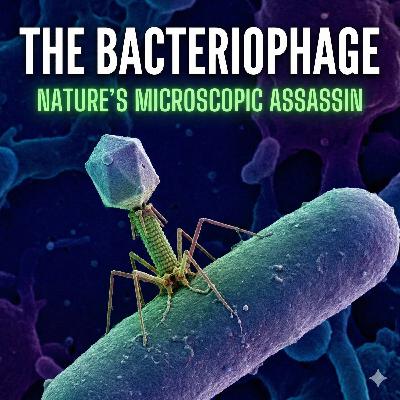
Nano-robots are microscopic devices designed for precise medical interventions, capable of identifying tumor cells for targeted drug delivery and clearing blood clots via magnetic control without invasive surgery,,. Beyond healthcare applications, researchers have developed temperature-sensitive magnetic nano-robots to remove environmental pollutants from water and are studying bacteriophages as natural, virus-like counterparts that hunt bacteria,. Futurists predict that these technologies will eventually be able to repair human genes and immune systems, potentially extending lifespans significantly or even aiding in the achievement of immortality by 2045,.

Recent market turbulence is driven by a US dollar liquidity crisis, where panic selling of assets like gold and cryptocurrencies is fueling a "cash is king" environment as investors flock to the greenback. Meanwhile, historical examples like Muddy Waters' exposure of Luckin Coffee and George Soros's currency trades demonstrate how short sellers capitalize on such financial distress and corporate fraud by betting against overvalued assets. Ultimately, these sources contrast the macroeconomic dangers of a liquidity freeze with the strategies investors use to survive or profit, whether by buying gold at support levels or conducting deep research to identify shorting targets.
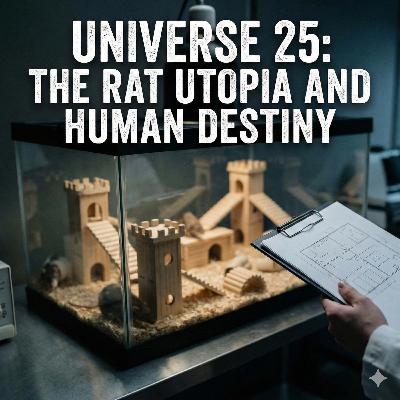
John Calhoun's "Universe 25" experiment demonstrated how a population of rats, provided with unlimited resources but confined space, eventually spiraled into extinction due to severe behavioral changes and social breakdown. The video links these findings to the concept of "tittytainment," a theory suggesting that elites might pacify the majority of the human population with mindless entertainment to prevent social unrest in an overcrowded world. However, the narrator concludes that humans may escape this fate because, unlike rats, we possess the unique ability to delay gratification and resist temptation, as evidenced by the Stanford marshmallow experiment.

On October 27, 1962, during the "most tense 10 hours" of the Cuban Missile Crisis, humanity narrowly escaped nuclear annihilation twice thanks to the individual actions of two officers. In Okinawa, U.S. Captain William Bassett bravely delayed a mistaken order to launch 32 nuclear missiles, refusing to fire until the command center corrected the error, noting that the DEFCON status had not been raised to the required level for war. Meanwhile, aboard the Soviet submarine B-59 near Cuba, officer Vasily Arkhipov refused to consent to the captain's order to fire a nuclear torpedo while under U.S. depth charge attacks, forcing the vessel to surface instead of sparking a global conflict.

Empress Dowager Cixi led an extraordinarily lavish existence, residing in the elaborately restored Palace of Gathered Elegance where her daily routine included rituals like wearing custom non-elastic silk socks that required thousands of seamstresses to produce and were worn only once. Her dining was equally extravagant, featuring 120 dishes per meal from which she would take only a few bites, and special occasions like the Lunar New Year involved grand pageantry with 500 eunuchs serving a "Four King Kongs, 500 Arhats" banquet. This lifestyle of excess continued into death with a funeral boat burned for her afterlife and a tomb filled with millions of taels of silver worth of jewels and a pearl-encrusted coffin, though her resting place was barbarically looted by warlord Sun Dianying twenty years later.

Surströmming is a Swedish fermented herring delicacy known as the world's smelliest food, with an odor so powerful that a German court once ruled a tenant's eviction legal after a lawyer simply opened a can in the courtroom to demonstrate the unbearable stench. Often referred to as an "edible bioweapon," it is produced through a traditional method involving months of natural fermentation without sterilization, which creates pressurized cans that airlines have banned as safety hazards comparable to explosives. Scientific testing has measured its pungency at levels nearly 20 times stronger than stinky tofu, and the fish itself has even been the subject of research linking herring flatulence to mysterious underwater sounds once mistaken for Soviet submarines.
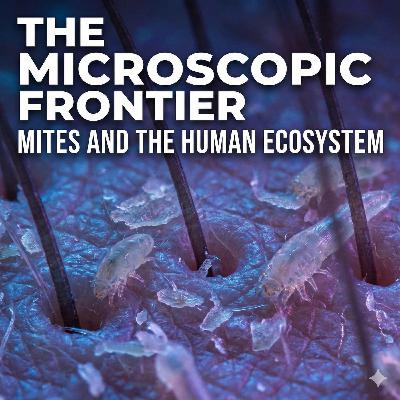
The provided sources cover two distinct subjects: a dialogue investigating fringe theories regarding the ancient use of sound frequencies, and a historical overview of the discovery and impact of mites on human health. The podcast transcript explores speculative connections between the Great Pyramid, the 432 Hertz frequency, and the Earth's Schumann resonance, suggesting ancient civilizations may have harnessed sound for energy. Meanwhile, the second text details the characteristics of dust mites, itch mites, and Demodex, explaining how these microscopic organisms were discovered and how they contribute to allergies and skin diseases.

During World War II, soldiers of the Polish II Corps adopted an orphaned bear cub named Wojtek in Iran, raising him as a morale-boosting mascot who mimicked human behaviors like drinking beer and smoking cigarettes. To travel with the troops to Italy, Wojtek was officially enlisted as a soldier and famously supported his unit during the Battle of Monte Cassino by carrying crates of ammunition to the artillerymen. After the war, the bear was relocated to Scotland and eventually lived in the Edinburgh Zoo, where he remained a beloved figure and symbol of the exiled Polish soldiers until his death in 1963.

The Mongolian Death Worm is a legendary cryptid rumored to inhabit the Gobi Desert, described as a red, sausage-like creature capable of killing prey instantly with corrosive venom or electric shocks. Local folklore often connects the beast to Genghis Khan, claiming it guards his tomb and that finding the worm is the key to discovering the conqueror's lost treasures. Despite numerous expeditions by explorers like Roy Chapman Andrews and various theories suggesting it could be a misidentified snake or related to the Bobbit worm, no scientific evidence has ever confirmed its existence.
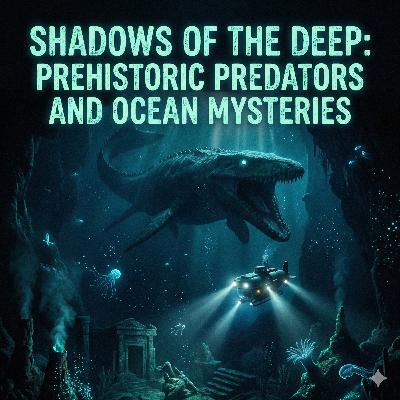
The provided sources explore the blurred lines between maritime folklore and marine biology, revealing that legendary monsters like the Kraken and sea serpents are often misidentifications of real animals such as giant squids, oarfish, or basking sharks,,. The videos investigate various modern mysteries, including the unexplained data from a tagged great white shark and the "Black Demon" of the Sea of Cortez, frequently attributing these events to known species or geological phenomena like icebergs scraping the seafloor,,. However, the rediscovery of the "extinct" Coelacanth and the fact that a vast majority of the ocean remains unexplored continue to fuel scientific and popular speculation about what unknown giants may still lurk in the deep,,.
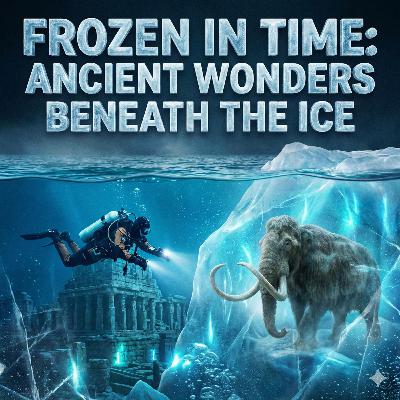
Melting ice in regions like the Yukon and Norway is revealing a wealth of preserved history, from ancient hunting tools and weapons to frozen biological wonders like mammoths and cave lions. These discoveries include remarkably intact human remains, such as Ötzi the Iceman and the "Long Ago Person Found," which offer a direct window into the lives, technologies, and genetics of our ancestors. Beyond these scientific finds, the frozen landscapes of Antarctica have inspired controversial theories regarding lost advanced civilizations, Earth crust displacement, and alleged secret military or alien bases.

In 1845, Sir John Franklin's elite British expedition to the Arctic vanished after their ships, HMS Terror and HMS Erebus, became hopelessly trapped in ice. Later scientific analysis confirmed that the crew suffered from severe lead poisoning caused by their canned food and water systems, which likely contributed to madness. Inuit legends describing an "evil" that consumed the men were eventually understood to be a reference to the crew resorting to cannibalism in their final, desperate days.

The sources detail two distinct historical narratives of "Ghost Armies," contrasting the tragic reality of abandoned frontier soldiers with the supernatural legends of a usurper's secret forces. In the first account, General Guo Xin and his men were cut off from the Tang Dynasty in Kucha for forty-two years, minting their own crude coins and aging into a "phantom" force that held the line until their eventual annihilation by the Tibetan Empire. Conversely, the second account describes how the "Pig Lord" (Liu Yu) allegedly employed a mysterious, invulnerable army—speculated to be a secretly trained unit of mute soldiers wearing rattan armor—to defeat a coalition in Nanjing and seize the imperial throne.
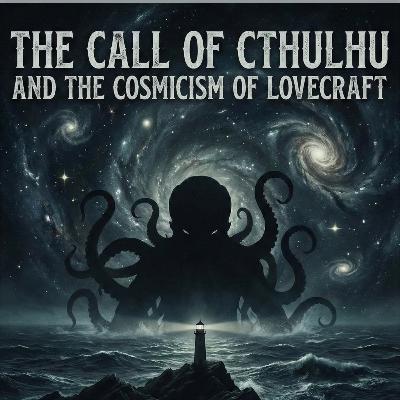
The Cthulhu Mythos, founded by H.P. Lovecraft, describes a universe that exists within the dream of the blind outer god Azathoth, spanning a timeline from the Big Bang 13.8 billion years ago to the eventual end of existence. This history chronicles the arrival and wars of various alien entities on Earth—such as the Elder Things, the Great Race of Yith, and Cthulhu—billions of years before the rise of humanity. Through stories like "The Call of Cthulhu," which details the discovery of the sunken city R'lyeh, the Mythos explores the philosophy of Cosmicism, suggesting that the universe is indifferent to humans and that contact with these ancient truths often leads to madness.
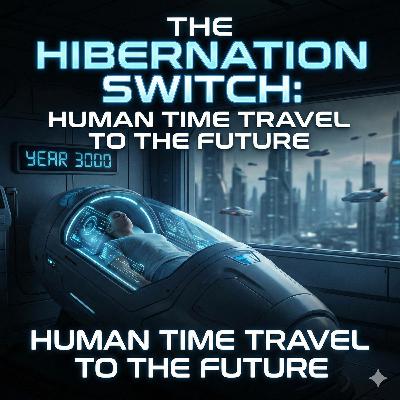
Emerging research challenges traditional views of time and biology, suggesting that the human heart may act as a precognitive receiver capable of detecting emotional events seconds before they actually occur. Parallel scientific investigations into hibernation reveal that biological "time travel" to the future might be possible, evidenced by ancient microorganisms waking from dormancy and the discovery of specific "Q-neurons" in the brain that can induce suspended animation. Together, these findings imply that the human body possesses untapped mechanisms for interacting with the temporal dimension, whether through the heart's electromagnetic resonance with the future or the physical preservation of life through artificial hibernation.

The first source details how the CIA utilized Itzhak Bentov’s research into the holographic nature of consciousness to develop "controlled perception" techniques, aiming to manipulate human behavior by altering how individuals construct their reality. The second source recounts the story of Juan Pujol Garcia, a World War II double agent who deceived the German military by inventing a fictitious network of 28 spies, ultimately diverting enemy attention away from the true site of the Normandy landings. Together, these accounts illustrate the power of fabricated narratives, whether through the psychological engineering of the mind described in the CIA documents or the strategic deception deployed by Garcia to influence the outcome of the war.

The Tibetan Book of the Dead is presented as a spiritual guide attributed to Padmasambhava that navigates the consciousness through the "Bardo," or intermediate states between death and rebirth, while also serving as a manual for practicing awareness during life. The text details how the deceased encounters various visions—ranging from the clear light of reality to terrifying wrathful deities—which must be recognized as projections of one's own mind to attain liberation rather than falling back into the cycle of samsara. Beyond its religious context, the sources highlight the book's significant influence on Carl Jung, who interpreted these afterlife stages as a psychological metaphor for confronting the collective unconscious and facing one's true self.
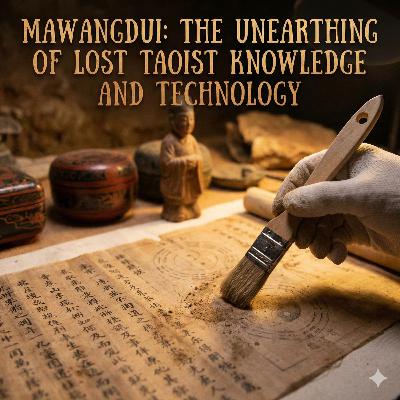
Recent investigations into ancient Chinese burial sites, specifically Emperor Qin Shi Huang's tomb and the Mawangdui Han tombs, have uncovered evidence of advanced engineering and scientific capabilities that challenge linear narratives of technological progress. Non-invasive scans of Qin Shi Huang's unexcavated complex confirmed ancient accounts of vast underground chambers containing rivers of liquid mercury and potential mechanical traps, indicating a mastery of hydraulics and metallurgy in 210 BCE. Meanwhile, the 1971 excavation of the Mawangdui tombs revealed "lost Taoist technologies," including an impeccably preserved 2,000-year-old corpse, incredibly lightweight silk garments that modern researchers struggled to replicate, and texts containing precise astronomical data.

Comments

Download from Google Play

Download from App Store
 United States