


 Claim Ownership
The Market Runup
Subscribed: 0Played: 0
Subscribe

© The Market Runup
Description
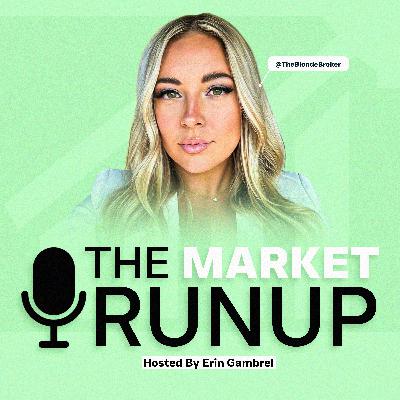
The Market Runup is a premium financial podcast at the intersection of macro, markets, and modern wealth creation.
Hosted by The Blonde Broker, the show delivers high-level market intelligence with the confidence, clarity, and cultural relevance of a new generation of finance leaders. Each episode blends sharp solo analysis with exclusive conversations featuring some of the most respected market analysts, fund managers, and financial experts across traditional finance and crypto.
Hosted by The Blonde Broker, the show delivers high-level market intelligence with the confidence, clarity, and cultural relevance of a new generation of finance leaders. Each episode blends sharp solo analysis with exclusive conversations featuring some of the most respected market analysts, fund managers, and financial experts across traditional finance and crypto.
9 Episodes
Reverse
Host Erin Gambrel (The Blonde Broker) sits down with AJ Warner, Chief Strategy Officer at Offchain Labs, the team behind Arbitrum, to discuss Ethereum scaling, the Robinhood Chain launch, and building the programmable economy. AJ shares how New York has become crypto's center over the last 18 months as traditional financial institutions and fintechs converge here. Arbitrum is now the top five blockchain by economic activity with 100 chains using their Orbit SDK, including Robinhood which just went live on testnet. AJ emphasizes the critical distinction between creating value and capturing value, explaining why sustainable business models matter for protocols and why traditional investors struggle to value crypto assets without clear frameworks.We dive into Ethereum's intentional scaling roadmap: the base layer prioritizes security and decentralization over throughput, while Layer 2 solutions like Arbitrum provide 1000x capacity increase while settling back to Ethereum. AJ breaks down why too many chains launched without product-market fit, how Offchain Labs approaches platform thinking by offering both public chains and custom SDKs, and why interoperability is fundamentally a UX problem not a technical problem. The acquisition of ZeroDev focuses on wallet infrastructure to enable seamless chain-hopping under the hood. AJ explains when to launch your own chain: either you have enough users to justify becoming the landlord instead of a tenant, or you need customization impossible on public chains. His legacy vision centers on democratizing access to opportunities, ensuring the best innovations are available to retail investors on day one, not just those born into privilege.TIMESTAMPS (00:00) Intro(00:19) NYC becoming crypto center over last 18 months, TradFi institutions converging here(01:38) Macro conditions: crypto risk on asset, stablecoin yield drives on chain activity(02:45) Robinhood tokenization partner, rebuilding entire infrastructure using on chain rails(03:56) Create value AND capture value: sustainable business models for protocols matter(04:52) Ethereum scaling: base layer security and decentralization, Layer 2 provides scalability(06:10) Early scaling focus was capacity: 1000x throughput increase settling back to Ethereum(08:42) Programmable economy vision: customization, flexibility, sovereignty for builders(10:52) Offchain Labs largest core Ethereum development team, building both Arbitrum and securing Ethereum(13:43) Too many chains launched without product market fit, platform thinking beats product silos(16:01) Interoperability is UX problem not technical: intranet approach never made sense(17:09) ZeroDev acquisition for wallet infrastructure: seamless chain hopping under the hood(18:14) Orbit chains explained: 100 in production, Robinhood just went live on testnet(18:55) Two reasons to launch chain: enough users to be landlord, or need customization impossible on public chains(19:44) Economics: 95% gross profit margin on transaction fees when you own the chain(21:28) Gaming chains with native tokens as gas, payments chains with stablecoins(26:40) Ethereum vs Solana: both succeed, modular vs integrated tradeoffs, different philosophies(34:33) Legacy vision: democratizing access, retail gets best innovations day one not just privilegeEPISODE ESSENTIALSHost: Erin Gambrel (The Blonde Broker) Host Socials: @theblondebroker (X) | @blondebrokerofficial (Instagram)Guest: AJ Warner Role: Chief Strategy Officer, Offchain Labs (team behind Arbitrum) Guest Socials: @ajwarner90 (X)Note: This podcast is for informational purposes only. Views shared are opinions, not financial advice. The host or guests may have financial interests in discussed content.
Host Erin Gambrel (The Blonde Broker) sits down with John D'Agostino, Head of Strategy at Coinbase Institutional, to discuss what institutions are actually doing in crypto right now. John brings decades of traditional finance experience, former Head of Strategy at NYMEX, subject of two NY Times bestselling books, lecturer at MIT and Columbia and a front-row seat to how capital is moving. He breaks down why markets couple and decouple all the time, why order flow is controlled by a small consolidated group of trading firms, and why Bitcoin ETF was the best-launched ETF in history despite brokers being completely prohibited from selling it. Products are sold, not bought. Morgan Stanley just announced the ETF with Coinbase as custodian, and now you have an army of brokers able to make outbound calls.Capital deployment is happening in two forms: direct investment into markets and infrastructure buildout. The unsexy part building bridges, tunnels, and subways is happening faster than ever. Coinbase Crypto-as-a-Service has hundreds of companies in the queue and hundreds of thousands of clients already. Firms that derided crypto for years are now hiring for head of crypto roles. John explains what retail completely overlooks: institutions are building core onchain infrastructure for payments, media buying settlements in 10 minutes instead of 60 days, and the real game-changer cross-collateralization. Getting everything into a system that can speak to each other frees up margin, which is the lifeblood of business. Fannie and Freddie accepting Bitcoin as collateral is huge. Solana proved 99.99999% uptime and resiliency, which is what you need for capital markets infrastructure.TIMESTAMPS(00:00) Intro(01:30) Crypto as macro-driven: markets couple and decouple, order flow controlled by consolidated trading firms(04:17) Bitcoin ETF best launch in history, no brokers allowed to sell it, products sold not bought(06:55) Morgan Stanley brokers entering, Crypto-as-a-Service hundreds of companies, infrastructure buildout(08:37) Clarity Act explained: market structure is constitution, foundational document needed even if argued over(11:32) Why Clarity Act matters for average investor: 1.6% compound interest difference over 18 years is massive(13:43) ETF flows remarkably resilient despite volatility, institutions not abandoning Bitcoin(17:19) YouTube analogy: open architecture means 99% garbage, but extraordinary talent gets discovered(20:41) Open architecture blockchain vs centralized control, accepting bad experiments for innovation(21:50) Solana proved infrastructure resiliency: 99.99999% uptime, internet built on cat videos(24:22) What retail overlooks: institutions building core infrastructure, media buying settlements in 10 minutes(28:42) Bitcoin in portfolio: 2-5% position improves Sharpe ratio, matching duration to thesis(32:54) Institutional risk appetite: cautious optimism, waiting for Clarity Act but building anyway(39:27) Catalysts are crutches, better technology wins regardless, Waymo and email analogy(41:42) 24/7 tokenized equity trading transformational, once you hedge 2am events you never go back(43:50) Legacy: building infrastructure enabling discovery and experimentation, garbage man enjoying workEPISODE ESSENTIALSHost: Erin Gambrel (The Blonde Broker) Host Socials: @theblondebroker (X) | @blondebrokerofficial (Instagram)Guest: John D'Agostino Role: Head of Strategy, Coinbase Institutional | Former Head of Strategy, NYMEX Guest Socials: @johnjdagostino (X)Note: This podcast is for informational purposes only. Views shared are opinions, not financial advice. The host or guests may have financial interests in discussed content.
Host Erin Gambrel (The Blonde Broker) sits down with Lucas Bruder, co-founder and CEO of Jito Labs, to discuss building Solana's leading MEV infrastructure. Lucas shares his journey from electrical engineering at Carnegie Mellon working on Tesla's Falcon Wing doors and programming self-driving bulldozers to discovering MEV and realizing this was modern-day high-frequency trading with hard problems to solve. His hardware and firmware background gives him a unique edge: deep systems thinking and understanding the hardware-software boundary. He bought into Anatoly's vision that Qualcomm systems engineers who truly understand computers would build the fastest blockchain.Today, Jito-Solana validator client runs on 94% of stake and has generated $750M in additional network revenue. Lucas breaks down his market layer manifesto: execution is the foundational pillar, transaction ordering is the lifeblood of markets, and Jito focuses on apps and users over maximizing validator extraction. The thesis is working Solana has the tightest spreads, beating all centralized exchanges. The best place to trade Ethereum is on Solana. Lucas discusses doubling down through 2022's dark bear market, the JTO airdrop inflection point, and his legacy vision of helping his parents move onchain to real DeFi. This show is brought to you by Token Relations, the leading investor relations platform for blockchains, protocols and token issuers. You can read The Market Runup's weekly newsletter and the best investor updates on ecosystems like Solana, Polygon, Avalanche, Ripple, Aptos and more, by subscribing for free at www.token-relations.com(00:00) Intro(01:10) From firmware engineer to crypto: Tesla, self-driving bulldozers, discovering MEV(02:09) Hardest mindset change from engineer to CEO: business thinking and inspiring people(03:18) Inflection point: JTO airdrop in 2023, straight-up priority fees on Solana(04:44) Why Solana: bought into Anatoly's vision, systems engineers understand computers(05:54) Hardware and firmware background edge: reverse engineering and deep problem-solving(09:49) Decentralization is means to end: what really matters is getting real markets onchain(10:14) Core problem Jito solves: helping Solana run efficiently amid spam(11:43) Market layer manifesto: execution is the most important blockchain layer(12:28) Value capture: balancing validators, apps, users, and Jito DAO(14:02) Best place to trade Ethereum is on Solana—tightest spreads beat CEXs(14:16) MEV explained: high-frequency trading infrastructure, transaction ordering matters(15:44) What separates essential infrastructure: net new value, focus on apps(19:32) Bam execution infrastructure: new approach to markets on Solana(21:16) Doubling down through 2022 bear: dark times, considered pivoting, tripled down(24:24) Legacy vision: helping parents and family move onchain to real DeFiHost: Erin Gambrel (The Blonde Broker) Host Socials: @theblondebroker (X) | @blondebrokerofficial (Instagram)Guest: Lucas Bruder Role: Co-Founder & CEO, Jito Labs Guest Socials: @buffalu__ (X) Note: This podcast is for informational purposes only. Views shared are opinions, not financial advice. The host or guests may have financial interests in discussed content.
Host Erin Gambrel (The Blonde Broker) sits down with Anthony Scaramucci, founder and co-managing partner of SkyBridge Capital, to discuss the precarious macro environment and Bitcoin's role in an increasingly uncertain world. Anthony breaks down the cost of ongoing conflict: energy facilities targeted, crude oil jumping from $55 to $116 per barrel, Secretary Willliam Hague requesting $200 billion to finish the job, and the Fed stuck at 3.5-3.75% with Chairman Jerome Powell openly admitting "the outlook is uncertain." We're seeing foreign central banks diversifying away from US treasuries, buying gold and other sovereign assets, while stagflation looms. Anthony puts dollar reserve status on the list of worries and he's not alone.The conversation shifts to Bitcoin's generational adoption curve. Anthony draws a parallel to the web in the 1990s: older people dismissed email and the internet as a fad, but the 30-year-olds using email became 50-year-olds who built the web economy. The same pattern is happening with bBitcoin. Anthony shares his warning from Mike Novogratz: "I want Bitcoin to be $1 million, but I want the dollar to be worth something when Bitcoin is $1 million." This show is brought to you by Token Relations, the leading investor relations platform for blockchains, protocols and token issuers. You can read The Market Runup's weekly newsletter and the best investor updates on ecosystems like Solana, Polygon, Avalanche, Ripple, Aptos and more, by subscribing for free at www.token-relations.comTIMESTAMPS(00:00) Intro(01:24) How his 4th bear market feels different with AI competing with crypto(04:47) Quantum computing threat to Bitcoin and why hardliners won't acknowledge it(07:04) Bitcoin's path to quantum resistance(12:26) What happens to Satoshi's Bitcoin and lost coins in quantum future(14:44) Bitcoin to $1M by 2030: conviction despite slower appreciation rates(17:27) Bitcoin DeFi evolution from 2024 to 2025(21:06) Bitcoin collateral: yield and lending product-market fit(28:55) Why institutions want BTC-denominated yields(31:10) What changed culturally to make Bitcoin staking acceptable to holders(34:55) Self-custodial Bitcoin staking: earn 3-7% with BTC in your hardware walletHost: Erin Gambrel (The Blonde Broker) Host Socials: @theblondebroker (X) | @blondebrokerofficial (Instagram)Guest: Anthony Scaramucci Role: Founder & Co-Managing Partner, SkyBridge Capital Guest Socials: @Scaramucci (X) Note: This podcast is for informational purposes only. Views shared are opinions, not financial advice. The host or guests may have financial interests in discussed content.
Host Erin Gambrel (The Blonde Broker) sits down with Kain Warwick, founder of Synthetix and Infinex, to break down the current market environment and what builders are focusing on during this sideways phase. Kain compares 2026 to 2018: Bitcoin grinding sideways, everyone feeling depressed, questioning their life choices. But there's a critical difference this time. Institutional adoption is real, DeFi has proven utility, and the infrastructure exists. The backdrop is completely different even though the price action feels the same. Kain shares his hot take: we're in for eight more months of choppy sideways movement before a potential capitulation at year-end, validating the four-year cycle once again.We dive into why bear markets are actually the best environment for builders. The noise floor drops, distractions disappear, and you can focus on what's actually needed in the space. The foundation for next cycle's dominant projects gets built during years like 2018, 2022, and 2026. But there's a new wrinkle this cycle: AI is creating a massive distraction outside crypto, pulling away even the smartest builders. Kain discusses building Infinex to solve crypto's UX problem, why duplicate projects keep raising money, the 2016 Ethereum greenfield opportunity happening in AI right now, and his legacy vision of making DeFi accessible without sacrificing self-custody.This show is brought to you by Token Relations, the leading investor relations platform for blockchains, protocols and token issuers. You can read The Market Runup's weekly newsletter and the best investor updates on ecosystems like Solana, Polygon, Avalanche, Ripple, Aptos and more, by subscribing for free at www.token-relations.comTime stamps(00:00) Welcome Kain Warwick, founder of Synthetix and Infinex(00:40) Market feels like 2018: sideways crab, everyone questioning life choices(02:58) Hot take: eight more months sideways, capitulation validates four-year cycle(05:04) Bear markets build foundations for next cycle's dominant projects(06:20) AI is the massive distraction pulling crypto's smartest builders away(11:26) Why duplicate projects keep successfully raising money(15:36) Early Ethereum 2016 comparison: greenfield opportunity everywhere(19:05) Building Infinex: solving DeFi's UX problem(24:45) Agents are nuking buttons and traditional UX from space(30:03) Agentic finance: agents augment transaction metadata and simplify everything(37:13) Weaponized autism and 18-hour building sessions during bear markets(42:13) Kain's legacy: making DeFi accessible without sacrificing self-custody(47:06) The transformation happening in crypto UX right now(51:21) Conviction during chaos: biggest opportunity across every industry(54:25) Looking forward: giving builders time without noiseHost: Erin Gambrel (The Blonde Broker) Host Socials: @theblondebroker (X) | @blondebrokerofficial (Instagram)Guest: Kain Warwick Role: Founder, Synthetix & Infinex | Partner, Bodhi Ventures Guest Socials: @kaiynne (X) | @infinex (Infinex) | @synthetix (Synthetix)
Welcome to The Market Runup podcast, hosted by Erin Gambrel aka The Blonde Broker. For this episode, Erin sits down with Matt Hougan, Chief Investment Officer at Bitwise, one of the world's largest crypto asset managers. We dive into a structural shift happening right now: Wall Street is rapidly moving financial infrastructure to onchain data, yet market participants remain anchored to outdated narratives. Matt breaks down the weekend crisis when U.S. strikes on Iran happened at 2:30 AM on a Sunday, forcing traditional investors to learn crypto rails because everything else was closed. Bloomberg reported on oil prices by looking at Hyperliquid and tokenized assets. The genie doesn't go back in the bottle.We discuss why Bitcoin is in a classic bottoming cycle, institutional investors moving from 0% to 2.5% or 5% portfolio allocations, and the Clarity Act concrete foundation Congress is building for crypto. Matt explains anchoring bias, why people still think of Bitcoin as the Silk Road era when it's now the Blackrock and Goldman Sachs era, and the biggest risk to the long-term Bitcoin thesis. Plus, why DeFi protocols like Aave, Uniswap, and Morpho are dramatically undervalued at $1-3 billion if tokenization reaches the $200 trillion scale Matt predicts. Five years from now, people will look back and wonder why they didn't listen when the SEC chair and Larry Fink told them this was coming. This show is brought to you by Token Relations, the leading investor relations platform for blockchains, protocols and token issuers. You can read The Market Runup's weekly newsletter and the best investor updates on ecosystems like Solana, Polygon, Avalanche, Ripple, Aptos and more, by subscribing for free at www.token-relations.comTIMESTAMPS(00:00) Intro(01:31) How WisdomTree defines tokenization as recordkeeping technology(04:16) Growth from $30M to $770M in tokenized assets within one year(06:13) Three use cases: stablecoin reserves, treasury management, and DeFi collateral(08:01) Talking to Aave and Morpho about integrating tokenized funds as collateral(09:17) Why its tokenized money market fund could become WisdomTree's largest fund overall(10:17) SEC approval for 24/7 trading and instant settlement: the big unlock(13:11) Why 24/7 trading only works with tokenized funds, not traditional infrastructure(16:02) DeFi and TradFi convergence: partnership not competition(18:28) Customer journey: wallet-first users, not brokerage account holders(27:42) Why liquid assets benefit more from tokenization than illiquid real estateEPISODE ESSENTIALSHost: Erin Gambrel (The Blonde Broker) Host Socials: @theblondebroker (X) | @blondebrokerofficial (Instagram)Guest: Matt Hougan Role: Chief Investment Officer, Bitwise Asset Management Guest Socials: @Matt_Hougan (X) | @BitwiseInvest (Bitwise)Note: This podcast is for informational purposes only. Views shared are opinions, not financial advice. The host or guests may have financial interests in discussed content.
This week's market feels confusing. Not crashing, not euphoric, just stuck and macro-driven. Host Erin Gambrel (The Blonde Broker) breaks down what's actually happening beyond the headlines. We start with the Jane Street lawsuit over alleged insider information during the 2022 Luna Terra collapse, a $40 billion wipeout that's resurfacing years later as people dig through blockchain data. But the real story isn't one firm controlling crypto, it's liquidity becoming a bigger part of the narrative as the space matures.Erin explains why the market feels slow right now. Bitcoin is consolidating in the mid-to-high 60K range, Ethereum is hovering around 2K, and Bitcoin dominance is elevated because capital rotates into safer assets during uncertainty. This is a consolidation phase after a leverage reset, not a crash. Markets move in waves, and right now we're in a positioning phase where liquidity conditions, macro signals, and capital flows matter more than hype. This show is brought to you by Token Relations, the leading investor relations platform for blockchains, protocols and token issuers. You can read The Market Runup's weekly newsletter and the best investor updates on ecosystems like Solana, Polygon, Avalanche, Ripple, Aptos and more, by subscribing for free at www.token-relations.comTIMESTAMPS 00:00 – Welcome to The Market Runup: breaking down crypto, macro, and psychology00:42 – Today's breakdown: market data, macro news, institutional moves, and what's next01:31 – Why this podcast exists: building financial literacy for beginners02:41 – Building behind the scenes: launching Insight marketing agency03:26 – Jane Street lawsuit over Luna Terra collapse and $40 billion wipeout04:37 – Market breakdown: Bitcoin at 60K, Ethereum at 2K, elevated BTC dominance05:30 – Why the market feels slow: consolidation phase after leverage reset06:28 – Macro matters: crypto is a global risk asset, not trading in isolation08:57 – What I think happens next: base case for the next month10:40 – Q&A: Five listener questions on navigating choppy markets12:22 – Why does the market react so much to news lately?13:37 – How are you personally positioning right now?14:33 – Should beginners be worried right now?15:44 – What does your actual day look like analyzing the market?17:53 – Bonus: Attending the Winter Olympics in Milan for Team USA hockeyHost: Erin Gambrel (The Blonde Broker) Host Socials: @theblondebroker (X) | @blondebrokerofficial (Instagram)Note: This podcast is for informational purposes only. Views shared are opinions, not financial advice. The host or guests may have financial interests in discussed content.
Markets are under pressure. Liquidity is tight, risk appetite is low, and crypto is being forced to mature faster than anyone expected. But in moments like these, infrastructure matters more than hype. Austin Federa, co-founder of DoubleZero, joins host Erin Gambrel (The Blonde Broker) to explain why blockchains are no longer limited by software but by the physical internet itself. We dive into the affordability crisis that isn't changing spending behavior, why traditional markets now look more like crypto than crypto looks like TradFi, and the strange phenomenon behind the 2025 flash crashes that nobody can fully explain.Austin breaks down why data flow is crypto's unsolved problem. Blockchains can handle the compute, but if you can't get data to the server fast enough, you hit performance bottlenecks. It's like owning a sports car stuck in traffic. DoubleZero is building a high-performance network layer using dedicated fiber and subsea cables to let chains like Solana scale beyond public internet constraints. We discuss bear market strategy, shifting from growth-at-all-costs to revenue generation, why founders should protect their teams over perks, and what it takes to advance an entire industry by a decade. This is infrastructure built for self-sovereignty, not safety nets. This show is brought to you by Token Relations, the leading investor relations platform for blockchains, protocols and token issuers. You can read The Market Runup's weekly newsletter and the best investor updates on ecosystems like Solana, Polygon, Avalanche, Ripple, Aptos and more, by subscribing for free at www.token-relations.comTIMESTAMPS (00:00) Intro(00:50) Welcome Austin Federa, market pressure over the past few weeks(01:39) Traditional markets now resemble crypto more than crypto resembles TradFi(02:57) The affordability crisis where spending habits aren't changing(06:06) Student loan debt disparities and policy consequences(09:01) Infrastructure gets built during bear markets when hype fades(11:36) What DoubleZero is building: network layer beneath blockchains(16:25) Dedicated fiber and subsea cables for high-performance networks(21:09) Consensus mechanism analogies and blockchain architecture(23:02) Data flow bottleneck: compute is solved, communication isn't(24:05) Bear market strategy: shift from growth to revenue generation(27:20) Austin's legacy: advancing the industry by a decade through infrastructure(29:10) Founders smiling through price action: building is what mattersHost: Erin Gambrel (The Blonde Broker) Host Socials: @theblondebroker (X) | @blondebrokerofficial (Instagram)Guest: Austin Federa Role: Co-Founder of DoubleZero | Former Head of Strategy, Solana Foundation Guest Socials: @Austin_Federa (X) | @doublezero (DoubleZero)Note: This podcast is for informational purposes only. Views shared are opinions, not financial advice. The host or guests may have financial interests in discussed content.
Welcome to The Market Runup podcast, hosted by Erin Gambrel aka The Blonde Broker and powered by Token Relations. For the flagship episode, Erin sits down with one of DeFi's most influential builders: Stani Kulechov, founder of Aave Labs. Markets are in a risk-off environment, liquidity is tightening, and crypto is moving in lockstep with broader global markets. This isn't a pullback, it's a stress test. Aave just processed nearly $500 million in liquidations this week without breaking a sweat. Stani walks us through the origins of Aave, from the early ETHLend peer-to-peer experiments in 2016 when DeFi had less than 1,000 users, to becoming the dominant player controlling 60% of all DeFi lending today. We break down how simplicity, trust, and resilience built a protocol that peaked at $75 billion in deposits in 2025.But this conversation goes deeper. Stani reveals Aave's vision to expand beyond digital assets into consumer loans, small business lending, and tokenized real-world assets. The new Aave app is coming, designed for mainstream users, especially underserved audiences like women and younger generations, with embedded wallets and full account recoverability. We dive into the macro picture: why DeFi provides uncorrelated yields that consistently outperform traditional money market funds, how central bank rate compression over the next 18 months will create a rush into DeFi, and why now is the best time to build accessible onchain infrastructure. This is crypto infrastructure maturing into real finance. This show is brought to you by Token Relations, the leading investor relations platform for blockchains, protocols and token issuers. You can read The Market Runup's weekly newsletter and the best investor updates on ecosystems like Solana, Polygon, Avalanche, Ripple, Aptos and more, by subscribing for free at www.token-relations.comTIMESTAMPS(00:00) Welcome to The Market Runup: markets in risk-off mode, liquidity tightening(00:49) Introducing Stani Kulechov, founder of Aave Labs(01:50) Origins of Aave and how the protocol works: supply, earn, borrow(02:53) Aave peaked at $75 billion in deposits, nearly a decade building in DeFi(03:54) ETHLend beginnings in 2016-2017 with under 1,000 users, evolution to pooled model(05:35) Market dominance: Aave controls 60% of DeFi lending today(06:08) Key to adoption: simplicity, trust, and utility as an onchain piggy bank(08:26) Security philosophy: building for worst-case scenarios and protocol resilience(11:18) Product consolidation: narrowing focus from multiple products to stronger core(12:14) The Aave app: simplifying DeFi with embedded wallets and account recoverability(13:40) Serving underserved audiences: women, younger generations, accessible finance(15:01) Uncorrelated yields: how DeFi consistently outperforms traditional money markets(16:28) Rate compression outlook: 18-month forecast and interest rate arbitrage opportunity(17:54) Stress test results: $200M liquidated in October, $500M this week without breaking(18:45) Stani's legacy: building for global financial wellness and open innovation(20:12) Infrastructure maturing into real finance: stablecoins, onchain lending, institutionsHost: Erin Gambrel (The Blonde Broker)Host Socials: @theblondebroker (X) | @blondebrokerofficial (Instagram)Guest: Stani Kulechov Role: Founder, Aave Labs Guest Socials: @StaniKulechov (X) | @Aave (Aave)Note: This podcast is for informational purposes only. Views shared are opinions, not financial advice. The host or guests may have financial interests in discussed content.
Comments

Download from Google Play

Download from App Store
 United States