


 Claim Ownership
The Mysteries of Latin America Podcast, Hosted by Andrew Colón
Subscribed: 18Played: 438
Subscribe

© Andrew Colón
Description
After 30 years of living and exploring ancient cultures in Latin America, I want to share them with you, along with stories of ancient civilizations, myths, legends, unsolved mysteries, UFO's, paranormal phenomena, witchcraft and more. My name is Andrew Colón and I welcome you to the Mysteries Of Latin America. Adios...for now.
97 Episodes
Reverse
For centuries, historians have searched for Aztlán, the legendary homeland of the Aztec Empire (the Mexica Empire). But what if the answer has been hiding in plain sight? In this interview, historian Dr. Erik Damián Reyes Morales of the National Autonomous University of Mexico (UNAM) presents a remarkable interpretation of Nahua historical sources that challenges the traditional search for Aztlán somewhere far to the north.If you're interested in Aztec history, the Aztec Empire, Aztec mythology, Mexica origins, Aztlán, Chicomoztoc, Teotihuacan, Texcoco, and the founding of México-Tenochtitlan, this conversation explores how codices, archaeology, and environmental history may reshape how we understand one of the most important civilizations in the Americas.This episode features Dr. Erik Damián Reyes Morales, whose research focuses on Nahua historical traditions, the Basin of Mexico, and the environmental forces that may have shaped the migrations described in early Indigenous sources.Dr. Erik Damián Reyes MoralesFacultad de Ciencias Políticas y SocialesUniversidad Nacional Autónoma de México (UNAM)https://www.erikdamian.mxTimestamps0:00 Did We Learn The Wrong Story About Aztlán?1:27 Where Aztlán REALLY was?2:26 The Answer Was In This Codex The Whole Time4:05 The Aztecs/Mexicas Were Not Alone5:28 The Catastrophe That Made Them Leave Aztlán5:53 The First Major Piece of Evidence-Population Decline6:45 A Major Accidental Discovery Under the Cathedral9:03 Recent Revelations & Iztapalapa Tie In To The Mystery10:00 The Teotiohuacan Connection11:24 How Long Before They Could Go Home?12:42 Why People Lost Faith In Their Leaders...13:22 Why Do People Think Aztlán Was REALLY Far To The North?14:46 Colonialism Helped Hide The Truth16:19 Were They Aztecs or Mexica???!!!18:58 More Than Just A Flood Caused The Migrations21:30 What Groups Migrated Apart From the Aztec-Mexica?21:54 A "Magic" Event Changed The Story For the Mexica24:12 Chicomoztoc? Real or Myth? Or Both?27:35 Why Do We Believe Fantastic Stories And Ignore Logic?31:29 The Ancient Mexicans Had No History? 33:55 The Mexica and the Byzantines?35:42 Colonialsim Rears Its Ugly Head Again...38:01 What If It Was ALL a Myth?40:46 What Mexicans in The US Share With the MexicaSources and Further ReadingElizabeth M. Brumfiel and Gary M. Feinman, The Aztec World:https://archive.org/details/aztecworld0000unse/mode/2upFrances F. Berdan, Richard E. Blanton, Elizabeth Hill Boone, Mary G. Hodge, Michael E. Smith, and Emily Umberger Aztec Imperial Strategies:https://archive.org/details/aztecimperialstr00unseElizabeth Hill Boone, The Aztec World:https://archive.org/details/aztecworld0000boon/mode/2upAlfredo López Austin y Leonardo López Luján, El pasado indígena:https://archive.org/details/lopez-austin-lopez-lujan.-el-pasado-indigena-ocr-2001 Works by Miguel León-PortillaLos antiguos mexicanos. A través de sus crónicas y cantares:https://archive.org/details/antiguos-mexicanos-miguel-portillaLa filosofía náhuatl. Estudiada en sus fuentes:https://archive.org/details/FilosofiaNahuatlMiguelPortillaLa visión de los vencidos:https://archive.org/details/vision-de-los-vencidos-miguel-leon-portilla More Books in our Amazon store here:https://www.amazon.com/shop/themysteriesoflatinamericawithandrewcolon/list/NEOPFYTPMD8Z?ref_=cm_sw_r_cp_ud_aip_sf_list_spv_ons_mixed_d_7GPR0CJSV0MRFJHAY7HS📲 Instagram:https://www.instagram.com/andycolonvoLove the stories? Rock the gear.• MOLA-inspired shirts, tote bags, mugs, and hats:https://mola-merch.creator-spring.com/ 🎙️ HIRE ME TO VOICE YOUR NEXT PROJECTNeed a professional voice-over in English or Spanish for your training video, documentary, or commercial?🔗 Book me directly: https://andycancun.com
Many people saw and felt the amount of Boricua Pride among Puerto Ricans and latinos during Bad Bunny's Halftime show at the Super Bowl.That pride is over 150 years in the making....In 1868, Puerto Rico declared independence from Spain.By the next day, the republic was gone.But the identity it created never disappeared.In this episode, we tell the full story of the Grito de Lares, the failed uprising that became the emotional and political foundation of modern Puerto Rican identity.Decades before the United States arrived in 1898, a network of revolutionaries planned an insurrection from the mountains of western Puerto Rico. Led by organizers in exile, supported by secret cells across the island, and symbolized by a hand-sewn flag, they believed that even a short-lived republic could change how a people understood themselves.You’ll meet the key figures behind the uprising, including Ramón Emeterio Betances, Segundo Ruiz Belvis, Manuel Rojas, and Mariana Bracetti, and follow the events of September 23, 1868, hour by hour, from the declaration of a republic to its violent collapse.This is not just a story about a rebellion that failed.It’s about how identity is born, how resistance reshapes culture, and why Puerto Rican pride today traces back to one night in the mountains of Lares.Because even when a revolution lasts only hours, its meaning can last generations.Spotify
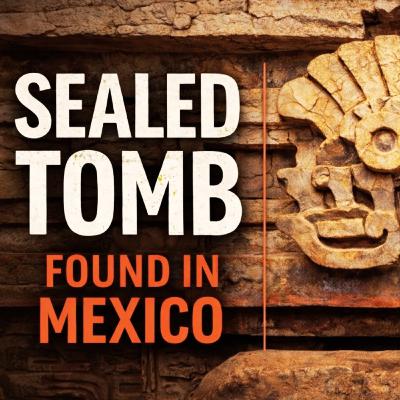
A recently discovered Zapotec tomb in Oaxaca is drawing national attention in Mexico, not because of its age, but because of how intact it was when it was found.In this episode, I walk through the discovery of Tumba 10 de Huitzo, a sealed burial dating to around the year 600. From the stone owl guarding the entrance, to painted murals, carved names, and human remains still in place, this tomb offers a rare look into Zapotec burial practices during the Classic period.For those of us with roots in the region, discoveries like this are not just archaeological events. They are reminders that complex systems of identity, memory, and ritual existed long before colonial narratives took hold.Mexican authorities, including INAH and the Secretary of Culture, have described this as one of the most important archaeological discoveries in the country in the last decade.This episode places the find in its historical context and explains why discoveries like this are so rare, and why they matter now.
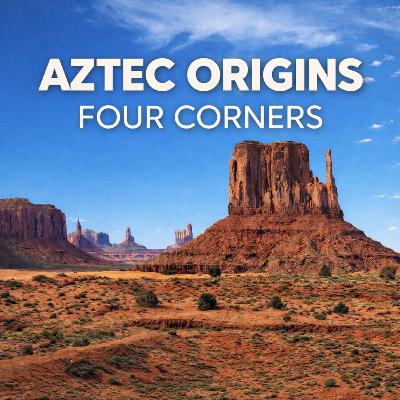
Where did the Aztecs really come from?In Mexica tradition, Aztlán is remembered as a sacred homeland somewhere to the north — a place left behind before the journey south that eventually led to Tenochtitlan. For years, listeners have asked whether that remembered “north” could point to the Four Corners region of the American Southwest.In this episode, we take that question seriously.Instead of arguing for a single location, we examine the evidence itself — archaeology, oral history, art, language, and timelines — and see how well the Four Corners holds up when placed side by side with what the Mexica actually remembered.We explore:Chaco Canyon, Mesa Verde, and Aztec Ruins — and what their architecture really tells usWhy “Aztec Ruins” isn’t Aztec at all, and how the name misleads peopleWhat Pueblo oral histories say about movement, place, and continuityWhy language points north — but not to a specific siteAnd why timing matters more than most people realizeThis episode doesn’t try to prove a theory.It asks a better question:Does the Four Corners match the kind of place Aztlán was remembered to be?This is Part of the Searching for Aztlán series.Listen carefully — and decide for yourself.✅ SUBSCRIBE & FOLLOW FOR MORE🎥 Subscribe for new episodes:https://www.youtube.com/channel/UC-mmWrV59t4X7wJClrm58kA📲 Instagram: https://www.instagram.com/andycolonvo🎧 Listen to the Podcast: • Spotify → https://open.spotify.com/show/12rJLlkJLvPqv1Q6rSm9ll • Apple Podcasts → https://apple.co/4jGoTO0🛍️ SHOP & SUPPORT THE CHANNEL • MOLA-inspired shirts, mugs, and hats: https://mola-merch.creator-spring.com/Books & gear from the show: https://www.amazon.com/shop/themysteriesoflatinamericawithandrewcolon🎥 WATCH NEXT: • Aztlán: The Original Migration Myth → https://youtu.be/IpvObjsMlMU • The Hidden History of the Ñ → https://youtu.be/ZO_QPnS6SRc 🎙️ HIRE ME TO VOICE YOUR NEXT PROJECT Professional bilingual narration for documentaries, training videos, and podcasts. https://andycancun.com🌎 ABOUT THIS CHANNEL I'm Andrew Colón, and I tell the stories of the myths, legends, history, and mysteries of the Americas — so those of us with roots here know our own stories, and everyone else can finally understand them.

They followed her into battle.They never knew she was a woman. And when the truth came out, the system erased her.To fight inside Pancho Villa’s army, Petra Herrera cut her hair, wore men’s clothes, and became Pedro Herrera. As Pedro, she led sabotage missions, destroyed bridges, cut power to entire cities, and helped take Torreón — one of the most strategic railway hubs in northern Mexico.When her secret came out, her soldiers stayed loyal.The system didn’t.She was denied rank, denied recognition, and forced to build her own all-women fighting unit. By the time the war ended, her victories belonged to everyone but her. Her name vanished from the records — but not from memory.This episode follows Petra Herrera’s life from the battlefield to the silence that followed her death, and the journalist who finally asked the question that brought her story back:Where were the women?If Petra’s story stayed with you, share it with someone who should hear her name.If you know more about Petra — or your family passed down stories about women who fought — leave them in the comments. That’s how we keep people from disappearing again.Subscribe to get more stories like this. One click tells the world these histories deserve to be heard.Some of the Women Heroes of the Mexican RevolutionAdela Velarde PérezAmelia Robles ÁvilaMargarita NeriÁngela JiménezCarmen Armelia RoblesMaría Esperanza ChaviraCarmen ParraCatalina Zapata MuñozÁngela Gómez SaldañaRosa BobadillaValentina Ramírez AvitiaEncarnación MaresMaría de la Luz Espinoza BarreraClara de la RochaCarmen VélezPetra RuizMaría Quinteras de MerasThese names prove Petra Herrera was not an exception — she was part of a history that was never written down.
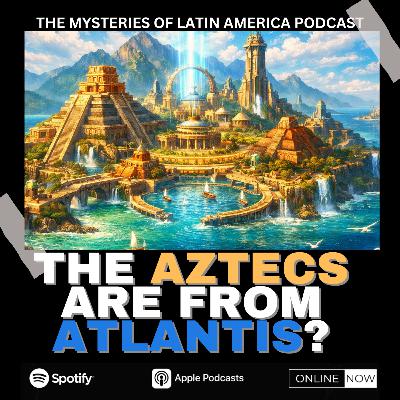
Was the Aztecs’legendary homeland of Aztlán actually Atlantis?Hundreds of listenershave asked this question—some even calling it “Aztlantis.” So I followedthe trail.In this episode of TheMysteries of Latin America, we explore the proposed connection between Aztlán,the mythical place of origin of the people most of the world knows as the Aztecs—whocalled themselves the Mexica—and Atlantis, the lost islanddescribed by the Greek philosopher Plato.We look at where thisidea comes from, why it keeps resurfacing, and how writers like IgnatiusDonnelly and later Graham Hancock helped shape the modernconversation.This episode examines: This episode is part ofthe ongoing Searching for Aztlán series.👉 Follow TheMysteries of Latin America on Spotify to continue the investigation asnew episodes are released.
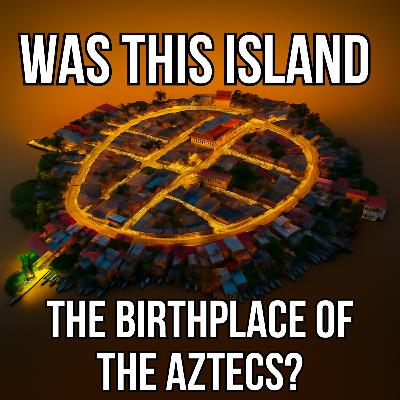
Did the Aztecs really begin their journey from a small island in Nayarit? In this episode, Andrew explores Mexcaltitán — the island long promoted as the possible location of Aztlán, the legendary homeland of the Mexica.We walk through the historical sources, the archaeological evidence, the political campaigns that shaped the modern myth, and the surprising new scholarship that challenges everything we thought we knew about Aztec origins.This is one of the most debated chapters in the search for Aztlán — and one that reveals as much about identity and national storytelling as it does about ancient history.
This episode is personal. Before I ever talked about lost cities, legends, or the history of the Americas… I was a kid who spent the Summer with my mother's family in Desamparados, Costa Rica. One afternoon in 1976, I said two words that changed how my entire family looked at me: “no sabo.” They laughed at me. They called us “los gringuitos.” And for years, I carried the shame of not speaking Spanish well enough.If you grew up in the U.S. and felt caught between languages or cultures, this story might be yours too. Being a “No Sabo kid” isn’t new, and it isn’t a joke. It’s the result of generations navigating survival, belonging, and identity on both sides of the border.In this episode, I break down:• What a “No Sabo kid” really is• The history behind language loss in Latino communities• How guilt and shame take root• How I reclaimed Spanish as an adult• Why language matters — but doesn’t define usToday I’m a bilingual voice-over artist and translator living in Mexico, telling the stories of our cultures from Mexico to Central America, South America, and the Caribbean. But it took a lifetime to get here.If you’ve ever been made to feel “not Latino enough,” I hope this helps you flip your script — and maybe start reclaiming whatever part of your identity you thought you lost.What’s your story? I genuinely want to hear it.📲 Instagram:https://www.instagram.com/andycolonvoSHOP & SUPPORT THECHANNEL• Shirts, bags, mugs, and hats inspired by the show:https://mola-merch.creator-spring.com/• Gear, books, and tools featured in the show:https://www.amazon.com/shop/themysteriesoflatinamericawithandrewcolonHIRE ME TO VOICE YOUR VIDEONeed a bilingual voice-over in English or Spanish for yourtraining video, documentary, or commercial?Narration, eLearning, corporate, time-synced dubbing, andmore.🔗 Book me: https://andycancun.comWelcome to The Mysteries of LatinAmerica. I’m Andrew Colón, and I explore myths,legends, lost cities, and cultural stories from Mexico to Argentina and acrossthe Caribbean. If you’re reconnecting with your roots — or just love goodstorytelling — you’re in the right place.#NoSabo #LatinoIdentity #BilingualLatinos #LearnSpanish#Latinidad
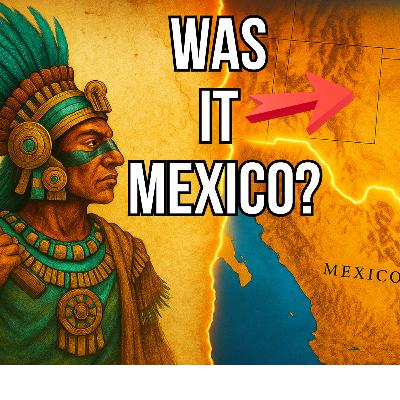
What does it really mean when people say the American Southwest “used to be Mexico”? We're talking about Utah, Colorado, California, Arizona, New Mexico, Nevada.The real history stretches across 1,000 years — long before the word “Mexico” even existed — through the rise of the Mexica (Aztec origins), native american history presences in what would become "America", three centuries of New Spain, independence, the Texas revolt, the Mexican–American War, and the moment the border moved while families stayed exactly where they’d always been.In this episode of The Mysteries of Latin America, you’ll discover:• What the world looked like before “Mexico” was a country• How the Mexica migrated from Aztlán to Tenochtitlan• Why the northern territories were never part of the Mexica Empire• How New Spain stretched into California, Arizona, New Mexico, and Texas• How independence created the first people called “Mexicans”• Why Tejas broke away — and why Tejanos fought to defend Mexico• What really happened in the Mexican–American War• How the Treaty of Guadalupe Hidalgo redrew an entire continent• Why culture stayed even when borders didn’tAnd then YOU decide: Was it really Mexico… or does the deeper truth live in the layers of Indigenous, Spanish, and Mexican heritage that never left?────────────────────────TIMESTAMPS00:00 – Were Utah and the other Southwesern US states REALLY MEXICO?00:53 – Before there was a Mexico01:23 – Leaving Aztlán03:07 – The World of the Mexica06:40 – Independence & the first “Mexicans”08:34 – When Texas broke away09:49 – The Mexican–American War10:00 – The border moves11:36 – So, Was It Mexico?13:06 – What Do You Think?13:18 – What’s next in the Aztlán series────────────────────────📚 SOURCES & REFERENCES• Durán, D. (1581). Historia de las Indias de Nueva España• Ixtlilxóchitl, F. de A. (17th c.). Relaciones Históricas• León-Portilla, M. (1959). La Visión de los Vencidos• Townsend, C. (2019). Fifth Sun — Oxford University Press• National Park Service — Indigenous Nations of the Southwest• Treaty of Guadalupe Hidalgo (1848) — U.S. National Archives• Gadsden Purchase (1853) — Library of Congress────────────────────────❓ WHAT DO YOU THINK?Did these lands “used to be Mexico”?Or is the real answer hidden in the Indigenous, Spanish, and Mexican roots that never disappeared — even when the border did?Drop your thoughts — and your sources — in the comments below.────────────────────────✅ SUBSCRIBE & FOLLOWYouTube / @hostandrewcolon Instagram / andycolonvo Podcast — The Mysteries of Latin AmericaSpotify → https://open.spotify.com/show/12rJLlk...Apple → https://apple.co/4jGoTO0────────────────────────🛍️ SUPPORT THE CHANNELMOLA Merch (shirts, hats, mugs):https://mola-merch.creator-spring.com/Books, tools, and gear used in the show:https://www.amazon.com/shop/themyster...────────────────────────🎥 WATCH NEXT• Aztlán: The Original Migration Myth • The "Aztecs" Real Name & Their Legendary H... • Did The Aztecs Come From Califonia? • Did The Aztecs Come From California? Searc... • Is Utah The Original Home of the Aztecs? • The Aztecs Came From Utah? The Aztlán Myst... ────────────────────────🎙️ NEED PROFESSIONAL VOICE-OVER?Narration in English or Spanish — documentaries, training, e-learning, character work, and time-synced dubbing.Book me directly: https://andycancun.com────────────────────────🌎 ABOUT THIS CHANNELWelcome to The Mysteries of Latin America.I’m Andrew Colón.Here we explore the myths, legends, ancient cities, and untold histories of Latin America — from northern Mexico to Argentina and across the Caribbean.If you’re reconnecting with your roots or just love learning the stories behind the places we come from… you’re in the right place.
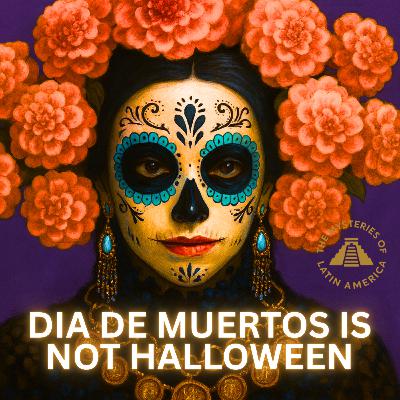
This episode dives deep into the real origins of Día de Muertos (or do you call it Dia de los Muertos?), The Day Of the Dead—from the ancient Mexica (Aztec) festivals of Miccailhuitontli and Huey Miccailhuitl, to the Spanish Catholic traditions that blended with them centuries later, creating a vibrant celebration that honors the dead with love, not fear and one of the most important celebrations in Mexican culture. But isn't it just Mexican Halloween?#mexico cultureYou’ll discover:How Día de Muertos and Halloween evolved from completely different worlds.The true meaning behind the ofrenda (altar) — every flower, candle, and photograph has a purpose.The story of Mictēcacihuātl, the Mexica Lady of the Dead, who guided souls through Mictlán.How José Guadalupe Posada and Diego Rivera transformed a satirical drawing into La Catrina, Mexico’s timeless symbol of life and death.The fascinating history of Pan de Muerto and Sugar Skulls, from Spanish All Saints’ breads to Mexico’s artistry in sugar and spirit.And yes… how James Bond’s “Spectre” changed Día de Muertos forever. Timestamps0:00 — Día de Muertos Is Not “Mexican Halloween”0:40 — The Difference Between Halloween and Día de Muertos2:10 — Indigenous Roots 3:28 — And Here Comes Spain…4:11 — La Catrina: From Satire to Symbol5:46 — The Ofrenda: What Every Element Means6:20 — How Every Family Celebrates Differently6:53 —Different Dates, Different Souls 7:50 — Día de Muertos Across Mexico10:24 — Pan de Muerto & Sugar Skulls 11:30 — Does it Still Matter?12:36—Something Special For Those That Made It This Far…🌎 A Journey Through TraditionFrom the candlelit lakes of Janitzio to the Maya Hanal Pixán of Yucatán, from the bustling Catrina Parade of Mexico City to quiet family altars in small towns — every region of Mexico celebrates differently.But each shares one truth: every life deserves to be remembered. 💬 Join the ConversationWhat’s on your ofrenda this year?Who are you honoring — a parent, a child, a friend, even a beloved pet?Share your story in the comments — it’s how these traditions stay alive. 🛍️ Support the ChannelFor Día de Muertos fans and supporters of The Mysteries of Latin America, explore the limited collection of T-shirts, hats, and bags inspired by this episode:🛒 El Mercadito MOLA on Spring https://mola-merch.creator-spring.com/🎧 Want to go deeper? Discover the books and gear I use to make these videos and my voiceover work on my Amazon Store:https://www.amazon.com/shop/themysteriesoflatinamericawithandrewcolon?ref_=cm_sw_r_cp_ud_aipsfshop_SJQNX5XS8483RS7HD0KH 🎙️ Hire My Voice or CollaborateLooking for a bilingual voice for your next documentary, training video, or commercial?🎤 Visit my site: https://www.andycancun.com/📧 Contact: 📧 Email: [andy@andycancun.com](mailto:andy@andycancun.com)📱 Instagram: https://www.instagram.com/andycolonvo 🔔 Stay ConnectedIf you love stories that blend myth, history, and mystery from across Latin America, don’t forget to subscribe to the channel and tap the bell so you never miss an episode.Watch more here: https://www.youtube.com/channel/UC-mmWrV59t4X7wJClrm58k
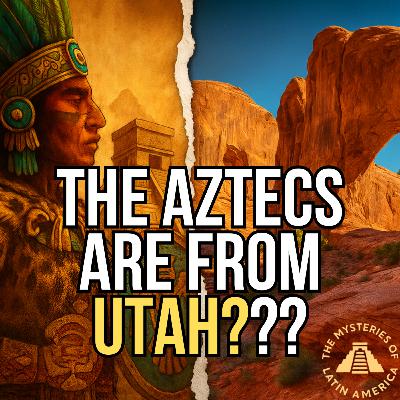
Did the ancestors of the Mexica—the people we often call Aztecs—come from the red rock canyons of Utah?For years, legends have placed the Aztecs’ origin in a mythical homelandcalled Aztlán. But according to some researchers, Aztlán may not bemythical—or even Mexican. In this episode, I explore one of the mostcontroversial and fascinating theories in Latin American history: Was Aztlánactually in the American Southwest?We'll look at: 🎧 With sources. With citations. With respect for the culture.And in the end—you decide.Check out the first episode on Aztlan here:Spotify: https://open.spotify.com/episode/2TS2B9D3bwXjRTEUYbxrYL?si=ak55sQZNRQat5HhX07OEUwApple Podcasts: https://apple.co/3IauAWo🔔 If you enjoy thoughtful storytelling about myth, migration, andidentity, follow the show for new episodes every week.🛍️ Support the project + grab gear inspired by these stories: https://www.andycancun.com/📲 Follow on Instagram: @andycolonvo📩 Email: andy@andycancun.com🎙️ YouTube channel: The Mysteries of Latin America🛒 Amazon Storefront: https://www.amazon.com/shop/themysteriesoflatinamericawithandrewcolon#AztecOrigins #Aztlán #Mexica #LatinAmericanHistory #MOLA #hispanichistorymonth#latinhistorymonthHomework Sources:· Campbell,L. (1997). American Indian languages: The historicallinguistics of Native America. Oxford University Press.· DeseretNews. (1990, March 24). Researchers say Aztec homeland was inUtah. Deseret News Publishing Company.· Durán,D. (1581). Historia de las Indias de Nueva España eIslas de Tierra Firme. (English version often cited in secondarysources; original Spanish text widely published in Mesoamerican studies.)· Gillespie,S. D. (1998). Codex Boturini and migration traditionsof the Mexica. In Carrasco, D. (Ed.), The Oxford Encyclopediaof Mesoamerican Cultures. Oxford University Press.· Hill,J. H. (2001). Proto-Uto-Aztecan: A community of cultivators in central Mexico? AmericanAnthropologist, 103(4), 913–934.· Ixtlilxóchitl,F. de A. (17th century). Relaciones históricas.(Compiled in various editions; specific references vary by edition.)· León-Portilla,M. (1959). La visión de los vencidos: Relacionesindígenas de la conquista. UNAM / Universidad Nacional Autónoma deMéxico.(English edition: León-Portilla, M. (1962). The Broken Spears: TheAztec Account of the Conquest of Mexico. Beacon Press.)· LópezAustin, A. (1980). Cuerpo humano e ideología: Lasconcepciones de los antiguos nahuas. UNAM / Instituto deInvestigaciones Antropológicas.· NationalPark Service. (n.d.). Archaeological resources of thesouthwestern United States. U.S. Department of the Interior.· Rivas-Salmon,A., & Orosco, C. (1990). Aztec homeland theory and Utah.Interviewed and profiled in Deseret News (March 24, 1990).· Shaul,D. (2014). The prehistory of the Uto-Aztecan languages. AnthropologicalLinguistics, 56(3–4), 255–302.· Townsend,C. (2019). Fifth sun: A new history of the Aztecs.Oxford University Press.· UtahRock Art Research Association (URARA). (n.d.). Rock art styles of theSouthwest. Retrieved from urara.wildapricot.org· Whitley,D. S. (2005). Introduction to rock art research(2nd ed.). Left Coast Press.
Top 5 Myths About Mexican Independence — and the Truth Behind ThemHosted by Andrew Colón | The Mysteries of Latin AmericaIf you're Mexican-American — or just fascinated by Mexico’s history — you’ve probably heard some creative versions of how Independence really happened.Think Mexico’s Independence Day is Cinco de Mayo? Think Father Hidalgo shouted “¡Viva México!” and the next day everyone woke up free? Did Mexican Independence come after the Mexican Revolution?Think again.In this episode, we bust the top five myths about Mexican Independence — and reveal the messy, surprising, and often misunderstood truth behind each one. From important figures like Leona Vicario and Vicente Guerrero to the real timeline of independence (hint: it wasn’t overnight), this is the version of history you didn’t get in school or from your grandparents.What you’ll hear:Real words of El Grito — and why “¡Viva México!” may or may not be in there...Why Cinco de Mayo has nothing to do with independenceThe myth of a quick victory — and the decade-long war it actually wasWhat the caste system tells us about who fought (and who didn’t)Mexican Independence vs The Mexican RevolutionIf you’ve ever been curious about what really happened on September 16, 1810 — and why it matters today — this episode is for you.History meets myth-busting. Culture meets truth.Follow the podcast for more myths, legends, and mysteries from across Latin America!
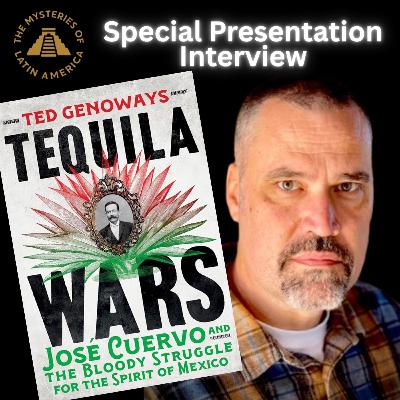
A MYSTERIES OF LATIN AMERICA SPECIAL PRESENTATION PODCAST INTERVIEWTequila isn’t just a drink—it’s the story of revolutions, betrayals, the Cuervo family empire, along with the Sauza family and other prominent names in the tequila industry. In this exclusive interview, author Ted Genoways reveals the hidden history of tequila and Mexico, and what they mean to each other and us today.What if everything you thought you knew about tequila’s origins was only half the story?In this episode of The Mysteries of Latin America, Andrew Colón sits down with two-time James Beard Award-winning journalist Ted Genoways, author of Tequila Wars: José Cuervo and the Bloody Struggle for the Spirit of Mexico.We uncover the erased history of tequila from about 1880–1930—a period wiped from memory during and after the Mexican Revolution. This isn’t just about a brand. It’s about power, survival, identity, and the fight for Mexico’s soul.From José Cuervo’s beginnings in the tequila business, to the rivalry with the Sauza family, to exile, backroom deals, cartels, and the Cuervo women who worked beding the scenes and on the main stage, this story has it all—Succession meets Narcos, with agave. What You’ll Learn in This InterviewThe hidden history of tequila between 1880 and 1930—and why it was erased.How the Cuervo family survived wars, revolutions, and betrayals.The surprising role of women in building the Cuervo empire.Why “cartel” meant something very different in the tequila world.Where "Añejo" tequila got its true originsHow close the tequila industry came to disappearingHow tequila became Mexico’s calling card to the world.A shocking detail that could make any tequila lover drop their glass. Here's a link to the book on Amazon: https://www.amazon.com/Tequila-Wars-Cuervo-Bloody-Struggle/dp/0393292592/ Note: I am not compensated in any way from book sales, the author or any brands mentioned in this interviewAbout The Mysteries of Latin AmericaI’m Andrew Colón. Every week, I share the myths, legends, histories, and mysteries of Mexico, Central America, South America, and the Caribbean—so that Latinos in the U.S. know their stories, and everyone else learns ours. If you enjoyed this video, hit like, drop your thoughts in the comments, and subscribe for more powerful stories from across this region.📲 Follow me on Instagram: https://www.instagram.com/andycolonvo/ #TequilaWars #JoseCuervo #MexicanHistory #TequilaHistory #MysteriesOfLatinAmerica
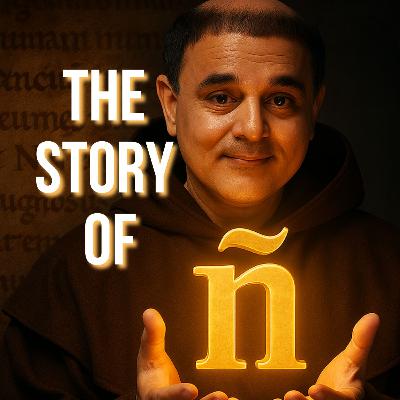
A little squiggle over the letter n has been around for more than 800 years — and its story involves medieval monks, a Spanish king, and tech companies that once tried to erase it from keyboards. Without it, “Happy New Year” in Spanish flips into something you definitely don’t want to wish your grandma.In this episode of The Mysteries of Latin America, Andrew uncovers the journey of the letter Ñ — from Roman scribes to medieval Spain, from typewriters to computer keyboards, and from linguistic quirk to a global symbol of culture, identity, and pride.If you’d like to dig deeper into the history of the Ñ:Real Academia Española (RAE) – Ortografía de la lengua española (1741 and later editions)Penny, Ralph. A History of the Spanish Language (Cambridge University Press, 2002)Lapesa, Rafael. Historia de la lengua española (Gredos, 1981)García Márquez, Gabriel – various essays and speeches on the defense of the Ñ (notably after Spain’s EEC debates in the 1980s)Vergne, Aida. “¿Se va la Ñ?” Metro Puerto Rico (2013, April Fool’s prank article)Hualde, José Ignacio. The Sounds of Spanish (Cambridge University Press, 2005)Puente, Manuel Alvar. El español: orígenes y evolución (Espasa-Calpe, 1992)📚 Sources & Further Reading
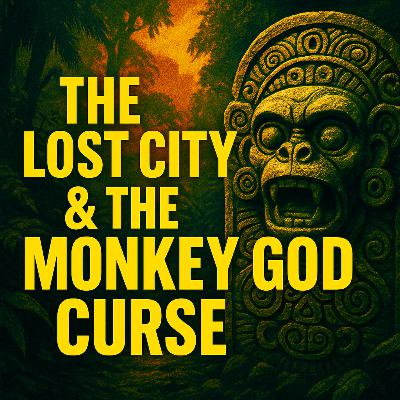
The Lost City & the Monkey God CurseHidden deep in the Honduran jungle lies one of the greatest archaeological mysteries of the Americas: a lost city whispered about for centuries... and a terrifying curse that followed those who found it.In this episode of The Mysteries of Latin America, we explore the real-life search for the so-called White City—also known as the City of the Monkey God. From Indigenous legends and Spanish chronicles to a modern expedition using LiDAR technology, this is a story filled with obsession, discovery, and a string of chilling events that some say were no coincidence.🎙️ Join host Andrew Colón as he unpacks the curse that struck researchers, the truth behind the Monkey God, and the sacred land at the heart of this mystery.If you’ve ever been fascinated by lost civilizations, ancient ruins, or the eerie line between myth and reality—this is one you won’t forget.Sources for Further Research:National Geographic’s 2015–2017 coverage of the expedition (Douglas Preston reporting)The Lost City of the Monkey God by Douglas Preston (2017)Journal of Field Archaeology: “The Use of LiDAR in Mesoamerican Archaeology” (Chris Fisher et al.)Theodore Morde’s archived expedition journals (Smithsonian Institution)University of Houston’s NCALM (National Center for Airborne Laser Mapping)Interviews with archaeologist Christopher Fisher (Colorado State University)Instituto Hondureño de Antropología e Historia (IHAH)Pech community interviews archived by Honduras Cultura y Historia
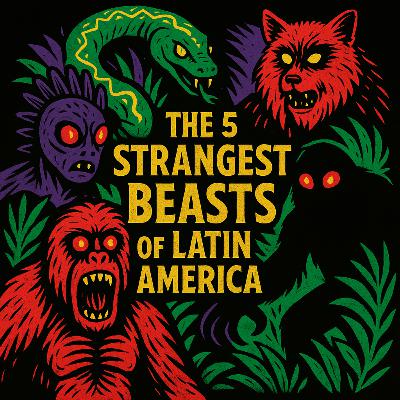
If you’re from Latin America—or from a Latino family—you’ve heard stories like these. I definitely did growing up.In this episode, I’m sharing 5 of the wildest beasts from across the region: monsters that howl, vanish into rivers, drag chains through the night… and one with a mouth where no mouth should ever be.Some are ancient. Some are modern. But all of them have left people shaken—and some of these stories come straight from real reports.Stick around to the end. The last one? Absolutely unreal.– AndrewThe Mysteries of Latin America
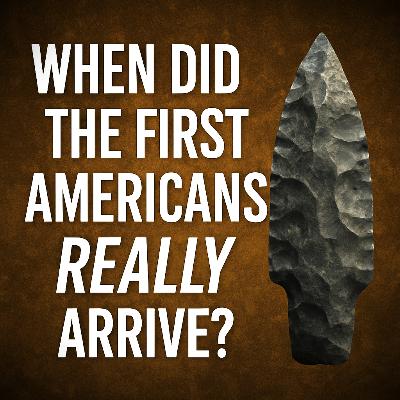
What if the first humans arrived in the Americas 20,000 years before we thought?In this episode of The Mysteries of Latin America, we journey to Monte Verde in southern Chile, where archaeologist Tom Dillehay uncovered fire pits, tools—and even chewed seaweed with human saliva—dating back nearly 15,000 years. This single discovery shattered the long-held Clovis First theory and changed our entire understanding of how the Americas were first populated.But that’s not even the most shocking part…Monte Verde may not be the oldest site. In fact, newer evidence hints that humans might’ve been in the Americas 33,000 years ago.🌎 In this episode:• The rise and fall of the Clovis First theory• What was discovered at Monte Verde• The intense backlash—and how science caught up• Alternate theories: boats, kelp highways, and coastal migration• Other early sites: Pedra Furada, Topper, and White Sands footprints• Why Monte Verde matters for Indigenous history today🎧 Prefer to read along? Check out the full script here: [Optional – Upload to your site or Substack if you want]🔗 Sources & References• Dillehay, T. D. (1997). Monte Verde: A Late Pleistocene Settlement in Chile. Smithsonian Institution Press.• Dillehay et al. (2008). “Monte Verde: Seaweed, Food, Medicine, and the Peopling of South America.” Science, Vol. 320.• Waters, M.R., Stafford, T.W. (2007). “Redefining the Age of Clovis.” Science, Vol. 315.• Halligan et al. (2020). “Evidence of Humans in North America During the Last Glacial Maximum.” Science, Vol. 369.• UNESCO World Heritage Tentative List: Monte Verde Archaeological Site• National Geographic (2021): “First Americans Arrived Thousands of Years Earlier Than Thought”💬 Got a theory about the first Americans?Drop it in the comments or email me at andy@andycancun.com🔔 Like this episode?Follow The Mysteries of Latin America for more stories that challenge what we thought we knew.
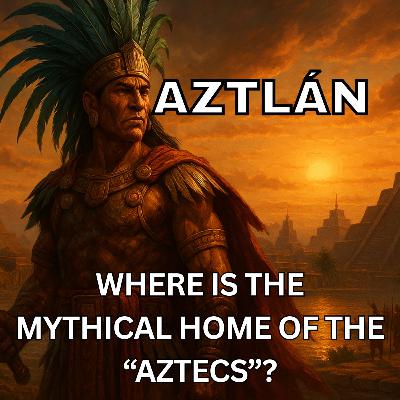
Was Aztlán real—or just a powerful myth? For generations, the Mexica told of a northern homeland they were commanded to leave in search of a sacred sign. That journey would lead them to Lake Texcoco… and to the founding of the Aztec Empire.In this episode of The Mysteries of Latin America, Andrew Colón explores what we know—and what we still don’t—about Aztlán. From ancient codices and migration stories to modern theories pointing to Zacatecas and Chihuahua, you’ll hear why this origin story still matters today.—Heard a different version of the Aztlán story?📩 DM me on Instagram: @andycolonvo📧 Email: andy@andycancun.comIf this story moved you—share it.Send it to someone who should hear it.And don’t forget to follow the show so these stories make it to future generations.Mil gracias for listening.
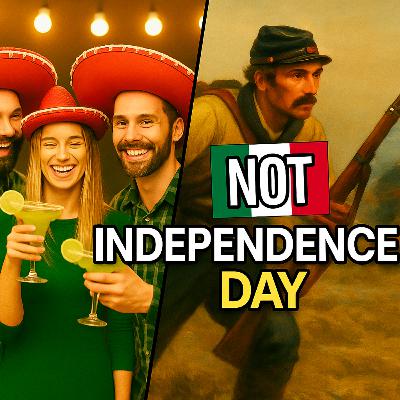
Most of us have been lied to about Cinco de Mayo.It’s not Mexican Independence Day. It’s not about tacos or tequila. So what is it really about?In this episode of The Mysteries of Latin America, Andrew Colón unpacks the real story behind Cinco de Mayo: a shocking military upset at the Battle of Puebla in 1862, how it came to symbolize resistance, and why it means so much more to millions of Mexican Americans today.From a war sparked by European imperial ambitions to its unlikely revival during the Chicano Movement in the U.S., Cinco de Mayo is a powerful story of survival, sovereignty, and pride—on both sides of the border.🎧 Prefer your history with a twist? We’ve got you.🎙️ And if you want to hear how a French pastry chef kicked off the war that led to Cinco de Mayo... check this episode next:
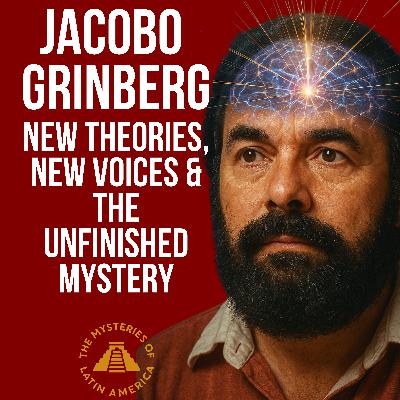
Jacobo Grinberg was a renowned Mexican neuroscientist who vanished without a trace in 1994. But his disappearance was only part of the mystery. In this updated episode, we explore newly surfaced theories, voices from those who knew him, and what his "Syntergy Theory" might really mean—decades later.Was it the government? A metaphysical experiment gone wrong? Or something even stranger?🎙️ Hosted by Andrew Colón🔍 From The Mysteries of Latin America📌 New episode drops every week—subscribe to stay curious.#JacoboGrinberg #MysteriesOfLatinAmerica #Podcast #MexicanHistory #UnsolvedMystery #Neuroscience #Consciousness #Disappearance

Comments

Download from Google Play

Download from App Store
 United States