


 Claim Ownership
Inside the Business
Subscribed: 0Played: 0
Subscribe

© EarningsBeat.ai
Description
Want to know how a specific company actually works? Get "Inside the Business" to learn who their customers are, how they make money, what their leadership is prioritizing, and where they're headed next. Each episode is built from real Investor Day transcripts and earnings calls, with direct quotes from named executives, so you're hearing the strategy straight from the people setting it.
31 Episodes
Reverse
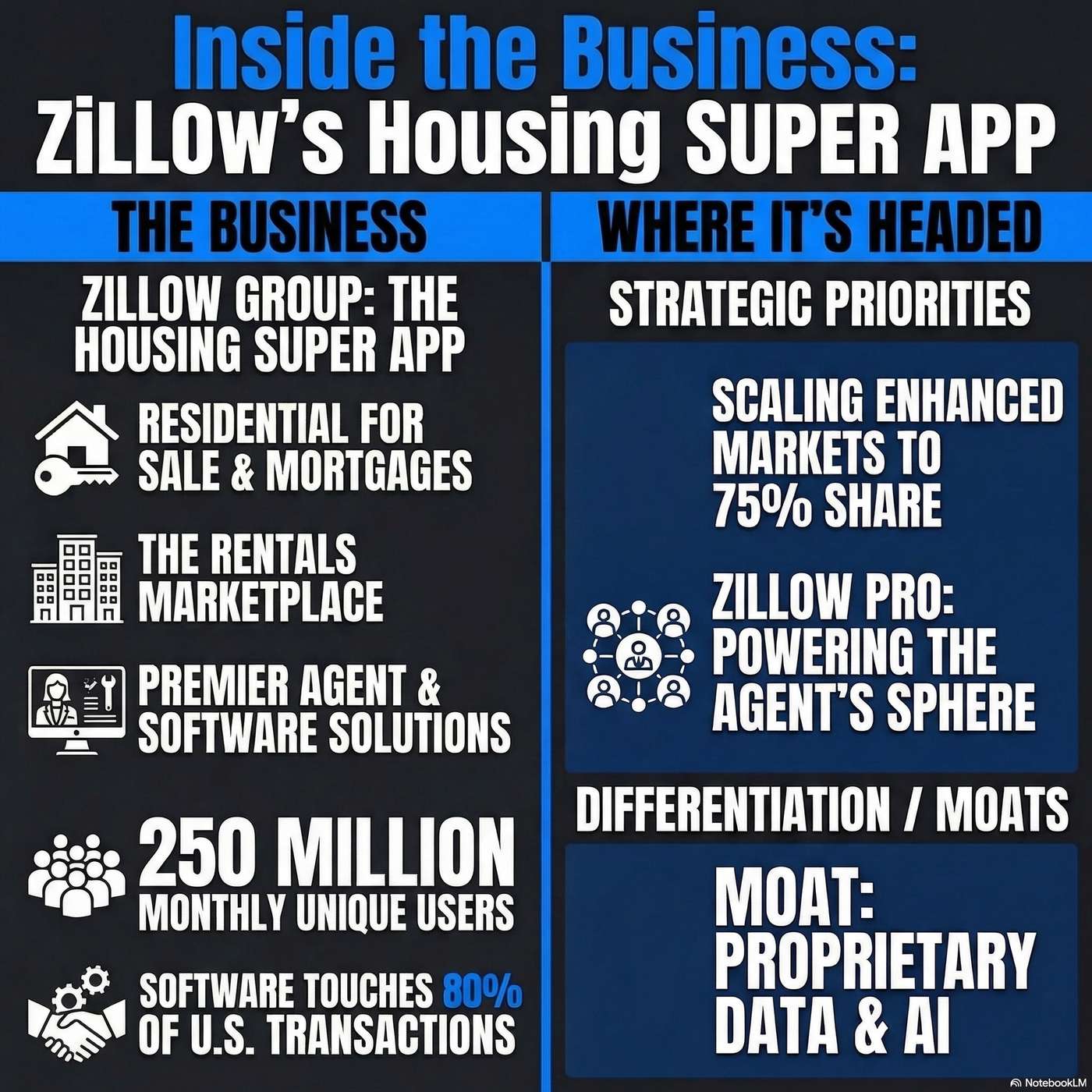
Business Synopsis & Direction.Zillow Group operates a leading real estate marketplace, generating revenue by connecting high-intent movers with agents, property managers, and lenders.The company is evolving from a lead-generation site into a housing super app that digitizes buying, selling, renting, and financing.Leadership is focused on capturing actual transaction share by building an integrated end-to-end digital experience.Differentiation & Products.Zillow’s primary moat is its massive consumer brand, with roughly 80% of traffic arriving organically and directly to the platform. It pairs this massive top-of-funnel reach with proprietary professional software like Follow Up Boss and ShowingTime to facilitate the actual transaction.Key offerings include Zillow Home Loans, AI-powered Zillow Showcase listings, and Zillow Pro, a newly launched subscription suite helping agents manage their entire sphere of influence.Strategy & Key Priorities. CEO Jeremy Wacksman and CFO Jeremy Hofmann emphasize scaling "Enhanced Markets" to handle over 75% of customer connections through integrated agent and loan officer teams.Zillow is also driving toward a $1 billion revenue target in its two-sided rentals marketplace and embedding generative AI throughout the entire home shopping and transaction process."All sourced directly from Zillow Group's own leadership from earnings calls and analyst briefings."
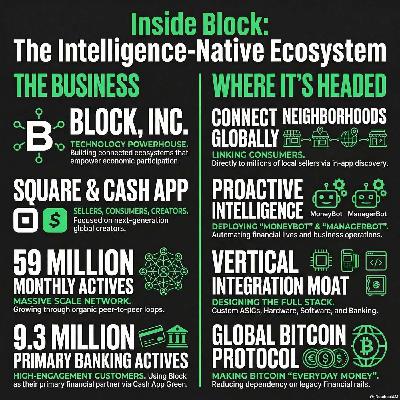
Business Synopsis & Direction.Block, Inc. operates interconnected financial ecosystems for merchants and consumers. It drives revenue through payment processing, software subscriptions, and consumer lending.Its diverse customer base spans from independent gig workers to multi-location restaurants.Leadership is currently transforming Block into an "intelligence native" company focused on building tools for autonomous economic empowerment.Differentiation & Products.Block differentiates itself through the deep vertical integration of its hardware, software, and banking tools.Its core competitive advantage is its presence on both sides of the transaction, actively connecting Square sellers with Cash App consumers via the new Neighborhoods initiative.Flagship offerings include Cash App Borrow, the Square Point of Sale system, and Afterpay.Furthermore, Block utilizes its proprietary, real-time data to power its internal Cash App Score, enabling superior underwriting and expanded credit access.Strategy & Key Priorities.Key priorities include scaling network density, expanding lending access, and launching proactive AI tools like MoneyBot and ManagerBot. CEO Jack Dorsey is accelerating product velocity by drastically restructuring Block around advanced intelligence tools.Meanwhile, CFO and COO Amrita Ahuja is targeting compounding profitable growth, highlighting that Block recently surpassed the Rule of 40 and generated a record $10.36 billion in gross profit in 2025."All sourced directly from Block, Inc.'s own leadership from earnings calls and analyst briefings."
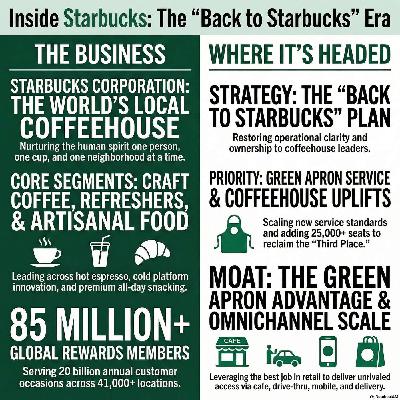
Business Synopsis & Direction.Starbucks operates a global network of coffeehouses, generating revenue through premium handcrafted beverages, food, and digital channels.Customers are driven by daily rituals and the welcoming "third place" connection.Leadership is currently prioritizing the "Back to Starbucks" turnaround, focusing on operational consistency, enhanced cafe seating, and strategic international licensing.Differentiation & Products.Starbucks sets itself apart through unparalleled omnichannel scale, seamlessly integrating cafe, drive-thru, mobile, and delivery access. A key competitive moat is beverage personalization, where customization alone generates $1 billion annually.Starbucks leverages core products like cold foam alongside emerging innovations like energy refreshers and protein-infused beverages to capture afternoon occasions.Strategy & Key Priorities.Chairman and CEO Brian Niccol is focused on executing the Green Apron Service model to improve throughput, targeting peak service times under four minutes. CFO Cathy Smith anchors this strategy with 2028 targets of 3% comparable sales growth and operating margins up to 15%."All sourced directly from Starbucks's own leadership from earnings calls and analyst briefings."
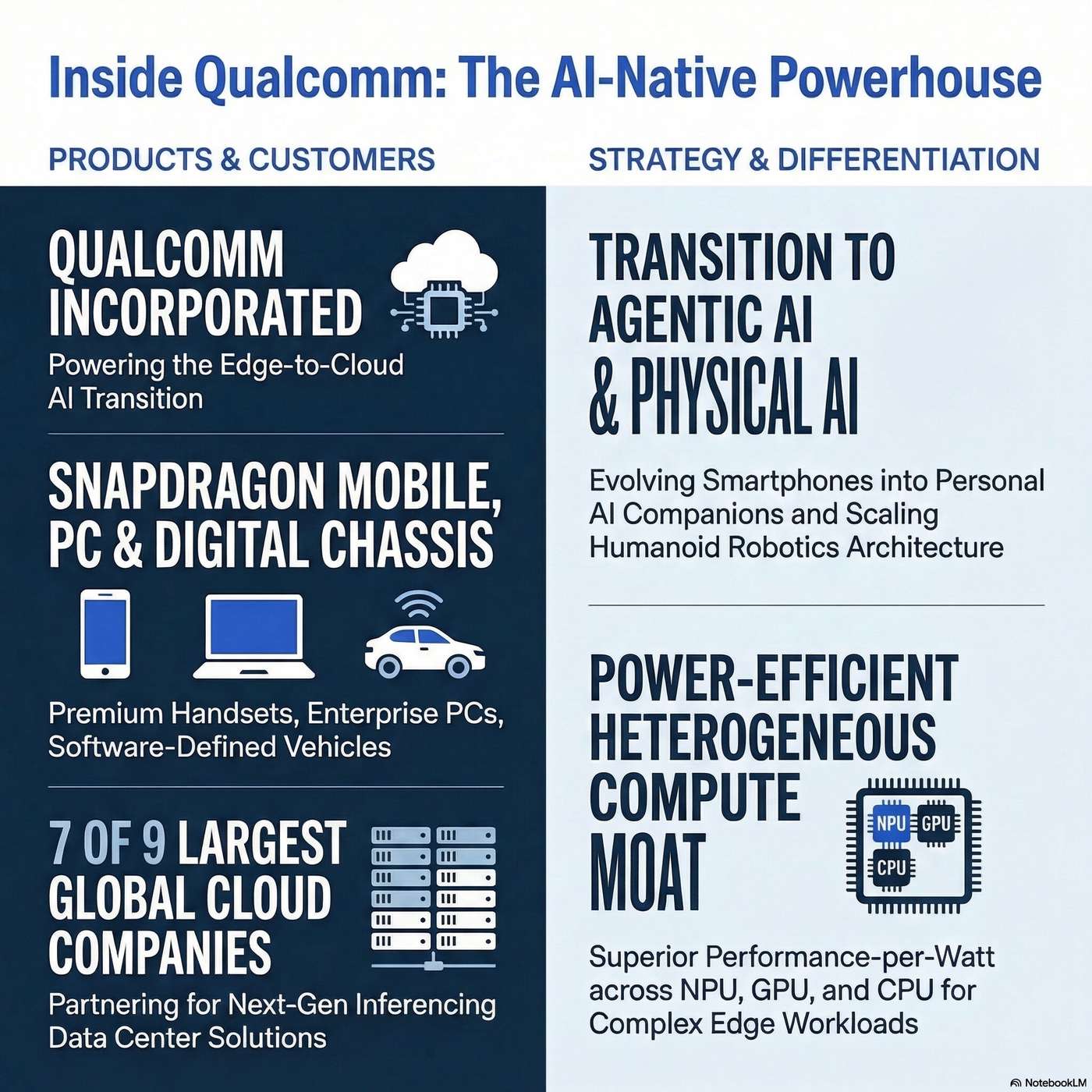
QUALCOMM Incorporated designs advanced semiconductors and licenses foundational wireless technologies. It generates revenue by supplying highly efficient chipsets to mobile OEMs, automakers, and IoT developers worldwide.Driven by consumer demand for premium computing power, leadership is actively prioritizing revenue diversification by expanding into edge computing, advanced robotics, and AI data centers.Qualcomm's competitive moat stems from its industry-leading power efficiency and integrated architectures spanning sub-5 watt mobile devices to 500-watt servers.Standout products like the Oryon CPU, Hexagon NPU, and Snapdragon Digital Chassis offer complete hardware-to-software stacks.This integrated platform approach cements their dominance in premium smartphones while accelerating enterprise and automotive design wins.CEO Cristiano Amon and CFO Akash Palkhiwala emphasized executing fiscal 2029 diversification targets and scaling their specialized data center platforms.They are also intensely focused on navigating near-term DRAM memory shortages, which are currently constraining handset growth despite achieving a 15% year-over-year revenue surge in their automotive segment.All sourced directly from QUALCOMM Incorporated's own leadership from earnings calls and analyst briefings.
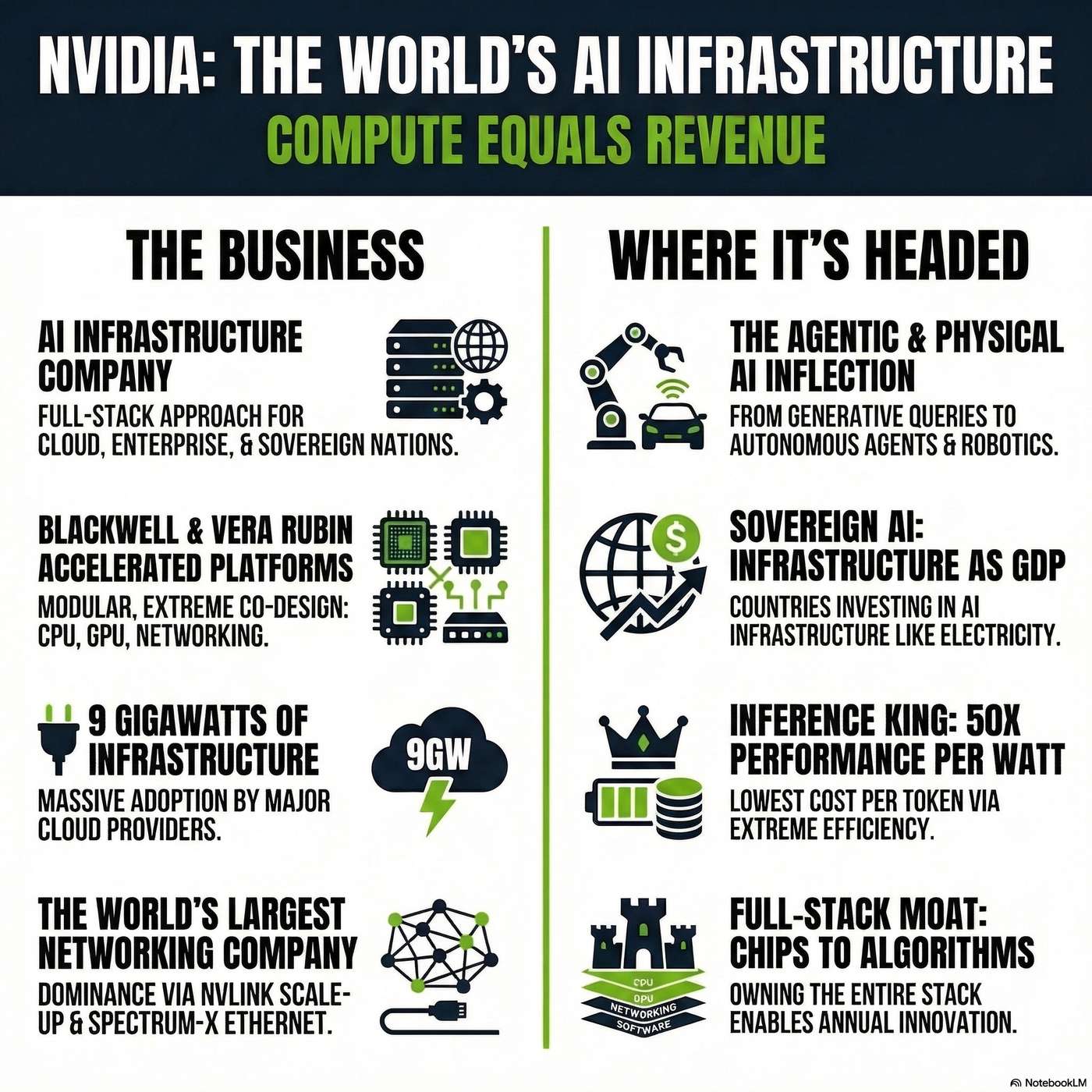
NVIDIA builds the computing infrastructure powering the global artificial intelligence industry, selling specialized GPUs, CPUs, and networking systems to hyperscalers, enterprises, and sovereign nations.Driven by the philosophy that compute directly equals revenue, leadership is transitioning traditional data centers into token-generating "AI factories" to meet the explosive computing demands of agentic AI models.The company separates itself through "extreme co-design," engineering the entire AI stack from chips to networking to software. By controlling the underlying architecture and the massive CUDA software ecosystem, NVIDIA delivers unmatched performance per watt.Leading hardware like the Blackwell architecture, the upcoming Vera Rubin platform, and Spectrum-X Ethernet offer the lowest cost per token, creating immense competitive stickiness.CEO Jensen Huang and CFO Colette Kress are prioritizing the rapid deployment of the Blackwell Ultra ramp and upcoming Rubin chips.Bolstered by massive strategic investments, including $10 billion into Anthropic, leadership is securing NVIDIA's foundation across the entire AI pipeline, from language models to future physical robotics."All sourced directly from NVIDIA's own leadership from earnings calls and analyst briefings."
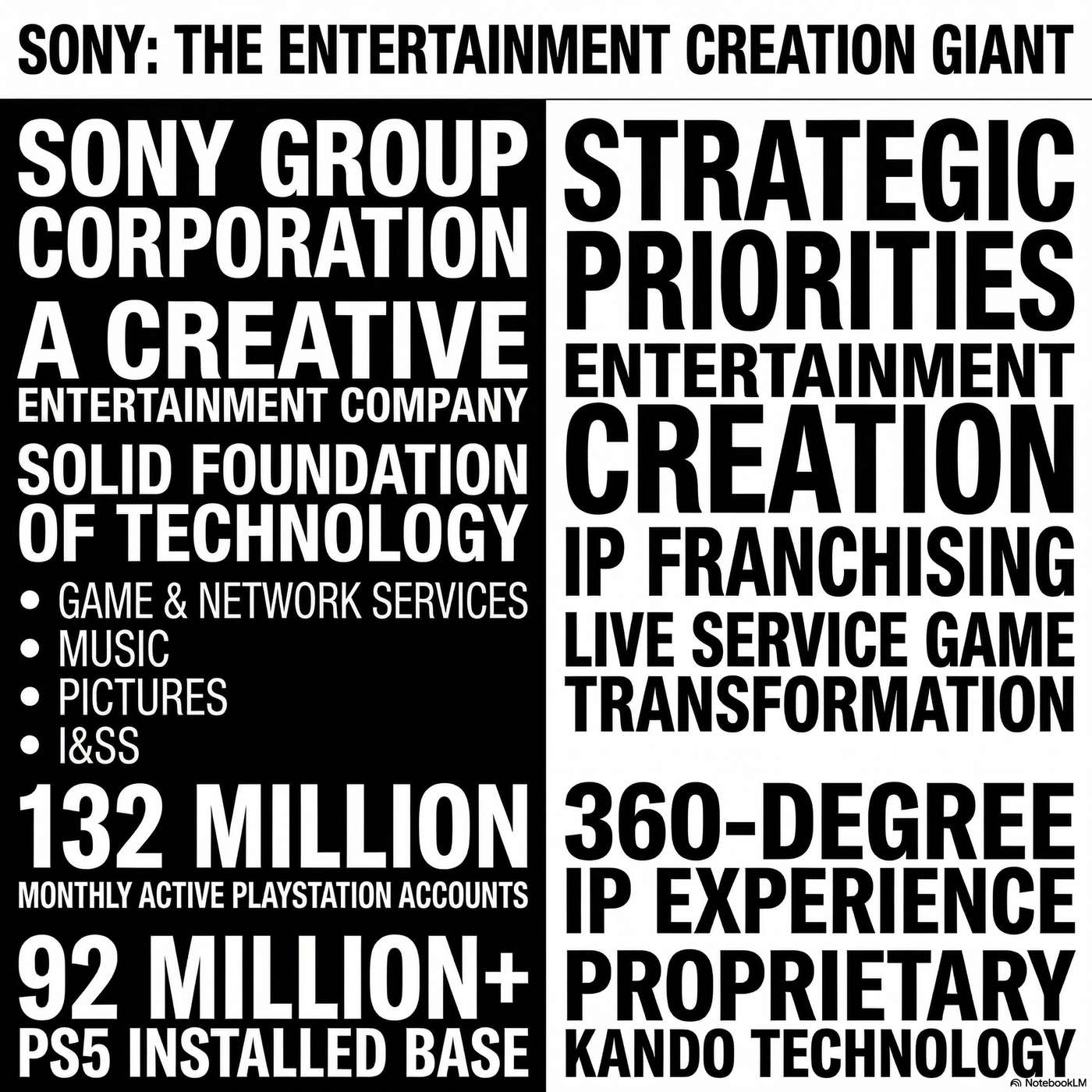
Sony Group Corporation generates revenue through gaming consoles, entertainment production, consumer electronics, and image sensors.Its customers range from hardcore gamers to major smartphone manufacturers.Leadership is prioritizing the monetization of the PlayStation 5's massive installed base while transitioning toward recurring live service gaming and expanding its global anime and music IP.Sony sets itself apart by vertically integrating hardware platforms with premium exclusive content.The company leverages the PlayStation 5, which recently exceeded 92 million units sold, pairing it with high-margin network services like PlayStation Plus.Furthermore, its dominance in high-end mobile image sensors and the massive success of its Crunchyroll anime platform solidify its unique competitive moat.Executives emphasized expanding software revenue to offset rising hardware memory costs. CFO Lin Tao highlighted that structural profitability is improving through record network service and first-party software results.Another key strategy involves a new joint venture with TCL for the home entertainment division to optimize Sony's legacy hardware portfolio."All sourced directly from Sony Group Corporation's own leadership from earnings calls and analyst briefings."
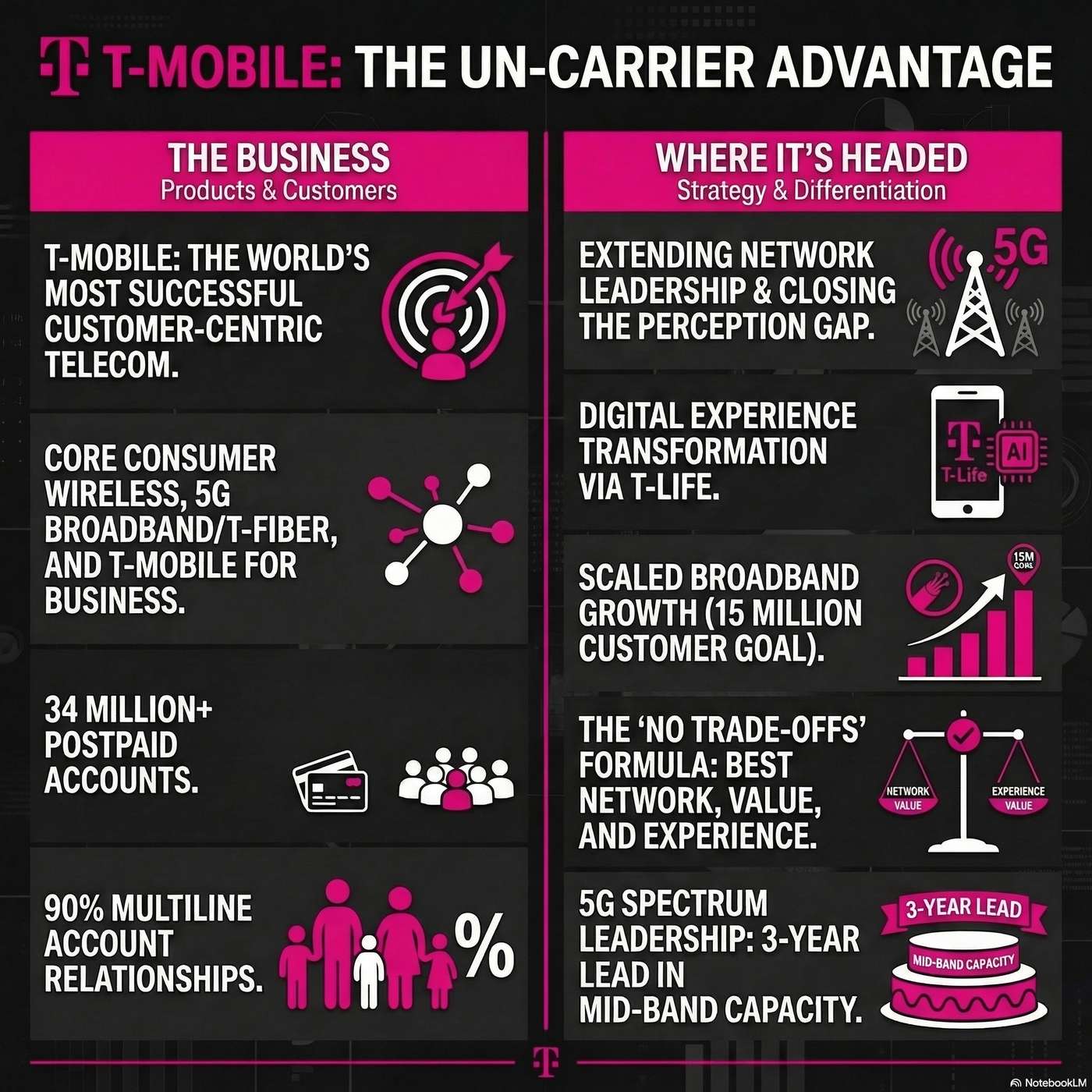
Business Synopsis & Direction T-Mobile is a telecommunications provider generating revenue through wireless and broadband subscriptions.Customers are drawn by a unique promise: the best network, value, and experience without trade-offs.Leadership is prioritizing closing the "network perception gap," aggressively targeting legacy network seekers while preparing for the 6G era.Differentiation & Products The company's competitive moat stems from its ultra-capacity 5G stand-alone network, leveraging mid-band spectrum to deliver speeds substantially faster than peers. T-Mobile separates itself through innovations like 5G Fixed Wireless Access (FWA)—monetizing fallow network capacity—and the T-Life app, which has digitized most customer upgrades.Strategy & Key Priorities CEO Srini Gopalan is focused on widening T-Mobile’s differentiation by pushing 6G AI-RAN, guarding its value position, and enhancing digital customer experiences. CFO Peter Osvaldik anchors this strategy on translating industry-leading postpaid account additions and Average Revenue Per Account (ARPA) growth into robust free cash flow margins."All sourced directly from T-Mobile's own leadership from earnings calls and analyst briefings."
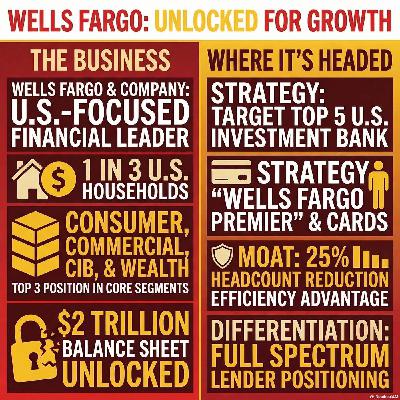
Business Synopsis & Direction.Wells Fargo is a leading U.S.-focused bank generating revenue through consumer lending, wealth management, and capital markets.After operating under a restrictive asset cap for seven years, leadership is now aggressively pursuing organic growth by utilizing its massive balance sheet to expand market share.Differentiation & Products.The bank sets itself apart with immense scale and decades-long relationships with U.S. corporate clients.Wells Fargo is leveraging these structural advantages to expand its Corporate and Investment Bank, while revamping consumer offerings through new credit cards and an exclusive auto-lending partnership with Volkswagen and Audi.Strategy & Key Priorities. CEO Charles Scharf and CFO Michael Santomassimo emphasize capitalizing on the asset cap's removal to accelerate loan and deposit growth.Their key priorities include achieving a 17% to 18% ROTCE, realizing efficiency gains from 22 consecutive quarters of headcount reductions, and methodically building a top-five U.S. investment bank."All sourced directly from Wells Fargo's own leadership from earnings calls and analyst briefings."
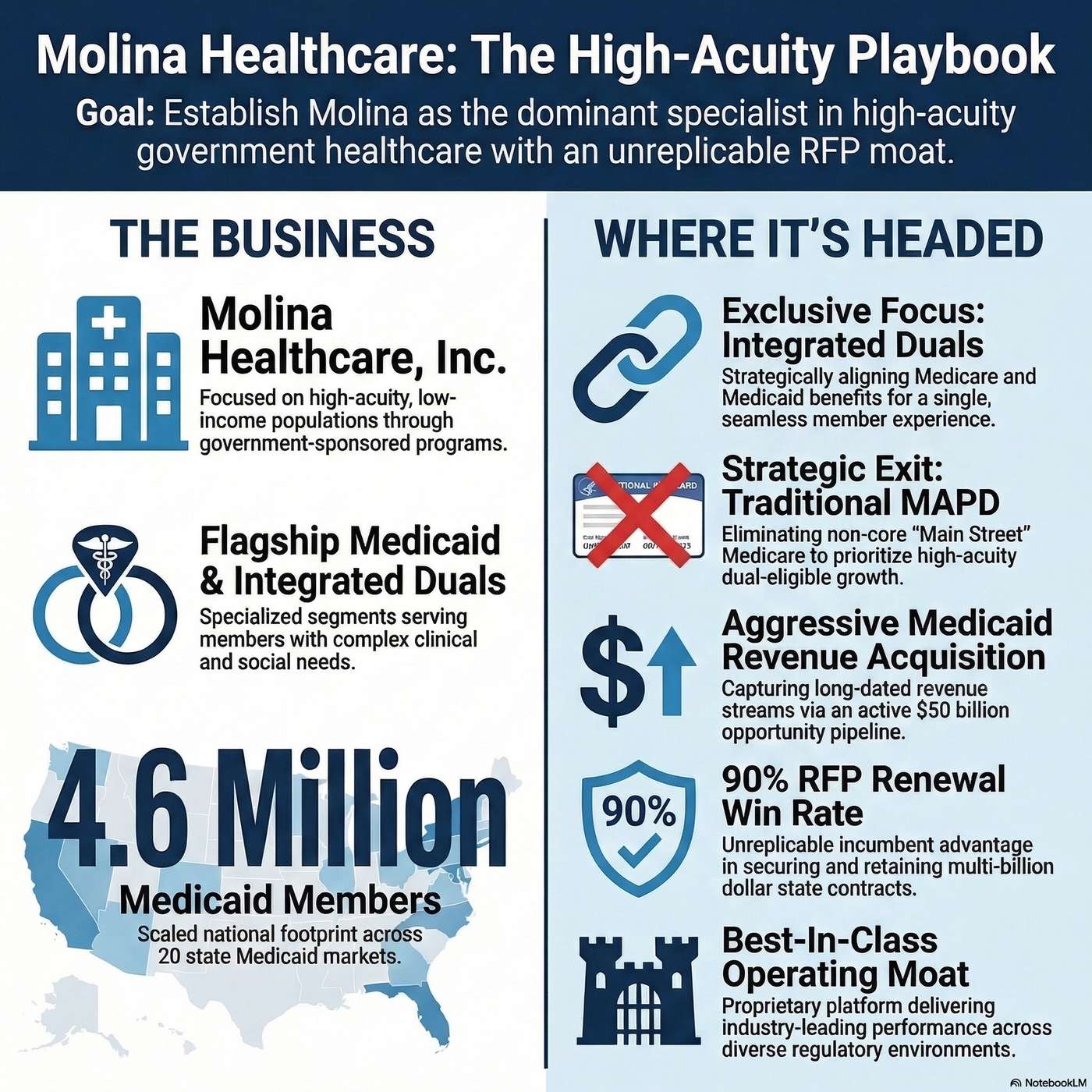
Business Synopsis & Direction.Molina Healthcare operates managed care plans focused exclusively on government-sponsored healthcare programs, primarily Medicaid, Medicare, and the ACA Marketplace.The company generates revenue through state and federal premiums to manage member health.Leadership is currently navigating a period of high medical cost trends by strictly focusing on profitable growth, significantly reducing volatile Marketplace exposure, and steering Medicare operations toward fully integrated dual eligible programs.Differentiation & Products.Molina differentiates itself through its best-in-class Medicaid cost management, typically operating 300 to 400 basis points better than the market average.This structural advantage allows the company to remain profitable even when state rates fail to keep pace with medical trends, while competitors operate at a loss.The company's competitive moat is its specialized expertise in managing high-acuity, low-income populations, which recently secured a historic $6 billion contract for Florida's Children's Medical Services.Strategy & Key Priorities.President and CEO Joe Zubretsky and CFO Mark Keim emphasize that 2026 represents a trough for Medicaid margins, with an eventual return to target margins driven by necessary state rate restorations.They are prioritizing a strategic pivot away from traditional Medicare Advantage to exclusively focus on dual eligible members.Management also highlighted an opportunistic M&A strategy to acquire struggling health plans at book value to secure long-dated revenue streams."All sourced directly from Molina Healthcare's own leadership from earnings calls and analyst briefings."
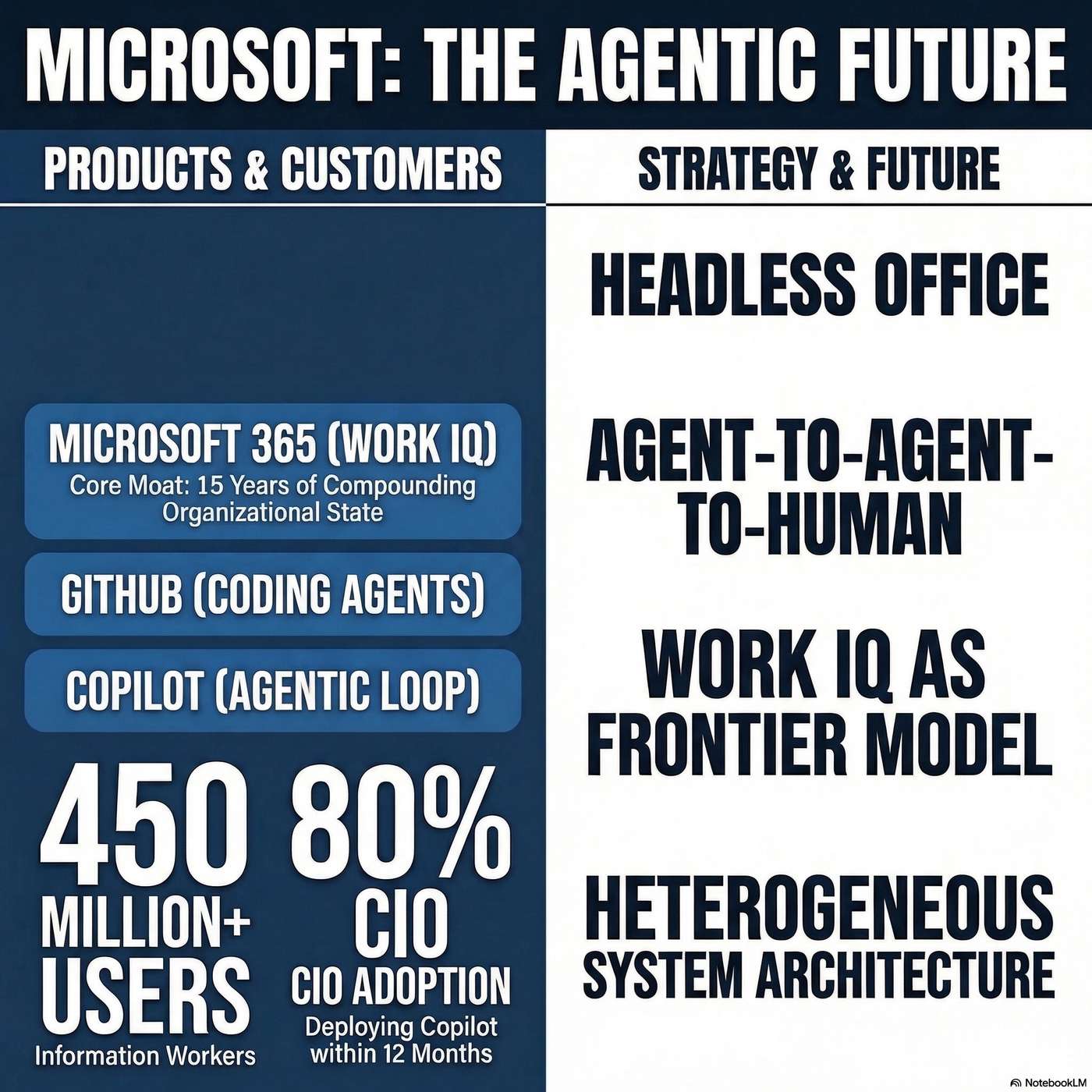
Business Synopsis & Direction.Microsoft provides enterprise software and cloud infrastructure to global businesses. It makes money through scalable cloud consumption and recurring M365 subscriptions, favored by IT departments for their robust security and compliance.Leadership is now steering the company toward an "agentic future," prioritizing massive capital investments in AI infrastructure to power next-generation knowledge work and sophisticated artifact creation.Differentiation & Products.Microsoft's competitive moat lies in what it calls the "network effects of intelligence". By pairing ubiquitous platforms like Microsoft 365 and GitHub with Work IQ—its foundational enterprise database—Microsoft enables stateful AI agents to reason across years of internal corporate communications and documents.This deep data integration allows Copilot to act as an embedded digital worker seamlessly keeping tasks in sync, rather than operating as a standalone external tool.Strategy & Key Priorities. CEO Satya Nadella is focused on maximizing ROI on massive AI capital expenditures through hardware-agnostic system software that optimizes multi-generational total cost of ownership across a diverse fleet. A core strategic priority is navigating acute global compute capacity constraints by actively choosing to feed high-margin, first-party Copilot services and model-optimizing R&D over maximizing short-term Azure cloud rentals."All sourced directly from Microsoft's own leadership from earnings calls and analyst briefings."
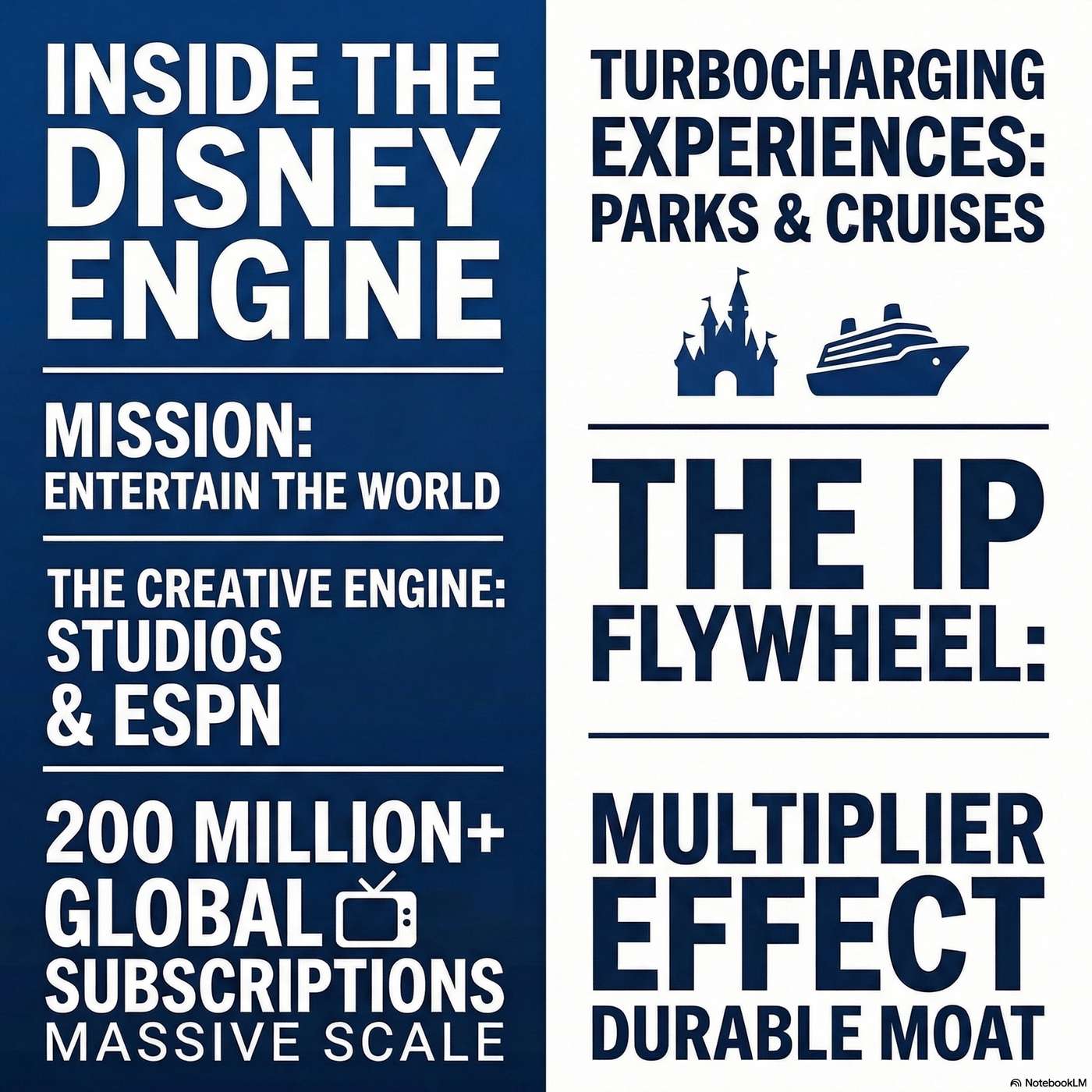
Business Synopsis & Direction.The Walt Disney Company monetizes its intellectual property by competing for consumers' entertainment time. It uses a creative engine for film, TV, and sports, paired with a monetization engine of B2B fees, subscriptions, and park tickets.Leadership is prioritizing streaming engagement, international expansion, and integrating artificial intelligence across its platforms.Differentiation & Products.Disney’s competitive moat is its unparalleled IP portfolio—including Marvel, Pixar, and Lucasfilm—which fuels a powerful multi-platform flywheel. A hit film generates box office revenue while seamlessly driving theme park attendance, merchandise, and Disney+ viewership.Additionally, the Experiences segment boasts unmatched scale and capacity utilization that competitors cannot easily replicate.Strategy & Key Priorities. CFO Hugh Johnston emphasizes consolidating Disney+ and Hulu into a single app, expanding ESPN digitally, and "turbocharging" the Experiences segment.The company is aggressively targeting the $500 billion global television market and integrating AI tools like OpenAI's Sora.These strategic initiatives anchor their guidance of clean double-digit EPS growth in both 2026 and 2027.All sourced directly from The Walt Disney Company's own leadership from earnings calls and analyst briefings.
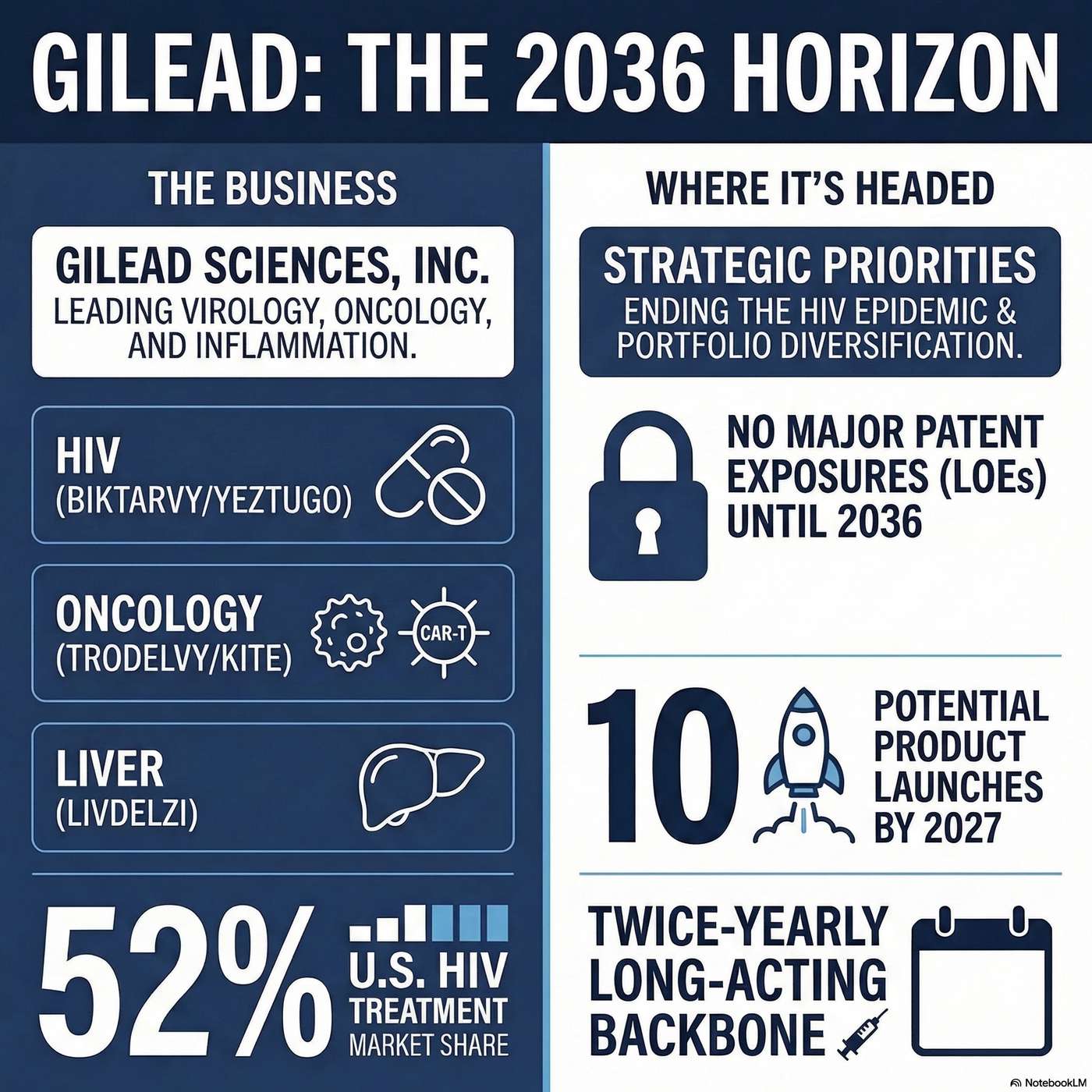
Gilead Sciences is a biopharmaceutical company discovering and commercializing medicines in virology, oncology, and inflammation.The company relies on strong commercial execution to deliver life-saving therapies to patients.Leadership is focused on expanding its core HIV franchise with long-acting options while rapidly diversifying its revenue base through late-stage oncology launches.Gilead differentiates itself through rigorous lifecycle management and standard-of-care efficacy.Its portfolio includes Biktarvy for HIV treatment and Yeztugo, a transformative twice-yearly injectable for HIV prevention. In oncology, its Kite division leverages unparalleled cell therapy manufacturing speed and reliability, while the company moves Trodelvy into earlier lines of breast cancer treatment.CEO Daniel O'Day emphasizes a secure foundation for growth, noting no major patent losses until 2036.Chief Commercial Officer Johanna Mercier is prioritizing the aggressive rollout of Yeztugo, targeting $800 million in 2026 revenue after achieving over 90% payer coverage.All sourced directly from Gilead Sciences' own leadership from earnings calls and analyst briefings.
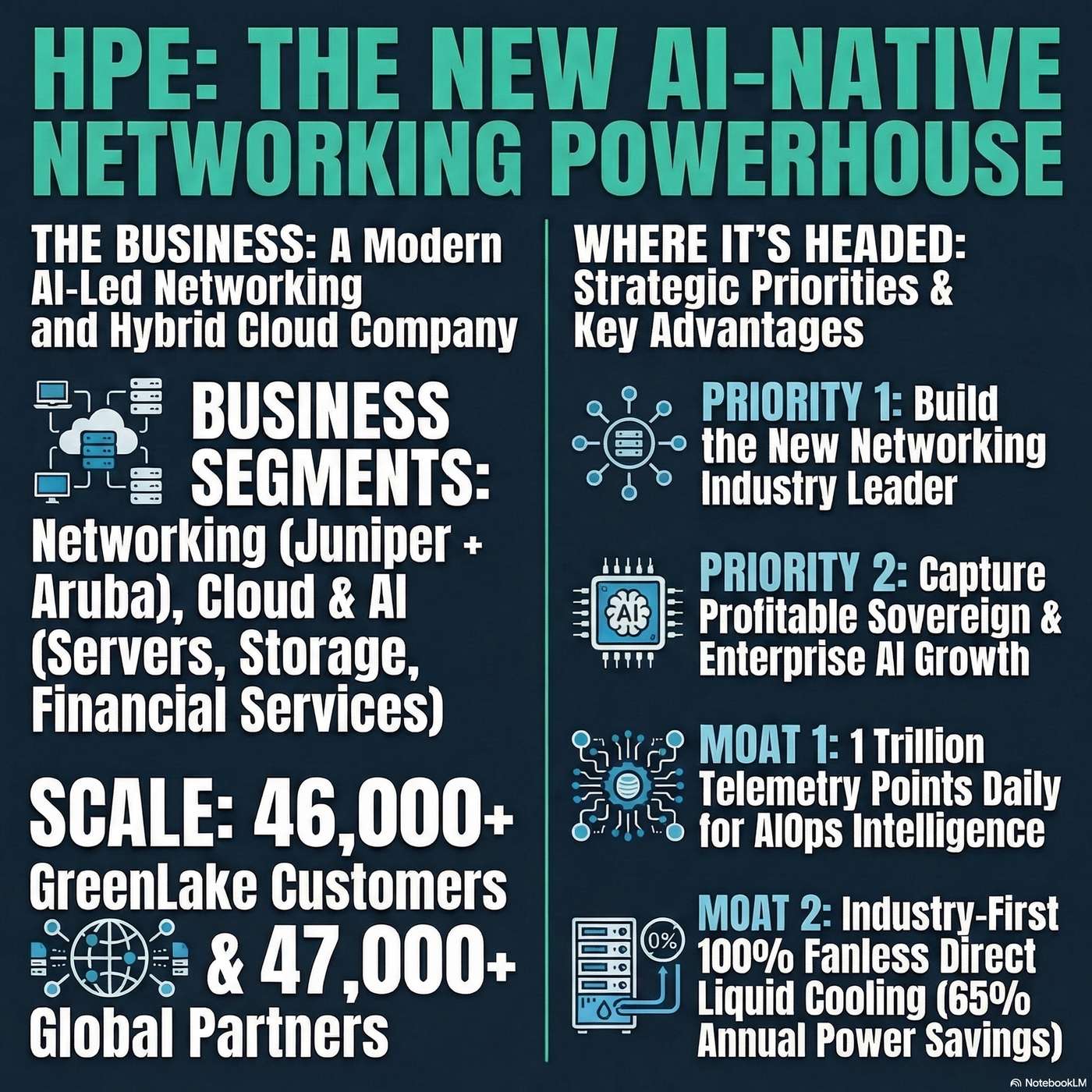
Business Synopsis & Direction.Hewlett Packard Enterprise provides foundational IT infrastructure, hybrid cloud software, and networking hardware, generating revenue through equipment sales and as-a-service subscriptions.Enterprise and sovereign customers choose HPE to modernize their data centers and scale intensive AI workloads securely.Leadership is currently focused on capturing the AI infrastructure build-out and establishing market leadership in AI-driven networking following the successful acquisition of Juniper Networks.Differentiation & Products. HPE differentiates itself through its deep legacy in supercomputing, its proprietary 100% fanless direct liquid cooling architecture, and its comprehensive hybrid cloud control plane.Rather than competing broadly for low-margin hyperscaler deals, the company targets enterprise and sovereign AI deployments with turnkey solutions like Private Cloud AI. Key growth drivers include GreenLake, Alletra MP storage arrays, and integrated networking stacks powered by Mist AI and Aruba Central.Strategy & Key Priorities. CEO Antonio Neri emphasizes the strategic integration of networking, cloud, and AI as the core of modern IT architecture.Rami Rahim, EVP of HPE Networking, is prioritizing the cross-pollination of AIOps platforms to drive a self-driving network experience while targeting a $169 billion networking total addressable market by 2028.Leadership is also executing the "Catalyst" initiative to drive $1 billion in annualized structural cost savings alongside Juniper synergies."All sourced directly from Hewlett Packard Enterprise's own leadership from earnings calls and analyst briefings."
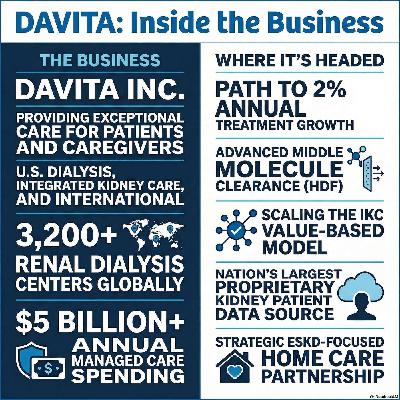
Business Synopsis & Direction. DaVita operates a vast network of U.S. and international dialysis centers, generating revenue by providing essential, life-sustaining treatments to end-stage kidney disease patients.The company is currently focused on overcoming recent treatment volume headwinds by actively pursuing clinical innovations that reduce patient mortality and improve overall quality of life.Differentiation & Products. DaVita differentiates itself through its massive clinical footprint, rigorous operational cost management, and its now-profitable Integrated Kidney Care (IKC) segment.Unlike traditional fee-for-service models, IKC leverages value-based care to lower hospitalization rates and care costs during the first 180 days of dialysis.The company also utilizes DaVita Clinical Research to pioneer advanced therapies and establishes competitive moats through strategic home health partnerships.Strategy & Key Priorities. CEO Javier Rodriguez and CFO Joel Ackerman emphasize that returning to long-term volume growth is fundamentally a clinical story centered on improving patient survival.Leadership is prioritizing the adoption of middle-molecule clearance technologies and GLP-1 medications to drive down mortality.Anchoring this strategy is a commitment to 3% to 7% operating income growth and disciplined capital allocation through sustained share repurchases."All sourced directly from DaVita's own leadership from earnings calls and analyst briefings."
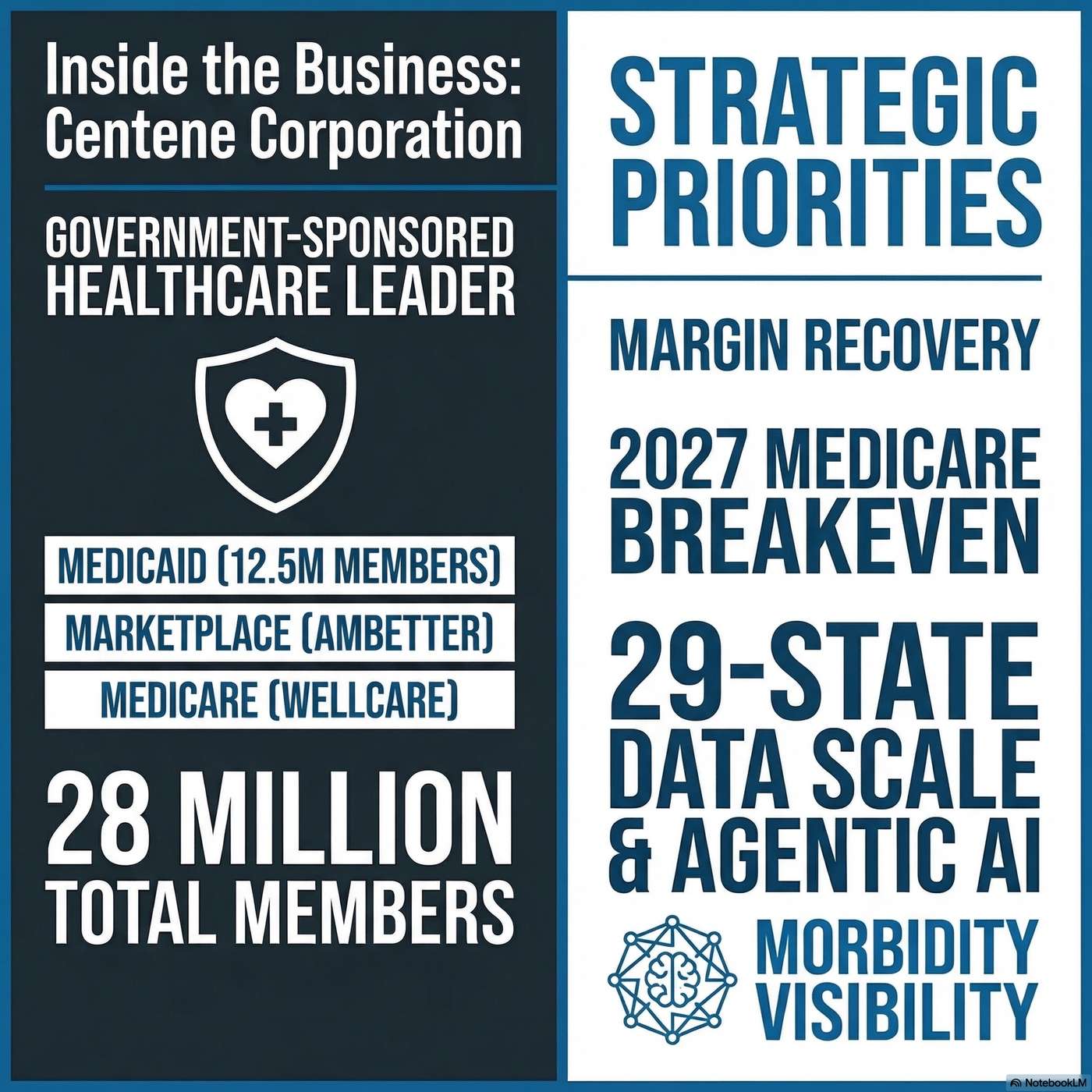
Business Synopsis & Direction.Centene provides government-sponsored healthcare coverage to low-income and medically complex populations, generating revenue through Medicaid, Medicare, and commercial Marketplace premiums.Leadership is prioritizing margin recovery and navigating significant policy changes across its core segments.Differentiation & Products.Centene leverages its massive 29-state footprint to identify claims data correlations, source best practices for cost containment, and advocate for actuarially sound state Medicaid rates.Key product lines include Medicaid, Ambetter, and Medicare Advantage.The company differentiates itself by aligning members with value-based providers and utilizing AI to aggressively root out provider fraud, waste, and abuse.Strategy & Key Priorities. CEO Sarah London and CFO Andrew Asher emphasize resetting Marketplace pricing to account for higher morbidity and expiring tax credits.They also prioritize stabilizing the Medicaid Health Benefits Ratio (HBR) and driving Medicare Advantage toward a 2027 breakeven target through footprint refinement and improved STARS scores."All sourced directly from Centene's own leadership from earnings calls and analyst briefings."
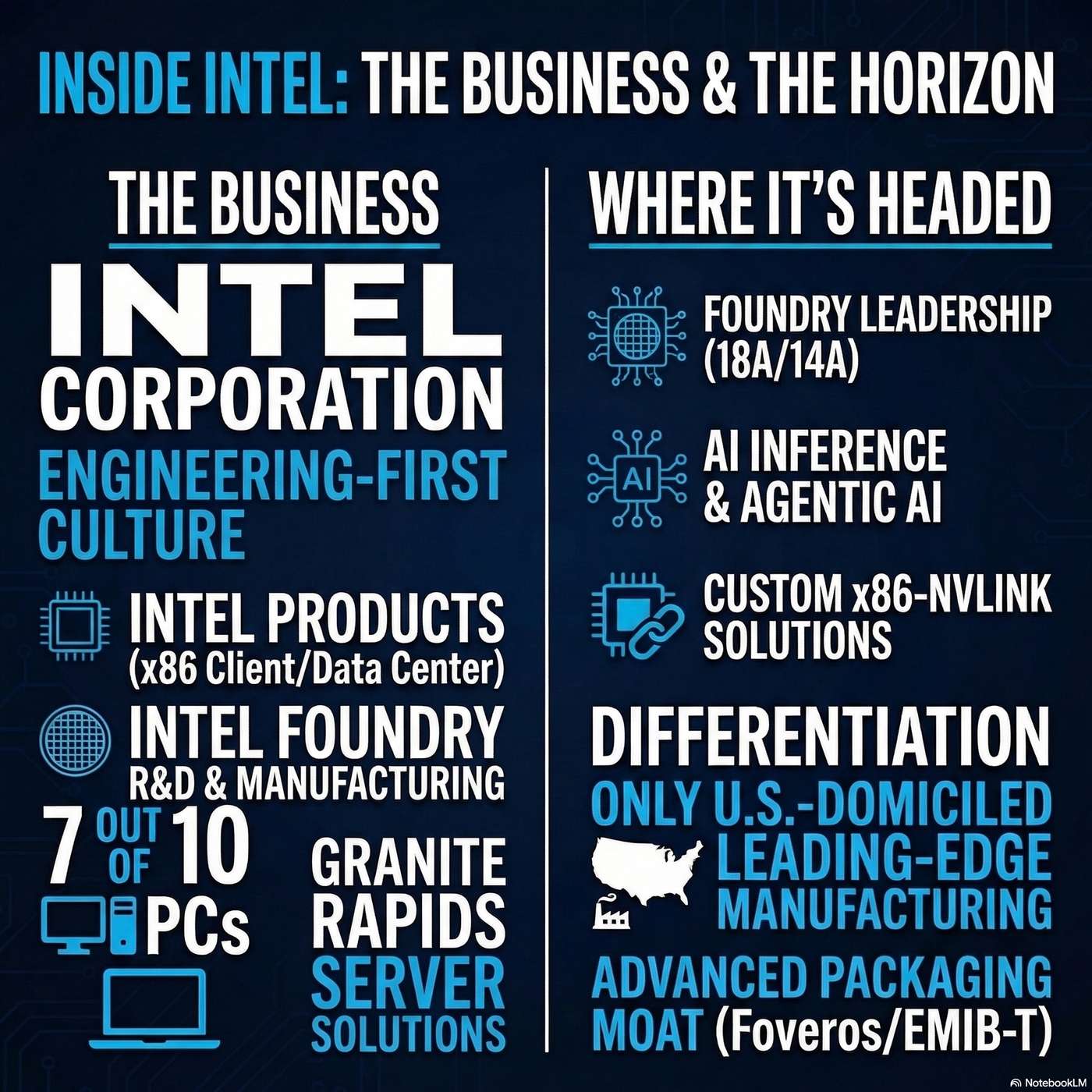
Business Synopsis & Direction.Intel designs and manufactures microprocessors for PCs and data centers, generating revenue through its product and foundry segments.Customers range from enterprise PC OEMs to major cloud hyperscalers.Leadership under CEO Lip-Bu Tan is prioritizing revitalizing the core x86 franchise, establishing a profitable U.S.-based external foundry, and capitalizing on AI inference and agentic AI workloads.Differentiation & Products.Intel differentiates itself as the only U.S.-based semiconductor company with leading-edge logic R&D and manufacturing. It leverages an integrated device manufacturer model that allows for margin stacking, alongside proprietary advanced packaging technologies like EMIB and Foveros.The company relies on its massive x86 installed base while pushing forward with Core Ultra processors, Xeon server CPUs, and an emerging custom ASIC business.Strategy & Key Priorities. CEO Lip-Bu Tan and CFO David Zinsner are focused on successfully ramping the Intel 18A manufacturing process and securing external customers for the upcoming 14A node. A massive strategic priority is a multi-generational partnership with NVIDIA to integrate Intel x86 CPUs with NVIDIA's NVLink technology.Financially, leadership is driving toward foundry operating profit breakeven exiting 2027 while targeting $16 billion in operating expenses for 2026."All sourced directly from Intel's own leadership from earnings calls and analyst briefings."
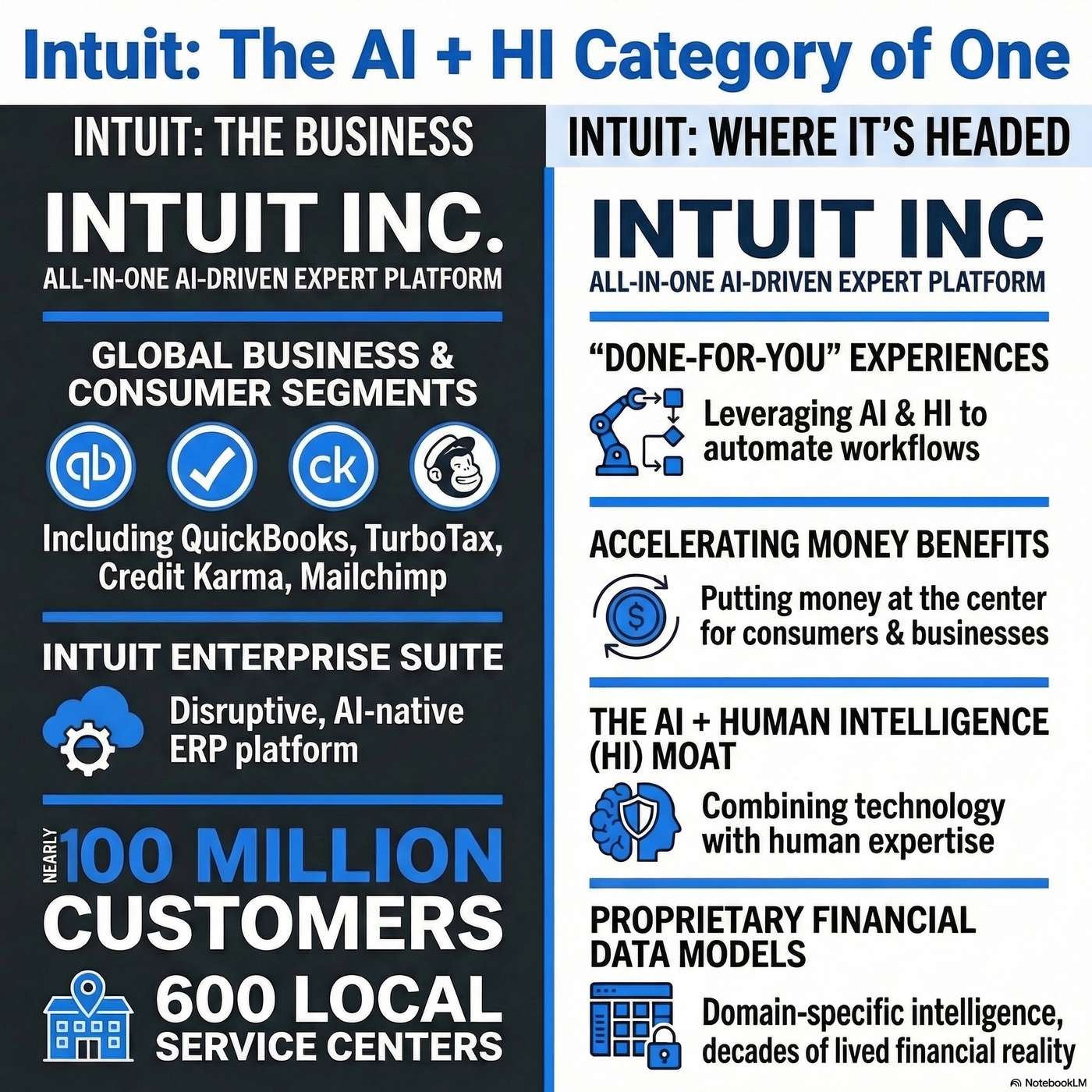
Intuit provides tax, bookkeeping, and personal finance software for consumers and growing businesses.Customers use Intuit's tools to navigate high-stakes financial choices and manage their daily operations.Leadership's strategic direction is shifting the company from purely do-it-yourself software into an AI-driven expert platform, focusing on comprehensive, "done-for-you" financial experiences.Intuit's structural advantage is built on decades of proprietary financial data combined with domain-specific AI and human intelligence (HI). In a regulated sector where accuracy is paramount, leading products like TurboTax and QuickBooks Online set themselves apart by integrating human experts to absorb liability and provide confidence.This creates a powerful competitive moat against generic large language models, driving a go-to-market strategy that emphasizes guaranteed financial outcomes over simple software access.CEO Sasan Goodarzi and CFO Sandeep Aujla prioritize three growth vectors: delivering done-for-you expert experiences, accelerating money movement, and disrupting the mid-market.Goodarzi highlighted the success of the new AI-native Intuit Enterprise Suite, noting that new contracts grew nearly 50% quarter-over-quarter.Aujla emphasized the financial momentum of this strategy, anchored by a 40% revenue growth in the mid-market online ecosystem."All sourced directly from Intuit's own leadership from earnings calls and analyst briefings."
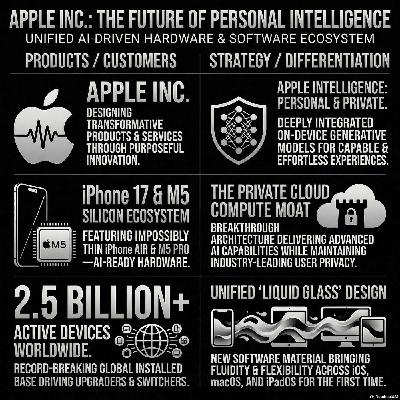
Apple is a global technology leader generating revenue through premium consumer electronics and high-margin subscription services.Customers buy into a seamless, private ecosystem that delivers reliable performance and tight data security.Leadership is aggressively prioritizing the rollout of "Apple Intelligence," embedding generative AI across its platforms, alongside expanding health tech capabilities.Apple's key differentiator is the strict vertical integration of its hardware, software, and proprietary Apple Silicon, such as the A19 Pro and M5 chips.This structural advantage enables superior thermal management in the new ultra-thin iPhone Air and natively powers intensive on-device AI workloads.The company's competitive moats are expanding through innovative hardware features like Apple Watch's hypertension notifications and AirPods Pro 3's real-time live translation.CEO Tim Cook highlighted that scaling AI capabilities is a top priority, supported by a new Google partnership to develop the next generation of Apple Foundation Models. CFO Kevan Parekh noted that Apple's hybrid CapEx model is funding proprietary Private Cloud Compute data centers to meet these AI demands safely.This strategy anchored a record-breaking $143.8 billion quarter, with Apple's active installed base surpassing 2.5 billion devices."All sourced directly from Apple's own leadership from earnings calls and analyst briefings."
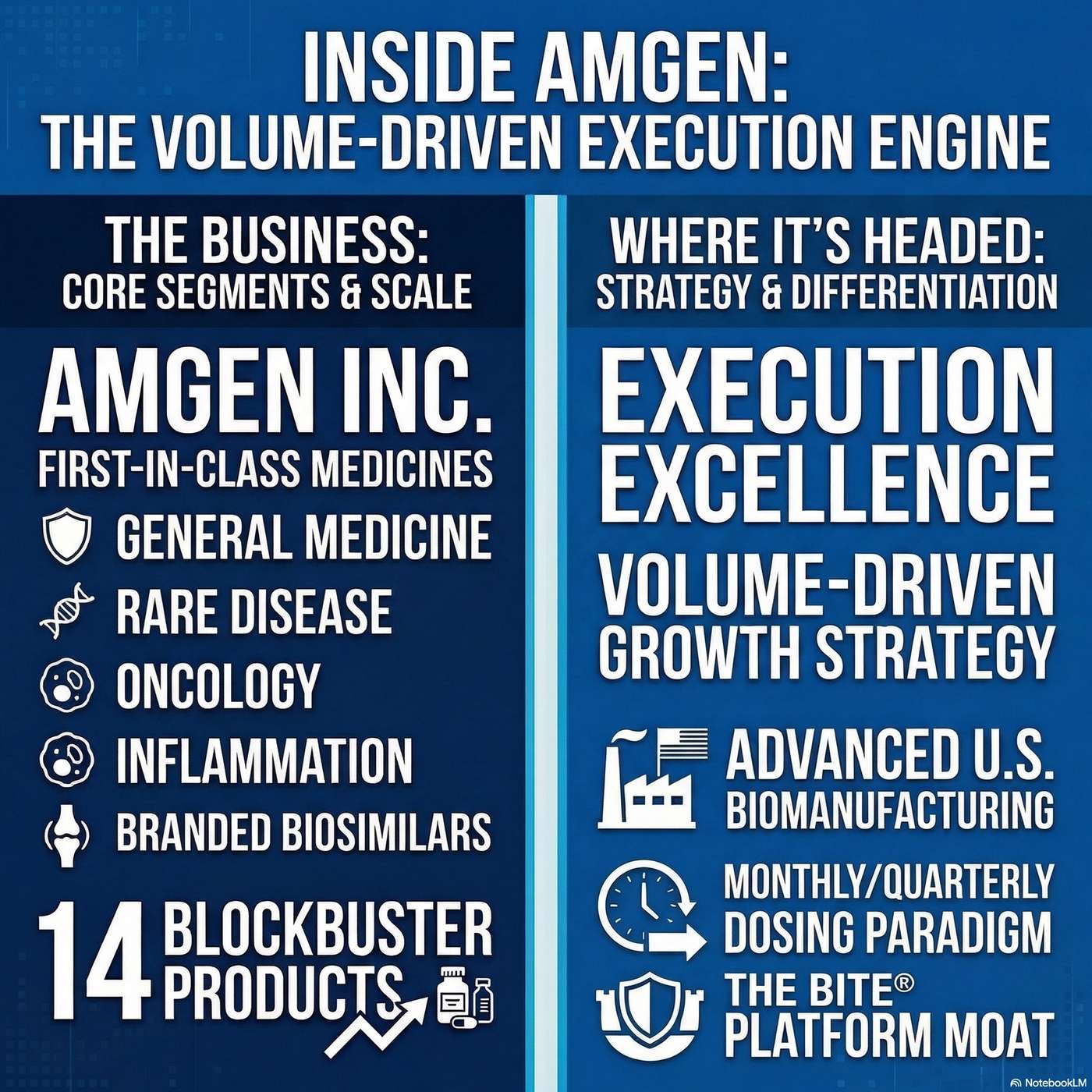
Business Synopsis & Direction Amgen is a global biotechnology leader discovering and manufacturing complex biologics for serious illnesses. To counter industry-wide price pressures, the company relies on a volume-driven growth strategy to reach massively underpenetrated patient populations.Leadership is currently prioritizing cardiovascular health, rare disease expansion, and its highly anticipated late-stage obesity pipeline.Differentiation & Products Amgen differentiates itself through decades of expertise in large-molecule manufacturing and a predominantly U.S.-based supply chain.Clinically, the company stands out with its bispecific T-cell engager (BiTE) platform, which is redefining oncology care with standard-of-care therapies like IMDELLTRA. Meanwhile, its emerging obesity asset MariTide utilizes a unique antibody backbone, enabling steady drug exposure and the potential for monthly or quarterly dosing, unlike competing weekly peptides.Strategy & Key Priorities Head of R&D Jay Bradner and Head of Commercial Murdo Gordon highlight Amgen's top priorities: advancing MariTide’s six Phase III trials and leveraging groundbreaking outcomes data to push Repatha into primary cardiovascular prevention. CFO Peter Griffith anchors these goals by allocating capital toward internal innovation and network capacity to support the company's impressive 14% product volume growth.All sourced directly from Amgen's own leadership from earnings calls and analyst briefings.
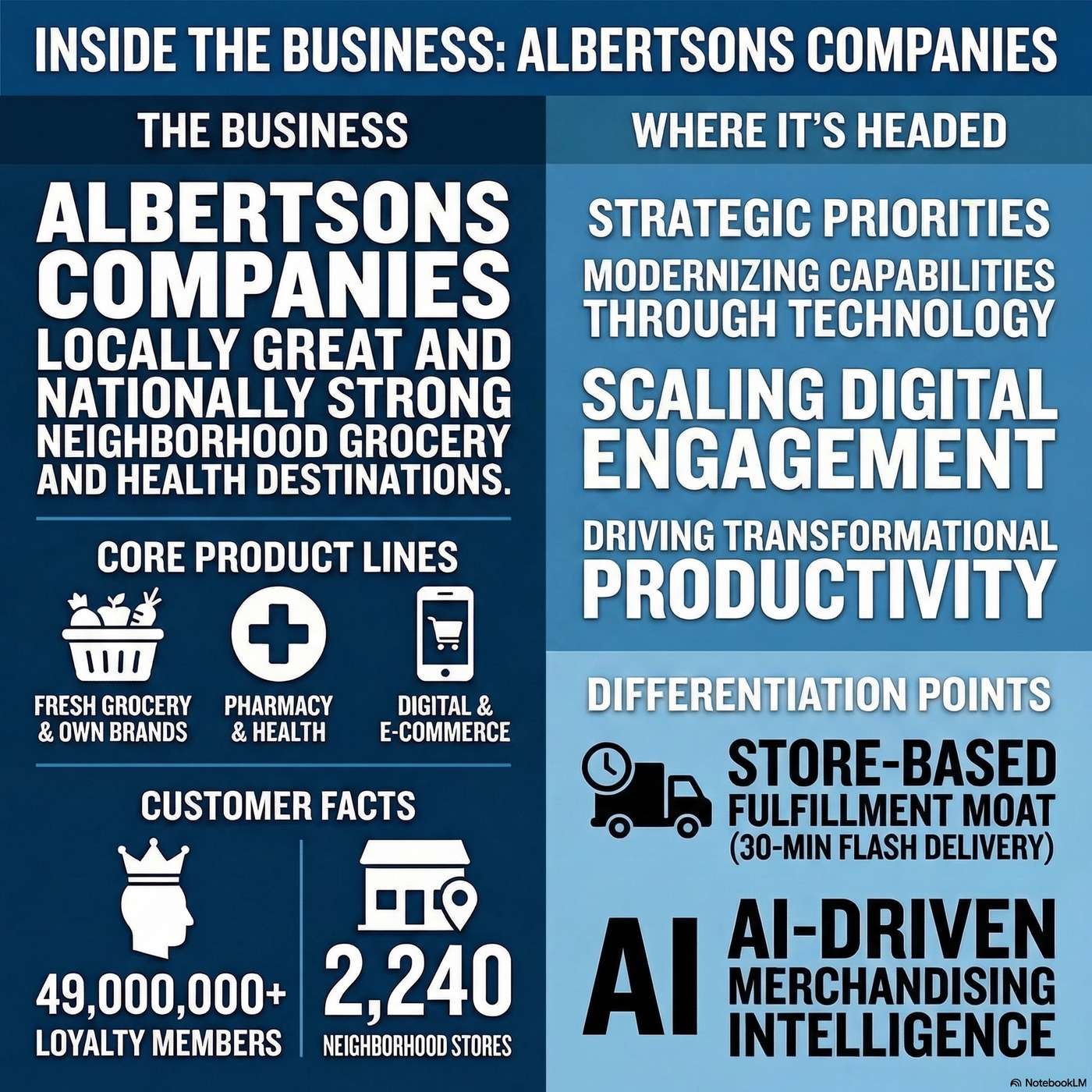
Business Synopsis & Direction.Albertsons operates over 2,240 neighborhood grocery and pharmacy stores, driving revenue through in-store purchases, e-commerce, and a retail media collective.Leadership is prioritizing their "Customers for Life" strategy, navigating a price-sensitive consumer environment with targeted price investments and personalized loyalty promotions to drive unit growth.Differentiation & Products.The company’s structural advantage is its store-based fulfillment model, leveraging proximity to customers for rapid last-mile delivery.Albertsons differentiates itself by integrating high-margin pharmacy services with grocery shopping to cultivate highly valuable cross-shoppers, while scaling its conversational "Ask AI" shopping assistant and expanding its margin-accretive Own Brands portfolio.Strategy & Key Priorities. CEO Susan Morris is focused on an enterprise-wide generative AI transformation to optimize labor, supply chain, and merchandising intelligence.President and CFO Sharon McCollam is prioritizing a $1.5 billion productivity savings plan by fiscal 2027 to offset inflation and fuel a return to 2% plus identical sales growth by 2026."All sourced directly from Albertsons's own leadership from earnings calls and analyst briefings."

Comments

Download from Google Play

Download from App Store
 United States