


 Claim Ownership
The Wildlife Podcast with Laurel Neme and Jeffrey Barbee
Subscribed: 3Played: 22
Subscribe

© Copyright 2026 All rights reserved.
Description
An in-depth podcast probing the mysteries of the animal world with two award-winning National Geographic investigative journalists, Laurel Neme and Jeffrey Barbee.
Join us as we journey around the globe, discover who is fighting to protect it, and why they do what they do. Get ready for frontline encounters with the wild as we talk with some of the planet's most fierce, funny and courageous scientists and other wildlife champions.
Have a great idea for a project/person/organization doing incredible work we should cover?
Please contact us on email: [email protected]
13 Episodes
Reverse
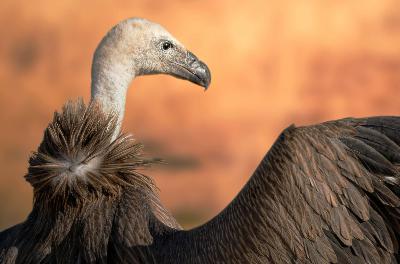
THE WILDLIFE PODCAST EPISODE ONE: VULTURES
SHORT: THE SOAP OF THE SAVANNA
In this episode, Laurel Neme and Jeff Barbee delve into the world of vultures—what they are, why they’re important, the threats they face, and what happens if we lose them. Guest: Dr. Corinne Kendall, conservation biologist and Southern Africa Program Director for The Peregrine Fund. Vultures are big, high-flying birds that can soar on thermals with little effort.
They also have keen eyesight and sense of smell that lets them find carcasses even from miles away. They play a critical role in the ecosystem by consuming the remains of dead animals, which in turn keeps diseases at bay. On the African continent, vultures are in serious trouble.
One of the main threats to them is poisoning. As scavengers, they're particularly susceptible—especially when carcasses are laced with lethal pesticides. This can lead to high mortality events and cause populations to plummet.
Yet The Peregrine Fund, Endangered Wildlife Trust and others are doing a lot to help them, such as helping rangers find the birds in time for them to be rehabilitated.
How You Can Help Support Vultures:
Donate to both the Peregrine Fund and EWT, they are doing incredible work!:
THE PEREGRINE FUND: https://peregrinefund.org/
ENDANGERED WILDLIFE TRUST: https://ewt.org/
EXPLORE MORE ABOUT VULTURES: https://peregrinefund.org/explore-raptors-...
Do you have an amazing story/project or person that we should highlight? Get in touch at our email:
[email protected]

The Wildlife Podcast Episode 6: The tip of the Tusk for African wildlife conservation
Supporting rangers, protecting wildlife and driving community development across Africa’s most incredible landscapes, the non-profit organisation Tusk has been working for decades to protect some of the most diverse and critically important ecosystems on planet Earth.
In this episode, join award-winning journalists Laurel Neme and Jeffrey Barbee as we talk to Tusk founder Charlie Mayhew and dive deep into how this small but incredibly impactful organization has been supporting communities who are the frontline protectors of Africa’s wildlife. We uncover how Tusk started, what its goals are, and how it has helped change the lives of hundreds of thousands of people across Africa, while also saving critically endangered species.
From supporting wildlife rangers by providing insurance and critical skills training, to organizing one of Africa’s premier cross-country marathons, discover in this episode how one person’s passion created a continental conservation movement, and how you can be a part of it.
Discover more about Tusk’s successes: https://tusk.org/our-news
Donate to Tusk: https://tusk.org/support-us/join-tusks-patrons-circle/
Tusk’s Website: https://tusk.org
Our theme music was produced just for our show by the amazing Joey Morra, check him out on his website at:
www.joeymorra.com

Join this deep dive into the incredible underwater world of freshwater ecology following the amazing scientist, fish geek and conservationist Joe Cutler. This font of fishy knowledge is an ichthyologist and conservation biologist who studies fish throughout the world, particularly in Africa. His work with The Wilderness Project documents freshwater biodiversity, assesses ecosystem health, advises governments and leads major river expeditions across the remotest parts of Africa.
So get your lines in the water, ready your holding tanks and be fascinated by this rare glimpse into the murky realm of fast-moving story telling on this watery exploration of all things fascinatingly fishy with National Geographic writers Jeffrey Barbee and Laurel Neme on The Wildlife Podcast.
Get involved:
The Wilderness Project (Africa)
Support the freshwater science behind the episode. The team surveyed Africa's Okavango, Zambezi, Nile and Congo basins, the river systems that supply freshwater to nearly half a billion people, to build the ecological baselines needed to protect them. Site: https://www.thewildernessproject.org/
Give: https://www.thewildernessproject.org/?form=giving
American Rivers (US)
Help protect and restore rivers across the country. The organisation has been directly involved in over 200 dam removals and works to reconnect floodplains and safeguard clean water for people and wildlife. Give: https://www.americanrivers.org/donate
World Fish Migration Foundation (Europe)
Fund the fight for migratory fish and free-flowing rivers. Based in the Netherlands, the foundation works worldwide to restore river connections so migrating fish can reach feeding and breeding grounds. Their get-involved page also lists volunteering and citizen-science options. Get involved: https://worldfishmigrationfoundation.com/get-involved/
The Rivers Trust (Europe)
Support river recovery across the UK and Ireland. The Rivers Trust is an umbrella body for around 60 member trusts working to protect and enhance freshwater ecosystems for people and wildlife. Give: https://support.theriverstrust.org/donate/donate
The Wildlife Podcast is directed and edited by Jeffrey Barbee and produced by Laurel Neme and Jeffrey Barbee.
Find out more on our websites: www.laurelneme.com and www.jeffreybarbee.com
The podcast is supported by the US-based nonprofit www.allianceearth.org
Our theme music was produced just for our show by the amazing Joey Morra, please check out his website at: www.joeymorra.com
Deep in Africa’s wild, rainforest-covered volcanic mountains is one of planet earth’s greatest conservation success stories. For the last forty years a group of dedicated veterinarians has brought one of our most iconic beasts, the mountain gorilla, back from the brink of extinction.
In this episode you will meet Dr. Kirsten Gilardi, the former Executive Director (recently retired) and Chief Veterinary Officer of Gorilla Doctors. Based at the UC Davis School of Veterinary Medicine, she led this incredible international team for 16 years, who provide hands-on veterinary care to ill and injured mountain and Grauer's gorillas in Rwanda, Uganda, and the Democratic Republic of the Congo.
Dr. Gilardi explains the sheer delight of visiting these gentle forest giants in their mountain homes, and what we can all learn from the successful conservation and preservation of our closest living relatives and the places they live.
So grab a leafy green snack, make a comfy night nest and be delighted by this expedition with National Geographic writers Jeffrey Barbee and Laurel Neme as we explore a wilderness protected by some of the fiercest, and fragile, vegetarians the world has ever known.
Get involved:
Gorilla Doctors is the only organisation in the world providing hands-on veterinary care to wild mountain and grauers gorillas, and every donation directly funds the field teams who race into the forest when a gorilla is ill, injured, or caught in a snare.
Give here: https://www.gorilladoctors.org/donations/
Follow the work case by case on their blog, where the field vets write up real interventions from Rwanda, Uganda, and the DRC: https://www.gorilladoctors.org/category/blog/
Learn more about the team, the science, and the One Health approach behind it all at the main site: https://www.gorilladoctors.org/
Because these are our closest living relatives, keeping them healthy protects people and habitat too, and your support keeps the doctors on call 365 days a year.
You can also back the wider effort to protect gorillas and their forests through the Dian Fossey Gorilla Fund, which continues the daily protection and research work Fossey began: https://gorillafund.org/
And through the International Gorilla Conservation Programme, a coalition working across the Virunga and Bwindi landscapes to safeguard gorilla habitat and the communities who share it: https://igcp.org/
The Wildlife Podcast is produced by Jeffrey Barbee and Laurel Neme.
It is directed and edited by Jeffrey Barbee.
Find out more on our websites: www.laurelneme.com and www.jeffreybarbee.com
The podcast is supported by the US based nonprofit www.allianceearth.org
Our theme music was produced just for our show by the amazing Joey Morra, check him out on his website at: www.joeymorra.com
In this week's episode we explore something deep, dark, and surprisingly full of life. Discover some hope in the depths of one of the most mysterious parts of our oceans in this episode with The Center for Biological Diversity's David Derrick.
David is a lawyer whose career path diverged from a more staid legal practice into environmental protection when he moved to California and started to enjoy the outdoor ocean life. Now he is working on protecting the ocean depths and her denizens from exploitation.
Deep sea mining is hard, dangerous and expensive, but these challenges aren't preventing dozens of companies, and the US government, from trying to dredge the ocean floor for financial gain. As the world looks down for more of the minerals and metals that are part of our transition away from the dirty and polluting oil business, we discover why it's critical that the bottom of Davy Jones' locker be left undisturbed.
So join us and find out how the deep sea’s protectors like David are squaring up against this little-known problem, why this is the perfect time for collective action, and how you can get involved and become a deep sea ocean champion yourself.
Get involved:
Everyone’s voice counts! Sign the Greenpeace petition tostop deep sea mining before it starts:
https://www.greenpeace.org/africa/en/act/stop-deep-sea-mining/
Find out more about the the issues of deep sea mining at The Center for Biological Diversity’s dedicated deep sea mining page:
https://www.biologicaldiversity.org/campaigns/deep-sea_mining/
Check out the The Center for Biological Diversity’s latest April 2026 press release, and support the organisation today at this link:
https://biologicaldiversity.org/support/
Learn more about WHY deep sea ocean mining is a false resource promise from Justin Alger
At The School of Social and Political Sciences at The University of Melbourne in Australia writing in the journal Nature:
https://www.nature.com/articles/s44183-025-00127-4
The Wildlife Podcast is produced by Jeffrey Barbee and Laurel Neme.
It is directed and edited by Jeffrey Barbee.
Find out more on our websites: www.laurelneme.com and www.jeffreybarbee.com
The podcast is supported by the US based nonprofit www.allianceearth.org
Our theme music was produced just for our show by the amazing Joey Morra, check him out on his website at: www.joeymorra.com

Comments

Download from Google Play

Download from App Store
 United States