


The Sprinkler Nerd Show
Subscribed: 18Played: 831
Subscribe

Copyright © 2022, Sprinkler Nerd
Description
If you are a Landscape Entrepreneur this show is for you. Andy, a former contestant on the ABC hit television series Shark Tank, irrigation technology expert, and multimillion-dollar eCommerce entrepreneur brings his curiosity & creativity to tease out the secrets of successful landscape influencers and business owners.
Discover how to get a leg up on the competition, be the smartest person at the design table, and advance your career in the irrigation and landscape industry at any level.
All stones will be unturned as Andy digs into the nerdy details of business, technology, and personal growth here on the Sprinkler Nerd show.
To join the community of Sprinkler Nerds transforming the Green Industry visit www.SprinklerNerd.com.
Discover how to get a leg up on the competition, be the smartest person at the design table, and advance your career in the irrigation and landscape industry at any level.
All stones will be unturned as Andy digs into the nerdy details of business, technology, and personal growth here on the Sprinkler Nerd show.
To join the community of Sprinkler Nerds transforming the Green Industry visit www.SprinklerNerd.com.
192 Episodes
Reverse
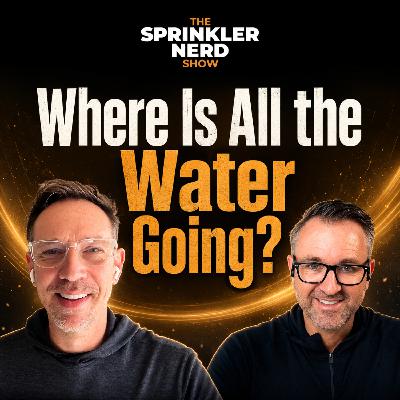
What happens when you try to answer one simple question: Where is all the water going? In this episode of the Sprinkler Nerd Show, Andy sits down with longtime friend and collaborator Paul Bassett from ENVOCORE to tell the story of one of the most complex irrigation and water management projects they have ever worked on—a massive retrofit at a government military base. What began as an irrigation upgrade quickly became something much bigger: more than 1,000 water meters, 225 irrigation controllers, 7 million square feet of irrigated landscape, and over 25 million gallons of monthly water use. Together, Andy and Paul share how they used wireless technology, LoRaWAN gateways, smart irrigation controls, weather stations, soil moisture sensors, and utility-grade water meters to build a system capable of tracking every drop across an entire military base. But the real challenge was not installing the hardware. It was learning how to trust the data. They discuss: How to discover and estimate a project of this size Why some properties are unknowingly use twice as much water as they need How missing meter data, duplicate reporting, and underground leaks complicated the project Why "gallons per square foot" may be the most important number in irrigation How water bills can reveal more about a property than most people realize Why contractors should start with the math before they start replacing sprinklers Paul also shares practical advice that any contractor can use immediately, whether they manage a military base or a five-zone residential system. If you want to understand how data, water, and technology are reshaping the future of irrigation, this is an episode you will not want to miss.
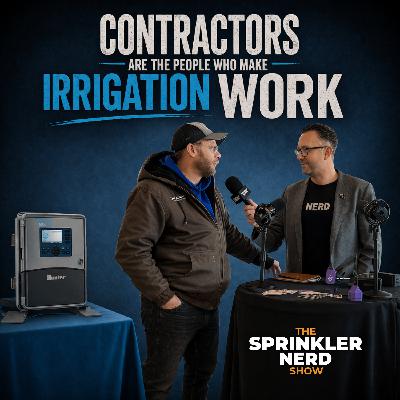
At the Hunter Industries Contractor Training Event hosted in Grand Rapids, Michigan, Andy sat down with irrigation contractors and technology leaders to explore one big question: What is the future of irrigation going to look like? In this documentary-style episode, you'll hear from contractors with decades of field experience, including three generations of Grapids Irrigation, contractors adapting to smart controllers and cloud-based monitoring, and the people building the next generation of tools at Hunter. Featuring conversations with: Aaron Katerberg of Grapids Irrigation, Brandon Dietrich of Garpio Group, Jason from Smith Lawnscapes, Hector Avalos of Pro-Mow Landscaping, Tony Tiscareno of Grapids Irrigation, and Scott Allison from Hunter Industries. Topics include: Flat-rate pricing and running a more profitable service business Smart controllers, Wi-Fi, flow sensors, and remote monitoring Why water savings and technology matter more than ever New cloud-based design tools like Hunter's My Design Landscape The differences between irrigation in Michigan and Florida Why, after 20–30 years in the business, contractors still love what they do The tools are changing. The technology is changing. The people who make irrigation work are still the story. If you enjoy the episode, please subscribe, leave a review, and share it with a friend in the irrigation industry.
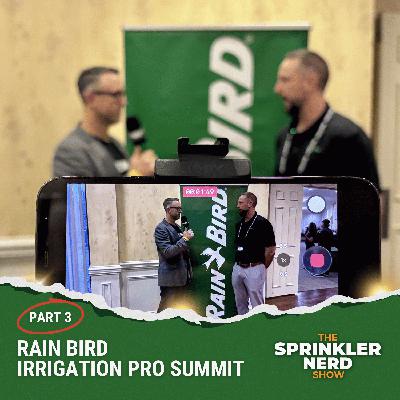
Behind every irrigation controller, valve, and system component is a team of engineers and product managers working to improve the tools contractors rely on every day. In the final episode of this three-part series from the Rain Bird Irrigation Pro Summit, Andy Humphrey talks with members of the Rain Bird team about how irrigation products are designed and how contractor feedback shapes the future of irrigation technology. Steve, a Rain Bird product manager, shares insights into the development of modern controller platforms, two-wire systems, and connected irrigation management tools. Maggie and Matt from Rain Bird discuss valve technology, integrated valve modules, and how product innovation happens within one of the irrigation industry's most recognized manufacturers. This conversation highlights how collaboration between contractors and manufacturers continues to drive innovation in irrigation. In This Episode How Rain Bird develops irrigation controllers Two-wire technology and system diagnostics Valve innovation and integrated valve modules (IVM) How contractor feedback influences product development The future of irrigation technology Featured Guests Steve Barendt— Rain Bird Product Manager, Controllers Maggie Saulsby — Rain Bird Product Manager, Valves Matt Cooper — Rain Bird Contractor Account Manager (CAM), Mid Atlantic
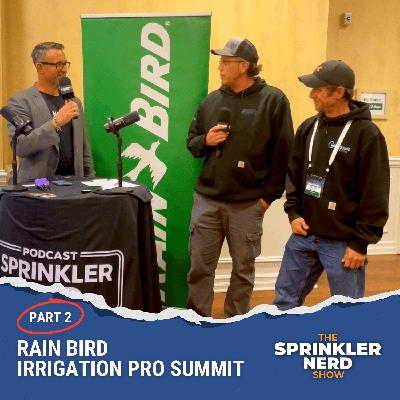
Today's irrigation contractor does far more than install sprinklers. Modern irrigation companies are managing water, integrating technology, and running sophisticated service businesses that combine field expertise with connected systems and data. In this second episode of the Rain Bird Irrigation Pro Summit series, Andy Humphrey speaks with several contractors working in the field today about how the role of the irrigation contractor is evolving. Steve from Quench Irrigation discusses water management, smart controllers, and the growing role of sensors and connected technology. Travis and Andy Childs share practical insights from decades of experience installing and troubleshooting irrigation systems. And Alex from Morgans Irrigation talks about how modern irrigation businesses are using automation, CRM systems, and new service models to improve customer communication and operations. Together, these conversations paint a picture of the modern irrigation contractor — a combination of technician, water manager, and technology operator. In This Episode Smart controllers and cloud-connected irrigation systems Water monitoring and irrigation management Two-wire troubleshooting and electrical diagnostics Training technicians and improving system reliability Using CRM systems and automation in irrigation businesses Featured Guests Steve Pereira — Quench Irrigation Travis Childs — Morgans Irrigation Andy Childs — Landscape Maintenance Services Danielle and Denise - Landscape Maintenance Services Alex Morgans — Morgans Irrigation
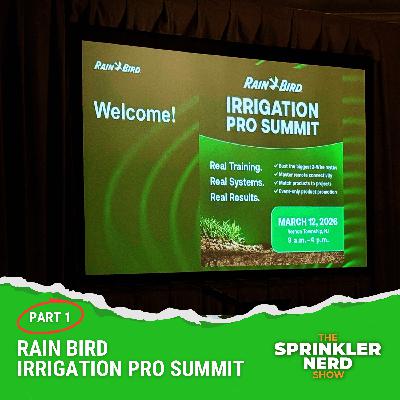
In the first episode of this three-part series from the Rain Bird Irrigation Pro Summit, Andy Humphrey sits down with Walter Mugivan, owner of Aqua Mist Irrigation, who has more than 50 years of experience in the irrigation industry. Walter installed his first irrigation system in 1968 — digging trenches by hand and working with early hydraulic valves long before modern irrigation technology existed. In this conversation, Walter shares how the industry has evolved over the decades, from early sprinkler systems to today's advanced controllers, flow management systems, and large-scale pump stations. He also shares advice for contractors entering the industry and explains why understanding the fundamentals of hydraulics and system design still matters today. This episode is a reminder that irrigation innovation didn't happen overnight — it was built through decades of learning, experimentation, and improvement. In This Episode What irrigation systems looked like in the late 1960s The evolution of controllers and sprinkler technology Pump stations and stormwater irrigation systems The importance of hydraulics in irrigation design Lessons from more than 50 years in the industry Featured Guest Walter Mugavin Owner, Aqua Mist Irrigation
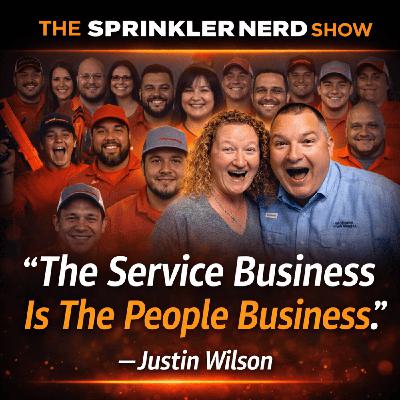
In this episode of The Sprinkler Nerd Show, Andy Humphrey sits down with Justin Wilson, founder of American Irrigation in Georgetown, Texas. With nearly three decades in the irrigation service business, Justin shares how he built a company that now runs 17+ service trucks and completes thousands of irrigation jobs each year. Justin explains why "the service business is the people business," emphasizing that successful companies must care for both their customers and their team members. The conversation dives into practical lessons from the field—how quality inspections and training help maintain standards across a large team, why many irrigation problems come down to simple issues like poorly installed sprinkler heads, and how contractors can build long-term customer trust. Andy and Justin also explore the future of irrigation, including smart controllers, the challenges of managing thousands of different systems, and the growing pressure on water resources. Justin argues that contractors will need to shift toward more efficient irrigation methods, better system design, and prioritizing which landscapes truly need water. The episode wraps with advice for contractors: stop searching for the "perfect technician" and instead invest in training the next generation of irrigation professionals.
TXT Andy and say what's up? 208 908 3229 -- Hey friends, welcome back to The Sprinkler Nerd Show. Today, I want to take you down a slightly different path. This one's not about technology. Not about sensors. Not even about irrigation. It's about something more fundamental… something that shapes how we lead, how we teach, and how we grow. It's about the power of not knowing. Have you ever noticed what happens when someone asks you a question? What do you do? You probably give them an answer. That's what we've been trained to do. We associate knowledge with value. We think: if I have the answer, I'm helpful. I'm smart. I'm a good leader. But I want to challenge that today. What if giving the answer actually ends the conversation too soon? See, when we hand someone an answer, we're closing a door. We're wrapping it up. Putting a bow on it. Done. Solved. Move on. But growth doesn't happen in the answers. Growth happens in the thinking. In the wondering. In the exploration of possibilities. So what if, instead of handing out answers like candy, we responded with questions? Imagine this: Someone asks you, "What should I do about this issue in the field?" And instead of launching into your best advice, you say: "What options have you considered?" "What's the outcome you're aiming for?" "What do you think will happen if you try that?" Now, suddenly, you're not just giving a solution—you're creating space for discovery. You're not the answer key. You're the guide. That's leadership. That's coaching. That's power. Because when you help someone think—not just tell them what to think—you unlock something in them. You give them a skill they can use forever, not just an answer they'll forget tomorrow. And here's the twist: Not knowing isn't weakness. It's wisdom. It's humility. It's the birthplace of insight. So next time someone comes to you looking for an answer, try holding back. Ask a question instead. Keep the door open. Let the conversation breathe. Because the power of not knowing... might just be the greatest tool you have. Thanks for listening, and I'll catch you next time. Intro audio source: America, "You Can Do Magic"

Reference Link: https://player.captivate.fm/episode/ec981d8c-cd1d-4c13-961a-76cf9cf32ecb
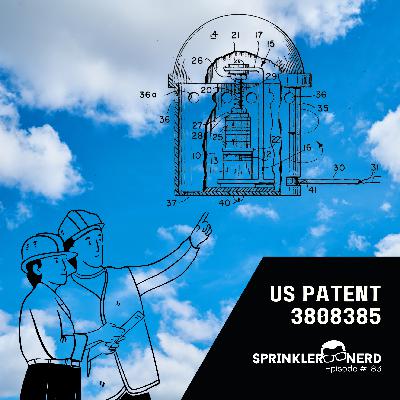
For immediate release—breaking news, kind of. In this solo episode of The Sprinkler Nerd Show, Andy dives into what seems like a revolutionary product: a mechanical rain sensor that requires no batteries, no Wi-Fi, no firmware updates—just pure, functional design. It shuts off irrigation during rainfall and turns it back on when conditions dry out, all thanks to hygroscopic discs that expand and contract to trigger a simple switch. This device sounds like the newest drop in water-saving technology—until Andy reveals the twist: it's not new at all. In fact, it's based on US Patent 3,808,385, filed in 1972 and granted in 1974. That's over 50 years ago. And the core concept of the mechanical rain sensor hasn't changed since. Andy breaks down how the device works, why it's still effective today, and what it says about the pace of innovation in the irrigation industry. He challenges contractors and tech developers alike to ask the big question: why are we still using 1970s technology in 2025? Could we create a smarter, data-driven rain sensor that actually logs rainfall events, provides historical context, and informs better irrigation decisions? If so—why hasn't anyone built it yet? Key Highlights: Breakdown of how the moisture-responsive switch actuator works Benefits for contractors: simplicity, reliability, zero maintenance Installation and adjustment tips Why the current state of rain sensors is a wake-up call A challenge to the industry: let's rethink how we track rain and respond to it Andy closes the episode with a call to action for all Sprinkler Nerds: always ask why. Why things work the way they do, why they've stayed the same—and how we can make them better.
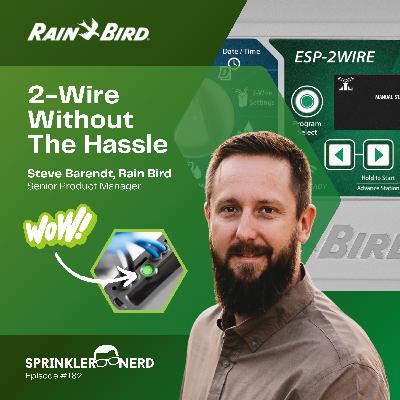
YouTube Short: https://youtube.com/shorts/flpTuNN7vqY Summary In this episode of the Sprinkler Nerd Show, host Andy Humphrey sits down with Steve Barendt from Rain Bird to explore the company's new ESP 2-Wire Controller—a product that's making 2-wire irrigation systems significantly more approachable for contractors who may have previously avoided them due to complexity. The Origin of the Conversation Andy first encountered Steve at the IA Show, where Steve delivered an impromptu 2-minute elevator pitch on the new controller. That pitch sparked Andy's interest in Rain Bird's new approach to two-wire systems, leading to this deeper dive discussion. Steve's Background Steve brings a decade of experience at Rain Bird, including seven years on the sales team working directly with contractors in the Austin, Texas area. His background in the field informs his work as a product manager, enabling him to better understand real-world customer needs and challenges. Why "Approachable" Matters Historically, two-wire systems have been considered complex, especially around wiring specifications, connector types, and troubleshooting. Rain Bird's ESP Two-Wire Controller aims to lower the barrier to entry, making it easier for contractors—even those new to two-wire installations—to adopt the technology. The term "approachable two-wire" is intentional. Steve explains that Rain Bird designed this controller to work with standard irrigation wire and connectors, rather than requiring specialized components. As long as the wire is direct burial irrigation wire (down to 18 gauge) and connectors are rated for 600 volts, users can leverage what's already on their trucks—reducing the learning curve and installation costs. A Big Shift: De-Energized Two-Wire Path A key innovation is that the two-wire path is not constantly energized, as it is in traditional two-wire systems. Instead, it's only powered when actively running a station or performing diagnostics. This reduces heat at the connectors and decreases corrosion risks, allowing the use of standard connectors and simplifying troubleshooting. Positioning: Who's It For? The ESP Two-Wire Controller isn't designed to replace all two-wire systems. Instead, it's aimed at light commercial and large residential projects with about 12 to 30 stations—an area where contractors often debate between traditional wiring and larger two-wire systems. Key highlights: 50-station capacity (though ideal use is around 12–30 stations) Cost break-even point starts around 12 stations, lower than the 30+ typical for traditional two-wire setups Two solenoids can operate simultaneously Compatible with a standard flow sensor (hardwired) By offering a lower break-even point and simpler installation, this controller fills a gap between traditional modular controllers like the ESP ME3 and higher-end commercial platforms like LX IVM. Troubleshooting Tools and Diagnostics Rain Bird has invested heavily in diagnostics features that make this controller easier to troubleshoot: LED Feedback on Decoders: Each decoder includes red, green, and blue LEDs that indicate operational status, short circuits, and open circuits. Short Finding Mode: Allows energizing the path for diagnostics with a clamp meter. Power-Measure Mode: Helps track power issues in the field. These features empower contractors to isolate and resolve issues faster without needing advanced tools or specialized knowledge. Auto-Addressing Decoders Perhaps the most contractor-friendly feature is the auto-address functionality. Rain Bird decoders come in numbered order, and if installed sequentially, the controller will auto-scan and assign decoder addresses to stations with no manual input. This drastically reduces setup time and minimizes human error. While other systems may require manual address entry or use specialized software, Rain Bird's solution is faster and simpler—especially when paired with the mobile app. No Field Grounding Required Another simplification: unlike other two-wire systems, no field grounding is required for this controller. Though contractors can choose to ground the system if they wish, it's not necessary for functionality or warranty compliance. Connectivity and Software Integration The controller is WiFi-enabled via Rain Bird's LNK2 module. It currently connects to Rain Bird's legacy mobile app, but a transition to Rain Bird's 2.0 app and IQ 4 web platform is planned for 2025, which will bring expanded access and remote management options. Simplified SKUs and Installation Rain Bird is offering this platform with just two SKUs: the controller and a single-station decoder. That's a major advantage for distributors and contractors, who won't need to manage complex inventories of sensor decoders, grounding kits, or multi-station decoders. Behind the Scenes: Product Development Steve shared insights into the 2–3 year development timeline, which included field testing, focus groups, and engineering across multiple departments. The goal: simplify, streamline, and make two-wire technology accessible to more contractors. Multiple patents were filed as part of the innovation process, particularly around the auto-addressing and system architecture. Final Thoughts This controller isn't for every project—but that's the point. Steve emphasized the importance of positioning the right tool for the right job. When used in the right context—light commercial sites, fast food chains, hotels, and medium-size properties—Rain Bird's ESP Two-Wire Controller can offer a compelling mix of ease-of-use, cost savings, and performance. Contractors interested in learning more are encouraged to reach out to their local Rain Bird representatives via their distributor or visit the Rain Bird website for product videos and specs. Key Takeaways Designed for simplicity and approachability Compatible with standard wire and connectors De-energized two-wire path reduces risk and simplifies install Auto-addressing decoders streamline setup Troubleshooting tools built-in (LEDs, short find mode, power measure) Ideal for 12–30 zone projects Connects via WiFi and will be fully app- and web-integrated in 2025 No field grounding required Just two SKUs for the system

Andy introducing wireless sensor technology to Ohio and riffs about the "RHYTHM" of the landscape.
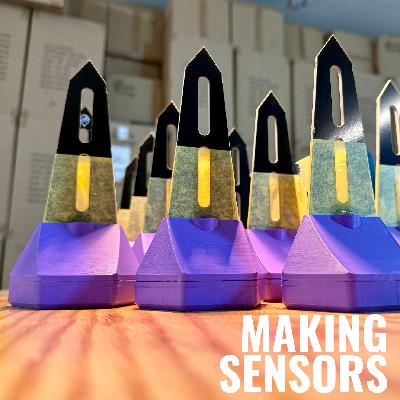
In this episode, Andy shares his process for manufacturing LoRaWAN wireless soil moisture sensors.
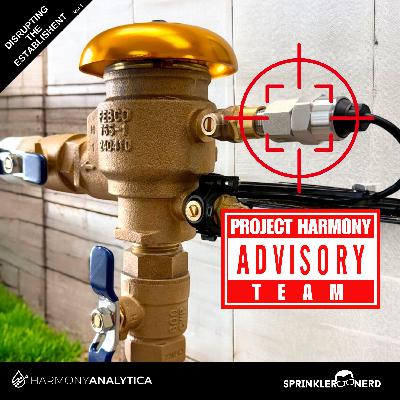
Join the Project Harmony Launch List: HarmonyAnalytica.com/future What does the future hold for your landscape business? Well, if you ask nine experts, you'll get 10 different answers. Some say we're heading for a lush, thriving growing season; others predict drought conditions. Some insist we'll get just enough rain this year—and someone else insists it's never enough. Let's be honest, nobody really knows... But now...there is one surefire way to future-proof your business and how you manage high asset value crops: Harmony Analytica. Harmony is the FIRST sensor analytics platform made for plant-focused professionals. It is currently used by leading institutions, managers, and contractors from Agricultural, to HOA, to Green Infrastructure everywhere.. But what does Harmony Analytica actually do? It brings all of your water consumption data, irrigation schedules, localized rainfall, soil moisture levels, environmental data, and plant health metrics together into one. single. platform. That means you have a single source of truth to manage your landscape assets. No more cobbling together spreadsheets or running multiple apps, or exporting for water use, from multiple software platforms—only to end up with a "dashboard" that's outdated the moment you finish assembling it. Do you juggle endless logins for systems like Rain Bird, Toro, Hunter, Baseline, WeatherTrack, RainMaster, Calsense, Weathermatic, Smart Rain…the list is fucking long, yeah? With Harmony Analytica you can affordably add sensors for one centralized command center, saving you time, simplifying your workflow, and giving you unparalleled insight into every aspect of your irrigation strategy -without spending thousands of dollars changing our controllers. Harmony Analytica knows exactly what you need: Real-Time Insights – to track water consumption, water pressure, soil moisture, local rainfall, evapotranspiration, and more. Accurate Planning – so you can schedule irrigation and manage your resources based on data, not guesswork. Visibility & Control – to make quick, informed decisions about your landscapes in one user-friendly dashboard. Think of this as the instrument panel of your horticultural fighter jet. You want all that data to be spot on and easily accessible—so your maintenance strategy is efficient, your plants are thriving, and your business is operating sustainably. Start with one sensor, grow with many. Harmony's modular platform ensures that no matter how small your business is today, or how large your landscape operations become, Harmony Analytica is designed to scale seamlessly right alongside you. There is no minimum to get started. In short: you need Harmony Analytica. It's an amazing opportunity to revolutionize how you manage landscapes. And speaking of opportunity, do yourself a favor: Apply Now, to join the Harmony Analytica Advisory Team, where you can become a part of the development team and help shape the future of the company. In this top-secret, private group, we will break down how to leverage cutting-edge tech to keep your landscapes greener—and your bottom line stronger. Signup today: Harmony Analytica.com/future, harmonayanalytica.com/future, harmonyanalytica.com/future.

In this episode of The Sprinkler Nerd Show, host Andy Humphrey starts off with an unapologetically bold greeting to illustrate the power of authenticity and grab listeners' attention. He gives a personal shout-out to friends, mentors, and colleagues he connected with during the week—highlighting the importance of real human relationships in an increasingly AI-dominated world. From there, Andy explores the rapid growth of AI and how it's poised to deliver personalized, mass-produced podcast content—comparing it to Walmart's ability to provide inexpensive, standardized groceries. But just as many people still prefer organic, home-cooked meals, Andy argues that listeners will continue to value authentic, human-created content. He emphasizes that AI, while a remarkable tool, simply can't capture the spontaneous quirks and genuine emotion inherent in a show crafted by a real person. Ultimately, Andy encourages creators (and listeners) to lean into their unique perspectives and passions. By embracing technology where it's helpful but maintaining the "handcrafted" essence of podcasting, we can build deeper connections and a vibrant community that values the human touch—something no AI can replicate.

Hello, friends! I wanted to take a moment to share a quick update on what's happening this week. I'll be traveling to Calgary and Edmonton, Canada, for the SiteOne Landscape Supply One Stop events. On Tuesday, I'll be at the Calgary event, and then on Thursday, I'll attend the Edmonton event. After that, I'll head back to the airport Thursday night and fly home on Friday. I had to adjust my travel plans a bit, departing from Grand Rapids instead of my usual airport because, upon my return, I'll be meeting up with my daughter. We're headed straight to a volleyball tournament in LaPorte, Indiana—an exciting way to wrap up the week! If you're in the Calgary or Edmonton area, I'd love for you to stop by the SiteOne events. Please make it a point to say hello! It's always a pleasure meeting industry professionals, and I'd love to hear what's happening in your world. An Update on Project Harmony For those of you following my journey to bring affordable wireless soil moisture sensors to market, I wanted to share some exciting news. We've successfully deployed a few hundred beta sensors—yes, handcrafted by yours truly! The beta launch has been a huge success, and if you'd like to learn more about Project Harmony, visit harmonyanalytica.com. If you're interested in participating in the beta program, you can receive a sensor and Wi-Fi hub for just $100. Simply visit harmonyanalytica.com/beta to sign up. I'm also looking for industry professionals who want to integrate wireless sensors into their business. I'm even considering launching a private group for beta users. In this group, I'd share everything I've learned on this journey, and together, we could build the next generation of water analytics and landscape insights. Behind the Scenes of Sensor Development What's fascinating about bringing sensors to market is that the biggest challenge hasn't been the measurements—it's been the manufacturing process. I've learned so much about 3D printing, epoxies, potting materials, and even things like glue types and vapor smoothing chambers. Right now, it's a 2-to-1 process—for every two sensors I manufacture, only one makes it to the field. Many work perfectly but have small cosmetic blemishes, making them unsellable based on current standards. This is one idea I'm considering for the beta group: offering these fully functional but slightly imperfect devices at no charge for testing and learning. If you're curious about how wireless sensors work, how they can add value to your business, and how we can revolutionize the industry together, I'd love to connect with you. Let's create the next wave of innovation outside of the traditional wholesale landscape manufacturers. That's my week ahead! I look forward to meeting any of you who are in Western Canada at the Calgary or Edmonton SiteOne One Stop events. Stop by and say hi—I'd love to connect. Thanks for listening, and let's keep innovating!

In this episode, we uncover a remarkable story hidden in plain sight: Ronald Wayne, the often-overlooked third co-founder of Apple. While Steve Jobs and Steve Wozniak achieved legendary status, Wayne's name is hardly mentioned in the tech world—even though he helped draft Apple's original partnership agreement and designed its first logo. After just twelve days, he chose to walk away from his 10% stake in Apple for a mere $800, a decision that would come to symbolize both the enormity of risk and the unpredictability of life. I share how my son, Drew, and I stumbled upon Wayne at an afterparty during the Consumer Electronics Show (CES). This unexpected meeting led to an eye-opening conversation about everything from historical shifts in monetary policy to Wayne's current passion for investing in silver. Drawing on Adam Smith's Wealth of Nations, he argues that today's fiat currencies are on shaky ground and sees silver as a tangible asset that may protect wealth when paper money loses its luster. Throughout our chat, Wayne's calm conviction and life experiences shine through. He exemplifies the power of informed decision-making, a willingness to pivot when necessary, and an unwavering commitment to charting one's own course. Despite leaving behind what could have been billions, he found fulfillment in engineering pursuits and personal independence. Tune in to hear my reflections on Wayne's journey and the lessons we can all draw from his story. If you're curious about his detailed thoughts on the future of money, stick around for the recorded audio of our conversation with Ronald Wayne himself. It may be a bit difficult to hear at times, but it's worth the listen if you want to glean insights from one of Apple's most intriguing figures.
Today, I'm sharing the story of my six-month recharge. Six months that pulled me out of my comfort zone and into a world of new challenges, new skills, and new possibilities. This wasn't a vacation—it was six months of diving into the sandbox, experimenting, and solving problems I'd never faced before. And here's the thing: If I can do this, you can too. So, join me on this creative adventure as we look ahead to 2025 and all the possibilities waiting for us. This is the story of my six-month recharge —-- six months that transformed how I think, work, and approach challenges. This wasn't a break or a vacation. It was six months of diving into the sandbox—learning, experimenting, and tackling problems I'd never faced before. I stepped out of irrigation and into the fast-moving world of IoT. The Sandbox Adventure Here's what happened: I invented new IoT products. I developed a wireless cloud solution to connect industrial weigh scales to the cloud—something that hadn't been done before. I learned to set up a Raspberry Pi. This opened the door to new technical possibilities. I dove into LoRa. I explored how this long-range wireless technology is shaping IoT. I attended the largest LoRa conference in Amsterdam. It gave me a front-row seat to the next big technology curve. In six months, I gained more skills than in the last six years. Why the Sandbox Matters This wasn't just about learning new skills—it was about embracing the unknown. The sandbox is where you play, experiment, and solve problems without fear of failure. It's where you push boundaries and ask, What if? These six months pulled me away from irrigation and into the broader IoT world, where the future is being built. Here's what I want you to take away from this: Growth happens in the sandbox. It's where you take risks, build, and learn about yourself. You don't need to know everything or have a perfect plan. You just need to step in, get your hands dirty, and start creating. If I can do this, you can too. 2025 is your year to play in your own sandbox, to learn, grow, and build something extraordinary. So, let's do this together. Join me on this creative adventure. The sandbox is waiting, and the best part? You're already holding the tools.
Andy Humphrey kicks off the episode with "Little Silver Ring" by The Samples and shares insights from his trip to Orlando for volleyball Nationals, highlighting its economic impact. He then revisits a past episode on field capacity, discussing soil moisture sensors, practical analogies, and their importance in irrigation systems. (0:00) Andy Humphrey introduces the morning song of the day (1:31) Andy Humphrey reveals the song: "little silver ring" by The Samples (1:44) Podcast introduction and target audience (2:20) Andy Humphrey talks about being in Orlando for volleyball Nationals (3:47) Discussion on the economic impact of the volleyball tournament (7:36) Transition back to the Sprinkler Nerd Show (8:15) Replaying a past episode titled "field capacity, my ass" (9:40) Experiment with multiple soil moisture sensors (12:21) Shout out to Juanita and replay of the April 2023 episode (12:58) Defining field capacity (14:23) Using a sponge as an analogy for field capacity (17:09) Comparing field capacity to a percolation test (19:16) Field capacity as the baseline for soil moisture (22:10) Explanation of how to measure and apply field capacity (27:20) The art of setting soil moisture sensors (32:40) Analogies for understanding tank size and soil moisture (33:14) Importance of field capacity in irrigation systems (34:16) The future impact of soil sensors in the industry (35:15) Closing remarks and wrap-up And so I'm gonna play that for you today. Here because I don't have time to record a full episode with brand new content, but it did get me thinking about just soil moisture sensing and field capacity and understanding the numbers, and you're gonna hear all that on this episode, this replay episode. But I wanted to share a new concept that actually it's not completely new, but a concept that I have running, in ex in an experiment right now. And that is a concept of taking multiple soil moisture sensors, let's say, within one zone, and averaging them together to creating new soil moisture or that you might think of as a synthetic value. So there's always the angel question of, you know, how is this one spot where the soil moisture sensor is buried. How how is that relative to the rest of either the site or the zone I'm not gonna get into all of those details. We'll save this for another episode. And and the and that is that is a valid question. And the only real way around causing a mistake is to actually just locate the sensor in in a really good area. But then what would happen? What would it look like if instead of putting one soil moisture sensor in a zone? Or one soil moisture sensor in every zone, we put 3 soil moisture sensors in one zone and use that one zone as the baseline zone for the rest of the site. And it's not actually possible today to do this with any control system. Even a baseline control system. You cannot install you can install 3 soil moisture sensors in a zone, but they're all going to be independent, and only one of them can actually control the zone. But what if you could take those 3 soil moisture sensors buried in the one zone, average them together to create a new synthetic, you know, synthetic value and use that average value to control the zone. What would that look like? That can't be done today, but I'm doing it. I'm actually I'm actually running this experiment. We have a a project that has I should know this number off the top of my head, but I don't. Let's say if it has 8, it has 8 soil moisture sensors. And each soil moisture sensor is actually buried in in its own zone, 8 slow moisture sensors, 8 zones, but then I'm taking all of those 8 slow moisture sensors averaging them together and creating a new value that says here's the average soil moisture across the entire site. And what's interesting about that is, well, first, it it hasn't been done before. But second, it might make up for potential errors in location, formity, etcetera, etcetera, if multiple sensors are installed within one zone average together to create a new value So that's just one experiment that I'm running right now. It's going really well. And, maybe maybe a manufacturer that might be listed into this podcast, we'll take that into consideration as they develop the platform. And, we'll just we'll just see how it goes. But Wanted to give a special shout out to Juanita. Thank you for being an active podcast listener. Appreciate hearing from you. And, with your recommendation, I'm gonna replay the episode from April, I think April 28th 2023 called field capacity, my ass. It is great content. I highly encourage you to listen to the entire episode. And if you don't have time today, bookmark it, listen to it again, and I'm, excited to talk about field capacity more in the future because it's more relevant than it ever has been. So thank you so much for listening. Appreciate all of you. And, we'll just roll the intro here and get right into the episode on field capacity. Okay. So in order to understand field capacity and talk about field I first think we should define field capacity. Field capacity refers to the maximum amount of water that a soil can hold against the force of gravity. Alright? It's kind of the point at which the soil is fully absorbed I won't say saturated, fully absorbed with water, and then the excess water has drained away. K? After that excess water has drained away. That's field capacity. At field capacity, the soil is sort of holding as much water as it possibly can and any additional that we add to the soil will actually drain away due to that force of gravity. One great way to illustrate this, maybe this would create a mental picture in your mind, is to think taking a sponge in your kitchen sink. K? If the sink is full of water, you put the sponge into the water, you let the water soak into the sponge, fully, then you lift the sponge out of the sink, it starts to drip, drip, drip, drip, That's saturation as soon as the water stops dripping out of the sponge. That's field capacity. K? That's the point at which the water can hold the the the moisture after gravitational drainage. K. So the sponge is a great way to describe this. Great way to understand it. Great way for you to describe this to your customers, your clients. And seeing this on a graph is awesome as well. So typically, I like to see this on a graph. So historically, working with baseline controllers, I would pull up a soil moisture graph report. I would look at this, on the graph to understand the concept and teach people about it. Okay. So the way that it looks on the graph. And again, I think probably the best way for you to visualize this is that sponge because we can all picture a sponge dripping. Okay. And what that looks like on the graph is a spike. When when the soil is full of water and it is dripping, it it's not holding water. The water is actually draining out of that soil. So you see this spike wet. Boom. It spikes up. And it's draining quickly. Right? The water is dripping out of that sponge. So you get this needle tipped tall spike. And then as the drop start to slow down out of the sponge, that's that's kind of like a curve. It represents a curve, a dry down curve on the graph. And and that curve, which is sometimes called, like, the shoulder, the shoulder of that curve, that illustrates where field capacity is. Okay. And you can kinda measure it. So if we're looking this looking at this on a graph, you could take your cursor, you could hover over the line, and you could get a a numeric value for field capacity. Okay? So more on that in just a moment. The other way that we can describe field capacity instead of using that term, which is very scientific, but it's important for us to understand it, but the average person may not. So One way to describe another way to describe that to the average person is just using the term wet. Sounds easy, silly, but it but it's true. It's wet. Not too wet, not too dry, just right. It's the goldilocks of wet. It's perfectly wet, not too wet, not too dry, just right. It's the goldilocks of wet. K? And again, you can measure this. It's a scientific value. Feel capacity is scientific. How much you allow that to deplete is the art. You can you can deplete it as much or as little as your plants can sustain. But every soil has a field capacity value that can be measured. Alright? Let's go with another way to think about this. I'm gonna give you a few examples because maybe one will stick more than another, and these are just analogies that I've used over the years to help describe the concept. A third way to describe this is a lot like a percolation test. Okay. And a lot of landscapers know this and home builders understand this because if you have a well for your water supply. Actually, not a well. What am I saying? If you have a septic, system, A lot of wells also have septic systems versus city water. But if you have a septic system, typically, you have to do a percolation test to see how the water drains through that soil to see whether that soil can even house or hold a septic tank. Okay. So typically a percolation test, you dig a hole You fill it up with water. You watch it drain over time. And then that would determine if you would be allowed to get a permit from your town to put in the drain field. Okay. So the faster a soil drains the more sand there's going to be in the soil. And the slower it drains, the more clay we're gonna have in the soil. Or, like, based on that drainage rate, it can also describe, you know, kind of the compaction and the structure because the soil type is only one variable. Right? So if we say I have Sandy Lom, well, that does just because you have Sandy Lom or you think you have Sandy Lom or you sent your soil test to a lab, and they said you have sandy loam, it doesn't mean the soil actually behaves like you have sandy loam because there is compaction and there's structure in the soil. They can also affect how wat
TL;DR::::::: Embrace an Open Mindset: Keeping an open mind is crucial for discovering new opportunities and innovations. Importance of New Conversations: Engaging with new people and ideas can lead to significant breakthroughs. Technology and Innovation: Encountering groundbreaking technology that could revolutionize the irrigation industry. Overcoming Initial Bias: It's essential to look beyond initial skepticism or bias towards new ideas and products. Creating Luck: Luck is often the result of continuous effort and openness to opportunities rather than mere chance. Episode Summary: In this episode of the Sprinkler Nerd Show, host Andy Humphrey discusses the concept of keeping one's "eyes wide open" as a way to stay receptive to new ideas, opportunities, and innovations, particularly within the irrigation and landscape industry. He emphasizes the importance of an open mindset in both personal and professional contexts. Andy begins by explaining that expressing thoughts out loud helps him remember them better. This episode serves as a reminder to himself and his listeners to stay open-minded. He introduces the concept of "eyes wide open," which he describes as the practice of seeing beyond what we want to see and remaining aware of what actually exists and what possibilities might be available. He recounts an experience from earlier in the day, where he had an unexpectedly profound conversation with an entrepreneur developing innovative technology outside the United States. Initially hesitant to engage, Andy decided to attend the meeting with an open mind and was amazed by the groundbreaking software technology relevant to his industry. This encounter reinforced his belief in the value of being open to new ideas and perspectives. Andy highlights how easy it is to dismiss new products or ideas, especially when one is loyal to a particular brand or has had negative experiences with other brands. He notes that often, people approach new conversations with a closed mindset, either out of habit or preconceived notions. This can lead to missed opportunities and hinder progress. By contrast, approaching interactions with an open mind allows for potential discoveries and innovations. He uses the example of his industry, where brands like Rain Bird or Hunter are predominant, and how professionals might resist considering products from other brands due to brand loyalty or preconceived biases. He stresses that it's crucial to entertain new ideas and test new products to stay ahead in the industry. This open-minded approach can lead to significant advancements and better solutions. Andy also addresses the concept of luck, challenging the common perception that successful people are merely lucky. He argues that what appears to be luck is often the result of numerous efforts and opportunities seized over time. By keeping their eyes wide open, individuals can create their own luck through continuous learning and openness to new possibilities. This podcast episode is a motivational reminder for professionals to maintain an open mind and actively seek new knowledge and experiences. Andy encourages his listeners to engage with new people, explore new technologies, and be willing to entertain meetings and conversations that might initially seem unimportant. He believes that this mindset will lead to personal and professional growth and ultimately contribute to shaping a successful future. In conclusion, Andy Humphrey's message in this episode is clear: staying open-minded and receptive to new ideas and opportunities is essential for innovation and success. By embracing an "eyes wide open" approach, individuals can overcome biases, discover groundbreaking technologies, and create their own luck through continuous effort and engagement with the world around them.

Comments

Download from Google Play

Download from App Store
 United States