


 Claim Ownership
Paper Chains
Subscribed: 0Played: 0
Subscribe

© 2026 Paper Chains
Description
Welcome to Paper Chains, a podcast that takes a deep dive into key reports, uncovering exploitation, labor abuses, and global supply chain tracking. This series is a project of Five24, dedicated to shining a light on the facts behind the headlines.
13 Episodes
Reverse

Send us Fan Mail Welcome to this episode of the podcast, where we take a deep dive into the Global Report on Trafficking in Persons 2024, published by the United Nations Office on Drugs and Crime. This is the seventh edition of the report, and it's a big one—spanning data from 156 countries and unpacking what’s really happening in the world of human trafficking today. In this episode, we break down the report’s key findings, trends, and takeaways so you don’t have to sift through the whole th...

Send us Fan Mail In this episode, we unpack key insights from the 2023 U.S. Trafficking in Persons Report, highlighting how human trafficking continues to evolve globally. We explore how governments, NGOs, survivors, and even banks are teaming up to fight exploitation—focusing on prosecution, protection, and prevention. The episode dives into survivor-led reform, the push to stop punishing victims for crimes they were forced into, and how modern challenges like war, climate change, and tech a...

Send us Fan Mail Welcome back to Paper Chains. In this episode, we dive into the 2024 Trafficking in Persons Report—the U.S. State Department’s flagship assessment of how countries around the world are fighting (or failing to fight) human trafficking. This is the report that sets the global benchmark, but it’s also one that’s dense, overwhelming, and often overlooked by the public. Our goal today is to break it down in plain language—highlighting the most disturbing trends, the countries movi...

Send us Fan Mail In this episode of Paper Chains, we compare the 2023 and 2024 U.S. Trafficking in Persons (TIP) Reports to uncover what’s really changed in the global fight against human trafficking. From shifting country rankings to policy reversals and eerily familiar patterns, we break down the most critical updates and explore what they reveal about international accountability—or the lack of it. This conversation isn’t just about documents—it’s about the people behind the data and what ...

Send us Fan Mail Welcome to Episode 5 of the Paper Chains Podcast — where we unpack major reports on exploitation and human trafficking and talk through what we’ve read to make these often dense documents more accessible and understandable for everyone. This episode is brought to you by Ethical Trade Co. Learn more about their work at www.ethicaltradeco.com. In this episode, we’re diving into “Reframing Child Labour Due Diligence”, a 2024 report from UK-based Fifty Eight. The report challenge...

Send us Fan Mail Welcome to Episode 6 of the Paper Chains Podcast — where we unpack major reports on exploitation and human trafficking and talk through what we’ve read to make these often dense documents more accessible and understandable for everyone. This episode is brought to you by Ethical Trade Co. Learn more about their work at www.ethicaltradeco.com. In this episode,we examine three different approaches to tackling child labour in supply chains: developing local smelting capacity in D...

Send us Fan Mail In this episode of Paper Chains, we unpack the Human Rights Watch report “Farmers Have No Freedom”, which exposes how cotton and wheat farmers in Uzbekistan face coercive quotas, state control, land insecurity, and conditions that echo forced labor. While global headlines have suggested reform in Uzbekistan’s cotton industry, this report reveals a more complicated and troubling reality beneath the surface. We break down what the findings mean, why agricultural labor abuses st...

Send us Fan Mail In this episode of Paper Chains, we unpack a powerful report from the International Organization for Migration (IOM) examining how climate change is increasing vulnerability to human trafficking—especially for women and girls. As environmental disasters, drought, and displacement reshape communities, migration becomes a survival strategy. But for many, that movement comes with heightened risk of exploitation. We break down how climate instability, gender inequality, and traff...
Send us Fan Mail In this episode of Paper Chains, we examine a report from the International Organization for Migration exploring how failing infrastructure—roads, water systems, housing, and energy networks—can increase vulnerability to human trafficking in communities already facing climate stress. When disasters damage critical systems, livelihoods collapse and migration becomes a survival strategy. But those moments of instability can also create openings for exploitation. We break down h...
Send us Fan Mail In this episode of Paper Chains, we zoom out from the reports we’ve explored on climate vulnerability and infrastructure breakdown to examine the bigger picture: how climate-driven migration is reshaping global labor markets and trafficking risks. As rising temperatures, disasters, and economic instability push more people to move in search of work and safety, those journeys increasingly intersect with informal labor systems where exploitation thrives. We explore what climate...
Send a text n this episode of Paper Chains, we unpack the 2025 U.S. Trafficking in Persons (TIP) Report, one of the world’s most influential assessments of how governments respond to human trafficking. Covering more than 180 countries, the report ranks nations based on their efforts to prevent trafficking, protect victims, and prosecute traffickers. We break down how the ranking system works, what the report reveals about global trafficking trends, and where progress is still falling short. F...
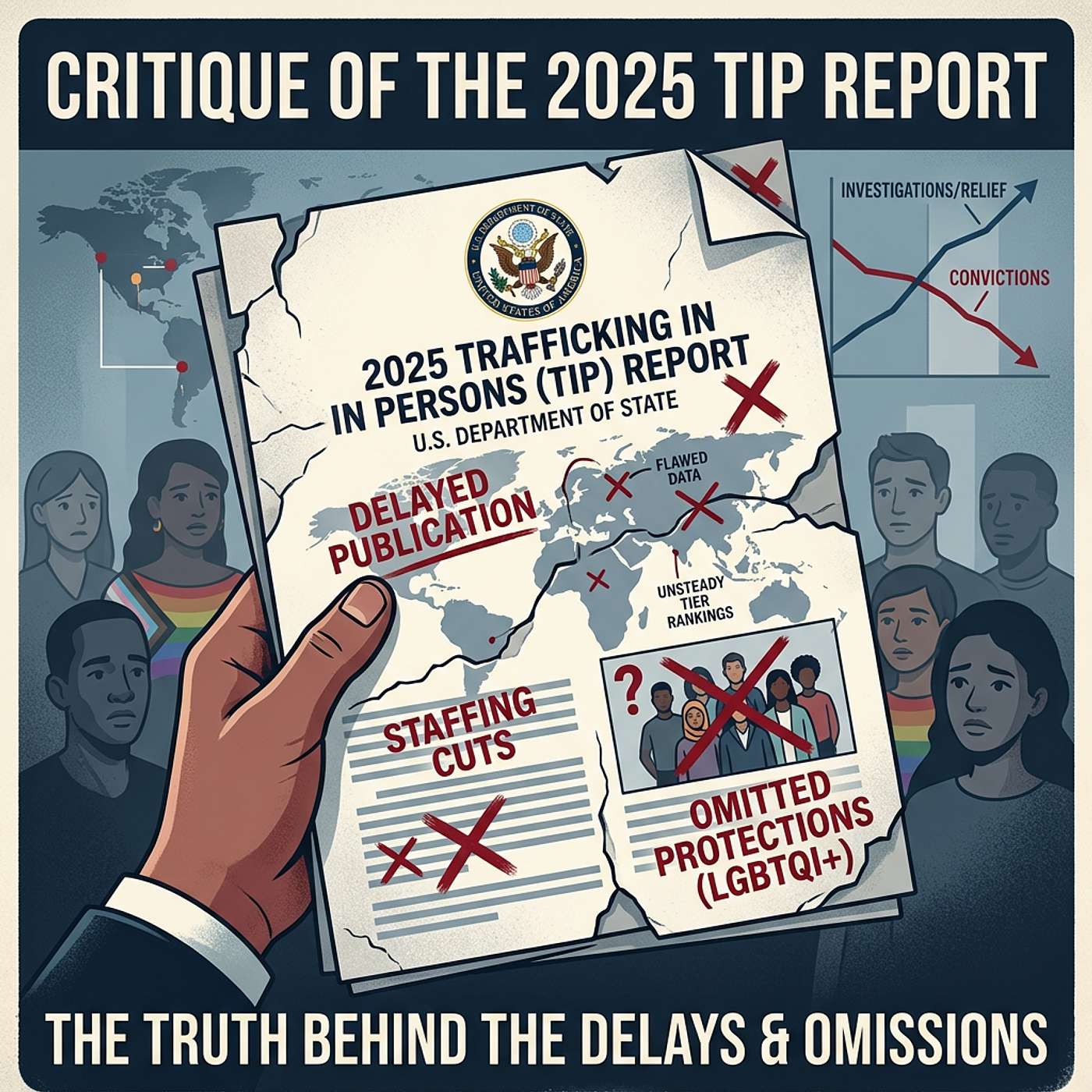
Send us Fan Mail In this episode of Paper Chains, we take a closer look at the controversies surrounding the 2025 Trafficking in Persons (TIP) Report under the current U.S. administration. While the report is widely considered the world’s most influential global assessment of human trafficking responses, it has also faced criticism over the years for potential political influence in country rankings. In this episode, we explore the debates around how administrations shape the report, what cri...
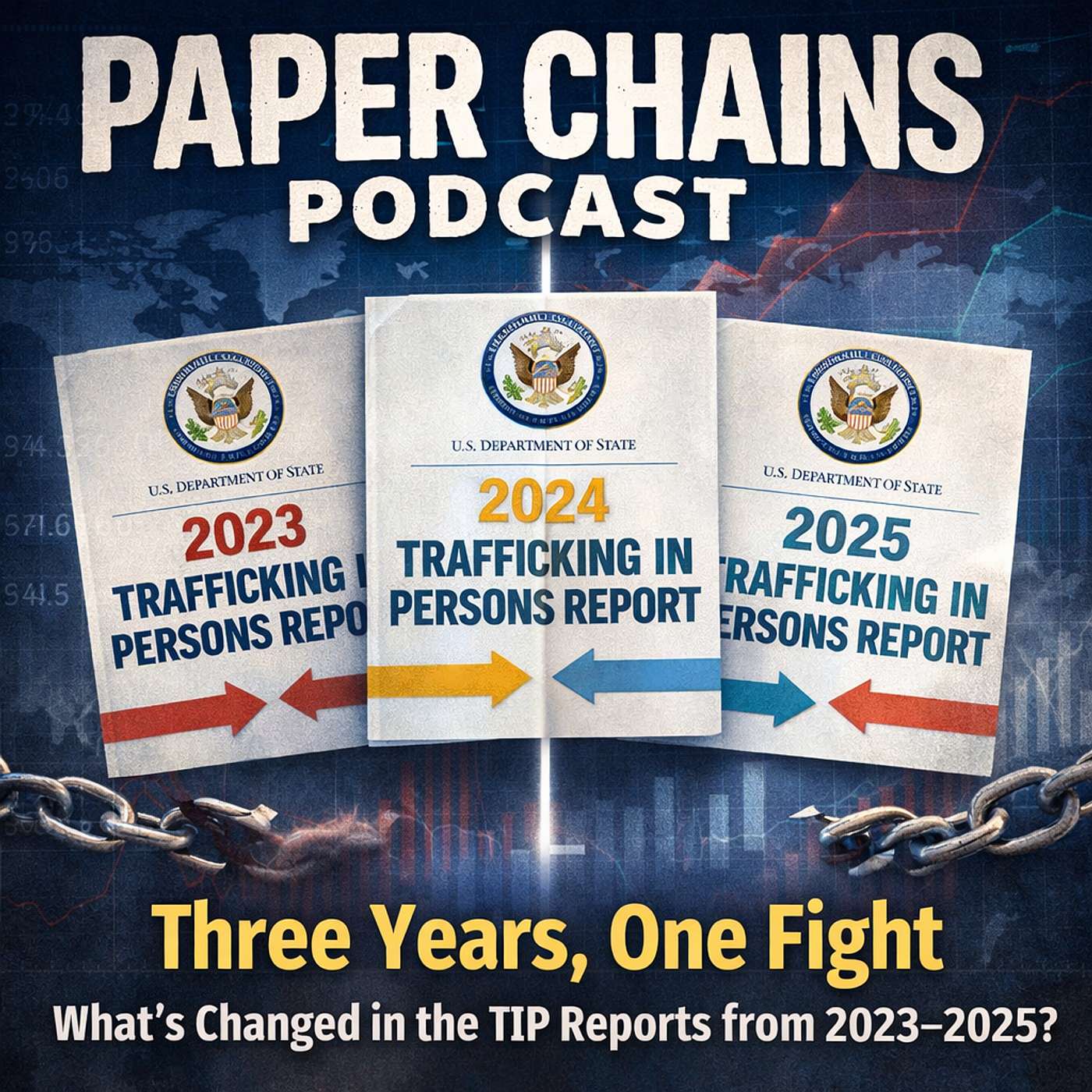
Send us Fan Mail In this episode of Paper Chains, we step back and compare the 2023, 2024, and 2025 Trafficking in Persons (TIP) Reports to understand what’s really changing in the global fight against human trafficking. Are countries improving—or just shifting positions? Are policies becoming more effective, or are the same challenges repeating year after year? We break down key trends across three years of reporting, including changes in country rankings, policy focus, and global traffickin...
Comments

Download from Google Play

Download from App Store
 United States