


 Claim Ownership
Management Today's Leadership Lessons
Subscribed: 49Played: 536
Subscribe

© Management Today
Description
Management Today's Leadership Lessons podcast is aimed at entertaining, educating and inspiring people to be better leaders.
The podcast delves into the world of leadership and management, bringing fresh insights, trends and advice to the ears of busy senior leaders.
We interview CEOs, founders, authors, executive coaches, business professors and other experts to discover the real secrets to effective leadership.
We also provide crucial insight into some of the biggest business stories of the day to help you stay ahead of the curve.
Hosted on Acast. See acast.com/privacy for more information.
115 Episodes
Reverse
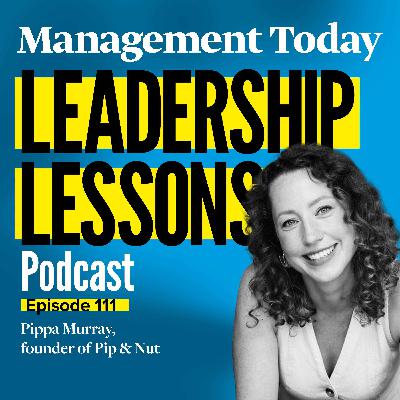
Pippa Murray is a foodie at heart with a particular love for nut butters, which in the early 2010s were her favourite pre- and post-marathon snack. But many of her favourite products at the time were “pretty processed”, often containing palm oil which is high in saturated fats and environmentally destructive to procure. Simultaneously, the protein trend was in its infancy and the wellness industry was championing ‘healthy fats’. Despite these market shifts, existing brands had failed to fully leverage these emerging developments.Spotting a gap in the market, Murray went on a journey to grow and scale her own nut butter brand while working at The Science Museum, eventually launching Pip & Nut in 2015. The brand has been growing strength to strength and is now the UK’s number one nut butter brand. On this week's episode, Murray discusses the early days of product development - including the three months she spent living in a shed - aligning the values of people, planet and profit, and using business as a force for good.Credits:Presenter: Éilis CroninProducer: Inga MarsdenArtwork: Jenny Hardy
Hosted on Acast. See acast.com/privacy for more information.

How do we solve population pressure and climate crisis in space? How has GPS allowed us to provide 12% more food globally? How did the UK become a global leader in small satellite manufacture after the British Government said, “there’s no future for the UK satellite industry”? How did Elon Musk turn reusable rockets from science fiction to science fact in less than 20 years? What else are “Elon and Jeff” going to allow us to do? And why is SpaceX still “the elephant in the room”? Join Alice as she talks to Will Whitehorn, chair of giant space tech investor Seraphim and former president of Virgin Galactic, and they discuss the implications of “The Elon Musk show” and its legacy, “the beginnings of a competitive space industry of scale”. Contributors:Alice Bunn, President of UKspace Dr Alice Bunn OBE FIMechE FRAeS CEng | LinkedInUKspace: Overview | LinkedIn Will Whitehorn OBE, Seraphim Space Investment TrustWill Whitehorn OBE | LinkedInKey topics covered:UK satellite manufactureUK universitiesSpaceX valuationReuseable rocketsAgricultural managementPopulation pressureClimate crisisSolar powerData centres in spaceIndustrialising in space
Hosted on Acast. See acast.com/privacy for more information.
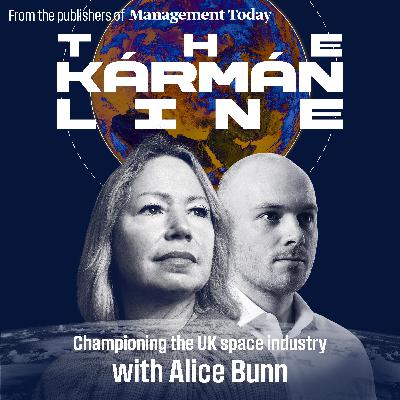
What did the Space-Comm Expo conference and exhibition tell us about connecting space and wider business? How does this manifest as tech connectivity in telecoms and why do farmers care about that? What did we learn about the benefits of extreme cold in manufacturing laboratories and why do pharmas care about that? How vulnerable are global logistics to the spoofing of navigation signals? And why is the UK government centralising space strategy in the Department for Science, Innovation and Technology? Join Alice and Jonners as they reflect on the UK space sector’s largest trade event and the “energy, diversity and …sheer scope of what this industry has to offer”. Contributors:Alice Bunn, President of UKspace Dr Alice Bunn OBE FIMechE FRAeS CEng | LinkedInUKspace: Overview | LinkedIn Jonathan Daves, The Karman LineJonathan Daves | LinkedIn Subscribe to The Karman LineApple: https://podcasts.apple.com/ca/podcast/the-k%C3%A1rm%C3%A1n-line/id1876605462Spotify: https://open.spotify.com/show/3qED4CgdRDxfKKzYNKZCIH?si=lZ-I4a19SPGLAJL-dHi4DQYouTube: https://www.youtube.com/@TheKármánLineUKKey topics covered:Space-Comm Expo, London, March 2026Conference overviewSector integrationInsuranceCustomer utilityGovernment roleFuture outlook Technological advancements· Telecoms· Manufacturing Defence and security· Satellite capabilities· Current threats
Hosted on Acast. See acast.com/privacy for more information.
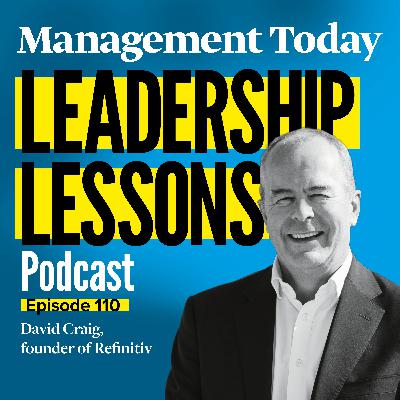
David Craig is a man who knows a thing or two about leading major organisational change projects, from his background as a partner at McKinsey advising companies on strategy to turning around Thomson Reuters’ largest – but “unloved” – financial and risk division, and spearheading its subsequent separation and reincarnation as Refinitiv.In his new book, Bluebook: How bold leadership unlocked a $27bn success story, Craig shares lessons from this practical education in transformation, including the importance of taking tough calls early on.“I wasn't brave enough and certainly not confident enough,” he says, reflecting on his early days at Thomson Reuters where he was charged with heading up the integration of the two companies. “I was still that new McKinsey guy.”Perhaps it was this reflection that provided the rocket fuel to his plans with Refinitiv. The company launched in October 2018 under the new majority ownership of private equity firm Blackstone. Ten months later – and a year and a half after the $20bn carveout deal was first struck – Refinitiv’s owners agreed its acquisition by the London Stock Exchange Group (LSEG) for $27bn, marking a $7bn exercise in value creation. LSEG’s purchase closed in January 2021, by which point the financial data and technology platform had been overhauled and its Tradeweb electronic marketplaces business IPOed.“Something that frustrates me with many organisations is they haven't realised the value of time. It's important to make decisions properly, but it's also important to make them quickly. I see too many organisations bogged down in ponderous decision-making, bureaucracy, and lack of accountability. [With Refinitiv] we really saw the benefit of speeding things up.”Credits:Presenter: Antonia Garrett PeelProducer: Inga MarsdenArtwork: Jenny Hardy
Hosted on Acast. See acast.com/privacy for more information.
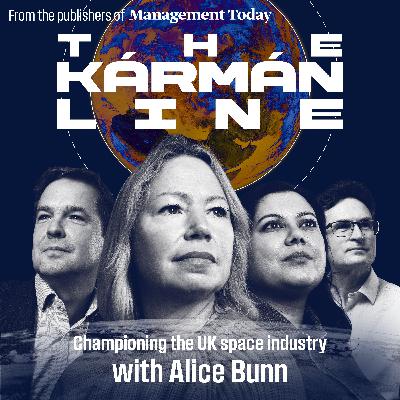
As of 2026, the UK space industry is a significant and strategic driver of the national economy, contributing over £19 billion in revenue and supporting tens of thousands of high-skilled jobs. Satellite-based services and data underpin roughly 18% of UK GDP, equivalent to approximately £454 billion of the wider economy. And the sector is growing exponentially.But this is just the tip of the iceberg. For the space industry to fully realise its potential it needs more of the right people to understand what’s happening and get involved. People like policy makers, investors, regulators, planners, communicators, lawyers and consultants.Dr Alice Bunn, the president of UK Space, and her panel of guests, Sam Alden co-CEO of Space Solar, Nick Shave managing director of Astroscale and Anushka Sharma founder of Naaut, discuss the surprising, awe inspiring business of space and make the compelling case for why more companies and investors should get involved. Contributors:Host:Alice Bunn, President of UKspace Dr Alice Bunn OBE FIMechE FRAeS CEng | LinkedInUKspace: Overview | LinkedInGuests:Nick Shave, Managing Director of AstroscaleNick Shave FRAeS | LinkedInAstroscale: Overview | LinkedInSam Adlen, CEO of Space SolarSam Adlen | LinkedInSpace Solar: Overview | LinkedInAnushka Sharma, founder of NaautAnushka Sharma | LinkedInNaaut: About | LinkedInKey topics covered:Impact of Space on Everyday LifePractical ApplicationsEnvironmental MonitoringGlobal SecuritySustainability and Innovation in OrbitSpace DebrisManufacturing in MicrogravitySpace-Based Solar PowerEconomic and Regulatory LandscapeCost ReductionInvestment and FinanceRegulation and PolicyThe Future of Space ExplorationNew PlatformsAcademic Contribution
Hosted on Acast. See acast.com/privacy for more information.
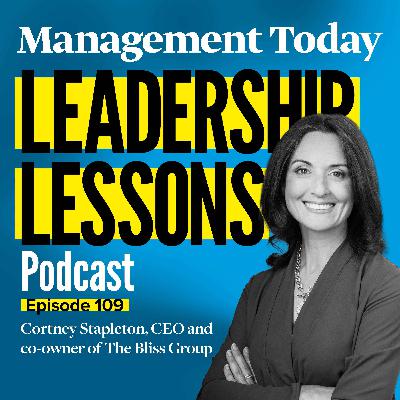
Cortney Stapleton, CEO of the Bliss Group, outlines her journey from the non-profit sector to leading the 50-year-old marketing and comm firm, emphasizing a leadership philosophy grounded in intellectual curiosity where employees are given an opportunity to innovate and learn from failure. In this week's episode, she discusses the firm's proactive response to industry disruption, specifically their co-development of a custom, agentic AI tool designed to generate deep B2B insights while maintaining client security. She also covers her strategies for navigating a polarised media landscape and her role as a co-founder of Exponent Women, an organisation dedicated to empowering women in the deal-making profession.Credits:Presenter: Éilis CroninProducer: Inga MarsdenArtwork: Jenny Hardy
Hosted on Acast. See acast.com/privacy for more information.
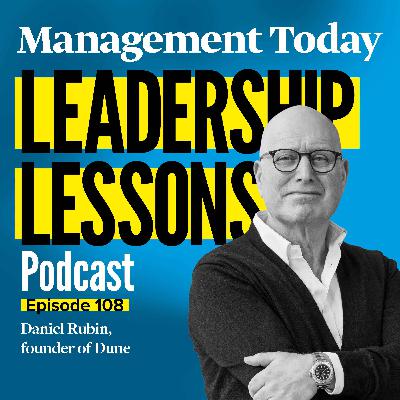
Self confessed "shoe obsessive" Daniel Rubin launched fashion brand Dune London more than 30 years ago. Since then the brand has expanded from a shop on Oxford Street to locations across more than 130 countries.In this week's episode, Rubin discusses his new book - Sole Survivor: How I Built a Global Shoe Brand, which documents the brand's journey and the leadership lessons he learned along the way. He also dives into the challenges facing the modern day fashion industry.Credits:Presenter: Éilis CroninProducer: Inga MarsdenArtwork: Jenny Hardy
Hosted on Acast. See acast.com/privacy for more information.
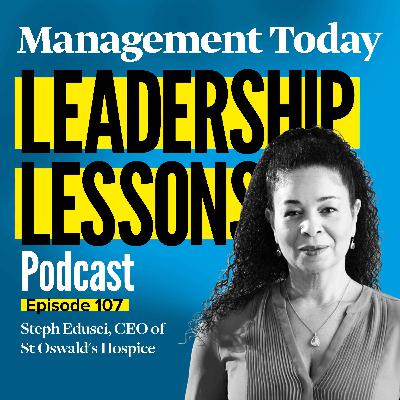
Steph Edusei’s leadership strategy can be encapsulated in two philosophies: “be a little bit naughty” and “push the boundaries”. This mindset of challenging the status quo, paired with a commitment to compassionate, human-centred leadership, defines her career trajectory from the rigid NHS structure to the caring culture of the charitable hospice sector. Edusei spent almost 20 years in the NHS, where she experienced a culture of immense pressure, constant reorganisation and a sense of being a “small cog in a huge machine”. Her appointment in 2020 as CEO of St Oswald’s Hospice – a charitable hospice based in the north east – presented a stark contrast.Credits:Presenter: Éilis CroninProducer: Inga MarsdenArtwork: Jenny Hardy
Hosted on Acast. See acast.com/privacy for more information.
As the world grapples with an ongoing wave of global disruptions, which many have dubbed the “supply chain polycrisis”, automotive distributor Inchcape has been forced to adapt quickly. CEO Duncan Tait, who took the helm during the Covid pandemic, is putting his more than 30 years of tech experience to good use, steering the almost 180-year-old company through this turbulent period.On the latest episode of Leadership Lessons, Tait talks leveraging technology, understanding emerging markets, and driving long-term growth for Inchcape.Credits:Presenter: Éilis CroninProducer: Inga MarsdenArtwork: Jenny Hardy
Hosted on Acast. See acast.com/privacy for more information.
Visa, Birmingham City Football Club, and Grindr. What do these companies have in common? They're all clients of PR firm Grayling, headed up by CEO Heather Blundell, who will grace the stage as a speaker at this years' Women in Work Summit.In this week's episode, Blundell reflects on her career trajectory; from a rigorous start at Edelman, which she describes as SAS training, to taking on a managing director role at Weber Shandwick at age 29. Now leading Grayling, Blundell explains the strategic shifts she's driving, including the launch of Grayling Media, and discusses how the agency’s diverse client base serves as the perfect business case for why DEI is a business necessity, not just a 'tick box exercise'." Credits:Presenter: Éilis CroninProducer: Inga MarsdenArtwork: Jenny Hardy
Hosted on Acast. See acast.com/privacy for more information.
New ideas are the engine of corporate growth, but all too often established businesses find innovation too cumbersome and too distracting from the day job – which means it’s the preserve of nimbler start-ups.Daniel Aminetzah is a McKinsey consultant on a mission to change that. The global co-leader of McKinsey Business Building wants companies to pursue new revenue streams and act more like start-ups, even in deeply traditional industries. As he puts it: “We can allow ourselves to unleash our entrepreneurial muscle in many more contexts, including traditional corporates or professional firms. You don’t have to go to a garage and do it with another founder.”On the latest episode of MT’s Leadership Lessons podcast, Aminetzah explained how he helps firms upgrade their business building capacity. And despite the current macroeconomic uncertainty, he said many are ready to take the plunge.Credits:Presenter: Antonia Garrett PeelProducer: Inga MarsdenArtwork: Jenny Hardy
Hosted on Acast. See acast.com/privacy for more information.
American author F. Scott Fitzgerald famously wrote that: “The test of a first-rate intelligence is the ability to hold two opposed ideas in the mind at the same time, and still retain the ability to function.”This is also, according to dean of Ivey Business School Julian Birkinshaw and ex-Pearson CEO John Fallon, who have co-authored a new book on established companies in an age of digital change, a good definition of the mindset needed to navigate this kind of disruption. You can think of it, Birkinshaw told MT’s Leadership Lessons, as “being paranoid and pragmatic at the same time”.“So you have to have a certain level of paranoia that any new technology could be something that will make your life very difficult, that will be a threat. The pragmatic bit says, ‘we've lived through many, many rounds of digital changes…Most of our big organisations are still with us’.”To be more precise, as of 2020, only 35 of the Fortune 500 cohort from 1995 - when the internet revolution was really getting underway - had gone bankrupt. Today, its constituents that didn’t exist in 1995 number only 27.The prevailing narrative about established firms, Birkinshaw says, casts them as “relics of a bygone era” - dinosaurs pitted against the unicorns and other fleet-footed disruptors of the digital era. But this narrative, he and Fallon argue in Resurgent: How established organisations can fight back and thrive in an age of digital transformation, ignores many of the inherent strengths that have made these companies market leaders.For many organisations, haunted by the fear of falling victim to their own ‘Kodak moment’, the temptation when faced with a new technology might be to react quickly to counter the perceived threat. Not only, however, are the firms that fail to adapt to digital disruption “the absolute exception” that proves the general rule (namely that “big companies are way more resilient than people give them credit for”), but it’s important to recognise that people tend to overestimate the speed of change and executives therefore often have more time than they might think to work out whether, when and how much to invest in a new technology.Credits: Presenter: Antonia Garrett PeelProducer: Inga MarsdenArtwork: Jenny Hardy
Hosted on Acast. See acast.com/privacy for more information.
On this week’s episode, MT’s editorial team discusses the impact of AI on professional services and the role of psychological safety in business transformation.Is AI coming for your job? If you’re a consultant that question might have been hard to shake in recent months, after a slew of headlines warned of the impact on the profession and data showed that the Big 4 scaled back their entry-level hiring programmes last year – by as much as 33% in KPMG’s case (compared with 2023). It’s clear that AI is squeezing employment in professional services firms, London Business School professor Michael Jacobides wrote in a recent piece for MT. He suggests, however, that “the death of the firm is greatly exaggerated”. We consider his argument.Humans, famously, are uncomfortable with change - but transformation, by definition, requires us to disrupt what’s familiar. That tension is at the heart of many large-scale organisational change projects, and could be one reason why the success rate for such initiatives remains dismally low. In a recent piece for MT, Lesley Cooper outlines the role of company culture in driving innovation, engagement, and in helping employees to get comfortable with the unfamiliar. We discuss how leaders can create a psychologically safe environment.Credits: Presenters: Éilis Cronin and Antonia Garrett PeelProducer: Inga MarsdenArtwork: Jenny Hardy
Hosted on Acast. See acast.com/privacy for more information.
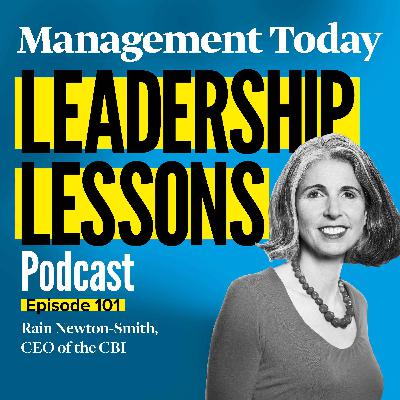
In 2023, the CBI became embroiled in a well-documented sexual misconduct crisis, which saw the exodus of a number of its member companies. Two years on, and with its former chief economist Rain Newton-Smith at the helm, the organisation is once again a trusted voice for businesses and is actively working with the UK government to boost business optimism and confidence.On this week's episode, Rain sat down with myself and MT's senior staff writer Antonia Garrett Peel to discuss what can be done to unlock business growth, how the government can support UK businesses in navigating new trade relationships, and her advice for stepping into a new and difficult role.Credits:Presenter: Antonia Garrett Peel and Éilis CroninProducer: Nav PalArtwork: Jenny Hardy
Hosted on Acast. See acast.com/privacy for more information.
In this week’s episode, we discuss how to elevate your business transformation abilities and the obstacles to women’s career progression in professional services.Ever heard of a ‘wicked problem’? Identified by two social scientists, Horst Rittel and Melvin Webber, in the 1970s, these are problems that are difficult or impossible to solve because of the numerous interlinked challenges they present, which are often in flux, may be contradictory, and involve multiple decision-makers. In a recent piece, MT columnist Chris Dalton argues that ‘wicked problems’ are one reason why business transformation is seldom straightforward. With the failure rate for such projects notoriously high, we bring you Dalton’s advice to support leaders in their organisational change endeavours. It may be 2025, but the number of women in M&A and professional services who feel their path to the C-suite has been hindered by sexist bias and discrimination is startlingly high (as many as one in three in the US). That’s the sobering picture revealed by a survey by CIL Management Consultants, which also cited imposter syndrome as a hindrance to career progression for women working in professional services. Éilis Cronin discusses her interview with CIL partner Tabitha Elwes, who offered her thoughts on how companies within the industry can support women as they climb the corporate ladder.Credits:Presenters: Antonia Garrett Peel and Éilis CroninProducer: Inga MarsdenArtwork: David RobinsonLinks:https://www.managementtoday.co.uk/five-personal-practices-art-business-transformation/mt-columnist/article/1927141https://www.managementtoday.co.uk/imposter-syndrome-lack-role-models-shape-womens-careers-professional-services/interviews/article/1926495
Hosted on Acast. See acast.com/privacy for more information.
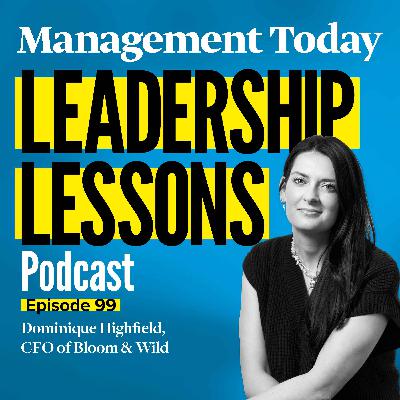
Bloom & Wild's tagline is ‘care wildly’ - a message that could also be an apt description of the leadership ethos conveyed by CFO Dominique Highfield, who became the letterbox flower brand’s first finance chief when she was appointed in the autumn.In the two decades since she started out as an auditor at PwC, however, Highfield has also learnt that sometimes you have to “reframe kindness”.She draws an analogy between the difficult conversations you might occasionally have to have with an underperformer at work and the awkwardness when someone has something stuck in their teeth.“You could be loosely kind and not tell them and make it awkward - or you could tell them. It's that [idea of] radical candour…It might be slightly awkward at the time, but you've done it for their own best interest.”This week’s guest on Leadership Lessons, Highfield tells MT about how the company is driving top- and bottom-line growth through a combination of new categories, market expansion and technology. “We use AI in our customer contact team, we use it in our marketing…[for] creating scripts and…converting into different languages. I'm even using it in finance to help speed up our financial close so that my team can spend more time on value-added tasks.”The finance executive joined Bloom & Wild from online estate agents Purplebricks, where it quickly became clear that the task at hand was quite different from that on the job description. “Within the first 100 days I had issued a profit warning, put the business up for sale, found new owners and narrowly escaped administration.”While Bloom & Wild hasn’t required Highfield to summon the same reserves of resilience - the company’s positive growth trajectory was in fact part of what drew her to the role - she says that she is still learning in her latest position.The data-centric nature of the business, combined with the high level of financial literacy among employees, has meant that her traditional leadership style of “cheerleading, bringing everyone on the journey and giving them the story and…reasons why actually often isn't enough”. Instead, the unique company context also demands greater specificity and for ‘the story’ to be rooted in data points. “So I think being able to…understand the culture and then how your communication style and negotiation style or delivery style has to flex in light of that culture is really important.”Credits:Presenter: Antonia Garrett PeelProducer: Nav PalArtwork: Jenny Hardy
Hosted on Acast. See acast.com/privacy for more information.
On this week’s episode of The Debrief, MT’s editorial team discusses what can be done to boost business optimism and how groupthink can sabotage your transformation agenda.If the first quarter’s GDP figures briefly put a spring in Rachel Reeves’ step, this boost would have been short-lived, while we can only assume she had regained the standard-issue world-weary tread of a put-upon chancellor by the time the ONS’s latest monthly estimate rolled around. The 0.7% increase in GDP that raised spirits early in the year gave way to projections of virtually flat growth in the second quarter, while the most recent data for May showed a surprise – if small – contraction of 0.1% (let’s not even mention the latest inflation figures). But Downing Street aren’t the only ones feeling under siege. With sentiment among businesses faring scarcely better, we asked our community of CEOs what’s needed to boost optimism.It’s common to strive towards consensus, but at what point do organisations become echo chambers, where new ideas quickly lose steam under the collective weight of conformity - if they ever even see the light of day? And as businesses face the need to rapidly evolve to meet new realities, what implications does it have for transformations if teams are governed by common assumptions, shared notions of ‘best practice’ and attachment to what’s come before? Data Impact author Ritavan’s own view is clear: groupthink is the “silent killer of transformation”. We discuss his argument.Credits:Presenters: Antonia Garrett Peel and Éilis CroninProducer: Inga MarsdenArtwork: David RobinsonLinks: https://www.managementtoday.co.uk/mt-asks-against-backdrop-economic-headwinds-boost-business-optimism/opinion-and-analysis/article/1925050https://www.managementtoday.co.uk/groupthink-enemy-transformation/opinion-and-analysis/article/1924413
Hosted on Acast. See acast.com/privacy for more information.
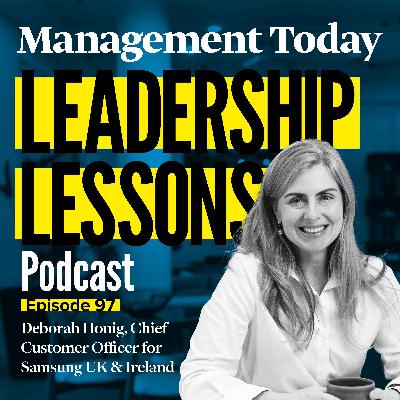
Samsung is putting people at the very heart of its new company proposition. Under the direction of its first-ever chief customer officer, Deborah Honig, the company is evolving from creating standalone products to leveraging AI to give busy customers back time “in a world that reduces to slow down”.In this week's episode, Honig discusses Samsung's shift towards a "customer-first" strategy, focusing on integrating technology to provide meaningful solutions to everyday problems, such as reducing energy consumption. It's collaboration with British Gas directly supports customers looking to reduce their consumption and their energy bills.Credits:Producer: Inga MarsdenPresenter: Éilis CroninArtwork: David Robinson
Hosted on Acast. See acast.com/privacy for more information.
On this week’s episode, MT’s editorial team discusses what chatbots think of your brand and how humans and AI agents might work together in the future.The traditional customer journey largely consisted of touchpoints that businesses could control, such as website content or paid advertising. The rise of social media and proliferation of influencers has upended this – a challenge for brands that is amplified when these sources feed the chatbots that have become a consumer and business go-to for product and service recommendations. BCG’s chief marketing officer Jessica Apotheker recently spoke to MT about the evolution of reputation management in the gen AI era. We discuss what she had to say.Continuing the AI theme, in a recent article for MT, Salesforce UK&I’s CEO Zahra Bahrololoumi argued that today’s cohort of business leaders will be the last to oversee ‘all-human teams’. As the technology advances, she predicts that AI agents will become increasingly integrated into the workforce, taking on repetitive tasks so humans can focus on driving innovation. We unpack her argument.Links: https://www.managementtoday.co.uk/5-mins-with%E2%80%A6-jessica-apotheker/interviews/article/1922694https://www.managementtoday.co.uk/todays-ceos-will-last-manage-all-human-workforces-heres-why-thats-good-thing-growth/opinion-and-analysis/article/1923090Credits:Producer: Jude OwenPresenters: Éilis Cronin and Antonia Garrett PeelArtwork: David Robinson
Hosted on Acast. See acast.com/privacy for more information.
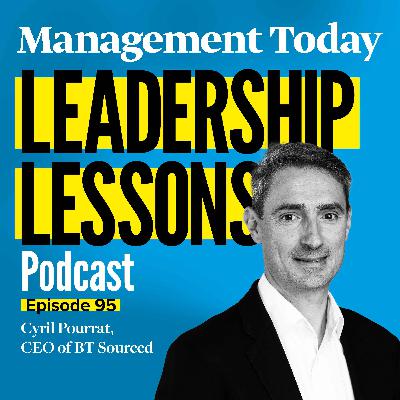
It’s 5pm on a Friday and you’re still in the office. In just two short hours, the CEO is scheduled to have dinner with a major supplier. This meeting is not merely a social occasion, but a strategic briefing. Preparations for events such as this are typically protracted processes, however you possess a unique advantage. By submitting a prompt to an AI program, you have effectively completed 90% of the work needed to prepare, thereby reducing the need for additional office hours and ensuring CEO satisfaction.This transformative approach, leveraging the expansive integration of AI across all departments, represents a shift in how BT Sourced manages its procurement operations. This isn’t purely about incremental improvements; it’s a fundamental reimagining of the entire large-scale procurement process.Cyril Pourrat, the company's CEO, discusses the inspiration behind this ambitious project, which cuts sourcing cycles from around a week to just one day and, in some cases, just a few minutes.Credits:Producer: Inga MarsdenPresenter: Éilis CroninArtwork: David Robinson
Hosted on Acast. See acast.com/privacy for more information.

Comments

Download from Google Play

Download from App Store
 United States