


 Claim Ownership
Peptides Explained
Subscribed: 6Played: 31
Subscribe

© John Garrett
Description
Peptides Explained breaks down the most talked-about peptides and GLP-1 medications in health, fitness, and longevity — including semaglutide, tirzepatide, BPC-157, TB-500, and more.
Hosted by Registered Nurse John Garrett, this podcast explains how these compounds work, why they’re popular, what the research shows, and the real risks and side effects — all in plain language.
No bro science. No hype. Just clear, foundational education.
For informational purposes only. Not medical advice.
Hosted by Registered Nurse John Garrett, this podcast explains how these compounds work, why they’re popular, what the research shows, and the real risks and side effects — all in plain language.
No bro science. No hype. Just clear, foundational education.
For informational purposes only. Not medical advice.
6 Episodes
Reverse

Are peptides dangerous—or just misunderstood?In this episode of Peptides Explained, we break down the real science behind peptide safety, how these compounds work in the body, and where risk actually exists.You’ll learn:• what peptides are and how they function biologically• the difference between FDA-approved, compounded, and research peptides• what changed with peptide regulation and access• how off-label prescribing fits into modern medicine• what recent conversations are getting right—and wrongThis episode focuses on clarity—not hype—so you can understand how peptides fit into real clinical practice.
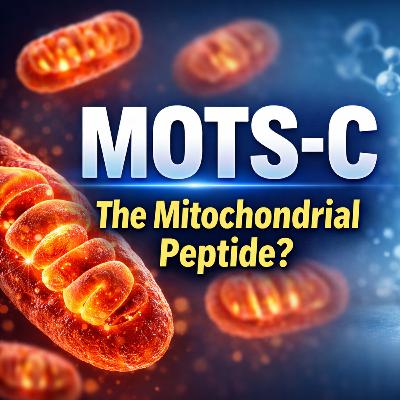
MOTS-C is one of the most unique peptides being studied today — not because of what it does, but because of where it comes from.Unlike most peptides, MOTS-C is encoded inside your mitochondria, the part of the cell responsible for energy production. That makes it part of a growing category of mitochondrial signaling peptides that may play a role in metabolism, aging, and cellular energy regulation.In this episode of Peptides Explained, we break down:• What MOTS-C is and how it’s produced• How it activates AMPK, the body’s metabolic “master switch”• Why it’s being studied as a potential exercise mimetic• Its effects on insulin sensitivity and glucose metabolism• What the animal research shows vs. the current state of human data• Where it may fit in the broader peptide landscape• Risks, limitations, and why it remains experimentalThis episode focuses on the biology and clinical context behind MOTS-C — not the hype.Disclaimer: This podcast is for informational purposes only and is not medical advice. MOTS-C is not FDA-approved and is currently considered an investigational peptide. Always consult a licensed healthcare professional before considering any therapy.Peptide science is evolving — and understanding the mechanism is the first step.
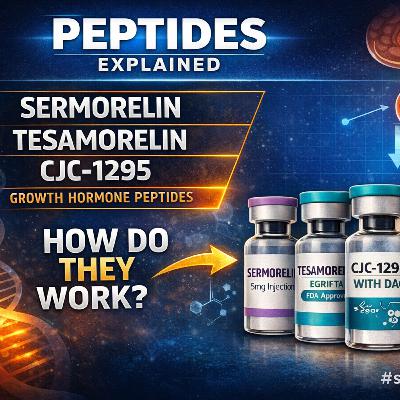
Growth hormone peptides are some of the most talked-about compounds in longevity medicine, metabolic health, and hormone optimization. But how do they actually work inside the body?In this episode of Peptides Explained, we break down the science behind four growth hormone secretagogues: Sermorelin, Tesamorelin, CJC-1295, and Ipamorelin.Instead of injecting growth hormone directly, these peptides stimulate the pituitary gland to release the body’s own growth hormone through different biological pathways.We explore the physiology of the growth hormone axis, the role of GHRH, IGF-1, and ghrelin signaling, and how these peptides may influence metabolism, recovery, and sleep.You’ll also learn the differences between these compounds, why CJC-1295 and Ipamorelin are often stacked, and what the clinical research actually shows.Topics covered in this episode include:• How growth hormone is regulated in the body• The biological role of ghrelin and GH pulses during sleep• The difference between Sermorelin, Tesamorelin, CJC-1295, and Ipamorelin• What DAC (Drug Affinity Complex) means in CJC-1295• Potential effects on IGF-1, metabolism, and recovery• Possible side effects, including effects on prolactin and glucose metabolism• What the clinical evidence actually supportsAs always, this podcast focuses on biological mechanisms and scientific evidence so you can understand how peptide therapies interact with human physiology.Disclaimer:This episode is for informational purposes only and does not constitute medical advice. Always consult a licensed healthcare professional before considering any therapy.If you'd like, I can also give you a very effective pinned comment for the YouTube video. That small detail often increases engagement and pushes the algorithm to recommend the episode more.
In Episode 3 of Peptides Explained, we take a closer look at two of the most talked-about peptides in injury recovery circles: BPC-157 and TB-500.These compounds are often combined in what’s popularly called the “Wolverine Stack,” a nickname that reflects claims of accelerated healing and recovery. But what are these peptides actually doing in the body, and what does the science really say?In this episode, we break down the biology behind both compounds, how they interact with tissue repair pathways, and why they’ve become so popular in athletic and performance communities.We discuss:• What BPC-157 is and how it may influence angiogenesis, tendon repair, and tissue healing• What TB-500 (a fragment related to thymosin beta-4) does in terms of cell migration and tissue remodeling• The biological rationale behind combining the two peptides• What the available animal research suggests — and where human clinical data is still lacking• Why these peptides remain in a regulatory gray area• The difference between experimental compounds and FDA-approved peptide therapeuticsThe goal of Peptides Explained is clarity, not hype. In each episode we examine the mechanisms, the available data, and the real limitations of what we know today.Disclaimer:This podcast is for informational purposes only and does not constitute medical advice. Peptides discussed may have different regulatory statuses and should only be used under the guidance of licensed healthcare professionals.If you’re interested in the science behind peptides, injury recovery, metabolism, and emerging therapeutic pathways, this episode will give you a clear, evidence-based overview of one of the most talked-about peptide combinations today.
In this episode I go over GLP-1 medications Semaglutide, Tirzepitide and Retatrutide. This is for educational purposes only. This is not medical advice.
Have you heard of Peptides and wondered "What is a peptide?". Listen to this episode to find out what they are and what they do. Hosted by Registered Nurse John Garrett, this podcast explains how these compounds work, why they’re popular, what the research shows, and the real risks and side effects — all in plain language.No bro science. No hype. Just clear, foundational education.For informational purposes only. Not medical advice.
Comments


Download from Google Play

Download from App Store
 United States