


 Claim Ownership
The Automated Daily - Space News Edition
Subscribed: 0Played: 0
Subscribe

Description
Welcome to 'The Automated Daily - Space News Edition', your ultimate source for a streamlined and insightful daily news experience.
108 Episodes
Reverse
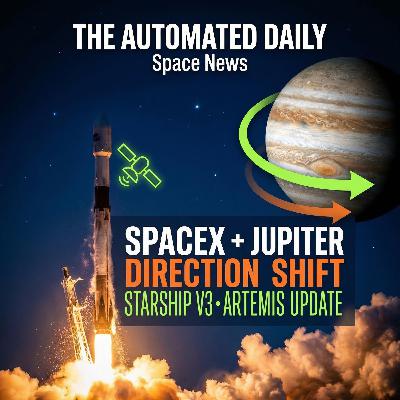
Please support this podcast by checking out our sponsors: - Prezi: Create AI presentations fast - https://try.prezi.com/automated_daily - Consensus: AI for Research. Get a free month - https://get.consensus.app/automated_daily - Invest Like the Pros with StockMVP - https://www.stock-mvp.com/?via=ron Support The Automated Daily directly: Buy me a coffee: https://buymeacoffee.com/theautomateddaily Today's topics: SpaceX launches television satellite - SpaceX successfully deployed the EchoStar-25 satellite to geostationary orbit on March 9th, marking the company's first geosynchronous transfer orbit launch of 2026 and supporting Dish Network's direct broadcast capabilities. Jupiter changes direction tonight - Jupiter ends its retrograde motion on March 10, 2026, reversing its westward path through Gemini and resuming normal eastward motion visible to evening sky observers. Starship V3 passes major test - SpaceX's Starship V3 first flight vehicle completed critical cryogenic testing with no issues, bringing the next-generation orbital rocket closer to its anticipated April 2026 debut. NASA restructures Artemis architecture - NASA officially selected ULA's Centaur 5 upper stage for the Space Launch System, standardizing the Artemis program architecture and accelerating lunar mission cadence. Episode Transcript SpaceX launches television satellite Starting with the launch news: SpaceX had a successful Monday night, sending the EchoStar-25 satellite to geostationary orbit aboard a Falcon 9 rocket from Cape Canaveral. The satellite deployed nearly 33 minutes after liftoff, exactly where it needed to be. This mission is important because it marks SpaceX's first geosynchronous transfer orbit launch of 2026, and it's going to power Dish Network's direct broadcast television service. The booster came back to Earth safely on the droneship in the Atlantic, marking the 583rd successful landing for SpaceX overall. What's particularly interesting here is the context: EchoStar has been shifting its strategy in a big way. Last year, they sold off spectrum licenses to SpaceX for 17 billion dollars—split between cash and stock—because they decided SpaceX and Starlink were better positioned to deliver mobile connectivity from space. So while Dish gets this TV satellite, SpaceX is clearly the company moving faster in the orbital race. Jupiter changes direction tonight Switching gears to something you can actually see tonight: Jupiter is changing direction in the evening sky. For months now, it's been moving backward through the constellation Gemini—something called retrograde motion. But on March 10th, that stops. Jupiter will pause and then resume its normal eastward motion. Now, this isn't actually Jupiter moving backward through space—it's an optical illusion from Earth's perspective. As we orbit faster than the outer planets, we temporarily overtake them, making them appear to reverse course. It's a neat reminder of how much we learn just by watching the sky change night to night. Starship V3 passes major test In development news, SpaceX has hit a major milestone with Starship. The next-generation V3 vehicle's first flight test article, Ship 39, just completed full cryogenic testing at their test site. This means engineers filled it with super-cold liquid methane and oxygen, ran structural squeeze tests to simulate the forces of a future tower catch, and checked all the redesigned propellant systems. No leaks, no problems. And this matters because Elon Musk has indicated Flight 12—the first full V3 flight—could happen around early to mid-April. That's soon. The V3 design brings larger fuel tanks, more payload capacity, and better reusability. So the pace is accelerating on Starship development. NASA restructures Artemis architecture Finally, NASA is making big moves on the Artemis program. The agency officially selected United Launch Alliance's Centaur 5 upper stage to fly on the Space Launch System starting with Artemis 4, currently targeted for early 2028. This is part of a broader restructuring of the program that emphasizes standardization and reducing complexity. NASA Administrator Jared Isaacman announced last week that the agency is accelerating its lunar mission cadence—planning to fly astronauts to the Moon regularly, with one landing every year after the initial few test flights. By consolidating on proven hardware like the Centaur, instead of developing new upper stages, NASA is betting it can move faster and more reliably. It's a pragmatic shift that trades some future capability for near-term mission assurance. Subscribe to edition specific feeds: - Space news * Apple Podcast English * Spotify English * RSS English Spanish French - Top news * Apple Podcast English Spanish French * Spotify English Spanish French * RSS English Spanish French - Tech news * Apple Podcast English Spanish French * Spotify English Spanish Spanish * RSS English Spanish French - Hacker news * Apple Podcast English Spanish French * Spotify English Spanish French * RSS English Spanish French - AI news * Apple Podcast English Spanish French * Spotify English Spanish French * RSS English Spanish French Visit our website at https://theautomateddaily.com/ Send feedback to feedback@theautomateddaily.com Youtube LinkedIn X (Twitter)

Please support this podcast by checking out our sponsors: - Discover the Future of AI Audio with ElevenLabs - https://try.elevenlabs.io/tad - KrispCall: Agentic Cloud Telephony - https://try.krispcall.com/tad - Invest Like the Pros with StockMVP - https://www.stock-mvp.com/?via=ron Support The Automated Daily directly: Buy me a coffee: https://buymeacoffee.com/theautomateddaily Today's topics: Congress extends ISS operations beyond 2030 - The U.S. Senate committee voted to extend International Space Station operations until 2032, pushing back retirement by two years to maintain continuous human presence in low Earth orbit amid competition with China. NASA completes Artemis II rocket repairs - NASA engineers fixed a helium flow issue on the Artemis II rocket's upper stage, keeping the crewed lunar flyby mission on track for an April launch with four astronauts aboard. March auroras peak near spring equinox - March 2026 offers exceptional aurora viewing opportunities in northern regions due to the combination of peak solar activity and the equinox effect, which amplifies geomagnetic activity around March 20. Venus and Saturn conjunction visible tonight - Venus and Saturn appeared just one degree apart in the western evening sky on March 7-8, creating a rare naked-eye planetary conjunction visible with binoculars for optimal viewing. DART mission proves asteroid deflection works - NASA's DART mission confirmed it was the first human-made object to measurably alter an asteroid's orbit around the sun, validating kinetic impact as a viable planetary defense technique. Episode Transcript Congress extends ISS operations beyond 2030 Starting with some significant news from Capitol Hill: The U.S. Senate has voted to extend operations of the International Space Station until September of twenty thirty-two. That's two full years longer than the original retirement date. Here's why this matters. As commercial space stations are still in development, extending the ISS keeps America competitive with China in low Earth orbit. Essentially, Congress wants to avoid any gap where the U.S. doesn't have continuous human presence in space. It's a strategic move in what's become a new kind of space race. NASA completes Artemis II rocket repairs In related news, NASA is making solid progress on Artemis Two. The agency identified and repaired a helium flow issue on the rocket's upper stage that had delayed the mission earlier this year. Engineers found a dislodged seal was causing the problem. Now the Space Launch System is being prepped for rollout, and the crewed lunar flyby is targeted for launch in early April. That mission will send four astronauts farther into space than any human has traveled in more than fifty years. March auroras peak near spring equinox If you're into stargazing, March is turning out to be a remarkable month for aurora hunters. We're approaching the spring equinox on March twentieth, and during the equinox, Earth's magnetic field aligns with the solar wind in a way that significantly boosts aurora activity. Combined with the sun being near its peak activity cycle, skywatchers across northern latitudes are getting some of the best chances in nearly a decade to see the Northern Lights. Even if you're not typically in aurora country, there's a possibility you might catch a glimpse if conditions align just right. Venus and Saturn conjunction visible tonight Speaking of evening skies, if you missed the Venus and Saturn conjunction over the weekend, you still have time. The two planets were at their closest on March seventh and eighth, appearing just a finger's width apart in the western twilight. Venus is the bright one, while Saturn is dimmer but visible with binoculars. They're still relatively close for a few more evenings if you want to step outside about thirty to forty minutes after sunset. DART mission proves asteroid deflection works And finally, some validation for planetary defense efforts. Researchers confirmed this week that NASA's DART mission from twenty twenty-two was the first human-made object to measurably alter an asteroid's orbit around the sun. When the spacecraft hit the moonlet Dimorphos back in September twenty twenty-two, it didn't just change that asteroid's orbit around its larger companion. It also shifted the pair's orbit around the sun by about one-tenth of a second. While that sounds minuscule, scientists say that over time, even tiny changes in an asteroid's trajectory can mean the difference between Earth getting hit or narrowly missing impact. Subscribe to edition specific feeds: - Space news * Apple Podcast English * Spotify English * RSS English Spanish French - Top news * Apple Podcast English Spanish French * Spotify English Spanish French * RSS English Spanish French - Tech news * Apple Podcast English Spanish French * Spotify English Spanish Spanish * RSS English Spanish French - Hacker news * Apple Podcast English Spanish French * Spotify English Spanish French * RSS English Spanish French - AI news * Apple Podcast English Spanish French * Spotify English Spanish French * RSS English Spanish French Visit our website at https://theautomateddaily.com/ Send feedback to feedback@theautomateddaily.com Youtube LinkedIn X (Twitter)

Please support this podcast by checking out our sponsors: - Invest Like the Pros with StockMVP - https://www.stock-mvp.com/?via=ron - KrispCall: Agentic Cloud Telephony - https://try.krispcall.com/tad - Discover the Future of AI Audio with ElevenLabs - https://try.elevenlabs.io/tad Support The Automated Daily directly: Buy me a coffee: https://buymeacoffee.com/theautomateddaily Today's topics: Japanese cargo spacecraft leaves ISS today - Japan's HTV-X1 cargo spacecraft departs the International Space Station on March 6, 2026, after delivering over 12,000 pounds of supplies and scientific equipment to support ongoing research missions. NASA restructures Artemis lunar program architecture - NASA announces major restructuring of Artemis program, shifting Artemis III focus to low Earth orbit testing while pushing crewed lunar landings to Artemis IV in 2028, introducing competition between SpaceX and Blue Origin. SpaceX Starship Version 3 prepares for March launch - SpaceX's Starship Version 3 Ship 39 undergoes cryogenic testing at Starbase with a targeted March 2026 launch window, featuring advanced flaps and structural improvements for full reusability. Early universe galaxies challenge formation theories - James Webb Space Telescope discovers unexpectedly bright galaxies formed only 280 million years after the Big Bang, and astronomers identify dusty star-forming galaxies challenging current cosmic formation models. China announces ambitious 2026 space missions - China unveils 2026 crewed spaceflight plan targeting first crewed lunar landing before 2030, with missions involving astronauts from Hong Kong, Macao, and international partners including Pakistan. Episode Transcript Japanese cargo spacecraft leaves ISS today Let's start with what's happening right now. As we're recording this afternoon, Japan's HTV-X1 cargo spacecraft is preparing to depart the International Space Station. This unmanned freighter has been docked to the orbiting lab, where it delivered about twelve thousand pounds of supplies, experiments, and equipment to support both NASA and international partner research. After undocking, HTV-X1 will remain in orbit for several more months, conducting its own scientific experiments before being commanded to reenter Earth's atmosphere. This marks another successful resupply mission in the ongoing effort to keep the space station running smoothly. NASA restructures Artemis lunar program architecture Now, to that major Artemis news we teased. NASA announced this week that it's fundamentally restructuring its lunar exploration program. Here's what changed: Artemis III, which was originally supposed to land astronauts on the Moon, is now being retooled as a low Earth orbit mission focused on testing hardware and demonstrating rendezvous and docking procedures with commercial lunar landers. The actual crewed Moon landing has been pushed to Artemis IV, now targeted for 2028. NASA Administrator Jared Isaacman explained the reasoning. The agency wants to move faster, eliminate delays, and introduce competition. Instead of relying solely on SpaceX's Starship, NASA is reopening the competition to include Blue Origin's lunar lander as well. It's a strategic shift that prioritizes progress over the original timeline. SpaceX Starship Version 3 prepares for March launch Speaking of SpaceX, their Starship program continues to accelerate. Ship 39, the first Version 3 Starship prototype, is undergoing cryogenic testing at the Texas test facility as we speak. This new variant features significant improvements, particularly in the flap design and structural systems. Elon Musk has expressed high confidence that Version 3 will achieve full reusability. SpaceX is still targeting a March launch window for the first integrated flight test of this new configuration. Booster 19 is also being prepared, with its raptor engines already installed. The company is clearly pushing hard to demonstrate the next generation of Starship capability. Early universe galaxies challenge formation theories Moving from Earth orbit to the distant universe, astronomers are continuing to puzzle over unexpected discoveries from the James Webb Space Telescope. The latest head-scratcher involves a galaxy called MoM-z14, which existed just 280 million years after the Big Bang. That's remarkably early for such a bright galaxy to exist. In fact, Webb is finding far more bright galaxies in the early universe than current models predict—roughly 100 times more. Meanwhile, other research teams using Webb and ground-based observatories have identified populations of dusty, star-forming galaxies that also formed far earlier than expected. These discoveries are forcing astronomers to reconsider how galaxies actually form and evolve in the early cosmos. China announces ambitious 2026 space missions Finally, let's look beyond American and European space efforts. China announced its 2026 space agenda this week, confirming plans for two crewed missions and one cargo resupply mission to its space station. The announcements include a historic milestone: astronauts from Hong Kong and Macao will carry out spaceflight missions as early as this year. One crew member from Shenzhou-23 will also conduct an extended one-year stay in space, a significant experiment in long-duration spaceflight. Beyond the near term, China continues progressing toward its goal of landing Chinese astronauts on the Moon before 2030. Development of the Long March-10 rocket, the Mengzhou spacecraft, and the Lanyue lunar lander is proceeding on schedule, with multiple critical tests already completed. China is also welcoming international participation, with a Pakistani astronaut scheduled to fly to the Chinese space station as a payload specialist. It's a clear signal that space exploration continues to become increasingly international. Subscribe to edition specific feeds: - Space news * Apple Podcast English * Spotify English * RSS English Spanish French - Top news * Apple Podcast English Spanish French * Spotify English Spanish French * RSS English Spanish French - Tech news * Apple Podcast English Spanish French * Spotify English Spanish Spanish * RSS English Spanish French - Hacker news * Apple Podcast English Spanish French * Spotify English Spanish French * RSS English Spanish French - AI news * Apple Podcast English Spanish French * Spotify English Spanish French * RSS English Spanish French Visit our website at https://theautomateddaily.com/ Send feedback to feedback@theautomateddaily.com Youtube LinkedIn X (Twitter)

Please support this podcast by checking out our sponsors: - Build Any Form, Without Code with Fillout. 50% extra signup credits - https://try.fillout.com/the_automated_daily - Discover the Future of AI Audio with ElevenLabs - https://try.elevenlabs.io/tad - Consensus: AI for Research. Get a free month - https://get.consensus.app/automated_daily Support The Automated Daily directly: Buy me a coffee: https://buymeacoffee.com/theautomateddaily Today's topics: SpaceX Starlink Launch Creates Sky Phenomenon - SpaceX launched 29 Starlink satellites from Cape Canaveral on March 4, creating a spectacular 'space jellyfish' phenomenon visible across Florida and beyond. The Falcon 9 mission included the 600th Starlink satellite deployed in 2026, with the first-stage booster successfully landing on a droneship for its 25th flight. Japan's Space One Rocket Fails Again - Japan's Space One suffered its third consecutive launch failure on March 4 when the Kairos rocket broke apart during its first stage of flight. The 18-meter solid-fuel rocket was carrying five satellites intended for sun-synchronous orbit. Vast Secures $500 Million for Space Stations - California-based startup Vast announced $500 million in new funding on March 5 to accelerate production of its Haven commercial space stations. The funding includes $300 million in equity and $200 million in debt to support development of next-generation orbital habitats. Ganymede's Auroras Mirror Earth's Lights - NASA's Juno spacecraft revealed that auroras on Jupiter's moon Ganymede display patch structures remarkably similar to Earth's northern lights. The discovery suggests that magnetic fields and charged particles may create auroral displays across different worlds in universal ways. Astronomers Map Ancient Hydrogen in Universe - Astronomers using the Hobby-Eberly Telescope revealed the largest 3D map of hydrogen light in the early universe, showing a vast 'sea of light' between galaxies from 9 to 11 billion years ago. The breakthrough used advanced intensity mapping techniques to uncover previously hidden cosmic structures. Episode Transcript SpaceX Starlink Launch Creates Sky Phenomenon Let's start with that stunning light show. Early this morning at 5:52 AM Eastern Time, SpaceX launched a Falcon 9 rocket from Cape Canaveral carrying 29 Starlink internet satellites. The timing was perfect. The rocket lifted off in darkness, but as it climbed higher into the upper atmosphere, it caught the light from the sun—which hadn't risen yet for people on the ground. This created an eerie blue glow that spread across the sky like a giant jellyfish with tentacles. People from Florida to Georgia and up the East Coast saw it. Turns out, this happens whenever rockets launch around dawn or dusk, but when conditions align just right, it's absolutely mesmerizing. Beyond the light show, this mission hit a milestone. The 29 satellites included the 600th Starlink satellite launched by SpaceX so far this year. The first-stage booster, a reusable rocket called B1080, completed its 25th flight and successfully landed on a droneship in the Atlantic Ocean. That brings SpaceX's total booster landings to 581. Japan's Space One Rocket Fails Again Over in Japan, the story was less celebratory. Space One's Kairos rocket failed on its third test flight. The 18-meter solid-fuel rocket lifted off from Spaceport Kii in Wakayama Prefecture at 11:10 AM local time on March 4th. About two minutes later, the mission ended. The rocket broke apart during its first stage of flight, destroying the five satellites it was supposed to deliver to sun-synchronous orbit. This was Space One's third attempt with the Kairos rocket, and unfortunately, all three have ended in failure. The company has some serious work to do to get this vehicle flight-ready. Vast Secures $500 Million for Space Stations In more positive funding news, space station startup Vast announced it has raised 500 million dollars to accelerate development of its commercial space stations. That's 300 million in equity and 200 million in debt, giving the company significant resources to move forward. Vast is building the Haven space stations as commercial alternatives to the International Space Station. Their first station, Haven-1, is scheduled to launch in 2027 on a SpaceX Falcon 9. After that, they plan to deploy new Haven modules roughly every six months from 2028 through 2032. The company is also preparing for a private astronaut mission to the ISS no earlier than summer 2027. With over a billion dollars already invested in their technology and more than 1000 employees on the payroll, Vast is positioning itself as a serious player in the emerging commercial space economy. Ganymede's Auroras Mirror Earth's Lights Moving to Jupiter's moons, scientists using NASA's Juno spacecraft have made a fascinating discovery. The moon Ganymede, which is the only moon we know that has its own magnetic field, displays auroras that look surprisingly similar to Earth's aurora borealis. The Juno spacecraft captured detailed ultraviolet images of Ganymede's auroras, revealing small bright patches—what researchers call 'beads'—scattered across the polar regions. These patch structures are strikingly similar to auroral beads observed on Earth before magnetospheric storms. On Earth, auroras happen when solar wind particles interact with our magnetic field. On Ganymede, the interaction is different—it's with Jupiter's massive magnetosphere instead. The fact that both create similar auroral patterns suggests that the physics of how magnetic fields and charged particles generate light might be universal across different worlds. Astronomers Map Ancient Hydrogen in Universe Finally, astronomers have created something truly remarkable: the largest and most precise 3D map of hydrogen light in the early universe. A team using the Hobby-Eberly Telescope discovered what they're calling a vast 'sea of light' between galaxies from 9 to 11 billion years ago. They used an advanced technique called Line Intensity Mapping, which is like viewing the universe through a slightly smudged window—you see a blurrier picture, but you capture all the light, not just the brightest spots. This breakthrough allowed them to detect faint galaxies and gas that previous surveys had missed. Understanding how galaxies were distributed and how they evolved during this crucial period helps scientists piece together the history of our universe and reveals how dark matter might be organized on the cosmic web. Subscribe to edition specific feeds: - Space news * Apple Podcast English * Spotify English * RSS English Spanish French - Top news * Apple Podcast English Spanish French * Spotify English Spanish French * RSS English Spanish French - Tech news * Apple Podcast English Spanish French * Spotify English Spanish Spanish * RSS English Spanish French - Hacker news * Apple Podcast English Spanish French * Spotify English Spanish French * RSS English Spanish French - AI news * Apple Podcast English Spanish French * Spotify English Spanish French * RSS English Spanish French Visit our website at https://theautomateddaily.com/ Send feedback to feedback@theautomateddaily.com Youtube LinkedIn X (Twitter)

Please support this podcast by checking out our sponsors: - Prezi: Create AI presentations fast - https://try.prezi.com/automated_daily - Invest Like the Pros with StockMVP - https://www.stock-mvp.com/?via=ron - Consensus: AI for Research. Get a free month - https://get.consensus.app/automated_daily Support The Automated Daily directly: Buy me a coffee: https://buymeacoffee.com/theautomateddaily Today's topics: Blood Moon Eclipse Visible Worldwide - A total lunar eclipse turned the Moon blood red on March 3rd, visible to over 3 billion people across Asia, Australia, the Pacific, and the Americas. The phenomenon occurs when Earth's shadow completely envelops the Moon, with Earth's atmosphere scattering sunlight to create the distinctive reddish hue. SpaceX Starlink Dual Coast Launches - SpaceX successfully launched Starlink satellites from both California and Florida on March 1st, bringing over 9,900 Starlink satellites into orbit. The dual-coast launches mark SpaceX's continued expansion of its broadband internet constellation in low Earth orbit. NASA Revamps Artemis Moon Program - NASA announced a major restructuring of its Artemis program, moving the first crewed lunar landing from Artemis III to Artemis IV in 2028. The new plan increases launch cadence and keeps Artemis III in low Earth orbit for technology testing instead of attempting an immediate Moon landing. Venus Saturn Conjunction Tonight - Venus and Saturn will appear remarkably close together in the evening sky on March 8th, separated by about one degree. This planetary conjunction offers a spectacular viewing opportunity in the western sky just after sunset. Vernal Equinox Spring Begins - The vernal equinox arrives on March 20th, marking the astronomical beginning of spring in the Northern Hemisphere and autumn in the Southern Hemisphere. On this day, both hemispheres experience nearly equal daylight and nighttime hours of approximately 12 hours each. Episode Transcript Blood Moon Eclipse Visible Worldwide Let's start with yesterday's main event—the total lunar eclipse that lit up skies across much of the planet on March 3rd. Scientists are calling it a blood moon, and for good reason. When Earth's shadow completely blankets the Moon, something remarkable happens. Rather than going dark, our lunar companion glows a deep crimson red. This happens because Earth's atmosphere acts like a lens, bending sunlight around the planet and filtering it onto the Moon's surface. It's as if every sunrise and sunset happening on Earth at that moment gets projected onto the Moon all at once. The eclipse was visible from evening hours in eastern Asia and Australia, continued throughout the night across the Pacific region, and graced the early morning skies of North and Central America. Over three billion people had the opportunity to witness this rare event, which won't happen again until 2029. SpaceX Starlink Dual Coast Launches In launch news, SpaceX kicked off March with a pair of successful Starlink missions from opposite coasts. On March 1st, the company launched from both Vandenberg Space Force Base in California and Cape Canaveral in Florida. These weren't small operations either—the company deployed 29 additional broadband satellites, bringing the total Starlink constellation to over nine thousand nine hundred spacecraft in orbit. Both first-stage boosters were successfully recovered and landed on drone ships, continuing SpaceX's impressive track record with reusable rocket technology. The company's aggressive launch schedule is steadily expanding global internet coverage, particularly in remote areas. NASA Revamps Artemis Moon Program Meanwhile, NASA made some significant announcements about its path back to the Moon. The agency revealed a restructured Artemis program that changes the timeline for astronauts actually setting foot on the lunar surface. The original plan had Artemis III carrying astronauts to the Moon, but now that mission will instead focus on testing critical systems in low Earth orbit. The actual lunar landing will move to Artemis IV in 2028. NASA says this approach follows a more methodical, proven strategy—similar to how the original Apollo program progressed through Mercury and Gemini before reaching the Moon. By keeping Artemis III in Earth orbit, the agency can conduct crucial docking tests with commercial lenders from SpaceX and Blue Origin before attempting the ambitious lunar landing. Venus Saturn Conjunction Tonight If you have clear skies tonight and tomorrow evening, mark your calendars for something special. Venus and Saturn will appear to snuggle up together in the western sky. Astronomers call it a conjunction, and while the planets will look almost close enough to touch from our perspective, they're actually separated by nearly a billion miles in space. To the naked eye, they'll be about one degree apart—roughly the width of your pinky finger held at arm's length. Check the western horizon just after sunset for your best view. Vernal Equinox Spring Begins Finally, the calendar is turning toward spring in the Northern Hemisphere and autumn in the Southern Hemisphere. March 20th marks the vernal equinox, when day and night reach near-perfect balance at approximately twelve hours each. It's also a day when Earth's magnetic activity sometimes ramps up, offering skywatchers in northern latitudes a potential opportunity to see the aurora borealis dancing across the sky. Nature's light show at both cosmic and terrestrial scales. Subscribe to edition specific feeds: - Space news * Apple Podcast English * Spotify English * RSS English Spanish French - Top news * Apple Podcast English Spanish French * Spotify English Spanish French * RSS English Spanish French - Tech news * Apple Podcast English Spanish French * Spotify English Spanish Spanish * RSS English Spanish French - Hacker news * Apple Podcast English Spanish French * Spotify English Spanish French * RSS English Spanish French - AI news * Apple Podcast English Spanish French * Spotify English Spanish French * RSS English Spanish French Visit our website at https://theautomateddaily.com/ Send feedback to feedback@theautomateddaily.com Youtube LinkedIn X (Twitter)
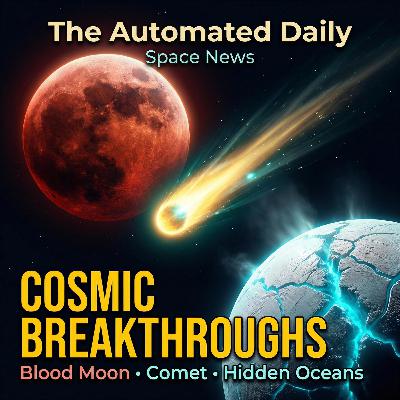
Please support this podcast by checking out our sponsors: - KrispCall: Agentic Cloud Telephony - https://try.krispcall.com/tad - Discover the Future of AI Audio with ElevenLabs - https://try.elevenlabs.io/tad - Consensus: AI for Research. Get a free month - https://get.consensus.app/automated_daily Support The Automated Daily directly: Buy me a coffee: https://buymeacoffee.com/theautomateddaily Today's topics: Blood moon eclipse spectacular display - A total lunar eclipse transformed the moon into a blood red orb on March 3, 2026, visible across North America, Asia, and Australia. The phenomenon occurred as Earth's shadow completely enveloped the lunar surface, creating a stunning copper-red appearance lasting nearly an hour. Interstellar comet observed by JUICE - The European Space Agency's JUICE spacecraft captured detailed images of interstellar comet 3I/ATLAS, only the third known object from outside our solar system ever detected. The comet's glowing coma and sweeping tail revealed its composition and activity just days after passing closest to the sun. Hidden oceans beneath icy moons - New research published in Nature Astronomy suggests hidden oceans beneath icy moons like Enceladus and Mimas may boil beneath their surfaces when tidal heating melts their ice shells. This discovery could explain unusual surface features and has implications for potential habitability on these distant worlds. SpaceX deploys fifty-four Starlink satellites - SpaceX launched fifty-four new Starlink satellites on March 1 across two bicoastal Falcon 9 missions, bringing the constellation to over nine thousand nine hundred operational satellites in orbit. Both rocket boosters were successfully recovered, continuing SpaceX's reusable launch legacy. New method measures universe expansion - Scientists developed a new technique using gravitational waves from colliding black holes to measure how fast the universe is expanding. The stochastic siren method could help resolve long-standing disagreements between different expansion rate measurements in cosmology. Episode Transcript Blood moon eclipse spectacular display Let's start with that incredible lunar eclipse we just witnessed. Early this morning, Earth's shadow completely covered the moon, turning it a deep, rusty red for nearly an hour. This wasn't just any eclipse—it was visible to over three billion people spread across North America, Asia, Australia, and New Zealand. The blood moon effect happens because our planet's atmosphere actually filters and bends sunlight onto the lunar surface, creating that distinctive copper-red glow. For anyone in North America watching from the eastern time zones, the moon dipped below the horizon right during totality, making it a race against the sunrise to catch the best views. Lunar eclipses this dramatic won't happen again until New Year's Eve 2028, so if you managed to see this one, you witnessed something truly rare. Interstellar comet observed by JUICE Moving from our moon to a visitor from beyond, the European Space Agency's JUICE spacecraft has sent back stunning images of an interstellar comet passing through our solar system. This comet, called 3I/ATLAS, is only the third known object we've ever detected that actually originated from another star system. Back in November, JUICE captured incredible detail of the comet's glowing coma—that bright cloud of gas and dust surrounding its nucleus—along with a sweeping tail sculpted by the solar wind. The images came from just seven days after the comet's closest approach to the sun, when it was still actively outgassing. Scientists are now analyzing data from five different instruments to understand this visitor's composition and activity. It's a rare opportunity to study something that formed around a completely different star billions of years away. Hidden oceans beneath icy moons Sticking with the outer planets theme, new research out of UC Davis is revealing something surprising about the moons orbiting Saturn and Uranus. These icy worlds might be hiding boiling oceans beneath their frozen shells. When tidal forces from the massive planets they orbit melt the ice from below, the pressure drops dramatically, and on smaller moons like Enceladus and Mimas, that pressure change could actually cause subsurface oceans to boil. The researchers suggest this boiling process might explain some of the strange surface features we see on moons like Miranda, including those massive cliffs and ridges. Size matters here—on larger moons, the ice shell would likely crack before boiling occurs. This discovery is significant because these hidden oceans are considered some of the most promising places in our solar system to search for extraterrestrial life. SpaceX deploys fifty-four Starlink satellites On the launch front, SpaceX had a busy Sunday. The company conducted two Falcon 9 missions from opposite coasts, deploying a total of fifty-four new Starlink satellites into orbit. One mission launched from California, the other from Florida, and both rocket boosters were successfully recovered. These launches pushed the total Starlink constellation past nine thousand nine hundred active satellites. The frequency and success of these missions underscores how routine orbital launches have become, with SpaceX now executing dozens of these deployments each year. Each successful mission adds another piece to their global broadband constellation. New method measures universe expansion Finally, cosmologists are getting a new tool to answer one of astronomy's biggest puzzles: how fast is the universe actually expanding? Researchers at the University of Illinois and University of Chicago have developed a novel method using gravitational waves—those ripples in spacetime created by colliding black holes. By studying the gravitational wave background, the faint hum created by countless black hole mergers happening throughout the universe, they can calculate the universe's expansion rate with greater precision. This matters because different measurement techniques currently disagree on this value, creating what's known as the Hubble tension. As gravitational wave detectors become more sensitive in the coming years, this new method could help resolve one of modern cosmology's most stubborn mysteries. Subscribe to edition specific feeds: - Space news * Apple Podcast English * Spotify English * RSS English Spanish French - Top news * Apple Podcast English Spanish French * Spotify English Spanish French * RSS English Spanish French - Tech news * Apple Podcast English Spanish French * Spotify English Spanish Spanish * RSS English Spanish French - Hacker news * Apple Podcast English Spanish French * Spotify English Spanish French * RSS English Spanish French - AI news * Apple Podcast English Spanish French * Spotify English Spanish French * RSS English Spanish French Visit our website at https://theautomateddaily.com/ Send feedback to feedback@theautomateddaily.com Youtube LinkedIn X (Twitter)

Please support this podcast by checking out our sponsors: - Invest Like the Pros with StockMVP - https://www.stock-mvp.com/?via=ron - Consensus: AI for Research. Get a free month - https://get.consensus.app/automated_daily - KrispCall: Agentic Cloud Telephony - https://try.krispcall.com/tad Support The Automated Daily directly: Buy me a coffee: https://buymeacoffee.com/theautomateddaily Today's topics: NASA's Geocorona Observatory Begins Operations - NASA's Carruthers Geocorona Observatory started its primary science mission on March 1, studying Earth's exosphere and ultraviolet hydrogen glow from the Sun-Earth L1 Lagrange point. SpaceX Deploys Starlink Constellation - SpaceX successfully launched 54 Starlink satellites across two Falcon 9 missions on March 1, bringing the total constellation to over 9,900 operational satellites. Total Lunar Eclipse Incoming Tomorrow - A total lunar eclipse will turn the moon blood red tomorrow morning, March 3, visible across North America, Asia, and the Pacific with 58 minutes of totality. Prominent Solar Activity Detected - The sun erupted with a massive prominence near its north pole on March 2, following days of increased solar flare activity with multiple C-class flares. Jupiter and Venus Evening Viewing - Jupiter dominates the evening sky this week in the constellation Gemini while Venus continues its descent toward the western horizon after sunset. Episode Transcript NASA's Geocorona Observatory Begins Operations Let's start with what's happening with our own planet. NASA's Carruthers Geocorona Observatory just kicked off its primary science mission yesterday, March 1st. This spacecraft, which launched back in September 2025, has been getting ready for this moment for months. It's now positioned at the Sun-Earth L1 point, about one million miles from Earth toward the Sun. From that vantage point, it can see something pretty remarkable: the glow of hydrogen in Earth's outermost atmosphere. The observatory carries two ultraviolet cameras that will watch how our exosphere expands and contracts as solar activity changes. Over the next two years, this mission will help us understand how our upper atmosphere responds to space weather events and how planets lose water to space over time. SpaceX Deploys Starlink Constellation Speaking of spacecraft doing their thing, SpaceX had a busy Sunday. On March 1st, they launched Starlink satellites from both coasts. A Falcon 9 took off from California in the morning, deploying 25 satellites. Then, nearly twelve hours later, another Falcon 9 launched from Florida with 29 more. Both first stage boosters came back and landed successfully on their respective droneships. These launches brought the total Starlink constellation to more than 9,900 operational satellites in orbit. That's an incredible number when you think about it. SpaceX is now deploying over 500 satellites just this month alone. Total Lunar Eclipse Incoming Tomorrow Now, if you haven't heard already, there's something really special happening tomorrow morning. A total lunar eclipse is coming, and depending on where you are, this could be one of the most dramatic skywatching events of the year. The eclipse begins at 3:44 AM Eastern time on March 3rd. The partial phase starts at 4:50 AM, and then totality hits at 6:04 AM. For about 58 minutes, the entire moon will be bathed in Earth's shadow, turning that deep reddish-orange color we call a blood moon. This happens because our planet blocks most of the Sun's light, and what little light reaches the lunar surface gets filtered through Earth's atmosphere. If you can get to a clear location in North America, especially in the eastern parts of the country, you should be able to see this. Just be prepared to wake up early. Prominent Solar Activity Detected The Sun has been pretty active lately, and that trend continued into today. A massive prominence erupted near the sun's north pole this morning, March 2nd. These are huge arcs of solar material that shoot up from the sun's surface. This one took several hours to fully develop, and most of the material fell back into the sun, though observers are still tracking whether any material escaped into space. Over the past 24 hours, we've also seen 18 C-class solar flares, which are relatively common but still worth monitoring. One of the larger flares reached C4.5 magnitude. Solar activity has been ramping up, so if you're into space weather, this is an interesting time to be paying attention. Jupiter and Venus Evening Viewing If you're planning to do some skywatching this week beyond the eclipse, Jupiter is your main attraction. It's been dominating the evening sky in the constellation Gemini, and it's bright enough that you can easily spot it without any equipment. Venus is also visible just after sunset if you look low in the western sky, though it's been getting lower each night. Saturn has pretty much disappeared into the sun's glare and won't be visible again until next month. Mercury is also in the process of making a transition, heading toward the morning sky. So if you have binoculars or a telescope handy, Jupiter is definitely worth a look this week. Subscribe to edition specific feeds: - Space news * Apple Podcast English * Spotify English * RSS English Spanish French - Top news * Apple Podcast English Spanish French * Spotify English Spanish French * RSS English Spanish French - Tech news * Apple Podcast English Spanish French * Spotify English Spanish Spanish * RSS English Spanish French - Hacker news * Apple Podcast English Spanish French * Spotify English Spanish French * RSS English Spanish French - AI news * Apple Podcast English Spanish French * Spotify English Spanish French * RSS English Spanish French Visit our website at https://theautomateddaily.com/ Send feedback to feedback@theautomateddaily.com Youtube LinkedIn X (Twitter)
Please support this podcast by checking out our sponsors: - Discover the Future of AI Audio with ElevenLabs - https://try.elevenlabs.io/tad - Effortless AI design for presentations, websites, and more with Gamma - https://try.gamma.app/tad - Consensus: AI for Research. Get a free month - https://get.consensus.app/automated_daily Support The Automated Daily directly: Buy me a coffee: https://buymeacoffee.com/theautomateddaily Today's topics: SpaceX launches Starlink satellites west coast - SpaceX's Falcon 9 successfully launched 25 Starlink V2 Mini satellites from Vandenberg Space Force Base on March 1, 2026, marking the booster's 20th flight with a successful Pacific Ocean droneship landing. Sun mirrors itself with prominence jets - Solar activity shows unusual mirror-effect prominence jets with the sun's southwest region responding to the previous day's southeast prominence, demonstrating complex magnetic interactions on Earth's nearest star. Total lunar eclipse coming March 3 - A total lunar eclipse will turn the moon blood-red on March 3, 2026, visible across North America, Australia, and East Asia with totality lasting approximately 58 minutes in early morning hours. Tonight's sky offers Saturn viewing - Saturn reaches its final visibility window in the evening western sky on March 1, appearing just 7 degrees above the horizon with its rings stretching 36 seconds of arc, viewable through telescopes. Solar activity remains active and dynamic - The sun maintains active flare production with 17 C-class flares recorded on March 1, 2026, as geomagnetic disturbances continue from a February 25 coronal mass ejection reaching Earth. Episode Transcript SpaceX launches Starlink satellites west coast Let's start with what happened in the pre-dawn hours this morning. SpaceX launched another batch of Starlink satellites from Vandenberg Space Force Base in California. The Falcon 9 rocket lifted off at 2:10 AM Pacific time, carrying 25 Starlink V2 Mini satellites toward low Earth orbit. What's particularly noteworthy here is that this booster, known as B1082, has now completed its 20th flight. That's right—the same rocket engine that launched critical military missions and resupply cargo is now routinely hauling internet satellites to the sky. The booster landed safely on the droneship in the Pacific, and the satellites reached their target orbit about an hour after launch. For those keeping track, SpaceX aims to launch another Starlink batch tomorrow morning from Florida. Sun mirrors itself with prominence jets Now, speaking of remarkable recycling efforts, let's talk about what the sun has been up to. Solar activity took an interesting turn over the past day. Scientists observed something unusual happening on our star. A prominence—that's a large loop of hot plasma—erupted from the sun's far side on February 27. But here's where it gets interesting. The next day, the sun's visible side responded with a powerful jet on the opposite side. It's almost like the sun is mirroring itself. Experts describe this as an unusual pattern, but it demonstrates just how interconnected the sun's magnetic systems really are. Today, March 1st, the sun produced 17 solar flares, all of them relatively modest C-class events. Still, this elevated activity means geomagnetic conditions on Earth could remain unsettled over the next couple of days. Total lunar eclipse coming March 3 If you've got a telescope handy and clear skies tonight, here's your final chance to catch Saturn in the evening. The ringed giant is sinking lower toward the western horizon, currently sitting just seven degrees above the horizon at an hour after sunset. Through a telescope, you're looking at those iconic rings stretching about 36 arcseconds from end to end. The planet's disk spans about 16 arcseconds, and if you're lucky, you might spot Titan, its largest moon, positioned about 2.5 arcminutes to the west. Venus and Mercury have already set by this hour, but Saturn remains the brightest light in the western evening sky. After tonight, Saturn moves into conjunction with the sun and will disappear from evening viewing for several weeks. Tonight's sky offers Saturn viewing Looking ahead just two days, we're in for a celestial treat. March 3rd brings a total lunar eclipse—what's often called a blood moon. The moon will enter Earth's shadow in the early morning hours, and those in North America will have excellent viewing opportunities. Totality begins at 6:04 AM Eastern time and lasts about 58 minutes. The entire moon should turn a striking coppery red as sunlight filters through Earth's atmosphere and casts shadows on the lunar surface. This is the last total lunar eclipse visible from Earth until the very end of 2028, so it's definitely worth setting an alarm for. The best views from the continental United States will be from the Mountain and Pacific time zones, where the eclipse happens in a dark sky. Subscribe to edition specific feeds: - Space news * Apple Podcast English * Spotify English * RSS English Spanish French - Top news * Apple Podcast English Spanish French * Spotify English Spanish French * RSS English Spanish French - Tech news * Apple Podcast English Spanish French * Spotify English Spanish Spanish * RSS English Spanish French - Hacker news * Apple Podcast English Spanish French * Spotify English Spanish French * RSS English Spanish French - AI news * Apple Podcast English Spanish French * Spotify English Spanish French * RSS English Spanish French Visit our website at https://theautomateddaily.com/ Send feedback to feedback@theautomateddaily.com Youtube LinkedIn X (Twitter)
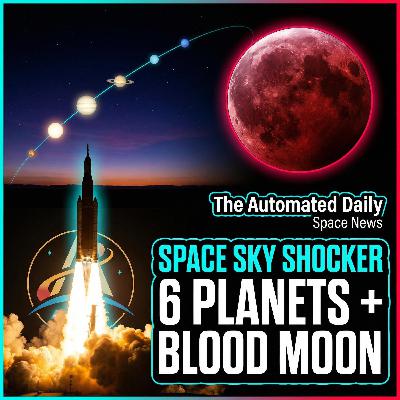
Please support this podcast by checking out our sponsors: - Discover the Future of AI Audio with ElevenLabs - https://try.elevenlabs.io/tad - Build Any Form, Without Code with Fillout. 50% extra signup credits - https://try.fillout.com/the_automated_daily - Prezi: Create AI presentations fast - https://try.prezi.com/automated_daily Support The Automated Daily directly: Buy me a coffee: https://buymeacoffee.com/theautomateddaily Today's topics: Tonight's Six-Planet Parade - Six planets visible after sunset on February 28, 2026, including Jupiter, Saturn, Venus, Mercury, Uranus, and Neptune in rare alignment requiring clear western horizon viewing. NASA Artemis Program Restructured - NASA announces major Artemis overhaul adding 2027 test mission before 2028 lunar landing, emphasizing step-by-step approach, increased launch cadence, and commercial lander competition. SpaceX Starlink Launch Finale - SpaceX concludes February with three successful Falcon 9 launches deploying 83 Starlink satellites, bringing constellation to over 9,850 units for global broadband coverage. March 3 Total Lunar Eclipse - Last total lunar eclipse until 2028 occurs March 3, visible from North America, Asia, and Australia with 58-minute totality phase and deep red blood moon appearance. Solar Activity Concerns Artemis - New research suggests solar superflare activity through mid-2026 may warrant delaying Artemis II beyond April, prioritizing astronaut safety during deep space mission. SpaceX Dragon Returns Successfully - SpaceX Dragon spacecraft successfully returned from International Space Station with thousands of pounds of science experiments after six-month stay in orbit. Episode Transcript Tonight's Six-Planet Parade Let's start with tonight's main event. If you have a clear view of the western horizon after sunset, you're looking at a pretty special opportunity. Six planets are positioned in our evening sky right now: Jupiter, Saturn, Venus, Mercury, Uranus, and Neptune. However, here's the thing you need to know—seeing all six is genuinely challenging. Jupiter is high up in the southeastern sky and relatively easy to spot. It's the brightest object you'll see and appears near the moon, which is almost full. But the real difficulty comes with the others. Venus and Mercury are sitting very low on the western horizon, competing with the twilight glow of the setting sun. You'll need a really flat, unobstructed view of the horizon to catch those two. Saturn is a bit higher than Venus and Mercury, so it might be easier to locate. As for Uranus and Neptune, well, those are basically telescope objects. Uranus requires binoculars at minimum, and Neptune really needs optical aid. The window to see the lower planets is super tight—maybe an hour or so after sunset before they disappear below the horizon. The internet's been buzzing about a 'planet parade' happening tonight, and while that's technically accurate, the reality is more nuanced. You'll probably only see two or three planets clearly with your naked eye. But that's still pretty cool for a Friday evening. NASA Artemis Program Restructured Now, shifting to some major news from the space agencies. NASA announced Friday a significant restructuring of its Artemis lunar program. This is important stuff. The original plan was ambitious: send Artemis II to circle the moon with four astronauts, then land people on the lunar surface in 2028 with Artemis III. But NASA Administrator Jared Isaacman acknowledged that jumping straight from a lunar flyby to a surface landing was too risky and probably not realistic. So here's what's changing. Artemis III, originally planned as the landing mission, is now being redefined as a test flight in 2027. Instead of going to the moon, it will stay in low Earth orbit where astronauts will practice docking with commercial lunar landers from SpaceX and Blue Origin. They'll test navigation, communications, propulsion, and life support systems. Think of it as a dress rehearsal in a safer environment. Then, in 2028, NASA plans to conduct actual lunar landing missions—potentially two of them, called Artemis IV and V. The approach here is what they're calling 'step by step'—similar to how Apollo was conducted. Isaacman emphasized that this strategy reduces risk and actually accelerates progress by learning from each mission before moving to the next one. Boeing, which builds the Space Launch System rocket, is on board with the plan. So is SpaceX. Blue Origin responded with 'Let's go. We're all in.' This is essentially opening up competition between the two companies for the landing contracts, which is actually good news for getting things done. SpaceX Starlink Launch Finale Speaking of SpaceX, the company wrapped up February with three Starlink launches in a single week. Tuesday, Wednesday, and Friday saw Falcon 9 rockets launch from Florida and California, putting a combined 83 satellites into orbit. That brings the Starlink constellation to over 9,850 active satellites. For context, that's a staggering number of spacecraft working together to provide internet coverage to remote parts of the world. All three launches successfully recovered their first-stage boosters, landing them on drone ships in the Atlantic and Pacific. One of the boosters, B1069, completed its 30th flight—a testament to SpaceX's reusable rocket technology. February's been a busy month for SpaceX overall, and this pace shows no signs of slowing down. March 3 Total Lunar Eclipse Before we wrap up, we've got to mention something coming in just a few days. March 3rd brings a total lunar eclipse—what many call a blood moon. This will be the last total lunar eclipse visible from North America until the end of 2028, so if you're in North America, Asia, or Australia, it's worth marking your calendar. The total phase lasts 58 minutes, and the moon will turn a deep reddish-copper color as Earth's shadow completely covers it. It'll be visible in the early morning hours for North America. The eclipse reaches totality around 6 a.m. Eastern Time on March 3rd. No special equipment needed—just find a spot with a clear view of the sky and watch our planet's shadow sweep across the lunar surface. Solar Activity Concerns Artemis One more thing before we go. There's been some discussion in the scientific community about solar activity. Researchers studying five decades of solar data have identified cycles that predict when powerful solar flares become more likely. Right now, we're in a period of elevated risk that runs through mid-2026. This matters for Artemis II because astronauts traveling beyond Earth's magnetic shield are more vulnerable to solar radiation. Some scientists are suggesting that waiting until later in 2026 to launch Artemis II might be smarter than launching in April. NASA has already delayed the mission from March to April due to technical issues with the rocket. This solar activity data adds another consideration to that timeline. It's not a showstopper—just a factor being carefully evaluated. SpaceX Dragon Returns Successfully Quick update on the International Space Station: SpaceX's Dragon spacecraft returned Thursday night with thousands of pounds of science experiments and equipment. It had been docked to the station for six months. The crew that arrived earlier this month is settling in and beginning advanced research operations. The station continues to be a hub for microgravity research and international cooperation in space. Subscribe to edition specific feeds: - Space news * Apple Podcast English * Spotify English * RSS English Spanish French - Top news * Apple Podcast English Spanish French * Spotify English Spanish French * RSS English Spanish French - Tech news * Apple Podcast English Spanish French * Spotify English Spanish Spanish * RSS English Spanish French - Hacker news * Apple Podcast English Spanish French * Spotify English Spanish French * RSS English Spanish French - AI news * Apple Podcast English Spanish French * Spotify English Spanish French * RSS English Spanish French Visit our website at https://theautomateddaily.com/ Send feedback to feedback@theautomateddaily.com Youtube LinkedIn X (Twitter)

Today's topics: Vera Rubin Observatory alerts launch - Vera C. Rubin Observatory issued 800,000 astronomical alerts in a single night, launching a revolutionary alert system capable of detecting asteroids, supernovae, and cosmic explosions in real-time. SpaceX Falcon 9 Starlink mission today - SpaceX launches Falcon 9 rocket with 29 Starlink satellites from Cape Canaveral on February 27, continuing deployment of the global internet constellation. Dragon capsule returns ISS research - SpaceX Dragon CRS-33 cargo capsule splashed down off California's coast, returning 55+ research investigations from the International Space Station including regenerative medicine and materials science studies. Artemis II expansion and timeline - NASA announced accelerated Artemis lunar program with new mission added in 2027 and standardized vehicle configuration, aiming for annual lunar surface landings beginning 2028. Solar activity and space weather - Solar activity increased with multiple C-class and M-class flares detected, coronal mass ejection expected to arrive late February 28 potentially causing geomagnetic storms.
Today's topics: Artemis II Mission Delayed - NASA's Artemis II moon rocket was rolled back to the Vehicle Assembly Building on February 25 after encountering a helium flow issue in the upper stage, pushing the crewed lunar mission from March to April 2026. SpaceX Starlink Expansion - SpaceX successfully launched its 500th Starlink satellite of 2026 on February 25, bringing the constellation closer to 10,000 spacecraft in low Earth orbit for global broadband coverage. Planetary Alignment Viewing - A rare planetary parade is visible in the evening sky with Mercury, Venus, Saturn, Jupiter, Uranus and Neptune forming a distinct arc along the ecliptic throughout late February. Congressional Space Priorities - The Senate Commerce Committee is preparing to consider extending the International Space Station's operational life to 2032 and mandating a lunar surface base as part of NASA's Artemis program. Evening Sky Observations - Jupiter appears exceptionally bright tonight, February 26, positioned just six degrees below a waxing gibbous moon, offering optimal viewing conditions for skywatchers.
Today's topics: Artemis 2 Moon Mission Delayed - NASA's Artemis 2 moon mission experiences helium system issues, delaying launch from March to April 2026. The Space Launch System rocket returns to the Vehicle Assembly Building for repairs. SpaceX Falcon 9 Record Reuse - SpaceX's most-flown Falcon 9 booster completes its record 33rd mission, continuing the company's push to certify boosters for up to 40 flights each while deploying Starlink satellites. Milky Way Magnetic Field Discovery - Scientists discover a surprising diagonal magnetic reversal in the Milky Way's Sagittarius Arm, revealing previously unknown three-dimensional structure of our galaxy's magnetic field. Planet Alignment Update February - Late February brings a six-planet alignment with Mercury, Venus, Jupiter, Saturn, Uranus and Neptune visible, though challenging observing conditions require clear western horizons at sunset. Moon Observing Opportunities Tonight - Tonight offers excellent viewing of the first quarter moon near constellation Taurus with detailed lunar features visible through telescopes, including the Coma galaxy cluster for large instruments.
Today's topics: NASA Artemis II rocket rollback - NASA rolled back the Artemis II rocket to fix a helium flow issue in the upper stage, pushing the lunar mission from March to April 2026. This delay affects the first crewed lunar mission since 1972. SpaceX Falcon 9 record breaking flight - SpaceX's Falcon 9 booster B1067 completed its record-breaking 33rd flight on February 21, continuing the company's work toward certifying boosters for 40 flights each. The mission deployed 28 Starlink satellites to orbit. Moon occults Pleiades cluster tonight - Tonight on February 23, the waxing crescent moon will pass through the Pleiades star cluster in Taurus, with some fainter stars being occulted or hidden by the lunar disk. The event is visible for several hours from North America. Six planet alignment this week - A rare alignment of six planets will be visible in the evening sky this week, with February 28 being the optimal viewing date. Mercury, Venus, Saturn, Jupiter, Uranus, and Neptune will all appear above the horizon, though some require binoculars or telescopes. Aurora displays over Arctic regions - A minor geomagnetic storm painted the skies over Iceland and eastern Canada with vivid aurora displays on February 16, captured by NASA's Suomi NPP satellite. The G1-level storm produced green and red auroras visible at high northern latitudes.
Today's topics: Ghost Galaxy - Ghost Galaxy Uranus Atmosphere - Uranus Atmosphere Webb Telescope - Webb Telescope Space Exploration - Space Exploration

Please support this podcast by checking out our sponsors: - Build Any Form, Without Code with Fillout. 50% extra signup credits - https://try.fillout.com/the_automated_daily - Consensus: AI for Research. Get a free month - https://get.consensus.app/automated_daily - Invest Like the Pros with StockMVP - https://www.stock-mvp.com/?via=ron Support The Automated Daily directly: Buy me a coffee: https://buymeacoffee.com/theautomateddaily Today's topics: Artemis II passes critical fueling test - NASA successfully completed the second wet dress rehearsal for Artemis II on February 19th, loading over 700,000 gallons of propellant without major hydrogen leaks, positioning the mission for a potential March 6th launch. Boeing Starliner safety investigation results - An independent investigation into Boeing's Starliner crewed flight test revealed multiple technical and management failures classified as a Type A mishap, prompting NASA to halt further crewed flights until significant corrections are made. SpaceX completes dual Starlink launches - SpaceX executed successful Starlink launches and booster landings, continuing to expand its satellite megaconstellation toward providing global broadband internet coverage. Private space stations advancing in 2026 - NASA selected Vast for the sixth private astronaut mission to the ISS launching in summer 2027, advancing the commercial space economy as the agency prepares for ISS transition and lunar exploration. Six-planet alignment visible this month - A rare six-planet alignment will occur on February 28th, with Mercury, Venus, Saturn, Jupiter, Uranus, and Neptune visible in Earth's evening sky for skywatchers. Episode Transcript Artemis II passes critical fueling test Let's start with some genuine progress on the lunar front. NASA's Artemis II mission passed a critical test yesterday. Engineers successfully loaded over seven hundred thousand gallons of supercold propellant into the Space Launch System rocket at Kennedy Space Center without experiencing the hydrogen leaks that plagued earlier attempts. This is the second time they've run through this full fueling procedure, and this time it went cleanly. The Artemis II crew, which includes NASA astronauts Reid Wiseman, Victor Glover, and Christina Koch, along with Canadian astronaut Jeremy Hansen, are now preparing to enter quarantine. If everything continues on schedule, they could launch as early as March sixth to fly around the Moon and back. This mission would be the first crewed lunar journey since Apollo seventeen in nineteen seventy-two—that's over fifty years ago. The crew will travel farther from Earth than any humans in history. Boeing Starliner safety investigation results Now, shifting gears to some troubling news in the commercial space sector. NASA released an independent investigation yesterday into Boeing's Starliner spacecraft following its crewed test flight last year. The report doesn't pull any punches. Investigators found a troubling mix of hardware failures, qualification gaps, and what they call leadership missteps. NASA officially classified the flight as a Type A mishap—the most serious category. While the astronauts eventually made it home safely, the investigation revealed that better decisions could have made the outcome very different. NASA administrator Jared Isaacman was direct about the agency's role, saying the pressure to ensure the success of having two independent crew vehicles led to decisions that exceeded reasonable bounds. Boeing will need to make significant corrections before NASA flies another crew on Starliner. SpaceX completes dual Starlink launches On the launch front, SpaceX has been busy. They executed a successful Starlink mission launch yesterday from Cape Canaveral, and a Falcon Nine booster made another impressive landing on a droneship in the Bahamas—marking only the second time SpaceX has pulled off that particular feat. Meanwhile, they have another Starlink launch scheduled for today. These continuous launches are steadily building out the Starlink constellation toward providing near-global broadband coverage. Private space stations advancing in 2026 Looking at the commercial space economy more broadly, NASA announced this week that it selected Vast Space for the sixth private astronaut mission to the International Space Station, targeted for summer twenty twenty-seven. This continues NASA's push toward commercializing low Earth orbit and preparing for the inevitable transition away from the ISS when it eventually reaches the end of its operational life. Six-planet alignment visible this month Finally, if you enjoy stargazing, here's something to mark on your calendar. Toward the end of this month, specifically on February twenty-eighth, six planets will align in Earth's evening sky. You'll be able to see Mercury, Venus, Saturn, and Jupiter with your naked eye if you have decent viewing conditions. You'll need binoculars or a telescope for Uranus and Neptune. The best viewing window is about thirty minutes after sunset, looking toward the western sky. Venus will be the easiest to spot—it'll be the brightest by far. Subscribe to edition specific feeds: - Space news * Apple Podcast English * Spotify English * RSS English Spanish French - Top news * Apple Podcast English Spanish French * Spotify English Spanish French * RSS English Spanish French - Tech news * Apple Podcast English Spanish French * Spotify English Spanish Spanish * RSS English Spanish French - Hacker news * Apple Podcast English Spanish French * Spotify English Spanish French * RSS English Spanish French - AI news * Apple Podcast English Spanish French * Spotify English Spanish French * RSS English Spanish French Visit our website at https://theautomateddaily.com/ Send feedback to feedback@theautomateddaily.com Youtube LinkedIn X (Twitter)
Please support this podcast by checking out our sponsors: - KrispCall: Agentic Cloud Telephony - https://try.krispcall.com/tad - Discover the Future of AI Audio with ElevenLabs - https://try.elevenlabs.io/tad - Consensus: AI for Research. Get a free month - https://get.consensus.app/automated_daily Support The Automated Daily directly: Buy me a coffee: https://buymeacoffee.com/theautomateddaily Today's topics: Artemis 2 moon rocket testing today - NASA conducts second fueling test of Space Launch System rocket for Artemis 2 mission, targeting March launch for crewed lunar flyby with four astronauts. Mercury occults moon in evening sky - Young crescent moon passes in front of planet Mercury on February 18th, creating occultation visible from southern United States, Mexico, and Central America. Perseverance rover navigates Mars autonomously - Perseverance rover deploys Mars Global Localization technology using artificial intelligence to autonomously determine its position without human assistance from Earth. Crew-12 arrives at space station - NASA SpaceX Crew-12 mission successfully docks at International Space Station with four astronauts for eight-month expedition aboard orbiting laboratory. Lunar celebrations viewed from orbit - Astronauts aboard International Space Station and China's Tiangong station celebrate Lunar New Year with festive decorations and fireworks viewed from orbit above Earth. Episode Transcript Artemis 2 moon rocket testing today Let's start with the big story today. NASA's Artemis 2 mission just kicked off a crucial wet dress rehearsal at Kennedy Space Center in Florida. This is essentially a full-scale practice run of the launch sequence. Teams are loading over 700,000 gallons of liquid hydrogen and liquid oxygen into the Space Launch System rocket. They've learned from an earlier attempt that experienced a leak, so engineers replaced a filter and made some adjustments. If everything goes smoothly today, we could see the actual launch happen sometime in early March. That means four astronauts—Reid Wiseman, Victor Glover, Christina Koch, and Canadian astronaut Jeremy Hansen—could be flying around the Moon within weeks. This would be the first crewed lunar mission since the Apollo era. Pretty historic stuff. Mercury occults moon in evening sky Moving to the night sky, if you were outside yesterday evening on February 18th, you might have witnessed something special. A thin crescent Moon passed directly in front of the planet Mercury. This phenomenon is called an occultation. From parts of the southern United States, Mexico, and Central America, observers actually saw Mercury disappear behind the lunar crescent. Even if you didn't catch it, the pairing of the young Moon and elusive Mercury made for a nice viewing opportunity for anyone looking west after sunset. Perseverance rover navigates Mars autonomously Now let's talk about some fascinating robotics work on Mars. NASA's Perseverance rover just achieved something remarkable. It's now autonomously figuring out where it is on the Martian surface without waiting for instructions from Earth. The team developed technology called Mars Global Localization, which uses an onboard algorithm to match images from the rover's cameras with orbital maps. Think of it like giving the rover its own GPS system. This breakthrough came from repurposing a powerful processor that originally communicated with the Ingenuity helicopter. The result? Perseverance can now travel much farther on its own each day, explore more of the planet, and gather more science. Crew-12 arrives at space station At the International Space Station, things are bustling again. The Crew-12 mission arrived at the orbiting laboratory over the weekend. Four crew members are now aboard—NASA astronauts Jessica Meir and Jack Hathaway, European Space Agency astronaut Sophie Adenot, and Russian cosmonaut Andrey Fedyaev. They've brought the station back to its full complement of seven crew members. The team has already begun their mission of conducting research to support future deep space exploration, along with experiments that benefit life here on Earth. They'll be there for about eight months. Lunar celebrations viewed from orbit And finally, something heartwarming to close out. Both the International Space Station and China's Tiangong space station celebrated Lunar New Year this past week. NASA astronaut Chris Williams shared stunning video footage of Beijing lit up by fireworks from 250 miles above Earth. The view captured the city's intricate network of highways and the broader urban landscape beautifully. Meanwhile, Chinese astronauts aboard Tiangong decorated their orbital home with festive decorations and created a music video partially filmed in space. It's a nice reminder that even at the cutting edge of space exploration, there's room for cultural celebration and human connection. Subscribe to edition specific feeds: - Space news * Apple Podcast English * Spotify English * RSS English Spanish French - Top news * Apple Podcast English Spanish French * Spotify English Spanish French * RSS English Spanish French - Tech news * Apple Podcast English Spanish French * Spotify English Spanish Spanish * RSS English Spanish French - Hacker news * Apple Podcast English Spanish French * Spotify English Spanish French * RSS English Spanish French - AI news * Apple Podcast English Spanish French * Spotify English Spanish French * RSS English Spanish French Visit our website at https://theautomateddaily.com/ Send feedback to feedback@theautomateddaily.com Youtube LinkedIn X (Twitter)

Please support this podcast by checking out our sponsors: - Invest Like the Pros with StockMVP - https://www.stock-mvp.com/?via=ron - Effortless AI design for presentations, websites, and more with Gamma - https://try.gamma.app/tad - Discover the Future of AI Audio with ElevenLabs - https://try.elevenlabs.io/tad Support The Automated Daily directly: Buy me a coffee: https://buymeacoffee.com/theautomateddaily Today's topics: Moon Occults Mercury Today - The crescent Moon passes directly in front of Mercury today, a rare celestial event visible from parts of North America with keywords: lunar occultation, Mercury visibility, celestial mechanics. Artemis 2 Critical Test Underway - NASA's second Artemis 2 wet dress rehearsal is underway after initial hydrogen leak issues, with fueling scheduled for February 19 to test systems before lunar launch, keywords: Space Launch System, rocket testing, moon mission preparation. SpaceX Continues Starlink Expansion - SpaceX launched additional Starlink satellites on February 14 and 16, continuing rapid deployment of its broadband megaconstellation now exceeding 9,600 active spacecraft, keywords: Starlink deployment, satellite internet, SpaceX operations. Crew-12 Begins ISS Science Mission - Four astronauts from Crew-12 docked at the ISS on February 14 and are now conducting advanced scientific investigations including cancer research and plant biology in microgravity, keywords: International Space Station, human spaceflight, orbital research. JWST Tracks Potentially Hazardous Asteroid - NASA's James Webb Space Telescope is monitoring asteroid 2024 YR4 with a 4.1 percent chance of impacting the Moon in 2032, gathering precise trajectory data through spectroscopy, keywords: asteroid tracking, planetary defense, JWST observations. Planetary Parade Coming Late February - Six planets will align in the evening sky on February 28, with Venus, Jupiter, Saturn, Mercury, Uranus, and Neptune all visible after sunset for skywatchers worldwide, keywords: planetary alignment, February 2026 astronomy, evening sky observation. Episode Transcript Moon Occults Mercury Today Let's start with tonight's main event. For observers across much of North America, Mexico, and Central America, the young crescent Moon will slide directly in front of the planet Mercury. This is called an occultation, and it's rarer than you might think. Mercury is notoriously difficult to spot because it stays so close to the Sun. But today, February 18th, it's reaching what astronomers call greatest eastern elongation—its farthest point from the Sun this evening—which means it's actually in a pretty good spot for viewing. From places like Dallas and westward through New Mexico, you'll see Mercury disappear behind the Moon's dark edge and then reappear on the bright edge about thirty minutes later. Even if you miss the occultation itself, Mercury and the Moon will make for a nice pairing in the western sky around sunset. Just remember to look well after the Sun has gone down to protect your eyes. Artemis 2 Critical Test Underway Shifting gears to something that's been a bit of a rollercoaster. NASA's Artemis 2 mission has hit some technical snags, but the team is pressing forward. Right now, they're in the middle of a critical second attempt at a wet dress rehearsal—basically a full practice run of everything that happens before launch. The first attempt back on February 3rd ran into trouble when liquid hydrogen leaked from connections at the rocket's tail service mast. This time around, they've replaced a suspect filter and made repairs, and as of yesterday evening, the countdown kicked off. The real test comes tomorrow when they'll load over 730,000 gallons of liquid hydrogen and oxygen into the Space Launch System rocket. If all goes well, this will clear the way for Artemis 2 to launch astronauts around the Moon, with March 6th now targeted as the earliest launch date. It's worth noting this is the same fueling system that gave them trouble back during Artemis 1 testing, so there's definitely some scrutiny on this one. SpaceX Continues Starlink Expansion While we're talking about lunar missions, let's touch on what SpaceX has been up to. Over the past few days, they've been busy adding to the Starlink constellation. On February 14th and 16th, two Falcon 9 rockets launched with a combined 53 new satellites. The company now has over 9,600 Starlink spacecraft in orbit, providing broadband internet coverage to underserved regions across the globe. What's particularly interesting is the speed at which they're operating—these launches are part of SpaceX's ongoing effort to maintain and expand the network. The company just hit 10 million subscribers, and airlines like Southwest are beginning to outfit their fleets with Starlink connectivity. It's a pretty remarkable pace of deployment when you think about it. Crew-12 Begins ISS Science Mission On the International Space Station front, Crew-12 has settled in nicely after docking on February 14th. The four-person team—two NASA astronauts, one from the European Space Agency, and one Russian cosmonaut—is already deep into their science work. They're investigating everything from how to manufacture medicine in microgravity to studying how plants grow without gravity's influence. One particularly cool project involves using advanced microscopy to observe human cells and tissues in space, research that could accelerate drug development and disease modeling here on Earth. There's also work on cancer treatments and studying nitrogen-fixing microbes that could help future space missions grow their own food. These long-duration missions are crucial not just for advancing science, but for testing systems and procedures we'll need when humans eventually return to the Moon and push on to Mars. JWST Tracks Potentially Hazardous Asteroid Now, here's something that shows how far our space technology has come. NASA's James Webb Space Telescope is currently keeping watch over asteroid 2024 YR4. This isn't some doomsday scenario—the asteroid will safely pass our planet in 2032. But calculations show there's roughly a 4.1 percent chance it could hit the Moon instead. While those odds are low, they're high enough to be interesting. So JWST is pointing its infrared instruments at this faint, distant rock to gather precise data on its position and trajectory. The observations will help refine predictions and improve our ability to track potentially hazardous objects. If the asteroid does strike the Moon, it could carve a crater up to two kilometers wide and create a visible flash from Earth—essentially a natural experiment written in lunar dust. Either way, the data we gather now helps us prepare for planetary defense in the future. Planetary Parade Coming Late February Before we wrap up, one quick heads-up for late February. If you've been hearing buzz about a planetary parade, mark your calendar for February 28th. Six planets—Mercury, Venus, Saturn, Jupiter, Uranus, and Neptune—will all be visible in the evening sky. Now, I should be honest: finding all six is more of a challenge than the marketing suggests. Mercury and Saturn are fading into twilight, and you'll need binoculars or a telescope to spot Uranus and Neptune. But Venus and Jupiter will be bright and unmissable, and if you have a clear western horizon and some optical aid, you can definitely piece together the full set. It's a nice reminder that even though we're focused on getting humans back to the Moon, the solar system's regular celestial mechanics provide plenty of wonder right here in our neighborhood. Subscribe to edition specific feeds: - Space news * Apple Podcast English * Spotify English * RSS English Spanish French - Top news * Apple Podcast English Spanish French * Spotify English Spanish French * RSS English Spanish French - Tech news * Apple Podcast English Spanish French * Spotify English Spanish Spanish * RSS English Spanish French - Hacker news * Apple Podcast English Spanish French * Spotify English Spanish French * RSS English Spanish French - AI news * Apple Podcast English Spanish French * Spotify English Spanish French * RSS English Spanish French Visit our website at https://theautomateddaily.com/ Send feedback to feedback@theautomateddaily.com Youtube LinkedIn X (Twitter)
Welcome to 'The Automated Daily', your ultimate source for a streamlined and insightful daily news experience. Please support this podcast by checking out our sponsors: - Invest Like the Pros with StockMVP - https://www.stock-mvp.com/?via=ron - Build Any Form, Without Code with Fillout. 50% extra signup credits - https://try.fillout.com/the_automated_daily - KrispCall: Agentic Cloud Telephony - https://try.krispcall.com/tad Support The Automated Daily directly: Buy me a coffee: https://buymeacoffee.com/theautomateddaily Today's topics: -SpaceX launches 29 Starlink satellites -Mercury reaches greatest evening elongation -Comet Wierzchoś visible in twilight -Annular solar eclipse tomorrow -Universe may collapse big crunch -International Space Station crew updates Subscribe to edition specific feeds: - Space news * Apple Podcast English Spanish (coming soon) French (coming soon) * Spotify English Spanish (coming soon) French (coming soon) * RSS English Spanish (coming soon) French (coming soon) - Top news * Apple Podcast English Spanish French * Spotify English Spanish French * RSS English Spanish French - Tech news * Apple Podcast English Spanish French * Spotify English Spanish Spanish * RSS English Spanish French - Hacker news * Apple Podcast English Spanish French * Spotify English Spanish French * RSS English Spanish French - AI news * Apple Podcast English Spanish French * Spotify English Spanish French * RSS English Spanish French Visit our website at https://theautomateddaily.com/ Send feedback to feedback@theautomateddaily.com Youtube LinkedIn X (Twitter)
Welcome to 'The Automated Daily', your ultimate source for a streamlined and insightful daily news experience. Please support this podcast by checking out our sponsors: - Discover the Future of AI Audio with ElevenLabs - https://try.elevenlabs.io/tad - Invest Like the Pros with StockMVP - https://www.stock-mvp.com/?via=ron - Build Any Form, Without Code with Fillout. 50% extra signup credits - https://try.fillout.com/the_automated_daily Support The Automated Daily directly: Buy me a coffee: https://buymeacoffee.com/theautomateddaily Today's topics: -Crew-12 launches to ISS -SpaceX Falcon 9 booster recovery -International space collaboration -Cosmic phenomena observations Subscribe to edition specific feeds: - Space news * Apple Podcast English Spanish (coming soon) French (coming soon) * Spotify English Spanish (coming soon) French (coming soon) * RSS English Spanish (coming soon) French (coming soon) - Top news * Apple Podcast English Spanish French * Spotify English Spanish French * RSS English Spanish French - Tech news * Apple Podcast English Spanish French * Spotify English Spanish Spanish * RSS English Spanish French - Hacker news * Apple Podcast English Spanish French * Spotify English Spanish French * RSS English Spanish French - AI news * Apple Podcast English Spanish French * Spotify English Spanish French * RSS English Spanish French Visit our website at https://theautomateddaily.com/ Send feedback to feedback@theautomateddaily.com Youtube LinkedIn X (Twitter)

Welcome to 'The Automated Daily', your ultimate source for a streamlined and insightful daily news experience. Please support this podcast by checking out our sponsors: - KrispCall: Agentic Cloud Telephony - https://try.krispcall.com/tad - Prezi: Create AI presentations fast - https://try.prezi.com/automated_daily - Invest Like the Pros with StockMVP - https://www.stock-mvp.com/?via=ron Support The Automated Daily directly: Buy me a coffee: https://buymeacoffee.com/theautomateddaily Today's topics: -SpaceX deploys Starlink satellites -NASA Crew-12 delayed by weather -Artemis 2 hydrogen seal testing -ULA Vulcan rocket anomaly -China advances lunar program -ESA Ramses asteroid mission -Earth-like exoplanet discovered -Webb finds organic molecules -Satellite collision risk rising -Supermassive black hole detection Subscribe to edition specific feeds: - Space news * Apple Podcast English Spanish (coming soon) French (coming soon) * Spotify English Spanish (coming soon) French (coming soon) * RSS English Spanish (coming soon) French (coming soon) - Top news * Apple Podcast English Spanish French * Spotify English Spanish French * RSS English Spanish French - Tech news * Apple Podcast English Spanish French * Spotify English Spanish Spanish * RSS English Spanish French - Hacker news * Apple Podcast English Spanish French * Spotify English Spanish French * RSS English Spanish French - AI news * Apple Podcast English Spanish French * Spotify English Spanish French * RSS English Spanish French Visit our website at https://theautomateddaily.com/ Send feedback to feedback@theautomateddaily.com Youtube LinkedIn X (Twitter)

Comments

Download from Google Play

Download from App Store
 United States