


 Claim Ownership
World Cup 2026 Pulse
Subscribed: 0Played: 4
Subscribe

Description
Dive deep into the heart of the FIFA World Cup 2026 with 'World Cup 2026 Pulse,' your weekly podcast that offers an in-depth look at the strategic moves, competitive landscape, and market positioning leading up to the event. Each week, we bring you the latest updates, critical analyses, and insider perspectives to keep you informed and ahead of the game.Fans and enthusiasts closely following the FIFA World Cup 2026 will find a treasure trove of information and insights here. 'World Cup 2026 Pulse' is designed to enrich your understanding of the event, offering a comprehensive view that enhances both your knowledge and your enjoyment of the game.Powered by Apisod.com
5 Episodes
Reverse

The FIFA World Cup 2026 faces the challenge of expanding globally while ensuring the event remains accessible to fans amid rising ticket prices. With the tournament growing to 48 teams, FIFA is implementing various sales phases, including lotteries and secondary markets like StubHub, to keep tickets attainable. However, concerns persist about affordability in the resale market. Host cities, like Los Angeles and Seattle, are preparing not only their stadiums but also investing in fan zones and urban renewal, aiming to leverage the World Cup for long-term cultural and infrastructure legacies. The episode examines the balance FIFA must find between maximizing revenue and maintaining inclusivity, the transformative potential of the World Cup for host cities, and the broader implications for global unity and local prosperity. News sources referenced include the African Hockey Federation, FIBA, and sportingnews.com, highlighting the global interest and pressures faced by FIFA as it plans for an inclusive and impactful 2026 World Cup.
Powered by Apisod.com

The FIFA World Cup 2026 faces challenges in ensuring ticket affordability and accessibility as it expands to 48 teams and hosts across the US, Canada, and Mexico. While initial ticket sales are high, with nearly 2 million sold, varying pricing strategies have raised concerns. Playoff matches in Mexico offer tickets as low as $11, but finals in the US see prices skyrocketing, sometimes over 41 times the face value on resale sites. The introduction of dynamic pricing, a first for the World Cup, could further affect ticket availability, potentially excluding average fans due to high costs for popular matches. This episode explores how FIFA's ticketing strategies might balance expanding access to the game while maximizing revenue, a critical issue for maintaining the event's global inclusivity. News sources referenced include Al Jazeera, Daily Sundial, Fédération Internationale de Hockey, Inside World Football, Malay Mail, Mashable India, OneFootball, The Economic Times, The Hockey Paper, The New York Times, The Times of
Powered by Apisod.com
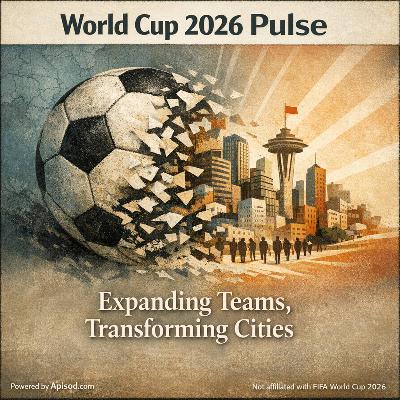
The FIFA World Cup 2026 is set to become a global spectacle with its expansion to 48 teams, bringing significant changes to host cities and fan experiences. Seattle exemplifies innovation by introducing free fan celebration venues to manage the influx of an anticipated 23,000 visitors and distribute economic and cultural benefits across the city. Similarly, the selection of team bases such as Greensboro, North Carolina, by Norway, emphasizes the importance of peaceful environments and top-notch training facilities, putting smaller communities on the world soccer map. This approach not only aims to make the World Cup accessible to all but also showcases global talent in new locations. The adjustments in formats and venues echo FIFA's vision for a more inclusive tournament. However, balancing the global excitement with local community benefits remains a challenge. The episode discusses how cities like Seattle are leading in fan engagement and strategic planning, potentially setting a precedent for other host cities. With record-breaking ticket requests and a boost in prize money, the economic implications are significant. Key to
Powered by Apisod.com

In this episode of "World Cup 2026 Pulse," hosts Alex and Jordan delve into the burgeoning excitement surrounding FIFA World Cup 2026, highlighting the record-breaking ticket demand, economic benefits for host cities, and the transformative effect on fan experiences. FIFA President Gianni Infantino reports an unprecedented 75% of matches receiving over 1 million ticket requests, indicating a possible early sell-out. Cities like Kansas City and Charlotte are becoming soccer hubs, with significant economic impacts including job creation in Miami and incentives for new Airbnb hosts in Atlanta to manage the surge in accommodation searches. Small communities, like Lawrence, Kansas, are also benefiting from global exposure by hosting national teams. The episode underscores the World Cup's role as a catalyst for urban development, global engagement, and the setting of new standards for future sports events. News sources referenced include Atlanta News First, CBS News, Charlotte FC, and Reuters among others, emphasizing the widespread impact and excitement the World Cup is generating across various sectors and communities.
Powered by Apisod.com

The FIFA World Cup 2026 faces a unique challenge in maintaining fan engagement and effectively utilizing infrastructure as the traditional fan fest model undergoes significant changes. Notably, the planned official FIFA Fan Fest in Liberty State Park has been canceled, prompting New Jersey's Governor Sherrill to pivot towards smaller, localized watch parties and street fairs, backed by a $5 million initiative. This move aims to preserve the tournament's spirit across the state. Meanwhile, Kansas City emerges as a significant locale, chosen by four national teams, including three from FIFA's top tier, as their base camp, highlighting the city's robust soccer infrastructure and community enthusiasm. These shifts reflect a broader trend towards maximizing community engagement and leveraging infrastructure in novel ways, suggesting a redefinition of how mega-events like the FIFA World Cup interact with host communities. This strategy promises not only a more inclusive celebration but also a lasting impact on the host cities and communities.
News sources referenced include Billy Penn at WHYY, CBS Sports, Charlotte FC
Powered by Apisod.com
Comments


Download from Google Play

Download from App Store
 United States