


 Claim Ownership
The Really Big Show with Jim Csek &Iain Burns
Subscribed: 1Played: 27
Subscribe

© Jim Csek
Description
The Really Big Show is a Canadian news hour done differently.
We discuss the news of the day through a Canadian lens with analysis and commentary from Jim Csek & managing editor Iain Burns.
We translate the rhetoric into reality with common sense on the news that affects Canada, BC and our region. We are live five days a week around 9 am PST. Recorded sessions available on Youtube, X and many podcast channels. https://thereallybigshow.ca
We discuss the news of the day through a Canadian lens with analysis and commentary from Jim Csek & managing editor Iain Burns.
We translate the rhetoric into reality with common sense on the news that affects Canada, BC and our region. We are live five days a week around 9 am PST. Recorded sessions available on Youtube, X and many podcast channels. https://thereallybigshow.ca
281 Episodes
Reverse
Overnight strikes, leadership taken out, and global powers moving fast — are we now at war with Iran? We break down what happened, how Canada responded, and why Ottawa says it wasn’t informed or asked to help. Carney backs the operation while traveling abroad, and the geopolitical shockwaves are already hitting markets — with gold surging and tensions rising.At home, questions deepen about the military’s readiness, media credibility, energy policy, rising crime, and ballooning debt at every level of government. Add in a bombshell report involving India, auto sector confusion, BC energy weakness, and a tightening Conservative leadership race — and the week starts with no shortage of impact.This isn’t just another news cycle. Something shifted. Let’s talk about it.
Canada is sitting on what the world desperately needs — and we’re barely using it.With global energy markets in turmoil, uranium surging in Saskatchewan, and geopolitical tensions reshaping supply chains, energy has become the central issue of the decade. The question is whether Ottawa finally understands that — or is still stuck in yesterday’s climate playbook.We break down Carney’s overseas deal-making, pension concerns, food price risks tied to the Iran conflict, cabinet rumblings, recession warnings, and why more Canadians are questioning media credibility and political accountability. From ethics investigations to high-speed rail protests and global military shifts, the pressure points are everywhere.Canada has the resources. The world knows it. The real question is whether we’re prepared to act like it.
The current headlines reveal a country fractured by its own geography and policy. While Saskatchewan powers ahead as a rare economic engine—fueled by a massive $60B project surge and Canada’s lowest unemployment—the rest of the nation feels increasingly left behind.From the global stage to the kitchen table, the prevailing sentiment is one of being "sidelined." Internationally, Canada is watching from the bleachers as the U.S. and Mexico deepen trade ties, while domestically, citizens are grappling with an 11-year "happiness recession." With the population falling for the first time since Confederation and record-low happiness rankings, the "Canadian Dream" is being replaced by a struggle for basic affordability and a search for a new national direction.
After 11 years of shifting policies and economic cycles, Canada finds itself at a historic crossroads where the standard of living no longer aligns with the national "brand." While the country was once a perennial Top 5 contender in global well-being, it has now plummeted to 25th in the Oxford World Happiness Report—its lowest position since records began.
It’s Wednesday, March 18, 2026. As the global economic winter settles in, Canada is now facing a perfect storm, with new data suggesting the country is on a collision course with stagflation—a combination of stagnant growth and high inflation. The central problem, critics argue, is that Ottawa’s regulatory and fiscal policies, far from providing a path out of the crisis, are actually stifling any hope of a real recovery.
It’s Tuesday, March 17, 2026. While the Prime Minister’s Office continues to push a narrative of global influence and "strategic autonomy," a bombshell report from the Canadian Human Rights Commission has forced a new, darker title into the national conversation.The declaration marks a historic low for the government's economic record. As Prime Minister Mark Carney meets with Nordic leaders to discuss Arctic defense and "climate challenges," his own domestic institutions are sounding a alarm that the basic right to an affordable life has been compromised. With the Fraser Institute projecting a record $321 billion deficit and Mexico officially unseating Canada in U.S. trade rankings, the "sunny ways" of the past have been replaced by a "human rights crisis" at the grocery checkout. From a crumbling national electricity grid to the "shameful" waste of millions in expired pandemic supplies, the disconnect between the ruling class’s global ambitions and the working class’s struggle for survival has reached a breaking point.
It’s Monday, March 16, 2026, and the contrast between the government's "Sunny Ways" rhetoric and the cold reality of a volatile world has never been sharper.As Mark Carney meets with Keir Starmer at 10 Downing Street to discuss the escalating war in the Middle East and the perilous closure of the Strait of Hormuz, Canadians at home are facing an "Economic Winter" that refuse to thaw. While headline inflation has dipped to 2.3%, the relief is an illusion for those at the checkout counter; grocery prices have skyrocketed over 30% since 2021. From the "shameful" lack of a strategic oil reserve to the explosive rise in Privy Council spending—now $252 million—the gap between the ruling class and the working class is widening. With hundreds of IRGC-linked individuals reportedly using Canada as a base and the auto sector facing a massive employment drop, we have to ask: Is this the "leadership" Canada was promised, or a managed decline disguised as progress?00:00:15 – Introduction: No cake for Canada on Mark Carney’s birthday00:01:17 – Carney meets Starmer in London: Iran war, Ukraine & global coalitions00:04:30 – Greenland, NATO & nuclear weapons: Canada’s defence confusion00:12:47 – Domestic tensions: Iran & Al-Quds Day protests in Toronto00:14:04 – Jobs, wages & spin: Carney’s ‘best deal for Canada’ claims00:19:46 – Charts don’t lie? Investment, jobs & Canada vs. the U.S.00:26:40 – Inflation at 2.3% vs. reality at the grocery store: carbon tax, food costs & the ‘zero impact’ narrative00:30:43 – Energy, strategic reserves & we produce, we don’t store00:35:32 – Fraser Institute: ‘economic nonsense’ of decarbonizing oil00:39:28 – U.S. surges ahead: refineries, rare earths & energy deals00:50:15 – Auto sector on the brink: NA market access & EV mandates + Pierre outlines Conservative strategy00:57:03 – Security & immigration: IRGC presence and political murder in B.C.*00:57:41 – On the ground in B.C.: MLA Gavin Dew on restaurants, costs & leadership politics01:07:37 – Double standards, bullying & media distraction: Eby vs. Dew01:13:21 – Ottawa’s bubble: Privy Council costs, bonuses & net zero junkets01:24:01 – Symbolism vs. substance: Buy-Canadian flags, Chinese pins & labour pain01:39:28 – Airlines, housing, crime & terror lists01:46:18 – Quebec’s “wall of shame” & everyday backlash01:50:05 – Pensions, carbon credits & saving Canada from gatekeepersThe Really Big Show: The thinking Canadian's daily briefing, independent and informed.Live every weekday at 9AM PST. Now streaming on Rumble, Spotify, Apple and more. Find out more here www.thereallybigshow.caWe tell real Canadian news you won't hear in the mainstream.Become a member and support independent media. Help us spread the word - subscribe, share, comment.NowMedia: free from political influence. Committed to the truth.#canadiannews #canadapolitics #canada #liberal #conservative
Has democracy failed in Canada, or is the country being steered toward a managed decline by a political class that values global optics over local stability?Economic winter is upon us as Liberals tout ‘sunny ways,’ yet the data tells a chilling story: a shock loss of 84,000 jobs has sent the unemployment rate soaring to 6.7%, with long-term joblessness now gripping nearly a quarter of the unemployed. While the government maintains that the industrial carbon tax has no impact on your grocery bill, the reality on the ground is a crumbling industrial base. Honda has just joined the big three automakers in a massive EV pullback, forecasting their first annual loss in 70 years, even as Mark Carney doubles down on his Beijing trade deal to scrap tariffs on Chinese imports. From the "shameful" lack of transparency regarding the Kuwait base attack to the proposal to scrub emails from access-to-information requests, we are witnessing a nation at a crossroads—where foreign aid and global "climate paths" take priority while Canadian workers are left out in the cold.It’s a heavy end to the week as the numbers finally catch up to the rhetoric—thanks for joining us to wrap up this Friday session, and we'll see you back here on Monday.Chapters:00:00 – IntroductionEconomic 04:30 – Shock Jobs Report: 84,000 Job Losses & 6.7% Unemployment11:30 – Young Canadians Squeezed: Foreign Labour, Students & Youth Joblessness18:00 – Government Job Boom, Private Sector Bust23:30 – Mark Carney’s Spin vs. Economic Reality30:00 – Energy Policy: Canada’s Squandered Oil & Gas Advantage38:30 – Industrial Carbon Tax & Food Prices44:00 – EV Mandates, Honda’s $15.7B Loss & Auto Sector Collapse52:00 – China, EVs & BYD: Carney’s High‑Risk Bet59:30 – Iran War & Trade: Canada’s Leverage with the U.S.1:05:00 – Kuwait Base Attack: Secrecy, Spin & Military Readiness1:12:00 – $37.7M to Lebanon: Aid Abroad vs. Crisis at Home1:18:00 – Immigration & Social Benefits: What Canadians Really Think1:25:00 – Stand on Guard Act: Home Self‑Defence vs. Liberal Pushback1:32:00 – Dental Plan Audit, Access to Information Erosion & Dental Program Bloat1:39:00 – Nova Scotia Wind Farm: ‘No Conspiracy’, but did Liberal insiders profit?1:44:00 – Critical Minerals: China’s Grip on Antimony & Strategic Weakness1:50:00 – Housing Crisis, Family Formation & Gregor Robertson blames Iran1:56:00 – Health Care at Breaking Point & Mass Immigration Pressure2:02:00 – Media, CBC & Accountability: Who Works for Whom?2:08:00 – Closing: Canada’s Crossroads – Prosperity or Managed Decline?The Really Big Show: The thinking Canadian's daily briefing, independent and informed.Live every weekday at 9AM PST. Now streaming on Rumble, Spotify, Apple and more. Find out more here www.thereallybigshow.caWe tell real Canadian news you won't hear in the mainstream.Become a member and support independent media. Help us spread the word - subscribe, share, comment.NowMedia: free from political influence. Committed to the truth.#canadiannews #canadapolitics #canada #liberal #conservative
The fallout from MP Lori Idlout’s floor-crossing is reaching a fever pitch this Thursday morning as new polling reveals a staggering 74% of Canadians believe floor-crossers shouldn't be allowed to finish their terms without a by-election. While Mark Carney secures a controversial Beijing pledge that ends surtaxes on Chinese EVs, our own auto exports have cratered to a four-year low—leaving many to wonder who this government is actually working for. From King Charles weighing in on the Alberta separatism crisis to the IRGC "terrorist" count that has the House in an uproar, we’re digging into the red tape cost that is literally stealing 32 days a year from Canadian business owners. As Carney prepares for a multi-country European vacation while the country grapples with a Lestock train derailment and a deepening deficit, we're asking the tough questions about accountability and where the money is actually going.It’s a high-stakes Thursday show —Jasmin Laine joins us at 10:30 PST to break down the latest, and we’ll be here to keep the record straight.
Today’s show tackles a massive shift in the House of Commons as Nunavut MP Lori Idlout crosses the floor to the Liberals, giving the government more leverage just as national security warnings reach a breaking point. From Doug Ford’s "sleeper cell" alerts to explosive testimony from a former CBC host alleging threats over Conservative bookings, the divide between the elites and the commoner has never been wider. We’re digging into the "entrepreneurial drought" crushing small businesses, the $35,000 taxpayer-funded open bar for B.C. bureaucrats, and why Mark Carney is calling for social media bans from the luxury of an upscale Victoria hotel. As the deficit triples and the PBO remains silenced, we ask: is Canada being managed or dismantled?
In today’s show we tackle a volatile news cycle that hits close to home as the U.S. Consulate in Toronto is struck by gunfire amidst rising global tensions. While oil prices retreat following Donald Trump’s declaration that the war in Iran is "very complete," Canada remains bogged down by ideological roadblocks and elite-driven scandals. We break down the Liberal attempt to bypass proper process for Bill C-9, the European Union’s admission that abandoning nuclear energy was a "strategic mistake," and the curious Oxford connections between a new PBO nominee, Chrystia Freeland, and Mark Carney. As the week winds down, we ask why the government remains fixated on carbon taxes while the nation’s security and economic future hang in the balance.
In our final show of the week, we explore the devastating argument that our leadership is prioritizing the benefit of a few at the expense of the many. From Mark Carney’s controversial stance on CUSMA and the "China Clause" to the dismantle-by-design approach hitting the auto sector under Mélanie Joly and Doug Ford, we ask why a resource-rich nation like Canada continues to travel the world giving more than it gets. As the world watches the fallout of Operation Epic Fury in the Middle East, we examine Canada's lack of a clear global stance and why, despite having exactly what the world needs—energy—we are still losing out to competitors like Argentina and India. We’re breaking down the fraud, waste, and systemic incompetence that have left our streets facing a crime wave while the government remains fixated on ideological "Net Zero" roadblocks.
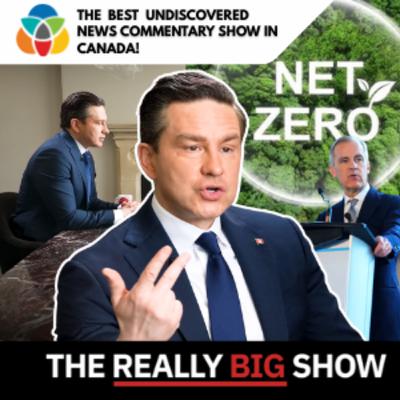
Is Canada sacrificing its economic strength for policies that aren’t delivering results? With energy markets in turmoil around the world, many are asking why a country as resource-rich as Canada still struggles to turn its natural advantages into prosperity.We break down the growing criticism of Net Zero policies, Poilievre’s vision for Canada’s future, and the broader question of why Canadians feel poorer despite living in one of the most resource-rich nations on earth. At the same time, global tensions are escalating with developments in Iran and Venezuela, while the U.S. flexes its influence on the world stage.
Midweek and the temperature in Canadian politics just keeps rising.Today’s show tackles the argument that the country’s current direction isn’t just about bad decisions — it’s about a deeper ideological problem. From economic policy and energy strategy to global positioning and media narratives, critics say the system is increasingly benefiting the few while the majority struggles.We break down Poilievre’s CANZUK push, Carney’s shifting messaging, questions around foreign interference, rising separatist sentiment, healthcare spending versus outcomes, and why Canada is falling behind in research and development. Add in global tensions in the Middle East, shifting alliances in Europe, and the ongoing battle over media credibility — and the midweek conversation is anything but quiet.Another packed Wednesday where the debate is only getting louder.
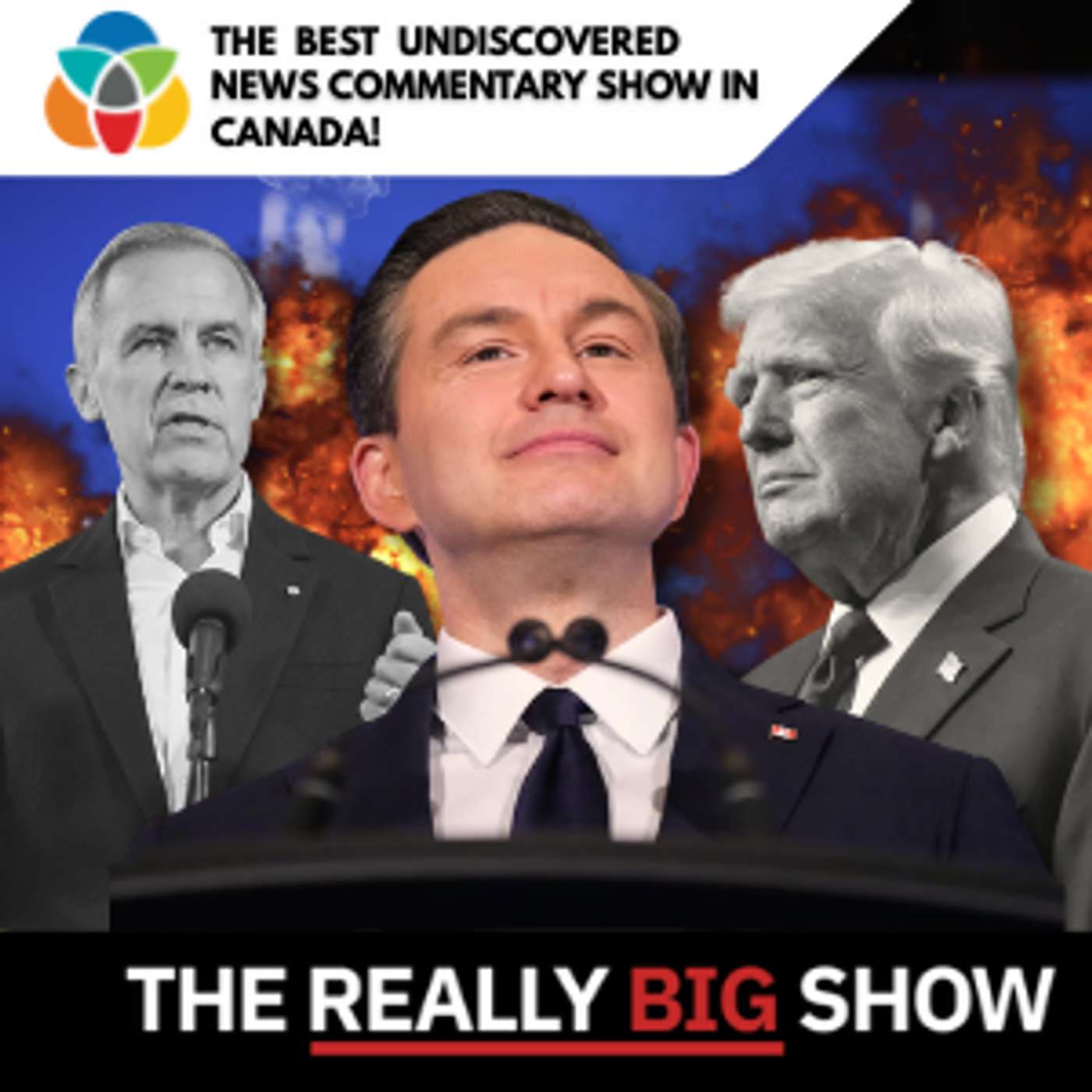
Friday and we’re closing the week with a message that cuts through the noise: America is not our enemy.As trade tensions, media narratives, and political rhetoric heat up, we examine the growing divide between reality and the storyline being sold to Canadians. From Poilievre’s pushback on China, to Carney’s overseas diplomacy, to China suspending canola tariffs, the geopolitics are shifting quickly.At home, housing data is flashing warning signs, questions swirl about government job growth masking deeper weakness, and accountability concerns mount as checks and balances appear strained. Add in looming job cuts, energy deals, infrastructure spending debates, and renewed scrutiny on high-profile political figures — and it’s a full Friday lineup.Last show of the week. Big themes. Bigger consequences.
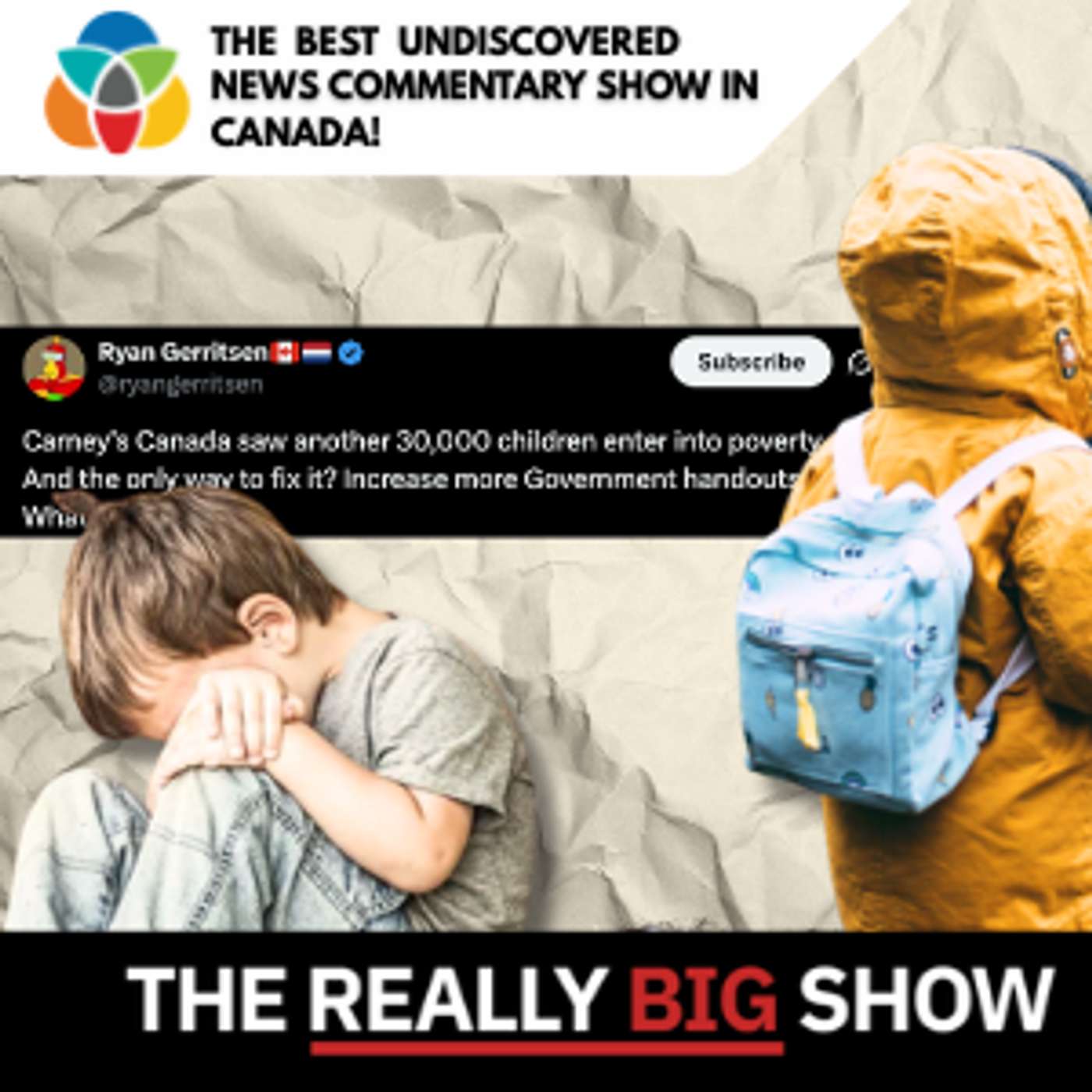
Thursday, February 26 — and the numbers are sobering.Child poverty in Canada has risen to its worst level since 2017, raising serious questions about affordability, policy direction, and who is actually benefiting from record government spending. While banks post strong profits and elites remain insulated, more families are struggling to keep up.We’ll also examine immigration pressures, MAID statistics, China warnings, Cuba tensions, carbon policy fallout, and growing accusations that accountability is being avoided in Ottawa and in the provinces. Add in media credibility debates, BC’s fiscal stress, and reactions to Trump’s latest speech — and it’s a packed midweek show.
Midweek and the contradictions are stacking up.Canada importing LNG from Australia while sitting on massive reserves at home. Bureaucratic games slowing deals. Housing once the pride of the country now sliding to the bottom. Military underfunded, Canada Post bleeding cash, and rail dreams being marketed like lifestyle branding.We break down media narratives, Quebec separatist momentum, Alberta tensions, Eby’s rejected budget, and whether common sense has left the building entirely.At 10:30am, constitutional lawyer John Carpay joins us live to weigh in on democracy, accountability, and where the legal lines are being tested.It’s another packed morning. No filters. No fear. Just the questions that aren’t being asked elsewhere.
Today we break down the growing narrative that blames the U.S. for Canada’s problems while the real structural issues at home go untouched. With Kris Sims from the Canadian Taxpayers Federation joining us, we dig into government spending, food inflation, another ArriveScam-style controversy, and why the military still seems to be an afterthought despite all the rhetoric.We also examine Canada’s falling dollar, housing chaos, immigration policy concerns, China’s strategic interest in Canada, and why media coverage continues to focus on the wrong targets. Add in more Ukraine funding, BC government spin, and Trump set to address the nation tonight — and it’s a packed show.Hard truths, big questions, and a reset on where the real challenges lie.
It’s Monday, and the week is already off to a chaotic start.From cartel violence erupting in Mexico to fresh warnings from the Bank of Canada about a potential “nightmare scenario,” the global and domestic pressures are piling up. We break down Carney’s frequent flyer diplomacy, tariff tensions, and whether any real deals are actually being made. Meanwhile, questions swirl around Canada’s shrinking middle class, real estate dependence, AI disruption, and whether climate policy is about economics or something else entirely.We also tackle free speech concerns, media credibility, Alberta drawing lines in the sand, blame shifting in Ottawa, and why more Canadians feel like the country is losing its footing.
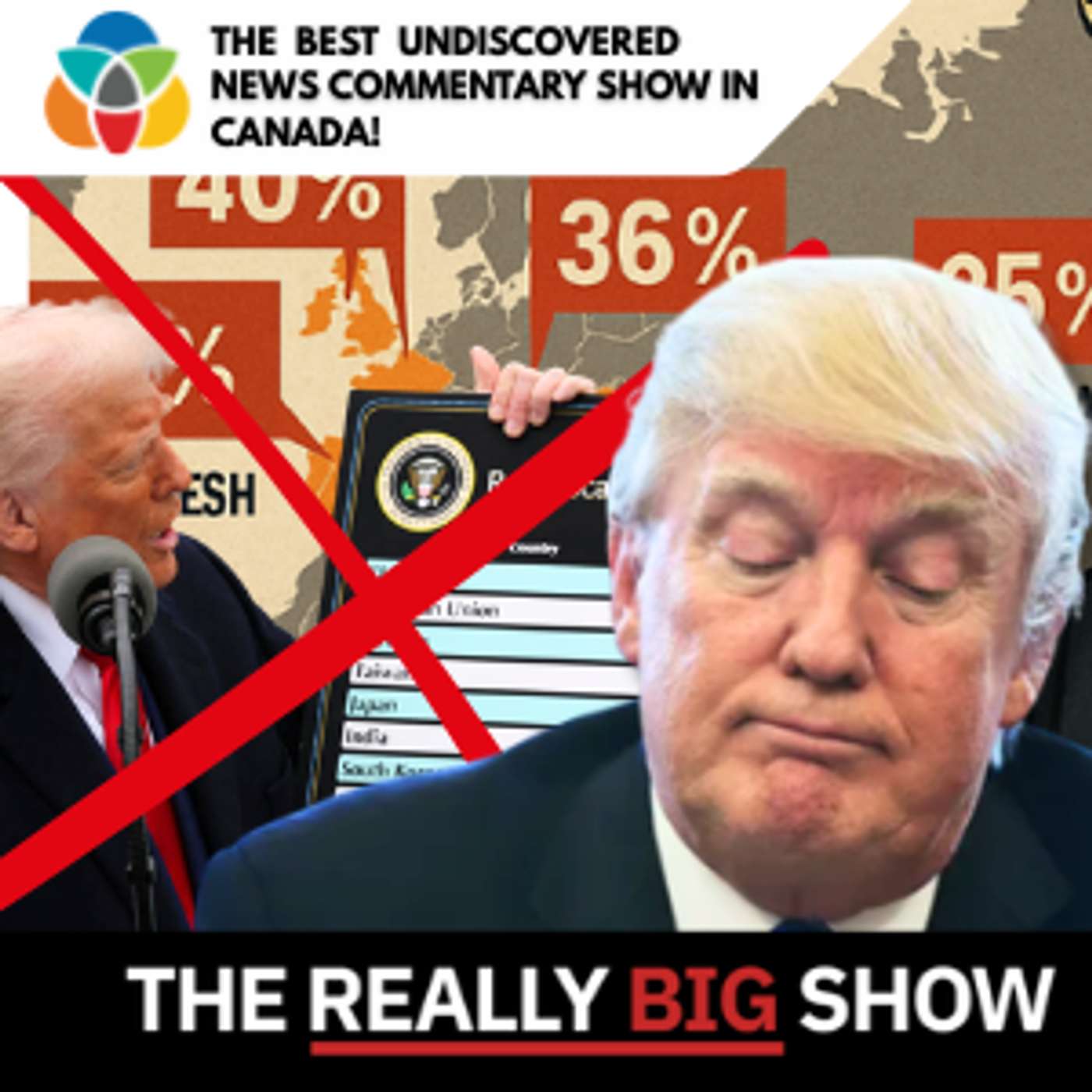
The U.S. Supreme Court strikes down Donald Trump’s global tariff regime, and the ripple effects are immediate. What does it mean for Canada, for trade, and for provinces like BC that are desperate for an economic boost? We break down the fallout, the reactions from Ottawa and Alberta, and whether this changes anything — or just reshuffles the deck.At home, frustration keeps building. Red tape pushing businesses south, slow-moving government promises, energy confusion, elite talking points, and Canadians saying they’ve simply had enough of policies that benefit the few while everyone else pays. Add in separatist talk, Churchill port spending questions, global tensions with Iran, and a political class that seems stuck in grind mode — and it’s another packed show.The world is shifting fast. The question is whether Canada is ready for it.

Comments

Download from Google Play

Download from App Store
 United States