DiscoverOut of the Valley’s Shadow
Out of the Valley’s Shadow
Claim Ownership

Out of the Valley’s Shadow

Author: Aziz Saad

Subscribed: 82Played: 298
Share

Description

Out of the Valley’s Shadow — The Podcast


What happens when freedom becomes procedural?


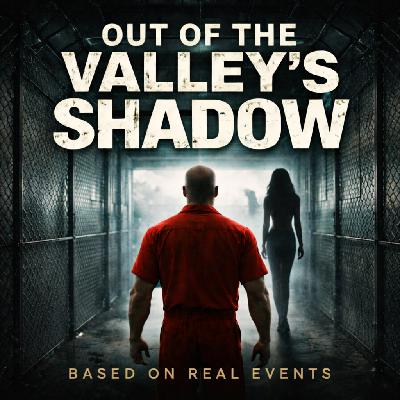
Out of the Valley’s Shadow is a narrative podcast based on a true story about confinement, endurance, and the quiet architecture of love under pressure.


Told through the voice of Adam Saad, the series moves between fluorescent detention corridors, courtroom cross-examinations, and the silent waiting rooms outside. Each episode excavates a moment — a hearing, a phone call, a conversation inside a dormitory that never fully sleeps — and reveals the human tension beneath institutional language.


This is not a political broadcast.
 It is a story about identity tested by systems.
 About dignity negotiated in small rooms.
 About a woman named Aspen who refuses to disappear while the world reduces a man to a case number.


Blending psychological tension, restrained philosophy, and intimate storytelling, Out of the Valley’s Shadow explores what remains when titles, timelines, and certainty are stripped away.


Some stories shout.
 This one listens.


Because sometimes survival is not dramatic.
 It is deliberate.


And sometimes the most powerful resistance is simply refusing to vanish.
6 Episodes
Reverse
Episode 5, “The Big Boys,” follows Adam’s transfer into Delaney Hall and his first night in Unit 5, tracing the claustrophobic intake process, shackles, and conversations with fellow detainees. The episode exposes how private detention operates as a business—classification, bed-days, and routine—while showing the human cost behind the system’s cold mechanics.
Ten years after filing for asylum, the email finally arrived. Just a date. A time. An address. An interview. Everyone told him the same thing: this was routine. His lawyer reviewed the documents, the affidavits, the years of evidence. “You’re not going to get detained.” So the night before, Adam and Aspen tried to treat the next morning like any other. They talked about lunch afterward. They fell asleep tangled together, assuming the day ahead would simply be another step toward closure. The next morning Adam put on his best suit. Armani. Louis Vuitton. A Rolex. He wanted to look like the life he had built in America. But inside a glass office tower in Newark, something shifted. After four hours of questions, the interview ended. The officer rotated the screen and asked him to sign. And then the door opened. Three men stepped inside. “We’re with ICE.” What follows is the moment when a routine immigration interview becomes something else entirely — a quiet, procedural turning point where a life built over years begins to disappear behind institutional doors. In this episode of Out of the Valley’s Shadow, the story moves from an immigration office to a service elevator, from a corporate building to an unmarked van, from certainty to something far less predictable. And for the first time, uncertainty becomes a place with an address.
For the first time, Aspen tells the story of her first date with Adam — entirely from her point of view. In this deeply reflective first date story, Aspen breaks down the psychology of modern dating: what she noticed, what she questioned, and the quiet real-time evaluation that happens when two strong personalities meet. She examines confidence, emotional intelligence, cultural assumptions, and the difference between performance and presence. From late-night conversations to a birthday trip to New York, to standing beside the Statue of Liberty during a Hudson River dinner cruise, Aspen reflects on cross-cultural relationships, vulnerability, ambition, and what it means for a strong woman to be met without being diminished. This episode explores modern love, power dynamics, identity, and intentional dating — without sentimentality or theatrics. It’s a grounded, honest look at attraction, confidence, and what happens when two driven people decide whether the other one is real.
Before detention. Before headlines. Before uncertainty. There was a calendar.  In this reflective episode of Out of the Valley’s Shadow, a physician shares the life he was steadily building in plain sight. Years of training. A growing career. A mortgage. A relationship grounded in commitment. A belief that if you worked, followed the rules, and contributed, stability would follow.  He followed the rules. Filed the paperwork. Paid the taxes. Built the life, he lived the American dream. For ten years, silence felt like safety. But immigration law does not always move in drama. It moves in discretion. Notices. Neutral fonts. Appointments that appear procedural. What begins as paperwork can become suspension. What feels permanent can turn conditional. This episode explores the fragile architecture of belonging in America. The mythology that if you work, contribute, love, and build, stability will follow. The difference between ownership and permission. The quiet power of administrative decision making. And how a life already in motion can be paused without accusation, without verdict, without warning. Nine months without a charge.
 Nine months without a sentence.
 Nine months in between. Before the Valley is not a detention story yet. It is the story of what came before. The illusion of cumulative safety. The assumption that time invested becomes roots. The moment you realize permanence in one system does not guarantee permanence in another. This episode speaks to anyone navigating immigration, asylum, identity, bureaucracy, or the question of what it truly means to belong in the United States. If you have ever believed that structure guarantees security, this chapter will stay with you.
Episode 1: The Lens

Episode 1: The Lens

2026-02-2208:27

What does an immigration final hearing actually look like? No jury.
No dramatic courtroom speeches.
No criminal conviction. Just a screen, a government file, and a decision that determines whether you go home or are removed from the country. In this premiere episode of Out of the Valley’s Shadow, Adam Saad recounts his experience spending nine months in U.S. immigration detention without a criminal charge, culminating in a final hearing conducted through video conference. This episode explores: • What immigration detention is really like
• The difference between criminal court and immigration court
• How due process works inside removal proceedings
• The psychological impact of prolonged detention
• The strain immigration cases place on relationships and families
• How bureaucratic language can quietly reshape a life Through restrained storytelling and first person reflection, Adam takes listeners inside a detention facility, inside a virtual courtroom, and inside the mental discipline required when everything depends on how you are perceived through a lens. At stake is not only legal status, but identity, love, and the future he built with Aspen, the woman waiting outside. This is not a political rant.
It is not a legal lecture.
It is a firsthand account of what happens when freedom becomes procedural. If you are interested in: Immigration law
Asylum and removal defense
ICE detention centers
Immigration court hearings
Human resilience under pressure
Love during incarceration
Stories of due process in America This series is for you. Out of the Valley’s Shadow is based on real events. Subscribe and follow for new episodes exploring immigration detention, legal strategy, identity, and the quiet fight to remain.
Most people think freedom is loud. It isn’t. It is fluorescent lights. Administrative language. A chain fastened politely enough not to bruise. In this premiere episode of Out of the Valley’s Shadow, a man enters U.S. immigration detention and spends nine months without a charge navigating courtroom interrogations, legal uncertainty, and life as a case number inside a detention center. Courtrooms the size of closets.
 Immigration hearings conducted through video screens.
 Detention units where global headlines flicker across televisions while men calculate their cases like engineers of their own survival. This is a true story about immigration detention, courtroom strategy, psychological endurance, and controlled intelligence under pressure. Inside, you learn quickly: anger is expensive. Precision is currency. But this is not just a detention story. It is a love story conducted through collect calls. A chess match played in fluorescent light. A pressure test of identity, loyalty, ambition, and faith not religious faith, but faith in your own mind. He is not a saint. He is not a martyr. He is not a victim. He is an architect of outcomes. The kind of mind that studies the system studying him. Outside the wire fence, a woman refuses to let the narrative collapse. She does not scream. She organizes. She waits. She stands. Each episode moves between interrogation and memory, between immigration court and quiet endurance. Questions fracture into stories. Stories return to the present. The present tightens. You will meet men who crossed oceans for their daughters. Officers who believe they are maintaining order. Lawyers who measure words like surgeons. Systems that speak in passive voice. At the center of it all is one stubborn idea: Conflict does not question love. It tests what it can survive. This podcast explores immigration court, detention life, legal systems, resilience, identity, and survival with discipline rather than outrage. If you have ever been underestimated, this is for you.
 If you have ever loved through uncertainty, this is for you.
 If you believe survival can be deliberate, press play. Based on real events. BRKLupTpIF1TKOaQmhbM
Comments 
loading
