


 Claim Ownership
The Puck: Venture Capital and Beyond
Subscribed: 50Played: 572
Subscribe

© Jim Baer
Description
The Puck: Venture Capital & Beyond showcases the innovative forethought that defines the venture capital world. Join us as we follow the puck and explore what this community has to offer.
Listen as we have in-depth conversations, gaining insights and lessons from well-established VCs, entrepreneurs, and other leading technology experts. We will learn about their successes, challenges, and how they got to where they are today. Along the way we will discover what investors most look for in who they invest in and what to avoid when making your pitch.
We will also follow industry leaders to understand the cutting-edge technologies and trends that continue to shape our world.
Listen as we have in-depth conversations, gaining insights and lessons from well-established VCs, entrepreneurs, and other leading technology experts. We will learn about their successes, challenges, and how they got to where they are today. Along the way we will discover what investors most look for in who they invest in and what to avoid when making your pitch.
We will also follow industry leaders to understand the cutting-edge technologies and trends that continue to shape our world.
116 Episodes
Reverse
America’s healthcare debate has been stuck for decades — framed as a political fight between left and right. But what if that’s the wrong lens entirely?In this episode of The Puck, Jim Baer sits down with economist Joe Antos of the American Enterprise Institute to unpack the real issue: tradeoffs.Who pays? Who gets access? How much innovation do we support — and what are we actually willing to spend?Antos draws on decades of experience inside the Congressional Budget Office, the Office of Management and Budget, and Medicare policy to explain why the system feels broken — and why many of the proposed solutions miss the mark.Key themes include:Why insurance coverage ≠ access to careThe government-created bottleneck behind doctor shortagesHow incentives — not ideology — drive system dysfunctionWhy more subsidies won’t fix the problemThe hidden inefficiencies AI may accelerate instead of solveMedicare, life expectancy, and the actuarial reality we avoidWhere real reform might actually beginAs Antos puts it: “We have a system under pressure — but it created its own pressure.”This is a grounded, pragmatic conversation about how healthcare actually works — and what it would take to make it sustainable.
Why do societies collapse—and what does that tell us about the future of the global economy?In this episode of The Puck, Jim Baer speaks with anthropologist and historian Joseph Tainter, author of the influential book The Collapse of Complex Societies. Tainter’s work explores a powerful idea: the very complexity that allows civilizations to solve problems can eventually become their greatest vulnerability.From the Roman Empire to modern globalization, artificial intelligence, and the rising global demand for energy, Baer and Tainter explore why societies continuously add layers of institutions, technology, and regulation to solve immediate problems—and why those solutions may only buy time.They discuss:Why complexity grows in successful civilizationsThe hidden role of energy in sustaining modern societyWhether AI and innovation can help us grow out of global debtWhy technological breakthroughs may be becoming harder to achieveThe fragility of globalization and supply chainsWhy cultures that think in longer time horizons may have advantagesTainter argues that most civilizational “solutions” are temporary—delaying deeper challenges rather than solving them permanently. Yet history also shows that humanity repeatedly adapts, improvises, and finds ways to move forward.A wide-ranging conversation about complexity, innovation, energy, debt, and the long arc of civilization.
Is the largest financial bubble in history hiding in plain sight?In this episode of The Puck, Jim Baer sits down with veteran market analyst Doug Noland, a longtime chronicler of credit cycles and financial bubbles. Noland argues that today’s risks aren’t just about stocks, crypto, or housing—they’re embedded in the very structure of the global financial system.Drawing on more than three decades of analysis, Noland explains how modern finance has shifted from traditional bank lending to a complex web of hedge funds, repo markets, shadow banking, and government-backed liquidity. The result, he argues, is a global credit system fueled by leverage and speculative liquidity that may now be approaching a dangerous turning point.The conversation explores how hedge funds are using massive leverage in Treasury markets, why private credit and “shadow banking” have become central to the economy, and how AI financing could represent the next stage of speculative lending. If liquidity begins to unwind, the consequences could ripple through markets, private credit, real estate, and technology investment simultaneously.Jim and Doug also examine the difficult policy trap facing central banks: print more money and risk inflation—or tighten conditions and trigger a broader credit unwind.Whether you believe a crisis is imminent or not, this episode offers a deep look at how modern financial systems actually work—and why the next disruption could be very different from the last one.
What happens when record stock prices meet record government debt — and nobody really knows what’s under the hood?
This week on The Puck, Jim Baer sits down with Mark Zandi, Chief Economist at Moody's Analytics, for a wide-ranging conversation on bubbles, private credit, shadow banking, AI exuberance, and the growing tension inside the Treasury market.
Zandi explains:
- Why today’s equity valuations are historically stretched
- Whether AI enthusiasm is becoming institutionalized speculation
- How serious the private credit and shadow banking risks really are
- Why commercial real estate and crypto may be deflating “gracefully”
- The real fragility inside the U.S. bond market
- Whether government debt is manageable — or quietly destabilizing
Is the economy stronger than it looks? Or more fragile than we think?
A thoughtful, honest debate about systemic risk, fiscal reality, and what could derail 2026.
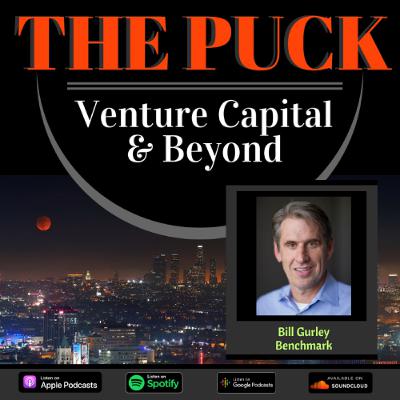
What do most people regret at the end of their careers? According to legendary venture capitalist Bill Gurley, it’s not the failures — it’s the risks they never took.
In this wide-ranging episode of The Puck, Jim Baer sits down with Gurley — longtime Benchmark partner, early Uber board member, and author of Running Down a Dream — for a candid conversation on boldness, bubbles, AI speculation, venture capital cycles, and America’s structural challenges.
Gurley reflects on:
- Why “boldness regret” weighs heavier than failure
- How to turn passion into mastery — and why most people don’t
- The resume arms race and why young people feel trapped
- AI: real revolution or speculative excess? (Hint: both)
- Venture capital’s evolution — from discipline to burn-at-all-costs
- Why five-year AI forecasts may set companies up to stumble
- Regulatory capture in healthcare and education
- State-by-state competition as America’s hidden advantage
From Austin’s music scene to Silicon Valley’s capital cycles, Gurley delivers battle-tested insights from decades at the center of tech’s biggest waves.
If you care about careers, markets, AI, or the future of the U.S. economy, this episode is essential listening.
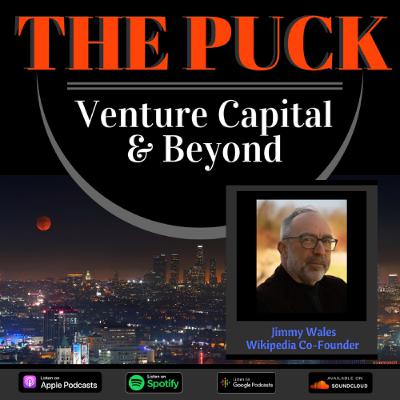
What does it take to build trust on the internet—at global scale?
In Episode 111 of The Puck: Venture Capital & Beyond, Jim Baer sits down with Jimmy Wales, co-founder of Wikipedia, to explore why trust—not technology—is the true foundation of open systems.
Wales reflects on Wikipedia’s evolution from a scrappy experiment into one of the most trusted information sources in the world, and why neutrality, transparency, and purpose matter more than algorithms or scale. The conversation centers on ideas from his new book, The Seven Rules of Trust, including how institutions earn trust, how they lose it, and what it takes to build systems that last.
Baer and Wales also dive into:
Why trust across journalism, politics, and business is collapsing
How Wikipedia governs bias without a single “editor-in-chief”
The role of funding models in preserving independence
Why AI systems struggle with transparency and attribution
What the decline of local journalism means for democracy
How open debate—done fairly—can be a path toward social cohesion
In a world increasingly shaped by algorithms, outrage, and information overload, this episode offers a sober, thoughtful look at how trust is built—and why it remains indispensable.
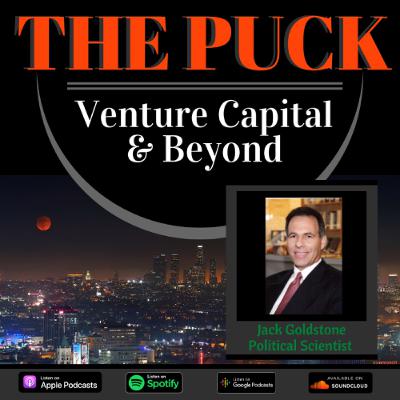
In this episode of The Puck, Jim Baer sits down with Jack Goldstone—the Hazel Chair Professor of Public Policy at George Mason University and one of the world’s foremost scholars on revolutions and social change. Goldstone has advised the National Intelligence Council, the World Bank, and the U.S. State and Defense Departments. His latest book, Revolutions: A Very Short Introduction, distills decades of research into why societies unravel—or endure.
Jim and Jack explore how rising debt, political polarization, elite fragmentation, and declining public trust mirror the early stages of historic revolutionary periods. They discuss China’s global ambitions, the impact of social media algorithms, the stagnation facing America’s working class, and what it would take to restore stability and rebuild a shared national purpose. Goldstone offers a candid assessment of where the U.S. stands in 2025—and why compassionate, unifying leadership will be essential to avoid deeper turmoil.
A wide-ranging and timely conversation about the forces reshaping democracy, the risks ahead, and the paths that might still lead America toward renewal.
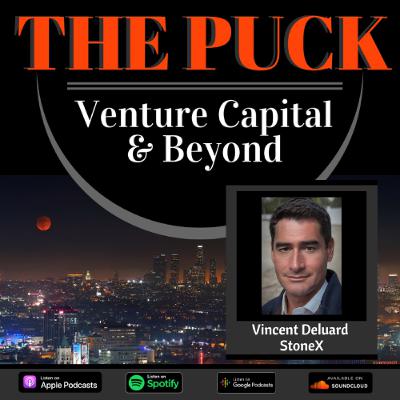
Global macro strategist Vincent Deluard joins Jim Baer for a direct, data-driven conversation about the new economic regime taking shape in the U.S. and around the world. Deluard explains why fiscal dominance now outweighs monetary policy, why inflation is proving sticky, and how generational inequality, asset bubbles, and rising deficits are reshaping politics and markets.
A concise, unfiltered look at the forces shaping the next decade of markets, democracy, and everyday life.
On this week's episode, Jim talks with Matthew Continetti about the real story of the American Right—how conservatism evolved, why populism exploded, and what’s coming next. Sharp history, clear analysis, and a roadmap for understanding today’s politics.
Jim Baer talks with Francis Fukuyama — author of The End of History and the Last Man — about the fragility of liberal democracy in an age of rising authoritarianism and deepening polarization.
They discuss political decay in the U.S., geopolitical threats from Russia and China, and the outsized influence of social media. Fukuyama also shares a practical vision for rebuilding effective governance through an “abundance agenda” that cuts through gridlock and proves democracy can still deliver.
In this episode of The Puck, Jim Baer sits down with acclaimed author and journalist Oliver Burkeman, whose books Four Thousand Weeks and The Antidote have reshaped how we think about time, productivity, and perfectionism.
Oliver introduces ideas from his forthcoming book Meditations for Mortals, exploring how embracing our human limitations—rather than denying them—opens the path to deeper meaning and accomplishment. From the illusion of “getting on top of everything,” to the paradox of slowing down in a productivity-obsessed culture, Oliver offers insights drawn from philosophy, spirituality, and his own journey.
Together, Jim and Oliver reflect on mortality, imperfectionism, and how practices like patience, Sabbath rest, and journaling can help us live saner, more fulfilling lives.
Musician turned therapist Dan Koch joins The Puck: Venture Capital & Beyond to share his remarkable journey from touring in a rock band to pioneering research on spiritual abuse. We explore how faith and psychology intersect, why polarization is so hard to overcome, and why Dan believes ‘reality itself can be the medicine.’ A conversation about healing, curiosity, and hope in a divided world.

As violence flares in Gaza and the Middle East teeters on the edge of a wider crisis, The Puck turns to Aaron David Miller — a senior fellow at the Carnegie Endowment for International Peace; a former State department analyst and negotiator in Republican and Democratic Administrations — for an unflinching look at the road ahead. In this urgent conversation, we explore the hard lessons of history, the role of U.S. leverage, the realities of Israeli and Palestinian leadership, and whether there’s any realistic path to a lasting peace after October 7th. A candid, deeply informed discussion that cuts through political soundbites to the heart of one of the world’s most intractable conflicts.
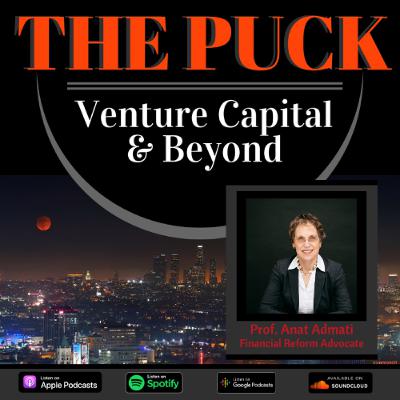
Stanford professor and financial reform advocate Anat Admati joins Jim to unpack the growing fragility in our financial system and the dangerous myths still shaping public policy. From shadow banking and corporate debt subsidies to crypto hype and post-crisis denial, Admati pulls no punches in exposing the deep structural flaws threatening American capitalism.
They discuss why financial regulations continue to fall short and what real reform would look like. Admati explains how public anger after 2008 was hijacked by dangerous narratives, why crypto's promise is largely a mirage, and how shadow banking adds new layers of systemic risk. She makes the case for genuine accountability—in both government and the private sector—and warns of the moral cost of allowing “profitable misconduct” to persist.
This is a candid conversation about fragility, power, truth—and what it will take to rebuild a system that actually serves society.
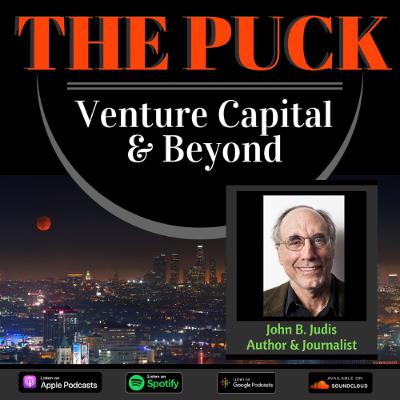
Journalist and author John B. Judis joins Jim to unpack the political chaos of our time—from Trump and Sanders to shifting class loyalties, cultural divides, and the fragile state of democracy. Is a new political order emerging—or are we just stuck in a dangerous loop?
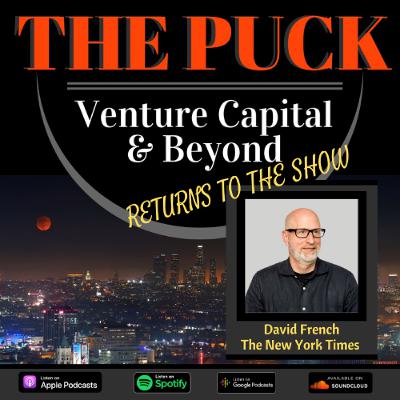
David French returns to The Puck for a wide-ranging, deeply thoughtful conversation about the state of American democracy, the risks of authoritarianism, and the spiritual costs of political polarization. A New York Times columnist and former National Review editor, French unpacks the dangerous allure of strongman politics, reflects on Israel’s evolving strategy in the Middle East, and explores how each of us can preserve trust and truth in chaotic times.
We talk about why institutions feel broken, how Trump uses public spectacle as a shield against accountability, and what it means to live with faith and courage in a disorienting moment. From LA protests to global power shifts, from misinformation to moral resilience—this is an episode you don’t want to miss.
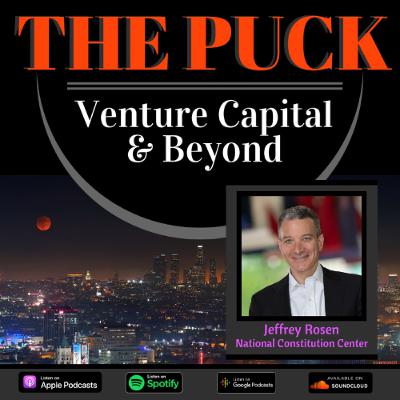
To mark our 100th episode and launch of Season 9, Jim Baer sits down with Jeffrey Rosen—President and CEO of the National Constitution Center, host of We the People, and author of The Pursuit of Happiness: How Classical Writers on Virtue Inspired the Lives of the Founders and Defined America.
In this rich and timely conversation, Rosen explores how ancient moral philosophy shaped the Founders' vision of happiness—not as pleasure, but as virtue. Together, we examine how this wisdom can help us navigate today’s polarized world, restore purpose to leadership, and reconnect with practices of self-mastery, deep reading, and spiritual discipline.
Rosen also shares his personal journey, the impact of Stoic philosophy, and his unexpected path into songwriting. A profound and inspiring dialogue for anyone seeking meaning, clarity, and civic renewal.
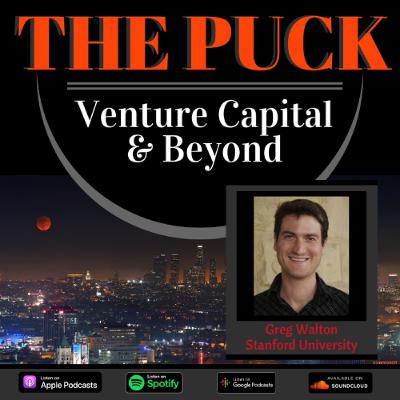
Stanford psychology professor Greg Walton returns for his second appearance on The Puck to discuss his new book, Ordinary Magic: The Science of How We Can Achieve Big Change with Small Acts. Three years after our first conversation, Greg rejoins the show to reflect on how our world has changed—and how subtle, science-backed interventions can help us find common ground and foster belonging.
From reducing recidivism among formerly incarcerated youth to encouraging empathy across political divides, Greg explores how grace, discomfort, and deep listening can drive meaningful transformation.
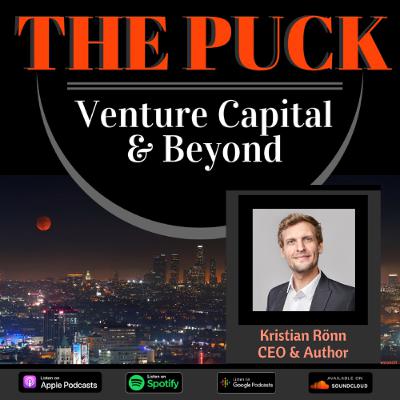
On this episode of The Puck: Venture Capital & Beyond, Jim Baer sits down with Kristian Rönn—climate tech founder, AI ethicist, and author of The Darwinian Trap—to explore how humanity can escape destructive evolutionary forces and build a future rooted in shared values, long-term thinking, and spiritual renewal. A conversation about risk, responsibility, and hope at the edge of history.

In this powerful episode of The Puck, Jim Baer sits down with Michelle Goldberg—New York Times columnist, author, and longtime voice of progressive political commentary—for a deep and timely conversation. They explore how the Trump era reshaped institutional norms, the growing influence of conspiracy thinking, and the failures of both political parties to inspire and govern effectively.
From Goldberg’s early activism to her critiques of Gavin Newsom’s media strategy, this discussion pulls no punches. They dive into the crisis of civic trust, the role of the media and social platforms in fueling division, and what it might take to inspire a new generation of political leadership.
Whether you’re left, right, or somewhere in between, this episode is a must-listen for anyone seeking clarity in a chaotic time.

Comments

Download from Google Play

Download from App Store
 United States