


 Claim Ownership
Christ is the Answer Podcast
Subscribed: 1,339Played: 84,185
Subscribe

© Billy Kangas
Description
📻 Christ is the Answer, hosted by Fr. John Riccardo, offers compelling Catholic teaching and heartfelt pastoral insights, helping listeners draw closer to Christ and navigate life's challenges with faith and hope.
christistheanswer.substack.com
christistheanswer.substack.com
839 Episodes
Reverse
Episode 726 · The Ten Commandments, Part 1Most of us learned the Ten Commandments by memorizing them, and that may be why they feel like a list of restrictions. Fr. John Riccardo starts at the beginning, with who was speaking, to whom, and where, and shows why the commandments read very differently once you know that. Then he looks at the first one, which he says is the most frequently broken and the least confessed.This episode helps answer: Is God the Enemy of Happiness?In this episode* We become who we are by our free choices, so the reward of choosing good is actually becoming good.* The crisis in the church is that too many people know about God but do not know Him personally; biblical knowledge is relational, not just information.* The Ten Commandments were given to freed slaves in the desert after 450 years in Egypt, so God is first a liberator, not a rule-maker.* The commandments are addressed to 'you' singular, written by the 'finger of God,' and never arbitrary: they flow from His love and aim at our happiness.* The first commandment has three parts: God is God and you are not; do not try to make an image of Him or box Him in; and do not let anything enslave you, from addictions to work, money or reputation.* Catholics can make and venerate images because God took on flesh in Jesus; we do not worship the statue but the God it points to. Feelings of God come and go, as Mother Teresa's long dryness shows.Timestamps* 1:02 – Why be good? Our choices make us who we are* 3:03 – Do I know God, or just know about Him?* 9:14 – What does God want for us? The devil's oldest lie* 16:37 – Context is everything: the Israelites, Egypt and Exodus 3* 23:16 – Where to find the commandments; what Jesus did with them* 30:31 – The first commandment: no other gods, no images, no slavery* 41:56 – Two reflection questions, then Q&A on images and knowing GodScriptureHosea 4:6, Amos 8:11, John 17:3, Exodus 3:7-8, Exodus 20:1-6, Deuteronomy 5:6-21, Deuteronomy 30:19, Matthew 5:17-30, Romans 13:10, Numbers 21:4-9, John 3:14, Colossians 1:15, Exodus 32Also mentionedCatechism of the Catholic Church, paragraphs 2052-2557; Baltimore Catechism; Theology of the Body (St. John Paul II); Second Council of Nicaea (8th century, on sacred images); Mother Teresa“The Ten Commandments are, in essence, obliging us to be happy. Thou shalt be happy. I made you for happiness, and these are the way to find it.” – Fr. John RiccardoInstruction on the Catechism of the Catholic Church and other topics critical to those seeking answers to life’s greatest questions. This is a public episode. If you'd like to discuss this with other subscribers or get access to bonus episodes, visit christistheanswer.substack.com/subscribe
Episode 725 · Theology of the Body Introduction, Part 3Is the Church down on the body? Fr. John Riccardo says the opposite is true, and uses the first chapters of Genesis and St. John Paul II's Theology of the Body to show that your body is the visible expression of your person, made for self-giving love. This is the densest session of his four-part introduction, and it explains why the Fall wounded how we see each other.This episode helps answer: What Does Your Body Say About Who You Are?In this episode* The Church does not despise the body; John Paul II's Theology of the Body gives a biblical anthropology to counter a dualism that treats the body as a thing the 'real me' merely uses.* The body is a sacrament of the person: bodily actions say something true or false, as with a husband and wife's self-gift or Judas' kiss in Gethsemane.* Original solitude shows that humans are unlike the animals, and that it is not good to be alone; we find ourselves only in the sincere gift of self.* Original unity: man and woman share equal dignity and complementary difference, and their communion of love images the Trinity and is fruitful.* Original nakedness is the 'peace of the interior gaze' before the Fall, where no one was used or objectified.* The Fall began by accusing the Giver; it broke the relationships with God, the earth, ourselves, and each other, and lust is objectifying a person; the problem is the will, not the body, and it can be healed.Timestamps* 3:06 – Why John Paul II gave the Theology of the Body and how it is structured* 9:16 – Adequate anthropology and the charge that the Church is down on the body* 13:23 – Dualism, euthanasia, and the body as a sacrament of the person* 20:42 – The four horizons: beginning, fall, redemption, resurrection* 25:45 – Original solitude, original unity, and the communion of persons* 42:29 – Original nakedness and the hermeneutic of the gift* 44:29 – The Fall, shame, lust, and concupiscenceScriptureGenesis 1-3, Matthew 19:3-9, Matthew 5:8, Matthew 22:23-33, 1 Corinthians 15, 1 Corinthians 4:15, Luke 22:48Also mentionedTheology of the Body (St. John Paul II); Humanae Vitae (Paul VI); General audiences of 1979-1984; Catechism of the Catholic Church“The problem now isn't with our bodies. The problem is with our wills. That's where the disorders happen.” – Fr. John RiccardoInstruction on the Catechism of the Catholic Church and other topics critical to those seeking answers to life’s greatest questions. This is a public episode. If you'd like to discuss this with other subscribers or get access to bonus episodes, visit christistheanswer.substack.com/subscribe
Episode 861If you only talk to God when something is going wrong, Fr. John Riccardo says you are in good company, and also missing the point. In a talk to a men's gathering, he explains why prayer is about receiving God himself, and why the sign that it is working is that you start to look more like Jesus.This episode helps answer: What Is Prayer Really For?In this episode* Prayer takes time, attention, and effort; you cannot be a disciple without praying, because discipleship is a relationship, and relationships need time.* Jesus' puzzling words to the royal official suggest that we often come to God only when we have a need, which saddens a Father who wants to give us himself.* Saying prayers is different from praying: it is the difference between talking to your wife with the remote in your hand and turning off the TV.* Check your motive: are you praying to appease God or because you love to be with him, even when prayer feels dry?* The goal of prayer is the gift of God himself, and the fruit is conformity to Christ, above all growing in mercy.* We need others to hold us accountable, as in a small men's fellowship, and we need Scripture, especially the Gospels, as the best personal trainer for the soul.Timestamps* 3:05 – A family's tragedy and why a priest has nothing to give without prayer* 6:09 – The royal official's son, and why we come to God only in need* 10:15 – Three essentials of prayer: time, attention, and effort* 29:05 – The object of prayer: God's gift of himself, and being changed* 36:20 – Three reflection questions on accountability, motive, and friendship* 40:24 – Why men need a small fellowship to grow in faith* 44:30 – Homily: Scripture is the single best personal trainerScriptureJohn 4:46-54, Luke 11:9-13, Matthew 6:6, Matthew 6:33, Matthew 7:21-23, Philippians 3:12-14, 2 Timothy 3:14-17, Exodus 17:8-13Also mentionedJesus of Nazareth (Pope Benedict XVI); What Happens at Mass (Fr. Jeremy Driscoll); United States Catholic Catechism for Adults; Fulton Sheen on the holy hour; St. Ignatius of Loyola, Spiritual Exercises“There's a huge difference between saying prayers and praying. It's really easy to say prayers. It's a lot more difficult to pray.” – Fr. John RiccardoInstruction on the Catechism of the Catholic Church and other topics critical to those seeking answers to life’s greatest questions. This is a public episode. If you'd like to discuss this with other subscribers or get access to bonus episodes, visit christistheanswer.substack.com/subscribe
Episode 806 · Lord, I Believe, Help My Unbelief, Part 4The twelve apostles had already dropped their nets, and they were still jockeying for the best seats. In this closing Mass homily of a parish mission, Fr. John Riccardo says that is good news for anyone afraid they have to be perfect first, and then asks what is at stake for the people in your life if you stay on the edge of the pool.This episode helps answer: Why Does Following Jesus Matter So Urgently?In this episode* Dropping the nets does not mean abandoning your family or becoming perfect; the apostles had left everything and were still clueless and competing.* The Gospel of the third passion prediction shows that the cross is the plan, not a tragic accident: Jesus came to give his life as a ransom.* Jesus says his blood is poured out for many, not to limit his love, but because God desires all to be saved and will not force anyone's freedom.* Every baptized Catholic is a missionary; Christ has no hands, feet, or voice now but ours, and the gospel was entrusted to us rather than to angels.* Fr. John challenges the comfortable assumption that salvation is automatic; if it were easy, the scourging and the cross would make no sense.* Imagine standing before the Lord and a friend asks why you never told them; Fr. John invites listeners to say yes without needing clarity about the future.Timestamps* 1:55 – Fr. Steve Matea's testimony: three times he dropped his net* 17:41 – Homily begins: the thresholds, and the image of the pool* 20:48 – Why the Gospel fits: twelve disciples who dropped the nets and are still jockeying* 23:59 – What is at stake: salvation, and why 'for many' rather than 'for all'* 28:04 – Every Catholic is a missionary, and Christ has no hands but ours* 30:12 – The friend who never heard the gospel from you, and the call to say yes* 37:20 – Bonus: a Sunday-night testimony of faith, stars, and cancerScriptureMatthew 20:17-28, Luke 5:1-11, Romans 10:14-15, Galatians 2:20Also mentionedForming Intentional Disciples (Sherry Weddell); Catechism of the Catholic Church on salvation and non-Christians; Spe Salvi (Pope Benedict XVI); St. Patrick's Breastplate“Christ has no other hands now but yours. He has no other feet now but yours. He has no other voice now but yours.” – Fr. John RiccardoProgram #806 Mission #4Series: 2013 Lenten MissionDescription: Instruction on the Catechism of the Catholic Church and other topics critical to those seeking answers to life’s greatest questions. This is a public episode. If you'd like to discuss this with other subscribers or get access to bonus episodes, visit christistheanswer.substack.com/subscribe
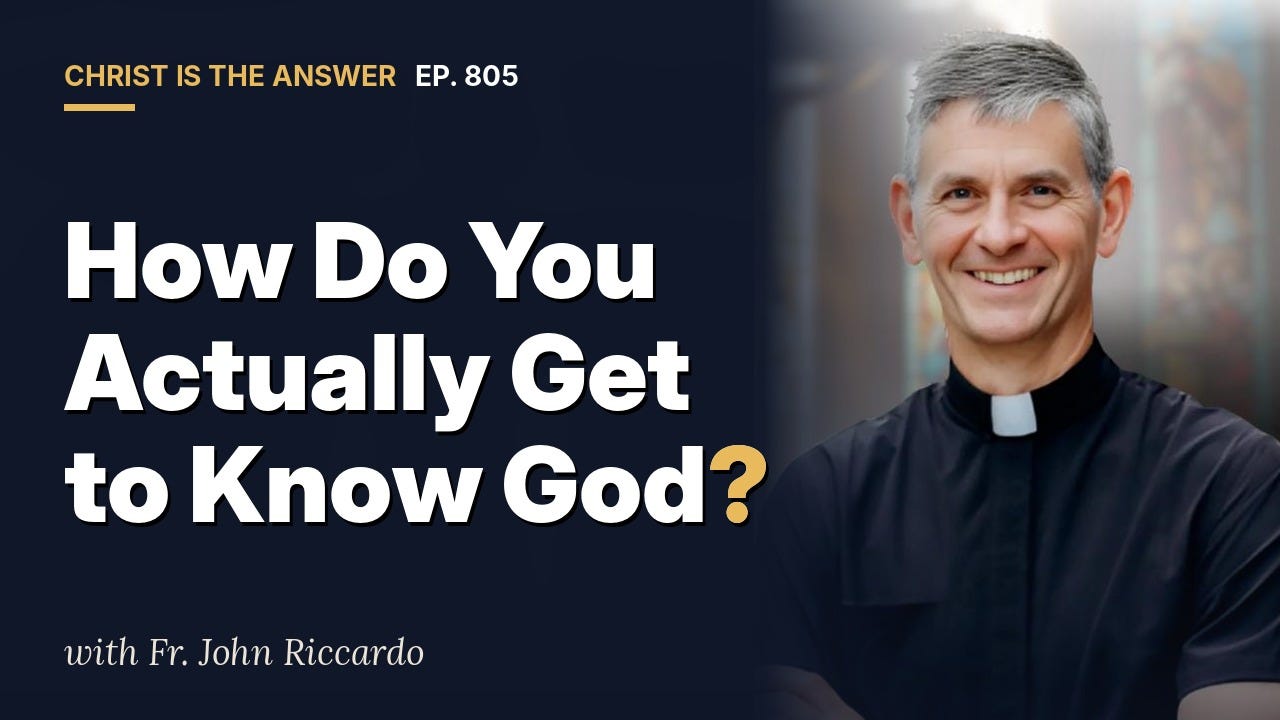
Episode 805 · Lord, I Believe, Help My Unbelief, Part 3Most of us can say what we believe about Jesus and still feel we do not really know him. Fr. John Riccardo tells how he finally stopped running from God's call, and gives one concrete dare for anyone standing at the edge of the pool: one hour a week in front of the Blessed Sacrament.This episode helps answer: How Do You Actually Get to Know God?In this episode* Naming exactly what you fear is often what makes it possible to drop the nets; vague fear cannot be brought to the Lord.* Most people stall between curiosity and openness, but Fr. John thinks many in the pews are already at seeking, holding the nets and wondering whether to let go.* You cannot surrender to someone you do not know; the way to know the Lord is the way you know anyone, by wasting time with him.* The Mass presupposes conversion, and the Eucharist is the summit, so many people struggle to benefit from it until they have begun the climb in prayer.* Fr. John shares his own story of running from Jesus' call for years before saying yes, and says surrender brought freedom he never expected.* Eucharistic adoration works because it is simple: expose Jesus and he does the work; Fr. John describes his own daily holy hour of listening, intercession, and journaling.Timestamps* 10:24 – Spiritual warfare, and the bishop who was told he looked holy* 16:37 – Fear of greatness, and naming what you are afraid of* 21:44 – Fr. John's own story: Jesus in the car and years of running* 31:56 – Why the Mass is not enough by itself, and the mountain image* 36:03 – The night at Divine Child when Jesus said it is easy, just put me out* 44:24 – The dare: one hour a week, and what to do in adorationScriptureJohn 12:32, John 6:67-69, Philippians 3:12-14, Matthew 4:18-20Also mentionedForming Intentional Disciples (Sherry Weddell); St. John Paul II on not settling for mediocrity; Strengthen Your Brothers (Archbishop J. Peter Sartain); Prayer of Abandonment (Charles de Foucauld); St. Patrick's Breastplate; Eucharistic adoration“I cannot surrender to somebody I don't know. The only way I get to know the Lord is the way I get to know anybody else: I waste time with him.” – Fr. John RiccardoProgram #805 Mission #3Series: 2013 Lenten MissionDescription: Instruction on the Catechism of the Catholic Church and other topics critical to those seeking answers to life’s greatest questions. This is a public episode. If you'd like to discuss this with other subscribers or get access to bonus episodes, visit christistheanswer.substack.com/subscribe

Comments

Download from Google Play

Download from App Store
 United States