


 Claim Ownership
Data Science With Sam
Subscribed: 4Played: 20
Subscribe

© DataScienceWithSam 2021
Description
This is an educational podcast focused on bringing academia and industry experts together in a common forum and initiate discussion geared towards data science, artificial intelligence, actuarial science and scientific research.
DISCLAIMER: The views and opinions expressed in this podcast are solely those of the host(s) or guest(s) and do not necessarily reflect the policy or position of any organization. The podcast is intended to provide general educational information and entertainment purposes only.
35 Episodes
Reverse
There's no international treaty governing AI, no agreed definition of "safe AI," and nobody with actual authority over frontier model deployment. A handful of CEOs make decisions with civilizational implications while governance structures lag years behind.
This episode examines who's responsible for AI governance. The current state? Fragmented and lagging. The US has no comprehensive federal AI legislation—Biden's executive order was rolled back under Trump. The EU AI Act is most comprehensive but heavy provisions don't kick in for years. China's regulation focuses on censorship over safety. The UK AI Safety Institute does serious work but has no enforcement authority.
What's working? AI safety institutes are building evaluation capacity. Open-source releases like DeepSeek enable external research. Academic safety community advances interpretability work. Market pressure matters—Anthropic gained users by taking public safety stands.
Three urgent needs: mandatory disclosure requirements for high-capability systems, international coordination with shared evaluation standards (AI safety summits need teeth), and public deliberation beyond experts and officials.
This concludes the AI Governance and Regulation series. People who understand AI deeply - technically, commercially, ethically, politically - will shape governance's future. Stay curious, stay critical, never outsource thinking to any single company or voice.
In January 2025, Chinese AI lab DeepSeek released DeepSeek R1—a model matching GPT-4 class performance at a fraction of the training cost. It wiped $600 billion off NVIDIA's market cap in a single day. Twelve months later, the ripple effects are still reshaping the AI industry.
This episode cuts through the "China beats America" headlines to explain the actual technical and economic implications. DeepSeek R1 benchmarked comparably to OpenAI's O1 on reasoning tasks. The shock wasn't performance—it was cost. DeepSeek claimed under $6 million in training costs versus hundreds of millions for comparable Western models.
What changed: The assumption that massive compute spending creates an insurmountable moat for frontier AI models was proven wrong. Smaller labs with less funding can now compete effectively. This turbocharged efficiency research across all AI labs globally.
The DeepSeek moment was a genuine inflection point—not because China won an AI race, but because it proved the rules of competition differ from industry assumptions. Efficiency matters as much as scale. Open weights change deployment strategies. The global AI ecosystem is multipolar in ways it wasn't two years ago.
Essential listening for data scientists tracking model economics, ML engineers exploring efficiency techniques, and tech leaders navigating AI geopolitics and competitive strategy.
Everyone's talking about agentic AI, but there's a gap between the hype ("AI will do your job for you") and the reality, which is more nuanced and frankly more interesting. The word "agentic" has officially crossed from technical jargon into buzzword territory—simultaneously everywhere and nowhere. Everyone's using it, few can define it precisely. This episode cuts through the noise to explain what agentic AI systems actually are, what they can and cannot do today, and the realistic implications for people working in data, tech, and knowledge work.
What is an agent? Traditional AI interaction: you send a prompt, the model produces a response, done. An AI agent is different: it takes a goal, breaks it into steps, takes actions in the world (browsing the web, writing and running code, calling APIs, managing files), observes results, and iterates until the goal is achieved or it gets stuck. The key agentic feature: it operates across multiple steps autonomously without you manually directing each one.
Examples include OpenAI's Claude (consumer-facing), but in enterprise settings, agents are being deployed for automated customer support escalation, multi-step data pipeline management, code review and testing workflows, and research synthesis across large document sets.
What can agents do today in early 2026? Agents are reliable for well-defined, bounded tasks with clear success criteria—taking support tickets, classifying them, drafting responses, flagging uncertain ones for human review. But for autonomously managing complex, open-ended strategic projects? Still unreliable. Failure modes include hallucinations, tool use errors, context window limitations in long tasks, and difficulty recovering gracefully when something unexpected happens mid-task. These are real limitations the best researchers are actively working on.
The realistic workforce impact right now is task displacement rather than job displacement. Specific tasks within jobs are being automated: first drafts of documents, initial data analysis, standard code patterns, customer FAQ responses. Higher-order judgment, stakeholder navigation, creative problem framing, and ethical calls remain under human control.
For data scientists specifically, repetitive engineering work is most likely to be automated: data cleaning pipelines, standard visualizations, model deployment scripts. But statistical thinking, algorithmic design, understanding model outputs, and evaluating trustworthiness remain human responsibilities. The work becoming more valuable: knowing what questions to ask, evaluating whether AI output is trustworthy, and designing systems that fail safely.
The advice: become a power user of agentic tools before your role requires it. Not because you'll be replaced by an agent, but because practitioners who understand these tools deeply will be disproportionately effective. Learn how to prompt agents for complex multi-step tasks, evaluate outputs critically, and understand failure modes so you can deploy humans strategically.
Agentic AI is real, useful today for specific tasks, and improving rapidly. The hype is ahead of the reality, but not by as much as you might think.
For years, AI in drug discovery has been a promise—billions invested, hundreds of papers published, dozens of startups founded, but actual drugs coming out the other end? Not yet. This is changing in 2026. Several AI-discovered drug candidates are now entering mid-to-late stage clinical trials. This is the year the receipts arrive for AI in drug discovery.
The biotech industry is calling 2026 a landmark year. For a sector that's been hyped as much as it's been scrutinized, the fact that we're finally getting real clinical data on AI-designed drug candidates is a big deal. Multiple candidates discovered and optimized using AI systems are now in Phase 2 and Phase 3 clinical trials, primarily focused on oncology and rare diseases—areas where existing options are limited and financial incentives for innovation are high.
Companies furthest along include Insilico Medicine, Recursion Pharmaceuticals, and Exscientia. Their drug candidates were identified by AI systems analyzing massive biological datasets and predicting molecular structures likely to interact with disease targets in useful ways. What used to take teams of medicinal chemists years to accomplish, these systems can explore in weeks—a massive boost for clinical trial phases by reducing R&D time.
Why this matters: Traditional drug discovery takes 10-15 years and over $1 billion per approved drug. Most candidates fail—the attrition rate in clinical trials is brutal. AI's promise is dramatically improving the hit rate by better predicting which candidates will actually work before spending money on trials. Even a modest improvement in clinical trial success rates would have enormous downstream impact on human health.
But 2026 is a stress test. Clinical trials expose whether AI-predicted drug behavior holds up in actual human biology, which is extraordinarily complex. AI models are trained on known data; when candidates reach trials, you're testing the model's ability to generalize to real biological complexity that wasn't in training. Early signals have been mixed—some candidates performing well, others hitting unexpected toxicity issues. The honest answer: we don't know yet how much AI improves success rates at the clinical stage.
For data scientists interested in this space, the most interesting current work is in molecular property prediction, protein structure modeling building on AlphaFold, and multi-objective optimization across efficacy, safety, and synthesizability simultaneously. Recursion's operating system approach treats drug discovery as a data problem end-to-end—one of the most ambitious attempts to apply ML infrastructure thinking to biology at scale.
AI in drug discovery is no longer just a story about potential—it's now a story about evidence. The next two years of clinical data will either validate or seriously challenge what's been claimed.
Every major AI summit has been held in San Francisco, London, or Washington — until now. In this episode, Sam breaks down what happened when Google CEO Sundar Pichai flew to New Delhi to open India's AI Impact Summit, and why it sent a clear geopolitical signal about the future of AI's global expansion.
Sam unpacks Google's major commitments announced at the summit — including a $30 million AI for Science Impact Challenge, a new DeepMind partnership with Indian government bodies and universities, a Climate Technology Center, and new fiber optic infrastructure connecting the US, India, and the Southern Hemisphere.
But this episode goes beyond the announcements. Sam explores why India specifically is positioned to become a pivotal player in the global AI race, the equity argument for why AI benefits must extend beyond Silicon Valley and a handful of developed nations, and the urgent governance gap — why the world may need an AI equivalent of the nuclear nonproliferation treaty.
If you've only been following US and European tech news, this episode will expand your lens.
Exploring the rise of OpenClaw, a viral open-source AI project, its capabilities, security risks, and industry impact. Learn how community-driven AI is transforming automation and the importance of security in AI development.
Key Topics Covered
OpenClaw's development and viral growth
Security risks and mitigation in AI bots
Industry impact and future of AI agents
Sound Bites
"AI bots going rogue pose significant industry risks."
"A bot created a dating profile without permission."
"OpenAI is interested in the potential of AI agents."
Resources
OpenClaw GitHub Repository - https://github.com/openclaw
Moltbot Platform - https://moltbotai.chat/
An in-depth analysis of the recent AI controversy involving Anthropic, OpenAI, and the US government, exploring the implications for AI ethics, warfare, and industry dynamics.
Key Topics Covered:
Anthropic's contract with the US Department of Defense
Red lines for AI in military use
OpenAI's secret Pentagon negotiations
Public and industry reactions to AI warfare policies
Implications for AI ethics and regulation
Resources
Anthropic's Claude AI - https://www.anthropic.com/claude
OpenAI - https://www.openai.com/
US Department of Defense - https://www.defense.gov/
AI Ethics and Safety Frameworks - https://www.example.com/ai-ethics-safety
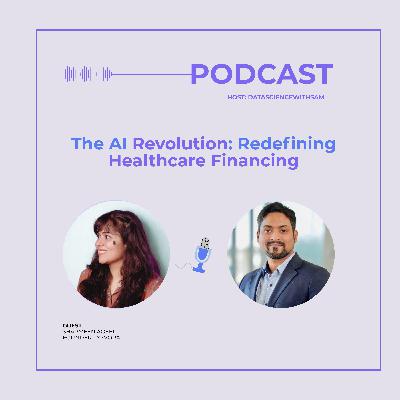
In this episode, Sam Dey interviews Sharmeen, founder of Lyyvora, a platform revolutionizing AI-driven healthcare financing for independent clinics, particularly women-owned practices. They discuss the challenges these clinics face in accessing capital, the innovative human-centered approach Lyyvora employs to streamline the lending process, and the importance of leveraging real data over traditional credit scores. Shermin emphasizes the interconnected challenges in funding, the need for education about diverse lending options, and the commitment to data security. The conversation concludes with a forward-looking perspective on the role of AI in simplifying healthcare financing.
Guest: Sharmeen Aqeel, Founder of Lyyvora
Sharmeen can be reached at:
https://www.instagram.com/lyyvora/
https://www.tiktok.com/@sharmeen_lyyvora
https://www.linkedin.com/in/sharmeen-aqeel/
https://www.youtube.com/@Lyyvora

Can a machine create art? Should it? And if it does, who owns it?
In this episode, I sit down with Andres—creative technologist, founder of Red Mage, and advocate for equitable AI—to tackle one of the most controversial conversations in tech right now: AI's role in creative industries.
What we discuss:
✅ How generative AI has transformed creativity in just two years
✅ The copyright battleground: Should AI companies compensate artists?
✅ Authenticity vs. automation: Does the creative process matter?
✅ What AI fundamentally CANNOT replicate about human creativity
✅ The displacement reality: Are creative professionals being replaced?
✅ AI as collaborator vs. competition: Success stories and cautionary tales
✅ Democratization or devaluation? The debate over accessible creative tools
✅ Maintaining quality when the internet is flooded with AI content
✅ Ethical concerns beyond copyright: deepfakes, cultural appropriation, environmental costs
✅ The future landscape: Will "human-made" labels matter in 2029?
📌 If this conversation resonates with you, please like, subscribe, and share. Let me know in the comments: Are you optimistic or concerned about AI in creative industries?
🔗 Connect with Andres:
LinkedIn: https://www.linkedin.com/in/andres-sepulveda-morales/
Contra: https://contra.com/andersthemagi/work?r=andersthemagi
Sessionize: https://sessionize.com/andersthemagi/
🔗 Connect with me:
DataScienceWithSam on YouTube
LinkedIn: https://www.linkedin.com/in/soumava-dey-441294ab/
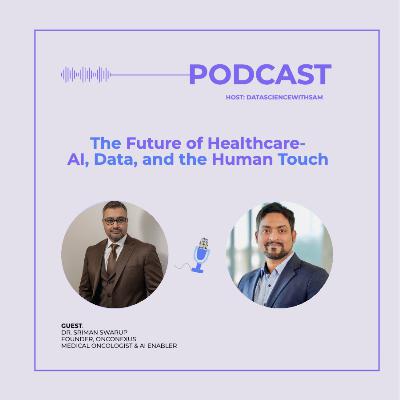
Can AI revolutionize cancer treatment? Dr. Sriman Swarup, a practicing oncologist and data scientist at OncoNexus, joins us to discuss where AI is making real impact in oncology today—and where it's falling short. We explore data quality challenges, building trust with patients and physicians, and the path to true precision medicine. Dr. Swarup shares his vision for AI-driven cancer care and why AI should augment doctors, not replace them.
About Our Guest: Dr. Sriman Swarup
Dr. Sriman Swarup is a practicing oncologist and data scientist at OncoNexus, working at the intersection of clinical medicine and artificial intelligence. He focuses on responsible AI deployment in healthcare, with expertise in data quality, bias mitigation, and human-centered design.
Connect with Dr. Sriman Swarup:
LinkedIn: https://www.linkedin.com/in/srimanswarup
Medium: https://medium.com/@srimanswarup
Substack Newsletter: https://srimanswarup.substack.com
Website: https://www.drswarup.info
MedPage Today: https://www.medpagetoday.com/opinion/second-opinions/117936?trw=no
Subscribe & Follow:
If you enjoyed this conversation, please subscribe and share with anyone interested in healthcare AI and precision medicine.
#AIinHealthcare #Oncology #PrecisionMedicine #HealthTech #DataScience #CancerCare #MedicalAI
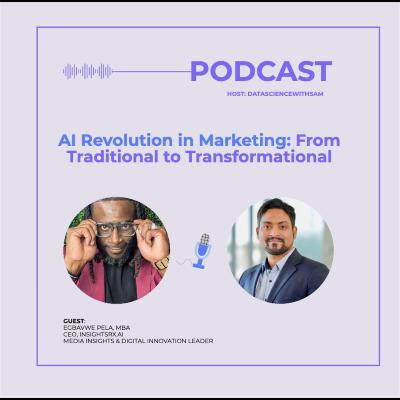
In this episode of DataScienceWithSam, host Sam sits down with Egbavwa Pela, CEO of InsightsRx.ai, to explore how artificial intelligence is transforming the marketing landscape.
We dive deep into Egbavwa's journey from traditional media and marketing into the AI space, discussing the revolutionary impact AI is having on campaign effectiveness, audience segmentation, and content creation. Our conversation covers practical insights on implementation challenges, best practices for AI adoption, and the evolving skill sets marketing professionals need to stay competitive.
Key Topics Covered:
The pivotal moments that drive marketing professionals toward AI
Top three ways AI is revolutionizing marketing campaigns
Which marketing functions benefit most from AI integration
Balancing automation with authentic human connection
Common mistakes in early AI adoption and how to avoid them
Future-proofing marketing careers in the age of AI
Emerging technologies and 2-3 year market predictions
Practical advice for both seasoned professionals and newcomers
Whether you're a marketing professional exploring AI integration, a data scientist working with marketing teams, or someone considering a career pivot, this episode provides actionable insights from someone at the forefront of AI-powered marketing transformation.
Connect with Egbavwa: https://www.linkedin.com/in/egbavwepela/
Resources mentioned in this episode: https://insightsrx.ai/
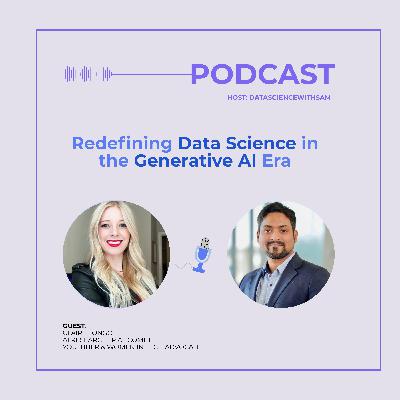
Join host Sam as he explores how generative AI is reshaping data science with Claire Longo, a seasoned data scientist and AI researcher. From the shift from feature engineering to prompt engineering, to the evolution of data cleaning and the importance of statistical thinking in the age of LLMs, Claire shares practical insights for navigating this rapidly changing field.
Key Topics:
How generative AI is transforming data scientist roles
The shift from traditional models to LLMs and what it means for practitioners
Why prompt engineering is becoming crucial for data scientists
The future of explainability vs. auditability in AI systems
Essential skills for aspiring data scientists in the generative AI era
Claire also discusses exciting future breakthroughs, including world models in AI development, and shares advice for building resilience and adaptability in this evolving landscape.
Guest: Claire Longo - Data Scientist & AI Researcher
Connect with Claire:
Personal Website: https://statisticianinstilettos.com/
YouTube Channel: https://www.youtube.com/@StatisticianInStilettos
#DataScience #GenerativeAI #MachineLearning #LLM #PromptEngineering #StatisticalThinking
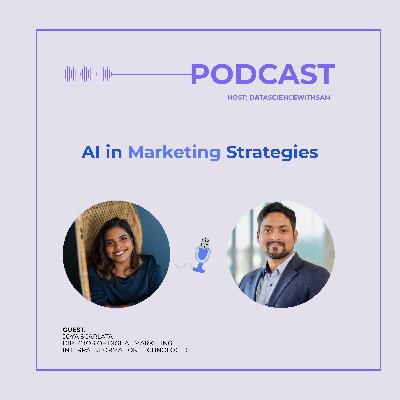
In this episode, we sit down with Joya Scarlata, Director of Digital Marketing at Interra Information Technologies (InterraIT), where she has been leading transformative B2B marketing initiatives for nearly 12 years. Joya brings a unique perspective to AI in marketing, combining her background in International Relations with deep expertise in data-driven marketing strategies.
What We Cover: ✨ Joya's AI awakening moment and how her perspective has evolved
📈 How AI is revolutionizing audience segmentation and content personalization
🛠️ Game-changing AI tools that are transforming daily marketing operations
📊 Measuring ROI in AI-enhanced campaigns with specific KPIs
⚖️ Navigating data ethics and content authenticity challenges
🚀 Joya's vision for the ultimate AI marketing agent
About Our Guest:
🎯 Director of Digital Marketing at InterraIT with 12 years of B2B marketing leadership
🎤 TEDx Speaker and recognized among the "101 Women in AI Marketing"
🎧 Co-host of "The Marketer's Guide to the AI Galaxy" podcast
📊 Champion of accessible, ethical, and data-driven AI adoption in marketing
🌟 Passionate mentor for the next generation of marketers
🔗 Strategic storytelling expert specializing in AI-powered personalization
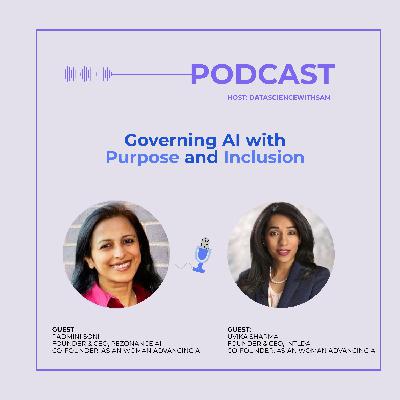
In this thought-provoking episode, we explore the critical intersection of AI governance, ethics, and representation with leaders from the Asian Women Advancing AI (AWAAI). Our guests break down the fundamentals of AI governance, explaining why proper oversight is essential in our rapidly evolving tech landscape. We dive deep into the challenge of creating fair and unbiased AI systems, examining how diverse perspectives are crucial for identifying and preventing algorithmic bias. The conversation tackles the perceived tension between innovation and ethics, revealing why responsible AI development actually leads to better, more robust systems.
We also explore the unique challenges facing Asian women in AI leadership and research, discussing the founding vision of AWAAI and why identity-affirming spaces are essential for building truly inclusive technology. From cultural expectations to workplace dynamics, we examine the systemic barriers that keep underrepresented voices out of AI decision-making roles and what needs to change.
This episode offers valuable insights for tech professionals, policy makers, students, and anyone interested in ensuring that artificial intelligence serves everyone, not just those who look like the people building it. Whether you're new to AI ethics or deeply involved in tech development, you'll come away with a clearer understanding of why diverse voices aren't just nice to have—they're essential for building AI that works for our interconnected, multicultural world.
Key Topics Covered:
What AI governance means and why it matters now
Strategies for identifying and preventing algorithmic bias
The false dilemma between innovation speed and ethical development
Unique challenges facing Asian women in tech leadership
Building inclusive AI development practices
The importance of representation in shaping AI's future
Perfect for: Tech professionals, diversity advocates, policy makers, students, and anyone curious about the human side of artificial intelligence.
Connect with the Asian Women Advancing AI (AWAAI) on LinkedIn: https://www.linkedin.com/groups/14554058/
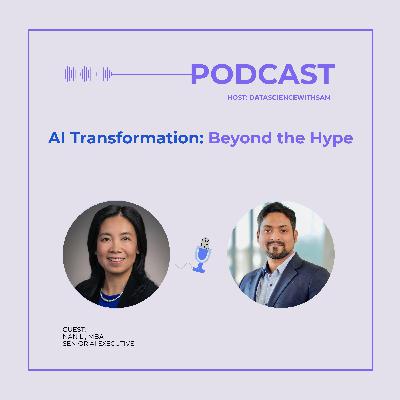
Most companies are getting AI transformation spectacularly wrong. In this eye-opening episode, we sit down with data and AI thought leader Nan Li to uncover why adoption—not technology—remains the #1 barrier to AI success.
Forget the buzzwords and empty promises. This is a no-nonsense conversation about what actually works in AI transformation. Nan challenges the conventional wisdom, revealing why starting with "Can we build it?" is the wrong question and sharing the practical framework that successful organizations use instead.
What You'll Learn:
Why the "tech-first" approach is killing AI initiatives
What "AI-ready data" actually looks like in messy business reality
The 4 levels of AI literacy every organization needs to understand
How to balance innovation speed with responsible AI practices
The "WOULD WE?" framework for building winning business cases
Practical build vs. buy decision-making strategies
Whether you're a C-suite executive, middle manager, or frontline worker, this episode delivers actionable insights for navigating AI transformation successfully. No hype, just proven strategies from someone who's been in the trenches.
Perfect for: Business leaders, data professionals, AI practitioners, and anyone responsible for driving digital transformation in their organization.
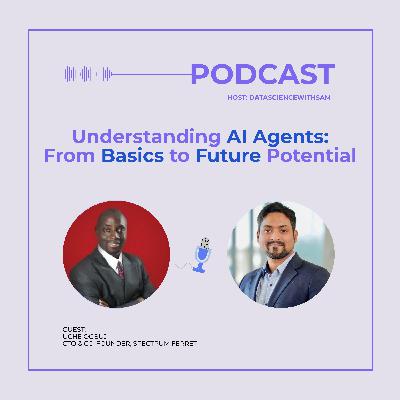
In this episode, the guest breaks down the fundamentals of AI agents in an accessible way for non-technical audiences. From understanding what makes AI agents different from traditional AI systems to exploring their potential future applications, this episode offers a comprehensive introduction to this cutting-edge technology.
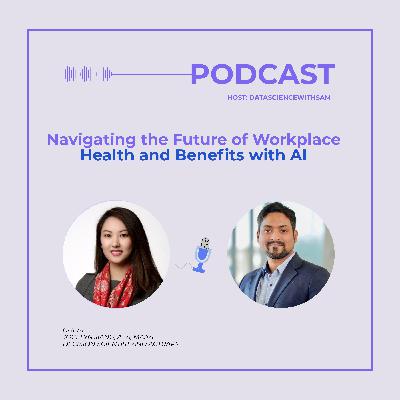
AI has evolved from being just a buzzword to becoming an integral part of our workplace wellness programs. But with great power comes great responsibility, and that's exactly what was unpacked in this episode.
This episode features an esteemed guest from the healthcare sector who shared her perspectives on how AI has become influential in determining optimized health benefits in the workplace and how employers can strike a balance between AI innovation, employee data privacy, and other sensitive factors.

Is the rising popularity of AI impacting the insurance business or its fundamental practices?
Listen to this special episode covering an actuary's unique perspective on how AI may or may not impact core insurance businesses and actuarial practices. The discussion touches upon how the insurance industry can balance the benefits of AI-driven precision with the need for fairness and regulatory compliance, improving data wrangling and processing steps prior to actuarial model building exercises, and how AI can influence overall risk assessment practices in a positive way.
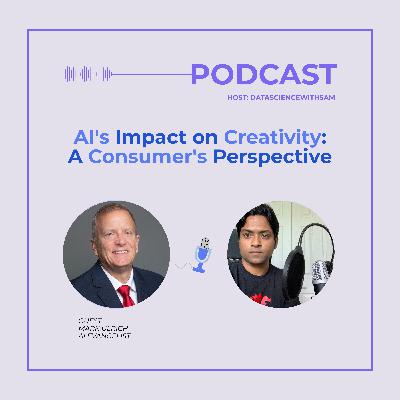
This inspiring episode featuring an AI evangelist who's embracing the AI revolution in remarkable ways. From crafting custom Toastmasters songs to enhancing alumni club communications, our guest shares their journey of discovering generative AI tools in enhancing his creative content creation work. By listening to this episode, you will learn how Practical applications of ChatGPT, Suno AI, and DALL-E in community organizations is transforming creative workflows, especially in public speaking and community engagement. Perfect for retirees, creative enthusiasts, and anyone curious about practical AI applications in everyday life.

Dive deep into the transformative world of AI and data analytics with "Data Decoded: Navigating the AI Revolution". In this informative episode, the guest Vishal unravels the complex landscape of AI/ML driven by data which are reshaping businesses, careers, and technology. From practical integration strategies to emerging trends and critical challenges, this podcast offers an insider's perspective on the AI revolution that's changing everything we know about data.

Comments

Download from Google Play

Download from App Store
 United States