


 Claim Ownership
Foreign Policy ProvCast
Subscribed: 47Played: 384
Subscribe

© All rights reserved
Description
Providence is a journal of Christianity and American foreign policy equipping the American mind to engage the real world.
108 Episodes
Reverse
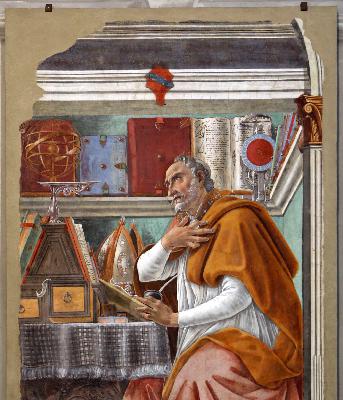
Why is it important for Christians to read—from the great classics to contemporary works? What does it mean to embrace a broad, liberal arts education from a Christian perspective? Providence Managing Editor James Diddams is joined by Nadya Williams—Contributing Editor at Providence, Books Editor at Mere Orthodoxy, and Interim Director of the MFA in Creative Writing at Ashland University—to explore these questions and to consider why, in an age of AI and increasingly dehumanizing technologies, reading texts that illuminate the human condition as a reflection of God may be more important than ever. Articles referenced: Nadya Williams. "A People Without Culture: What the End of Reading Truly Means." Providence: A Journal of Christianity & American Foreign Policy, June 6, 2024. https://providencemag.com/2024/06/a-people-without-culture-what-the-end-of-reading-truly-means/. Nadya Williams. "Christopher Lasch, Plain Writing, and Democracy." Providence: A Journal of Christianity & American Foreign Policy, July 2, 2025. https://providencemag.com/2025/07/christopher-lasch-plain-writing-and-democracy/. Nadya Williams. "To Read Is Human." Providence: A Journal of Christianity & American Foreign Policy, September 8, 2025. https://providencemag.com/2025/09/to-read-is-human/. Nadya Williams. "The Conservative Christian Literary Ecosystem." Providence: A Journal of Christianity & American Foreign Policy, February 17, 2026. https://providencemag.com/2026/02/the-conservative-christian-literary-ecosystem/. Nadya Williams. "'Like a Western Suit that Doesn't Fit': Shūsaku Endō, Christianity, and Japan." Providence: A Journal of Christianity & American Foreign Policy, March 31, 2025. https://providencemag.com/2025/03/like-a-western-suit-that-doesnt-fit-shusaku-endo-christianity-and-japan/. James Diddams. "The Real Problem at Wheaton College." First Things, November 30, 2022. https://firstthings.com/the-real-problem-at-wheaton-college/
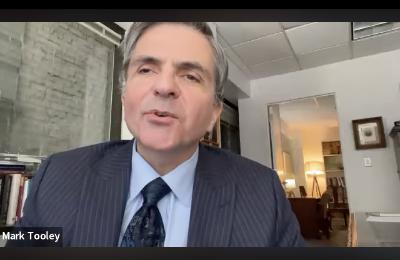
Providence editors Marc LiVecche, Mark Tooley, and Robert Nicholson are joined by Redeemer Universitry's Robert Joustra to discuss the U.S.-Israeli campaign against Iran, nearly three weeks since the start of Operation Epic Fury on February 28th. While there may be just cause in striking Iran, is this a prudent usage of American political capital for President Trump and for future American leaders? If the U.S. fails at regime change or significantly weakening Iran for years to come, will the U.S-Israeli campaign be counted as a failure a generation from now? Mark, Marc, Robert, and Robert discuss.
When Christians attempt to derive political principles from the New Testament absent the context of the Old Testament, the result is sloppy political theology. But why is that? Providence Magazine Managing Editor James Diddams is joined by Tim Milosch, lecturer in politics at Biola University and Providence Contributing Editor, to discuss how the moral framework of the Old Testament can help Christians better understand the teachings of Jesus and the apostles in the New Testament. In particular, Milosch and Diddams examine three major excesses in contemporary evangelical political theology: propheticism, pacifism, and cosmopolitanism. Each represents a legitimate category of political reflection that can serve an important role, but which can also become distorted when detached from the interpretive lens of the Old Testament. Milosch and Diddams also discuss how the Vietnam War contributed to a significant shift in how the Bible's message was interpreted. Articles referenced: Milosch, Tim. "Our Political Theology Shouldn't Start at Romans 13." Providence: A Journal of Christianity & American Foreign Policy, November 2023. https://providencemag.com/2023/11/our-political-theology-shouldnt-start-at-romans-13/ Milosch, Tim. "'Jesus Christ: Refugee' and Other Fallacies in the Immigration Debate." Providence: A Journal of Christianity & American Foreign Policy, February 2025. https://providencemag.com/2025/02/jesus-christ-refugeetm-and-other-fallacies-in-the-immigration-debate/ Milosch, Tim. "Solomon: The Archetype of a Just Ruler." Providence: A Journal of Christianity & American Foreign Policy, May 2025. https://providencemag.com/2025/05/solomon-the-archetype-of-a-just-ruler-1/

Providence Managing Editor James Diddams and Executive Editor Marc LiVecche are joined by Redeemer University Professor of Politics and International Robert Joustra to discuss Operation EPIC FURY in its ethical and strategic dimensions. Can we expect to see a flowering of democracy in Iran soon as a result of President Trump's attacks on Iran's theocratic regime? Are these attacks in accordance with the tenets of Just War Theory? How will Trump cast the results of the U.S. and Israeli strikes on Iran, both in the best and worst case scenarios? Articles referenced: Joustra, Robert. "Which Is More Durable: Iran's Regime or Trump's Commitment to Regime Change?" Providence. March 2, 2026. https://providencemag.com/2026/03/which-is-more-durable-irans-regime-or-trumps-commitment-to-regime-change/. Kosc, Jozef Andrew. "Iran's Enduring Apocalyptic Political Mythology." Providence. September 17, 2024. https://providencemag.com/2024/09/irans-enduring-apocalyptic-political-mythology/. Kosc, Jozef Andrew. "Thousands of Paper Cuts, Then a Nuclear Bomb: Georges Sorel, French Anarchism, and Iran's Revolutionary Warfighting Doctrine." Providence. October 21, 2024. https://providencemag.com/2024/10/thousands-of-paper-cuts-then-a-nuclear-bomb-georges-sorel-french-anarchism-and-irans-revolutionary-warfighting-doctrine/. Diddams, James. "Striking Iran Will Not Change the Long-term Strategic Picture—America Should Still Do It." Providence. June 19, 2025. https://providencemag.com/2025/06/striking-iran-will-not-change-the-long-term-strategic-picture-america-should-still-do-it/.
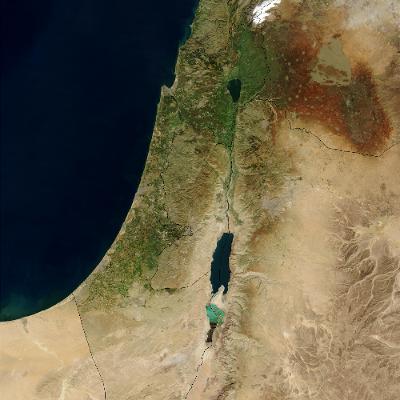
On the second anniversary of the Hamas massacre of October 7, 2023, the Provcrew sits down to review Donald Trump's proposal for ending the war. Although it's a good plan with significant support, many ambiguities and questions remain. Will the Arab states step up? Will the Israeli far-right bring down the Netanyahu government? And will Hamas fighters really put down their weapons? Turning closer to home, the crew then takes up the Trump Pentagon's new national defense strategy which centers on "hemispheric security" in North and South America. Is this just rhetoric for domestic politics? What does it mean for our competition with China?
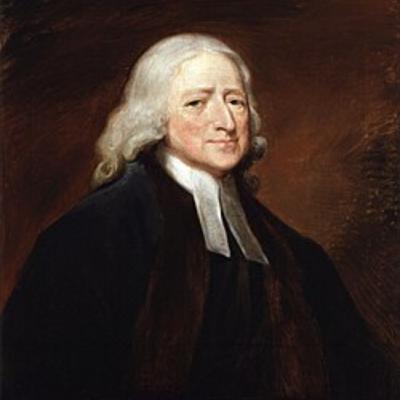
(…actually, Wesley was a teetotaler so not possible.) Ladies and gentlemen, the Provcrew is at war. "Can you be a Wesleyan Protestant and a Christian realist?" The battle lines are drawn. Providence editor Mark Tooley, a Methodist Christian realist, says yes; editor at large Robert Nicholson, a non-Methodist who knows about John Wesley's optimistic theology, is skeptical. To break the deadlock, they hosted Methodist theologian and Reinhold Niebuhr scholar Robin Lovin to set the record straight. Sin, grace, anthropology, eschatology, nationalism, fascism—they got to all of it. And the outcome was surprising.
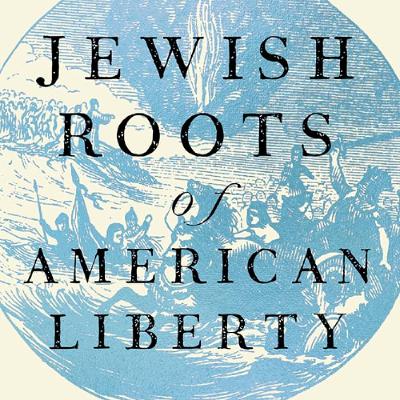
The shocking assassination of Charlie Kirk is a wakeup call for Americans of every stripe. What is happening to our society? How can we fix it—and where do we start? In a fascinating conversation with Wilfred McClay and Stuart Halpern, authors of a new book entitled The Jewish Roots of American Liberty: The Impact of Hebraic Ideas on the American Story, the Provcrew discusses the pivotal place of the Judeo-Christian heritage in US history and how we can reclaim it in troubled times. Here's the link to their book: https://www.encounterbooks.com/books/jewish-roots-american-liberty/

In a weird twist of history, the United States has spent the bulk of its diplomatic energy everywhere but its own backyard: the Western Hemisphere. President Trump has vowed to change that, wisely re-prioritizing Latin America after years of neglect, but may be undermining his chances of success with a counterproductive tariff policy that (ironically) resembles those of many failing/failed Latin American countries—at least, that's what Providence contributor Eric Farnsworth argues in his recent essay, "Is America Becoming Latin America?" In today's episode, Mr. Farnsworth defends and explains his argument, fielding questions like: Is America really becoming like Latin America, and if so how? What is the backstory of US-Latin America relations until now? What are the similarities and differences between our two cultural blocs? And why does Latin America matter to the US beyond issues of illegal migration, crime, and area denial (historically, to European empires, the USSR, and now to the Chinese Communist Party)? But Farnsworth goes further, extrapolating from the Latin America case to the world at large, showing how US trade policy can either be the backbone of a successful grand strategy or its soft underbelly, and makes some fascinating proposals for grounding an "Americas first" foreign policy in more than just domestic politics. Articles: "Is America Becoming Latin America?" by Eric Farnsworth in Providence Magazine, published August 9, 2025 - https://providencemag.com/2025/08/is-america-becoming-latin-america/ "An Americas First Foreign Policy" by Marco Rubio in The Wall Street Journal, published January 30, 2025 - https://www.wsj.com/opinion/an-americas-first-foreign-policy-secretary-of-state-rubio-writes-western-hemisphere-too-long-neglected-a81707b0?st=3nswYm&reflink=desktopwebshare_permalink "In an Insecure World, Americans Should Look South" by Eric Farnsworth in Barron's, published June 18, 2024 - https://www.barrons.com/articles/latin-trade-brazil-costa-rica-chips-tech-manufacturing-trade-8769a40f "The U.S. has more in common with South America than Europe" by Sam Goldman, published published September 22, 2021 in The Week - https://theweek.com/politics/1005146/the-us-has-more-in-common-with-south-america-than-europe
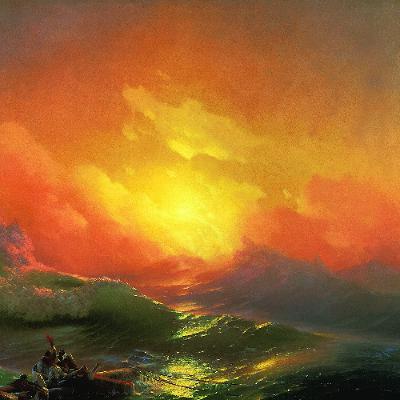
In an essay commemorating the end of World War II, Providence editor Dr. Paul Miller argues that increased global anarchy and democratic decline are pushing US towards another global war. "The question is not whether there will be conflict," Miller writes, "but when, what kind, and how large." In this episode of the Provcast, editor at large Robert Nicholson asks Miller to unpack his argument and respond to those who might see him as "Chicken Little"—or the Trojan priestess Cassandra, as he describes it in the essay—who warns of disasters that never come. Is the US really doing that badly? Are we really facing the possibility of World War III? Moving from Russia and China to our own backyard, Miller explains his reasoning in light of the last five years with typical verve. He touches on the Afghanistan withdrawal, the Alaska summit, the problem with "spheres of influence" thinking, and the (few) times he feels Trump got it right. Admitting that his warnings may strike some as hollow, he adds: "Don't forget what happens at the end of the Boy Who Cried Wolf. There is a wolf in that story."

On August 6, 1945 at 8:15 AM, US forces dropped a new kind of bomb—one which harnessed the very power of the sun—on the Japanese city of Hiroshima. The devastation was total and unprecedented: some 70,000 Japanese died in the blast and tens of thousands more by year's end. The event marked the start of new era in international politics and of a long-running public debate that continues today. Did President Truman make the right decision? Was the atomic bombing of Hiroshima (and later Nagasaki) moral or immoral? In this episode, Robert Nicholson sits down with McDonald Scholar of Ethics, War, and Public Life Marc LiVecche to talk through these questions in light of the historical record. Decades of study have led LiVecche to rule Truman's decision the best moral choice in light of the alternatives—but this conclusion seems more controversial than ever. Walking through arguments and counter-arguments, LiVecche responds to some of the more common objections and makes the case—carefully but confidently—that the use of atomic weapons in 1945 was indeed necessary and just. Stick around for the end for scattered musings on what it all means for American foreign policy today. Send comments and questions to jdiddams@theird.org or snipe directly at: mlivecche@providencemag.com
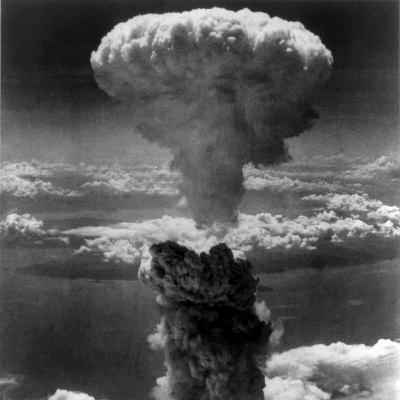
Taking a break from guest interviews, the Provcrew (Tooley, Diddams, LiVecche, Nicholson) meets up to discuss a few big topics looming above the current news cycle. First, they talk through a recent Washington Post article from George Will arguing the need for more clarity about the nature and purpose of Western civilization. Moving between domestic and international politics (and a fair bit of philosophy and theology), each crew member lays out his understanding of the "West," its significance in 2025, and the choices that lie before us (including Diddams' belief that the choice may be, as he puts it, "Bari Weiss or Protestant Franco"). Next, in light of the upcoming 80th anniversary of the atomic bombing of Hiroshima, the crew reflects on the apparent paradox of Western values and weapons of mass destruction. How should we feel about atomic weapons and the events of August 1945? How does the annihilation of two Japanese cities at the end of World War II mess with, or clash with, Judeo-Christian values? What lessons might Hiroshima and Nagasaki impart to current debates about morality and international politics, especially as we contemplate the potential weapons soon available through artificial intelligence? Stay tuned to the end for LiVecche's preliminary musings on why some Americans on the right are retroactively condemning Truman's decision and what it might suggest about the inner workings of American culture in 2025. If you have comments or questions, please send a note to jdiddams@theird.org. We want to hear from you!
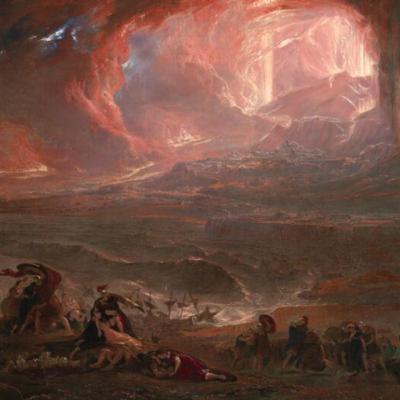
The end times get a bad rap. Typically associated with Christian fundamentalists, the apocalypse has in fact been an object of human fascination for thousands of years. In this offbeat conversation with Robert Joustra, professor of politics and international studies at Redeemer University, the Provcast crew (James Diddams and Robert Nicholson) unpacks the history of apocalyptic thinking and how it manifests in American society today. Aliens, zombies, dystopias, and armageddons—could these things, so frightening on the surface, flow from a divine longing inside us? And could the apocalypse actually be a prerequisite for hope? Stick around to the end for Joustra's hot take on evangelical polarization and the need for a bit of humility. Texts referenced: Joustra, Robert, and Alissa Wilkinson. How to Survive the Apocalypse: Zombies, Cylons, Faith, and Politics at the End of the World. Grand Rapids, MI: Eerdmans, 2016. Joustra, Robert. "Punching Blind: Why Grand Theories of Church and Culture Often Fail the Test of Place." Comment Magazine, February 27, 2025. https://comment.org/punching-blind/. Diddams, James. "The Real Problem at Wheaton College." First Things, November 30, 2022. https://firstthings.com/the-real-problem-at-wheaton-college/.
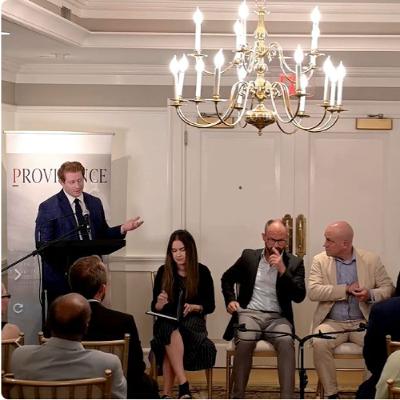
On June 30th, Providence and Tikvah partnered to convene a panel titled "What We Mean by 'Judeo-Christian'" to discuss the role of the Hebrew Bible as a shared point of reference in the American traditions of liberal democracy and constitutional republicanism. This panel was inspired by the Providence article "The Judeo-Christian Nation" by Pete Peterson and Jack Miller, published in Providence on March 26, 2025. In the face of heightened political and social divisions, the Hebrew Bible holds the possibility of civic renewal rooted in biblical principles which, though having originated with Israel, are accessible to all Americans. Throughout American history, from the Pilgrims to the Founders and from Abraham Lincoln to Martin Luther King, the Hebrew Bible in particular has served as a moral touchstone for disparate Christian denominations, Jewish people, and nonbelievers alike. The panelists included: Tamara Berens, Director of Young Professional Programs, Tikvah Jonathan Silver, Chief Programming Officer of Tikvah and editor of Mosaic Marc LiVecche, McDonald Distinguished Scholar of Ethics, War, and Public Life at Providence Robert Nicholson, Editor-at-Large of Providence Anne Lord, Director of Government Affairs, Vandenberg Coalition Thank you to Pepperdine University School of Public Policy and the Jack Miller Center for sponsoring this event.
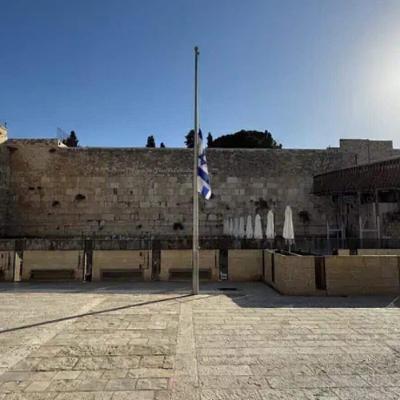
In July 2023, Brig. Gen. (ret.) Yossi Kuperwasser saw something catastrophic on the horizon: a Hamas invasion of Israel. A year later, in a conversation with Providence, he predicted an aggressive IDF military campaign to proactively degrade Hezbollah, the Assad regime, and Iran itself -- another bold prediction which also came true. One year later, Kuperwasser's reputation as a prophet has been firmly established. Now the president of the Jerusalem Institute for Strategy and Security, Kuperwasser joins the Provcast to discuss his past predictions, the current state of Israel's multi-front war against its enemies, the IDF's changing military doctrine, US-Israel relations, and the recent Israeli-American strike on Iran. This time Kuperwasser predicts the emergence of a new regional security architecture -- and, possibly, a wider peace -- that could bring about dramatic changes in the Near East.
Responding to two recent essays, the Provcast team interview Rich Ghazal, Executive Director of In Defense of Christians, to discuss the question of Christian persecution as it relates to US foreign policy past and present—and particularly to the well being of Christians now under threat in Syria. What is America's obligation to these Christians and where does it come from? Should helping them be a priority of American power, and if so, how? What about other persecuted non-Christian communities? And how do we rank our foreign policy priorities when confronted with multiple moral "goods"? Articles referenced: https://mereorthodoxy.com/how-america-betrayed-middle-eastern-christians https://mereorthodoxy.com/america-and-christians-in-the-middle-east-a-response
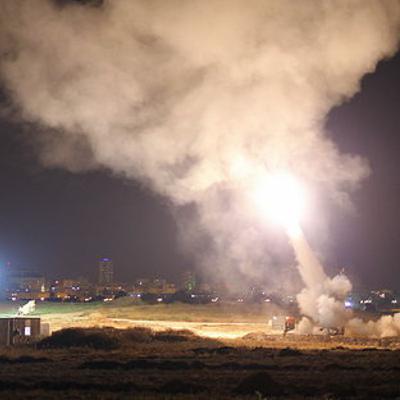
Talking with Iranian scholar and policy expert Dr. Farhad Rezaei, the Provcast crew get caught up on the latest developments related to the Iran-Israel war before talking through a number of hard questions: the nature of America's involvement, the potential for escalation and unexpected outcomes, and the controversial question of regime change. How should a Christian realist think about this war? What's at stake? And how should President Trump be assessing what to do next? Articles referenced: "Iran's Enduring Apocalyptic Political Mythology" by Jozef Kosc on Sept. 17, 2024 in Providence Magazine. "Thousands of Paper Cuts, Then a Nuclear Bomb: Georges Sorel, French Anarchism, and Iran's Revolutionary Warfighting Doctrine" by Jozef Kosc on Oct. 21, 2024 in Providence Magazine.
In this two-part conversation, the Provcast crew unpacks Ukraine's surprise drone attack on Russia and what it means for the war (and the future of war in general), America's involvement, and whether the attack risks escalation with Russia. The crew then shifts to President Trump's recent speech in Riyadh, which lays out the preliminary principles of a "Trump doctrine"—but are they really principles? Is there any method to Trump's approach? Is he an isolationist, a realist, a mercantilist, or something else? Do nations just want to be rich? And if so, where do "irrational" things like religion fit? Is US foreign policy amoral? Text: https://providencemag.com/2025/06/ukraines-operation-spiderweb-was-smart-not-reckless/ https://www.amazon.com/Seconds-Die-Military-Nagorno-Karabakh-Warfighting/dp/1636241239 https://www.timesofisrael.com/full-text-of-trumps-speech-in-riyadh-dawn-of-the-bright-new-day-for-the-great-people-of-the-middle-east/
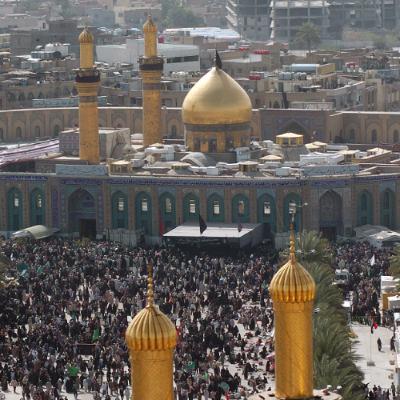
Providence Managing Editor James Diddams is joined by Jozef Kosc, Hamilton Center Fellow at the University of Florida, to discuss the varied ideological parentage of Iran's official state ideology, which includes not only Islamic sources but also European philosophers such as Martin Heidegger, Georges Sorel, Vladimir Lenin, Ernst Cassirer, and GWF Hegel. Jozef's two articles on this subject, "Iran's Enduring Apocalyptic Political Mythology" and "Thousands of Paper Cuts, Then a Nuclear Bomb: Georges Sorel, French Anarchism, and Iran's Revolutionary Warfighting Doctrine" appeared in Providence in September and October of 2024. https://providencemag.com/2024/09/irans-enduring-apocalyptic-political-mythology/ https://providencemag.com/2024/10/thousands-of-paper-cuts-then-a-nuclear-bomb-georges-sorel-french-anarchism-and-irans-revolutionary-warfighting-doctrine/
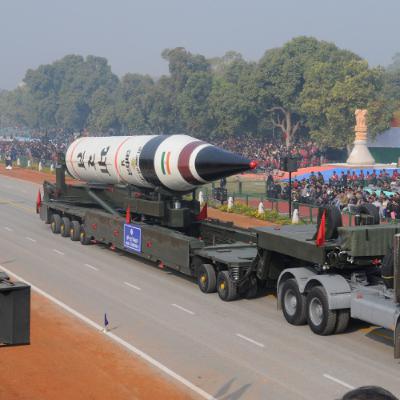
Providence Editor James Diddams is joined by Bill Drexel, Fellow at Hudson Institute in US-India relations and geopolitical competition with China, to discuss his April 4th article "How Competing Hindu Theologies Drove India's Nuclear Decision Making—In Opposite Directions." The story of India's acquisition of nuclear weapons is a compelling counterexample to the idea that foreign policy/national security decisions, and nuclear proliferation in particular, are only driven by the narrowly defined logic of economic self-interest and abstract methods of analysis like game theory. According to the "realist" security analysis of Westerners, India's security situation in the 1960s was such that it should have been compelled to acquire nuclear weapons, and yet chose not to. Then, in 1998, when nuclear proliferation seemed far from necessary, India shocked the world by conducting tests that revealed to the world its possession of nuclear weapons. What could explain the thought process behind India's circuitous path to becoming a nuclear-armed state? Bill Drexel's article: https://providencemag.com/2025/04/how-competing-hindu-theologies-drove-indias-nuclear-decision-making-in-opposite-directions/
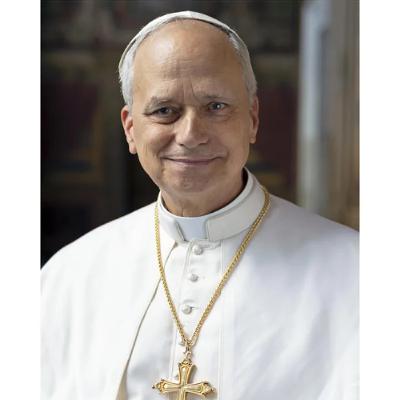
Pondering recent events in the Vatican, the Provcast crew talks through the legacy of Pope Francis and the rise of "Pope Bob from Chicago" (the first Bishop of Rome to laugh at the Blues Brothers?) against the backdrop of a more important question: What role should the Roman Pontiff play in global affairs, if any? They then pick up questions surrounding the emerging, and likely unsatisfying, peace deal in Ukraine, Trump's visit to the Middle East, and the role of allies and "spheres of influence" in US grand strategy. Towards the end, they turn to the topic of national memory in light of America's retreat from Vietnam 50 years ago and its victory over Nazism 30 years before that, exploring America's unique capacity for renewal despite major setbacks. Articles mentioned: https://providencemag.com/2025/05/the-power-of-the-papacy-in-international-affairs/ https://providencemag.com/2025/05/the-world-needs-a-cold-warrior-pope/ https://providencemag.com/2025/04/americas-defeat-50-years-ago/ https://providencemag.com/2025/05/ignoring-americas-greatest-victory/ https://www.kyivpost.com/post/50219

Comments

Download from Google Play

Download from App Store
 United States