


 Claim Ownership
The Geeks Design Show - "Where great architecture begins."
Subscribed: 0Played: 0
Subscribe

© 2026 Divya Goel
Description
The Geeks Design Studio Podcast is a global platform bringing together emerging architects, designers, and innovators to share unfiltered perspectives on the future of architecture.
Across AI, design, education, business, and humanitarian work, each conversation explores what it really means to practice architecture today — beyond theory, beyond trends.
Every season introduces a new theme.
Every episode brings a new voice.
And every conversation moves the discipline forward.
This is where architecture is not just presented —
it is questioned, challenged, and redefined.
8 Episodes
Reverse

EPISODE TITLE:Design Is the Most Radical Act of Hope — Joanna Nsenga on humanitarian architecture, community dignity, and what JI's model is changing about the built world SHOW NOTES:Season Two begins. And it begins here. Joanna Nsenga is an architect and Senior Project Manager at Journeyman International — the nonprofit that pairs volunteer designers with humanitarian NGOs to build schools, clinics, libraries, and community facilities in places that have never had access to professional architecture before. 114 projects. 44 countries. A model that is unlike anything else in the design world. In this conversation, Divya and Joanna go deep on what it actually means to design for communities in crisis — the rigor, the cultural intelligence, the stakes, and the extraordinary things that happen when a building is designed to affirm the people inside it. In this episode:• How Journeyman International's volunteer design model works — and what makes it rigorous, not charitable• What 'culturally appropriate design' actually means in practice — and what happens when architects design from the wrong cultural default• The moment a school changed its attendance rate — not because of the curriculum, but because of the building• Why the hardest design brief in architecture might be a rural clinic with a modest budget — not a luxury penthouse• AI's potential in humanitarian design — the parametric humanitarian brief that needs to exist• Design 'for' vs. design 'with' and 'by' — and why that distinction is everything• Joanna's 10-year vision: the complete loop between design, community, and the next generation of local architects If you've ever wanted to use your design skills for something that really matters — this episode is for you. And if you're a humanitarian organisation that needs architectural design support, visit journeymaninternational.org. Hosted by Divya Goel | Architect & Design Technologist | @thegeeksdesignstudio Guest: Joanna Nsenga | Architect & Senior Project Manager | Journeyman International | journeymaninternational.org #GeeksDesignStudio #HumanitarianArchitecture #DesignForGood #JourneymanInternational #VolunteerDesign #SocialImpact #ArchitectureForChange #CommunityDesign #SeasonTwo #DesignPodcast #WomenInArchitecture #BuildingWhatMattersMost #Africa #SustainableDesign #Dignity
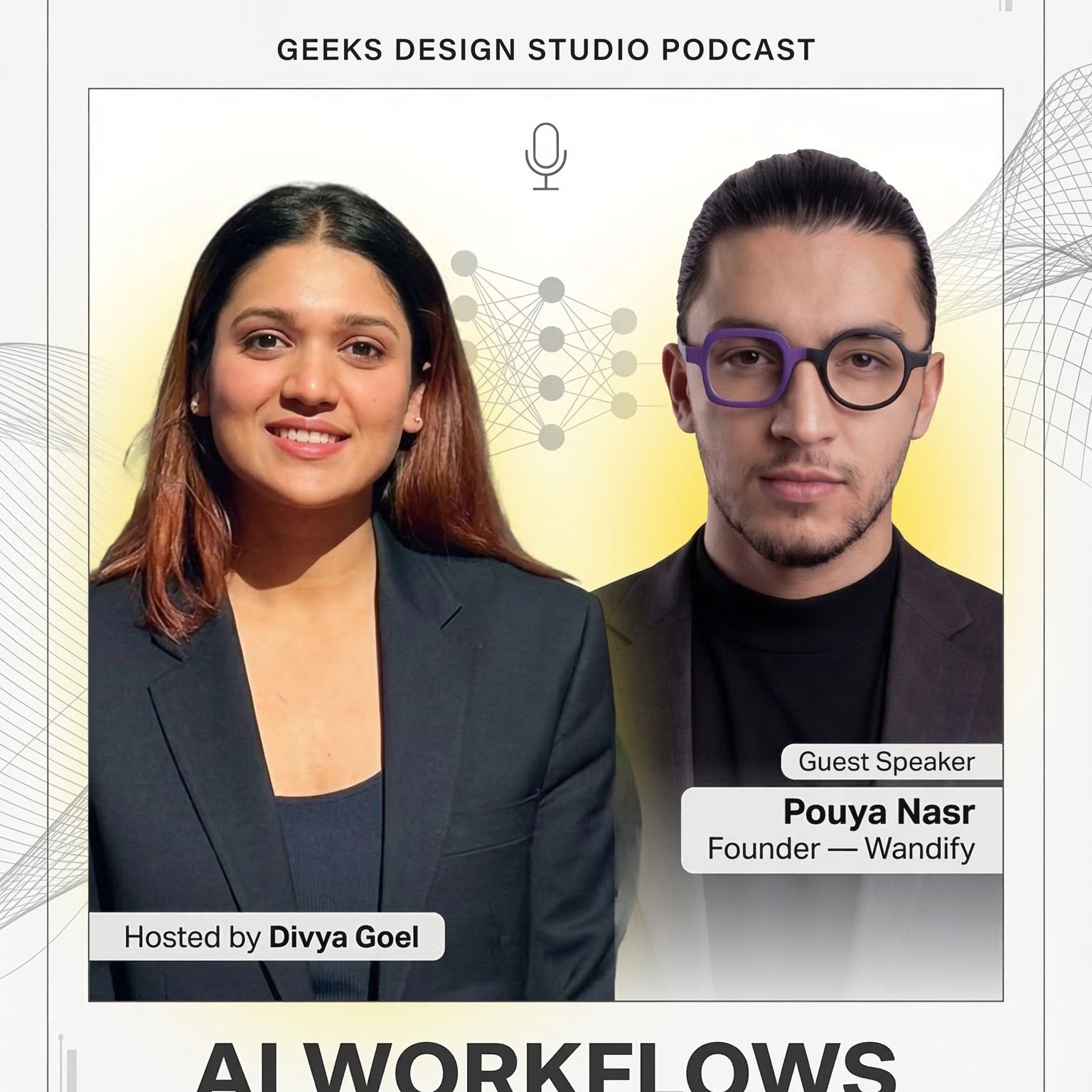
What does it actually take to build something from scratch — while also working full-time, studying for a Master's, winning international design awards, and freelancing for one of the most exciting AI-first studios in London?Today's guest is doing all of that simultaneously — and somehow making it look considered rather than chaotic.Pouya Nasr is an Iranian-born architect and designer now based in Lincoln, UK. He has silver wins at the IDA Design Awards, an Interior Architecture Master's from the University of Lincoln, a role as AI Visualizer at Studio Tim Fu, and — as of early 2026 — he is the founder of Wandify: an AI-enabled workflow platform built specifically for architecture and design studios. I'm Divya Goel, your host at The Geeks Design Studio. And this conversation is one I've been genuinely looking forward to.
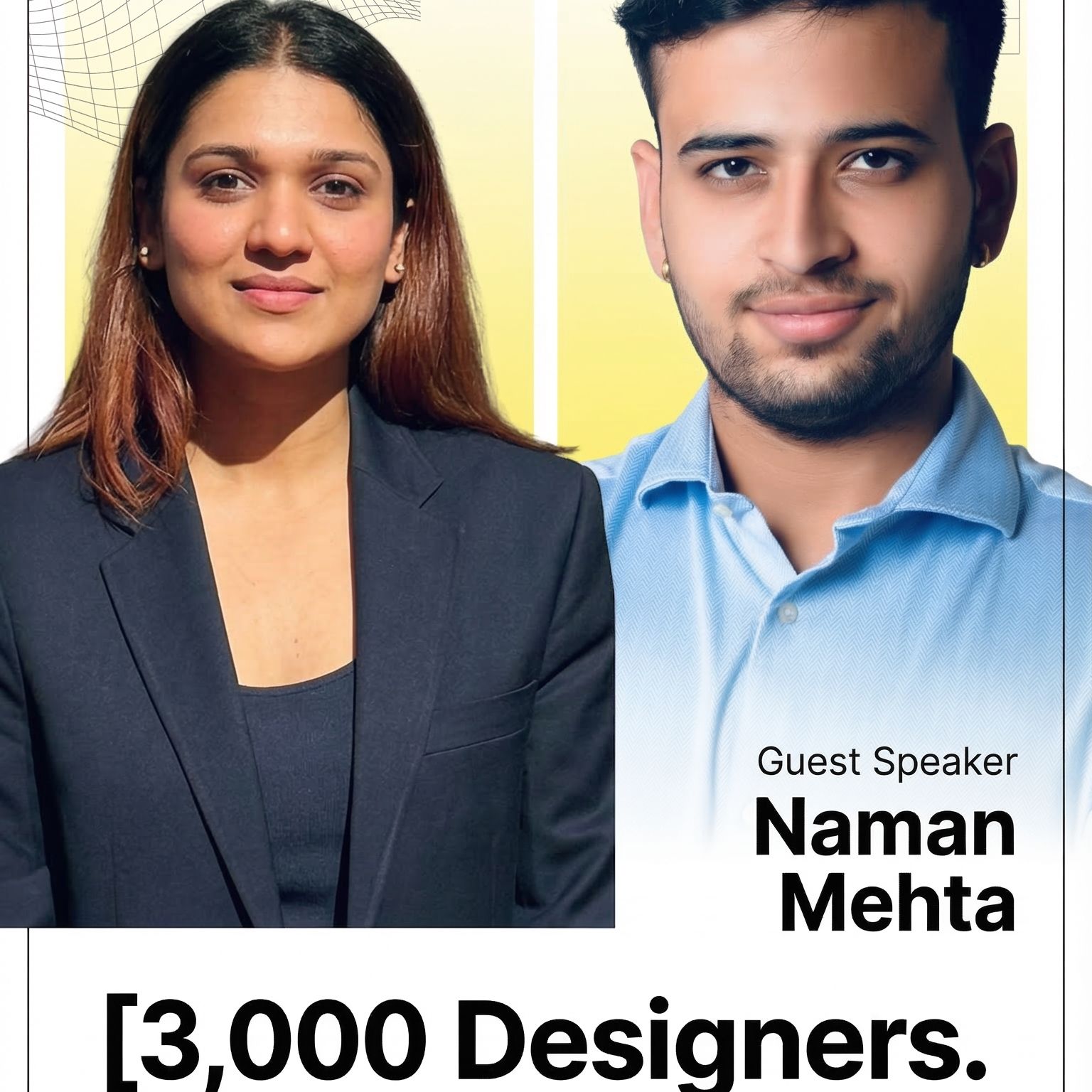
Hello, my nerdy, geeky, brilliantly obsessed designers — Episode Six is here. And this one is for everyone who is trying to figure out where AI fits into their actual practice.Naman Mehta is an architect, founder of IntelliBuild Group, co-founder of StageLens AI, and one of the most active AEC educators in the world right now. He has trained over 3,000 professionals across 40 countries — and he started, like most of us, with a frustration and a lot of late nights. In this episode, Divya and Naman have the honest conversation about what it actually takes to bring an entire industry into the AI era.In this episode:• How Studio Lotus shaped Naman's design thinking — and why that foundation matters more now than ever• The real story behind training 3,000 professionals across 40 countries• Why you should start with the problem, not the tool — and how to actually do that• StageLens AI — building cultural intelligence into a real estate staging product for India• Why AI amplifies your skill level rather than replacing it — and what that means for how you learn• The curriculum lag in architecture education — and who's closing the gap• The version of the AI story that doesn't get told: amplification, not replacement• Homework: 30 minutes, one tool, one workflow — and tell me what happensTools & platforms mentioned: Grasshopper, IntelliBuild, StageLens AI, Flora AI, xFigura, Midjourney, Stable Diffusion.Find Naman at @naman.ai.aec on Instagram and on LinkedIn.Hosted by Divya Goel | Architect & Design Technologist | @thegeeksdesignstudioGuest: Naman Mehta | Founder, IntelliBuild Group | @naman.ai.aec
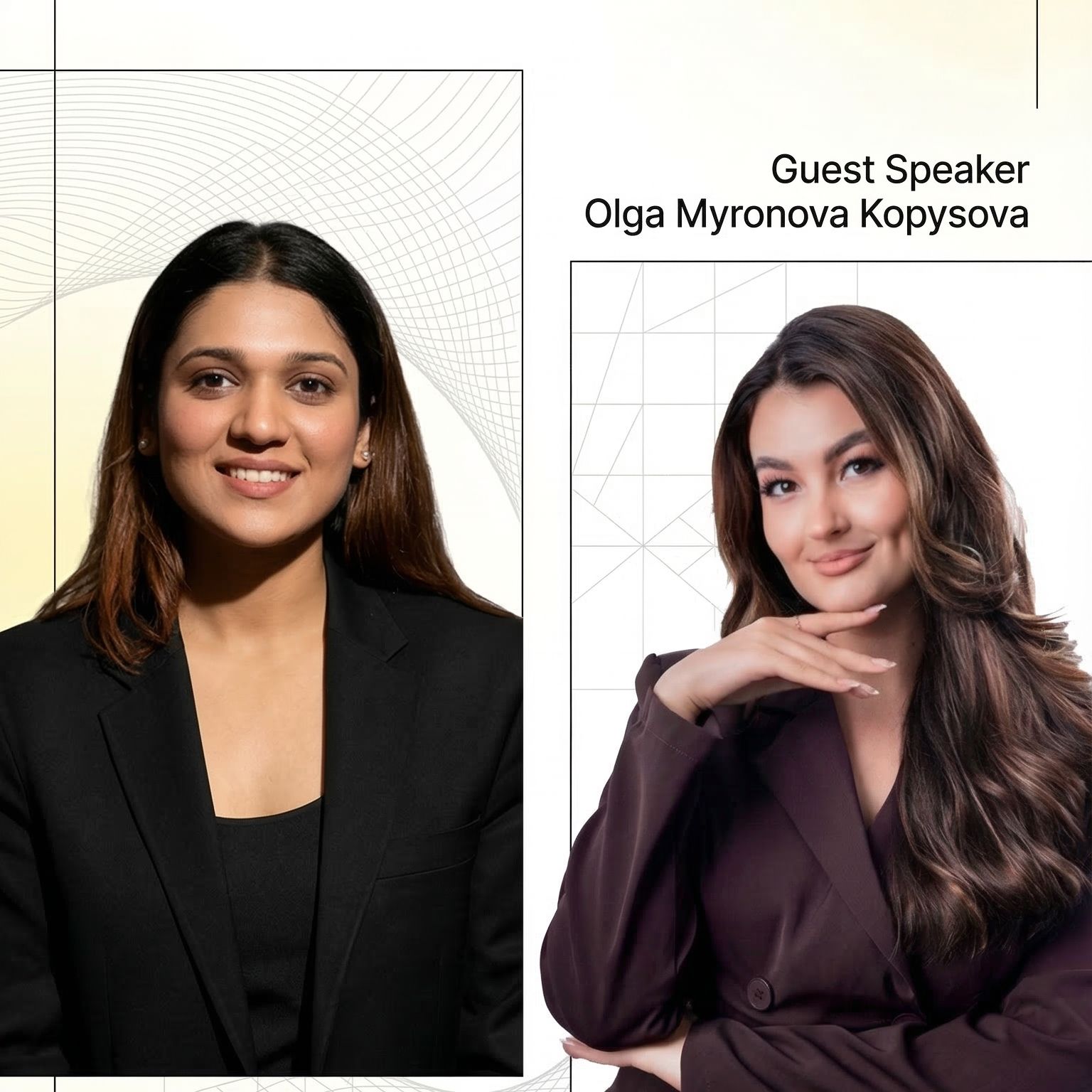
EPISODE TITLE:From Kharkiv to Xi'an to Dubai. And Every Render Was Worth It. — Olga Myronova-Kopysova on 3D visualisation, the AI revolution, and what Dubai does to your design ambitionSHOW NOTES:Hello my nerdy, geeky, beautifully obsessed designers — Episode Six is here. And this time, we're going to Dubai.Olga Myronova-Kopysova has one of the most extraordinary design journeys I've come across — Ukraine to China (MArch, Xi'an Jiaotong University) to Poland to New York to Dubai, where she now works as an Interior Designer and 3D Visualiser at XBD Collective, one of the Middle East's most award-winning luxury design studios. Clients include Emaar, DAMAC, Rixos, St. Regis, and W Hotel.And she started her career as a 3D Visualiser — which means she has watched, from the inside, how AI is transforming the craft of making spaces look real. This conversation is essential listening. In this episode:• Olga's path from Ukraine → China → Poland → New York → Dubai — and what each city gave her design vocabulary• Inside XBD Collective: what it's really like designing luxury spaces for a market recording $39B in Q1 2025 real estate transactions• Why 'the render IS the space' in the Dubai luxury market — and what that means for quality• The AI visualisation revolution from a 3D specialist's perspective: what it can do, what it can't, and what the future looks like• The honest Dubai expat life — the ambition amplifier, the pace, and the beautiful challenge of building community from scratch• Triple homework: the AI render test, the city question, and the emotion exercise that changes how you think about visualisation• Tools discussed: Midjourney, ArchiVinci, Spacely AI, V-Ray, Corona, Adobe Photoshop, 3D Max Drop your homework answers in the comments — or find Divya at @thegeeksdesignstudio on Instagram.Find Olga: LinkedIn — Olga Myronova-Kopysova | Upwork — link in show notes Hosted by Divya Goel | @thegeeksdesignstudioGuest: Olga Myronova-Kopysova | XBD Collective Dubai | Interior Designer & 3D Visualiser#GeeksDesignStudio #InteriorDesign #3DVisualization #DubaiDesign #XBDCollective #LuxuryInteriors #AIinDesign #ArchViz #DesignPodcast #ExpatsInDubai #WomenInDesign #DesignDistrict #DubaiD3 #PhotorealisticRendering #FutureOfDesign
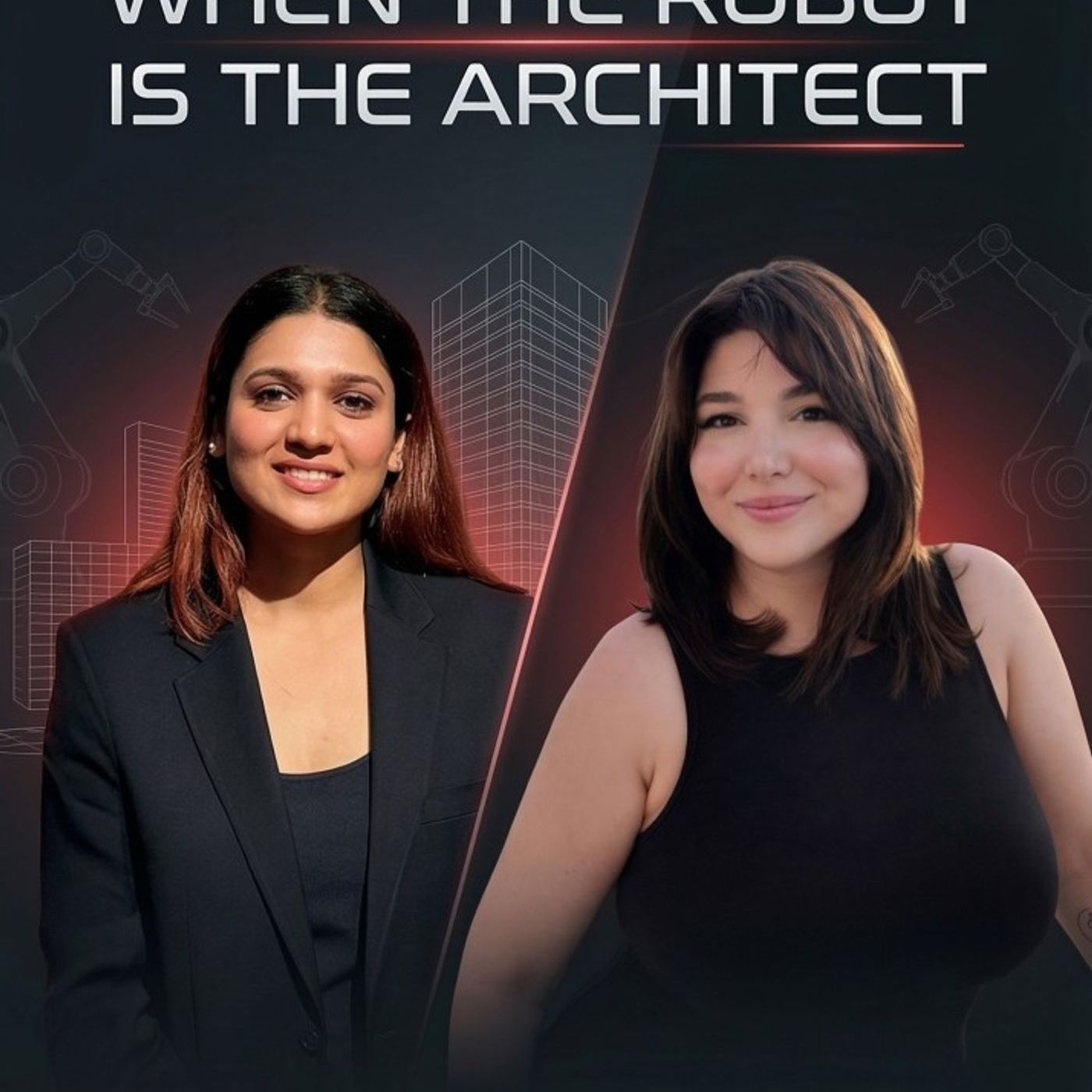
When the Robot Is the Architect — A conversation with computational designer & robotic fabrication researcher Cansu ErsoySHOW NOTES:What if the waste material from the paper industry could become the structural wall of a building — printed by a robot, graded for strength exactly where it's needed, and designed to biodegrade at the end of its life?That's not a hypothetical. That's the research Cansu Ersoy spent her MSc thesis at TU Delft pursuing. In this episode, Divya sits down with Cansu for a wide-ranging, genuinely fascinating conversation about robotic fabrication, biocomposite materials, what architecture school doesn't teach you, and what the built environment might look like in twenty years. In this episode:• What lignin and cellulose are — and why we're burning them instead of building with them• How strength-graded biocomposites could change the way we think about structural materials• Why the robot is ready but the material library is not — and what that gap means for the industry• Cansu's honest take on architecture education and the gap between what's taught and what's needed• AI as a translation tool, not an origination tool — a refreshingly grounded take• Why diversity of perspective isn't just ethics — it's better science• The dream project: a real building, from waste material, that someone actually lives in Tools & concepts mentioned: Grasshopper, Python, Karamba3D, Droid, robotic extrusion, lignocellulosic biocomposites, eCAADe 2025, TU Delft LAMA Lab.If this episode made you see materials differently — share it with someone who builds things. And find Cansu on LinkedIn: Cansu Ersoy. Hosted by Divya Goel | Architect & Design TechnologistGuest: Cansu Ersoy | Computational Designer & Researcher | ArchiTech Company, RotterdamInstagram: @thegeeksdesignstudio#Architecture #RoboticFabrication #ComputationalDesign #Biocomposites #TUDelft #DigitalFabrication #FutureOfArchitecture #SustainableMaterials #WomenInSTEM #YoungArchitects #DesignPodcast #GeeksDesignStudio
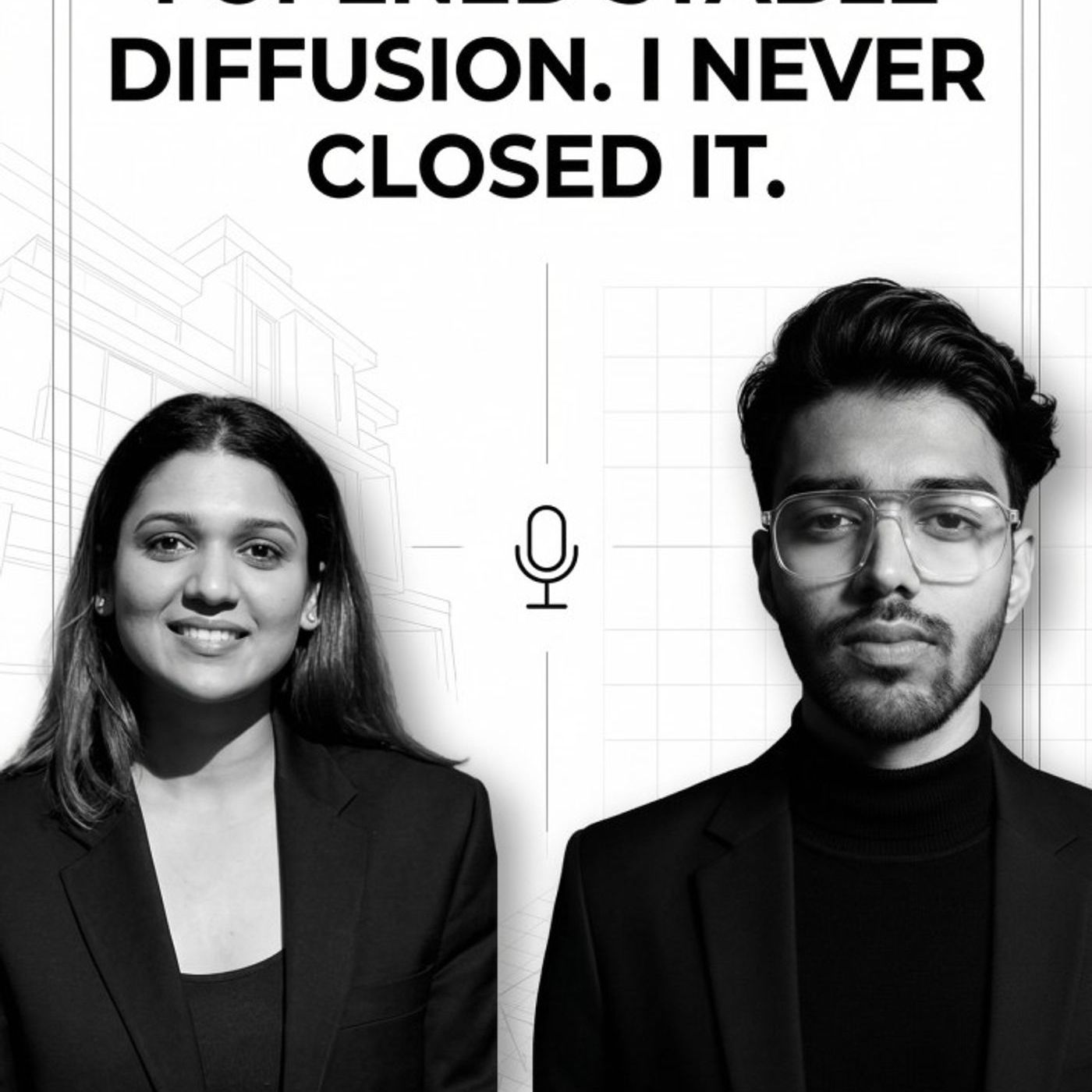
Hello, my nerdy, geeky, ridiculously talented designers — Episode Five is here. And this one is for the practitioners.Ar. Md Abdul Vasi is a COA-registered architect, BIM-VDC specialist, and AI-integrated workflow practitioner based in Hyderabad, India. He's worked on hospitals, high-rise towers, luxury villas, and now — remotely — on restaurant chains across Canada. And he started his AI journey the same way most of us do: alone, with Stable Diffusion open and a YouTube tutorial running on another screen.In this episode, Divya and Vasi have the conversation architects actually need to have. Not the AI hype version. The real version — what works, what breaks, what clients misunderstand, and what's worth betting your career on. In this episode:• How Stable Diffusion changed Vasi's client conversations in the first week he used it• The 'expectation inflation problem' — why AI visualisations can create confusion at the wrong project stage• What's actually in Vasi's AI toolkit (D5 Render, Stable Diffusion, AI documentation tools) and what each one earns• Why AI in healthcare architecture is fundamentally different from AI in a restaurant fitout• The case for AI in documentation and specifications — not just visualisation• How cross-border practice from India to Canada is becoming viable partly because of AI• Vasi's concept of 'strategic AI fluency' — the skill that separates the next decade's leaders• Homework: your first generative tool experiment AND the workflow task you're secretly dying to give to a machine Tools mentioned: Stable Diffusion, Midjourney, D5 Render, Chaos Corona, Revit, BIM workflows, AI specification/documentation tools.Drop your homework answer in the comments — or find Divya at @thegeeksdesignstudio on Instagram. Episode Six might just feature what you share. Hosted by Divya Goel | Architect & Design Technologist | @thegeeksdesignstudioGuest: Ar. Md Abdul Vasi | Registered Architect (COA) | BIM-VDC Specialist | @versatile.architects

My closest friend — a brilliant, five-year trained architect — put her chai down, looked me in the eyes, and said: "AI is garbage. We are losing real talent because of this." And here's the thing. She's not entirely wrong.In Episode 01, Divya gave you the hype reel. The cheat codes, the wins, the vision. In Episode 02, she's having the conversation Episode 01 deliberately skipped: the real fears, the real losses, and the parts of this AI revolution that the design industry should be genuinely worried about — before it's too late to get it right.This is not a takedown of AI. And it's not a defense of it either. It's the honest, slightly caffeinated conversation that's happening in studios and universities worldwide — but rarely out loud, and almost never in a podcast. In this episode:• The "AI is garbage" conversation — and why the person saying it might have a point worth hearing• The historical pattern: how CAD and BIM created the same fears, and what actually happened• Divya's personal origin story — the 11 PM Thursday that changed everything• The real danger: passive AI adoption vs. intentional AI integration• The three things Episode 01 didn't tell you: taste, prompts as design briefs, and emotional intelligence• What Divya actually said back to her friend (over the same chai)• Two pieces of homework to protect the irreplaceable parts of your craft Episode 02 picks up exactly where Episode 01 left off — and fills in the pieces that the hype never talks about. If you shared Episode 01 with someone, share this one with the person who pushed back.
You didn't spend five (or seven) years in architecture school to spend your weekends recalculating floor areas. You didn't join this profession to argue with a staircase that's two centimetres off-code. In this debut episode, Divya Goel makes a bold case: AI isn't coming for your job — it's coming for your grunt work. Think of it as the best promotion you'll ever get. What you'll hear in this episode:• The "Parallel Thinking" model — why AI lets architects explore Option A through Z simultaneously, while our judgment becomes more valuable, not less.• Sustainable design by default — how AI simulation replaces guesswork with a full year of solar and weather data in seconds.• The end of the BIM headache — automating core placement, elevator sizing, and documentation so a day's manual work becomes a single click.• Visual storytelling with game engines — giving clients a living, breathing world (including December light at 6 PM) instead of a flat render.• The human-centric future — when logic is handled by machines, designers get to focus on feeling, safety, and inclusivity. Tools & topics mentioned: Autodesk Forma, Grasshopper, Unreal Engine, BIM automation, sustainable simulation. "AI handles the logic so we can handle the emotion. That is the Geek dream." Hosted by Divya Goel | Architect · AI Workflow Specialist · Design TechnologistNew episodes drop regularly. Subscribe so you never miss a geek-out session.
Comments

Download from Google Play

Download from App Store
 United States