


 Claim Ownership
A Curious Appetite with Dr Alessandra Pino
Subscribed: 0Played: 0
Subscribe

© A Curious Appetite with Dr Alessandra Pino
Description
A podcast exploring gothic food, horror, and the culture of consumption.
In A Curious Appetite, Dr Alessandra Pino examines food not simply as something we consume, but as something that consumes us — shaping memory, identity, longing, and fear. From Gothic feasts to migrant kitchens, from childhood nostalgia to culinary reinvention, each episode traces the stories that linger at the table. Through conversation, the podcast asks what happens when appetite becomes a language for belonging, transformation, power, and desire.
In A Curious Appetite, Dr Alessandra Pino examines food not simply as something we consume, but as something that consumes us — shaping memory, identity, longing, and fear. From Gothic feasts to migrant kitchens, from childhood nostalgia to culinary reinvention, each episode traces the stories that linger at the table. Through conversation, the podcast asks what happens when appetite becomes a language for belonging, transformation, power, and desire.
3 Episodes
Reverse
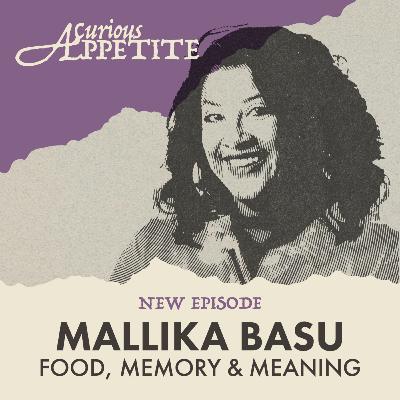
For this episode of A Curious Appetite, I speak with food writer Mallika Basu about curry, food culture, migration, and the loaded question of authenticity.Mallika recently came to speak with my California university students at the London campus, and I still remember how their minds were blown by the way she explained complex histories of migration, empire, and identity through food. She has an extraordinary ability to make difficult histories feel understandable and, quite literally, more digestible.In this episode we talk about curry as a British phenomenon, the politics of naming and ownership, why food can provoke such strong emotions, and how recipes can carry meaning even when they do not have a single point of origin. We also discuss her latest book In Good Taste, which explores what shapes what we eat and drink and why it matters.One line that stayed with me from our conversation:“Recipes don’t have IP, but they have meaning.”There is also mango, biryani, childhood memory, and the complicated onion that is the modern food system.Listen to the episode on A Curious Appetite.Read more on Substack:https://substack.com/@dralessandrapinoArtwork: @medusazzzAudio: @thedeliciouslegacyMusic: @manu_pino_1111A Curious Appetite is a reader-supported podcast and publication.Subscribe on Substack to receive new essays and episodes.Please follow this show on Spotify. It really helps!Useful Links & Works MentionedBooks by Mallika BasuIn Good Taste: What Shapes What We Eat and Drink – and Why It Matters (2026)Masala: Indian Cooking for Modern Living (2018)Miss Masala: A Stylish Indian Cookbook for Effortless Ethnic Cooking and Modern Living (2010)Literary References & Historical ContextCollingham, Lizzie. Curry: A Tale of Cooks and Conquerors. Oxford: Oxford University Press, 2006.Dickson Wright, Clarissa. A History of English Food. London: Random House, 2011.Glasse, Hannah. The Art of Cookery Made Plain and Easy. 1803.Huxley, Aldous. Jesting Pilate. 1926.Panayi, Panikos. Migrant City: A New History of London. 2020.Panayi, Panikos. Spicing Up Britain. 1995.Sukhadwala, Sejal. The Philosophy of Curry. 2023.Empire Podcast – “Inventing Curry: The British Taste for India”Empire (BBC / Open University, 2012)Episode 1 – A Taste for PowerEpisode 2 – Making Ourselves at HomeEpisode 3 – Playing the GameEpisode 4 – Making a FortuneEpisode 5 – Doing Good
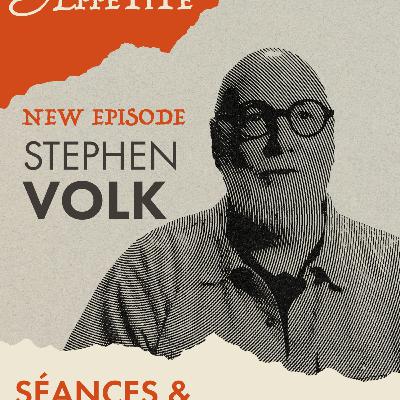
Today’s guest is the brilliant Stephen Volk, screenwriter behind Ghostwatch, Afterlife, Gothic, The Guardian, and one of my favourite supernatural films, The Awakening (2011).In this episode we talk about séances as the perfect storytelling device, Dickens’s “The Portrait-Painter’s Story,” which inspired a story of Stephen’s own, belief and doubt as the engine of ghost stories, and the uncanny power of everyday objects in horror, including food, eggs, and even cake decorations that can quietly carry so many emotions. Along the way I also got to hear about some of Stephen’s own food memories.Stephen discusses his excellent short story collections The Good Unknown (2023) and The Confirmed Bachelors (2025) .There is a moment from Ghostwatch that has stayed with me since childhood. The poltergeist makes itself known through a ruined dinner when the family’s mackerel suddenly appears covered in something that looks disturbingly like saliva. I remember thinking how awful it was that not only were they experiencing something terrifying, but they now could not even sit down and eat their meal.Because horror does not just interrupt fear. Sometimes it interrupts dinner!Part of this conversation also appears in Haunted Magazine #49. Listen now, and if you enjoy the episode please follow and share A Curious Appetite with Dr Alessandra Pino.With special thanks to @deliciouslegacy for the audio, @medusazzz for the artwork, and @manu_pino_1111 for the music.Useful Links/ Works MentionedWorks by Stephen VolkVolk, Stephen. The Good Unknown: And Other Ghost Stories. Manchester: Sarob Press, 2023.Includes the stories “Unrecovered” and “The Waiting Room.”Volk, Stephen. The Confirmed Bachelors. Manchester: Sarob Press, 2025.Ghostwatch. Written by Stephen Volk. BBC, 1992.Afterlife. Created by Stephen Volk. ITV, 2005–2006.Midwinter of the Spirit. Written by Stephen Volk. ITV, 2015.Adapted from the Merrily Watkins novels by Phil Rickman.Gothic. Directed by Ken Russell. Screenplay by Stephen Volk. 1986.The Guardian. Directed by William Friedkin. Screenplay by Stephen Volk. 1990.The Awakening. Directed by Nick Murphy. Written by Stephen Volk and Nick Murphy. 2011.Books and Written Works DiscussedBarthes, Roland. Mythologies. Paris: Éditions du Seuil, 1957.Crowe, Catherine. The Night Side of Nature; or, Ghosts and Ghost-Seers. London: T.C. Newby, 1848.Dickens, Charles (ed.). All the Year Round. London: Chapman & Hall, 1859–1895.Dickens, Charles. “The Portrait Painter’s Tale.” All the Year Round, 1861.James, Henry. The Turn of the Screw. London: William Heinemann, 1898.James, M. R. “Oh, Whistle, and I’ll Come to You, My Lad.” In Ghost Stories of an Antiquary. London: Edward Arnold, 1904.Levin, Ira. Rosemary’s Baby. New York: Random House, 1967.Rickman, Phil. The Merrily Watkins Series. Various publishers, 1998–present.Tomalin, Claire. The Invisible Woman: The Story of Nelly Ternan and Charles Dickens. London: Viking, 1990.Film and Television ReferencedA Haunting in Venice. Directed by Kenneth Branagh. 2023.The Changeling. Directed by Peter Medak. 1980.The Exorcist. Directed by William Friedkin. 1973.Evil Dead Rise. Directed by Lee Cronin. 2023.Ghostbusters. Directed by Ivan Reitman. 1984.Hereditary. Directed by Ari Aster. 2018.Host. Directed by Rob Savage. 2020.The Haunting. Directed by Robert Wise. 1963.The Innocents. Directed by Jack Clayton. 1961.Lake Mungo. Directed by Joel Anderson. 2008.Presence. Directed by Steven Soderbergh. 2024.The Sixth Sense. Directed by M. Night Shyamalan. 1999.Starve Acre. Directed by Daniel Kokotajlo. 2023.The Stone Tape. Written by Nigel Kneale. BBC television film, 1972.The Others. Directed by Alejandro Amenábar. 2001.Vertigo. Directed by Alfred Hitchcock. 1958.Whistle and I’ll Come to You. Directed by Jonathan Miller. BBC, 1968.The Invisible Woman. Directed by Ralph Fiennes. 2013.
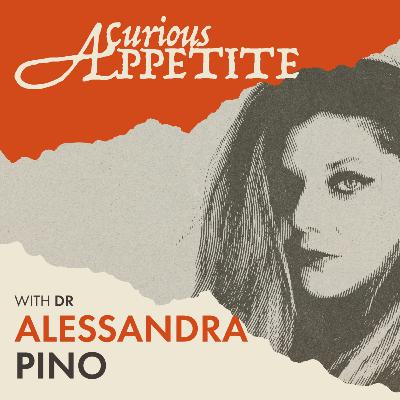
Gothic food, horror, and the culture of consumption.Hosted by Dr Alessandra Pino, this podcast explores how food shapes literature, history, migration, and the Gothic imagination. Moving between archive and kitchen, theory and lived experience, it considers appetite as a force that structures identity, memory, and power.Each episode invites listeners to rethink what it means to consume — and to be consumed.
Comments

Download from Google Play

Download from App Store
 United States