DiscoverNeuroAlchemy: The Brain-Body Healing podcast
NeuroAlchemy: The Brain-Body Healing podcast
Claim Ownership

NeuroAlchemy: The Brain-Body Healing podcast

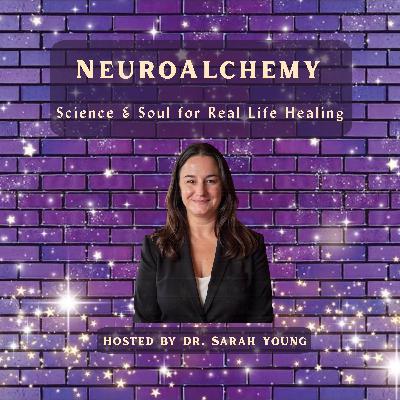
Author: Dr. Sarah Young

Subscribed: 1Played: 0
Share

Description

NeuroAlchemy: The Brain-Body Healing Podcast explores the science and soul of real-life healing. Hosted by integrative neuro clinician Dr. Sarah Young, this podcast bridges neuroscience, nervous system regulation, integrative medicine, and spiritual insight to help listeners understand how true healing happens when the brain, body, emotions, and life experiences begin working together again.

Many people living with chronic or invisible health challenges feel dismissed, overwhelmed by conflicting advice, or stuck searching for answers that traditional approaches have not fully provided. NeuroAlchemy offers a different perspective. Instead of treating symptoms in isolation, this podcast explores how the nervous system, physiology, emotions, and daily life interact as one interconnected system.

Through clear explanations and compassionate guidance, Dr. Sarah translates complex neuroscience into practical tools that support real-world healing. Listeners will learn about neuroplasticity, nervous system regulation, sleep and brain repair, stress physiology, emotional resilience, trauma-informed healing, and integrative approaches to brain and body health.

Episodes include both solo teaching and conversations with practitioners and thought leaders who are exploring innovative approaches to healing. Topics often include brain health, chronic illness recovery, functional and integrative medicine, mindfulness, emotional intelligence, and the powerful connection between neuroscience and spirituality.

NeuroAlchemy is designed for curious, thoughtful listeners who sense that healing involves more than just treating symptoms. Whether you are navigating stress, burnout, trauma recovery, neurological challenges, or complex health conditions, this podcast offers insights that help you reconnect with your body’s natural capacity for regulation and change.

At the heart of NeuroAlchemy is the understanding that healing is not only biological. It is emotional, relational, and meaningful. When the nervous system begins to feel safe and supported, the brain and body can reorganize in powerful ways. This process is known as neuroplasticity, and it reminds us that change and recovery remain possible throughout life.

If you are interested in nervous system healing, neuroscience and spirituality, trauma-informed care, or integrative approaches to brain and body health, NeuroAlchemy invites you into a deeper conversation about transformation. Here, science and soul come together to illuminate the path toward clarity, resilience, and real-life healing.
36 Episodes
Reverse
In this episode of NeuroSynergy – The Brain-Body Healing Podcast, Dr. Sarah Young is joined by A.B. Kaura to explore why real change often feels difficult, even when we understand what needs to shift.Many people gain insight into their behaviors but still find themselves repeating the same patterns. This conversation introduces the concept of Thought Architecture, a framework that explains how internal structures shape behavior, emotion, and long-term change.Together, they explore how patterns are not just thoughts, but repeated systems of behavior that become familiar to the nervous system. These patterns can feel safe, even when they are not supportive.The discussion also dives into neuroplasticity, emphasizing that change requires more than awareness. It requires consistent input, structure, and repetition to reshape the brain and nervous system.This episode highlights the gap between knowing and doing, and how building internal structure creates the foundation for emotional regulation, safety, and sustainable transformation.If you feel stuck in recurring patterns despite insight and effort, this conversation offers clarity and a more structured path forward.🌿 KEY TOPICS• Why awareness alone is not enough for change • Understanding thought patterns and behavioral loops • The role of neuroplasticity in long-term transformation • The gap between awareness and emotional regulation • Building internal structure for nervous system safety • How familiar patterns can feel safe even when unhelpful✨ SOUND BITES"Change is just awareness." "You have to build everything yourself." "Everything is an output of conscience."🎧 EPISODE CHAPTERS00:00 Introduction to NeuroSynergy and healing 01:56 Understanding thought architecture 03:26 Patterns and neuroplasticity 06:33 The role of insight in change 08:37 Awareness versus regulation 09:51 Familiarity and the nervous system 11:07 Building internal structure for safety 13:11 Integrating thought and emotion 15:19 Misconceptions about change 17:27 Self-reflection 19:39 Practical applications 25:40 Final thoughts🌱 MICRO PRACTICE INVITATIONThis week, notice one pattern that keeps repeating in your life.Instead of trying to change it immediately, pause and observe:When does it show up? What triggers it? What feels familiar about it?Awareness is the first layer. Structure comes next.This small shift helps your nervous system begin recognizing patterns rather than automatically repeating them.👤 ABOUT THE GUESTA.B. Kaura is the founder of the Thought Architecture System and focuses on understanding behavior through structured cognitive and emotional frameworks. His work explores how internal systems shape human experience and how structured input supports lasting change.🔗 RESOURCES & LINKSWebsite https://theartofsupreme.comInstagram https://instagram.com/the_supreme_experience_Secondary Instagram https://instagram.com/aboptimization🔗 CONNECT WITH DR. SARAH YOUNGFree Webinar: https://home.neurosynergyhealth.com/from-overwhelm-to-coherence-984291🌿 CLOSINGIf this episode resonated with you, consider sharing it with someone who feels stuck in repetitive patterns.Change does not begin with force. It begins with understanding.You are not broken. You are becoming.
In this episode of NeuroSynergy – The Brain-Body Healing Podcast, Dr. Sarah Young sits down with Ash Mars to explore the journey from survival mode into a more grounded, authentic, and soul-led way of living.Many people move through life feeling like they are constantly bracing for what comes next. Even when things appear stable on the outside, the nervous system may still be operating in a state of alertness, scanning for potential threat.This conversation explores what it truly means to feel safe in your body.Ash shares a clear and accessible understanding of nervous system safety, describing it as the ability to be present, grounded, and connected to yourself in the moment. Together, they unpack how survival mode develops, how trauma can be understood in everyday terms, and why healing requires more than just cognitive awareness.The episode also introduces somatic awareness as a key pathway to healing. Rather than trying to think your way out of stress, listeners are invited to reconnect with the body and begin listening to its signals.Through personal insight and practical reflection, Ash shares how small daily practices, breath awareness, and intentional pauses can support a shift from coping toward true regulation and alignment.If you have ever felt stuck in patterns of stress, disconnection, or overwhelm, this conversation offers a grounded and compassionate pathway forward.🌿 KEY TOPICS• What nervous system safety actually feels like • Understanding trauma as “too much, too fast, too soon” • Recognizing when you are in survival mode • The role of somatic awareness in healing • The difference between coping and feeling safe • What it means to live in alignment with your authentic self✨ SOUND BITES"Trauma is too much, too fast, too soon." "Body awareness is the key to healing." "Rest is generative and foundational."🎧 EPISODE CHAPTERS00:00 Introduction to NeuroSynergy and healing 01:27 Understanding nervous system safety 03:47 Defining trauma and somatics 05:38 Survival mode and its impact 08:23 Soul-led living and authenticity 10:41 Personal healing journey 14:44 Coping versus feeling safe 17:35 Presence and connection 18:56 Somatic awareness and spirituality 21:10 Receiving without burnout 23:36 Boundaries and self-trust 26:08 Final reflections and breath practice👤 ABOUT THE GUESTAsh Mars is the founder of the Soul Release Method and a guide in somatic healing, nervous system awareness, and spiritual integration. Her work helps individuals move out of survival patterns and into a more grounded, authentic, and aligned way of living through body-based practices and self-awareness.🔗 RESOURCES & LINKSWork with Ash https://www.soulreleasemethod.com🔗 CONNECT WITH ASHInstagram https://www.instagram.com/SoulReleaseMethodFacebook https://www.facebook.com/Ash.mars.magicYouTube https://www.youtube.com/@MyWealthWithin🔗 CONNECT WITH DR. SARAH YOUNGWebsite https://home.neurosynergyhealth.com/home-6935🌿 CLOSINGIf this episode resonated with you, consider sharing it with someone who may be navigating stress, overwhelm, or disconnection.You are becoming.
In this episode of NeuroSynergy – The Brain-Body Healing Podcast, Dr. Sarah Young is joined by eating disorder specialist Marcella Raimondo for a deeply compassionate and eye-opening conversation on body image, diet culture, and healing the relationship with food.Many people believe their struggles with food or body image are personal failures. In this conversation, Marcella gently reframes that belief, explaining how eating disorders are often protective responses shaped by trauma, culture, and the need for safety.Together, they explore how diet culture conditions individuals to disconnect from their bodies, suppress hunger cues, and internalize shame. This episode highlights how body shame is not just a thought pattern but a lived nervous system experience.The conversation also introduces a more compassionate path forward. One that does not focus on control or restriction, but on rebuilding safety, trust, and connection within the body.If you have ever felt stuck in cycles of shame around food, disconnected from your body, or overwhelmed by cultural expectations, this episode offers clarity, validation, and a more supportive way to understand healing.🌿 KEY TOPICS• Eating disorders as protective survival responses • The psychological and physiological impact of diet culture • Body shame as a nervous system experience • The connection between trauma and food behaviors • Rebuilding trust with the body and internal cues • The role of compassion and language in healing✨ SOUND BITES"Body shame lives in the nervous system." "Healing requires safety and patience." "You are not failing, you are learning."🎧 EPISODE CHAPTERS00:00 Introduction to NeuroSynergy and healing 04:47 Understanding eating disorders and body shame 09:17 The role of diet culture 14:06 Body shame and the nervous system 19:47 Healing through acceptance and liberation 25:28 Sustainable healing practices 30:58 Closing reflections🌱 MICRO PRACTICE INVITATIONThis week, notice how you speak to yourself around food and your body.Without trying to change anything, gently observe the language you use.Then experiment with one small shift:Instead of criticism, try curiosity. Instead of judgment, try neutrality.For example: “What is my body needing right now?”This small moment of awareness can begin rebuilding trust and safety within your system.👤 ABOUT THE GUESTMarcella Raimondo is a psychologist and eating disorder specialist who focuses on body image, diet culture, and compassionate approaches to healing. Her work helps individuals understand their relationship with food through a trauma-informed and nervous system-based lens, supporting long-term healing and self-acceptance.🔗 RESOURCES & LINKSMarcella Raimondo Website https://marcellaedtraining.comTherapy Services (California) https://marcellaedtraining.com/therapy/Speaking & Training https://marcellaedtraining.com/speaking/Newsletter https://www.marcellaedtraining.com/newsletter🌿 CLOSINGIf this episode resonated with you, consider sharing it with someone who may need a more compassionate perspective on food and body image.Healing is not about fixing yourself. It is about understanding yourself.You are not broken. You are becoming.
In this episode of NeuroAlchemy, Dr. Sarah Young speaks with artist and art therapist Lesley Andrew about the connection between creativity, emotional healing, and the nervous system.Many emotions are difficult to express through words alone. Art therapy offers another pathway by using imagery, color, and creative expression to communicate feelings that may otherwise remain hidden.Lesley shares her personal journey through grief, health challenges, and identity shifts, explaining how creativity became a powerful tool in her healing process. Through art therapy and creative practices, individuals can safely explore emotions, reconnect with themselves, and transform painful experiences into meaningful expression.Dr. Sarah and Lesley also discuss disenfranchised grief, a form of grief that is often unrecognized or unsupported by society. When grief is not acknowledged, it can create isolation and emotional suppression. Creative expression can provide a safe outlet for processing these experiences while supporting nervous system regulation.Together they explore how emotional pain and physical symptoms are often interconnected, and why creativity can support healing in ways traditional medical approaches may not always reach.This conversation offers practical encouragement for anyone interested in exploring creativity as a pathway toward emotional healing, self-expression, and personal transformation.In This Episode• The role of art therapy in emotional healing • Creativity as a pathway for expressing emotions • Understanding disenfranchised grief • The connection between emotional pain and physical health • Creativity as a tool for nervous system regulation • Reclaiming identity through creative expressionKey Takeaways• Clarity creates safety and supports healing • Creativity allows emotions to surface beyond words • Art therapy combines image making with emotional expression • Creative practices can help regulate the nervous system • Disenfranchised grief can feel isolating when it is not recognized • Healing often involves reclaiming identity beyond trauma • Emotional and physical health are deeply connectedMemorable Quotes“Disenfranchised grief is often unrecognized.”“Healing involves reclaiming one’s true self.”“Creativity can transform pain into beauty.”Episode Chapters00:00 Welcome to NeuroAlchemy 01:34 The Role of Art Therapy in Healing 03:33 Creativity as Emotional Expression 08:04 Understanding Disenfranchised Grief 11:57 Creativity's Transformative Power 19:32 Emotional Layers of Physical Pain 25:34 Safe Expression Through Creativity 32:45 Validating Hidden Grief 35:49 Accessible Creative Practices 46:34 Acceptance and Allowance in HealingConnect with Lesley AndrewWebsite www.lesleyandrew.comInstagram www.instagram.com/lesley_andrew_art.therapistFree Workbook ART HEALS – 5 Ways to Improve Mental Health Using Art www.lesleyandrew.com/f/lesley-s-newsletterCreative Healing Kickstart (Mini Course) www.lesleyandrew.com/courses/creative-healing-kickstartYouTube www.youtube.com/@LesleyAFacebook www.facebook.com/LesleyAndrewArt
In this episode of NeuroAlchemy, Michelle A. Kester Marsh explores the hidden emotional and neurological demands of modern motherhood.The conversation examines burnout, emotional load, identity shifts, and invisible labor, along with the cultural pressure known as the “good mum myth.” Many mothers operate in a constant state of nervous system activation while trying to meet impossible expectations.Michelle introduces her CALM Method (Connection, Alignment, Liberation, Manifestation), a framework that helps mothers reconnect with themselves through small, practical micro-moments that regulate the nervous system and restore agency.The discussion also reframes resentment, exhaustion, and identity loss as signals of nervous system depletion rather than personal failure. By recognizing these signals and creating small moments of regulation, mothers can move from self-sacrifice toward self-leadership.This episode offers compassionate insight and practical tools for mothers seeking balance, identity, and nervous system stability.Key Takeaways• Healing is nonlinear and multidimensional • The “good mum myth” fuels pressure and self-judgment • High-functioning burnout often hides beneath productivity • Invisible labor keeps many mothers in constant overdrive • Micro-moments can regulate the nervous system • The CALM Method helps reconnect identity and agency • Resentment often signals depletion • Self-leadership replaces self-sacrificeSound Bites“Micro-moments are life-saving techniques.” “Self-leadership replaces self-sacrifice.” “You can be whoever you want to be.”Chapters00:00 Introduction 02:02 Michelle’s Journey 03:54 The Good Mum Myth 05:40 High-Functioning Burnout 07:10 Invisible Labor 08:48 Micro-Moments 10:35 The CALM Method 13:35 Michelle’s Story 15:40 Motherhood and Identity 18:00 Emotional Load 20:12 Resentment Cycles 21:28 Depletion Signals 23:03 Regulation Without More Time 24:23 Rebuilding Trust 27:22 Creating Space 28:33 Self-Leadership Shift 30:49 Cultural Change 33:47 Daily Micro-Practice 35:14 Closing ThoughtsConnect with Michelle A. Kester MarshWebsite: www.micheleakester-marsh.com Instagram: www.instagram.com/michele.akestermarsh Facebook: www.facebook.com/michele.akestermarsh LinkedIn: https://www.linkedin.com/in/micheleakester-marsh YouTube: www.youtube.com/@michele.akestermarshIf you would like to explore these concepts further, Dr. Sarah offers a free educational webinar titled “From Overwhelm to Coherence: NeuroSynergy Brain–Body Healing Series.” In this session, she introduces practical tools to help calm the nervous system and restore balance.Register here: https://home.neurosynergyhealth.com/from-overwhelm-to-coherence
In this episode of NeuroAlchemy: A NeuroSynergy Podcast, Dr. Sarah Young speaks with John Farrand, a practitioner specializing in breathwork and trauma healing. Together they explore how conscious breathing can become a powerful tool for regulating the nervous system and supporting emotional recovery.John shares his personal journey with breathwork and how it transformed his understanding of trauma, the body, and the brain. The conversation highlights how unresolved experiences can be stored within the nervous system and how breath can help shift those patterns in a safe and natural way.Throughout the episode, John explains the three pillars of breathwork: controlling breath, everyday breathing, and healing breath. These principles illustrate how breathwork moves beyond a mystical concept and becomes a physiological practice that supports nervous system regulation and emotional balance.Dr. Sarah and John also discuss the powerful intersection of ancient healing traditions and modern neuroscience, showing how both perspectives can work together to help people reconnect with their bodies and emotions.Listeners will gain insight into how breath functions as a natural reset button for the brain and body, and how small, intentional breathing practices can support healing, stress regulation, and greater emotional clarity.This episode offers practical encouragement for anyone interested in exploring breathwork as a gentle, accessible pathway to healing.Key Topics• Breathwork and nervous system regulation • Trauma stored in the body • Breath as a physiological reset tool • Emotional regulation through breathing • Ancient wisdom and modern neuroscience • Integrative approaches to trauma healingMemorable Quotes"The breath must be observed from three angles.""Trauma can create energy blocks in the body.""Breath is the tool that nature gave us."Episode Chapters00:00 Introduction to NeuroAlchemy 02:02 Arriving in the present moment 02:58 Breathwork as a healing tool 05:07 John's journey with breath and trauma 07:09 The three pillars of breathwork 08:40 Breath as a reset button 10:20 Transformations through breathwork 12:09 Trauma physiology in the body 16:02 Shifting stress with breath 17:24 Emotional processing vs physiological regulation 19:46 Ancient wisdom and neuroscience 23:39 Integration in healing 27:55 Practicing breathwork daily 29:20 Closing reflectionsConnect with John FarrandWebsite https://thethirdbreath.com/Facebook https://www.facebook.com/jon.jyf.ferrandLinkedIn https://www.linkedin.com/feed/If you would like to explore these concepts further, Dr. Sarah offers a free educational webinar titled “From Overwhelm to Coherence: NeuroSynergy Brain–Body Healing Series.” In this session, she introduces practical tools to help calm the nervous system and restore balance.Register here: https://home.neurosynergyhealth.com/from-overwhelm-to-coherence
In this episode of NeuroAlchemy: A NeuroSynergy Podcast, Dr. Sarah Young sits down with Melissa Marina to explore subconscious healing, identity, worthiness, and the unseen beliefs that shape our lives.Melissa is a destiny and success mentor who helps people dissolve subconscious patterns that keep them stuck in fear, self-doubt, and limitation. Together, Sarah and Melissa discuss how old emotional patterns live in the nervous system and why creating internal safety is essential for real growth.Many people experience the frustration of knowing what they want logically but still repeating the same patterns emotionally. This conversation explores why that happens and how healing can begin beneath the surface where beliefs and identity are formed.Blending neuroscience, emotional awareness, and intuition, this episode highlights how meaningful change often happens not through force or hustle, but through nervous system safety, identity evolution, and small supportive practices that gently shift old patterns.You will also hear how subconscious beliefs influence relationships, confidence, finances, and life direction, and how even subtle shifts in awareness can create meaningful change.In This Episode• How the conscious and subconscious mind interact • Why many beliefs are inherited rather than chosen • How fear shows up in the body • The role of safety in healing and expansion • Identity evolution versus hustle culture • How intuition connects with neuroscience • Nervous system regulation during personal growth • What “timeline potential” means in practical terms • How small micro practices can shift old patternsEpisode Chapters00:00 Introduction to NeuroAlchemy 03:10 Melissa Marina’s journey 05:39 The conscious and subconscious mind 09:17 Identifying subconscious blocks 11:21 Releasing limiting beliefs 12:54 Fear and the body 14:44 Patterns of repetition 16:18 Identity, safety, and expansion 21:24 Worthiness and subconscious beliefs 24:33 Nervous system regulation 26:56 Intuition and neuroscience 29:57 Timeline potential 34:43 Trusting your inner compass 38:01 Micro practices for change 39:48 The truth about healing and timeListener Micro PracticeWhen considering opportunities or decisions, gently ask:“Will this create more for me?”Notice what a yes feels like in your body and what a no feels like. With your system calm and grounded, ask again and observe the response.You can also begin asking:“Is this even my belief?”Many beliefs are inherited through conditioning rather than consciously chosen.Connect with Melissa MarinaWebsite www.melissamarina.comSocial https://www.linktr.ee/nirvanacollectiveBook a call https://api.leadconnectorhq.com/widget/bookings/blockbusterIf you would like to explore these concepts further, Dr. Sarah offers a free educational webinar titled “From Overwhelm to Coherence: NeuroSynergy Brain–Body Healing Series.” In this session, she introduces practical tools to help calm the nervous system and restore balance.Register here: https://home.neurosynergyhealth.com/from-overwhelm-to-coherence
In this episode of NeuroAlchemy: A NeuroSynergy Podcast, Dr. Sarah Young sits down with Courtney, a guide who helps high-achieving mothers navigate emotional healing and reconnect with themselves.Many people who appear strong, capable, and responsible are quietly carrying patterns of over-functioning. They take care of everyone else while suppressing their own emotional needs. Over time, this pattern can lead to burnout, emotional triggers, and nervous system dysregulation.Together, Dr. Sarah and Courtney explore how emotional healing often begins with self-awareness, compassion, and the courage to slow down and listen to the body.Courtney shares her personal story of undergoing a significant medical procedure that unexpectedly led to a deeper emotional awakening. What initially appeared to be a physical challenge revealed underlying emotional patterns that had been present for years.Through this experience, she began to see the powerful connection between physical health, emotional safety, and inner child healing.The conversation explores the concept of emotional reset work, a process of recognizing triggers, understanding the messages behind them, and learning to respond with compassion instead of self-criticism.Dr. Sarah and Courtney remind listeners that triggers are not failures. They are signals that something within us is asking to be seen, understood, and supported.At the heart of the episode is a powerful message that reflects the spirit of NeuroAlchemy:You are not broken. You are becoming.Healing does not require constant effort or perfection. Sometimes the most profound shifts occur when we simply become aware of what our emotions and nervous system are trying to tell us.Key Topics• Over-functioning and people-pleasing patterns • Inner child healing and emotional awareness • Nervous system regulation and emotional safety • Recognizing emotional triggers as teachers • The connection between physical and emotional health • Compassion as a catalyst for healingMemorable Quotes"Over-functioning is people pleasing.""Emotional triggers are teachers, not problems.""You are not broken. You are becoming."Episode Chapters00:00 Introduction to NeuroAlchemy 02:14 Emotional check-in 03:29 Understanding over-functioning 05:19 Inner child healing 07:42 Emotional reset work 09:41 Courtney's medical journey 14:24 Early signs of over-functioning 17:06 Emotional suppression patterns 19:11 Learning from emotional triggers 20:41 Building self-trust 22:03 Childhood wounds in adult life 23:46 Compassion in healing 24:37 Nervous system regulation 25:42 Who benefits from emotional reset work 27:26 NeuroAlchemy reflection challenge 28:33 Closing reflectionsConnect with CourtneyTO GET IN TOUCH WITH COURTNEY:Links:• Website• Instagram• FacebookFreebies:• Trigger Reflection Journal:• Complimentary Emotional Reset Session:
In this episode of NeuroAlchemy: A NeuroSynergy Podcast, Dr. Sarah Young speaks with writer and healer Kayla McDonald about the connection between trauma, food, self-worth, and emotional healing.Many people approach healing as something serious, heavy, or difficult. Kayla offers a refreshing perspective. Healing can also include playfulness, imagination, and curiosity, allowing the nervous system to feel safe enough for deeper transformation.Together, Dr. Sarah and Kayla explore the concept of body-led healing, where the body is treated as a guide rather than a problem to fix. Through practices such as parts work, inner child healing, and subconscious exploration, individuals can begin to understand the emotional patterns that shape their relationship with food, self-worth, and identity.Kayla shares her personal journey of navigating childhood trauma and eating disorders, and how reconnecting with movement, creativity, and laughter became essential parts of her healing process.The conversation also introduces the idea of food freedom as a peaceful and intuitive relationship with food rather than a rigid set of rules. When the body is supported and the nervous system feels safe, individuals often discover that healing becomes more natural and sustainable.Dr. Sarah and Kayla highlight a powerful insight throughout the episode: healing does not have to feel heavy to be profound. Playfulness, imagination, and compassionate awareness can open unexpected pathways toward emotional freedom.Key Topics• Trauma, food, and self-worth • Body-led healing and listening to the body • Parts work and inner child healing • Subconscious patterns shaping food behaviors • Food freedom and intuitive eating • Playfulness as nervous system regulationMemorable Quotes"Healing does not have to feel heavy.""If it's not fun, I'm not doing it.""There's always a way to make it fun."Episode Chapters00:00 Introduction to NeuroAlchemy 06:42 Kayla's journey with food and self-worth 10:55 Playful and body-led healing approaches 15:13 Subconscious healing and food freedom 16:53 Play and imagination in healing 20:45 Food as a spiritual teacher 22:07 Practical playful healing practicesConnect with Kayla McDonaldWebsite https://www.embodiedwritingwarrior.com/Podcast https://embodiedwritingwarrior.buzzsprout.com/Instagram https://www.instagram.com/embodiedwritingwarrior/Facebook https://www.facebook.com/kaylavanegdom/Learn More About Dr. Sarah YoungIf you would like to explore these concepts further, Dr. Sarah offers a free educational webinar titled “From Overwhelm to Coherence: NeuroSynergy Brain–Body Healing Series.” In this session, she introduces practical tools to help calm the nervous system and restore balance.Register here: https://home.neurosynergyhealth.com/from-overwhelm-to-coherence
In this episode of NeuroAlchemy: A NeuroSynergy Podcast, Dr. Sarah Young speaks with healing practitioner Brenda B. Bailey about trauma recovery, emotional safety, and integrative approaches to healing.Many people believe healing requires revisiting painful memories or reliving past trauma. Brenda offers a different perspective. Healing can occur through nervous system safety, self-compassion, and supportive healing modalities without reopening old wounds.Together, they explore how trauma can develop in subtle ways, including moments of neglect, emotional disconnection, or chronic stress patterns. The conversation introduces Theta Healing and trauma-informed care as approaches that can help shift emotional responses while supporting nervous system regulation.Dr. Sarah and Brenda discuss how many life decisions are reactions shaped by past experiences. When those patterns are viewed with compassion rather than judgment, healing becomes more accessible and empowering.This episode shares an encouraging message: healing does not have to be painful or take decades. When the nervous system feels safe, meaningful change can happen more gently and sometimes more quickly than we expect.Key Topics• Trauma recovery and emotional safety • Theta Healing and trauma-informed care • Nervous system regulation and healing • Non-linear healing journeys • Self-compassion in the healing processMemorable Quotes"Every poor decision was based on a reaction.""Healing is possible without reopening old wounds.""It doesn't have to be hard. It doesn't have to take a long time."Episode Chapters00:00 Introduction 01:52 Meet Brenda B. Bailey 02:57 Understanding Theta Healing 07:47 Trauma-informed care 12:50 Brenda’s healing journey 16:15 Healing without reopening wounds 25:15 Nervous system safety 31:29 Mindful self-talk challenge 34:39 Closing reflectionsConnect with Brenda B. BaileyFacebook https://www.facebook.com/brendabbaileyLinkedIn https://www.linkedin.com/in/brendabbailey/Instagram https://www.instagram.com/shatteryourincomeceiling/Free chat www.ChatWithBrendaB.comForgiveness workbook www.FreedomThruForgiveness.comAlternative Healing Showcase www.AlternativeHealingShowcase.comLearn More About Dr. Sarah YoungNeuroSynergy Integrative Health annarborbrainhealth.onlineIf you would like to explore these concepts further, Dr. Sarah offers a free educational webinar titled “From Overwhelm to Coherence: NeuroSynergy Brain–Body Healing Series.” In this session, she introduces practical tools to help calm the nervous system and restore balance.Register here: https://home.neurosynergyhealth.com/from-overwhelm-to-coherence
In this episode of NeuroAlchemy: A NeuroSynergy Podcast, Dr. Sarah Young speaks with flexibility and mobility coach Yulia Yumalova about the powerful relationship between movement, posture, and the nervous system.Modern lifestyles often leave people feeling stiff, fatigued, and disconnected from their bodies. Hours spent sitting, chronic stress, and burnout can create patterns of tension that affect posture, movement, and overall energy regulation.Yulia explains the difference between flexibility and mobility and why both are essential for a healthy nervous system. Flexibility reflects the body’s internal balance and elasticity, while mobility represents functional strength at the end of a joint’s range of motion.The conversation also explores how posture is influenced not only by muscles but by the state of the nervous system. Stress and burnout can manifest physically as tightness, pain, or restricted movement patterns that develop over time.Yulia shares her personal journey from bodybuilding to a more holistic movement philosophy. Through that experience, she discovered that true strength comes from listening to the body, building awareness, and restoring balance rather than forcing performance.Together, Dr. Sarah and Yulia highlight a powerful insight: movement does not drain energy. Movement creates energy. Small daily practices can restore body awareness, improve posture, and support nervous system regulation.This episode offers simple insights and practical inspiration for anyone seeking to reconnect with their body and rediscover movement as a tool for healing.Key Topics• Flexibility vs mobility and why both matter • The nervous system’s role in posture and movement • Burnout and how stress shows up in the body • Movement patterns and long-term imbalances • Energy regulation through daily movement • Building body awareness through small practicesMemorable Quotes"Movement is a big healing.""You don't need extra energy to move.""Movement gives you energy."Episode Chapters00:00 Welcome to NeuroAlchemy 01:21 Understanding flexibility and mobility 03:51 Posture in modern life 06:38 Movement and the nervous system 08:07 Yulia's movement journey 09:56 Stiffness and pain in modern bodies 11:35 Understanding body signals 13:37 Nervous system and movement 16:15 Weekly body awareness challenge 20:47 Common flexibility training mistakes 23:22 Lessons from bodybuilding and Pilates 25:10 Movement as a healing toolConnect with Yulia YumalovaSpeaker page https://balibodyclub.my.canva.site/yulia-yumalova-speakerInstagram https://www.instagram.com/bali.body
KeywordsNeuroalchemy, healing, self-abandonment, somatic awareness, GLOW method, inner radiance, mental health, personal growth, identity shift, joySummaryIn this episode of Neuroalchemy, Dr. Sarah Young engages with Angie Hawkins, a memoirist and coach, to explore themes of self-abandonment, somatic awareness, and the transformative GLOW method. Angie shares her personal journey, including a pivotal suicide attempt that reshaped her understanding of strength and self-worth. The conversation delves into the importance of listening to one's body, the process of identity shifts, and practical practices for reclaiming joy and inner radiance. Ultimately, the episode emphasizes hope and the possibility of living a fulfilled life.TakeawaysSelf-abandonment is seeking approval outside of yourself.Somatic awareness involves paying attention to bodily signals.Embodiment is about stepping into your true identity.Inner radiance reflects self-love radiating outward.The GLOW method helps uncover limiting beliefs from childhood.Personal power and agency can be reclaimed after trauma.Self-abandonment often manifests as chronic anxiety.Grieving old identities is essential during transformation.Joyful practices can significantly shift one's emotional state.Chapters00:00 Welcome to Neuroalchemy02:39 Defining Key Terms in Healing07:34 A Turning Point: Angie’s Journey09:18 Understanding Self-Abandonment12:18 Shifting Identity Through Somatic Awareness13:31 The GLOW Method Explained14:36 Choosing Life Over Survival18:35 Practices for Reclaiming Joy23:55 Messages of Hope and FulfillmentTo get in touch with Angie:Website: https://www.runninginslippers.com/Masterclass: https://angie-hawkins-s-school.teachable.com/l/pdp/people-pleaser-to-powerhouse-masterclass-break-free-from-external-validationYouTube: https://www.youtube.com/@angiehawkins808To learn more about Dr. Sarah and NeuroSynergy:🌿 NeuroSynergy Integrative Healthhttps://NeuroSynergyHealth.comIf you would like to explore these concepts further, Dr. Sarah offers a free educational webinar titled “From Overwhelm to Coherence: NeuroSynergy Brain–Body Healing Series.” In this session, she introduces practical tools to help calm the nervous system and restore balance.Register here: https://home.neurosynergyhealth.com/from-overwhelm-to-coherence
What if your sensitivity isn’t a weakness, but a form of intelligence?In this episode of NeuroAlchemy, Dr. Sarah Young speaks with mind-body practitioner Katherine Elizabeth Anker about sensitivity, neurodivergence, emotional imprints, and the nervous system’s ability to heal.If you’ve ever felt overwhelmed by sensory input, dismissed in medical settings, or confused by chronic symptoms without clear answers, this conversation offers a new perspective.Together we explore:• What sensitivity means in the body and brain • Why neurodivergence is variation, not pathology • How emotional imprints influence physical symptoms • The link between chronic illness and body communication • Why healing is about expanding capacity rather than fixing • Somatic practices that help reconnect with the bodyKatherine shares a powerful reframe: chronic symptoms are not betrayals. They are messages. The body is always communicating, often in ways the mind has learned to override.This episode may resonate with:• Highly sensitive adults • Neurodivergent individuals • People navigating chronic or unexplained symptoms • Caregivers and clinicians supporting sensitive populationsYou’ll also hear about interoception, emotional regulation, and why healing is rarely linear. Instead, it unfolds gradually as the nervous system builds capacity.Healing is not about becoming less sensitive. It’s about becoming more coherent.Key Takeaways• Healing expands nervous system capacity • Neurodivergence reflects natural variation in human wiring • Emotional imprints influence physiology and experience • Chronic symptoms can be understood as body communication • Regulation and somatic awareness build resilience • Interoception strengthens self-trustSound Bites“Neurodivergence is not viewed as pathological.” “Coherence is authenticity in the body.” “Chronic symptoms are messages from the body.”Episode Chapters00:00 Welcome to NeuroAlchemy 08:55 Sensitivity and Neurodivergence 17:25 Emotional Imprints and Body Communication 26:33 Capacity Expansion and Healing 35:49 Somatic Practices for RegulationConnect with KatherineWebsite https://kathrineelizabeth.com/consciousness-coaching/Blog https://kathrineelizabeth.com/can-you-really-heal-from-within/Facebook https://www.facebook.com/KathrineELJohanssonLinkedIn https://www.linkedin.com/newsletters/7332390640216969216/Substack https://kathrineelizabethjohansson.substack.com/p/detoxing-from-the-matrix-of-stressFree Sound Gift http://mailklub.kathrineelizabeth.dk/aP8GGIEmail info@kathrineelizabeth.comIf you’d like to explore these ideas further, Dr. Sarah offers a free webinar:From Overwhelm to Coherence: NeuroSynergy Brain–Body Healing SeriesRegister here: https://home.neurosynergyhealth.com/from-overwhelm-to-coherence
SummaryIn this episode of Neuroalchemy, Dr. Sarah Young shares her personal journey towards becoming a neurointegrative clinician, emphasizing the intersection of neuroscience and spirituality. She reflects on her past as a speech-language pathologist and the transformative experiences that led her to explore multidimensional healing. Dr. Young discusses the five interrelated dimensions of human experience—form, flow, awareness, field, and essence—and how they contribute to holistic healing. She highlights the importance of understanding that healing is not linear but relational, and that sensitivity and overwhelm are not flaws but integral parts of the human experience.Dr. Young encourages listeners to embrace their healing journeys with compassion and awareness, inviting them to check in with themselves across the five realms she describes. She emphasizes that symptoms are not moral failures but signals for deeper understanding and connection. The episode serves as both a personal narrative and a call to action for listeners to honor their own healing processes, reminding them that they are not broken but are in a state of becoming.Keywordsneuroscience, healing, multidimensional, neurointegrative, spirituality, somatic work, emotional intelligence, trauma-informed care, holistic health, self-awarenessTakeawaysHealing is not linear; it's relational across all five realms.Your symptoms are not moral failures; they're signals for deeper understanding.Sensitivity is not a flaw; it's a form of intelligence.You are not broken; you are becoming.Healing requires connection, not isolation.Sound bites"Sensitivity is not fragility; it's intelligence.""You are not broken; you are becoming.""My story is not a prescription; it's an invitation."Chapters00:00 Introduction to Neuroalchemy01:07 The Journey to Neurointegrative Healing04:00 Understanding the Five Realms of Healing06:43 The Evolution of Neurosynergy08:29 Invitation to Self-Reflection and Healing🌿 NeuroSynergy Integrative HealthWww.Annarborbrainhealth.onlineIf you’d like to explore these ideas further, Dr. Sarah offers a free webinar:From Overwhelm to Coherence: NeuroSynergy Brain–Body Healing SeriesRegister here: https://home.neurosynergyhealth.com/from-overwhelm-to-coherence
SummaryIn this episode of NeuroAlchemy, Dr. Sarah Young sits down with registered nurse and dementia care advocate Kimberly Diaz for a grounded, compassionate conversation about trauma, dementia, caregiving, and nervous system healing.If you’re caring for someone with dementia, navigating trauma, or feeling stretched thin in a helping role, this episode offers understanding, validation, and practical insight.Together, Sarah and Kimberly explore how trauma is stored in the nervous system and how it can manifest in behaviors often misunderstood in dementia. Kimberly shares why dementia should be viewed as brain changes rather than stigma, and how presence, embodiment, and compassion can transform caregiving from control into connection.This conversation also centers caregivers.Kimberly speaks openly about burnout, anticipatory grief, and the quiet toll caregiving can take on mental and physical health. She reminds us that self-compassion is not optional — it is essential. You cannot pour from an empty cup.In this episode, you’ll learn:• How trauma lives in the nervous system and shapes responses• Why dementia behaviors are communication, not defiance• The difference between caregiving and care partnering• How embodiment supports regulation for both caregiver and loved one• Why meeting people where they are creates safety• The health risks caregivers often ignore• How to recognize burnout before it becomes crisis• Why asking for help is strength, not weakness• The power of community in healingAt its heart, this episode is a reminder:Caregiving was never meant to be done alone.Healing happens in relationship.Compassion changes outcomes.Sound bites:“You can’t fill from an empty cup.”“This is not a journey that anybody is meant to do alone.”Episode Chapters:00:00 Welcome to NeuroAlchemy + Guest Introduction01:45 Trauma and the Nervous System03:29 Understanding Dementia as Brain Change05:48 Embodiment in Caregiving08:23 Why Self-Compassion Matters09:20 Survival Mode vs Regulation11:08 Kimberly’s Personal Journey13:43 Nervous System Patterns in Dementia15:35 Care Partnering vs Caregiving16:10 Understanding Behaviors19:03 Choice and Independence21:52 Caregiver Health Statistics23:30 Signs of Burnout25:03 Anticipatory Grief26:28 Community Support27:29 Compassion Challenge29:05 Closing ReflectionsConnect with Kimberly Diaz:Facebook: https://www.facebook.com/placementRN/Instagram: https://www.instagram.com/caremattersalways/Facebook Group: https://www.facebook.com/groups/caringmindsdementiandbrainhangesWebsite: https://caringmindsdementiacare.com/Care Matters Always: https://caremattersalways.com/LinkedIn: https://www.linkedin.com/in/kimberly-diaz-rn/YouTube: https://www.youtube.com/@Caring_mindsUnraveled & Rising: https://unraveledandrising.com/Connect with Dr. Sarah Young:NeuroSynergy Integrative Healthhttps://www.annarborbrainhealth.onlineNeuroAlchemy Podcasthttps://open.spotify.com/show/7agFaWsIgMJfl071O6ny14YouTubehttps://youtub
In this episode of NeuroAlchemy, Dr. Sarah Young sits down with Terri Kozlowski for a deeply grounded conversation about trauma, the fear body, nervous system healing, and what it means to come home to yourself after survival.If you’ve ever felt stuck in fear, hypervigilance, or emotional overwhelm, this episode offers both clarity and compassion.Together, Sarah and Terri explore how trauma lives in the body, how the nervous system learns protection, and why healing is not about fixing yourself, but about learning to feel safe again inside your own experience.Terri shares her personal healing journey and how presence, intuition, and indigenous wisdom helped her move beyond survival mode into embodied resilience. They discuss the “fear body,” the ego’s role in trauma, and how subconscious reframing and inner parenting can gently restore trust in the body.This conversation is especially meaningful for anyone navigating:• trauma or emotional overwhelm• chronic stress or hypervigilance• fear-based patterns or anxiety• nervous system dysregulation• spiritual or emotional awakening• sensitivity or burnout• a desire for deeper self-connectionYou’ll hear about:• what the fear body really is and how it shows up in daily life• why trauma should be viewed as information, not identity• how presence creates space for healing• the difference between survival and thriving• how intuition guides recovery• why feelings are meant to move through the body, not stay stored• how indigenous wisdom offers grounded tools for transformation• practical ways to support nervous system safety• the role of inner parenting in emotional healingAt its heart, this episode is a reminder:Healing happens in the present moment.The body carries wisdom.Fear is not who you are.And transformation begins when you listen inward.Episode chapters:00:00 Welcome to NeuroAlchemy + Healing Journeys02:39 Understanding the Fear Body and Nervous System Regulation05:24 Trauma’s Impact on Body and Mind08:06 Presence and Intuition in Healing11:06 Terri’s Personal Healing Journey15:30 Hypervigilance and the Ego20:10 Indigenous Wisdom and Grounding Practices24:36 Inner Parenting and Subconscious Reframing29:13 Practical Tools for Nervous System Safety31:51 The Power Within: Healing and TransformationConnect with Terri Kozlowski:www.TerriKozlowski.comhttps://www.SoulSolutionsHealing.comwww.SoulSolutionsPodcast.comwww.RavenTranscendingFear.comhttps://www.facebook.com/KozmicSoulSolutions/https://twitter.com/tmkozlowskihttps://www.instagram.com/terrikozlowski/https://www.linkedin.com/in/terrikozlowski/http://www.youtube.com/@KozmicSoulSolutionsConnect with Dr. Sarah Young:Websitehttps://www.annarborbrainhealth.onlineNeuroAlchemy Podcasthttps://open.spotify.com/show/7agFaWsIgMJfl071O6ny14YouTubehttps://youtube.com/@neurosynergyhealthLinkedInhttps://www.linkedin.com/in/dr-sarah-youngInstagr
SummaryIn this episode of Neuroalchemy, Dr. Sarah Young delves into the crucial distinction between brain health and brain fitness, emphasizing that while they are interconnected, they serve different purposes in our cognitive well-being. Dr. Young explains that brain health refers to the physical and biological condition of the brain, including factors like blood flow, inflammation, and sleep, while brain fitness pertains to how we engage and challenge our brains through activities that promote neuroplasticity. She reassures listeners that feeling overwhelmed or struggling with cognitive tasks is not a personal failure but often a result of compromised brain health or insufficient engagement in stimulating activities.Dr. Young encourages listeners to embrace a proactive approach to brain fitness by introducing novelty and complexity into their daily routines. She suggests that meaningful challenges, such as learning a new skill or engaging in social interactions, can significantly enhance cognitive clarity and emotional well-being. By fostering a supportive environment and challenging the brain appropriately, individuals can move away from narratives of decline and towards resilience and growth. The episode concludes with a call to action for listeners to introduce one new challenge into their week, reinforcing the idea that the brain is adaptable and responsive to care and engagement.Keywordsbrain health, brain fitness, neuroplasticity, cognitive clarity, emotional well-being, Dr. Sarah Young, Neuroalchemy, brain challenges, mental health, integrative medicineTakeawaysBrain health and brain fitness are connected but distinct.Your brain is not fragile; it is responsive.Engagement and novelty are key to brain fitness.Support your brain first, then challenge it.Feeling overwhelmed is not a personal failure.Sound bites"You're not behind and your brain is listening.""Your brain is not a static machine.""Your brain is not fragile. It is responsive."Chapters00:00 Introduction to Neuroalchemy01:10 Understanding Brain Health vs. Brain Fitness03:42 The Importance of Engagement and Novelty07:08 Moving Towards Resilience and Clarity07:33 Weekly Brain Fitness Challenge🔗 Dr. Sarah Young | NeuroSynergy Integrative Health🌿 NeuroSynergy Integrative Health⁠vhttps://www.annarborbrainhealth.online🎧 NeuroAlchemy: A NeuroSynergy Podcast⁠ https://open.spotify.com/show/7agFaWsIgMJfl071O6ny14?si=myJwdYl6S9WFIp4PygMgqg⁠📺 YouTube | NeuroSynergy Health⁠ https://youtube.com/@neurosynergyhealth?si=_nPJyn1wIy2XHq2j⁠💼 LinkedIn | Dr. Sarah Young⁠ https://www.linkedin.com/in/dr-sarah-young⁠📸 Instagram | @neurosynergyhealth ⁠https://www.instagram.com/neurosynergyhealth⁠📘 Facebook | NeuroSynergy Integrative Health ⁠https://www.facebook.com/neurosynergyhealth⁠📚 Books by Dr. Sarah Young Quantum Integrative Medicine for Brain Injury: A Clinician’s Guide ⁠https://a.co/d/8JMnbIo⁠The Healer’s Map: A multidimensional Guide to Brain Injury Recovery⁠ https://a.co/d/9tthtwf⁠
In this episode of NeuroAlchemy, Dr. Sarah Young sits down with Lara Bokovay for a heartfelt conversation about nervous system healing, trauma, self-regulation, intuition, parenting, and personal growth.If you’ve ever felt reactive, overwhelmed, emotionally exhausted, or unsure how to care for yourself while caring for others, this episode offers clarity, compassion, and practical insight.Together, Sarah and Lara explore how trauma shapes our nervous system responses, why reactivity is a survival adaptation (not a flaw), and how healing begins when we slow down enough to listen inward.Lara shares her personal journey with frequency therapy and intuitive healing, emphasizing the importance of mothers and caregivers healing themselves first in order to create safety for their children. They discuss how awareness creates choice, why permission is essential for growth, and how self-compassion opens the door to transformation.This conversation is especially meaningful for anyone navigating:• nervous system dysregulation• emotional overwhelm or burnout• trauma or chronic stress• parenting from survival mode• sensitivity or intuition awakening• personal healing and identity shifts• a desire to feel calmer, clearer, and more connectedYou’ll hear about:• how healing happens on a cellular and nervous system level• why reactivity is learned protection• how calming the nervous system restores clarity• the role of truth and awareness in healing• why permission matters for self-compassion• how children mirror emotional states• how frequency therapy supports emotional and physical healing• practical ways to regulate and reconnect with yourselfAt its heart, this episode is a reminder:Healing is multidimensional.Awareness creates choice.Self-compassion changes everything.And your nervous system can learn safety again.Sound bites from the episode:“Reactivity is not a flaw, but a survival adaptation.”“Regulating the nervous system on a cellular level.”“Life happens for you, not to you.”Episode chapters:00:00 Welcome to NeuroAlchemy: Healing and Clarity03:55 Understanding Nervous System Regulation09:10 The Journey of Healing and Self-Discovery15:36 The Role of Truth in Healing21:59 Permission and Self-Compassion27:25 Parenting from a Regulated State31:14 Healing Through Frequency and Intuition36:37 Awareness and Choosing DifferentlyConnect with Lara Bokovay:TikTok: @larabokovayYouTube: @larabokovayInstagram: @larabokovayFacebook: Lara Bokovay and Lara Bokovay – Coach and Intuitive ReaderLinkedIn: https://www.linkedin.com/in/lara-bokovay-a9000a3a/Connect with Dr. Sarah Young:Websitehttps://www.annarborbrainhealth.onlineNeuroAlchemy Podcasthttps://open.spotify.com/show/7agFaWsIgMJfl071O6ny14YouTubehttps://youtube.com/@neurosynergyhealthLinkedInhttps://www.linkedin.com/in/dr-sarah-youngInstagramhttps://www.instagram.com/neurosynergyhealthFacebookhttps://www.facebook.com/neurosynergyhealthBooks by Dr. Sarah Young:Quantum Integrative Medicine for Brain Injury: A Clinician’s Guidehttps://a.co/d/8JMnbIoThe Healer’s Map: A Multidime
In this episode of NeuroAlchemy, Dr. Sarah Young sits down with trauma-informed movement educator Tami Lysher for a deeply grounding conversation about trauma, the nervous system, healing through movement and breath, and how we can support both children and adults in reconnecting with their bodies.If you’ve ever felt overwhelmed, disconnected, emotionally reactive, or unsure how to help yourself or your children regulate, this episode offers gentle wisdom and practical tools.Together, Sarah and Tami explore what trauma-informed movement truly means, how the nervous system responds to stress and safety, and why healing does not require fixing yourself, but rather learning how to be present with what your body is already communicating.Tami shares her personal healing journey through trauma and breast cancer, along with the inspiration behind her framework, Move Into Calm. Designed for children, families, and caregivers, Move Into Calm offers simple, adaptable practices that meet people where they are, helping them reconnect with breath, movement, and emotional awareness.This conversation is especially meaningful for anyone navigating:• trauma or chronic stress• nervous system dysregulation• parenting sensitive or overwhelmed children• caregiving or burnout• emotional overwhelm• recovery or personal growth• a desire to feel safer inside their bodyYou’ll hear about:• what trauma-informed movement really looks like in daily life• how breath and movement work together to support regulation• why children often communicate through their bodies instead of words• how understanding your own trauma helps you support others• the body’s innate capacity to heal• how consistency builds resilience and hope• what it means to welcome yourself home to your bodyAt its heart, this episode reminds us:Clarity creates safety.Safety opens healing.Your body holds wisdom.And regulation begins with presence.Sound bites from the episode:“She doesn’t just teach regulation, she lives it.”“With consistency, there’s hope.”“Welcome yourself home to your body.”Episode chapters:00:00 Welcome to NeuroAlchemy02:09 Introducing Trauma-Informed Movement08:35 The Heart of Move Into Calm14:25 Understanding Movement and Breath19:45 The Journey of Healing26:21 The Body’s Healing Potential30:51 Hope and Regulation35:00 Closing ReflectionsConnect with Tami Lysher:Websitewww.moveintocalm.comSpecial Offerhttps://www.moveintocalm.com/black-friday-offerFacebookTami LysherInstagramIIG studiotpilatesmiYouTubestudiotpilates157LinkedInStudio t Pilates and Tami LysherEmailstudiotpil595@gmail.comConnect with Dr. Sarah Young:Websitehttps://www.annarborbrainhealth.onlineNeuroAlchemy Podcasthttps://open.spotify.com/show/7agFaWsIgMJfl071O6ny14YouTubehttps://youtube.com/@neurosynergyhealthLinkedInhttps://www.linkedin.com/in/dr-sarah-youngInstagramhttps://www.instagram.com/neurosynergyhealthFacebookhttps://www.facebook.com/neurosynergyhealthBooks by Dr. Sarah Young:Quantum Integrative Medicine for Brain I
In this episode of NeuroAlchemy, Dr. Sarah Young sits down with Katrin Lucas to explore the Trinity Method, an integrative healing approach designed to move individuals from survival mode into vitality, inner freedom, and embodied self-love.If you’ve ever felt stuck in patterns of self-criticism, emotional overwhelm, or nervous system dysregulation, this conversation offers hope and grounded insight.Together, Sarah and Katrin explore how true healing requires integration, not just awareness. They discuss the deep connection between the brain, body, and lived experience, and why safety is the foundation for transformation. The Trinity Method invites individuals to move beyond trauma-driven survival responses and into aligned, empowered living.Katrin shares how trauma can create self-hatred or disconnection, and how integration restores inner freedom. They talk about nervous system healing, self-responsibility, grounding practices, and the power of silence in reconnecting with your authentic self.This conversation is especially meaningful for anyone navigating:• trauma recovery• nervous system dysregulation• burnout or emotional exhaustion• identity shifts or life transitions• a desire for deeper self-love and self-trust• spiritual or personal transformation• feeling stuck in survival modeYou’ll hear about:• what the Trinity Method actually is in everyday language• how safety shifts the nervous system out of survival• why integration matters more than insight alone• the role of responsibility in personal growth• how grounding reconnects you to vitality• why silence can deepen self-awareness• practical ways to cultivate presence and inner freedom• how change is possible, even after long-standing traumaAt its heart, this episode reminds us:Healing is multidimensional.Integration creates freedom.Safety allows vitality to emerge.Self-love is not indulgent. It is transformational.Episode chapters:00:00 Welcome to NeuroAlchemy02:11 Understanding the Trinity Method05:41 The Importance of Integration09:31 Personal Transformation Through the Trinity Method12:51 Hope in Healing and Change15:54 Cultivating Self-Love and Agency18:23 Practical Steps for Presence and GroundingConnect with Katrin Lucas:Websiteen.katrinlucas.comTrinity Method Web Appmastersofcreationacademy.comConnect with Dr. Sarah Young:Websitehttps://www.annarborbrainhealth.onlineNeuroAlchemy Podcasthttps://open.spotify.com/show/7agFaWsIgMJfl071O6ny14YouTubehttps://youtube.com/@neurosynergyhealthLinkedInhttps://www.linkedin.com/in/dr-sarah-youngInstagramhttps://www.instagram.com/neurosynergyhealthFacebookhttps://www.facebook.com/neurosynergyhealthBooks by Dr. Sarah Young:Quantum Integrative Medicine for Brain Injury: A Clinician’s Guidehttps://a.co/d/8JMnbIoThe Healer’s Map: A Multidimensional Guide to Brain Injury Recoveryhttps://a.co/d/9tthtwf
loading
Comments 
loading