DiscoverThe Quiet Archive: Atmospheric History
The Quiet Archive: Atmospheric History

The Quiet Archive: Atmospheric History

Author: The Quiet Archive

Subscribed: 105Played: 3,045
Share

Description

Atmospheric History, Quietly Told


The Quiet Archive is an atmospheric history channel about how things change — and how ordinary that change often looked while it was happening.


An empire, a discovery, a decision, a way of life, a place, a passage. Not the loud version. The years, the rooms, the small choices, the moment no one recognized as the moment. Told before anyone knew there was no turning back.


◈ Close enough to feel human, far enough to see what changed

◈ One story at a time, told slowly, with room to think

◈ Quietly observed, carefully told, never overstated

◈ A conclusion the listener reaches alone


Narrated with restraint. Built for quiet listening as much as watching.


Atmospheric history, told with space to breathe.


✧ This channel features AI-assisted narration, produced for consistency and clarity.


─── ◈ ───


The archive is open.


Start where something already feels wrong.


Hosted on Acast. See acast.com/privacy for more information.

224 Episodes
Reverse
A trawler skipper breaks open a lump of black peat on deck, and his shovel strikes something hard.⟡ This narration features AI-assisted voice production, carefully crafted for consistency and clarity.─── ◈ ───WHY A WHOLE COUNTRY LIES UNDER THE NORTH SEAUnder the grey water between England and the Netherlands there are river valleys, lake beds and old shorelines, and in places the stumps of trees. Long before the sea arrived, people hunted, fished and buried their dead there, on dry land that ran from Yorkshire to Denmark. This is the story of Doggerland, told backwards, from the newest thing the North Sea has given up to the oldest world it took.◈ A forest of oak and hazel, read from ancient DNA in mud cored from the seabed◈ A tsunami launched by a collapse of the seabed off Norway, about 8,150 years ago◈ A barbed antler point, lost in a reed bed and hauled up in a fishing net in 1931◈ A lake in Yorkshire where hunters wore the skulls of deer on their headsThe last of it stayed above the water far longer than anyone believed.The drowned land of Doggerland in the southern North Sea, between Britain, the Netherlands and Denmark, from the Dogger Bank and the Leman and Ower banks off Norfolk to Star Carr in Yorkshire.History told with space to breathe.─── ◈ ───✧ Support the project: https://linktr.ee/quietarchivum✧ Help keep these stories alive — quietly, consistently.─── ◈ ───✧ Subscribe for history told without noise.✧ New stories arrive when they're ready — and not before.✧ Leave a comment if this one stayed with you.─── ◈ ───Sources & further readingColes, B. (1998). Doggerland: a Speculative Survey. Proceedings of the Prehistoric Society 64.Gaffney, V., Thomson, K. & Fitch, S. (2007). Mapping Doggerland: The Mesolithic Landscapes of the Southern North Sea.Gaffney, V., Fitch, S. & Smith, D. (2009). Europe's Lost World: The Rediscovery of Doggerland.Gaffney, V. et al. (2020). A Great Wave: The Storegga Tsunami and the End of Doggerland? Antiquity.Allaby, R. et al. (2026). Ancient DNA from the Southern River, North Sea. PNAS.Reid, C. (1913). Submerged Forests.Godwin, H. & Godwin, M. E. (1933). British Maglemose Harpoon Sites. Antiquity.Clark, J. G. D. (1936). The Mesolithic Settlement of Northern Europe.Brauer, A. et al. (2008). An abrupt wind shift in western Europe at the onset of the Younger Dryas cold period. Nature Geoscience.Milner, N. et al. (2016). A Unique Engraved Shale Pendant from the Site of Star Carr. Internet Archaeology 40.#Doggerland #NorthSea #DoggerBank #Storegga #StarCarr #Mesolithic #StoneAge #IceAge #LostLand #SunkenWorld #PrehistoricBritain #DeepTime #AncientHistory #HistoryDocumentary #History Hosted on Acast. See acast.com/privacy for more information.
Three canoes slide out from the Cuban shore before first light, toward a Spanish sloop that has no wind to run.⟡ This narration features AI-assisted voice production, carefully crafted for consistency and clarity.─── ◈ ───HOW PIRATES BUILT THEIR OWN REPUBLIC IN THE BAHAMASIn 1713, a war ended and thousands of sailors lost their trade almost overnight. Some of them remembered a burned harbour in the Bahamas, with fresh water, a shallow bar no warship could cross, and no governor at all. This is the story of the town they built there, and of the men who each had to choose which side of the law they would stand on.◈ A privateer without a war, and the one rule he refused to break◈ A wrecked Spanish treasure fleet, and the silver that came ashore at Nassau◈ A crew that voted out its own captain on a careening beach◈ A King's pardon read aloud on the sand, and a ledger of namesSome captains went up to the table. Others stood back in the dark, remembering faces.The Golden Age of Piracy in Nassau and New Providence, 1713–1718: Benjamin Hornigold, Henry Jennings, Sam Bellamy, Blackbeard, Charles Vane and the Flying Gang, from Cuba and the Florida wrecks to Cape Cod and the Carolina coast.History told with space to breathe.─── ◈ ───✧ Support the project: https://linktr.ee/quietarchivum✧ Help keep these stories alive — quietly, consistently.─── ◈ ───✧ Subscribe for history told without noise.✧ New stories arrive when they're ready — and not before.✧ Leave a comment if this one stayed with you.Sources & further reading— Colin Woodard, The Republic of Pirates (2007)— Captain Charles Johnson, A General History of the Pyrates (1724)— David Cordingly, Under the Black Flag (1995)— Cotton Mather, Instructions to the Living, from the Condition of the Dead (1717)— Calendar of State Papers, Colonial: America and West Indies, 1716–1718#PirateRepublic #Nassau #Blackbeard #BenjaminHornigold #CharlesVane #SamBellamy #FlyingGang #GoldenAgeOfPiracy #Bahamas #Pirates #CaribbeanHistory #MaritimeHistory #18thCentury #HistoryPodcast #History Hosted on Acast. See acast.com/privacy for more information.
A child sat up on a sack of grain and asked whether the castle on the hill was Jerusalem.⟡ This narration features AI-assisted voice production, carefully crafted for consistency and clarity.─── ◈ ───THE FIRST CRUSADE TOOK JERUSALEM. ONLY 300 KNIGHTS STAYED TO HOLD IT.In 1096, tens of thousands of people sewed crosses onto their clothes and walked east, towards a city most of them knew only from sermons. Three years later, the army that stood beneath the walls of Jerusalem was a fraction of the one that had set out, and within weeks of its victory most of what remained had gone home. This is the story of the First Crusade, and of where all those people went.◈ A pope's sermon in a field at Clermont, and a crowd that cut crosses from whatever cloth it had◈ The Jewish families of Mainz, and the survivors who wrote down the names of every one of their dead◈ Eight months outside the walls of Antioch, where an egg cost two shillings and a servant dug a spearhead from a church floor◈ The assault on Jerusalem in July 1099, and the numbers both sides counted afterwardsAt Maarat, the chroniclers who had counted everything stopped counting.The First Crusade, 1095–1102: Clermont, the Rhineland, Constantinople, Nicaea, Dorylaeum, Antioch, Edessa, Maarat al-Numan, Arqa and the siege of Jerusalem.History told with space to breathe.─── ◈ ───✧ Support the project: https://linktr.ee/quietarchivum✧ Help keep these stories alive — quietly, consistently.─── ◈ ───✧ Subscribe for history told without noise.✧ New stories arrive when they're ready — and not before.✧ Leave a comment if this one stayed with you.Sources & further reading— Anonymous, Gesta Francorum et aliorum Hierosolimitanorum— Raymond of Aguilers, Historia Francorum qui ceperunt Iherusalem— Fulcher of Chartres, Historia Hierosolymitana— Albert of Aachen, Historia Ierosolimitana— Anna Komnene, The Alexiad— Stephen of Blois, letters to Adela of Blois (1097–1098)— The Hebrew chronicles of 1096 (Solomon bar Samson and the Mainz Anonymous)— Ibn al-Athir, The Complete History (al-Kamil fi'l-Ta'rikh)— Ibn al-Qalanisi, The Damascus Chronicle— S. D. Goitein, "Contemporary Letters on the Capture of Jerusalem by the Crusaders", Journal of Jewish Studies (1952)— Benjamin Z. Kedar, "The Jerusalem Massacre of July 1099 in the Western Historiography of the Crusades", Crusades (2004)— Thomas Asbridge, The First Crusade: A New History (2004)— Peter Frankopan, The First Crusade: The Call from the East (2012)— Jonathan Riley-Smith, The First Crusade and the Idea of Crusading (1986)— Christopher Tyerman, God's War: A New History of the Crusades (2006)#FirstCrusade #SiegeOfJerusalem #SiegeOfAntioch #Jerusalem1099 #PeterTheHermit #GodfreyOfBouillon #AnnaComnena #ByzantineEmpire #Crusades #CrusaderStates #MedievalWarfare #MedievalHistory #MiddleAges #HistoryPodcast #HistoryDocumentary Hosted on Acast. See acast.com/privacy for more information.
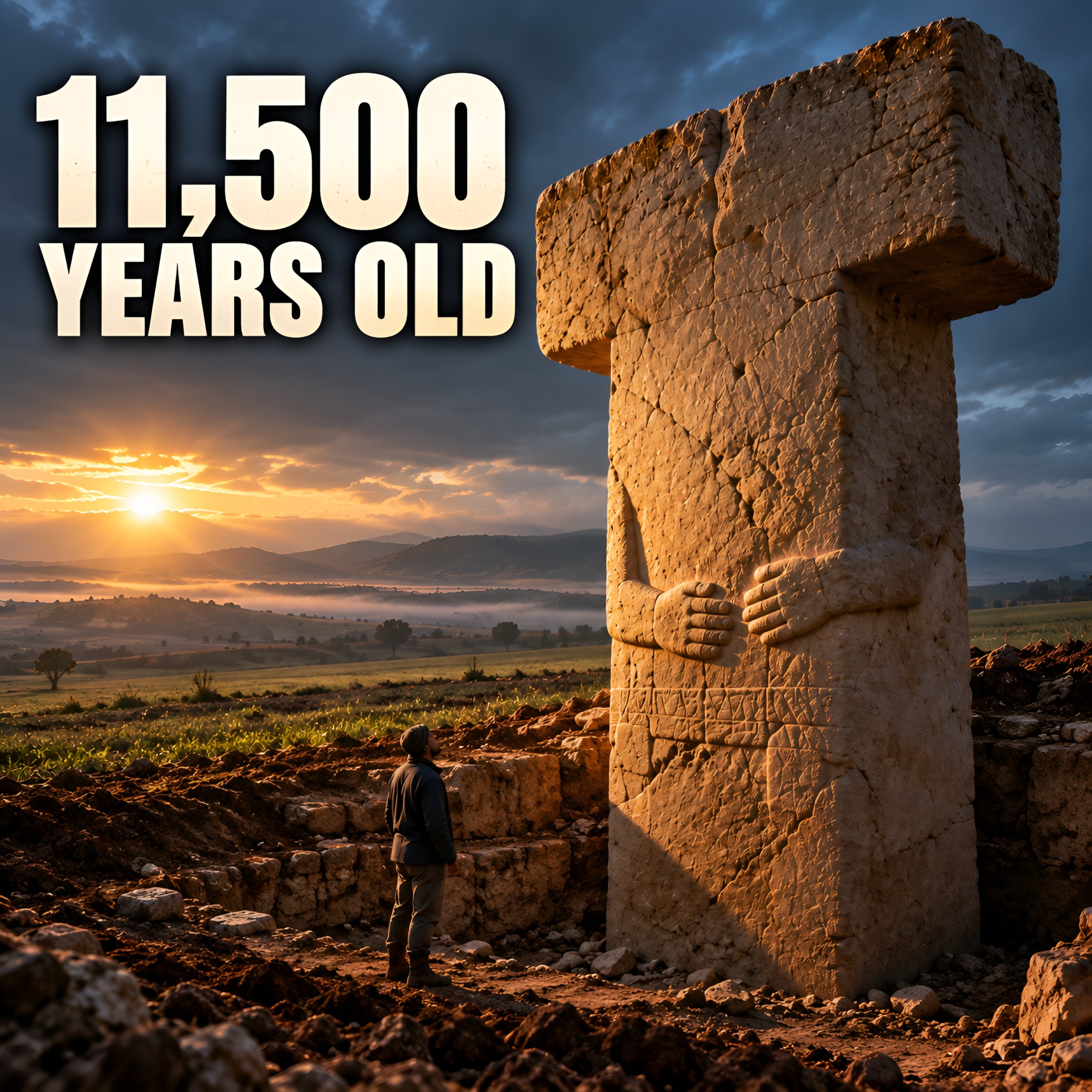
Flint rasping on limestone, and a stone the length of three men lifting a finger's width off the bedrock.⟡ This narration features AI-assisted voice production, carefully crafted for consistency and clarity.─── ◈ ───GÖBEKLI TEPE WAS BUILT BEFORE FARMING EXISTED. IT OVERTURNED HOW CIVILISATION BEGAN.Eleven and a half thousand years ago, on a bare limestone ridge in south-eastern Turkey, people with no crops, no pottery and no metal cut stone pillars from the rock, carved them with foxes, snakes and vultures, and stood them upright in great rings. Six thousand years would pass before Stonehenge rose in Britain. And in the twentieth century, a farmer's plough would scrape across the tops of those same stones, and the men behind it would curse them as rock.This is the story of Göbekli Tepe, of the hunters who built it, and of the archaeologists who dug it up and found that the hill would not give them a simple answer.◈ A survey team in 1963 who mistook the pillars for Byzantine gravestones and moved on◈ Klaus Schmidt, the German archaeologist who called the rings the first temples on earth◈ Three human skulls carved and drilled by flint, and a hill with seven thousand grinding stones◈ Karahan Tepe and the Stone Hills, where a T-shaped pillar finally turned out to have a faceThe rings were full of earth. For years, everyone thought they knew who had put it there.A documentary narrative of Göbekli Tepe, Karahan Tepe and the Neolithic Stone Hills (Taş Tepeler) near Şanlıurfa, Turkey: the T-shaped pillars, the excavations from 1995 to today, and how the oldest monumental buildings on earth changed the debate over the origins of farming and civilisation.History told with space to breathe.─── ◈ ───✧ Support the project: https://linktr.ee/quietarchivum✧ Help keep these stories alive — quietly, consistently.─── ◈ ───✧ Subscribe for history told without noise.✧ New stories arrive when they're ready — and not before.✧ Leave a comment if this one stayed with you.─── ◈ ───Sources & further readingKlaus Schmidt, Göbekli Tepe: A Stone Age Sanctuary in South-Eastern Anatolia (ex oriente, 2012)Lee Clare, "Inspired Individuals and Charismatic Leaders: Hunter-Gatherer Crisis and the Rise and Fall of Invisible Decision-Makers at Göbeklitepe," Documenta Praehistorica 51 (2024)Laura Dietrich et al., "Cereal processing at Early Neolithic Göbekli Tepe, southeastern Turkey," PLoS ONE 14 (2019)Julia Gresky, Juliane Haelm and Lee Clare, "Modified human crania from Göbekli Tepe provide evidence for a new form of Neolithic skull cult," Science Advances 3 (2017)Julia Schönicke, "Towards a New Understanding of Abandonment Practices in the Neolithic Settlement of Göbekli Tepe"Necmi Karul, excavation reports on Karahantepe, Türk Arkeoloji ve Etnografya Dergisi (2021–)Manfred Heun et al., "Site of Einkorn Wheat Domestication Identified by DNA Fingerprinting," Science 278 (1997)German Archaeological Institute (DAI), The Tepe Telegrams — Göbekli Tepe research blog#GobekliTepe #KarahanTepe #TasTepeler #StoneHills #Neolithic #PrePotteryNeolithic #KlausSchmidt #OldestTemple #OriginsOfAgriculture #Sanliurfa #AncientTurkey #Prehistory #Archaeology #AncientHistory #HistoryDocumentary Hosted on Acast. See acast.com/privacy for more information.
A young man from China counts the stone giants on a bridge, fifty-four on each side, and keeps counting.⟡ This narration features AI-assisted voice production, carefully crafted for consistency and clarity.─── ◈ ───WHY ANGKOR, THE LARGEST CITY OF THE MEDIEVAL WORLD, WAS ABANDONEDIn 1296, a Chinese envoy walked into a city of golden towers, lotus-filled moats and reservoirs large enough to hold the rain of a whole season. He stayed eleven months, wrote down everything he saw, and sailed home. After he left, the stones of Angkor stopped speaking, and the greatest city of its age began to empty, one household at a time. This is the story of the city he walked through, and of the century in which its people slowly left it behind.◈ The stone giants, the golden window and the women who ran the markets, through the eyes of Zhou Daguan◈ The slaves beneath the houses and the hidden labour that kept the waterworks running◈ Two great droughts and the violent floods between them, read in the rings of a Vietnamese cypress◈ The army from Ayutthaya, and the court that moved south to the riverWhen the last inscription was carved in 1327, only the mud and the trees were left to keep the record.A historical narrative of Angkor, Angkor Wat and Angkor Thom in Cambodia, the Khmer Empire, Zhou Daguan's journey of 1296, and the abandonment of the Khmer capital in the fourteenth and fifteenth centuries.History told with space to breathe.─── ◈ ───✧ Support the project: https://linktr.ee/quietarchivum✧ Help keep these stories alive — quietly, consistently.─── ◈ ───✧ Subscribe for history told without noise.✧ New stories arrive when they're ready — and not before.✧ Leave a comment if this one stayed with you.─── ◈ ───Sources & further readingZhou Daguan, A Record of Cambodia: The Land and Its People, trans. Peter Harris (Silkworm Books, 2007)Buckley, B. M. et al., "Climate as a contributing factor in the demise of Angkor, Cambodia," PNAS (2010)Penny, D. et al., "Geoarchaeological evidence from Angkor, Cambodia, reveals a gradual decline rather than a catastrophic 15th-century collapse," PNAS (2019)Evans, D. et al., "Uncovering archaeological landscapes at Angkor using lidar," PNAS (2013)Fletcher, R. et al., "The water management network of Angkor, Cambodia," Antiquity (2008)Carter, A. K. et al., "Temple occupation and the tempo of collapse at Angkor Wat, Cambodia," PNAS (2019)Day, M. B. et al., "Paleoenvironmental history of the West Baray, Angkor (Cambodia)," PNAS (2012)Klassen, S. et al., "Diachronic modeling of the population within the medieval Greater Angkor Region," Science Advances (2021)#Angkor #AngkorWat #AngkorThom #KhmerEmpire #ZhouDaguan #Cambodia #SiemReap #Ayutthaya #LostCity #MedievalHistory #SoutheastAsia #AncientCivilizations #HistoryPodcast #HistoryDocumentary #TheQuietArchive Hosted on Acast. See acast.com/privacy for more information.
loading
Comments