DiscoverThe Quiet Archive: Atmospheric History
The Quiet Archive: Atmospheric History

The Quiet Archive: Atmospheric History

Author: The Quiet Archive

Subscribed: 105Played: 3,106
Share

Description

Atmospheric History, Quietly Told


The Quiet Archive is an atmospheric history channel about how things change — and how ordinary that change often looked while it was happening.


An empire, a discovery, a decision, a way of life, a place, a passage. Not the loud version. The years, the rooms, the small choices, the moment no one recognized as the moment. Told before anyone knew there was no turning back.


◈ Close enough to feel human, far enough to see what changed

◈ One story at a time, told slowly, with room to think

◈ Quietly observed, carefully told, never overstated

◈ A conclusion the listener reaches alone


Narrated with restraint. Built for quiet listening as much as watching.


Atmospheric history, told with space to breathe.


✧ This channel features AI-assisted narration, produced for consistency and clarity.


─── ◈ ───


The archive is open.


Start where something already feels wrong.


Hosted on Acast. See acast.com/privacy for more information.

229 Episodes
Reverse
Beyond the firelight, a wolf waits for the people to turn away.⟡ This narration features AI-assisted voice production, carefully crafted for consistency and clarity.─── ◈ ───WE FEARED WOLVES. HOW DID THEY BECOME OUR DOGS?For thousands of years, humans and wolves hunted the same animals across the frozen landscapes of the Ice Age. They were rivals, competing for food and survival. Yet somewhere along the way, one of our most dangerous competitors became our oldest companion.This is the story of how wolves became dogs — and how the distance between two predators slowly disappeared.◈ The Ice Age hunters who shared their world with wolves◈ Ancient DNA discoveries that are rewriting the origins of dogs◈ A prehistoric puppy whose grave reveals an extraordinary act of human care◈ The first sled dogs, ancient leashes, and the lost dogs of the AmericasLong before we built cities, planted fields, or domesticated livestock, something remarkable had already happened between humans and wolves.An animal we once feared had learned to trust us. And, perhaps more remarkably, we had learned to care for it.From the mammoth steppe of prehistoric Siberia to ancient burials in Anatolia and Europe, this atmospheric history documentary explores dog domestication, human evolution, archaeology, and the prehistoric relationship between wolves and people.History told with space to breathe.─── ◈ ───✧ Support the project: https://linktr.ee/quietarchivum✧ Help keep these stories alive — quietly, consistently.─── ◈ ───✧ Subscribe for history told without noise.✧ New stories arrive when they're ready — and not before.✧ Leave a comment if this one stayed with you.─── ◈ ───#DogDomestication #HistoryOfDogs #WolfEvolution #PrehistoricHistory #IceAge #AncientDNA #HumanEvolution #Archaeology #Prehistory #AncientHistory #Wolves #HumanAnimalBond #HistoryDocumentary #AtmosphericHistory #TheQuietArchive Hosted on Acast. See acast.com/privacy for more information.
The seed sack was still hanging from the beam. The bread was almost gone. And outside, the rain had not stopped.⟡ This narration features AI-assisted voice production, carefully crafted for consistency and clarity.─── ◈ ───THE GREAT FAMINE OF 1315: THE RAIN THAT STARVED NORTHERN EUROPEIn the summer of 1315, rain fell across northern Europe and refused to leave. Fields flooded, grain rotted, and families faced a terrible choice: eat the seeds they needed for next year's harvest, or go hungry and hope the weather would change.This is the story of the Great Famine of 1315–1317, told through three harvests, a medieval family's struggle to survive, and the numbers that quietly determined who would eat.◈ Two consecutive harvest failures that pushed millions towards starvation.◈ A family's impossible choice between feeding their children and saving the next year's seed.◈ The shrinking loaves of medieval London, the abandoned homes of Flanders, and the desperate arithmetic of survival.◈ A devastating cattle plague that followed the famine and threatened Europe's recovery.The rain eventually stopped. The fields recovered. But the families who survived would never return to the world they had known.An atmospheric historical documentary exploring the Great Famine of 1315–1317, medieval England, Flanders, food shortages, agricultural collapse, and everyday life in fourteenth-century Europe.History told with space to breathe.─── ◈ ───✧ Support the project: https://linktr.ee/quietarchivum✧ Help keep these stories alive — quietly, consistently.─── ◈ ───✧ Subscribe for history told without noise.✧ New stories arrive when they're ready — and not before.✧ Leave a comment if this one stayed with you.#GreatFamine #GreatFamine1315 #MedievalHistory #EuropeanHistory #MiddleAges #HistoryDocumentary #ForgottenHistory #MedievalEurope #1315 #BlackDeath #HistoricalStorytelling #BritishHistory #FamineHistory #AtmosphericHistory #TheQuietArchive Hosted on Acast. See acast.com/privacy for more information.
One notebook recorded the weather. Outside, an empire was falling.⟡ This narration features AI-assisted voice production, carefully crafted for consistency and clarity.─── ◈ ───THE LAST TSAR OF RUSSIA: HOW NICHOLAS II LOST EVERYTHINGFor thirty-six years, Nicholas II kept a diary. He wrote about the weather, his family, afternoon walks, and the small routines of ordinary life. Meanwhile, the Russian Empire was moving towards revolution, war, and collapse.He witnessed the assassination of his grandfather, inherited a throne he never wanted, and watched a dynasty that had ruled Russia for three centuries come to an end.This is the story of Nicholas II, the last Tsar of Russia, told through his personal diaries, the decisions that shaped his reign, and the final days of the Romanov family.◈ The assassination that changed the future of the Russian throne.◈ The coronation tragedy, Bloody Sunday, and the growing Russian Revolution.◈ The secret illness of his son, Alexei, and the influence of Grigori Rasputin.◈ The abdication of Nicholas II, the imprisonment of his family, and their final night in Ekaterinburg.Through private letters, diary entries, and historical accounts, we follow a man who recorded the smallest details of his days while the country he ruled slipped beyond his control.And when his empire was gone, he kept writing.An atmospheric historical documentary exploring Nicholas II, the Romanov dynasty, the Russian Revolution of 1917, the First World War, and the fall of Imperial Russia.History told with space to breathe.─── ◈ ───✧ Support the project: https://linktr.ee/quietarchivum✧ Help keep these stories alive — quietly, consistently.─── ◈ ───✧ Subscribe for history told without noise.✧ New stories arrive when they're ready — and not before.✧ Leave a comment if this one stayed with you.─── ◈ ───#NicholasII #LastTsar #RomanovDynasty #RussianRevolution #RussianHistory #RomanovFamily #ImperialRussia #HistoryDocumentary #TsarNicholasII #WorldWarI #Rasputin #RussianEmpire #HistoricalStorytelling #HistoryPodcast #TheQuietArchive Hosted on Acast. See acast.com/privacy for more information.
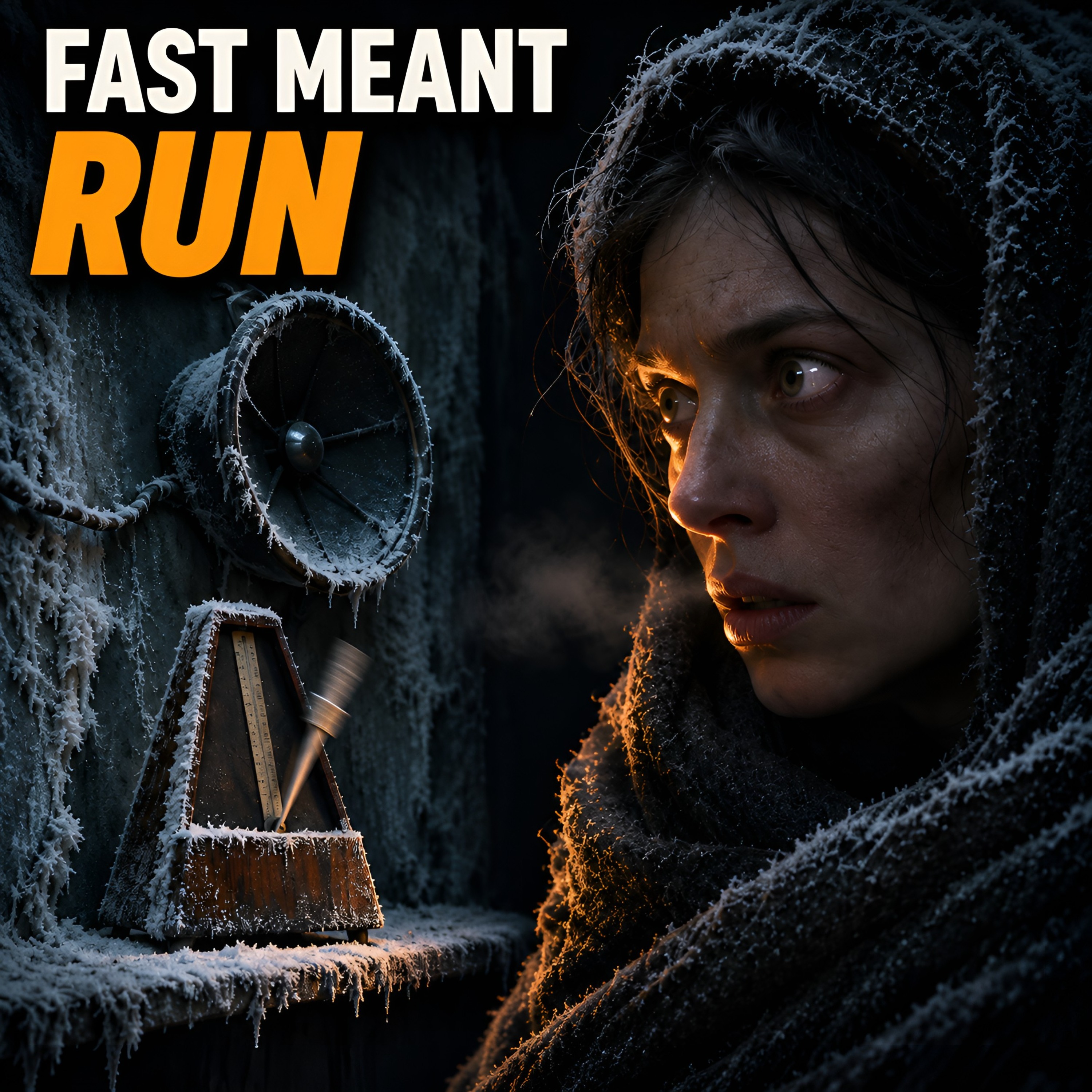
A black paper disc by the door, ticking slowly in the dark.⟡ This narration features AI-assisted voice production, carefully crafted for consistency and clarity.─── ◈ ───OVER 600,000 DIED IN THE SIEGE OF LENINGRAD. THE RADIO TICKED ON.For 872 days, Leningrad was sealed inside a German ring. When the city's radio had nothing left to say, it did not go quiet. It played a metronome. This is the story of that sound, and of the people at the other end of the wire who kept it going.◈ A bread ration cut five times, down to 125 grams a day◈ Botanists who starved beside a seed collection they refused to eat◈ An orchestra log that read: "Srabian is dead. Orchestra not working."◈ A symphony played on 9 August 1942 to a city with almost no strength leftWhen the beat was slow, the city was still there.The Siege of Leningrad, 1941–1944 — Radio Leningrad, the Road of Life across Lake Ladoga, the Hermitage and Shostakovich's Seventh Symphony.History told with space to breathe.─── ◈ ───00:00:00 The Ring00:02:30 The Plate on the Wall00:07:39 The Warehouses00:12:33 Bread00:17:33 The Seed Vault00:22:56 The Road of Life00:27:54 The Dark Rooms00:33:19 Silence00:37:48 The Voice00:43:20 The Empty Frames00:48:43 The Orchestra00:54:01 The Ninth of August00:59:14 The Long Middle01:04:23 Twenty-Four Volleys01:08:57 What the Sound Became─── ◈ ───✧ Support the project: https://linktr.ee/quietarchivum✧ Help keep these stories alive — quietly, consistently.─── ◈ ───✧ Subscribe for history told without noise.✧ New stories arrive when they're ready — and not before.✧ Leave a comment if this one stayed with you.Sources & further readingAnna Reid — Leningrad: The Epic Siege of World War II, 1941–1944Harrison E. Salisbury — The 900 Days: The Siege of LeningradSimon Parkin — The Forbidden GardenBrian Moynahan — Leningrad: Siege and SymphonyOlga Berggolts — "This Is Radio Leningrad!" (1942)#SiegeOfLeningrad #Leningrad #LeningradBlockade #RadioLeningrad #Shostakovich #LeningradSymphony #RoadOfLife #WorldWar2 #WWII #EasternFront #SovietHistory #WarHistory #HistoryDocumentary #HistoryStories #TheQuietArchive Hosted on Acast. See acast.com/privacy for more information.
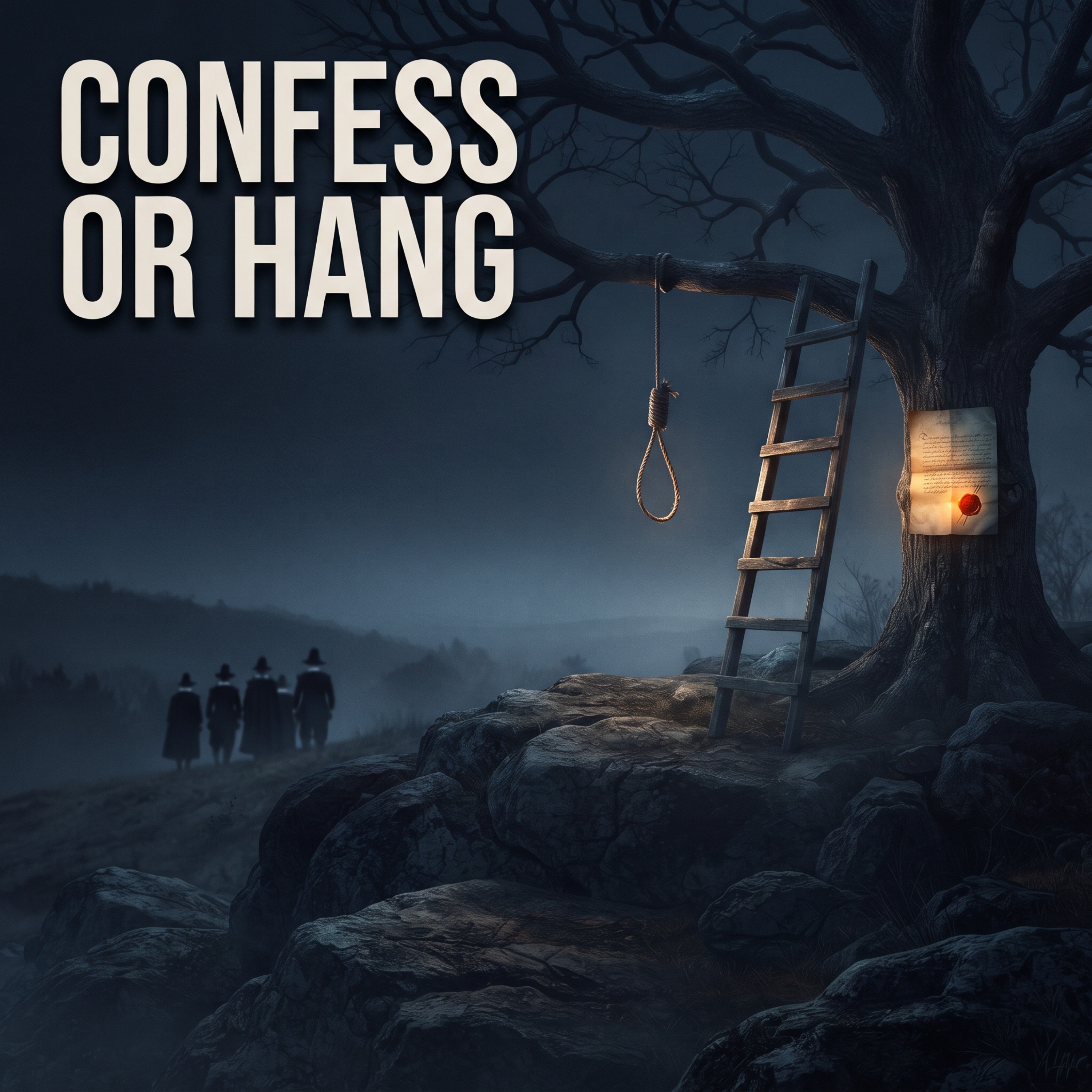
A small girl answers the magistrates' questions, and the clerk writes down every word.⟡ This narration features AI-assisted voice production, carefully crafted for consistency and clarity.─── ◈ ───THE SALEM WITCH TRIALS JAILED A 4-YEAR-OLD. HER MOTHER WAS HANGED.In the winter of 1692, two girls in a minister's house began to suffer from something no doctor could name. Within months, a colony that prided itself on law and scripture had built a court to hunt the Devil, and filled its jails with neighbours, grandmothers and children. This is the story of Salem in 1692, and of a court that decided, one paper at a time, who would live and who would hang.◈ The witch cake baked in a minister's house that turned a sickness into an accusation◈ The jury that said not guilty, and the old woman who could not hear the question◈ The town of Andover, where more people were accused than in Salem itself◈ The farmer who refused to say a single word, and the stones they laid on himNineteen were hanged. Not one of them had confessed.Atmospheric storytelling about the Salem witch trials of 1692, from Salem Village and Salem Town to Andover, Massachusetts.History told with space to breathe.─── ◈ ───✧ Support the project: https://linktr.ee/quietarchivum✧ Help keep these stories alive — quietly, consistently.─── ◈ ───✧ Subscribe for history told without noise.✧ New stories arrive when they're ready — and not before.✧ Leave a comment if this one stayed with you.─── ◈ ───Sources & further reading— Bernard Rosenthal et al. (eds.), Records of the Salem Witch-Hunt (2009)— Salem Witch Trials Documentary Archive and Transcription Project, University of Virginia— Emerson W. Baker, A Storm of Witchcraft: The Salem Trials and the American Experience (2014)— Richard Hite, In the Shadow of Salem: The Andover Witch Hunt of 1692 (2018)— Robert Calef, More Wonders of the Invisible World (1700)— Deodat Lawson, A Brief and True Narrative (1692)— The Diary of Samuel Sewall— Rachel Christ-Doane, "The Untold Story of Dorothy Good," Salem Witch Museum (2024)#SalemWitchTrials #Salem1692 #DorothyGood #RebeccaNurse #GilesCorey #AndoverWitchHunt #SalemMassachusetts #WitchTrials #Puritans #ColonialAmerica #AmericanHistory #HistoryDocumentary #HistoryPodcast #AtmosphericHistory #History Hosted on Acast. See acast.com/privacy for more information.
loading
Comments