


 Claim Ownership
PhotoPhone
Subscribed: 0Played: 0
Subscribe

© Jesse Alexander and Clare Bottomley
Description
Jesse Alexander and Clare Bottomley explore photography within higher education. In conversation with colleagues, recent graduates and other professionals, they seek to address the pertinent issues that concern those involved in learning, teaching, or just curious about photography education.
https://www.jessealexander.co.uk
https://clarebottomley.co.uk
https://www.jessealexander.co.uk
https://clarebottomley.co.uk
12 Episodes
Reverse
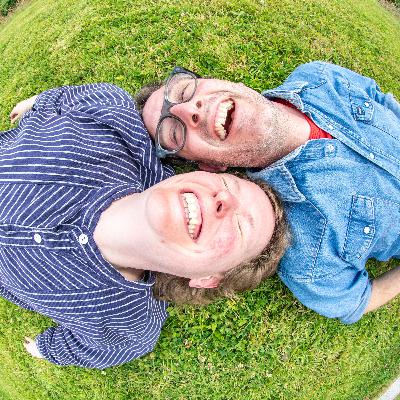
"Play is the highest form of research."-Albert Einstein.Clare and Jesse talk to George Bull and Michal Iwanowski about photography and 'play'. They ask how play has featured in their education and creative practices, and discuss their experiences of students' willingness (or not as the case may be) to play, experiment, take creative risks and get things 'wrong'. George Bull is a photographer and lecturer in photography at Henley College in Berkshire and completed the MA Photography (online) programme at Falmouth University in 2025.https://www.georgecbull.com@George_C_BullMichal Iwanowski is an artist and lecturer in photography at Cardiff Metropolitan University. He has exhibited widely and his work is in numerous collections. His project 'Go Home Polish' which explores his identity in a post-Brexit climate was first published as a photobook and will be exhibited at Y Storiel in Bangor on March 20th, to mark the 10th anniversary of Brexit referendum.https://www.michaliwanowski.com@MichalIwanowskiThank you also to Joe Costigan @CostiganJoe for the playful artwork! (Sorry we ever doubted the wisdom of using a fisheye lens for a portrait!)
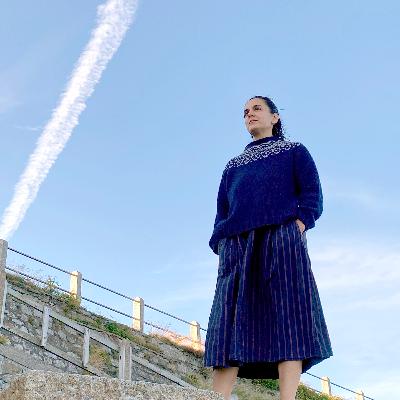
Join by Dr. Catarina Fontoura, Course Leader for BA(Hons) Photography (online) at Falmouth University, Jesse and Clare discuss the challenges of teaching a subject that is steeped in politics, in an unprecedented time of polarised viewpoints.
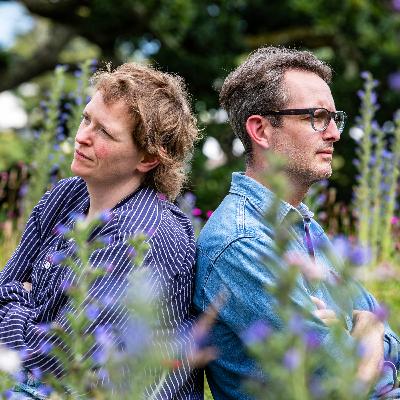
Clare and Jesse explore the idea of graduate “opportunities” such as prizes, awards and other ways to get your work noticed. They ask what best practice looks like, in terms of organisations running such schemes, and to what extent such things exploit new graduates trying to get started in the creative industries. Helping them navigate this are Siân Addicott, Director of Ffotogallery - the photography development agency for Wales, and Philippa James - photographer, Associate Lecturer at Oxford Brookes, and graduate of the MA Photography programme at Falmouth University.Siân mentions Ffotogallery’s annual ‘Ffocws’ exhibition and mentorship scheme for recent graduates as well as those who are entering the industry through other routes. Philippa talks about various activities, including her experience as a finalist for the National Portrait Gallery’s Taylor Wessing Portrait Prize. https://www.ffotogallery.orghttps://philippajames.net
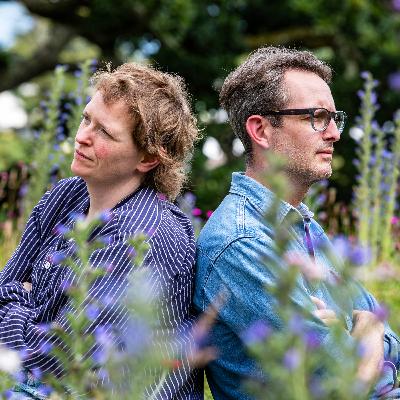
Jesse and Clare talk to Michelle Sank and Geoffrey Bird, both educators and photographers, about their experiences of returning to study photography at postgraduate level as 'mature students'.Michelle is a celebrated documentary photographer and environmental portraitist, and Lecturer on the MA Photography (online) programme at Falmouth University.Geoffrey Bird is a photographer and teacher at the Vancouver British Columbia Institute of Technology, and graduate of the Falmouth MA.The episode discusses the challenges that getting back to study after an extended period of time can bring, and also asks what maturity brings to a cohort of students, and a creative practice more generally. @Sank_Michelle@Geoffrey_BridPhotoPhone theme tune by @MichaelJamesUKPortrait by @CostiganJoeThank you so much, Alan Pelz-Sharpe for giving us this topic to discuss! If you have a topic you'd like Clare and Jesse to explore in an episode, please add a comment here, or use this form.
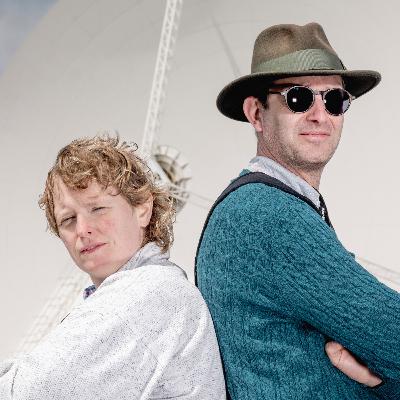
Jesse and Clare talk to Haley Morris-Cafiero @hmorriscafieroand Dawn Rodgers @dawn_s_rodgers about ‘autobiographical’ approaches. Or, in other words, putting yourself literally or emotionally in the picture. This episode discusses Haley and Dawn’s creative approaches as photographic practitioners and how, as educators, we should go about supporting students who make work in these ways.https://www.haleymorriscafiero.comhttps://www.dawnrodgers.co.uk/shop-1/p/sorrow
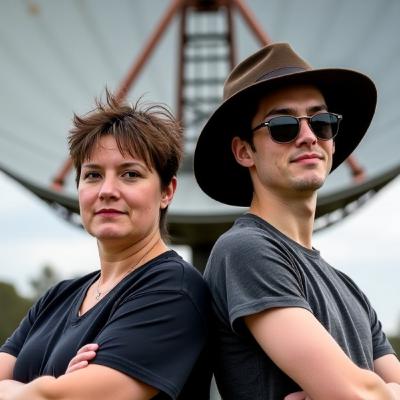
Jesse and Clare ask how Artificial Intelligence is effecting how we teach and talk about photography. In this episode, they are joined by artist and educator, Dr. Wendy McMurdo, and Katy Hundertmark who is managing editor and curator of Foam in Amsterdam.In preparation for this episode, we had a play with our profile picture using StableDiffusionWeb.com It used c. 0.000042 KWh of electricity to produce. PhotoPhone theme © Michael James @MichaelJamesUKPhotoPhone profile photo © Melane Uhkoette @Mel.MelanieUhkoetterFurther reading and works discussed in the episode: FOAM International Photography Magazine no.66. Missing Mirror: Photography through the Lens of A.I.FOAM: Amsterdam.Future's Institutes https://efi.ed.ac.uk/Linn Hershman Leeson https://www.lynnhershman.com/Gem Fletcher. ‘Lynn Hershman Leeson’ in FOAM pp.129 -144‘Interview: Hito Steyerl and Noa Levin’ in FOAM pp.12-17Shannon Vallor. 2024. The AI Mirror: How to Reclaim Our Humanity in an Age of Machine Thinking. Oxford: Oxford University PressECAL/ University of Art and Design Lausanne https://ecal.ch/en/school/network/people/milo-keller/Justine Kurland. 2022. Scum Manifesto. London: MACKMarketa Kinterova https://marketakinterova.cz/?portfolio=public-space-%e2%80%93-workshop Ahmet Polat. Processing Fred Ritchin. 2025. The Synthetic Eye: Photography Transformed in the Age of AI. London: Thames & HudsonWorld Press Photo https://www.worldpressphoto.org/news/2023/could-an-ai-image-win-old-versionXin Li - Magic Wand Tool https://www.foam.org/talent-2024/artist/xin-liAperture no. 257 ‘Image Worlds to Come: Photography & AI. Aperture: New YorkPhotoworks Annual 31. ‘Multi Multi’. Photoworks: Brighton.Naomi M. Elcott & Tim Trombley. 2025. ‘How Can Image-Makers Open Up AI’s Mysterious “Black Box” https://aperture.org/editorial/how-can-image-makers-open-up-ais-mysterious-black-box/
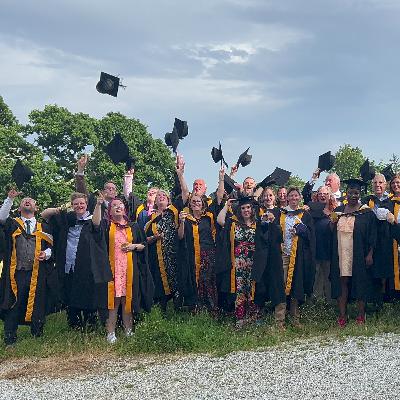
Jesse and Clare discuss what HE adds to photography. In
discussion with Colin Pantall and Laura Hynd, both of whom run their own distinctive non-accredited courses, they explore what HE adds and perhaps takes away from learning photography.
https://www.laurahynd.com/
https://www.instagram.com/laura_hynd/
https://www.colinpantall.com
https://www.instagram.com/colinpantallteaching
With the shift from an industrial-based to a knowledge-based economy in the late 1990s and early 2000s, coupled with New Labour’s expansion of higher education to meet the demands of this new economic model, there was a significant surge in students pursuing photography at the university level. This trend was propelled not only by technological advancements but also by the rapid growth of the creative industries leading to a departure from the traditional Further Education and vocational college routes for photography training.
In more recent times, there has been a rise in non-academic courses and workshops offering training across a diverse range of topics, from creative processes to portfolio
development and professional networking. These courses vary in length and demand different levels of engagement from participants.
Often offered by individual professionals or independent organizations, these courses allow knowledge sharing without the bureaucratic constraints of universities—such as fixed curricula, academic calendars, and predefined learning outcomes.
Do these courses provide both participants and facilitators with a more holistic, flexible opportunity to teach and learn about the craft and profession of photography?
Moreover, could these alternative training paths be seen as viable substitutes for university-based photography education? Or should they be regarded as complementary, addressing areas that universities traditionally place less emphasis on, such as professional practice?
There are ongoing debates about the tensions between academic and professional training in creative fields. The rise—or perhaps, the growing visibility—of non-academic
training suggests a potential crisis in photography education, where academicization and professionalisation appear to be on a collision course.
But how has this increasing academicization impacted the medium of photography?
What has it contributed, and what has been lost?
How has the ‘academic turn’ shaped or challenged our approach to making, understanding, and using the camera?
PhotoPhone theme © Michael James @MichaelJamesUK
Photo © Melane Uhkoette @Mel.MelanieUhkoetter
In this episode, Clare and Jesse explore the thorny issue of class, and what impact this has on studying photography at degree level and beyond, in the context of rising tuition fees, the cost-of-living crisis, the decrease in government funding for art education, and the diminishing emphasis upon art and literature within compulsory education in the UK. They are joined by documentary photographer, artist and educator, Kelly O’Brienand Dr. Vanessa Corby, Professor of the Theory, History and Practice of Fine Art at York St John University.
PhotoPhone theme © Michael James @MichaelJamesUK
Photo © Melane Uhkoette @Mel.MelanieUhkoetter
Further reading discussed in the episode (in order of appearance):
ORIAN, Brook et al. 2023. ‘Social Mobility and ‘Openness’ in Creative Occupations since the 1970s’. Sociology, 57 (4), 789-810.
SHILLIAM, Robbie. 2018. Race and the Undeserving Poor. Newcastle upon Tyne: Agenda Publishing.
FEMI, Caleb. 2020. Poor. Harpenden: Penguin.
BROWN, Jessica. 2024. Underclass: A Memoir. London: Little, Brown.
HOOKS, Bell. 2000. Where We Stand: Class Matters. New York: Routledge.
CREW, Teresa. 2020. Higher Education and Working-Class Academics: Precarity and Diversity in Academia. Cham, Switzerland: Springer Nature.
If you’d like to suggest topics for Clare and Jesse to discuss in future episodes, please submit via this form.
Clare and Jesse talk to Dr. Simon Denison about 'criticality' in relation to photography and teaching: what do we mean by 'critical thinking'? What does it mean in the context of Photography ?And how best can learn how to be better at it?
Simon Denison is a photographer, critic, academic and teacher.
http://www.simondenison.co.uk
His documentary and conceptual landscape photography has been exhibited both nationally and internationally. He is the author of three photographic books, The Human Landscape (Greyscale 2002), Quarry Land (Greyscale 2005) and I Spy Pinhole Eye (with Philip Gross, Cinnamon Press 2009), which won the Arts Council Wales Book of the Year Award in 2010. His work has been reviewed widely including in The Times, The Guardian and on BBC Radio 4.
He has led the Critical Studies department at Hereford College of Arts since 2011, teaching degree-level students across all art, design and media courses. Previously, he taught photography and history of photography at the Institute of Art and Design at Birmingham City University. He regularly reviews books and exhibitions for the photography journal Source. Formerly a broadsheet newspaper journalist and editor of the award-winning magazine British Archaeology, he was educated at Oxford University (Classics) and Edinburgh College of Art (Photography). His doctorate in photography criticism and learning theory from Birmingham City University was awarded in 2023.
Recent publication: 'Putting Ourselves in the Picture: An Autoethnographic Approach to Photography Criticism' in: Goode, J, Lumsden, K, and Bradford, J (eds), 2023. Crafting Autoethnography: Processes and Practices of Making Self and Culture, Abingdon: Routledge.
Clare Bottomley and Jesse Alexander talk to photographer and lecturer Anthony Prothero about getting into lecturing in Higher Education.
Born in 1984 in Torquay and then raised in Bath, Anthony went on to study BA Photography at Falmouth University. After spending some years as an assistant in London, assisting the likes of Igor Borisov, Ryan McGinley, Sarah Maingot and Kevin Macintosh, followed by a staff photographer's post at University of Bath, Anthony returned to Falmouth University to study an MA in Photography for which he earned a distinction.
Along with some editorial portrait commissions, Anthony’s personal project research concerns aspects of; memory, the family album and archives.
More recently Anthony has started to develop his writing on photography. He has a Postgraduate Certificate in Higher Education and is a lecturer and Course Leader of the BA Commercial Photography programme at the Institute of Photography at Falmouth University.
www.anthonyprothero.co.ukwww.instagram.com/anthony_prothero/
Clare and Jesse talk to Falmouth MA Photography (online) graduate Justin Carey. Justin tells us about how he managed his studies alongside his day job and his transition from "a doctor that makes art" to "an artist who's also a doctor".
See Justin's work at: justincarey.com
Follow Justin @ www.instagram.com/justincareycom/
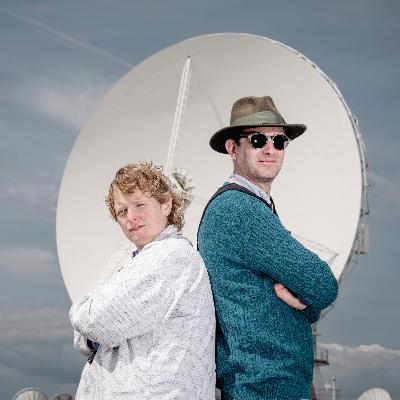
In the inaugural episode, Clare and Jesse talk to recent MA Photography alumnus Adele Annett about student expectations of theory and practice, making the move to HE study in art and design from science disciplines and imposter syndrome.
https://clarebottomley.co.uk/
https://www.jessealexander.co.uk/
https://photographybyadele.co.uk/
If you'd like PhotoPhone to explore any of your questions or observations about photography within higher education, you can post them, anonymously, at: docs.google.com/forms/d/e/1FAIpQL…AwB65OBw/viewform
Comments

Download from Google Play

Download from App Store
 United States