


 Claim Ownership
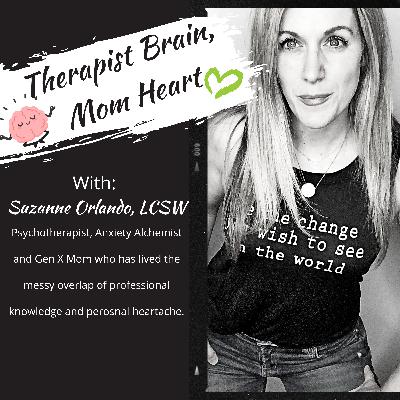
Therapist Brain, Mom Heart
Subscribed: 0Played: 0
Subscribe

© Suzanne Elizabeth Orlando, LCSW
Description
Therapist Brain, Mom Heart is a raw, honest podcast where a Gen X therapist-mom shares the messy truth of raising neurodiverse kids, navigating school systems, and advocating without shame — so parents everywhere feel seen, supported, and never alone.
11 Episodes
Reverse
If you feel like your brain never shuts off, you forget things constantly, and you’re overwhelmed by the mental load of motherhood—this episode will make you feel seen.In this relatable and hilarious episode, psychotherapist Suzanne Orlando breaks down “mom brain”—what it really is, why it happens, and why it’s not forgetfulness… it’s cognitive overload.From mental load and invisible labor to anxiety, intrusive thoughts, and emotional overwhelm, this episode dives into the real psychology behind what moms experience every day.You’ll learn:Why your brain feels constantly overwhelmed as a momThe science behind mental load, anxiety, and overstimulationWhat intrusive thoughts are and why they are normalWhy you snap over “small things” (and why it’s not a personality flaw)How to manage cognitive overload in real, practical waysIf you’re a mom navigating parenting, stress, anxiety, or burnout—this episode will help you understand your brain, feel less alone, and give you language for what you’ve been experiencing.You’re not forgetting.You’re carrying too much.
Parenting adolescents can feel like driving without directions. In this episode, inspired by the song Does Anybody Have a Map? from Dear Evan Hansen, I talk honestly about what it’s like navigating the teenage years for the first time.Even after 20 years as a psychotherapist working with adolescents, there are still moments with my own kids where I think, does anybody actually have a map for this stage of parenting?We explore the reality of parenting tweens and teens today—from social media pressure and teen anxiety to the internal battle between therapist brain and mom brain. I also share why our kids don’t need perfect parents with all the answers—they need parents who show up, repair mistakes, and help them navigate the messy road of growing up.If you’ve ever wondered whether you’re handling your teenager the “right way,” this episode will remind you that none of us have the full map, but we can still find our way forward. 🎙️
As Gen X parents, we got a break from social drama when the school bell rang on Friday. Our kids don’t. Their social world follows them everywhere, through texts, posts, group chats, and social media, and it changes the way they experience trust, rejection, and connection.In this episode, I talk about how we can teach kids to build trust in friendships using the marble theory, how to recognize who really shows up for them, and why noticing the small moments of connection matters more than grand gestures.But just as important, and something nobody talks about, is how to teach kids how not to be friends with someone respectfully. Kids don’t need to be close with everyone, but they do need to learn how to set boundaries while still being kind and emotionally mature.We’ll talk about: • How kids actually learn to trust their friends • Why social media makes friendships harder than ever • The psychology behind belonging and rejection • How to teach kids to be thoughtful friends • How to step back from a friendship without being cruel • Why middle school doesn’t have to feel like social warfareBecause friendship isn’t just about being nice, it’s about learning who deserves a place in your marble jar and how to coexist with the people who don’t.If you’re raising kids in today’s social world, or still healing from your own middle school friendships, this episode is for you.
The internet has entered the chat… and apparently it’s now everyone’s therapist.In this episode, I’m putting therapist brain vs. social media mental health culture head-to-head — and we need to talk about what’s helping, what’s harming, and where things are getting wildly twisted.Not every hard thing is trauma. Not every bad mood is depression. Not every boundary is narcissism. And not every person with a ring light and a Canva quote is qualified to guide you through your mental health.We’re unpacking: why over-identifying with diagnoses can quietly box you in, how TikTok psychology is shaping how our kids see themselves, the difference between support and content, why discomfort is part of growth (ugh, I know) , how we raise resilient kids without dismissing their feelings, and yes… my rant about “coaches” vs licensed therapists (with love, but also… facts)This is not anti-mental health. It’s pro-accurate mental health. Less labels. More skills. More resilience. More truth.If you’ve ever thought, “Wait… is this actually trauma or just life being life?” This episode is your reset button.
No one warns you about this part of motherhood.The mom cliques.The unspoken rules.The pressure to belong.The subtle — and not-so-subtle — relational aggression that shows up in carpools, group texts, birthday parties, and school functions.In this episode, I talk honestly about losing myself while trying to fit into a culture that never truly aligned with who I am — the drinking, the parties, the performances, the moments I laughed along while quietly disappearing inside.I share what it felt like to pull away and realize I wasn’t missed.The grief of recognizing relationships weren’t as real as I thought.The awkwardness of running into people afterward.The fake smiles.The social media gut punches.The silence when you finally share something that matters to you.We unpack the psychosocial dynamics of mom cliques, why relational aggression cuts so deeply in adulthood, how these patterns trickle down to our kids, and what it costs children when belonging is modeled as conditional.This isn’t about blame.And it’s not about villainizing other women.It’s about awareness.Boundaries.Authenticity.And choosing alignment over approval — even when it comes with loss.If you’ve ever felt invisible in a room full of parents…If you’ve ever tried to be someone else just to stay included…If you’ve ever realized the table you were sitting at was slowly stripping you of yourself…This episode is for you.
We’ve been sold the idea that every moment needs to be bigger, better, themed, photographed, and posted. But kids don’t remember the balloon arch. They remember how it felt.In this episode, I unpack how we went from simple drive-by birthday parades during COVID — where connection mattered more than stuff — to over-the-top PTO culture, competitive celebrations, and milestone moments that feel more like performances than memories.We’ll talk about:Why kids remember people, laughter, and belonging — not the favors, themes, or decorationsHow “making it special” can quietly turn into pressure, comparison, and resentmentWhat we’re teaching kids about gratitude, community, and worth (often without realizing it)How to shift from consumption to connection — without becoming the “fun police”This is a conversation about slowing down, letting go of the noise, and remembering what actually sticks with kids long after the party is over.
This episode is about that space.The fear that shows up before logic has a chance. The waiting that feels endless. The stigma we swear we’re over — until our bodies remember first. The pickup line meltdowns. The shame no one warns you about. And the advocacy that doesn’t come with a script, a checklist, or a neat ending.We talk about why your brain jumps straight to worst-case scenarios, why Google after midnight is a terrible idea, and how unresolved educational trauma still follows many of us into school meetings today.We unpack what the system gets wrong, what educators are carrying too, and why support should never require a label.And we name the truth that often gets missed: This isn’t just about helping your child. It’s about normalizing difference so no child has to carry shame in silence.This episode isn’t fast. It isn’t tidy. And it isn’t about fixing everything.It’s about staying. Choosing dignity over denial. Clarity over chaos. Support over silence.If you’ve ever said yes — and then wondered what comes next — this one is for you.
In this powerful, episode, Suzanne Orlando takes listeners on a deeply personal, raw, and hilarious journey into the realities of parenting and educating children with learning differences, behavioral struggles, and mental health challenges. Drawing on her dual perspectives as a parent and licensed therapist, Suzanne unpacks the frustrations, the systemic failures, and the heart-stopping moments that many parents and educators face.Through candid anecdotes, Suzanne illuminates how children absorb every glance, whisper, and interaction—and how crucial it is for adults to meet them with connection, validation, and understanding.Listeners will hear the honest truth about educators: how they navigate impossible systems, endless paperwork, and professional development trainings that often don’t equip them for the realities of today’s classrooms. Suzanne offers a window into their challenges, showing empathy for their work while highlighting the need for consistency and emotional intelligence in schools.The episode also dives deep into mental health support as a lifeline for both children and adults. Suzanne gives actionable tools for parents and educators to advocate, model healthy expression, and support children emotionally and socially. The conversation is peppered with humor, Gen-X cultural references, that make you nod, laugh, and maybe even cry.Listeners walk away feeling seen, empowered, and equipped with practical strategies to make meaningful change for their children, themselves, and the educators around them. This episode is essential for parents, teachers, and anyone invested in the well-being of kids navigating today’s complex educational and social landscape.Key Takeaways:How one adult can transform a child’s experienceThe ripple effect of validation and connection on social and emotional healthMental health support as a critical and consistent lifelineReal-world tools for parents to advocate without shameWays teachers can navigate systemic pressures while fostering genuine relationshipsUnderstanding the lived experience of children who feel misunderstoodWhy anti-bullying programs fail when school culture doesn’t match the messageTrigger Warning: This episode includes discussion of panic attacks, anxiety, bullying, and emotional distress.
If you’re a parent whose stomach drops when the school’s number pops up on your phone, this episode is for you.In this deeply personal conversation, I speak as both a former school social worker and a mom who has watched her child struggle emotionally in a system that often misunderstands kids who need connection the most.We talk about what chronic misunderstanding does to a child’s nervous system, how inconsistency and lack of validation push kids into fight-or-flight, and the quiet social fallout that follows: isolation, exclusion, and shame. I share a powerful moment from my own parenting journey that changed how I see emotional safety in schools forever.This isn’t about blaming educators. It’s about impact, humanity, and what kids actually need to feel safe and supported, and what parents are often too afraid to say out loud.You are not alone. Your child is not broken. And this conversation matters.
In this episode of Therapist Brain, Mom Heart, Suzanne Orlando, LCSW takes you to the other side of the IEP table—the side no amount of professional training can emotionally prepare you for.After 15 years as a school social worker on a Child Study Team in New Jersey, Suzanne thought she understood the IEP process inside and out. She wrote the reports. Ran the meetings. Interpreted the data. Knew the law, the timelines, and the scripts by heart.Then she became a parent sitting across the table.What she shares in this episode is the truth parents rarely hear out loud: knowing the system does not protect your nervous system when it’s your child being discussed. The meetings hit differently when the data belongs to your kid, the stakes feel existential, and your prefrontal cortex quietly exits the room.Suzanne walks listeners through:What it really feels like to sit in IEP meetings as a parent—even with insider knowledgeWhy parents often leave meetings confused, emotional, and doubting themselvesHow shame, fear, and childhood memories hijack the brain during these conversationsWhy behavior rooted in disability is so often misunderstoodThe moment she realized her son needed more—and how advocacy changed his life.She also offers a compassionate look at educators and case managers, who are often overwhelmed, under-supported, and stuck inside a system that prioritizes compliance over connection—while still holding firm to this truth: your child deserves to be understood, and you deserve to be heard.This episode is for any parent who has:Sat at an IEP table with their heart in their throatFelt intimidated by reports, scores, and jargonBeen afraid of being labeled “that parent”Walked out of a meeting emotionally wrecked and unsure what just happenedYou are not overreacting. You are not failing. You are advocating—and that matters more than you know.
In this deeply honest and darkly funny episode, Suzanne Orlando, LCSW—licensed clinical social worker, psychotherapist, and former school social worker—steps out from behind her credentials and speaks from the place that feels far more vulnerable: motherhood. With nearly two decades of professional experience helping families navigate trauma, emotional regulation, and school struggles, Suzanne is the person everyone assumes has it all figured out. She doesn’t—and she’s here to say that out loud.Suzanne shares what it’s really like to parent two kids in the thick of adolescence while carrying the invisible weight of professional expectations, Gen X conditioning, and a nervous system that never quite powers down. She opens up about parenting a son with ADHD and emotional regulation challenges, raising a teenage daughter who is doing exactly what teens are wired to do, and the humbling reality that clinical knowledge does not protect you from losing your patience before 8 a.m.At the heart of this episode is Suzanne’s raw exploration of something many parents feel but rarely name: the trauma of being seen during your hardest parenting moments. From the dreaded school pickup walk to the fear of judgment, she unpacks how shame, hypervigilance, and nervous system overload show up in the body—explaining the neuroscience behind why your brain knows better, but your body panics anyway. This isn’t weakness or failure; it’s biology colliding with impossible expectations.This episode sets the tone for the podcast ahead—a space where the therapist brain and the mom brain can both speak freely. Together, we’ll talk about parenting without neat endings, the IEP process from both sides of the table, emotionally intense kids and teens, and what it means to survive parenting with honesty, humor, and compassion. If you’ve ever felt overwhelmed, judged, or quietly falling apart in your car, this episode is for you. You’re not broken. You’re not alone, and you’re doing better than you think.
Comments

Download from Google Play

Download from App Store
 United States