


 Claim Ownership
Orbital Briefing: The Missions, Machines, and People of Spaceflight
Subscribed: 0Played: 0
Subscribe

© Ron Walker
Description
Orbital Briefing explores the history, technology, and future of human spaceflight.
From the early days of Mercury and Apollo to the Space Shuttle era and the new generation of spacecraft being developed today, each episode dives into the missions, machines, and people that made space exploration possible.
Hosted by Ron Walker, Orbital Briefing brings the stories of spaceflight to life through deep dives into historic missions, the engineers who built them, and the technologies that will carry humanity farther into the cosmos.
From the early days of Mercury and Apollo to the Space Shuttle era and the new generation of spacecraft being developed today, each episode dives into the missions, machines, and people that made space exploration possible.
Hosted by Ron Walker, Orbital Briefing brings the stories of spaceflight to life through deep dives into historic missions, the engineers who built them, and the technologies that will carry humanity farther into the cosmos.
9 Episodes
Reverse
In this episode of Orbital Briefing, Ron Walker takes a deep dive into Jared Isaacman, the 15th Administrator of NASA, exploring his path from entrepreneur and pilot to Inspiration4 commander, commercial spaceflight pioneer, and the man now helping shape the future of Artemis, lunar exploration, and America’s road to Mars. We break down Isaacman’s background, his ties to the modern commercial space era, what his leadership means for NASA, and why this moment could mark a major turning point in the future of human spaceflight. Get the book The American Spaceplane at RetroJetStudios.comNew episodes of Orbital Briefing drop every Thursday. Be sure to like, follow, and leave us a 5-star review wherever you listen.Next episode: Sputnik: The Beginning of the Space Age
In this episode of Orbital Briefing, we dive into Apollo 8, the groundbreaking NASA mission that became the first crewed flight to leave Earth orbit, the first to reach the Moon, and the first to orbit another world. Learn how Frank Borman, Jim Lovell, and Bill Anders helped change history in December nineteen sixty eight, from the tense journey into deep space to the unforgettable Earthrise photo and the iconic Christmas Eve broadcast from lunar orbit.If you love stories about NASA history, Apollo, lunar exploration, the Space Race, and the missions that changed humanity’s future, this is an episode you won’t want to miss.Orbital Briefing is sponsored by The American Spaceplane: A Story of Ambition, Risk, and Reinvention, a book exploring the rise, promise, and legacy of America’s spaceplane dream.For more space history, podcast updates, and RetroJet Studios projects, visit RetroJetStudios.com.
NASA just reshaped the future of human spaceflight. In this special Orbital Briefing update, Ron Walker breaks down the biggest announcements from NASA’s IGNITION event, including the new Artemis roadmap, the shift toward building long-term lunar infrastructure, the growing focus on Mars, and what it all means as Artemis II approaches launch. If you want a clear, accessible breakdown of NASA’s latest Moon and Mars strategy, this episode brings together the headlines, the context, and the bigger picture of where exploration is headed next.That title and description are built around the biggest current search terms tied to the event and NASA’s own framing, including IGNITION, Artemis update, Moon, Mars, and Artemis II. NASA’s IGNITION page and March 24 announcement positioned the event as a broad update to its Moon and deep-space strategy, and NASA currently lists Artemis II for Wednesday, April 1, 2026, at 6:24 p.m. EDT.
How did the Space Shuttle survive the most dangerous part of every mission?During reentry, the shuttle slammed into Earth’s atmosphere at over seventeen thousand miles per hour. Temperatures outside the spacecraft soared into the thousands of degrees, hot enough to melt the aluminum structure of the orbiter in seconds.The only thing standing between the astronauts and that inferno was one of the most remarkable engineering systems NASA ever built: the Space Shuttle’s thermal protection system.In this episode of Orbital Briefing, we take a deep dive into the technology that made reusable spaceflight possible. From fragile silica tiles to reinforced carbon-carbon panels on the wing leading edges, we explore how NASA designed a spacecraft that could survive reentry again and again.We’ll also look at the thousands of engineers and technicians who maintained the shuttle’s heat shield between missions, the early challenges of the first shuttle flights, and the lessons learned after the tragic loss of Columbia in two thousand three.The shuttle didn’t just go to space.It had to come home through fire.And the heat shield made that possible.Sponsored by:The American Spaceplane: A Story of Ambition, Risk, and ReinventionAvailable now on Amazon.🚀 Next Episode:Apollo Eight — The First Lunar Orbit
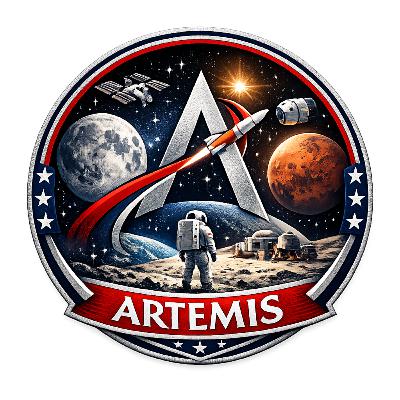
After more than fifty years, humanity is preparing to return to the Moon.In this episode of Orbital Briefing, Ron Walker takes a deep dive into NASA’s Artemis program — the missions, the astronauts, the technology, and the long-term vision to build a lasting human presence beyond Earth.From Artemis I and the upcoming Artemis II crewed mission, to the evolving plans for Artemis III, Artemis IV, and Artemis V, this episode explores how NASA is laying the groundwork for a moon base, sustainable lunar exploration, and eventually, human missions to Mars.You’ll also hear about the people leading the way, including the Artemis II crew, Charlie Blackwell-Thompson, and NASA Administrator Jared Isaacman, as we examine why Artemis may become one of the most important space programs of the twenty-first century.If you’re fascinated by NASA, the Moon, Artemis II, Artemis III, Moon to Mars, space exploration, and the future of human spaceflight, this is an episode you won’t want to miss.Sponsored by:The American Spaceplane: A Story of Ambition, Risk, and ReinventionAvailable now on Amazon: https://a.co/d/0i8OdKgi#NASA #Artemis #MoonMission #SpaceExploration #MarsMission #OrbitalBriefing
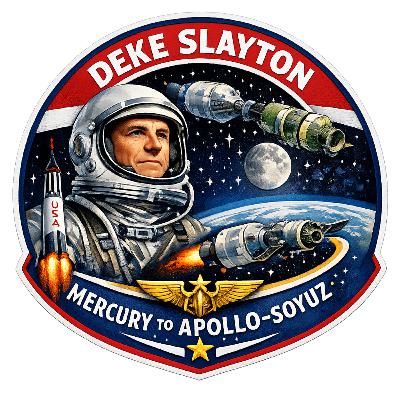
Deke Slayton helped decide who would fly some of the most important missions in the history of human spaceflight.In this episode of Orbital Briefing, host Ron Walker explores the remarkable story of Deke Slayton, one of the original Mercury Seven who became one of the most powerful figures inside NASA.Grounded early in his career due to a heart condition, Slayton never left the astronaut corps. Instead, he became Director of Flight Crew Operations and helped assign crews for Project Gemini, the Apollo program, and the missions that would eventually land humans on the Moon.For more than a decade, astronauts waited for one thing from Deke Slayton: a flight assignment.Then, after sixteen years of waiting, Slayton finally got his own chance to fly aboard the historic Apollo–Soyuz Test Project, the first international partnership in human spaceflight.In this episode we explore:• The selection of the Mercury Seven astronauts• How astronaut crews were chosen during the Space Race• Slayton’s influence on Gemini and Apollo missions• The leadership that shaped NASA’s astronaut corps• The mission that finally sent Slayton into spaceThe American Spaceplane: A Story of Ambition, Risk, and ReinventionDownload the book on Amazon:https://www.amazon.com/dp/B0GQS1VG8XFollow all things space atRetroJetStudios.comNew episodes of Orbital Briefing drop every other Thursday.Next episode: Artemis — Returning to the Moon. 🚀This episode is sponsored by the book
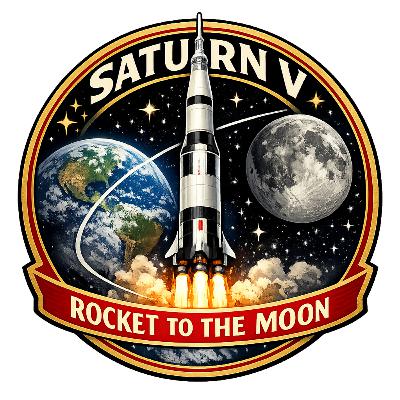
The Saturn V rocket was the most powerful launch vehicle ever successfully flown — the machine that carried NASA’s Apollo astronauts to the Moon.Standing more than three hundred sixty feet tall and producing seven and a half million pounds of thrust, the Saturn V remains one of the greatest engineering achievements in human history. Built during the height of the space race, this three-stage rocket launched every crewed Apollo Moon mission, including the historic flight of Apollo Eleven.In this episode of Orbital Briefing, we take a deep dive into the rocket that made the Moon landing possible. Learn how the Saturn V worked, how its massive F-one engines generated unprecedented power, and how NASA engineers and more than four hundred thousand people helped build the machine that carried humans beyond Earth orbit for the first time.If you love NASA history, the Apollo program, rockets, and human space exploration, this episode is for you.This episode is sponsored by the book:The American Spaceplane: A Story of Ambition, Risk, and ReinventionA deep exploration of the Space Shuttle program — the engineering, politics, triumphs, and tragedies behind America’s reusable spaceplane.Learn more here:https://www.amazon.com/dp/B0GQS1VG8XHosted by Ron WalkerA production of RetroJet StudiosNext episode: Deke Slayton — The Mercury Seven astronaut who helped choose the crews that went to the Moon.
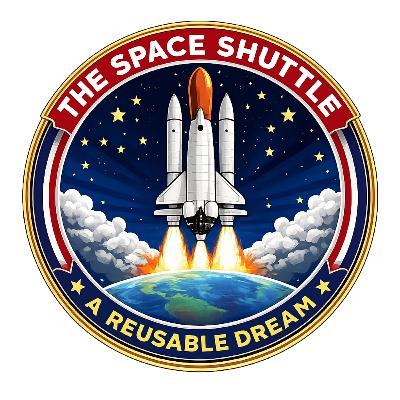
After the Apollo Moon landings, NASA faced an uncertain future. The Saturn V rockets were retired, the Space Race had been won, and funding for space exploration was shrinking.What came next would become one of the most ambitious spacecraft ever built.In this episode of Orbital Briefing, Ron Walker explores how NASA moved from the Apollo program to the development of the Space Shuttle — a revolutionary reusable spacecraft designed to launch like a rocket, land like an airplane, and fly again and again.The Space Shuttle would go on to fly 135 missions, deploy satellites, repair the Hubble Space Telescope, and help build the International Space Station. But the vehicle that eventually launched in 1981 was the result of years of political negotiations, engineering compromises, and bold vision.This is the story of how the dream of reusable spaceflight began.New episodes of Orbital Briefing release every other Thursday.Next episode: The Saturn V — Rocket to the MoonSponsored by:The American Spaceplane: A Story of Ambition, Risk, and Reinventionhttps://www.amazon.com/dp/B0GQS1VG8X
Welcome to Orbital Briefing — the podcast exploring the missions, machines, and people of spaceflight.From the earliest days of the space race to the spacecraft now preparing to carry humans back to the Moon and beyond, Orbital Briefing dives deep into the history and future of space exploration.In this trailer episode, host Ron Walker introduces the show and previews the kinds of stories you’ll hear in upcoming episodes — from legendary missions like Apollo and the Space Shuttle to the engineers, astronauts, and technologies shaping the next era of exploration.Follow the show and join us as we explore the missions, machines, and people that made spaceflight possible.
Comments


Download from Google Play

Download from App Store
 United States