


 Claim Ownership
UX Stories Podcast
Subscribed: 0Played: 0
Subscribe

© 2026 Lihong Hicken
Description
If you want to understand your customers more deeply and unlock growth that doesn't rely on guesswork, this series is for you. Founders, operators, and product leaders tune in to learn how real conversations shape better products, better decisions, and better outcomes.
In each episode of UX Stories Podcast, you'll explore how fast-growing teams uncover meaningful insights using smarter feedback loops and authentic user conversations. Inspired by the approach behind TheySaid, this show digs into why traditional surveys fall short and how modern teams gather richer, more actionable signals that drive real business impact.
In each episode of UX Stories Podcast, you'll explore how fast-growing teams uncover meaningful insights using smarter feedback loops and authentic user conversations. Inspired by the approach behind TheySaid, this show digs into why traditional surveys fall short and how modern teams gather richer, more actionable signals that drive real business impact.
18 Episodes
Reverse

What happens when vibe coders skip user research? You build the wrong thing — fast. Dave Powell, Director of UX at QGenda, shares how his team does real usability work inside one of the most complex, HIPAA-restricted industries in the world.
From Figma prototypes shown to hospital staff before a single line of code is written, to the moment a "warm" customer meeting turned ice cold — this is what serious enterprise UX actually looks like.
🎙️ Guest: Dave Powell, Director of User Experience @ QGenda
🏥 Industry: Healthcare SaaS | Enterprise UX | B2B Product Design
⏱️ Timestamps
0:00 - Intro: Why AI made user research more urgent, not less
1:14 - Dave's background: 8 years fixing healthcare's broken software
1:53 - "Every piece of software they touch doesn't work for them"
2:01 - Why healthcare usability testing is uniquely hard (HIPAA, secure networks, union rules)
4:42 - How Dave navigates access: CX teams as research liaisons
6:22 - The prototype-before-code workflow that makes customers feel heard
7:04 - Piggybacking on CX calls to run usability sessions
8:18 - When listening turns into hard business commitments (not flowery promises)
9:00 - Dave's hiring philosophy: designers who understand humans first
9:36 - "We have a captive audience" — why tolerability matters in enterprise
10:17 - How AI and vibe coding are reshaping UX & product roles
12:56 - Two-phase prototyping: solutioning vs. high-fidelity component work
13:30 - Why enterprise complexity is hard to vibe code your way through
14:54 - "Prototyping with live ammunition" — the danger of skipping validation
16:39 - Customer story: when a warm reception turned into a cold landing
18:16 - Dave's usability toolkit: Maze, Pendo, Google Forms & in-house polling
19:01 - Magic wand question: the one human data point Dave wishes he could measure
20:00 - Closing thoughts: why understanding users is the skill AI can't replace
📌 If you enjoyed this episode:
→ Like & subscribe for weekly conversations with UX and product leaders
→ Share with a product designer or researcher on your team
UXResearch #HealthcareUX #ProductDesign #VibeCoding #UserTesting #QGenda #EnterpriseUX #AIProduct #UXUI #SaaSDesign
In this episode of UX Stories, host Lihong Hicken sits down with Apurva Garware, SVP and Head of Product at Invisible Technologies — the company behind 80% of the world's AI companies. From Microsoft Azure to Amazon to EdTech, Apurva shares how first principles of teaching humans apply directly to training AI models, why hybrid human-AI teams are inevitable, and how vibe coding is transforming the product building process.
🔥 What you'll learn:
✅ How training AI models mirrors teaching children
✅ Why product building is 10x faster with vibe coding & prototyping tools
✅ The future of product teams — convergence of PM, design & engineering
✅ Hybrid teams: AI agents working alongside humans
✅ Why listening to real users still beats AI personas
✅ The "magic number" for user research interviews
👤 About the Guest:
Apurva Garware is SVP and Head of Product at Invisible Technologies, where she works with Frontier AI Labs and enterprises to build AI enablement products. Previously, she held product leadership roles at Microsoft, Amazon, Chegg, and Upwork.
⏱️ Timestamps:
0:00 — 👋 Welcome & Introduction
1:16 — 🎯 Apurva's Career Journey: Microsoft, Amazon, Chegg, Upwork & Invisible
3:43 — 🧒 Is Training AI Like Teaching a Child?
4:11 — 🧠 How Reinforcement Learning Gyms Work
7:29 — 🛠️ How Has Product Building Changed with AI?
8:38 — 💡 From Weeks to Hours: The New Speed of Prototyping
15:41 — 🏗️ The Future of Product Teams: Convergence of Roles
15:49 — 🔮 Prediction #1: Roles Will Converge but Expertise Stays
17:55 — 🤖 Prediction #2: Hybrid Human-AI Teams Are Coming
18:49 — ⚡ Rapid Fire: Always-On Usability Monitor?
20:25 — 🧪 AI Personas vs. Human Feedback in User Testing
22:06 — ❤️ Most Fulfilling Part of the Work
23:41 — 🙏 Closing Thoughts & Key Takeaway
📢 Subscribe for more UX Stories!
ProductManagement #AI #UXResearch #InvisibleTechnologies #VibeCoding #ProductDesign #AIAgents #HybridTeams #UserTesting #TechPodcast
In this episode of UX Stories, host Lihong Hicken sits down with Naveen Mohan, Product Manager and Head of Monetization at Otter.ai, to unpack the art and science of pricing in the age of vibe coding. 🚀
Naveen shares how his data science background at Carnegie Mellon shaped his product instincts, reveals a pricing experiment that looked like an early win but turned into a 20% revenue loss 😬, and breaks down why "clear, easy, and feels fair" might be the golden rule of pricing.
They also debate: in the era of vibe coding, is usability testing still worth slowing down for? 🤔
🔑 Key Takeaways:
How to build and test pricing hypotheses using surveys, A/B testing & live data
The "Calculator Rule" — if customers need a calculator, you've failed 🧮
Why conversion spikes can be misleading without churn data
When to do usability testing vs. just shipping it
The difference between what users SAY they'll pay vs. what they ACTUALLY pay
🕐 Timestamps:
0:00 — 👋 Intro & Meet Naveen Mohan
1:21 — 🧠 From Data Science to Product Management
2:50 — 💡 Data as a PM Superpower in Monetization
3:56 — 💲 How Do You Test a Pricing Model?
5:03 — 📊 Traditional Methods: Surveys, Van Westendorp & Competitor Research
6:57 — 🧪 Lihong's Pricing Testing Story: 11 Rounds in 7 Months
8:23 — 👥 Testing Pricing with Real Target Users
10:15 — 🗣️ "The Calculator Rule" & 3 Principles of Good Pricing
11:28 — 🔄 Predictability & Battle-Testing Your Pricing Model
12:31 — 💥 The Pricing Experiment That Backfired (20% Revenue Drop!)
14:10 — ⚠️ Don't Jump to Conclusions — Wait for the Churn Data
15:36 — 🔁 How Price Changes Impact Renewals & Legacy Customers
16:12 — 🏷️ Handling Public Pricing Pages & Rollback Challenges
17:12 — 🎧 Does Otter.ai Use Usability Testing?
17:52 — 🧪 Prototypes, Lo-Fi Mocks & A/B Testing at Otter.ai
19:00 — 🤖 Vibe Coding vs. Usability Testing: Should You Still Test?
20:28 — 📏 Defining "Big" vs. "Small" Features by User Impact
22:00 — ⚡ Is Usability Testing Still Worth Slowing Down For?
23:20 — 💬 When Your ICP Is Very Different From Your Team
23:55 — 🏷️ Is Pricing Worth Usability Testing?
25:30 — 🎯 First-Time Pricing vs. Iterating on Existing Prices
26:16 — ⚡ Rapid Fire: Go-To Usability Toolkit
26:45 — 🔮 The One Dashboard Metric Naveen Wishes Existed
27:09 — ❤️ Most Fulfilling Part of Being a Product Builder
27:48 — 👋 Outro & Where to Find SAID Stories
🎙️ About the Guest:
Naveen Mohan is a Product Manager and Head of Monetization at Otter.ai with a Carnegie Mellon background in data science and computer science.
🔗 Links:
Start free user testing → theysaid.io
ProductManagement #Pricing #Monetization #OtterAI #UserTesting #VibeCoding #SaaS #ABTesting #ProductStrategy #UXStories
Mike Bal, Head of Product at David's Bridal, joins Lihong Hicken on UX Stories to talk about building digital experiences for one of the most emotional customer bases on the planet — brides.
From merging deep legacy retail expertise with modern product thinking, to why he believes formal usability testing isn't always necessary, Mike shares how his lean team ships fast, gathers scrappy feedback, and keeps the customer experience at the center of everything.
🔑 Key topics:
* How a self-confessed "product nerd" ended up in wedding retail
* Why David's Bridal stylists already set a high bar for CX
* Shipping incremental improvements vs. big-bang releases
* The problem with vibe coding without vibe testing
* Why "they did it wrong" is always a product team problem
* Instagram's early usability testing discipline that led to a $1B acquisition
⏱️ Timestamps:
0:00 — Welcome & Introduction
0:29 — Meet Mike Bal, Head of Product at David's Bridal
1:08 — Core philosophy: Building for an emotional customer base
5:24 — Bringing digital transformation to a legacy brand
9:19 — Ensuring great experiences through feedback
9:40 — Usability testing approach at David's Bridal
12:20 — Remote vs. in-person testing methods
13:04 — Why formal testing isn't always necessary
16:38 — The vibe coding problem: Shipping without testing
23:35 — Current usability testing tech stack
24:57 — Magic wand: Capturing frustrated user feedback
25:46 — Wrap-up
#ProductManagement #UserExperience #DavidsBridal #WeddingTech #VibeCoding #UsabilityTesting #UXResearch #ProductStrategy #DigitalTransformation
🔥 Mazen Letayf, Head of Product at Alkami Technology, delivers a masterclass on why vibe coding is creating a tsunami of low-value software — and what builders should do instead.
With experience leading product at Capital One, Cox Automotive, and Credit Acceptance, Mazen makes a compelling case: the real bottleneck isn't code speed — it's deeply understanding your customer. He shares how his team went from 1% to 5% conversion by obsessing over the full customer journey, why most features go unused, and why NPS might be the worst metric in product history. 🎯
🎙️ Host: Lihong Hicken, co-founder of TheySaid & former co-founder of UserTesting.com
⏱️ TIMESTAMPS:
0:00 — Welcome to UX Stories
1:18 — What drives Mazen as a product builder
2:22 — His obsession with fixing auto & finance
4:35 — How China leapfrogged US in auto & mobile payments
6:26 — Why Chinese EVs are beating legacy automakers
8:02 — Balancing regulation vs. customer-centricity in vibe coding era
13:43 — Why most code is low-value — the real challenge of vibe coding
15:04 — Einstein's 59/1 rule: Stop coding, start listening
17:20 — "NPS is the worst thing that happened to products"
20:21 — The mocha pot analogy: Why intent ≠ experience value
23:42 — The "Temu-ification" of software
29:56 — How Cox went from 1% to 5% conversion in months
33:08 — Can AI-moderated testing replace in-person research?
35:15 — Final thoughts & wrap-up
🔑 KEY TAKEAWAYS:
💡 Vibe coding lowers the barrier to entry — which means more crappy products, not better ones
💡 Understand your customer at an anthropological level before writing a single line of code
💡 Product differentiation comes from services, relationships & data — not UI customization
💡 The best NPS scores come from fixing bad experiences — a perverse incentive
💡 Quantity has a quality in and of itself — AI-moderated testing could be a game changer
🔗 Visit TheySaid.io — Sign up for a free account and start testing with real users today!
📢 If you enjoyed this episode, like, subscribe, and hit the bell! 🔔
ProductManagement #VibeCoding #UX #CustomerExperience #DigitalBanking #NPS #AI #Startups #UserResearch
Jonathan Abon, a seasoned CPO and engineer with 30 years in AI/neural networking, joins Lihong Hicken to discuss the real challenges facing B2B software companies in the age of vibe coding. They explore why speed without direction is dangerous, how to balance rapid prototyping with proper user feedback, and Jonathan's "Usability Index Scoring" framework for measuring user experience in near real-time.
Jonathan shares his process for turning around underperforming product portfolios and why he still believes in jobs-to-be-done, customer needs mapping, and usability testing — even when everyone else is "just shipping."
Timestamps:
0:00 — Welcome & Introduction
1:04 — Jonathan's Background: Engineer Turned CPO
2:38 — What's Wrong with B2B SaaS Today?
3:21 — SaaS vs. AI-Centric Applications Explained
4:23 — How AI Is Changing Product Development (3 Ways)
5:11 — The Scaling Problem: Speed vs. Stability
8:49 — Vibe Coding & The New Way of Building Products
10:13 — Does Vibe Coding Replace User Research?
11:01 — Feedback Fatigue: When Users Get Overwhelmed
11:42 — The Danger of "Throw It at the Wall" Product Dev
13:22 — Finding the Right Balance: Strategy + Speed
13:48 — Why Usability Testing Still Has Value
14:06 — Customer Needs Mapping & Jobs to Be Done
16:13 — Where Vibe Coding Actually Helps (Surgical Innovation)
17:32 — Tech Stack for Feedback: NPS & Beyond
17:58 — Usability Index Scoring: The 4-Part Framework
19:48 — Why Traditional Usability Testing Is Getting Harder
20:09 — The Rise & Fall of UserTesting.com (Private Equity Problem)
24:27 — Magic Wand: What Would Make Feedback Dramatically Easier?
26:26 — Most Fulfilling Moment as a Product Builder
🔗 Try TheySaid.io — 5 free user tests/month: https://theysaid.io

Jodi O'Prandy, VP of Product at 1stDibs, joins host Lihong Hicken on UX Stories to break down what luxury e-commerce and travel booking have in common — and where they diverge.
They discuss how trust factors differ between a $500 flight and a $50,000 piece of fine art, the TripAdvisor filter redesign that failed because it skipped user testing, why hyper-personalization is the future of e-commerce, and what tools like Sprig are doing for modern product teams.
🔑 Topics covered:
Trust signals in high-value vs. commodity purchases
Why cruise shoppers rejected Google Flights-style filters
How AI agents, image search, and natural language are reshaping shopping
The case for moderated user research in the AI era
Rapid fire: go-to testing tools and gathering customer feedback at scale
⏱️ Timestamps:
0:00 - Intro & Jodi's background
1:37 - $500 flight vs. $50K art: How trust differs
3:58 - How long does it take to buy a $50K art piece?
5:52 - Designing for conversion, not just looks
7:00 - How 1stDibs tests new features (focus groups + A/B testing)
7:42 - Why in-person & moderated research still matters
8:42 - The value of body language & behavioral cues
9:57 - Story: The TripAdvisor filter redesign that crashed and burned
13:07 - Lesson learned: Know your users before you build
13:27 - The future of e-commerce: AI agents, image search & personalization
14:48 - Why one-size-fits-all no longer works in e-commerce
16:22 - Image search, AI agents & serving every customer segment
17:02 - Hyper-personalization at 1stDibs
18:03 - Rapid fire: Go-to user testing tool (Sprig)
19:16 - Magic wand: Making feedback gathering easier at scale
🎙️ Guest: Jodi O'Prandy — VP of Product Management at 1stDibs, formerly TripAdvisor & Priceline
🎙️ Host: Lihong Hicken — Co-founder of TheySaid, former UserTesting team (zero to IPO)
Subscribe for more conversations with product leaders on building great user experiences.
Dan Breyre has built products at Amazon, Apple, and JW Player during the internet's biggest shifts. Now as Head of Product at Sofar Ocean, he's applying big tech wisdom to ocean intelligence—helping scientists and governments make better decisions about our planet's most critical, least understood data set.
In this episode of UX Stories, we dig into:
• The fundamental truth about users Dan learned at Amazon that he still uses today
• Why "vibe coding" doesn't mean you should skip user testing
• The 14-pound product lesson that changed how he thinks about requirements
• How to do usability testing when you don't have time (but know you need it)
• Using AI tools to multiply research capacity without losing human insight
• The "torture room" that executives couldn't stay away from
Key Takeaways:
[00:00] Introduction - From Amazon to ocean intelligence
[05:45] The biggest lesson from Amazon & Apple
[12:30] Why product teams are changing (and what's being lost)
[24:15] The danger of optimizing for the wrong metrics
[31:22] How customer expectations are evolving faster than ever
[39:15] The 14-pound lesson in empathy
[48:20] Building a "torture room" for continuous user observation
[01:04:15] Rapid fire: Dan's research toolkit
About the Guest:
Dan Breyre is Head of Product at Sofar Ocean, where ocean data collected by autonomous buoys helps scientists, engineers, and policymakers make informed decisions about weather and ocean health. Previously, Dan held product roles at Amazon, Apple, and JW Player.
Resources:
• Sofar Ocean: https://www.sofarocean.com/
• Connect with Dan on LinkedIn: https://www.linkedin.com/in/dan-breyre/
• Learn more about They Said: https://theysaid.io
ProductManagement #UserResearch #UXDesign #VibeCoding #AI #ProductStrategy #AmazonPM #ApplePM
AI has made product development 10x faster—but user research is stuck in the past. How do modern builders ship products users love when traditional testing can't keep pace?
In this episode of US Stories, Lihong Hicken (former UserTesting executive who scaled the company from zero to IPO) sits down with Arvind Duhan, Chief Product Officer at DispatchTrack, for an honest conversation about the speed mismatch between "vibe coding" and user feedback.
🎯 KEY TAKEAWAYS:
• Why the software development lifecycle has been "completely turned upside down"
• How to prototype and ship 10-20x faster using AI tools
• The problem with $30K+ enterprise user testing platforms
• Building products with "hyper-agile" methodologies that compress traditional testing cycles
• Real strategies for collecting qualitative feedback without slowing down
• The future of AI-powered usability testing vs. human feedback
💡 HIGHLIGHTS:
• [1:52] - How AI fundamentally changed the product development lifecycle
• [6:07] - "Now usage becomes the feedback" - The shift from testing-first to ship-first
• [7:11] - Why traditional agile is now "hyper agile"
• [10:08] - The torture room: Why watching users is irreplaceable
• [18:35] - The real disruption: How AI is breaking SaaS seat-based pricing models
• [28:50] - Arvind's wishlist for AI-powered user testing tools
• [32:20] - TheySaid's vision: AI moderators + real user testing in under 2 hours
ABOUT THE GUEST:
Arvind Duhan is a product leader with 12+ years of experience building products across logistics, fintech, and education technology. Currently Chief Product Officer at DispatchTrack, Arvind advocates for first-principles thinking and solving customer problems at scale using the right technology stack.
ABOUT THE HOST:
Lihong Hicken co-founded TheySaid to solve the speed gap between building and learning. After helping scale UserTesting from zero to IPO, she's on a mission to make user research affordable and fast enough to match modern AI-powered development speeds.
TIMESTAMPS:
0:00 - Introduction: The 10x speed problem
0:52 - Arvind's background in product management
2:32 - How AI changed product development forever
4:53 - From CRM surveys to instant customer feedback
7:11 - The shift from agile to "hyper agile"
10:08 - The power of the "torture room" for executives
17:44 - Instagram's usability testing success story
20:00 - Why user testing became unaffordable
23:02 - Unexpected customer insights from logistics
28:50 - Arvind's wishlist: AI agents as customer personas
32:20 - TheySaid's hybrid approach: Real + AI testing
35:38 - Wrap-up and final thoughts
#ProductManagement #AI #UserResearch #ProductDevelopment #SaaS #UXResearch #Startups #AgileDevelo
Steven Lamb, Product Leader at Addepar, reveals the hidden tension in modern product development: we can build 10x faster with AI, but user testing is still stuck in the past. In this episode of UX Stories, we explore how wealth tech companies balance rapid innovation with zero margin for error when managing trillions of dollars.
Key Topics:
• Why "vibe coding" is outpacing traditional user testing methods
• The reality of B2B user testing: 3-day turnarounds vs 24-hour expectations
• Synthetic user personas and AI-powered usability testing experiments
• When to use deterministic systems vs AI in financial products
• The critical difference between user feedback and usability testing
• How Instagram shipped twice daily with rapid testing (and why that's rare today)
Timestamps:
0:00 - Introduction: The speed problem in product development
3:15 - Balancing AI innovation with financial accuracy at Addepar
8:42 - Why traditional user testing is too slow for modern development
15:30 - Synthetic personas and "vibe usability testing"
22:18 - The B2B user testing challenge: context vs speed
28:45 - Steven's vision for 100% tested products by 2026
Steven Lamb leads product innovation at Addepar, a platform tracking trillions in assets for sophisticated investors. He shares hard-won lessons about maintaining trust while innovating at AI speed.
Resources:
• Visit TheySaid.io to start vibe testing your products
• Connect with Steven Lamb on LinkedIn
ProductManagement #UserTesting #AIProduct #B2BSaaS #WealthTech #UXResearch #ProductDevelopment
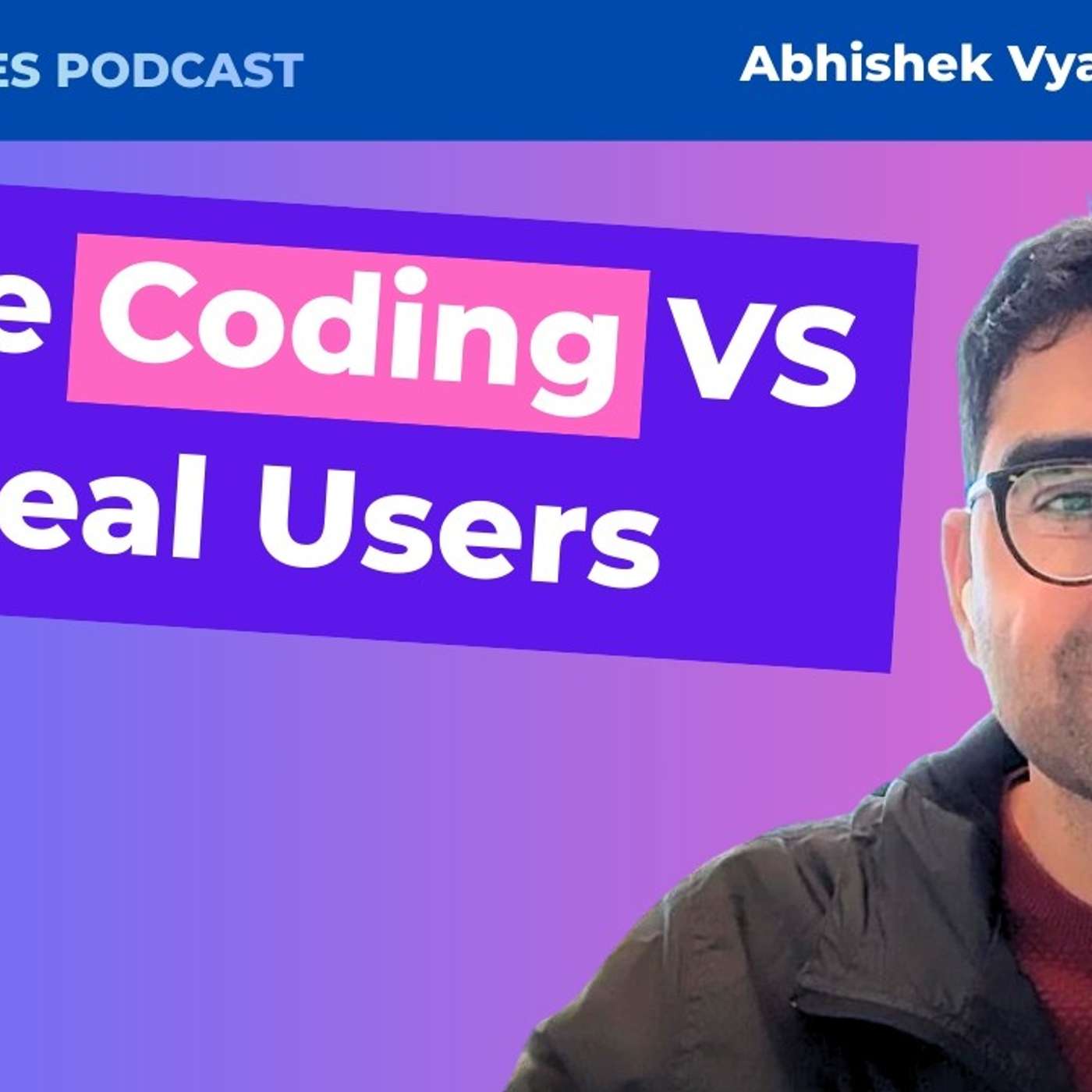
In this episode of UX Stories, host Lihong Hicken sits down with Abhishek Vyas, Director of Product Management at Auditoria.AI, to explore how AI is transforming enterprise product development.
🎯 Key Topics Covered:
• The current state of agentic AI in enterprise environments
• How AI committees are shaping enterprise AI adoption
• Vibe coding vs. traditional product development workflows
• The role of user testing in the age of rapid AI-powered development
• B2B vs. B2C product validation strategies
• Why usability testing still matters (even with AI)
• Finding product-market fit through customer feedback
💡 Key Insights:
Agentic AI is still early stage but evolving rapidly
Enterprises are creating AI compliance committees alongside security reviews
Product teams are using tools like Cursor and Lovable to build prototypes in days instead of months
The fundamental principle hasn't changed: focus on solving real customer problems
User testing remains critical - there are no shortcuts to understanding user behavior
🔧 Abhishek's Background:
15+ years in product management at Meta, Workday, Walmart, and VMware, with 7-8 years focused on ML/AI products. Currently building agentic AI solutions for finance operations at Auditoria.AI.
⏱️ Timestamps:
0:00 - Introduction
1:00 - Abhishek's AI journey from NLP to Gen AI
4:30 - Is agentic AI ready for enterprise?
8:20 - AI compliance committees in enterprises
13:30 - How AI is changing product development workflows
20:00 - Customer validation in the vibe coding era
28:00 - The value of usability testing today
🎙️ About UX Stories:
Conversations with product builders navigating the intersection of AI, user research, and rapid product development.
AIAgents #ProductManagement #UserTesting #EnterpriseAI #B2BSaaS #ProductStrategy #VibeCoding #UXResearch #AICompliance
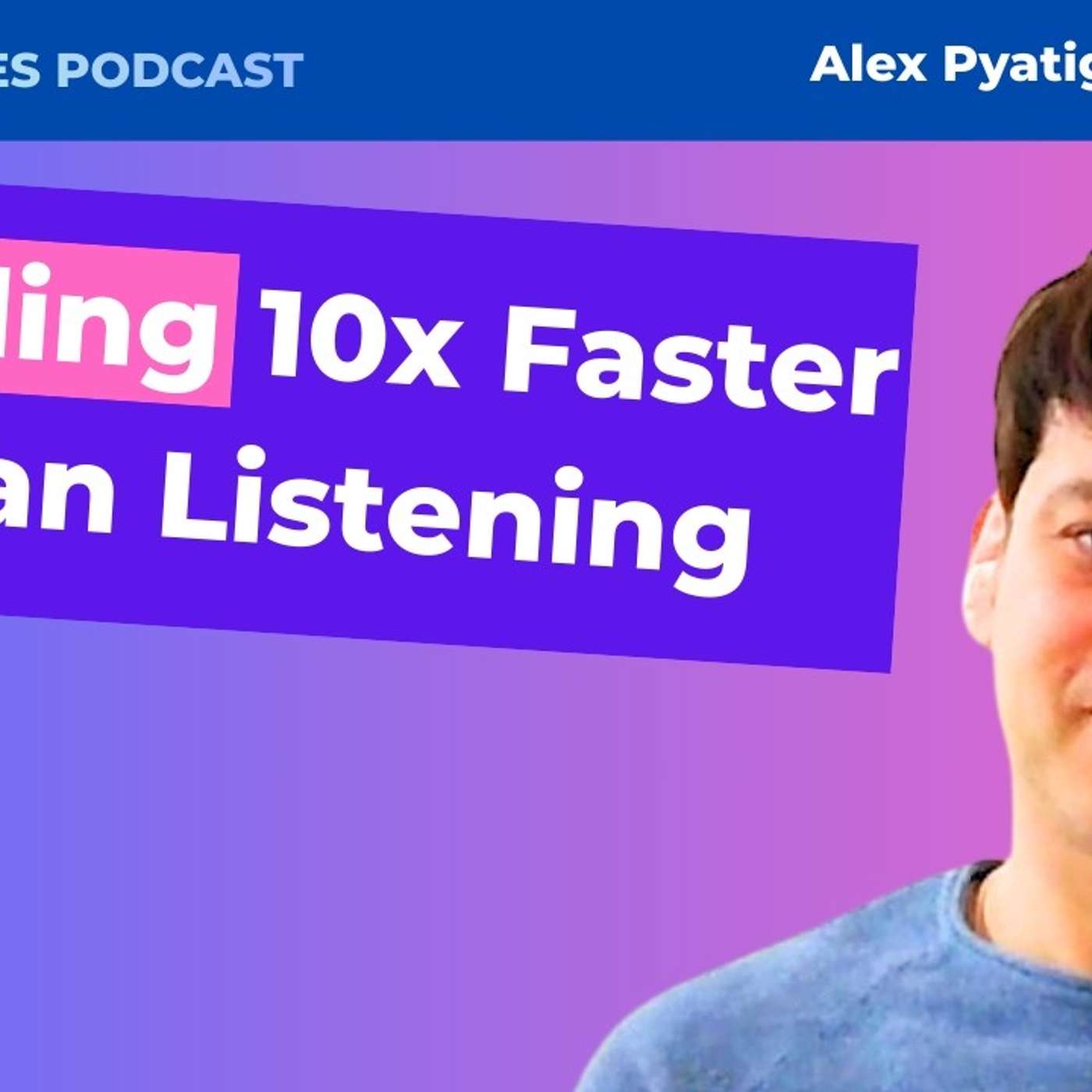
AI has made building products 10x faster—but are we forgetting our customers in the process?
In this episode, I sit down with Alex Pyatigorskiy, Head of Product at Vama and former Chief Digital Business Officer at Disney, to tackle the biggest challenge facing product teams today: how to maintain customer-centricity when vibe coding has replaced traditional product development.
🎯 KEY TOPICS:
• Why founders are abandoning pre-launch user research (and why that's risky)
• The "torture room" that became the most popular space at a major bank
• How to do user testing at the speed of AI development
• Why customers now expect you to use their data to bring them value
• The Henry Ford fallacy: what user research actually reveals
• Building products for introverts vs extroverts
• AI testing tools vs human insights: when to use each
💡 BEST QUOTES:
"The speed of building is 10x faster than the speed of listening"
"Users never can explain what they need—but that doesn't mean you should abandon research"
"Value first, before any cool features or optimizing onboarding"
⏱️ TIMESTAMPS:
0:00 - Introduction: The AI product development crisis
2:15 - Alex's background: Disney to Vama
5:30 - How customer expectations have evolved
12:45 - The three domains of product management
18:20 - Why some founders abandoned user research
25:10 - The "torture room" story
32:40 - Current user testing stack (including AI tools)
40:15 - The magic wand question: extracting true emotions
🔗 CONNECT WITH ALEX:
LinkedIn: https://www.linkedin.com/in/alexpyatigorskiy/
Vama: https://www.vama.com/
🔗 ABOUT UX STORIES:
I'm Lihong Hicken, and I scaled UserTesting from zero to IPO. Now I'm building TheySaid to bring vibe testing to the speed of vibe coding. Subscribe for weekly conversations with product leaders who are navigating the AI revolution while keeping customers at the center.
Try TheySaid: https://www.theysaid.io/
Follow me on LinkedIn: https://www.linkedin.com/in/lihonghicken/
#ProductManagement #UserResearch #AI #UXDesign #ProductDevelopment #CustomerCentric #AITools #Disney #Vama #UserTesting
Your product roadmap is moving faster than your customers can keep up.
That gap is silently killing adoption, retention, and expansion revenue.
Watch this episode to learn how to validate what matters before you ship.
Most B2B SaaS teams don’t have a product problem—they have a feedback speed problem.
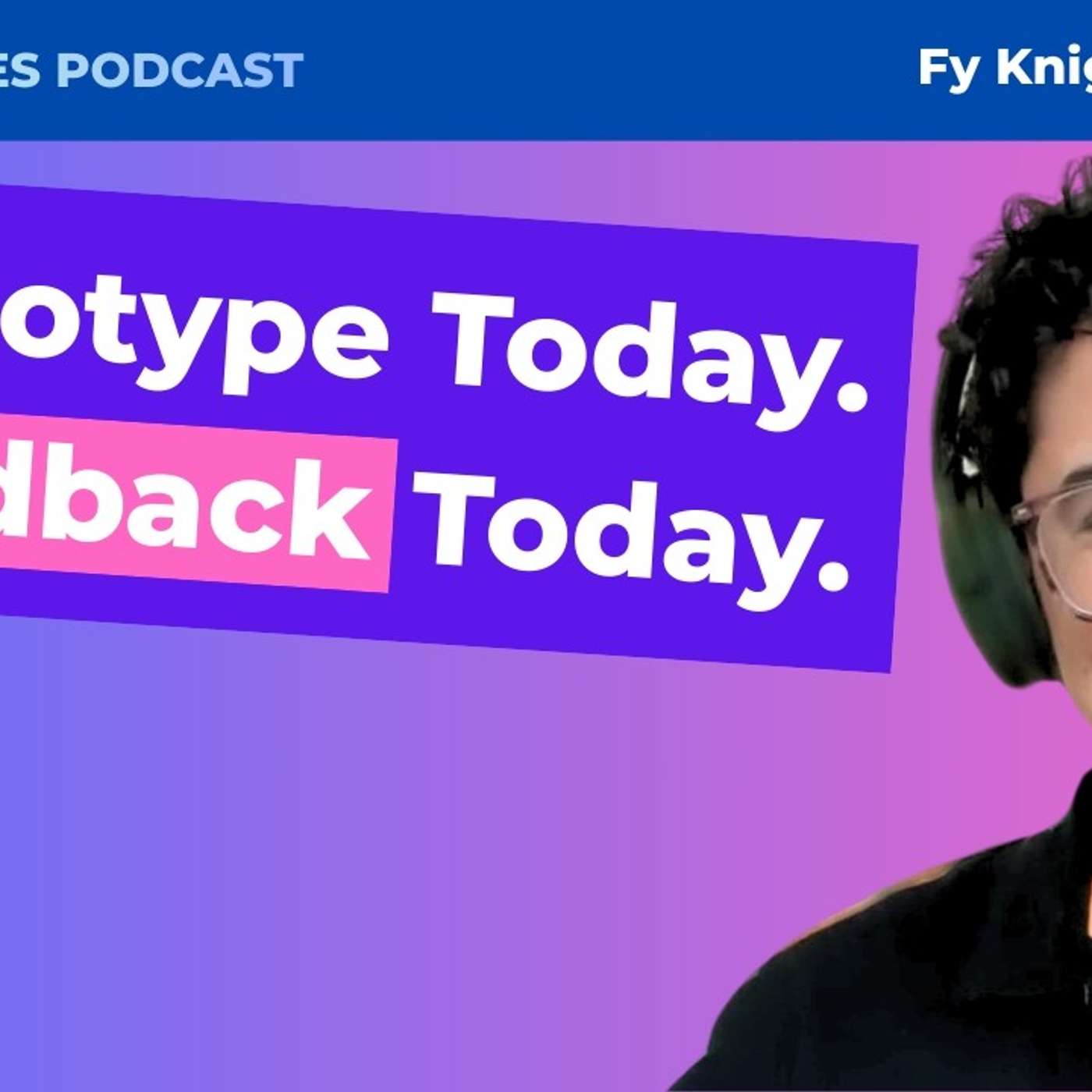
In this episode of UX Stories, Lihong Hicken sits down with Fy Knight (Head of Product at Recidiviz) to break down what it really means to build products that are personal, empowering, and effortless. Fy shares how high-performing product teams validate risky assumptions fast, avoid expensive experimentation traps, and turn user feedback into real business outcomes. You’ll learn how to create momentum with rapid validation methods that don’t rely on slow cycles or endless internal debate.
If you’re shipping fast but learning slow, this conversation will change how you build.
✅ Key Insights from This Episode:
✅ Why speed is beating listening right now
✅ The “vibe testing” mindset for product teams
✅ How to validate risky assumptions faster
✅ Why A/B tests are the most expensive option
✅ What users say vs what they actually do
✅ How to turn metrics into user outcomes
✅ Resources & Links:
✅ Connect with Fy Knight (LinkedIn): https://www.linkedin.com/in/celesteknight/
✅ Get Fy’s team-level product feedback system & validation playbook: https://www.recidiviz.org/
B2B SaaS teams are shipping faster—but adoption and trust aren’t keeping up.
That gap silently drains pipeline efficiency, retention, and expansion.
Watch this episode to learn the strategic approach UX leaders use to scale with confidence.
Speed is not the same as progress.
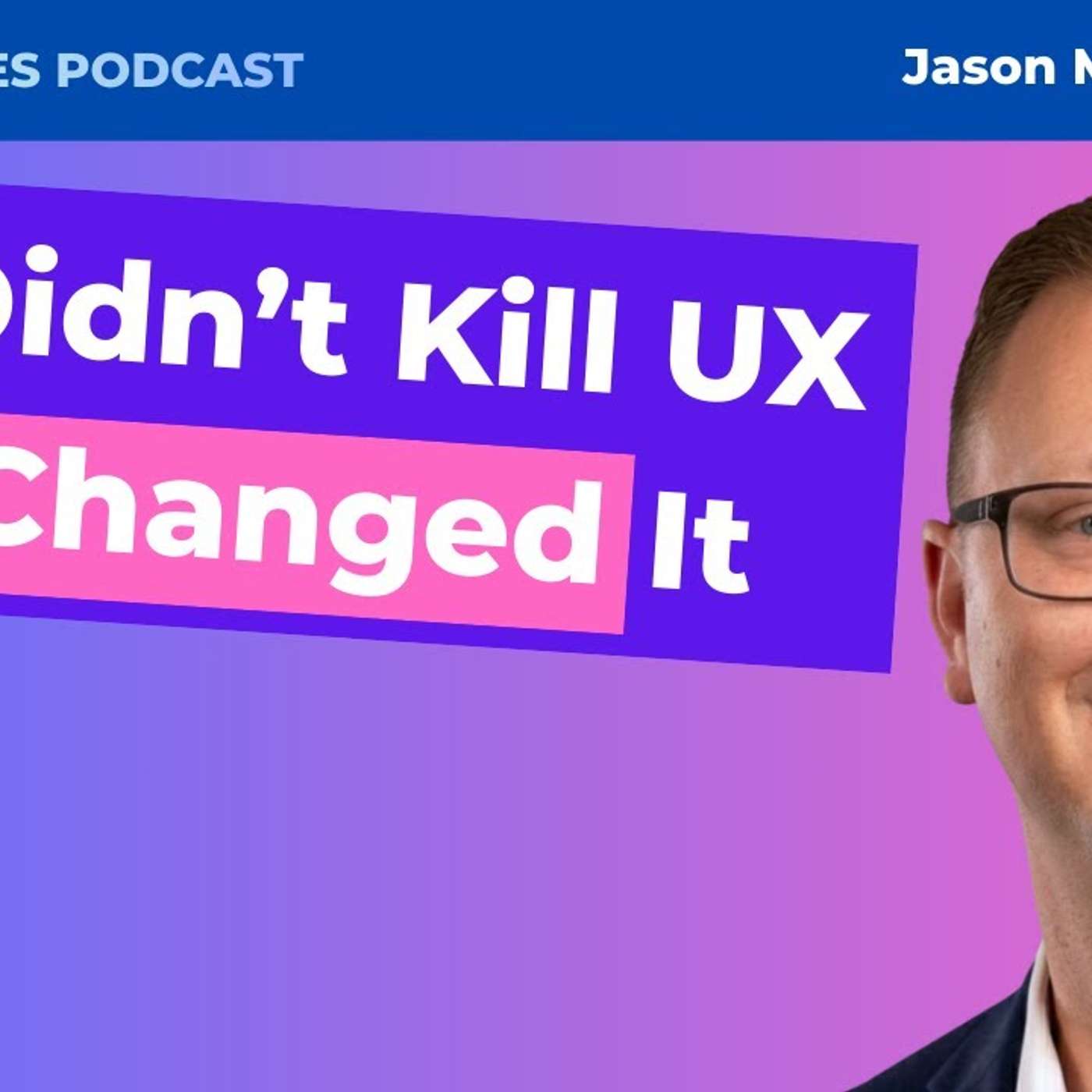
Jason Moore (Head of User Experience at Planful) breaks down what’s changing in UX leadership as AI accelerates building, design, and decision-making across product orgs. You’ll hear why “tool obsession” is a career trap, how to lead teams through constant change, and why synthetic users can be useful for spotting obvious gaps—but dangerous as a substitute for real customer truth. We also get into the real reason research teams stay understaffed, how to prove UX ROI with outcomes (not outputs), and how to evolve toward a long-term product vision without breaking customer trust.
If you’re a SaaS exec trying to grow efficiently while product velocity explodes, this is your playbook.
✅ Key Insights from This Episode:
✅ Ship fast without losing trust
✅ Why “why” beats opinions
✅ Synthetic users: use wisely
✅ UX ROI = outcomes, not output
✅ Tool skills won’t save careers
✅ Bring users along gradually
✅ Data mistrust is game over
✅ Resources & Links:
✅ Get Jason’s UX leadership framework: https://www.linkedin.com/in/jasongmoore/
Your product is shipping faster than your customers can keep up.
That gap is quietly killing adoption, retention, and expansion revenue.
Watch this episode to learn the strategic fix top product leaders use to scale growth.
Building faster isn’t the same as building better.
In this episode of UX Stories, Sam Ho (ex-Head of Product at Tuning, VP Product at Sendoso, Director of Product at Glassdoor) breaks down why “vibe coding” is creating a dangerous illusion of progress for B2B SaaS teams. We unpack how the speed of AI-powered building is outpacing real customer understanding—and why many teams are shipping features that only power users touch. If you want real growth, the goal isn’t less friction everywhere… it’s lower cognitive load, smarter onboarding, and a product experience that meets users where they are.
If you’re a SaaS leader trying to scale efficiently, this conversation will change how you think about product velocity.
✅ Key Insights from This Episode:
✅ Vibe coding is speeding up the wrong part
✅ Feature velocity ≠ user adoption
✅ Why “protect engineering time” changed
✅ Don’t build for the loudest 4%
✅ Reduce cognitive load (not friction)
✅ Onboarding is your growth engine
✅ Vision + iteration wins long-term
✅ Resources & Links:
✅ Get Sam’s product builder playbook: https://www.linkedin.com/in/samho/
Shipping faster shouldn’t mean shipping the wrong roadmap
When product intent is unclear, growth stalls and churn spikes
Watch to learn how top teams align speed with real customer value
AI is accelerating product teams—but it’s also accelerating bad decisions.
In this episode of UX Stories, Lihong Hicken sits down with Jason Kirby (Global Head of Product Engineering at Magic Memories) to unpack why “build fast” isn’t the same as “build right,” how competing stakeholder intent quietly sabotages growth, and where AI is strong vs. dangerously weak.
You’ll walk away with a practical framework for keeping quality, clarity, and customer feedback at the center—without slowing down your team.
If you’re leading growth in B2B SaaS, this conversation will help you tighten strategy, reduce wasted build cycles, and ship with confidence.
✅ Key Insights
✅ Speed ≠ accuracy in AI
✅ Intent beats output
✅ QA still needs humans
✅ Avoid “marketing features”
✅ Watch users, not dashboards
✅ Resources & Links
✅ Jason Kirby: https://www.linkedin.com/in/jasonkirby/
✅ Magic Memories: https://www.magicmemories.com/
Standing out in an AI-dominated search world is killing your pipeline.
If your message sounds generic or invisible in LLM results, you’re leaving revenue on the table.
Watch this episode to learn how a 3x SaaS CMO uses AI strategically to grow, not water down, your brand.
Most SaaS marketing teams are using AI to move faster—but also to sound the same.
In this episode, three-time SaaS CMO Ashley Deibert breaks down how she used AI to overhaul LLM search performance, re-architect brand positioning around real customer language, and drive pipeline without letting bots write the story. She shares how her team achieved a 1900% boost in LLM search visibility, rebuilt product marketing to sit closer to customers, and tied every function—content, PMM, and competitive intelligence—directly to pipeline. You’ll also hear how she uses AI for research and synthesis, when she refuses to let it touch customer-facing copy, and why giving PMMs a number is the fastest way to change behavior.
If you want to stop being “just another AI-powered vendor” and start owning your category narrative, this episode shows you how a CMO actually does it.
Key Insights from This Episode:
✅ Why “no-AI-written blogs” can still 19x your LLM search
✅ How to rebuild messaging from real customer language
✅ Connecting product marketing and customer marketing for impact
✅ Giving PMMs and content teams a pipeline target
✅ Using competitive intel in outbound and paid campaigns
✅ When AI should support research—not own your brand voice
✅ Simple feedback loops that sharpen positioning over time
Resources & Links Mentioned:
✅ Customer surveys that go beyond NPS
✅ Competitive takeout campaigns tied to clear KPIs
✅ Biannual feedback as a compass for roadmap and messaging
Resources & Links:
🔗 Get Ashley’s B2B SaaS CMO strategy & advisory insights: [https://www.linkedin.com/in/ashleyeckeldeibert]
Scaling revenue as a B2B SaaS leader while staying truly trusted is harder than ever.
When buyers doubt your credibility, deals stall, churn rises, and growth gets capped.
Watch this episode to learn a practical trust-first strategy you can apply across your go-to-market.
Trust is still the most powerful growth asset your company has.
In this episode, Lisa Swanson—CEO and President of the Better Business Bureau of Central New England—shares how a 100+ year-old institution is evolving in 2025 while holding the line on credibility, ethics, and customer protection. She breaks down why human-vetted reviews still matter in an AI-driven world, how businesses can avoid the “grow too fast, break trust” trap, and why following through on simple promises often beats flashy tactics. You’ll also hear her perspective on scams, consumer education, and what it really means to build a marketplace of trust instead of just chasing clicks.
If you’re a B2B SaaS leader trying to turn reputation into a strategic growth advantage, this conversation gives you a timeless blueprint.
Key Insights from This Episode:
✅ Why credibility and follow-through are your real moat
✅ How AI, ethics, and trust collide in 2025
✅ Simple ways to signal reliability in crowded markets
✅ Why relationships beat short-term growth hacks every time
✅ How to think about scams, urgency, and “too good” offers
✅ Back-to-basics advice for sustainable, trust-led growth
Resources & Links Mentioned:
✅ Learn how BBB supports honest, trustworthy businesses
✅ Use education to protect customers from scams year-round
✅ Focus your team on clear goals, standards, and accountability
Resources & Links:
🔗 Build trust and credibility with the Better Business Bureau of Central New England: [https://www.linkedin.com/in/lisa-swanson-037a5924]
👉 Like, comment, and subscribe for more B2B SaaS growth and trust-building strategies!
Your B2B SaaS forecasts still feel more like a guess than a system.
That uncertainty hides churn risk, weak deals, and stalled revenue growth.
Watch this episode to learn how a CEO uses AI to turn messy ops into predictable revenue.
AI is evolving faster than most SaaS leadership teams can realistically adapt to.
In this episode, Naushad Parpia—CEO and founder of Plative and Earth Side Farms—shares exactly how he’s weaving AI into the fabric of his business, from sentiment-scoring client calls to automated win–loss analysis and forecasting. He breaks down how his team uses AI agents across systems to surface risks early, improve project delivery, and make their forecasts feel less like a guessing game and more like a control panel. You’ll also hear his take on the future of work, why empathy matters more as AI scales, and how sales and customer feedback still sit at the core of every great strategy.
If you’re a B2B SaaS leader trying to move from reactive chaos to proactive, AI-augmented growth, this conversation is a blueprint.
Key Insights from This Episode:
✅ AI sentiment on calls as an early warning system
✅ Using AI agents to run win–loss analysis on demand
✅ Making SaaS forecasting more accurate and less political
✅ Automating reports so managers focus on outcomes, not admin
✅ Balancing AI efficiency with empathy and culture
✅ Why “sales cures all” still matters in an AI era
✅ How feedback loops keep your GTM motion evolving
✅ Why hiring great people is harder—and more important—than ever
Resources & Links:
✅ Unlock AI-driven forecasting and win–loss insights with Naushad’s team at Plative: [https://www.linkedin.com/in/naushadparpia]
👉 Like, comment, and subscribe for more B2B SaaS growth and AI strategy insights!
AI is evolving faster than SaaS companies can adapt.
Every missed step compounds into stalled growth and operational waste.
Watch this episode to learn the strategic AI roadmap tech leaders must adopt now.
AI adoption isn’t the challenge—misaligned AI adoption is.
In this episode, Microsoft MVP Chris Hinch explains why most SaaS leaders are deploying AI backwards, how “FOMO-driven adoption” is destroying ROI, and the practical steps executives can take to finally make AI a growth driver instead of a productivity drain.
You’ll learn how to find your “AI aha moment,” deploy AI where it actually moves metrics, and avoid the hallucination, hype, and chaos stalling so many teams today.
Chris breaks down exactly how to think about productivity gains, workflow automation, and tech stack strategy in a world where AI is evolving faster than any technology in the last 25 years.
This episode gives SaaS leaders a clear path forward.
Key Insights from This Episode:
✅ AI FOMO is killing ROI — why leaders must define pain points first
✅ The “aha moment” framework that drives real AI adoption
✅ Why chat-based refinement beats traditional search for knowledge workers
✅ How to reduce busywork & reclaim hours with AI-driven workflows
✅ Handling AI hallucinations intelligently (trust but verify)
✅ When AI should be customer-facing — and when it absolutely shouldn’t
✅ The difference between LLMs vs SLMs when designing internal AI systems
✅ Automating recruiting, support, inbox management & daily workflows
✅ What’s coming next in AI: locally-grounded models & secure data access
Resources & Links:
🔗 Transform your workflows with Chris Hinch’s expertise (https://www.linkedin.com/in/hinch/)
👉 Like, comment, and subscribe for more SaaS growth insights!
Comments

Download from Google Play

Download from App Store
 United States