


Kaatscast: the Catskills Podcast
Subscribed: 24Played: 804
Subscribe

© Silver Hollow Audio
Description
Kaatscast: the Catskills Podcast is a biweekly series featuring Catskills culture, history, sustainability, local interviews, literature, and the arts. Shows are hosted by Brett Barry and produced by Silver Hollow Audio, in the heart of the Catskills. Subscribe and experience what reviewers have called “delightfully informative” storytelling with “great production quality.” Voted “Best Regional Podcast” three years in a row. Episode archives, transcripts, and a robust search engine at kaatscast.com. Enjoy!
180 Episodes
Reverse
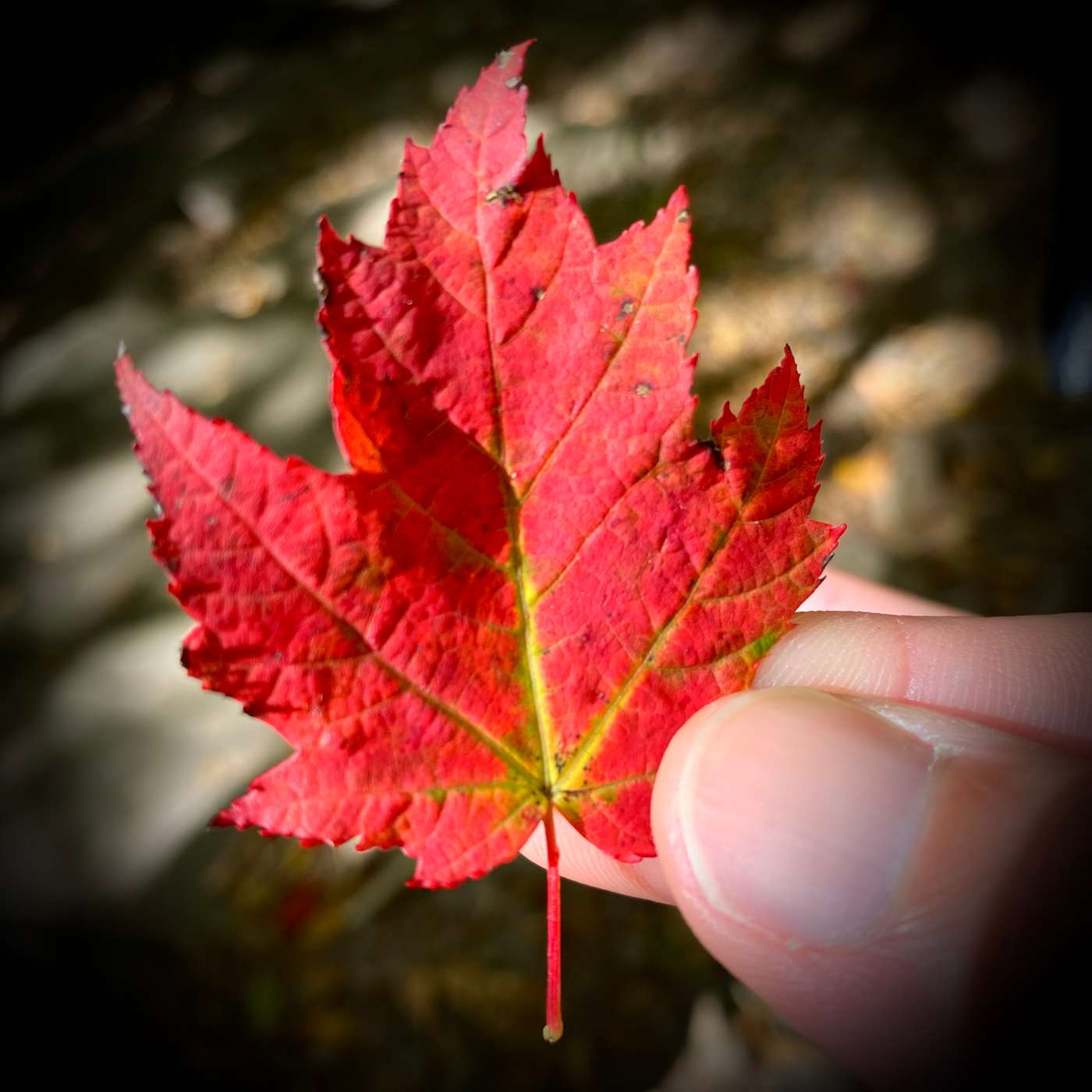
As the leaves change, Kaatscast and Cidiot join up to look at fall foliage on both sides of the Hudson. Cidiot's episode covers the science of leaf color with Cary Institute scientist Dr. Amy Zanne. This one covers the west side: an environmental educator explains why leaves change color, and five more Catskills residents describe how they spend the season and where they go to see it.In this episode00:00 Introduction, with a reading of "Poème d'Automne" by Langston HughesThe autumn leavesAre too heavy with color.The slender treesOn the Vulcan RoadAre dressed in scarlet and goldLike young courtesansWaiting for their lovers.But soonThe winter windsWill strip their bodies bareAnd thenThe sharp, sleet-stungCaresses of coldWill be their onlyLove.01:33 Matt Savatgy, environmental scientist in residence in the Onteora School District (Cornell Cooperative Extension / Ashokan Watershed Stream Management Program), on chlorophyll, why trees go dormant, how drought and a wet August affect color, and why the Northeast shares its foliage with places at similar latitudes like South Korea. Favorite spots: the escarpment at North Lake, Ashokan Quarry Trail, Giant Ledge, Overlook Mountain.11:57 Milton O'Connell of the Bruderhof community in Platte Clove on fall hikes (Kaaterskill High Peak, Indian Head, Plattekill Mountain, Dibble's Quarry) and the community's fall festival.15:41 Painter Christie Scheele on why fall is the season she paints least, what she looks for in late-fall oaks, and driving Route 28 west.21:24 Photographer Casey Kelbaugh on shooting foliage in overcast light, iPhone settings, and a one-way hike through Diamond Notch to the West Kill brewery.28:10 Ed Ullmanm of Wellness Rx in Phoenicia on fall as a season of reflection, plus his advice on flu shots, COVID boosters and immune support.33:05 Samantha Awand-Gortel, manager of Ulster Savings Bank's Phoenicia branch, on preparing finances for winter costs and her favorite views, including the Belleayre and Hunter Mountain Oktoberfests.35:42 Closing and how to send in your own fall favoritesEvent: The Bruderhof fall festival in Platte Clove is Saturday, October 3, 2026, 2:00–5:00 PM, open to the public (hayrides, pumpkin carving, cider making).LinksCidiot podcast, East of Hudson fall guide with Dr. Amy Zanne: https://www.cidiot.com/Bruderhof: A Christian Community in the Platte Clove: https://www.kaatscast.com/bruderhof-a-christian-community-in-the-platte-clove/Christie Scheele's Kaatscast episode: https://www.kaatscast.com/catskills-artist-christie-scheele/... and the Drive 28 Arts & Culture audio tour: https://drive28.com/Walking the Long Path from Manhattan to the Catskills (Casey Kelbaugh): https://www.kaatscast.com/walking-the-long-path-from-manhattan-to-the-catskills/Wellness Rx: A Prescription for Rural Healthcare: https://www.kaatscast.com/wellness-rx-a-prescription-for-rural-healthcare/Samantha Awand-Gortel's 2023 financial literacy episode: https://www.kaatscast.com/financial-literacy-at-ulster-savings-bank/Share your fall favorites: kaatscast.com (contact page or Send a Voicemail): https://www.kaatscast.com/contact/

“Invasive species” has become one of the most charged phrases in environmental discourse — but what if the term itself obscures more than it reveals? In this episode, Brett Barry sits down with Dr. Erik Kiviat, co‑founder of Hudsonia and a field biologist with decades of research on introduced plants, to explore the nuance behind weeds like knotweed, purple loosestrife, and common reed. As Kiviat notes, “There is a fear and hysteria of things that come from somewhere else….” His perspective reframes the conversation, showing how many “invasives” also provide habitat, pollinator resources, water‑quality benefits, and even medicinal compounds like resveratrol.From the herbarium at Hudsonia's field station on the Bard College campus, Kiviat explains how human disturbance creates ideal conditions for these plants, why management must be site‑specific rather than fear‑driven, and how wildlife — from songbirds to pollinators — routinely use knotweed in ways that complicate the usual narrative. The episode offers a grounded, science‑based look at a topic often clouded by alarmism, reminding us that ecology is complex, adaptive, and rarely served by simple labels like “invasive.”
"Close your eyes when you roll through town and open them when you get to the driveway," is essentially how Peter and Sarah Finn jokingly welcomed friends to their Hunter home in the mid-1990s — when dilapidated buildings and FOR SALE signs dominated Main Street.The Finns turned frustration into action, buying a rotting dairy barn and a struggling movie theater, and building what would become the Catskill Mountain Foundation in 1998. Nearly 30 years later, CMF runs a three-screen cinema, a piano performance museum, ballet and theater programs, artist housing, an organic farm, and a monthly regional magazine, and employs about 30 people. Peter's new book, Driven to Build, Guided by Values: Leading for Long-Term Success in the For-Profit and Nonprofit Worlds, traces the principles behind both CMF and FINN Partners, the global PR firm he founded.Peter and Sarah join host Brett Barry at their home in Hunter, along with CMF Executive Director Amy Scheibe, to talk through the foundation's origins and where it's headed. Topics include:The Finn family's roots in Hunter, going back to Peter's great-grandparents, who arrived from the Poland-Ukraine borderlands in 1889 (a story also told in Malcolm Gladwell's Outliers)Buying and renovating the Red Barn and the old Hunter movie theater, and how conversations with Sean Byrne (Hunter Foundation), Barry Kerr, Linda Nichols, and Pam and Judd Weisberg shaped CMF's formationThe distinction between CMF (arts) and its neighbor, The Hunter Foundation (Main Street revitalization)Funding the foundation's early years and building donor relationships, including Hunter Mountain's Slutsky familyHow Peter's PR-agency background shaped CMF's multi-pronged structureCurrent capital projects: new theatrical equipment and a rehearsal/dance studio at the Orpheum (funded by a $1.75M state matching grant), a NYSERDA net-zero grant for the studio building, and new artist housing (Creekside Retreat)What's next for CMFLinks:Peter Finn's book: Driven to Build, Guided by ValuesThe Catskill Mountain Foundation: catskillmtn.orgKaatscast: kaatscast.com — full episode archive, transcribed and searchable
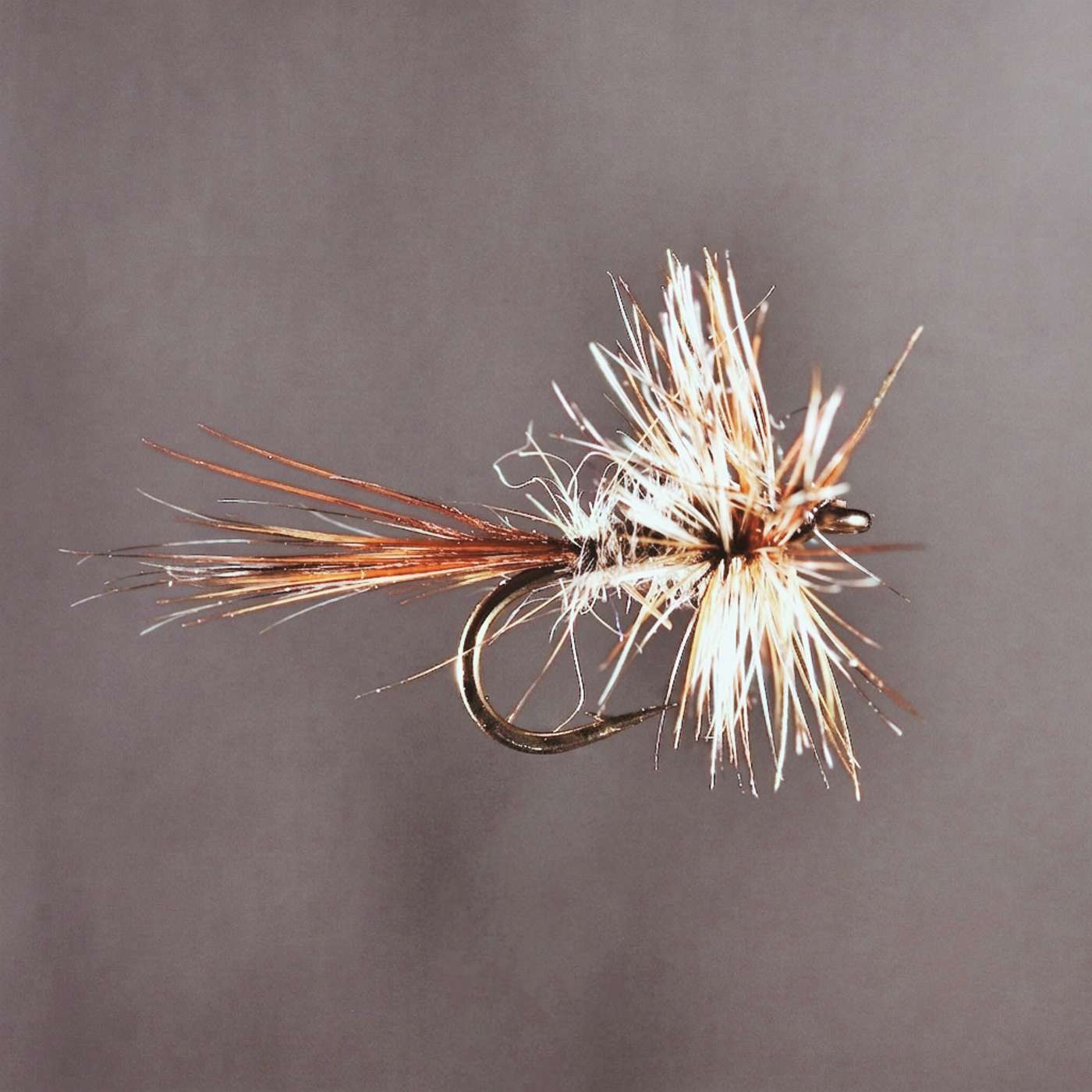
Ed Van Put spent more than fifty years studying, fishing, and protecting Catskill waters — and in the process became one of the region’s most respected fly fishers and fisheries biologists. In this episode, Nick Lyons returns to Kaatscast to share the story of how Ed’s final book, A Fly Fisher’s Revelations, brought him out of retirement at age 93. Joining Nick is Ed’s wife, Judy “Obie” Van Put, who offers a deeply personal portrait of Ed’s life, his gentle nature, and his lifelong devotion to the rivers he loved.Together, Nick and Obie trace Ed’s journey from a curious New Jersey kid to a principal fisheries biologist for New York State, his meticulous fishing journals, his contrarian approach to fly selection, and his decades of work securing public fishing rights and cold‑water releases. They revisit Ed’s favorite flies, his philosophy of presentation over complexity, and the stories behind his landmark books on Catskill trout fishing. It’s a celebration of a man whose knowledge, humility, and passion shaped generations of anglers — and whose legacy continues to ripple through Catskill waters.
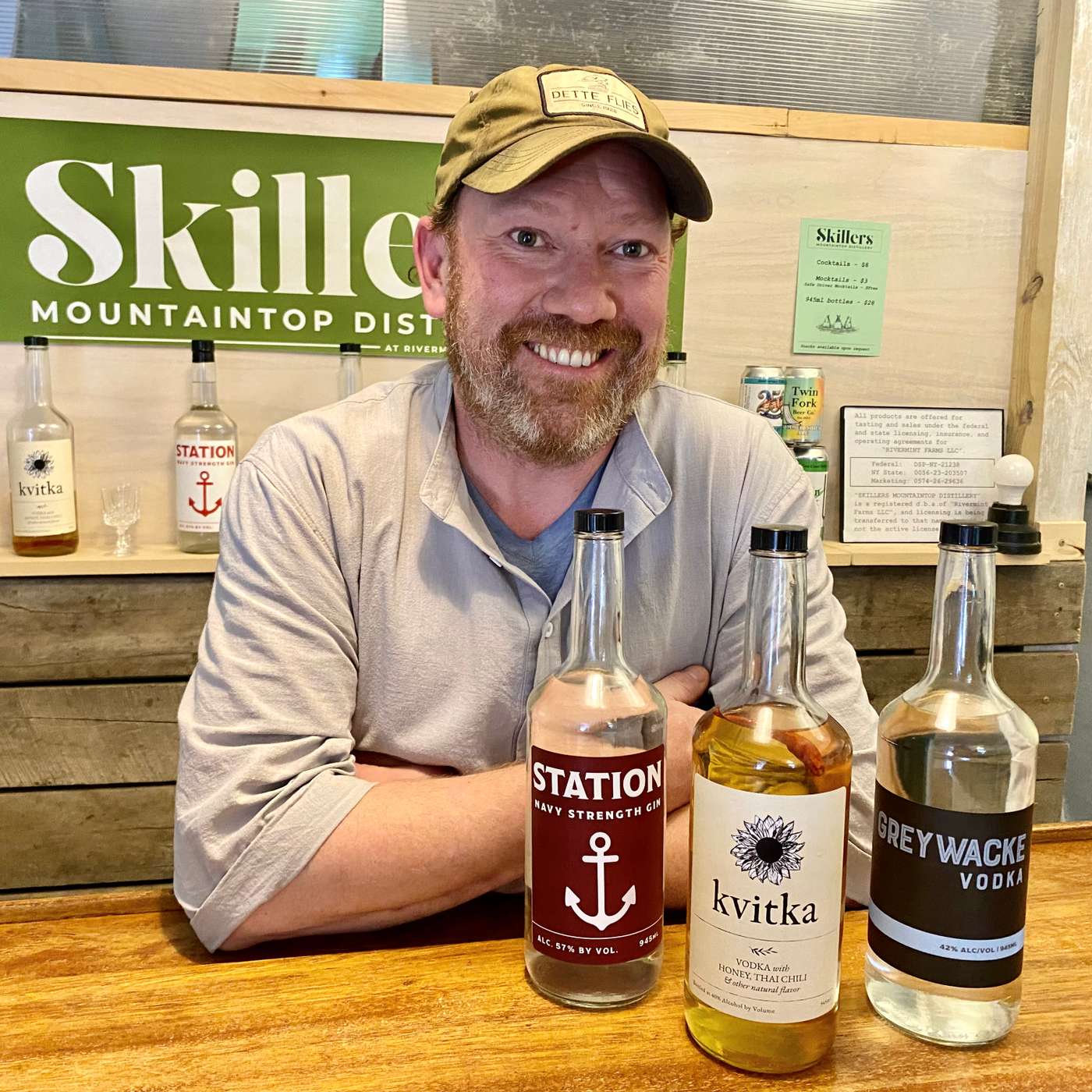
At a Fleischmanns street fair, a bottle with a bright red label and bold white type — Station Navy Strength Gin — stops Brett at the Skillers booth. Owner James Rooney pours a taste and explains why British sailors once needed their gin strong enough that gunpowder would still ignite if it got splashed with the stuff. That bottle leads to a drive up to Lexington, NY, to see where it's made.Skillers Mountaintop Distillery occupies a small pre-fab barn in what started as Rooney's ski house property near Hunter. Kaatscast walks us through some of the New York state laws that made a small operation like his possible — the Micro Distillery Act of 2003, which cut licensing fees enough to let small producers in; the Farm Distillery Act of 2007, which let distillers open tasting rooms and sell direct, the way wineries already could; and the Craft New York Act of 2014, which simplified licensing further and let farm distilleries sell in satellite locations. In exchange, farm distilleries have to source at least 75% of their ingredients from New York — Skillers uses 100% New York corn as the base for all three of its spirits, filling in the small remainder with botanicals like coriander that can't be grown locally.The three bottles get a full tasting. Greywacke vodka takes its name from the bluestone bedrock under the Catskills, and Rooney credits its stony, mineral edge to Schoharie Creek water that's filtered through that rock. The navy strength gin, bottled at 57% ABV, is built specifically to survive being mixed into a Negroni without landing flat. And horilka — a honey and chili spirit named for the Ukrainian word for flower (kvitka) — nods to the area's Ukrainian community, using local honey and an ultrasonic extraction process to pull flavor from Thai chilies.Gin-smith Jeff Graham describes running the still, watching a batch drip for hours to yield about 20 gallons at a time. Marketing director Todd Spire talks about the tasting room's weekend acoustic music series. And we learn that Skillers spirits are now on shelves at Elevated Wines in Hunter and behind the bar at Small Talk in Woodstock and Peekamoose in Big Indian. Next up: a Skillers Negroni made entirely in-house, which means Rooney is now considering his own line of vermouth.FeaturingJames Rooney, founder and owner, Skillers Mountaintop DistilleryJeff Graham, gin smithTodd Spire, director of marketingRic Rawlins, tasting guestMusic: "Growing Up Catskills" by Josh Roy Brown, from the documentary of the same name.

Comments

Download from Google Play

Download from App Store
 United States