


 Claim Ownership
Scaling Without Breaking
Subscribed: 0Played: 0
Subscribe

© Copyright 2025 | All Rights Reserved
Description
Scaling Without Breaking is the podcast for startup leaders who are done winging it and ready to lead like CEOs. Straight talk only. Real stories about what breaks when your team hits 30, why people's calendars are a mess, and how to stop being your company’s biggest bottleneck. The mission is to help founders scale without losing their minds or their culture.You’ll hear from startup CEOs, sharp edged investors, battle tested coaches, and operators who’ve been through the re and came out stronger. They’ll share the hard lessons, team meltdowns, and systems that actually worked. If you’re tired of vague advice and ready to build something that runs without constant firefighting, this one’s for you.
17 Episodes
Reverse
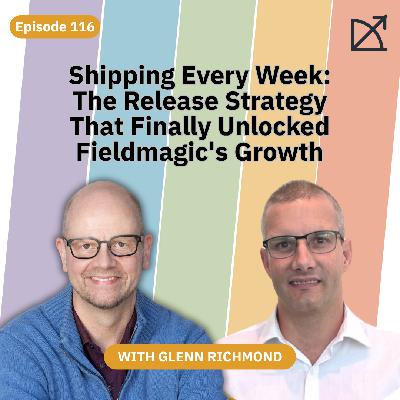
Building the “perfect” product sounds like the right move.
It wasn’t.
In this episode of Scaling Without Breaking, host Roland Siebelink sits down with Glenn Richmond, Founder & CEO of Fieldmagic, who nearly killed his startup by over-engineering it from day one.
Enterprise-grade architecture.
Zero-downtime deployments.
Full DevOps pipelines.
All built before meaningful customer feedback.
The result?
Months-long release cycles.
Slow iteration.
A product at risk of falling behind.
Because the real challenge of building a startup isn’t just building it right.
It’s building it fast enough to matter.
Everything changed when Glenn made a critical shift:
Ship every week.
In this episode, Roland and Glenn unpack what it takes to build and scale field service management software without getting trapped in unnecessary complexity.
Key Discussion Points
00:45 - Over-engineering + slow shipping problem
03:35 - Shift to weekly releases + impact on customers
05:20 - Product positioning (field service + inspections)
08:00 - GTM learning + advisors
10:13 - ICP mistake + Gartner lead issue
12:43 - Shift to outbound + ICP clarity
14:18 - Junior devs + shipping culture
16:09 - AI + role of juniors
21:57 - Founder advice
For founders building SaaS products — especially in field service scheduling software, service inspection software, and work order management — this episode offers a practical perspective on scaling without slowing down.
Fieldmagic is offering listeners a 30-day free trial plus a free consulting session.
Learn more here:
fieldmagic.co/midstage
👍 Like if this changed how you think about product velocity
🔔 Subscribe for more honest conversations about growth
💬 Comment with your biggest takeaway
🔗 Share this with a founder building their product
#ScalingWithoutBreaking #FieldServiceManagementSoftware #StartupLeadership #ProductDevelopment #FounderMindset #SaaS #GoToMarket #OperationalExcellence
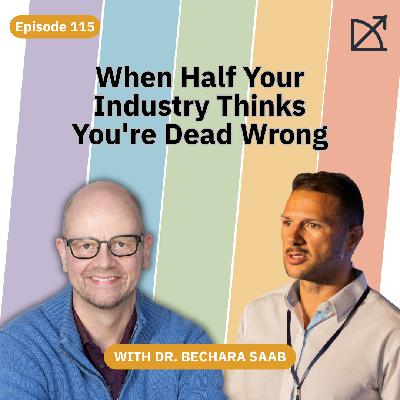
Mental health assessments rely on what people say they feel.
But what if words aren’t the most reliable signal?
In this episode of Scaling Without Breaking, host Roland Siebelink sits down with Bechara Saab, Co-Founder & CEO of Mobio Interactive, who is building technology that uses biomarkers from a simple selfie to assess mental well-being.
No long surveys.
No biased self-reporting.
No guesswork.
Instead, the conversation explores objective emotional measurement — using science and AI to uncover signals that traditional methods often miss.
Because the real challenge in mental health isn’t just access.
It’s accuracy.
In this episode, Roland and Bechara unpack what it takes to build and scale mental health technology and digital therapeutics with global potential.
Key Discussion Points
00:06 – From neuroscientist to building objective psychiatry
01:23 – Can a selfie measure emotions better than self-reporting?
02:41 – Why objective biomarkers outperform subjective data
03:39 – How Mobio’s platform delivers personalized therapy
05:26 – “Exercise for the brain” and expanding use cases
06:34 – Self-guided vs. provider-supported mental health care
07:22 – Business model across different healthcare systems
08:37 – Market expansion strategy: US, Canada, Singapore, India
09:17 – Why the founder is still the best dealmaker
09:44 – Rethinking sales: supporting founder-led sales instead of hiring more closers
10:46 – Scaling globally: serving both large institutions and individual practitioners
11:49 – Universal biomarkers vs. culturally localized therapy
13:16 – Childhood, freedom, and shaping leadership style
14:49 – What leadership actually requires beyond decision-making
16:12 – Leading with empathy (and “not nice” traits used for good)
17:07 – Advice for founders without a business background
18:52 – Choosing investors and protecting company culture
20:09 – Making the platform accessible to everyone
For founders building in AI, healthtech, or global platforms, this episode offers a new perspective on scaling innovation responsibly.
Mobio is also offering listeners access to a limited release of its latest platform.
Sign up here:
https://forms.gle/TRFjwKpwryThfJjSA
👍 Like if this changed how you think about mental health tech
🔔 Subscribe for more honest conversations about growth
💬 Comment with your biggest takeaway
🔗 Share this with someone building in AI or healthtech
#ScalingWithoutBreaking #MentalHealthTechnology #DigitalTherapeutics #ObjectiveEmotionalMeasurement #FounderLedSales #ScientistToCEO #HealthTech #StartupLeadership

Early-stage startups feel like a series of small decisions.
They’re not.
In this episode of Scaling Without Breaking, host Roland Siebelink sits down with Anthony Rose, Founder & CEO of SeedLegals, to explore the reality founders face when every decision can shape the future of their company.
No perfect playbook.
No guaranteed outcomes.
No “safe” path forward.
Instead, the conversation focuses on making high-stakes bets, navigating uncertainty, and thinking clearly when the answers aren’t obvious.
Because the real challenge of building a startup isn’t just growth.
It’s making the right decisions when everything is still unclear.
In this episode, Roland and Anthony unpack what it really takes to navigate founder decision-making, align a strong scaling strategy, and manage resource allocation in the earliest stages of a company.
Key Discussion Points
00:00 – The binary problem founders face at the start
02:15 – Making bets that determine a startup’s future
05:10 – Leveraging teams to sharpen decisions
08:20 – The misalignment between founders and investors
11:35 – Rethinking startup funding and the rise of seed strapping
15:00 – Balancing speed vs. conviction in decision-making
18:25 – Finding product-market fit without overbuilding
22:10 – Allocating limited resources for maximum impact
26:40 – When to double down vs. change direction
30:05 – The evolving role of founders as companies scale
For founders navigating growth, fundraising, or strategic trade-offs, this episode offers a practical lens on decision-making and execution.
SeedLegals is also offering listeners a free consultation.
Book here:
https://seedlegals.com/talk-to-an-expert/
👍 Like if this changed how you think about startup decisions
🔔 Subscribe for more honest conversations about growth
💬 Comment with your biggest takeaway
🔗 Share this with a founder navigating critical decisions
#ScalingWithoutBreaking #StartupFunding #FounderDecisionMaking #ScalingStrategy #ResourceAllocation #ProductMarketFit #StartupLeadership #FounderMindset
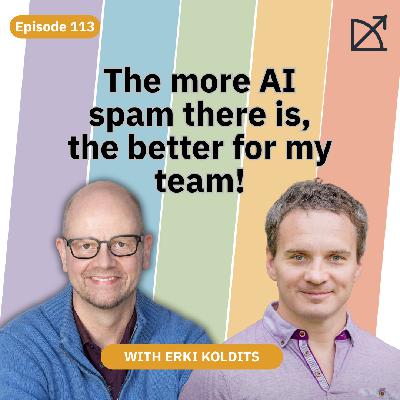
Returning to the company you founded sounds like a victory lap.
Except, it wasn’t.
In this episode of Scaling Without Breaking, host Roland Siebelink sits down with Erki Koldits, founder of Kontaktikeskus, who once scaled the company from 25 to 250 employees — making it the largest call center in the Baltics.
Then he stepped away.
Years later, he received the call no founder wants: the company had become a rudderless ship.
So Erki returned.
Not to preserve the past.
But to rebuild the company from scratch.
No protecting outdated processes.
No maintaining comfortable leadership structures.
No accepting “this is how we’ve always done it.”
Instead, Erki started breaking things.
Processes.
Management layers.
Bureaucracy.
Because sometimes the only way to transform a company is to dismantle the systems that are holding it back.
In this conversation, Roland and Erki explore what it takes when a founder returns to rescue a business and implement effective company turnaround strategies.
They also discuss how AI transformation in call centers, automation, and new operating models could reshape the telemarketing industry.
Key Discussion Points
00:00 – Why Erki wasn’t surprised when he returned
02:25 – The risks of leadership staying too long in one company
04:43 – Why breaking systems can unlock growth
07:00 – Eliminating bureaucracy and unnecessary processes
08:25 – Why human calls may outperform AI-driven outreach
10:49 – The telemarketing CPO model and incentive alignment
12:10 – Using call transcripts and AI insights to generate new revenue
14:04 – Why human connection still matters in an AI world
15:52 – Why large companies are now moving like startups
17:42 – The emerging role of CEOs as builders and rapid prototypers
For founders, operators, and leaders thinking about workforce optimization automation, AI disruption, or business reinvention, this episode offers a candid look at what real transformation requires.
👍 Like if this changed how you think about company turnarounds
🔔 Subscribe for more honest conversations about growth
💬 Comment with your biggest takeaway
🔗 Share this with someone leading a business transformation
#ScalingWithoutBreaking #CompanyTurnaroundStrategies #FounderReturnsToRescueBusiness #AITransformationCallCenter #TelemarketingCPOModel #WorkforceOptimizationAutomation #StartupLeadership #FounderMindset
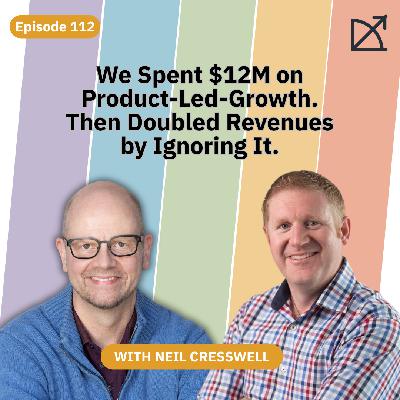
He spent nearly three-quarters of his $60M in funding.
Not on bad hires.
Not on a failed product.
But on the wrong go-to-market playbook.
In the latest episode of Scaling Without Breaking, I sat down with Neil Cresswell, Founder & CEO of Portainer, who openly shares how chasing product-led growth in a market that didn’t buy that way nearly derailed his company.
Investors wanted PLG.
The market needed enterprise sales.
And when you’re selling mission-critical infrastructure software, engineers don’t just swipe a credit card and hope for the best.
Neil finally pivoted:
• Shifted from small $7K deals to true enterprise sales
• Replaced transactional salespeople with engineers in pre-sales
• Re-centered around founder-led sales
• Raised prices
• Doubled revenue within 12 months
We also unpack:
• Why founders get out of sales too early (and why that’s dangerous)
• The cost of being stuck in the “dead zone” of mid-sized deals
• How to hire leaders who think like you — without creating tunnel vision
• Why churn is more dangerous than missing revenue
• How founder mode actually works in practice
• And the unexpected hobby that helps Neil unplug (hint: it involves rappelling 2,000 feet underground into abandoned mines)
This is an honest conversation about expensive mistakes, painful pivots, and what it really takes to scale enterprise software.
If you’re building in SaaS, infrastructure, or enterprise tech — this episode will challenge how you think about go-to-market.
👍 Like if this changed how you think about founder-led sales
🔔 Follow for more honest conversations about scaling
💬 Comment with your biggest takeaway
🔗 Share this with a founder who needs to hear this
#ScalingWithoutBreaking #FounderLedSales #StartupLeadership #EnterpriseSales #SaaS #GoToMarket #FounderMode #BusinessGrowth
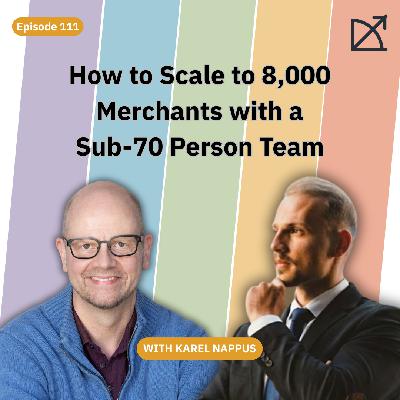
Scaling to 8,000 merchants sounds like a hiring story.
It wasn’t.
In this episode of Scaling Without Breaking, host Roland Siebelink sits down with a founder who built a merchant network of 8,000+ — with a team of fewer than 70 people.
No bloated org chart. No endless layers of management. No “just hire more people” solution.
Instead, it was about operational discipline, clear positioning, repeatable systems, and the courage to say no when complexity tried to creep in.
Because the real challenge of scale isn’t growth.
It’s staying coherent while you grow.
In this conversation, we unpack what it actually takes to scale distribution, partnerships, and merchant relationships without fracturing your culture or overwhelming your team.
Key Discussion Points
00:00 – Why headcount isn’t the answer to scale
02:10 – Building systems that support 8,000 merchants
04:45 – The hidden operational risks of rapid expansion
07:30 – Standardization vs. customization: where to draw the line
10:15 – Designing internal clarity so teams don’t duplicate work
13:40 – Metrics that matter when scaling merchant networks
17:05 – Partner enablement without losing control of the brand
20:22 – Protecting culture while increasing complexity
24:18 – The inflection point: when scale starts to strain the system
28:50 – Leadership maturity required at 8,000+ merchants
33:12 – What founders get wrong about “lean teams”
37:05 – The mindset shift from hustle to architecture
If you’re scaling marketplaces, fintech platforms, SaaS ecosystems, or merchant networks, this episode will challenge how you think about growth.
👍 Like if this changed how you think about scale
🔔 Subscribe for more honest conversations about growth
💬 Comment with your biggest takeaway
🔗 Share this with someone building with a lean team
#ScalingWithoutBreaking #MarketplaceGrowth #StartupLeadership #OperationalExcellence #FounderMindset #LeanTeams #MerchantGrowth #BusinessArchitecture
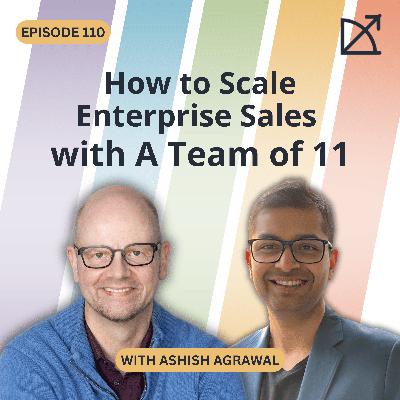
Scaling looks glamorous until enterprise customers start pulling you in ten different directions.
Ashish Agrawal built an AI company serving NBC Sports, Comcast, the PGA Tour, WWE, and U.S. Olympic teams—with just 11 people, no outsourcing, and no external funding. The secret wasn’t working harder. It was refusing to fracture the product.
In this conversation with host Roland Siebelink, Ashish breaks down what it actually takes to scale without breaking: staying product-led while serving enterprise customers, designing workflows that adapt without customization chaos, and building a team that understands customers deeply—not just tickets and specs.
Key Discussion Points
00:00 – Why most teams break as they scale
01:40 – Serving enterprise customers with a team of 11
03:15 – One product, many workflows (without customization hell)
05:23 – Why everyone on the team talks to customers
07:58 – Building an advisory board that actually adds value
11:14 – The hidden value trapped in archival content
13:55 – Pricing based on volume, not complexity
15:05 – Owning the full workflow end-to-end
17:17 – Partnerships, awards, and non-exclusive growth
19:54 – The hardest challenge: helping customers see their own value
22:31 – Why staying bootstrapped was a strategic choice
24:09 – Long-term growth and exit thinking
26:12 – Courage, problem-solving, and founder mindset
32:01 – Creating autonomy without chaos inside small teams
If you’re a founder or operator navigating enterprise complexity, metadata debt, or the pressure to “just make this one exception,” there’s a lot here for you.
👍 Like if this challenged how you think about scale
🔔 Subscribe for more honest conversations about growth
💬 Comment with your biggest takeaway
🔗 Share this with someone navigating enterprise complexity
#ScalingWithoutBreaking #StartupLeadership #EnterpriseSaaS #FounderMindset #ProductLedGrowth #Bootstrapped #EonMedia #OperationalExcellence
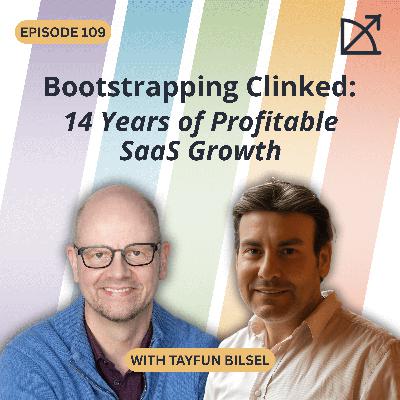
Some companies are built fast. Others are built to last.
This conversation is about the second kind.
Tayfun Bilsel spent 14 years building Clinked.com into a profitable, multi-million-pound SaaS business without venture capital, without chasing growth for growth’s sake, and without losing control of what mattered most: customers, trust, and long-term thinking.
We talk about what bootstrapping really costs, why white-labeling became a competitive advantage, how founder-led sales shaped the product, and what it actually looks like to scale slowly, intentionally, and sustainably—especially in a world being reshaped by AI.
If you’re a founder or operator questioning the “faster is better” narrative, there’s a lot here that will challenge your assumptions.
Key Discussion Points
00:00 – Why midstage companies face a different kind of struggle
01:10 – Introducing Tayfun Bilsel & his work with scaling teams
02:55 – What “midstage” really means (and why founders misjudge it)
04:40 – The early traction trap: success that creates new problems06:35 – Why what worked before stops working now
08:50 – Hiring mistakes that compound complexity
10:45 – Organizational debt and invisible drag on growth
12:55 – When growth exposes broken processes
14:55 – Founder bottlenecks and decision overload
16:45 – Letting go of control without losing accountability
18:40 – Operating without a clear operating model
20:30 – Aligning teams around outcomes, not activity
22:35 – Why midstage teams feel busy but stuck
24:45 – Decision velocity as a leadership signal
26:50 – Cross-functional misalignment and execution gaps
28:55 – Scaling culture while raising standards
31:00 – Metrics that actually matter at this stage
33:05 – Strategy vs. execution: where teams fall apart
35:10 – Why founders resist structure (and why it hurts them)
37:05 – Building systems that support innovation
39:00 – Leadership leverage and focus at scale
40:55 – Moving from intuition to repeatability
42:50 – What sustainable scale really looks like
44:40 – Advice for overwhelmed midstage founders
If this conversation made you pause, rethink, or reflect:
Hit like so more builders find it
Subscribe if you care about scaling without chaos
Share your biggest takeaway in the comments
Pass it along to someone building the long game
#Bootstrapped #SaaS #FounderStories #StartupLeadership #ScalingWithoutBreaking #B2B #ProductStrategy #CustomerTrust #Entrepreneurship #AIinBusiness #ClientPortalSoftware #VirtualDataRoomSoftware #SecureClientPortal #WhiteLabelProjectManagementSoftware
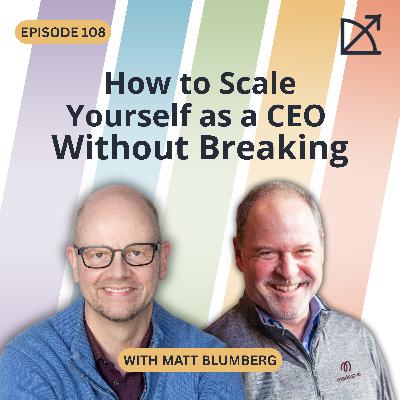
What actually breaks when a company scales—and why does it so often happen between 30 and 100 employees?
This conversation with Matt Blumberg goes straight to the uncomfortable truth: most companies don’t stall because of product or market fit. They stall because the CEO hasn’t scaled yet.
Matt has built companies from zero to $100M+, served as CEO and executive chair, advised hundreds of founders, and written the go-to books on being a startup CEO, CXO, and board member. In this episode, he shares the moments where he nearly broke himself—and the frameworks he developed to avoid breaking again.
This is a practical, honest discussion about feedback, coaching, leadership teams, boards, and why scaling yourself is the hardest (and most important) work a founder can do.
Key Discussion Points
00:00 – Why companies really break as they scale
01:40 – What “breaking” looks like for a CEO
03:00 – Matt Blumberg’s near-breaking moment as a first-time CEO
04:20 – Why getting a coach changed everything
07:40 – The real meaning of “scaling yourself”
09:55 – Why the 30–100 employee stage is so dangerous
11:40 – The two teams every CEO must scale: leadership & board
14:05 – How to actually invest in leadership team growth
16:40 – Coach vs mentor vs peer group (and why all three matter)
18:00 – How to ask for, process, and act on feedback
21:00 – Why operating systems become the company’s lifeblood
23:40 – When leaders must stop telling and start asking
26:00 – Why boards need to scale too
28:00 – Why being a student of the craft never stops
About Matt Blumberg
LinkedIn: https://www.linkedin.com/in/blumbergmatt/
Email: matt@markup.ai
Personal Blog: https://startupceo.com (22 years of CEO insights)
Company: https://markup.ai
Matt's Books on Amazon
Startup CEO: https://www.amazon.com/s?k=startup+ceo+matt+blumberg
Startup Boards: https://www.amazon.com/s?k=startup+boards+matt+blumberg
Startup CXO: https://www.amazon.com/s?k=startup+cxo+matt+blumberg
Before you go:
👍 Like this if it resonates
🔔 Subscribe for more real conversations on leadership and scale
💬 Comment with the takeaway that hit closest to home
🔗 Share with someone navigating growth right now
#ScalingWithoutBreaking #MattBlumberg #StartupLeadership #FounderGrowth #CEODevelopment #ExecutiveCoaching #CompanyBuilding #Leadership
For years, sales leaders were taught to avoid POCs at all costs.
They slow deals down. They spiral out of control. They kill momentum.
So what happens when a longtime CRO—who preached that exact advice—becomes CEO of a company built to automate POCs?
This conversation gets into the uncomfortable truth: POCs aren’t the problem. The way most teams run them is.
Steve Davis, CEO of Provarity, has spent three decades in Silicon Valley sales—BDR to CRO to CEO. He breaks down why pre-sales has been ignored for years, how manual POC processes quietly destroy win rates, and what changes when you stop trying to avoid technical evaluations and start using them as a competitive advantage.
If deals keep stalling late, or “technical evaluation” feels like a black hole, this one will hit close to home.
Key Discussion Points
00:00 – Why “avoid the POC” became sales dogma
02:05 – The real reason POCs fail (and it’s not the buyer)
03:27 – How most teams still run POCs today
05:34 – Why POCs are no longer optional in modern buying
07:53 – The hidden revenue cost of unmanaged evaluations
10:32 – Turning POCs from a liability into leverage
12:07 – Where POCs actually go off the rails
15:19 – Why pre-sales were ignored for 30 years
18:24 – Early-stage vs. mid-stage CEO reality
20:29 – What lack of focus really does to a company
23:08 – Making decisions for where you’re going, not where you are
26:48 – Building a career by following great people
29:13 – Why most sales engineers struggle as AEs
30:34 – What true category leadership looks like
32:49 – Educating a market that doesn’t know it has a problem
44:55 – Where to learn more about Provarity
If this conversation sparked something:
👍 Support the show if it added value
🔔 Subscribe for more honest conversations about scaling
💬 Share the takeaway that challenged your thinking
🔗 Send this to a leader stuck in endless POCs
#ScalingWithoutBreaking #B2BSales #PreSales #RevenueLeadership #StartupScaling #GoToMarket #SaaSSales #SalesEngineering #TechLeadership #FounderJourney
At some point, every growing company hits the same wall: too many tools, too many decisions, and not enough clarity on what actually matters.
In this conversation with Sven Sabas, founder of Dragonfly, we get very real about one of the most expensive mistakes scaling teams make—building when they should buy.
Sven shares a firsthand story of spending millions and 18 months building foundational tech that already existed, why engineers are wired to overbuild, and how opportunity cost quietly becomes the biggest killer of momentum. We also unpack why senior leaders stop chasing clever systems and start focusing on simplicity, integration, and leverage.
Key Discussion Points
00:00 – Why tech decisions quietly break scaling companies
02:30 – Sven Sabas on the most expensive build-vs-buy mistake he’s seen
06:45 – Why engineers default to building—and why it backfires
09:15 – Opportunity cost: the real price no one calculates
11:00 – Junior vs mid vs senior decision-making patterns
14:20 – The explosion of SaaS tools and “shadow IT”
17:40 – Why most companies don’t actually know what they’re paying for
21:10 – Thinking about your tech stack as a system, not a list of tools
24:00 – Serving customers without becoming a custom software shop
27:30 – Staying unbiased in a pay-to-play software world
30:00 – Productivity, leverage, and managing time as a founder
32:30 – Career lessons from hypergrowth and constant reinvention
40:00 – Mentorship, giving back, and long-term impact
If you’re scaling a team, drowning in SaaS tools, or questioning whether your tech stack is helping or hurting—this one will feel uncomfortably familiar.
If this conversation with Sven made you rethink how you’re building:
👍 Like the video, so more operators see it
🔔 Subscribe for more honest conversations about scaling
💬 Share the takeaway that hit closest to home
🔗 Send this to a founder or leader who’s buried in tool decisions
#ScalingWithoutBreaking #SvenSabas #TechStack #BuildVsBuy #StartupLeadership #FounderLife #SaaS #Operations #Leadership #StartupPodcast

As startups race to adopt AI, many enterprise leaders quietly admit they’re overwhelmed, underprepared, and unsure how to avoid becoming part of the 95% of failed AI initiatives. Kaspar Korjus isn’t one of them.
In this conversation, he breaks down how his company scaled AI negotiation agents from an idea to an engine trusted by Walmart, BMW, Rolls-Royce, and global enterprises moving hundreds of billions through automated procurement.
You'll hear the real story behind landing Walmart as an early customer, how founders should think about ICP discipline, the mechanics of scaling a global org across Estonia, Europe, and the US, and why freeing up mental bandwidth may be the most underrated executive skill in the AI era.
Kaspar also opens up about fatherhood, burnout-proof leadership, and the unexpected truth about work-life performance when you’re running a 100M-funded scale-up.
KEY DISCUSSION POINTS
00:00 — Welcome to Scaling Without Breaking
00:39 — The Walmart pitch that changed everything
01:12 — Building AI negotiation agents before it was cool
02:05 — Why 95% of AI initiatives fail—and why it doesn’t worry Kaspar
03:26 — Digital workforces + leveling the supplier playing field
05:16 — How AI is reshaping procurement at scale
06:26 — Founding story: from e-Residency to AI negotiations
08:15 — The Walmart negotiation—and what founders get wrong
10:10 — Non-linear negotiations & the myth of zero-sum deals
12:12 — Managing thousands of parallel negotiations
13:05 — Go-to-market strategy & landing enterprise early
14:45 — ICP discipline and the psychology of sales teams
16:02 — Hunters vs. farmers—when to split the sales org
17:12 — The shocking size of Factum’s marketing team
18:40 — Why the founder still needs to meet customers
20:05 — Avoiding “founder escalation chaos”
21:11 — Product vision: when (and how) to hire a CPO
23:18 — Europe vs. US founders—go-to-market mindsets
24:44 — How much should founders pre-sell?
26:19 — Driving internal AI adoption
27:46 — Creating a culture where people embrace agents
29:08 — The surprising internal use cases
30:03 — Estonia vs. US: building globally
31:22 — Remote culture done right
32:55 — Energy, trust, and the 90-day reset
33:19 — Childhood, Estonia, and early entrepreneurial patterns
35:19 — Family bankruptcy, tech, and resilience
36:28 — Fatherhood, Ironman training & CEO performance
38:11 — Creativity, mental space & leadership
39:56 — Books and influences
40:43 — How to reach Kaspar
41:23 — Closing thoughts
A masterclass for founders, operators, and anyone trying to scale without breaking.
Don’t forget to:
👍 Like if the conversation sparked new ideas
🔔 Subscribe for more high-caliber founder stories
🔗 Share this with a founder or operator who needs to hear it
#AIProcurement #EnterpriseAI #StartupLeadership #ScalingCompanies #Automation #DigitalWorkforce #FounderStories #GoToMarketStrategy #ProcurementTech #AITransformation #LeadershipDevelopment #B2BTech #FutureOfWork
Most companies treat OKRs like a necessary evil. Gerlinde Boback treats them like a stage—where real people, real ingenuity, and real stories move the company forward.
In this episode, she breaks down how to turn “boring processes” into shared narratives that teams actually want to rally around.
From cross-cultural leadership to building “baby values,” navigating layoffs with humanity, and choosing challenge over compensation—this conversation is a reminder that scaling is about people long before it’s about process.
Episode Breakdown
00:00 – Why storytelling makes OKRs actually work
02:56 – Why spreadsheets aren’t the problem—communication is
04:22 – Getting non-storytellers to tell powerful stories
05:42 – A clash between engineer + PM that turned into a breakthrough
07:47 – The gift of seeing different realities inside one team
09:06 – What being a “professional foreigner” teaches leaders
11:23 – What great HR leaders understand that others miss
13:30 – When founders challenge HR (and why that’s good)
16:56 – Coaching founders through their first reduction-in-force
19:14 – Worst practices during layoffs
20:14 – Building an alumni network after tough moments
21:56 – Why people matter differently in scale-ups
22:46 – Purpose-driven hires vs. corporate hires
24:35 – Burnout, passion, and work-life reality in tech
25:56 – How engineers chose “kindness” as a core value
28:13 – Building a job-description wizard with AI in 90 minutes
32:16 – Volunteering with unhoused jobseekers (and what resilience really looks like)
35:22 – Growing up between worlds
41:17 – The first person who truly needed her help
42:11 – How a boss changed her entire career trajectory
43:51 – What her younger self would think of who she became
45:21 – Where to find Gerlinde + roles Vyntra is hiring for
Building culture isn’t about adding more processes—it’s about adding more meaning. If this episode helped you rethink how you lead, communicate, or scale, share it with someone shaping a team of their own.
👍 Show some love with a like
🔔 Subscribe for more human-centered business conversations
💬 Share your biggest insight about storytelling or leadership
🔗 Pass this episode forward to someone building a team or culture
#CultureLeadership #OKRs #StorytellingInBusiness #ScaleUpLife #PsychologyAtWork #LeadershipDevelopment #TechCulture #FintechLeadership #FoundersJourney #StartupCulture #PeopleAndCulture #BusinessStorytelling #ResilientLeadership
What happens when your biggest weakness becomes your greatest advantage?
In this episode of Scaling Without Breaking, host Roland Siebelink sits down with Pepe del Rio, founder and CEO of SESH, a fan community management platform that redefines how artists connect with their audiences.
Pepe shares how he:
Went from a teenage tennis player in Madrid to leading one of the most innovative startups in the music industry
Built SESH from zero network and zero revenue to a thriving global company
Scaled back from 48 employees to a lean, AI-powered team of 12—without losing growth momentum
Disrupted the industry by giving artists true visibility into their fans and communities
It’s a story of resilience, reinvention, and radical focus on product over prestige.
Listen now for real talk on failure, scaling smart, and what it takes to turn “no connections” into your ultimate edge.
Enjoying the conversation?
✅ Follow Scaling Without Breaking for more founder stories that tell the truth behind hypergrowth.
💬 Drop your biggest takeaway or lesson from Pepe’s journey in the comments.
🔔 Subscribe so you never miss a new episode drop.
📢 Know a founder who needs to hear this? Share it with them.
#StartupGrowth #MusicIndustry #FanCommunities #Leadership #Entrepreneurship #ScalingWithoutBreaking #RolandSiebelink #PepeDelRio #sesh #FounderJourney #StartupPodcast
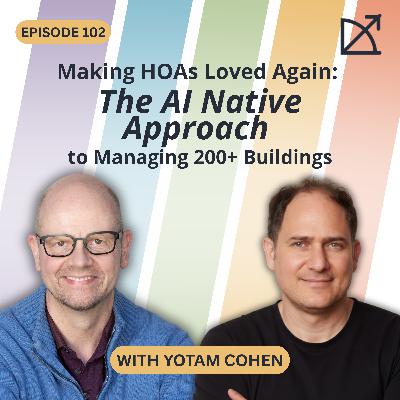
Meet the startup that’s rewriting the rules of real estate—one digital employee at a time.
In this episode of Scaling Without Breaking, host Roland Siebelink sits down with Yotam Cohen, CEO and Co-founder of Daisy, the AI-native property management company disrupting how communities are run.
Yotam reveals how 18 AI agents (complete with names, job titles, and even performance reviews) helped Daisy triple revenue while cutting headcount and keeping customers happier than ever.
From onboarding “Agent Steven” to autonomously catching phishing scams, this conversation uncovers how the future of work is already here.
Key Takeaways:
● How Daisy became an AI-native company from day one
● The truth about AI-human collaboration in real operations
● Why traditional property management is ripe for disruption
● How to build a positive, evolving company culture in a fast-scaling startup
● What autonomous buildings could look like by 2030
If you’re a startup founder, tech innovator, or builder of the future, hit Subscribe and turn on notifications. You should not miss another deep dive into scaling, leadership, and technology that actually works.
Main Topics Discussed
00:02 – 01:41 Introduction of Yotam and Daisy
01:44 – 04:30 AI Agents in Daisy
04:30 – 05:36 “AI Native” Companies
05:36 – 08:20 Day in the Life of an AI Agent (“Agent Steven”)
08:20 – 10:23 Human + AI Collaboration
10:27 – 12:27 Scaling Challenges
12:27 – 13:59 Operational Bottlenecks
13:59 – 15:29 Expansion Strategy
15:29 – 17:31 Customer Growth and Market Demand
17:31 – 18:54 Community Building
19:11 – 20:41 Customer Personas
20:41 – 21:36 Industry Fragmentation and Future Growth
21:36 – 23:14 Managing Global Teams
23:14 – 26:32 Tech Decisions and AI Stack
26:32 – 29:43 Origin Story of Daisy
29:43 – 31:19 Early Challenges and First Clients
31:37 – 33:16 Vision for 2030
33:16 – 35:51 Yotam’s Background
35:51 – 37:18 Entrepreneurial Traits
37:43 – 39:12 Leadership Style
39:12 – 42:11 Core Values
42:11 – 43:33 Source of Positivity
43:54 – 44:39 Parenting Lessons in Leadership
44:45 – 45:29 How to Contact Yotam
Connect on LinkedIn: Yotam Cohen, CEO and Co-founder of Daisy
Website: joinDaisy.com
#AIStartup #PropertyManagement #PropTech #AITransformation #StartupGrowth #RealEstateInnovation #AutonomousBuildings #TechDisruption
In this special full-length episode of Scaling Without Breaking, host Roland Siebelink sits down with producer Nick for a deep dive into the why behind the podcast — and the hard truths every founder faces when their company starts to outgrow them.
From managing chaos and hiring the right people to shifting from founder to true CEO, this candid conversation explores the realities of scaling a business without burning out or losing control. Whether you're a startup founder, operator, or investor, this episode offers valuable lessons on building companies that thrive sustainably.
⏱️ Timestamps
00:00 – Welcome to Scaling Without Breaking
00:26 – What this show is all about
01:04 – Turning the tables: producer Nick interviews Roland
02:09 – The toughest stage of startup growth
03:18 – When success starts breaking what worked before
04:14 – Who this podcast is for
05:34 – The hiring trap: startup vs. corporate mindset
07:12 – Practical lessons for founders in chaos
08:35 – The challenge of making success repeatable
11:27 – Lessons from Amazon’s management style
12:17 – Meet the guests: founders, investors, and advisors
13:38 – The paradox of focus after raising funding
15:17 – Defining real startups vs. lifestyle businesses
17:48 – Why founders pivot instead of quit
20:06 – Balancing vision with pragmatism
21:02 – Future guests and expert perspectives
23:17 – Why outside advice matters when scaling
24:20 – Roland’s origin story and early career
26:20 – Lessons from Europe’s first broadband launch
29:37 – Becoming a coach for scaling startups
31:01 – Childhood roots of leadership
33:29 – Founders, growth, and the courage to change
35:11 – Family influences on leadership
38:07 – Lessons from Roland’s parents’ business
40:36 – Emotional reflections and insights
41:00 – Where to find the podcast and resources
🎧 About the Show
Scaling Without Breaking is the podcast for startup leaders who want to grow smarter, not harder. Each week, you’ll hear real stories, strategies, and solutions from founders, operators, and advisors who’ve scaled through the chaos — and learned how to lead like a CEO.
👉 Subscribe now
Scaling Without Breaking is the podcast for startup leaders who are done winging it and ready to lead like CEOs. Straight talk only.
Real stories about what breaks when your team hits 30, why people's calendars are a mess, and how to stop being your
company’s biggest bottleneck. The mission is to help founders scale without losing their minds or their culture.
You’ll hear from startup CEOs, sharp edged investors, battle tested coaches, and operators who’ve been through the re and came out stronger. They’ll share the hard lessons, team meltdowns, and systems that actually worked. If you’re tired of vague advice and ready to build something that runs without constant firefighting, this one’s for you.
Comments


Download from Google Play

Download from App Store
 United States