


 Claim Ownership
Chemical Curiosities
Subscribed: 0Played: 0
Subscribe

© John Knight
Description
Chemical Curiosities is an audio companion to John Knight’s Substack, featuring pieces that explore the molecules behind everyday life, with a touch of organic chemistry. From historical pigments and natural dyes to the chemistry of smells, flavors, and unusual phenomena, each episode reveals a small but fascinating piece of the chemical world.
https://johnknightphd.substack.com/
johnknightphd.substack.com
https://johnknightphd.substack.com/
johnknightphd.substack.com
10 Episodes
Reverse

The Hollywood Zombie FallacyThe October twilight paints the sky with an eerie glow. You’re a survivor scavenging an abandoned office building. Devastation is all around you. The office windows are smashed. The front doors look as though someone forced them open. Empty cars sit in the parking lot, some turned over. Not a living soul in sight. You slip through the entrance and into the gloom within. As your flashlight beam cuts through the dust and darkness, sweeping across ransacked desks and overturned tables, you search for anything useful. Maybe there are batteries or, better yet, unopened bottles of water.It’s quiet. You pause. You listen again. All you hear are the faint sounds of settling dust and the hollow drip of a corroded pipe echoing somewhere in the building.This place is a dead end. As you turn on your heel back toward the exit, you hear movement behind the reception desk. Before you can even shine your light, a gray, decaying hand shoots out from the shadows and grabs your coat! A rotting, sunken face lunges directly into your flashlight beam, yellow teeth snapping just inches away from your throat. Unbeknownst to you, one of the undead was nearby the entire time!Love the intersection of nature, history, and chemistry? Subscribe for free to join me as I unpack the molecules shaping our world from beehive security to the smell of the ocean.But wait. Something’s wrong with this scene. It has the sound and visuals, but there’s no smell.Unless you were surrounded by the dead all the time, the stench of that walking corpse would have hit you the second you entered through the front door. It would be almost impossible to ignore!Your nose would have detected an invisible, noxious mix of chemicals so potent and revolting that your stomach would have knotted up, your eyes would have watered, and your survival instincts would have sent you fleeing. Hollywood can make it look and sound scary, but it leaves out the single most overwhelming sensory reality of a putrefying corpse walking around: the chemistry of biological decay.When life stops, whether by natural causes or a zombie apocalypse, microorganisms immediately take over, producing a specific cocktail of volatile organic molecules. Two of the star players in that mixture don’t have scientific, high-brow academic names, either. Back in the late 19th century, a German chemist named Ludwig Brieger isolated these compounds and gave them names so brutally honest that horror writers couldn't do better: putrescine and cadaverine. Yes, as in cadavers! Dead bodies!Cadaverine is often described as sickly sweet and like rotting flesh. Putrescine is the pungent scent of decay. Our noses are extremely sensitive to these compounds.Back in the 1800s, chemists lumped these and other deathly compounds into a morbid category called ptomaines, derived from the ancient Greek word for corpse. For decades, people were caught up in the idea of “ptomaine poisonings.” Any mysterious death or illness was blamed on these molecules. Fortunately, we no longer believe in such superstitions. I’m John Knight, and today we’re going to lean into October with a trip into the chemistry of the crypt. We’ll look at how bacteria turn ordinary amino acids into some of the most alarming smells on Earth, why our brains treat that odor like a fire alarm, and why you don’t need dead bodies to find these molecules lurking around. As always, you can check out the full text of this podcast and some chemical structures in my Substack post.So, if you’re in the spirit of the season, grab a hot cider, light a scented candle, and let’s get a little bit into the chemistry of rot.Harmless Building BlocksBefore we talk about what molecules like putrescine and cadaverine are and what they do, we first need to talk about where they come from. They actually have rather ordinary origins. Maybe you remember from school that living things are made of proteins, and those proteins are themselves made of building blocks called amino acids. Every amino acid has the same general features: an acid group (called a carboxyl group, -COOH), an amine group (-NH₂), and a side group that changes. Around 20 amino acids are used to make proteins. Today, though, we will focus on two: lysine and ornithine. Lysine is an essential amino acid that affects muscle growth and healing. The human body can’t produce it, so we must obtain it from our diet. The second amino acid, ornithine, is different. Our bodies can produce it, but it’s not used to make proteins. Instead, it plays an important role in breaking down proteins and getting rid of excess nitrogen atoms in the body. Keep that in mind because nitrogen is really the star element of this whole story. So, these two amino acids are rather important for living things. But we’re not talking about the living today. We’re focused on what happens when life stops. Molecular Shears and RotLet’s imagine someone dies. On the outside, not much changes in the first few minutes after death. At the cellular level, though, things begin to break down quickly. The body’s defenses against the outside world shut down. Internal oxygen levels plummet, and the door is suddenly wide open for anaerobic bacteria to flourish. Surrounded by a rich environment, these microorganisms begin breaking down molecules in the dead body. It’s not malicious. They’re just taking advantage of an opportunity. These bacteria produce specialized enzymes called decarboxylases to break down amino acids into simpler molecules for energy. Decarboxylases act sort of like molecular shears, cutting off the acid group from the amino acid to form an amine. That COOH group becomes carbon dioxide (CO₂) and drifts away. That is where putrescine and cadaverine come from.Lysine gets clipped to produce cadaverine, a linear molecule with five -CH2- groups and two amine groups. Ornithine gets clipped to produce putrescine, a linear molecule with four -CH2- groups and two amine groups.In fact, the only difference between these two molecules is a single -CH2- group in the chain of atoms.Removing the acid group from the amino acid changes everything. That acid group was a strong source of intermolecular interactions, and the resulting amine is not just smaller but also more volatile. It can easily evaporate from decaying flesh.In organic chemistry, an amine group is often described as sharp, pungent, and fishy. Think of household ammonia or bad seafood, and you get the picture. Putrescine and cadaverine don’t have one amine group, though. They have two, and they’re even more likely to trigger a response in the nose.I should take a moment to point out that these aren’t the only molecules associated with death. Sulfur-containing molecules like dimethyl disulfide and dimethyl trisulfide also play a role. Putrescine and cadaverine provide a heavy, nauseating base, while sulfur compounds add a strong, rotten cabbage note that punches you in the face.Electrostatic TrapsSo how do we even smell compounds like putrescine and cadaverine? It turns out that our nasal cavity is lined with special receptors meant to sense amines. These are called Trace Amine-Associated Receptors - or TAARs for short. When you breathe in an amine, its nitrogen atom often becomes positively charged in the mucus in your nose. TAAR receptors have negatively charged pockets where the amine can fit and interact. Think of them as little electrostatic magnets. The positively charged amine is attracted to the negatively charged receptor pocket. Once they interact, your brain receives a signalFor molecules like putrescine and cadaverine, the interaction with TAARs is quite strong. These receptors may even detect them at concentrations so low that we can’t smell them. The Scent of FearIn 2015, a small study was conducted by Drs. Arnaud Wisman and Ilan Shrira to investigate how putrescine affects human behavior and perception. Through a series of experiments, they exposed test subjects to putrescine, ammonia (NH₃), and water both consciously and unconsciously. Again, it was a small study, but the results are interesting. When exposed to putrescine, the test subjects experienced heightened vigilance. Their reaction times on cognitive tests were faster. They even became more hostile toward others.While ammonia doesn’t have the same odor as putrescine, it’s still quite irritating to smell. And yet, the participants didn’t respond the same way.In another experiment, researchers lowered putrescine levels below the smell threshold. Without going into numbers, this is a vanishingly small amount. The test subjects didn’t report smelling anything, but they still seemed to experience behavioral changes! When the investigators told the participants the experiment was over and pointed them toward the building’s exit, they secretly timed how long it took the participants to leave. Exposure to putrescine caused them to walk significantly faster.This suggests that putrescine doesn’t just smell awful. Even a trace amount of molecules is enough to send a kind of emergency signal to the brain. It makes sense. Compounds like putrescine are telling our brains that something is dead or something bad happened here. When we smell them, there’s an instinct deep inside us that says, “Leave now!” The Post-Halloween Porch SceneYou don’t need to visit your local morgue to find these molecules, either. When October and spooky season come around, many people place pumpkins out on their porch. If you like to carve Jack-o’lanterns for Halloween, you probably know that it’s not a good idea to do it too soon. Much like a dead body, a carved pumpkin changes once you start cutting it. Microorganisms begin to take over. Proteins are broken down into amino acids. Decarboxylases then clip off CO₂ molecules. Does this sound familiar? Plants are rich in amino acids like ornithine, so it’s no surprise to find putrescine coming from your rotting decoration. Maybe this podcast will make you think a bit differently about tha

The Myth of Bananas and BeesImagine you’re watching a movie. On the screen, some kids are walking down the sidewalk in a typical American neighborhood. They’re eating bananas, and, like all suburban kids on summer vacation, they’re laughing and having fun. Little do they know that there’s danger! Unfortunately, there’s a large honey bee colony tucked up in a nearby tree cavity. At first the bees are calm, but as soon as the kids walk under the tree with half-eaten bananas in their hands, things quickly change. The bees become agitated. Something makes them angry. Suddenly, one of the kids hears a buzz and a sudden sharp pain in an arm. Before the children can even react, bees are swarming all around them. The stings come in quick succession. Panicked screams fill the air. From across the street, a kind, elderly lady hears the commotion and comes outside to see what’s going on. Her face is at first confused, but it quickly turns to absolute fear when she sees what’s happened. Her loud cry is all you hear as the scene fades to black. It sounds like something right out of a horror movie.You might think it’s crazy, but there’s a popular myth about bananas and bees. Supposedly, if you eat or hold a ripe banana near a beehive, chemicals in the bananas will drive the bees into an aggressive frenzy. A local beekeeper might even give you a warning to never eat bananas around honey bees! Of course, it’s not really accurate. But there is a kernel of truth. I’m John Knight, by the way, and this is where I dig into the chemistry hiding in ordinary things. As always, full transcript and visuals are in the full post on my Substack.The molecule behind it all is called isoamyl acetate. It’s found in ripening fruits and special styles of beer. It even plays a role in how honey bees spread the alarm. Holding a banana near a beehive won’t switch the colony into “Attack!” mode, though. Bees are too sophisticated to rely on a single molecular trigger common in nature. Instead, they respond to context, just like we do!Love the intersection of nature, history, and chemistry? Subscribe for free to join me as I unpack the molecules shaping our world from beehive security to the smell of the ocean.Enter Isoamyl Acetate Before I continue, let’s take a moment to explain what isoamyl acetate is. First, it’s an ester, and it belongs to the family of organic molecules famous for providing rich, fruity, and floral aromas. Without esters, the world would be a pretty boring place!Like all esters, isoamyl acetate is made from two components: a five-carbon molecule called isoamyl alcohol and acetic acid - that’s the acid found in vinegar, by the way. In its pure form, this volatile ester smells remarkably like banana candy and, to some people, like ripe pears. It’s found throughout nature, too. The human nose can even detect it at tiny concentrations in the parts-per-million (ppm) range. I included a chemical structure in the full post on Substack if you’re interested.So, sure, it smells nice, but what does this molecule have to do with bees? To answer that question, we first need to talk about the time of year when bees are the most sensitive to their environment. The Late Summer DearthThat time is late summer and early fall. Depending on your location, August or September, for example. At this point, the honey bee colony is at peak population. Their comb is filled with honey for the winter season. But now food is scarce. The blooms of spring and summer are long gone. Depending on the area, there might be nothing to bring into the hive until March or April. This is called the late summer dearth. To survive, the colony needs to prioritize. The population begins declining. The queen lays eggs for winter bees. Instead of being bred for work in the warm season and living 4 to 6 weeks, these bees will be bred for endurance, surviving up to six months thanks to their higher stores of fat and protein. They will be the bees that take the colony into the new year with the queen. Those summer workers? They won’t make it past the fall.Until winter arrives, though, the colony fiercely protects its honey.Suddenly, what was acceptable earlier in the year is now prohibited. Everything is scrutinized. In the spring, a drifting bee might find its way into another hive without issue. Now, the guards shut her out. Things might even get physical. Protecting the colony and its honey is a matter of survival. And the threats have never been greater: robber bees, wasps/hornets, and honey-hungry animals can easily destroy a smaller or weaker colony before winter even arrives. Not surprisingly, this is a common time of year for bee stings. The bees are on high alert, and even beekeepers notice the change. A colony that was calm and easy to manage in the spring is now aggravated and temperamental. These environmental changes also change how bees respond to the chemical signals they receive. A 40-Compound Battle CryImagine there’s a colony of bees in a tree, except this time, a group of foreign bees shows up at the entrance. These are called robber bees. They aren’t there to pay a visit or say hello. They are there to ransack the place. The specialized guard bees instantly respond, blocking their path. Wings and hair are pulled. Physical fights break out. As a guard bee drives her stinger into an intruder, a chemical flare goes off. Honey bees have a special gland near the base of their stinger called the Koschevnikov gland. When a bee stings, this organ releases a complex cocktail of over forty compounds into the air. Isoamyl acetate is one of the most abundant and most active of these chemicals. It creates a sort of beacon, invisible to the eye, but easily detected by other bees, marking the victim for the rest of the colony’s guards. What this mixture does to the bee’s brain, though, is where things get really interesting. When other guard bees sense this defensive concoction, the chemistry in their brain begins to change. Neurotransmitters like dopamine and serotonin spike, driving up aggression and lowering the threshold for attack. At the same time, a kind of endogenous opioid response occurs - that’s just a fancy way of saying the bee’s body produces its own natural painkiller. By dulling any sensations of pain, the guard has an advantage in a fight to the death to protect the hive. And the mixture is important. The bees don’t respond to just isoamyl acetate. They respond to a mixture containing isoamyl acetate. The context is important!As a side note, anything that blocks these chemical signals will help keep the bees calm. Beekeepers often use smoke when inspecting their colonies, and this smoke effectively prevents them from “hearing” any alarm.It Used to Smell Like PearsAt this point, I think it’s important to mention that scientists only discovered the role of isoamyl acetate and other honey bee alarm pheromones in 1962. We’ve known about the ester for significantly longer, though. In fact, chemists have been synthesizing it for various purposes since the mid-19th century, back when it was all but impossible to isolate it from nature. They did this by reacting acetic acid with fusel oil - the unpleasant, toxic leftover from alcohol distillation. What they created was distinctly sweet and fruity. And that brings us to the other thing that isoamyl acetate is so strongly linked to: bananas. The connection between the fruit and the isoamyl acetate is ingrained in our modern minds. I’m willing to bet that if I had a vial of pure isoamyl acetate and removed the cap, you’d immediately think of bananas or banana-flavored candy upon smelling it. But the ester hasn’t always been so strongly linked to bananas, especially when few people had any idea what bananas smelled or tasted like. In 1851, the public actually got its first “taste” of synthetic isoamyl acetate at the Crystal Palace Exhibition in London. Here, it was shown off as a flavoring agent called “pear drops.” That’s right, I said pears! One of the judges at the exhibition actually noted that the flavoring agent reminded him of Jargonelle pears, an aromatic variety of European pear growing in the British Isles. For many years afterwards, chemists linked isoamyl acetate’s smell to pears, and consumers in Europe would first buy it as Jargonelle pear flavoring. Things changed after synthetic isoamyl acetate entered the American market, however. American consumers, it turns out, weren’t very familiar with Jargonelle pears - they were a British pear, after all. Coincidentally, Americans became a bit crazed over an exotic tropical fruit called the banana. Bananas were very rare, and most Americans had never seen, let alone tasted, one. But they had heard of it! So, chemical suppliers in America began marketing isoamyl acetate as a kind of “banana essence.” And thus, the connection was made. For Americans, this molecule has always been linked to bananas. Good luck convincing anyone that it smells like another fruit! Where Else Does It Hide?If you’re someone who is scared to death of bees and hates bananas, you still have likely met isoamyl acetate before. It’s a common component in other fruits like apples, peaches, and guavas. Even tomatoes have a small amount of the ester! One of the most striking, non-food examples, though, would be alcoholic drinks.In Bavaria, Germany, beers made from malted wheat are common. A famous example is the hefeweizen, a straw-colored, cloudy-looking beer with a thick head of foam and a somewhat spicy aroma. And it also smells like bananas thanks to isoamyl acetate. How does that even happen? Do they just add it to the finished beer? It turns out that it’s natural. Yeast often produce esters when they ferment sugars. They basically make it the same way extract producers do today. A certain variety of yeast will, under the right conditions, favor some esters over others, though. Add just the right amount of yeast and keep the fermentation temperature warmer, for example, and a brewer can
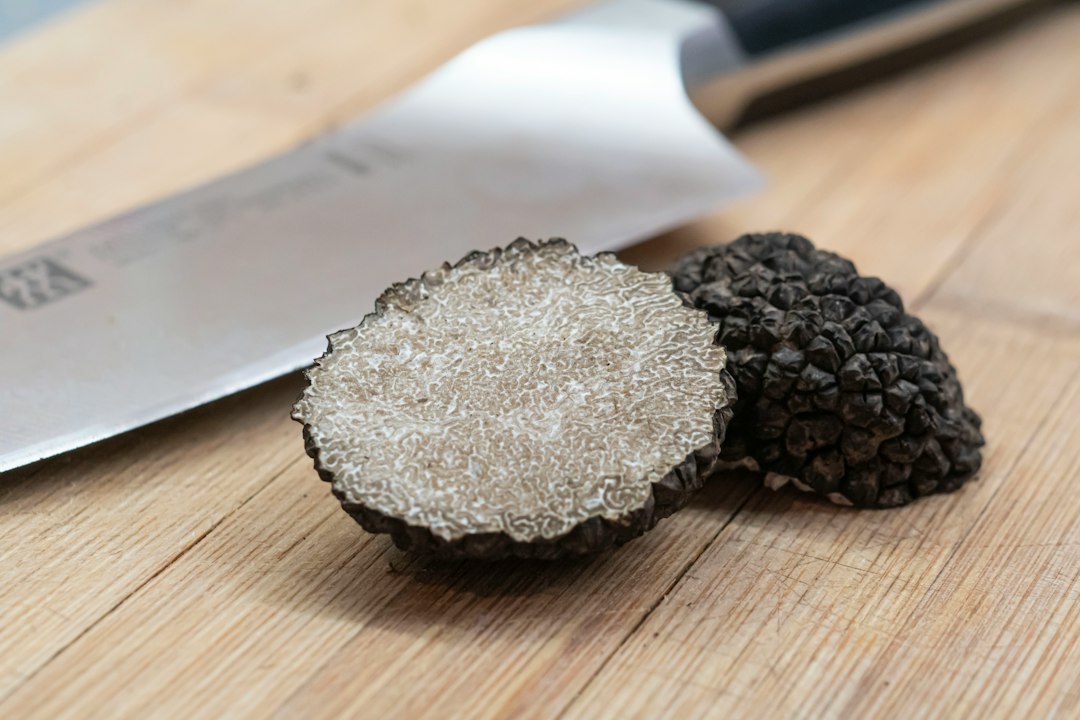
Two Experiences, One MoleculePicture this. You’re sitting at a picnic table on a hot summer’s day. Your friend hands you a cold beer - something light and refreshing. The perfect “lawnmower beer.” You pop the cap, bring it to your mouth, and your nose is immediately hit with the smell of malted grain and a hint of sweet corn. It’s a great combination!Next, imagine you’re standing in a friend’s kitchen. There’s a pot of cabbage on the stove. Unfortunately, your friend has overcooked the greens. Perhaps they got distracted; now the kitchen is filled with an unpleasant, pungent aroma that reminds you of, well, really bad cabbage. Two different experiences. Two different scents. But both come from the same molecule!That molecule is dimethyl sulfide (or DMS). It’s the same molecule I featured in my recent post about the smell of the ocean. DMS goes way beyond the sea, however. Once you start looking for it, you can’t stop finding it! I’m John Knight, by the way, and this is where I dig into the chemistry hiding in ordinary things. As always, full transcript and visuals are on my Substack.Like what you’re reading? Subscribe to learn more about the chemistry and science in ordinary, everyday things!Culinary ChemistryHere’s a fun fact. You’ve probably smelled DMS today. You almost certainly have eaten it this week. Multiple times, in fact. And I bet that you had no idea!Here’s the basic mechanism: a lot of vegetables and fruits - beets, tomatoes, corn, asparagus, and berries - carry a special molecule, something called S-methylmethionine (or SMM). We don’t really know for sure why many plants produce it. On its own, this molecule is colorless and odorless. If you heat it, though, or let it sit too long, it breaks down into DMS. Milk and cheese do something similar, too. It’s what happened in that pot of overcooked cabbage we mentioned earlier. By cooking that cabbage too long, we’ve liberated the very same molecule that helps give the ocean its smell. Some foods get their DMS differently, however. If you read my article about the smell of the sea, you’ll remember where it comes from: phytoplankton make a protective compound, they die, and bacteria break that compound down. You might have an idea of where this is going. This whole process isn’t just limited to phytoplankton and bacteria, though. It happens in the sea creatures that live and feast on the plankton, too. Those lovely oysters you ate over the weekend? They probably had a sweet, briny aroma and taste that comes from trace amounts of DMS. In fact, a little DMS is one of the things people love about seafood. Things can go a bit too far, though. If you don’t store that seafood properly or let bacteria have their way, too much DMS will be formed, and you’ll be sending that seafood back to the kitchen.Oh, and for those of you who are into expensive delicacies, consider the truffle. No, I don’t mean the chocolate. I mean the rare, intensely earthy fungus that commands a high price. If you like the way they taste and smell, you can thank DMS! In fact, truffles owe their highly prized aroma to DMS, and truffle-hunting animals likely use DMS to help search for the fungus.That’s it for the kitchen! Remember that beer from the beginning, though? The one that seemed so perfect on a hot summer’s day? It turns out that DMS isn’t just something that sneaks into your food. Sometimes, it’s exactly what you’re paying for. The Brewer and Winemaker’s DilemmaDMS, it turns out, is a big deal in beer brewing. This really isn’t surprising considering that beer is made from malted grain, which also contains SMM - just like those fruits and vegetables I mentioned earlier! For most beer styles, however, the presence of DMS is considered a flaw. Imagine if your beer had an unusual sweet aroma mixed with cooked cabbage and may even spoiled onions. Doesn’t sound too appealing, does it? DMS is especially an issue for beers made with lightly kilned malts that contain higher amounts of SMM. Brewers make an effort to remove it by boiling the unfermented wort to drive away any DMS and by controlling fermentation conditions. There are a few exceptions, however. Some of you have probably had a cream ale or a German-style pale lager that had a hint of sweet corn. That was no accident! In these styles, a little DMS is a positive thing. Brewers of these styles typically have to adjust their brewing technique to keep just the right amount of DMS in the finished beer.Beer isn’t the only alcoholic drink where the amount of DMS can make or break the experience. Winemakers also have to worry about it. The difference for wine, however, is that most of this DMS is produced slowly over time. Just as before, a tiny amount of DMS can enhance the fruitiness and complexity of a wine. It keeps developing over time, though, even inside a sealed bottle. Store that bottle the wrong way or let the wine age too long, and you’ll probably end up thinking the winemakers kept their socks on before they stomped on the grapes. So far, everything we’ve talked about is related to smell and taste - things that we humans try to manage like brewers boiling off DMS or winemakers hoping you store that bottle correctly. We’re not the only species that notice this molecule, however. For some animals, DMS is a matter of finding food or being fooled into doing something. The Marine Scent TrailIf you’ve been near or on the ocean, you’ve seen it before: seabirds circling above the waves as if searching for something. They seem to know the best spots for foraging, as though they have some kind of hidden sight. It turns out they don’t - they just know how to use DMS as a cue! DMS levels tend to be higher in areas where zooplankton are actively grazing on phytoplankton, which also happen to be the best feeding grounds for some seabirds. And birds like the albatross and petrel are exceptionally good at detecting DMS.In a way, nature has developed an elegant system: just follow the scent trail to dinner!This ability does have a downside in our modern world, though. Remember how I mentioned earlier that DMS in the ocean is formed by phytoplankton, bacteria, and algae living their lives? They especially like to do this on floating plastic, creating a biofilm on the debris that also produces higher levels of DMS. Seabirds, in turn, are drawn to these areas to forage. Inevitably, they end up eating smaller pieces of plastic, which to them smell exactly like their normal food. This is a major driver of plastic consumption in animal species that hunt by smell, and it’s largely something we humans have caused. Bringing It All TogetherHere’s the interesting part, though. A seabird’s nose can’t tell the difference between the krill it normally eats and a floating piece of plastic that smells like that krill. We humans are no different. Our noses aren’t just sensitive to the presence of DMS. They’re sensitive to the concentration of DMS. Depending on what that concentration is, the signal we get could be a delicious dinner or something dangerous. We’ve evolved to associate high levels of DMS with danger because it’s a chemical marker for death, decay, and maybe toxicity. In tiny amounts, however, it can come across as a good thing!Think about everything we’ve covered. A little DMS in a cream ale is refreshing. Too much, and the brewer might consider that batch ruined. A hint of it in a nice red wine comes across as fruity and complex. Age it too long, however, and you might have a bouquet of stewed fruits. It’s the difference between a perfect oyster and a sickly, spoiled one. Again, the molecule in question isn’t changing. It’s not reacting or interacting differently. The only thing changing is the concentration. A Little Bit of Cosmic ChemistryLet me tell you one more thing before I go. Earlier this year, the James Webb Space Telescope detected a faint signal on an exoplanet called K2-18b. This planet is located over 124 light-years away and orbits a small red dwarf star in the constellation Leo. Why do I mention this? Because the signal detected appeared consistent with DMS, and we know how connected that molecule is with life.Now, the result is tentative. Astrophysicists are still debating whether the signal is really DMS or an overlap of other signals. Maybe the signal is just from a mixture of common gases such as methane and carbon dioxide. But just the possibility it was due to DMS was enough to get people excited. It’s also a reminder, though, that DMS is not just a terrestrial molecule. We’ve detected it in space and even on comets. It might be far more common in the universe than we originally thought. OutroAnd that’s dimethyl sulfide. It’s in your kitchen, on your dinner table, and in space. Think about it the next time you have a beer or your fancy friend serves truffles at dinner. If you want the transcript for this along with some visuals, check out the full post on my Substack. Thanks for listening, and I’ll catch you next time!References and Notes This is a public episode. If you would like to discuss this with other subscribers or get access to bonus episodes, visit johnknightphd.substack.com

Full post can be read at: https://johnknightphd.substack.com/IntroImagine a beautiful spring morning. The trees are stunning with new, bright green growth and colorful blossoms. Songbirds fill the air with their melodies. Above, small white clouds drift by across the blue sky.Now imagine feeling the warmth of a mug in your hands as you take in this scene. What’s in the cup? For some, it might be a nice cup of coffee. Others might prefer something herbal or fruity. Still others would drink tea - green tea perhaps!And what if that green tea actually tasted like cherry blossoms?Hello everyone! My name is John Knight. As a chemist and writer, my goal for these audio posts is to peel back the curtain on the chemistry of our modern world. Whether it’s the latest lab breakthrough or the hidden science in our daily lives, I’m here to help break down the science so that it’s clear without getting bogged down in a bunch of lab notes.Before I tell you about a very special kind of tea, just a quick reminder: if you’re listening to the audio-only version, be sure to check out the full post on my Substack. There, you’ll find a transcript of everything I’m saying and important visuals, some of which can help you “see” the chemistry I will discuss.And now, let’s talk about a tea that was rejected by the industrial tea world of Japan, although it tastes like one of the most Japanese things of all…The Fleeting Scent of SpringCherry blossoms, or sakura in Japanese, are deeply connected to the spring season. The trees are prized for their beautiful flowers that come in shades of white or pink. For many, they are a symbol of renewal and the end of winter. Tourists will often flock to areas with many cherry blossom trees. Just ask anyone who has traveled to Japan or Washington, D.C. at the beginning of spring!These trees are also a symbol of impermanence. Because they only bloom for one or two weeks on average, their beauty is but temporary, much like spring itself.In Japan, sakura are more than just ornamental flowers, however. They actually have a long history of being used in confectionery and seasonal food. Flavor-wise, they are often described as a combination of floral, vanilla, almond, and light cherry notes.This might be confusing to some who have stood close to a cherry blossom tree. If you put your nose right up to a flower, you will probably smell nothing. They are perfectly edible, but you probably won’t taste anything, either. Instead, the flavor is locked up in the flower, and a little chemistry is required to release it.So how does this work? The flowers are traditionally cured through a kind of pickling process. First, the flowers are washed, dried, and mixed with sea salt to remove moisture. This is followed by a thorough soaking in a vinegar made from plums. This not only preserves the flowers and gives them a vibrant pink color but also changes their flavor.Sunlight and SugarMany plants produce compounds called glycosides, sugar-containing molecules that also contain a non-sugar component. In addition to regulating plant growth and stabilizing pigment molecules, glycosides are also used to store potentially toxic or unstable molecules meant to protect the plant. Plants also produce special enzymes that can break down these glycosides into their individual components when needed.For cherry blossoms, one important glycoside is o-coumaric acid glucoside. That name might sound scary, but bear with me for a moment. Think of this glycoside as a large storage molecule with an important component safely secured inside. On the tree, this glycoside and its unlocking enzyme are never stored in the same place. After harvesting, washing, and curing, however, many of the cells in the flower are broken, allowing the enzyme and glycoside to interact. The enzyme then breaks the glycoside into two molecules: o-coumaric acid and glucose. From there, the rest of the chemistry can happen relatively quickly. That coumaric acid is a rigid, elongated molecule containing what chemists call a trans double bond. Normally, this would be stable, but in this case, it’s not. Add just the right amount of energy into that double bond, and it can be converted into a cis double bond, bending the molecule toward itself. It turns out that ultraviolet light (UV) from the Sun provides the necessary energy to do this. Once the geometry changes, the molecule essentially folds in on itself, placing the atoms in the right position to react and form an important molecule called coumarin.It’s coumarin that is primarily responsible for that sweet, vanilla-almond flavor and scent of sakura.But what does all of this have to do with green tea? That’s a completely different type of plant! And traditional green tea doesn’t contain fermented flower petals…It turns out that this process of making coumarin also occurs during tea production, albeit in very small amounts. For one particular variety, however, this isn’t the case.Japanese Green TeaMany people have a basic understanding of where tea comes from, though they may not be aware of the exact details. Most of the tea consumed in the world is made from the leaves of the tea tree (Camellia sinensis). That’s right - the tea tree is in the same family as all of those glossy, evergreen shrubs that produce bright, showy flowers from fall to spring every year. The processing of the leaves varies considerably from country to country and even region to region. For every producer that uses modern methods of harvesting and processing, it’s not difficult to find some who make tea using more traditional methods and maybe even entirely by hand.Although China is the biggest producer of green tea in the world, Japan also produces its share. It’s also very distinct. When making green tea, it’s important to stop oxidation by enzymes in the leaves. Otherwise, you’ll end up making black tea or oolong tea. In many green tea-producing countries, this is done by pan-frying or even roasting the leaves on a hot surface. In Japan, the leaves are steamed. This gives a completely different flavor profile.Where green teas from China might have mellow, nutty, floral, or even toasty notes, Japanese green teas are more vegetal, grassy, and full of umami flavor. Some producers intentionally shade the trees before harvest, which forces them to produce more flavorful compounds. Japanese producers also love to use machines. In fact, the entire process is mechanical. This is in stark contrast to other countries, where you can still find people harvesting and processing by hand.Japanese Tea CultivarsNow, I mentioned that most tea comes from a single type of tree, but there are many varieties of tea trees worldwide. These are often called cultivars. Think of them as the tea tree equivalent of wine grape varietals. In Japan, there are hundreds of cultivars, and the government has an official registry that recognizes over 130 of them.Despite the large number of cultivars, however, most of the green tea in Japan - roughly 75% - comes from a single cultivar called Yabukita. It’s a mainstay known for its high yields, strong umami flavor, and, perhaps most importantly, its ability to be easily processed using machines. Resilience? It’s got that in spades! Yabukita grows in almost every tea-producing region of Japan, with only the warmest and coldest areas of the country limiting its reach. If you ever drink Japanese green tea, there’s a good chance it’s prepared from Yabukita.Other cultivars exist with their own special characteristics. Saemidori trees mature early and produce a tea with lower bitterness. Okumidori, in contrast, grows better in colder parts of the country. Gokou is kind of like an umami bomb that is used to produce high-grade matcha and shaded teas. Many other cultivars are used to prepare relatively small amounts of tea.The tea that I’m focused on today, though, was mostly forgotten about outside its home region. Instead, it’s a misfit. It was considered unsuitable for large-scale production with a flavor profile that didn’t fit the standard palate of the 20th century. This cultivar is Shizu-7132, and its tea has the flavor of cherry blossoms.Shizu-7132Back in the 1960s, researchers were trying to find a new cultivar that would supplant Yabukita as the go-to cultivar in tea production. They wanted more umami flavor, stronger aroma, and greater resistance to cold and disease. They didn’t rely on artificial breeding programs, though. Instead, they harvested seeds from Yabukita trees in local tea fields and planted them. Although several interesting varieties were found over the years, many had characteristics that made them less desirable in Japan’s highly mechanical tea production system.Shizu-7132 was one of those experimental cultivars. Its strong, cherry blossom-like aroma and flavor were unique, but its leaves also proved problematic during production. Typically, steamed tea leaves are shaped into needles using rolling machines. This step helps break down the leaves and release more flavor compounds. The thicker stems of Shizu-7132 didn’t play well with rolling machines designed for standard cultivars like Yabukita.The cultivar does have its mother’s strong resistance to frost and certain diseases, though. Researchers are uncertain what the father plant is. Some even speculate that the father was a foreign variety used to make black tea. This might explain where the “un-Japanese” flavor profile comes from.Despite all its positive characteristics, Shizu-7132 was never officially registered. It didn’t fit the mold of what was considered desirable at the time. Sidelined, it was mostly relegated to local tea fields in Shizuoka. We owe its continued existence to the work of local tea farmers in that region.What Makes it SpecialTeas made from Shizu-7132 contain coumarin just like fermented cherry blossoms. In fact, the coumarin is produced in a very similar set of reactions during the tea-making process. The cultivar doesn’t just contain h

The Battery ParadoxWe live in a world of batteries. They are in our smartphones, laptops, wearables, tablets, and speakers - all the devices we surround ourselves with every day. But it’s not just the things we use or wear that have batteries. They are increasingly being found in things that help us move, too. In 2025, for example, 25% of all new cars sold globally were electric vehicles, powered by rather large lithium-ion batteries. Batteries, though, are just complex chemical reactions that are neatly packaged. They can be fire and safety hazards. Making them isn’t exactly “green,” either. And what do we do with them when they no longer work? That depends on the battery type! Although lead-based batteries are recycled at nearly a 100% rate, the global recycling rate of lithium-ion batteries is significantly lower. It’s just too expensive to do. In many cases, the components are worth less than the cost of recycling. If we are going to live in a world of more and more batteries, we will need to figure out new ways to repurpose and reuse them. Recently, researchers have developed a new way to tease apart two common battery components that have proven difficult to remove from battery waste. They didn’t do this with new machines or some novel scientific theory. Instead, they did it with something you can find in a wine bottle. Hello everyone! My name is John Knight. As a chemist and writer, my goal for these audio posts is to peel back the curtain on the chemistry of our modern world. Whether it’s the latest lab breakthrough or the hidden science in our daily lives, I’m here to break things down without getting bogged down in the technical details.Before we dive deeper into today’s topic, just a quick reminder: if you’re listening to the audio-only version, be sure to check out the full post on my Substack. There, you’ll find a transcript of what I’m saying and some visuals that help you “see” some of the chemistry we're about to discuss.Now, let’s get back to the surprising solution to a long-standing problem in battery waste recycling…Chemical TwinsBefore I go into what the recent breakthrough is, we need to look at two specific battery components: cobalt and nickel. Next to lithium, these are workhorses in the battery world. If you drive a long rangeTesla, there’s probably a battery containing lithium nickel cobalt aluminum oxide (NCA for short). Other common batteries use a combination of nickel, manganese, and cobalt, known as NMC. What do these two metals do? Well, nickel acts as a kind of energy booster, increasing the energy density of a battery and enabling faster charging rates. Cobalt is more of a stabilizer. It’s used to extend the lifespan of a battery and improve its stability.When it’s time to recycle these batteries, however, there’s a big problem. Before these metals can be reused, they need to be separated. Colbalt and nickel, though, don’t separate very easily. They’re right next to each other on the periodic table and are almost chemical twins. Many people would have trouble telling the two pure metals apart!Normally, we can separate metals using a process called electrowinning. Here, you take a liquid solution of the metals and apply a specific voltage to it. By changing the voltage value, you can pull each metal out of the solution. Cobalt and nickel, though, are two elemental peas in a pod. In other words, they come out of the solution at the same specific voltage. If you try to remove cobalt from the solution, the nickel comes right along with it. Currently, cobalt and nickel are separated using something called solvent extraction. It can get the job done, but it’s rather expensive. It also uses a lot of chemicals - think of giant vats or tanks of hazardous chemicals and specialized, toxic molecules. The process isn’t universal, either. What works for one type of battery waste may not work for another. Researchers have been on the hunt for cleaner, cheaper ways to separate these two important metals for years. Recently, they found a molecule that helps tease them apart: tartaric acid. Tartaric AcidBelieve it or not, you’ve probably seen tartaric acid before, even if the name sounds alien. It’s a natural organic acid found in grapes and many other fruits. If you’ve ever used cream of tartar to make baking powder or stabilize egg whites, you’ve used a derivative of this acid. It also plays an important role in the fermentation process, contributing to the acidity and flavor of wine in particular.If any wine lovers are listening, you might recognize tartaric acid as the source of so-called wine diamonds. These are small crystals of potassium bitartrate, a salt of tartaric acid that tends to form over time at the bottom of wine bottles or on the cork. They can also form in wine barrels during storage. Some who see them for the first time think there’s broken glass in their wine, but there’s nothing to fear. These crystals are pretty harmless!Tartaric acid is actually a bit of a celebrity in organic chemistry. The famous scientist Louis Pasteur used this molecule in 1841 to discover chirality - the idea that molecules can have "handedness” and can exist as mirror images of each other. In other words, it’s the stereotype of chirality. So, it’s pretty interesting that a molecule found in everything from your morning muffin to a bottle of Merlot may also be used to solve the problem of separating cobalt and nickel. How It WorksHow did researchers use tartaric acid to separate cobalt and nickel? Well, it turns out that researchers have been trying for years to find molecules that can effectively wrap themselves around one of the metals and change its properties. Think of it as a kind of chemical hug that traps one metal so you can easily remove the other. Concentrated chloride salts showed some promise in the past, but they’re a bit harsh and require large quantities to work.To find something that will make a perfect chemical hug, researchers at John Hopkins University examined 13 different organic acids from nature, which they call bioacids. Among these acids was citric acid, the acid found in lemons, oranges, and other fruits, and lactic acid from yogurt. Of all the acids, though, tartaric acid proved uniquely suited for this role. What makes tartaric acid special is its molecular architecture. When you add tartaric acid to a solution of cobalt and nickel, two of these acid molecules work together to trap two ions of cobalt or two ions of nickel. You might be thinking, “Don’t cobalt and nickel basically act the same?” In many cases, that can be true. Conveniently, tartaric acid actually has a strong preference for nickel over cobalt. It effectively traps the nickel.By binding to nickel ions so strongly, tartaric acid makes separating the two metals using electrowinning much easier. Their voltage potentials are no longer the same because one metal has another molecule wrapped tightly around it!No expensive chemicals required. No hazardous waste or flammable solvents. Just add a byproduct of winemaking and use standard electrochemical methods.Using tartaric acid, researchers recovered cobalt and nickel with purities over 95%. And they didn’t do this with just simple laboratory solutions, either. They tested tartaric acid on real-world battery waste, recovering cobalt with over 99% purity. They even built a flow system that enabled them to recover cobalt, nickel, and manganese, one after another.Using tartaric acid isn’t just a cleaner or simpler process. It’s potentially much cheaper and more energy efficient than what is used in industry today.ConclusionIt’s important to keep in mind that transitioning to greener energy often comes with hidden drawbacks. Batteries are one example of this. If it’s cheaper to just mine more minerals than to recycle old, worn-out batteries, things may not be as green or sustainable as we think. That’s why research such as this is important. We are proving that we don’t need to use expensive, hazardous chemicals to recycle battery components. We can use a common organic acid to reduce the number of lithium-ion batteries that end up in a landfill or the environment. Sometimes, the solutions to problems aren’t new or exotic. They might, in fact, just be sitting in something like a wine bottle.Thanks for listening to this audio post. If you want to see an example of how tartaric acid molecules wrap themselves around nickel ions, check out the full post on Substack. You can also find a link to the original paper in the references. And if you liked what you’ve heard, be sure to subscribe so you don’t miss the next one. I’m John Knight, and I’ll see you in the next post.References and Notes This is a public episode. If you would like to discuss this with other subscribers or get access to bonus episodes, visit johnknightphd.substack.com

Comments

Download from Google Play

Download from App Store
 United States