


 Claim Ownership
Geopolitical Economy Hour
Subscribed: 3Played: 30
Subscribe

© Radhika Desai
Description
As dizzying yet historically deeply-rooted developments transform the political economy of key countries and the world's geopolitical economy, we provide ongoing analyses of the foundations being laid for a multi-polar world beyond capitalism.
4 Episodes
Reverse
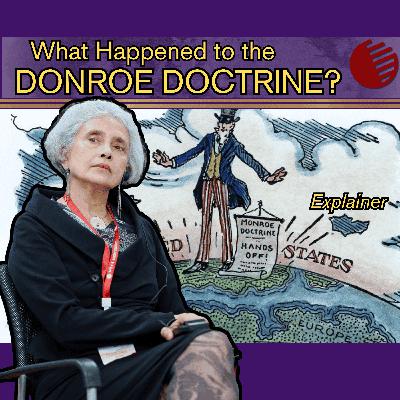
GEOPOLITICAL ECONOMY EXPLAINER Just over a month ago, the world was abuzz with talk of the Donroe Doctrine? Radhika explains what the so-called "Donroe Doctrine" was supposed to be, what it really was, how it lined up with the Monroe Doctrine and the Roosevelt Corollary, and why it is hardly surprising that it was barely proclaimed before it was violated. The explanation may surprise you.

Starting Sunday, 22 March 2026, Radhika Desai is leading a Capital Reading Group on line. It will consist of an hour’s lecture followed by at least an hour’s discussion.In her lectures, Radhika will be presenting an interpretation of Capital that she arrived at in the course of developing Geopolitical Economy, the Marxist approach to understanding the international relations of the capitalist world, which placed imperialism and anti-imperialist resistance at its centre and has required rescuing Marx’s original analysis of capitalism as contradictory value production from more than a century and a half of misinterpretation by Marxists themselves.In this first episode, Radhika analyses an Introduction by Ernest Mandel as well as two Prefaces by both Marx & Engels.
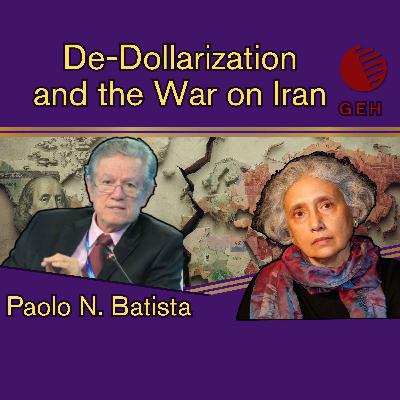
The illegal, criminal US-Israeli war on Iran is now almost three weeks old. There are new twists and turns by the hour. However, some things are clear. The US and Israel are not winning, Trump is desperately looking for an off ramp and even the most delusional one is not available to him given that it is not up to the US-Israeli side to end the war, only up to Iran, which is willing to fight for months, even a year, and is seeking nothing less than the exit of the US from the middle eastern region, ending a more than century long engagement. Meanwhile, the war has already had significant economic and financial effects The price of oil and gas have risenSo have prices of associated products, like fertilizerInflation and food inflation are rising.Expected cuts to interest rates are now on hold and may even turn into hikesStock markets are falling on expectations of a recessionand dollar denominated asset markets, vulnerable to higher interest rates could soon be tottering on the brink of collapse While there is a lot of commentary on all this, there is hardly any discussion of that the war on Iran means for the dollar system and to the prospects of de-dollarization? In this Geopolitical Economy Hour, Radhika Desai discusses the ins and outs of this question with Paulo Nogueira Batista Jr, who has served, inter alia, with the IMF, the New Development Bank and the Brazilian government.

For the Second Year Running, the Munich Security Conference became the theater of a battle in the West’s international civil war that stretches far beyond it, turning increasing insecurity rather than managing security around the world. This war – in which the stakes seem to be not only Greenland but also regime change in Europe – pits the establishment ‘globalizing’ neoliberals against the ultra neoliberal right wing forces represented by Trump, Farage, the Alternative für Deutschland and other such forces and is waged between and within countries. In this relaunch of Geopolitical Economy Hour, Radhika Desai, Geopolitical Economist discusses the outcomes of Munich with K J Noh, one of the best informed journalists and activists on international relations and military affairs. Where does Munich leave the Atlantic Alliance? What about the US equation with China, and, for that matter Russia?
Comments

Download from Google Play

Download from App Store
 United States