


 Claim Ownership
The Experimentation Edge
Subscribed: 1Played: 1
Subscribe

© Ashley Stirrup
Description
How do product teams decide what to build and what not to? The Experimentation Edge is the podcast where product, growth, and engineering leaders share how A/B testing, feature flags, and experimentation drive real business outcomes — backed by named companies and real numbers. From DoorDash's 12,000 A/B tests a year to Atlassian's experimentation-led product win to UPS's $500M experimentation team, each episode goes deep with operators running experimentation programs at scale.
Hosted by Ashley Stirrup, CMO at GrowthBook and a 25-year executive in data and experimentation. For product managers, engineers, data scientists, and growth leaders at B2B tech companies who care about experimentation culture, statistical rigor, and shipping with confidence. No marketing speak. Just operators explaining what they shipped, what moved the needle, and how experimentation reshaped their teams.
Topics: A/B testing, experimentation, growth experimentation, product experimentation, tech experimentation, feature flags, experimentation culture, statistical significance, marketplace experimentation, conversion rate optimization, experimentation at scale.
66 Episodes
Reverse
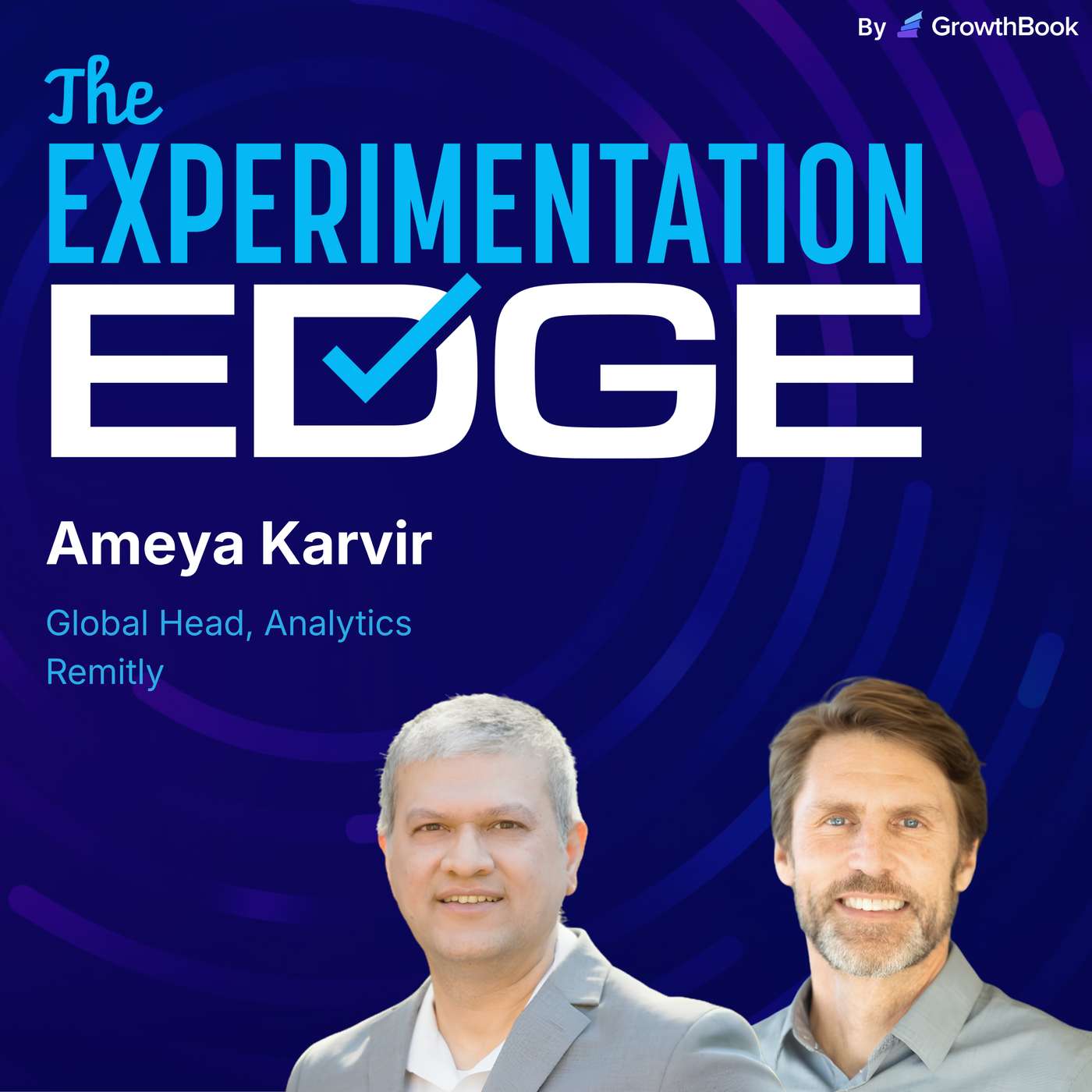
SummaryWhat happens when a homepage redesign everyone expects to win performs worse than the existing experience? Ameya Karvir, Global Head, Analytics at Remitly, joins GrowthBook CMO Ashley Stirrup on The Experimentation Edge to explain how testing at scale can challenge assumptions, protect customer trust, and turn surprising results into better product decisions.Ameya describes experimentation across marketing, pricing, promotions, and the cross-border money movement experience. Remitly had originally planned for 700 experiments in 2026 and reached that volume by July or August, prompting an expansion of its testing capacity. But velocity alone is not the goal. He shares why a major app-homepage redesign initially lost to the control, what the team learned about customers' familiarity with existing navigation, and how clearer hypotheses, smaller rollouts, user-journey instrumentation, and business-relevant metrics improve experimentation quality. The conversation closes with a vision for AI-assisted checks and self-service tools that help more teams test confidently without turning analysts into a bottleneck.Chapters00:00 Meet Ameya Karvir and the Remitly mission 02:56 Where Remitly experiments: marketing, product, and pricing 04:45 How analytics teams partner across the business 05:17 Hitting a 700-experiment annual target by midsummer 05:46 Why experiment quality matters as much as volume 07:26 The homepage redesign that lost to the control 10:33 Better change management: outside perspectives and guardrails 11:59 Making neutral and negative tests useful 14:00 Statistical significance versus meaningful business impact 14:53 How AI and self-service may reshape experimentationTakeaways- Remitly applies experimentation across acquisition, in-app experiences, pricing, and promotions while keeping trust and customer experience central. - Reaching the initial 700-test target ahead of schedule created pressure to scale without compromising hypotheses, execution quality, or decision-making. - A seemingly better homepage can initially underperform when it disrupts the habits and expectations of returning customers. - Broader design feedback, a controlled traffic ramp-up, and early guardrails help identify problems before full rollout. - Instrument the entire journey so neutral or negative results reveal where behavior diverged from the hypothesis. - A statistically significant movement may still be too small to matter commercially; analysts should clarify business objectives before launch. - AI-enabled quality checks and self-service frameworks could democratize testing while protecting rigor.Connect with the GuestAmeya Karvir on LinkedIn: linkedin.com/in/ameya-karvir Learn more about Remitly: remitly.comSponsorGrowthBook helps teams ship features with confidence through open-source experimentation and feature flagging. Run A/B tests, manage feature rollouts, and evaluate results using data from your warehouse. Explore the platform at growthbook.io.

SummaryWhat does it take to build an experimentation culture outside a company with Meta-scale traffic? Joshua Hussong, Senior Data Scientist at Airwallex, joins GrowthBook CMO Ashley Stirrup on The Experimentation Edge to explain how his team applies A/B testing to organic search, signup flows, and on-page conversion while navigating the sample-size and regional challenges of a global fintech.Drawing on his work at Meta and Disney Streaming, Joshua shares how an interactive onboarding tooltip improved the path from Instagram advertiser signup to first ad creation, why test design and guardrail metrics matter, and what teams can learn from negative results. The conversation also explores how Airwallex coordinates data science and business teams, and how AI-driven search, GEO, and crawlable content are changing the organic acquisition landscape.Chapters00:00 Meet Joshua Hussong and Airwallex02:24 What SEO teams can and cannot A/B test04:00 Experimentation lessons from Disney, Meta and Airwallex10:37 How interactive tooltips improved Instagram ad activation14:35 Guardrails: engagement, churn and revenue16:12 Learning from losing experiments19:09 Scaling experiments across regions20:20 AI, GEO and LLM crawlers23:35 Closing thoughtsTakeaways-Focus SEO A/B tests on on-page behavior and conversion when acquisition ranking is controlled by search algorithms.-Share experiment readouts and co-design hypotheses with business stakeholders, not just data scientists.-Use adequate sample sizes, statistical power, and engagement, churn, and revenue guardrails to evaluate changes.-Analyze losing tests by user segment before deciding whether to iterate, retarget, or rethink the hypothesis.-Treat GEO and AI search as emerging organic discovery channels, while keeping useful, accessible content at the center.Connect with the GuestLinkedin: https://www.linkedin.com/in/joshua-hussong/Company: AirwallexSponsorGrowthBook is the warehouse-native platform for experimentation, feature flags, and product analytics trusted by AI-native product teams at 3,000+ companies worldwide. Go to growthbook.io
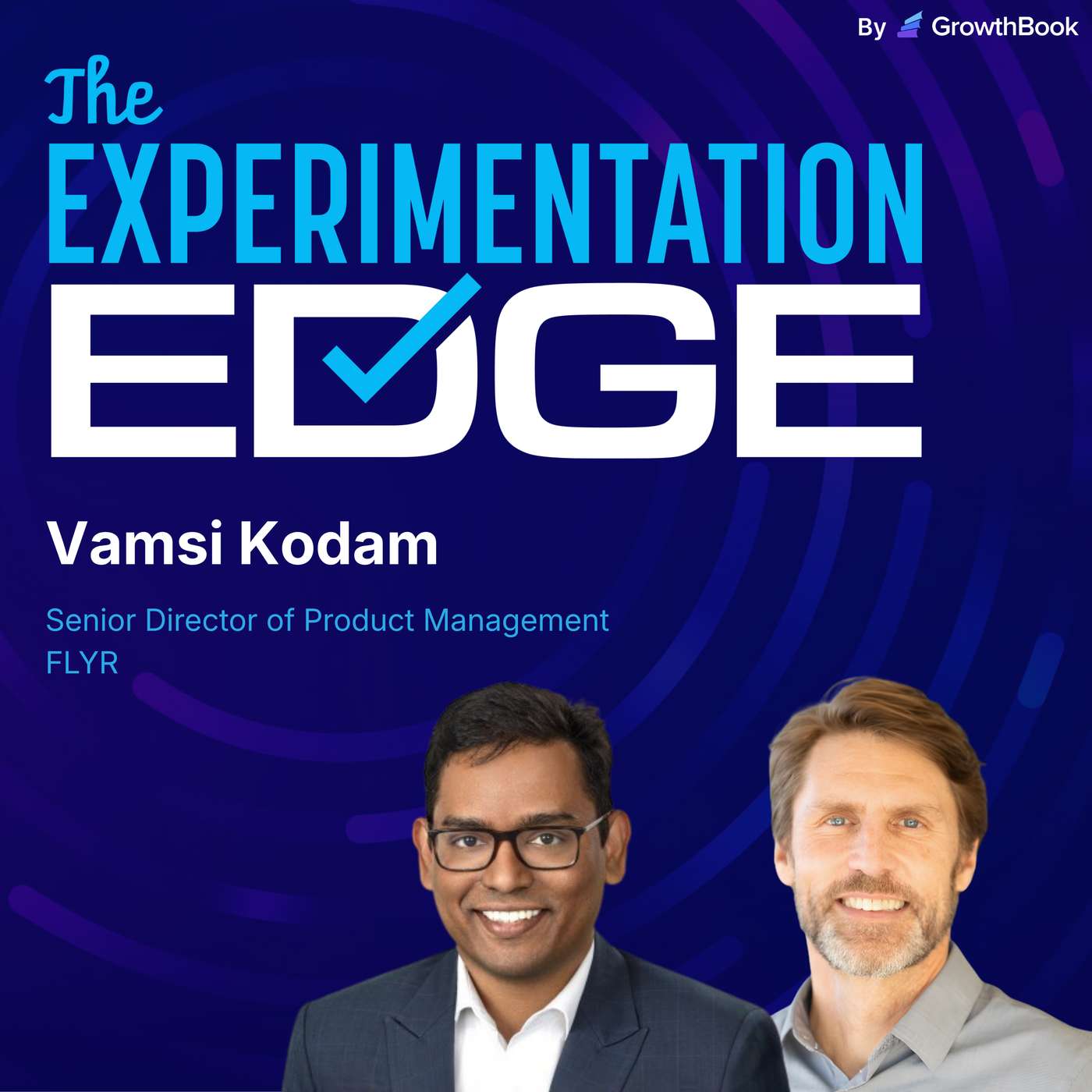
SummaryAirline seats are perishable inventory, and small decisions about pricing and product offers can have enormous consequences. Vamsi Kodam, Senior Director of Product Management at FLYR, joins host Ashley Stirrup on The Experimentation Edge to explain how FLYR is helping airlines modernize commerce, personalization, pricing, and offer orchestration.Vamsi revisits a formative "human versus machine" experiment in airline revenue management: total revenue barely changed, but looking across the network revealed where human overrides helped, did nothing, or actively hurt performance. He also shares how FLYR applied multi-armed bandit experimentation to an airline pricing problem and saw double-digit revenue improvement, why he studies other practitioners' research before designing tests, and how airline experimentation can move beyond price to personalized product bundles.Chapters00:00 Meet Vamsi Kodam of FLYR00:17 Building a modern airline commerce platform01:37 Riyadh Air and a cart-style booking experience02:28 Product catalog, pricing, and offer orchestration03:37 Vamsi's first A/B tests in airline pricing04:23 Experimentation beyond e-commerce05:28 When human pricing overrides help or hurt07:11 Why every experiment teaches you something08:23 The lingering human price override10:22 Multi-armed bandits and double-digit revenue improvement12:01 Building experimentation into airline products13:16 Learning from research and other industries15:16 AI-assisted research monitoring15:39 Experimenting beyond price and into product personalization17:27 AI and faster product development18:18 Feature flags as a safety netTakeaways-An experiment that ties overall can reveal meaningful improvements when you analyze different markets or customer segments.-Test human intervention against automated decisions; use the results to define where overrides add value.-Multi-armed bandits can reallocate traffic toward better-performing pricing variants while continuing to learn.-Reuse lessons from other industries and technical research rather than designing every test from scratch.-Beyond dynamic pricing, airlines can test which products and bundles best match traveler needs.-As AI accelerates development, feature flags can help teams release more safely.Connect with the GuestLinkedIn: linkedin.com/in/vkodampmFLYR: flyr.comSponsorGrowthBook is an open-source experimentation and feature-flagging platform that helps teams run A/B tests and make decisions using data. Learn more at growthbook.io.
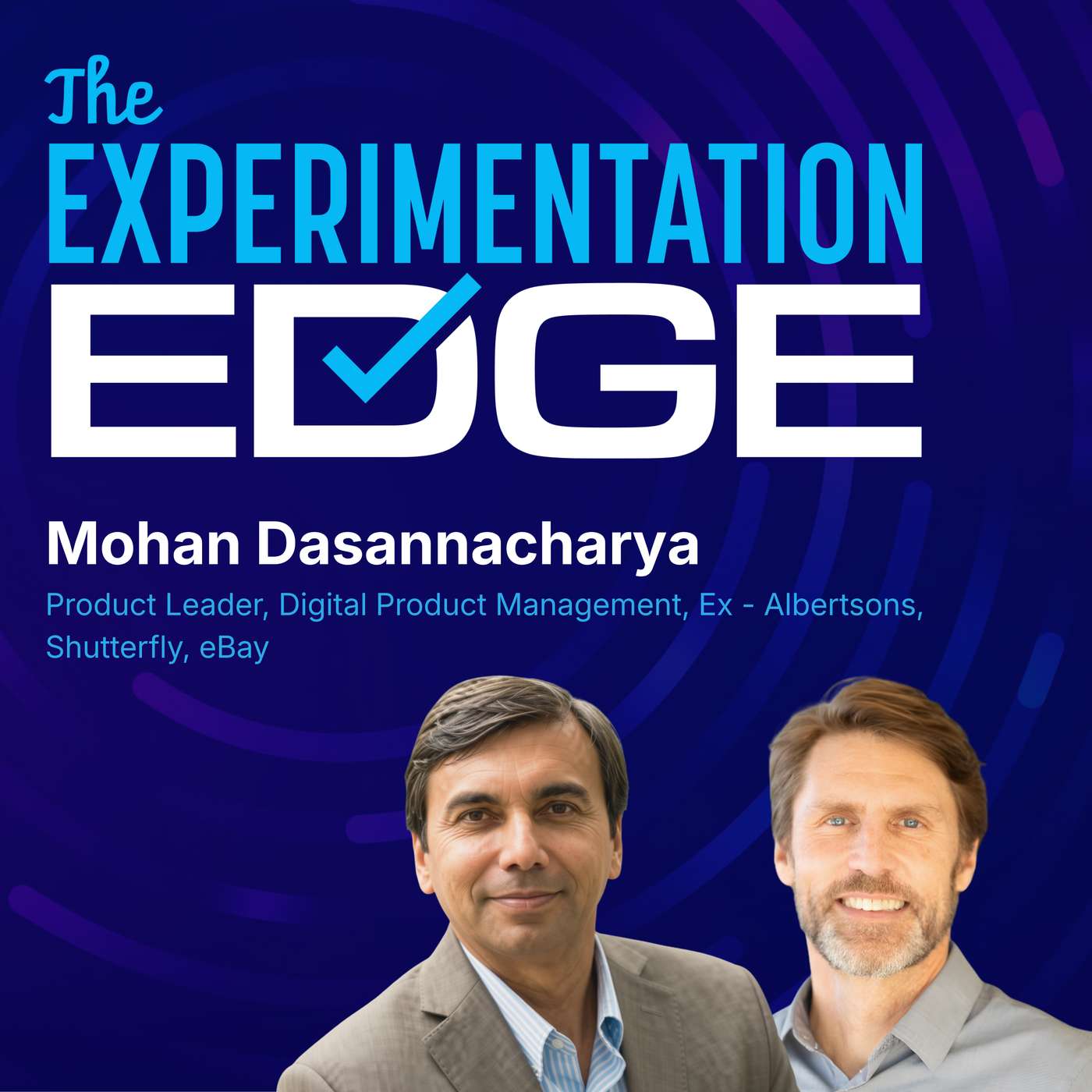
SummaryMohan Dasannacharya, Ex Albertsons, Shutterfly, eBay, joins host Ashley Stirrup to talk about what it takes to trust the numbers an experimentation platform gives you. Mohan's path runs from physical design to UX at eBay, product and experimentation at Shutterfly, and now the in-house experimentation and analytics platform at Albertsons, which moved off Adobe Target and cut results reporting from about 7 days to overnight. Mohan explains how A/A tests that kept producing winners led Albertsons to split tests into A, A and B for almost 2 years, why a flat add-to-cart test turned out to be a false positive once the team looked at next-step conversion, and how a Shutterfly bug hid a 6 to 7% lift. He also covers exposure versus impression tracking, setting expectations before a test runs, keeping analysts independent from product owners, and how personalization and democratized testing will demand longer tests and better guardrails. For product, data and experimentation leaders who want results their whole company can believe. Chapters00:00 Welcome Mohan Dasannacharya of Albertsons00:31 From physical design to eBay, Shutterfly and Albertsons02:00 Experimentation through the dot-com bubble, 2008 and COVID02:49 How Albertsons moved experimentation in-house04:25 Why grocery shoppers add to cart from the grid06:02 The biggest lesson: make sure you can trust the platform07:44 Splitting tests into A, A and B09:12 Why personalization raises the stakes for platform checks10:11 How the platform team validates experiment results11:20 The add-to-cart button that became a plus sign13:13 Validating projected wins after launch14:53 Track journey conversion and next-step conversion together15:45 A novelty effect in reverse16:12 The Shutterfly bug that hid a 6 to 7% lift17:38 Balancing test volume with test quality19:23 Exposure versus impression tracking20:21 Set your expectations before the test runs22:34 Keep analysts independent from product owners23:35 When 80% of eBay's home page tests claimed victory24:30 Personalization and pre-picked test audiences26:15 Bake-in periods before you measure27:20 Democratizing experimentation with gatekeepers29:08 Running longer tests for smaller personalized audiences30:30 Grocery as an omnichannel experience Takeaways- Test the platform itself: run a constant A/A test if you have the traffic, or one every 6 months if you don't- A flat primary metric can hide a changed journey; track next-step conversion alongside end-to-end conversion- Write down the expected lift before the test runs so a 0.1% result isn't declared a win against a 1% goal- Keep an experimentation analyst team independent from the product owner to avoid cherry-picking- Personalization shrinks each test's audience, so plan power calculations and run tests longer Connect with the GuestMohan Dasannacharya LinkedIn: https://www.linkedin.com/in/mohandasannacharya/Company Website: https://www.albertsonscompanies.com SponsorGrowthBook is the warehouse-native platform for experimentation, feature flags, and product analytics trusted by AI-native product teams at 3,000+ companies worldwide. Go to growthbook.io
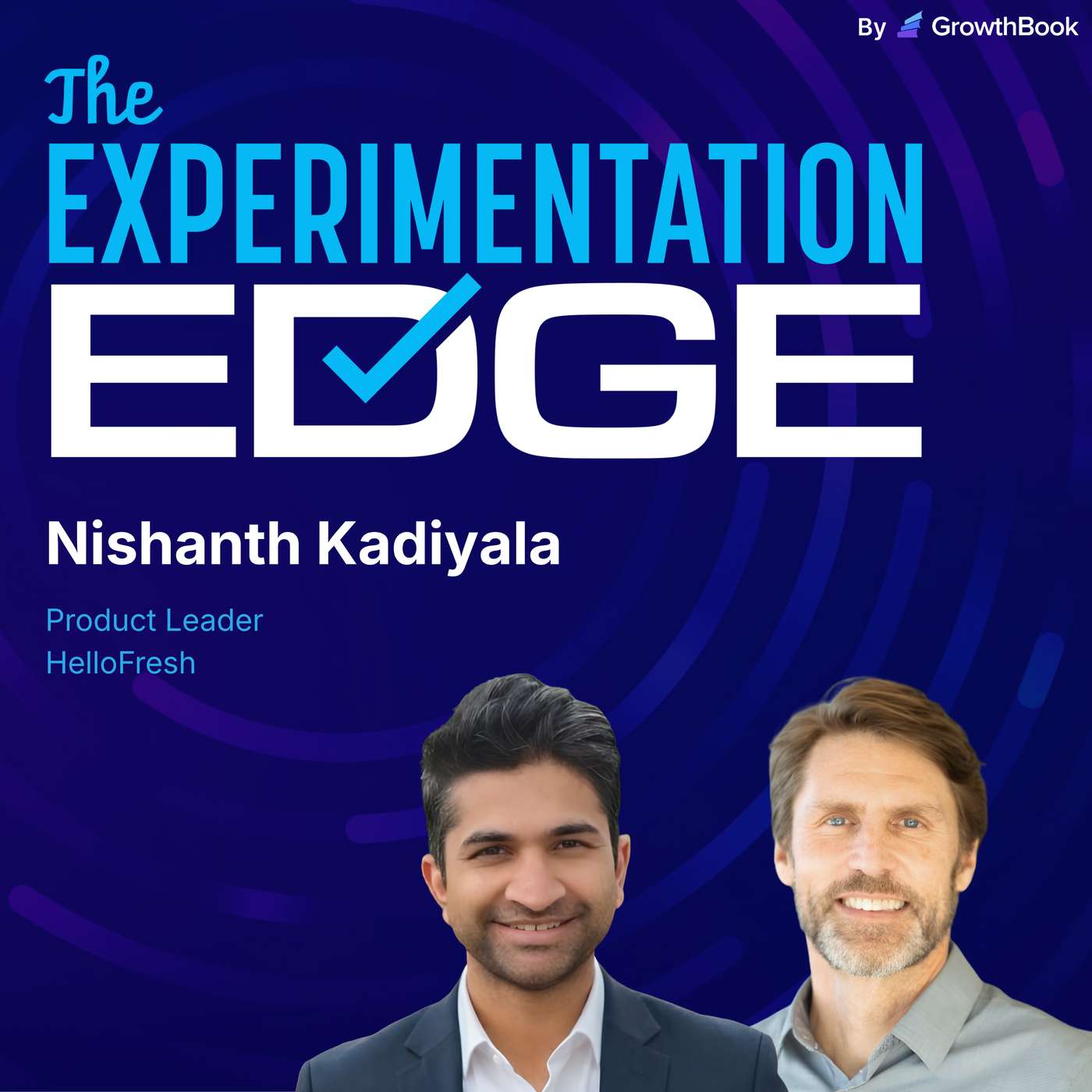
SummaryHow do you measure the quality of an AI-generated ad when designers, legal teams, and advertisers may all define “good” differently? Nishanth Kadiyala, Product Leader at HelloFresh and formerly an ad tech product leader at Walmart Connect, joins Ashley Stirrup on The Experimentation Edge to explain how the team shifted from subjective creative preferences to measurable acceptability, compliance, and performance.Nishanth walks through the realities of building creative automation for smaller advertisers: segmenting users, validating AI output against a large evaluation dataset, running A/B tests to earn stakeholder buy-in, and letting real advertiser needs shape the product. He describes moving creative production from weeks to minutes as more than 250 advertisers tried the product, then shares how those lessons inform creative velocity and diversity in his current work at HelloFresh.Chapters00:00 Meet Nishanth Kadiyala01:16 Inside Walmart Connect’s retail media stack05:30 Why B2B experimentation requires a different playbook07:30 Moving from subjective quality to acceptability09:45 Helping smaller advertisers create better ads12:21 Iterating with user research and phased launches14:47 Testing AI creative against human-designed ads15:57 Building a golden dataset for AI evaluation18:05 Scaling across products, advertisers, and categories22:18 Defining baseline quality and performance24:50 Unexpected lessons from advertiser feedback26:35 Choosing the right level of AI control28:33 Results: 250+ advertisers and minutes to create29:44 From manual reviews to AI evaluation pipelines31:35 Creative velocity and diversity at HelloFresh34:57 AI’s role in the next generation of testing36:40 Closing reflectionsTakeaways-An ad that looks better is not necessarily an ad that performs better; A/B testing turns aesthetic debates into learning.-AI creative must first clear acceptability guardrails for product fidelity, context, and brand compliance, even while models keep improving.-Start with the advertisers and product categories that current technology can support, then expand with evidence from real users.-A representative golden dataset and ongoing evaluations are as important as the generative model itself.-Nishanth says the Walmart Connect effort reached more than 250 advertisers and reduced creative production from multiple weeks to minutes.-Creative velocity, diversity, and excellence are now central to Nishanth’s paid-social work at HelloFresh.Connect with the GuestNishanth Kadiyala on LinkedIn: linkedin.com/in/nishkadiFor more of Nishanth’s perspective on Walmart Connect and AI-powered ads, listen to his Rethink Retail conversation.SponsorGrowthBook is the warehouse-native platform for experimentation, feature flags, and product analytics trusted by AI-native product teams at 3,000+ companies worldwide. Go to growthbook.io

Comments

Download from Google Play

Download from App Store
 United States