


 Claim Ownership
Not Another CEO Podcast
Subscribed: 6Played: 146
Subscribe

© 2026 Not Another CEO
Description
Our mission is to bend the curve for Founders and CEOs. At Not Another CEO, we know there’s no formula for running a business. Leadership is forged through unique journeys, real challenges, and hard lessons. Our exclusive content showcases unfiltered stories and practical guidance from those who’ve crawled through the trenches. Our platform offers the largest library of CEO insights and how-to guides, sourced directly from a diverse community of leaders. Find our full video library, detailed playbooks, deep dives, and lessons learned on our Substack here ➡️ https://notanotherceo.substack.com/
116 Episodes
Reverse
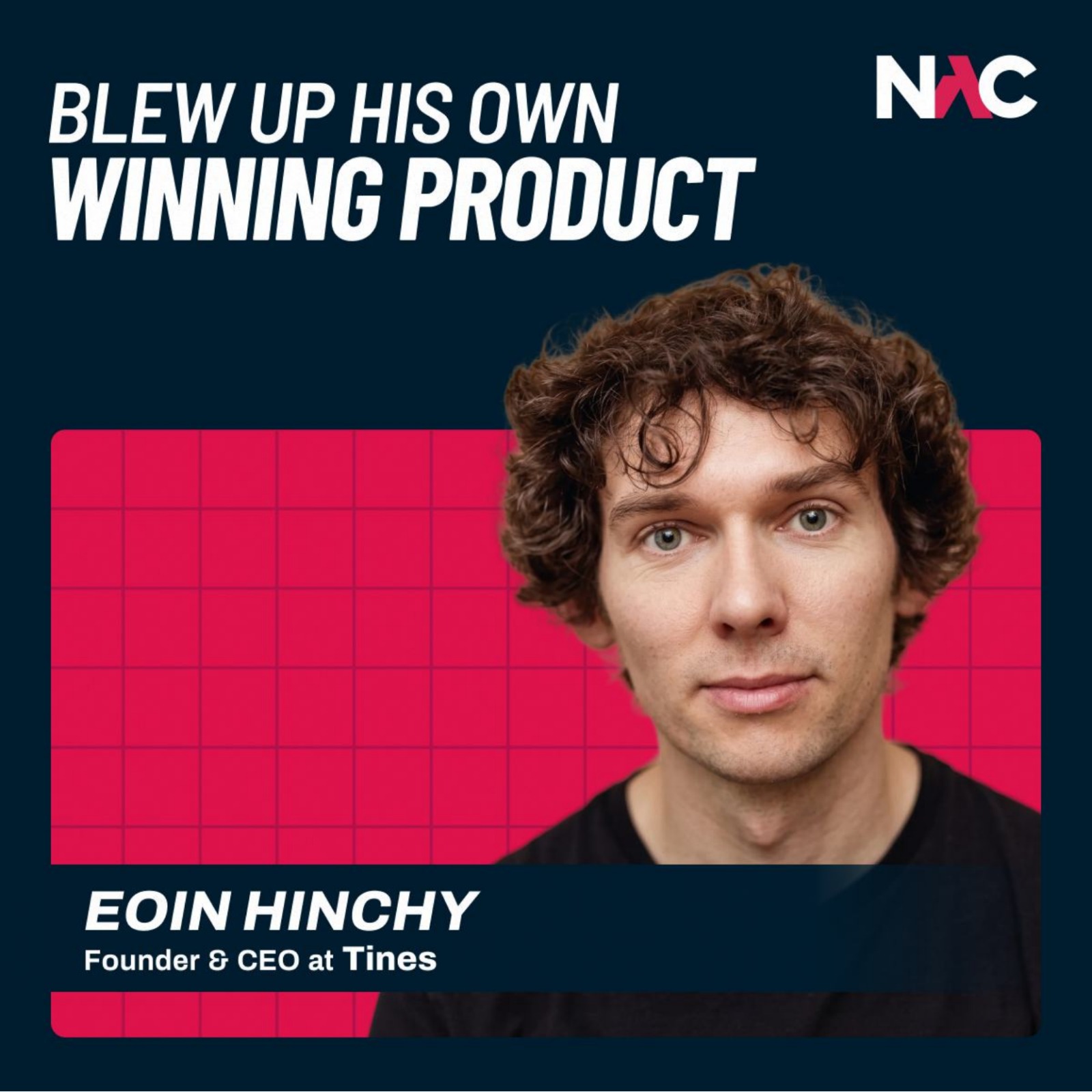
Eoin Hinchy spent 15 years living the exact problem he'd eventually build a company to solve. First at Deloitte, then eBay, then as Director of Information Security at DocuSign, he watched security teams burn hours gluing broken tools together by hand. So in 2018, he and his co-founder Thomas left to build the product they wished they'd had, out of a small office in Dublin.That company is Tines. Today it's 450 people across Dublin, Boston, San Francisco and Sydney, has raised over $270 million from Goldman Sachs, SoftBank, Accel and others, is valued at over a billion dollars, and is approaching $100 million in ARR. In this episode, we talk about the moment Tines decided to blow up its own winning product to get ahead of AI, why he's never built a pitch deck in his life, and the piece of advice he'd give himself before his very first job.Key Takeaways:Why founders beat sales teams from $60B companies: Eoin explains the difference between a missionary and a mercenary, and why buyers can feel it immediately.Refounding the company at its best quarter ever: The "falling off a building" analogy Eoin uses for why Tines rebuilt its core product around AI before the market forced their hand, and how he broke the news to his team and board.Why no customer was ever forced to migrate: The promise Eoin made to protect the people who got Tines to where it is today.Raising $270M without a single pitch deck: How Tines picked investors the way you'd pick a co-founder, and why Eoin never went looking for capital."Nobody cares" : The reframe that Eoin says makes the hardest parts of the job easier, not harder.The Wizard of Oz moment: What happened the first time Eoin worked inside a company he used to think was run by geniuses.Quote of the Show:"The failures aren't going to be these dramatic explosions. They're going to be this kind of like quiet, unrequited effort where you put in all this hard work and like, everybody's kind of like, yeah, cool and moves on."— Eoin Hinchy, Co-Founder & CEO, TinesGuest Featured in This Episode: Eoin Hinchy, Co-Founder & CEO, TinesLinkedIn: https://www.linkedin.com/in/eoinhinchy/Tines: https://www.tines.com/We also break this episode down into a full write-up on Substack, where we turn every conversation into a practical playbook with the biggest lessons, frameworks, and strategies discussed in each episode.Chapters:00:00:00 - Introduction00:02:35 - Best Decision at Tines: Picking a Problem He Lived00:06:26 - Why Founders Beat Sales Teams00:11:18 - Spending 30–50% of His Week With Customers00:12:58 - The Refounding Moment Begins00:17:22 - The "Falling Off a Building" Analogy00:21:13 - Telling the Team and the Board00:24:38 - No Existing Customer Was Ever Forced to Migrate00:33:13 - Bootstrapping and the First Raise00:33:33 - Blossom Capital Shows Up at Their Office00:36:33 - How He Actually Picked Investors00:38:27 - Board as an Extension of the Team00:41:27 - Building a Fully Remote, Global Team00:43:18 - Biggest Challenge: "Nobody Cares"00:55:48 - The Wizard of Oz Moment00:58:38 - What Actually Drives Him00:59:48 - Advice to His Younger Self

Most people think experience is your greatest advantage. Ronnen Harary believes it can become your biggest blind spot.In this episode, Ronnen Harary, Co-Founder of Spin Master, shares the lessons behind building one of the world's most successful toy and entertainment companies, the creator of global brands like Paw Patrol, Bakugan, Air Hogs, Rubik's Cube, and Etch A Sketch.From turning down a $100 million Hollywood deal he now regrets, to explaining why it's riskier not to bet on yourself, Ronnen unpacks the mindset that helped Spin Master grow from three friends with an idea into a multi-billion-dollar public company.Key Takeaways:1. The Power of Not Knowing: Sometimes experience becomes a limitation. Ronnen explains why the lack of conventional wisdom helped Spin Master create products that industry veterans had already dismissed, and why trusting your instincts matters more than following what everyone else believes.2. Bet on Yourself Early: Your 20s are a unique window to take meaningful risks. As responsibilities grow, so does the cost of leaving a stable career. Ronnen argues that waiting until you feel "ready" often means you never start at all.3. Create Your Own Luck: Luck isn't something that happens to you. It's something you earn by staying in motion, building relationships, and consistently putting yourself in situations where unexpected opportunities can find you.4. Trust Your Instincts: The same experience that helps you build a successful company can eventually cause you to overthink. Ronnen shares why he believes your intuition is often a better guide than your intellect when making the biggest decisions.5. Build a Culture of Ideas: Some of Spin Master's best ideas came from meetings that everyone else wanted to cancel. Ronnen explains why protecting time for open discussion and pulling the right people into the room fuels creativity and better decision-making.Quote of the Show:"The power isn't in not knowing. It's in not letting your intellect override what you know internally." – Ronnen Harary, Co-Founder, Spin MasterGuest Featured in This Episode: Ronnen Harary, Co-Founder, Spin MasterLinkedIn: https://www.linkedin.com/in/ronnen-harary-99b13370/Spin Master: https://www.spinmaster.com/en-US/No Experience Necessary: https://www.penguinrandomhouse.com/books/789812/no-experience-necessary-by-ronnen-harary/Chapters:00:00:00 — Trailer & Introduction 00:02:05 — The 32-Year Tri-Founder Partnership 00:05:34 — "The Power of Not Knowing" & The Air Hogs Story 00:09:00 — The $100M Bakugan Regret00:10:26 — Betting on Yourself in Your 20s & Inverse Risk 00:16:44 — Early Parent Support 00:18:47 — Becoming a "Grinder" 00:22:46 — Operational Discipline 00:27:14 — Making Your Own Luck: The Flick Tricks Story 00:33:40 — "Tethered Freedom" & Owning Your Culture 00:35:20 — Seeking Micro-Mentors & Writing "No Experience Required"00:38:46 — The Decision to Take Spin Master Public 00:41:28 — The Origin Story of Paw Patrol 00:47:08 — Evolution of the Toy Industry00:49:45 — Future Outlook for Spin Master 00:50:37 — Ronen’s Background 00:53:39 — Early Hustles00:58:03 — Core Drive00:59:13 — Workaholism, Burnout, and Health Sacrifices 01:04:03 — Advice to Younger Self
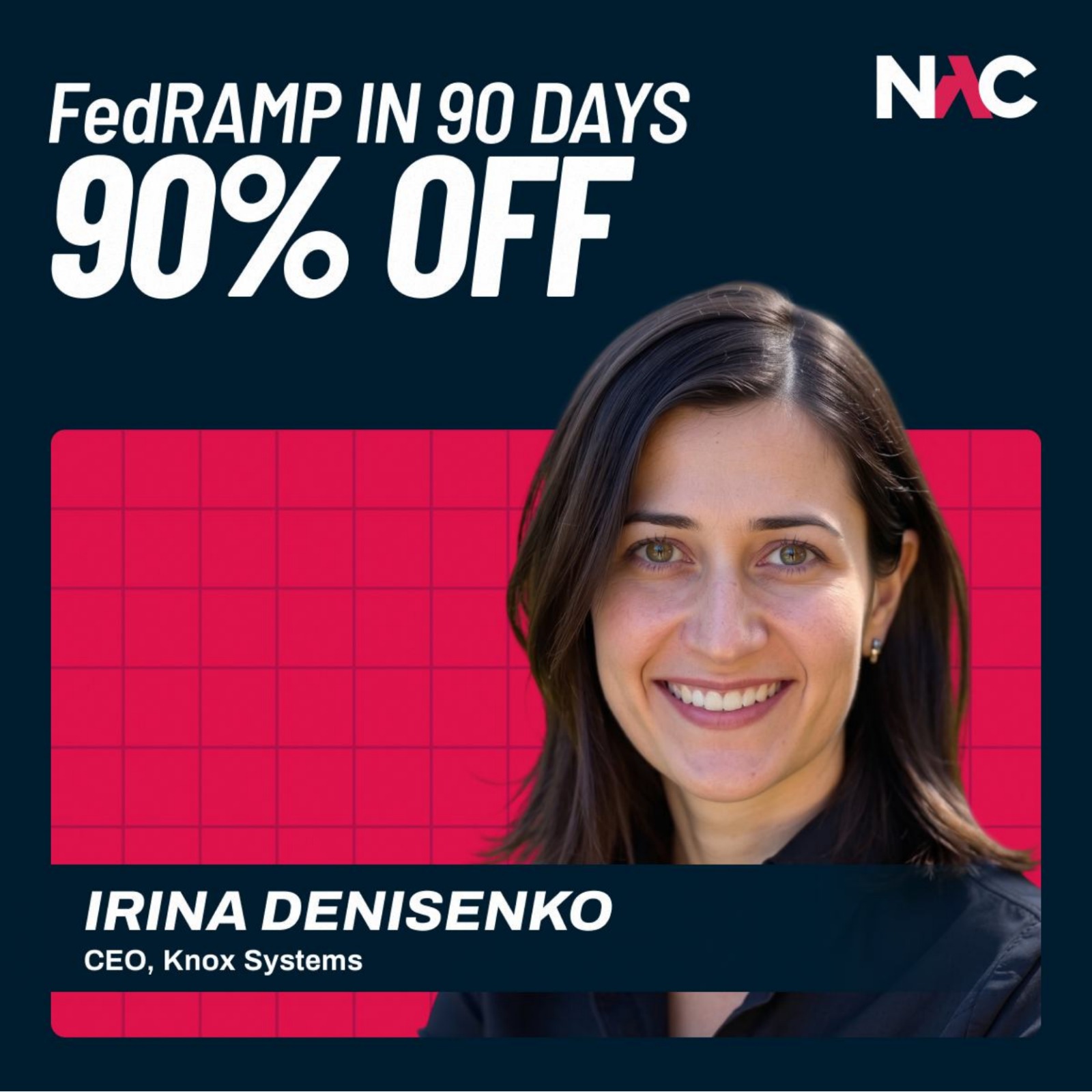
Most companies that start the FedRAMP process never finish it. Irina Denisenko built a business on getting you through it in 90 days, and said so, loudly, when everyone told her not to.Irina is the founder and CEO of Knox Systems, a company that gets software companies FedRAMP certified — the federal government's exhaustive cybersecurity authorization required to sell to agencies like the Pentagon — in 90 days instead of the usual multi-year process. Two years in, Knox has raised over $30 million, crossed 100 customers, and counts Adobe among them. Before this, Irina was COO of Class Technologies, where she had to get her own company FedRAMP certified and ended up acquiring an already, authorized company just to get through the process. She later spun that capability out as Knox.Here were my biggest takeaways:1. Trust that you know your market better than the room does: When advisors pushed Irina to soften her tagline, she refused. "I know my market. I've lived this problem," she told me.2. Turn a cost center into a revenue unlock: Irina assumed her first customers would come through CISOs. Instead, her first ten came from calling friends who ran companies. The real unlock was reframing FedRAMP: it's not a compliance expense, it's access to a market a company was previously shut out of entirely. 3. Make your investors work for you, even when you're not raising: Irina stays close to her investor network specifically because boardrooms are where FedRAMP tends to get dismissed as too slow to bother with. She's built a habit of asking investors to correct that in the room on her behalf. 4. Kill a bad bet before you defend it: Knox made an early bet on a specific AI approach to auto-remediate security vulnerabilities. The technology wasn't ready yet, and by the time that was undeniable, they'd already sunk real time and money into it. 5. Never underpay your best people: Irina calls her hiring approach "Delta Force" — senior only, nobody walking in without years of reps elsewhere. Her rule on comp: she's never once regretted overpaying for the right person, and calls the opposite mindset "pennywise, pound foolish."Quote of the Show:"If you know your market, you should know how to talk to them. And if you don't know your market, you go figure out your market first.” - Irina Denisenko, Founder & CEO, Knox SystemsGuest Featured in this Episode:Irina Denisenko: https://www.linkedin.com/in/irinadenisenko/ Knox Systems: https://knoxsystems.com/If you enjoy the episode, please like and subscribe on your favourite platforms and share with your network.We also break this episode down into a full write-up on Substack, with the exact playbook Irina used to build a go-to-market motion around a tagline everyone told her to drop, we're building out a full library of playbooks and lessons from every episode on Substack.Chapters:00:00:00 — Intro: Irina Denisenko & Knox Systems00:02:13 — The "FedRAMP in 90 Days" Tagline00:06:34 — Building In-Person Across 3 Cities00:08:52 — Hiring Only "Delta Force" Talent00:11:41 — Revenue Per Employee in the Age of AI00:17:10 — How She Vets a Delta Force Hire00:25:57 — Never Regretting Overpaying for Talent00:31:26 — Landing the First 10 Customers00:42:41 — Investors as Her Best Referral Channel00:47:43 — "Who Cares About This Market"00:52:31 — The Valuation Hangover01:02:16 — Scrapping a Year of AI Work01:05:29 — From the Soviet Union to Founder01:16:41 — Closing Advice: Integrity Above All

I've interviewed over 100 founders and CEOs on Not Another CEO. I've asked them about their hardest days, their biggest regrets, and the sacrifices they made to build what they built. I never thought I'd be the one in that seat.This week, my own kids flipped the mic on me. Sammy and Noah wrote their own questions and interviewed me for the show, and I had no idea what was coming. We covered the worst week of my career, firing people I actually liked, the sacrifices I made that I'd still make again, and the moment my son stumped two successful CEOs on a live stage with a single question.Here's what we got into:Where it started: My father, their grandfather, built companies my whole life, and he put me on the BCC of every email he ever sent so I could learn the business before I had a job in it. My actual first paycheck came from a summer carrying furniture up four story walk ups for a moving company in New York.The worst week of my career: one week in 2019 where we lost our biggest customer, our incoming CRO backed out the day before he was supposed to start, I found out I wasn't winning an award I really wanted, I tore my Achilles, and I missed a family trip to Israel, all in the span of five days.Firing people I liked: I've fired hundreds of people over 20 years, including good friends. My kids asked how I could do that, and we talked about why it's actually the kinder move when it's done right.The sacrifice question: I missed my son's first steps building BetterCloud, and I left the hospital right after my younger son was born to go straight to a VC meeting. My kids wanted to know if I'd still make that call today.Comparing myself to other CEOs: yes, I still get jealous scrolling LinkedIn. It was worse when I was actually running BetterCloud and too deep in the weeds to see anything but my own world.How I define success: the same answer my son got out of me at our first ever live show, the one that stumped Kass and Mike Lazarow in front of a packed room.This is a different kind of episode for the show, and it might be one of my favorites. Thanks for listening, and thanks to Sammy and Noah for the toughest interview I've ever done.Quote of the Show: "The way that I define success is being able to meaningfully impact other people's lives while significantly benefiting your own life." — David Politis, Host, Not Another CEO PodcastChapters:00:00:00 - Trailer 00:02:22 - BetterCloud's Biggest Lesson 00:04:52 - What Inspired Me to Want to Be a CEO 00:07:12 - My First Job 00:10:14 - Pitching BetterCloud to My Own Kids 00:15:21 - What 100+ Interviews Taught Me About Building a Company 00:20:31 - AI and the Skills That Won't Get Replaced 00:23:37 - The Hardest Days 00:29:35 - Still Bad At It, Jealous of Other CEOs 00:33:13 - How I Define Success 00:41:29 - The Sacrifice Question 00:46:47 - Trust Your Gut

Most founders assume the loneliness fades once the company succeeds.It doesn't. If anything, it gets quieter and harder to name.In this special compilation episode of Not Another CEO, David brings together lessons from nine founders, CEOs, and investors who have built, scaled, sold, and advised some of the most recognizable companies in tech.The conversation moves through why the seat is lonely in the first place, the false belief that you are the only one carrying it, and what the best CEOs actually build around themselves once they stop trying to carry it alone.Key Takeaways:Loneliness at the top isn't a personal failing, it's baked into the structure of the job: unpopular decisions, imperfect information, and a team that only ever sees half the picture.The belief that you are uniquely alone in your struggles is common and almost always wrong.Even the most people-first, culture-driven CEOs cannot fully escape the isolation of being the one who stays in the seat while everyone else eventually moves on.Founder loneliness is a default, not a fixed destiny. A co-founder, a coach, or a peer group can change the default entirely.The most effective support comes from someone with independent context on your business and your team.Support systems show up in real outcomes, not just in how someone feels.The founders who say they never felt the loneliness usually point to the same thing: a spouse, a family member, or a peer they could call and be fully honest with.Quote of the Episode"Your team has no conception of how lonely it is to be the CEO."— Adam Dell, Founder & CEO, Domain MoneyGuests Featured in This Episode:Marcus Ryu, Co-Founder & Former CEO, Guidewire — LinkedInAdam Dell, Founder & CEO, Domain Money — LinkedInChieh Huang, Co-Founder & Former CEO, Boxed — LinkedInNick Mehta, Co-Founder & Former CEO, Gainsight — LinkedInNadia Boujarwah, Co-Founder & Former CEO, Dia&Co — LinkedInChip Hazard, General Partner & Co-Founder, Flybridge — LinkedInKathryn Minshew, Co-Founder & Former CEO, The Muse — LinkedInMike Grossman, CEO (6x) & Author, Failure Is an Option — LinkedInKyle Porter, Founder & Board Chair, Salesloft — LinkedInChapters:00:00 – Trailer00:48 – Intro02:20 – Marcus Ryu03:34 – Adam Dell04:57 – Chieh Huang05:59 – Nick Mehta07:26 – Nadia Boujarwah08:43 – Chip Hazard10:10 – Kathryn Minshew12:34 – Mike Grossman15:38 – Kyle Porter16:38 – Closing Thoughts

Comments

Download from Google Play

Download from App Store
 United States