


 Claim Ownership
The B2B CMO Podcast with Jon Miller and Sydney Sloan
Subscribed: 0Played: 0
Subscribe

© The B2B CMO Project
Description
Welcome to The B2B CMO Podcast, a show for marketing executives who are redefining what it means to be a strategic leader. Join Jon Miller and Sydney Sloan every week as they talk with the very best Chief Marketing Officers who are navigating the modern marketing playbook and positioning themselves as strategic leaders.
Each episode, we unpack what it really takes to lead through complexity, earn trust at the strategy table, and shape the future of growth.
We’re building the community, research, and frameworks CMOs need to reclaim their strategic role and drive sustainable growth.
For more marketing leadership resources, visit [b2bcmoproject.com](http://b2bcmoproject.com/).
Each episode, we unpack what it really takes to lead through complexity, earn trust at the strategy table, and shape the future of growth.
We’re building the community, research, and frameworks CMOs need to reclaim their strategic role and drive sustainable growth.
For more marketing leadership resources, visit [b2bcmoproject.com](http://b2bcmoproject.com/).
21 Episodes
Reverse
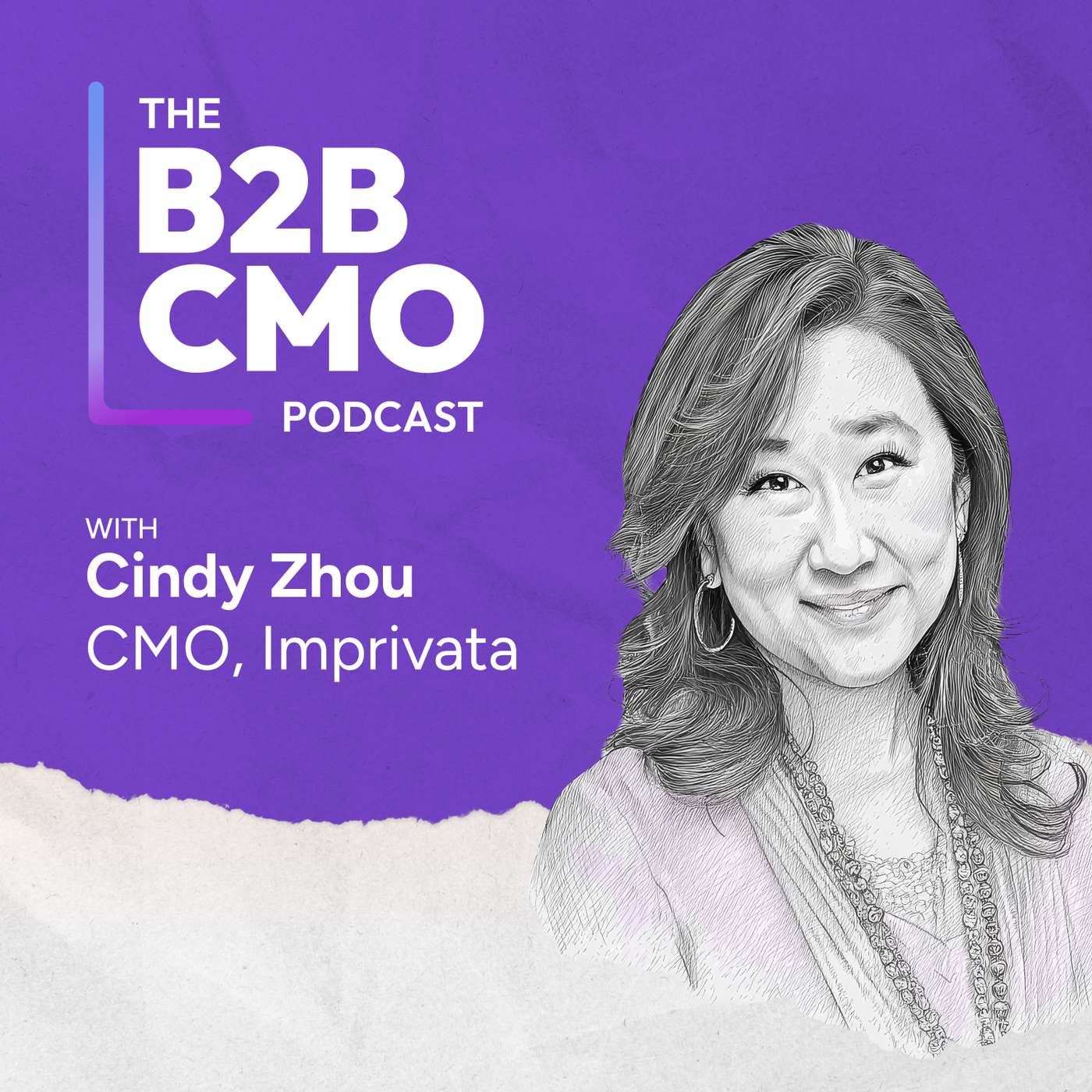
Cindy Zhou is the Chief Marketing Officer of Imprivata, the simple and secure access management platform used by roughly 90% of U.S. hospitals. Before Imprivata, Cindy built her CMO track record at KnowBe4, LogRhythm, and in senior marketing roles at IBM and Verizon, making this her fourth cybersecurity company as a marketing leader.Cindy chats with Jon Miller and Sydney Sloan about her new role to unpack how she built her 30-60-100-day plan, why she believes CMOs need to operate as business executives first, and why she has already told her team to stop talking about MQLs. Cindy also walks through how she prioritizes with her CEO and CRO, why she is tying her customer marketing team's KPIs to retention and churn instead of lead volume, and how KnowBe4's InfoSec team tried to break her first AI SDR before she would let it near a real customer.Jump Into the Conversation(00:00) Welcoming Cindy Zhou, CMO of Imprivata(02:31) How Cindy went from product management to marketing(07:49) What it means to be a strategic CMO(10:05) What she brought from past roles into Imprivata's C-suite(11:36) Seeing the market beyond industry silos(14:17) How to earn the strategic CMO seat(19:51) Moving beyond MQLs and tying priorities to strategic metrics(22:12) Investing in retention and customer marketing(27:41) How to build brand in an AI-disintermediated world(29:48) AI SDRs and AI teammates, governance, and human-in-the-loop(32:01) Closing gratitude, mentors and board members who shaped her careerEpisode TakeawaysTreat marketing as a business-executive function, not a departmental one. When Cindy evaluates a new opportunity, she starts with market dynamics and the financials (NRR, GRR, growth rate) before she gets to a marketing plan, because 'chief market officer' only works as a title if you actually understand the market.Look past the vertical to find the universal pain underneath it. Imprivata's brand is deeply rooted in healthcare, but Cindy makes the case for expanding into manufacturing and public safety by pointing to a pain point every industry shares: nobody wants to deal with passwords. She backs this up with real customer stories, like a casino cage worker locked out of a login for 45 minutes, to show how the same root problem shows up everywhere, just wearing a different industry's clothes.Use your CEO's and CRO's own words to build your first 90 days. Cindy's tip for new CMOs: go back and listen to the sales kickoff keynote, then build your plan around the problems leadership already said out loud they want solved. Parroting it back makes the plan easier to align on.Replace MQLs with metrics tied to retention and growth. Cindy has moved her customer marketing team's KPIs away from lead volume and toward NRR, GRR, and churn signals, arguing that in a private-equity-backed business, those numbers matter more to the board than marketing-sourced pipeline.Stress-test AI SDRs before they ever talk to a real customer. At KnowBe4, Cindy had her InfoSec team try to break the AI SDR with off-topic and legal questions before launch, and the program is still built to route uncertain questions to a live human rather than risk a wrong answer.Standout Quote"We’re business executives first, that’s the way to really think about it. We just happen to have responsibility over marketing.” — Cindy ZhouGuest LinksLinkedIn: https://www.linkedin.com/in/cindyzhou/Imprivata Website: https://www.imprivata.com/Mentioned in this EpisodeMark Logan: https://www.linkedin.com/in/mark-logan-894977/Betsy Atkins: https://www.linkedin.com/in/betsy-atkins-a36b114/Shanti Atkins: https://www.linkedin.com/in/shanti-atkins-602b493/Brian Jack: https://www.linkedin.com/in/privacy-policy/Penn Entertainment: https://www.pennentertainment.comMore from The B2B CMO ProjectWebsite: https://www.b2bcmoproject.com/ LinkedIn: https://www.linkedin.com/company/b2bcmoproject/ Jon Miller: https://www.linkedin.com/in/jonmiller2/ Sydney Sloan: https://www.linkedin.com/in/sydsloan/ More Episodes: https://www.b2bcmoproject.com/podcasts
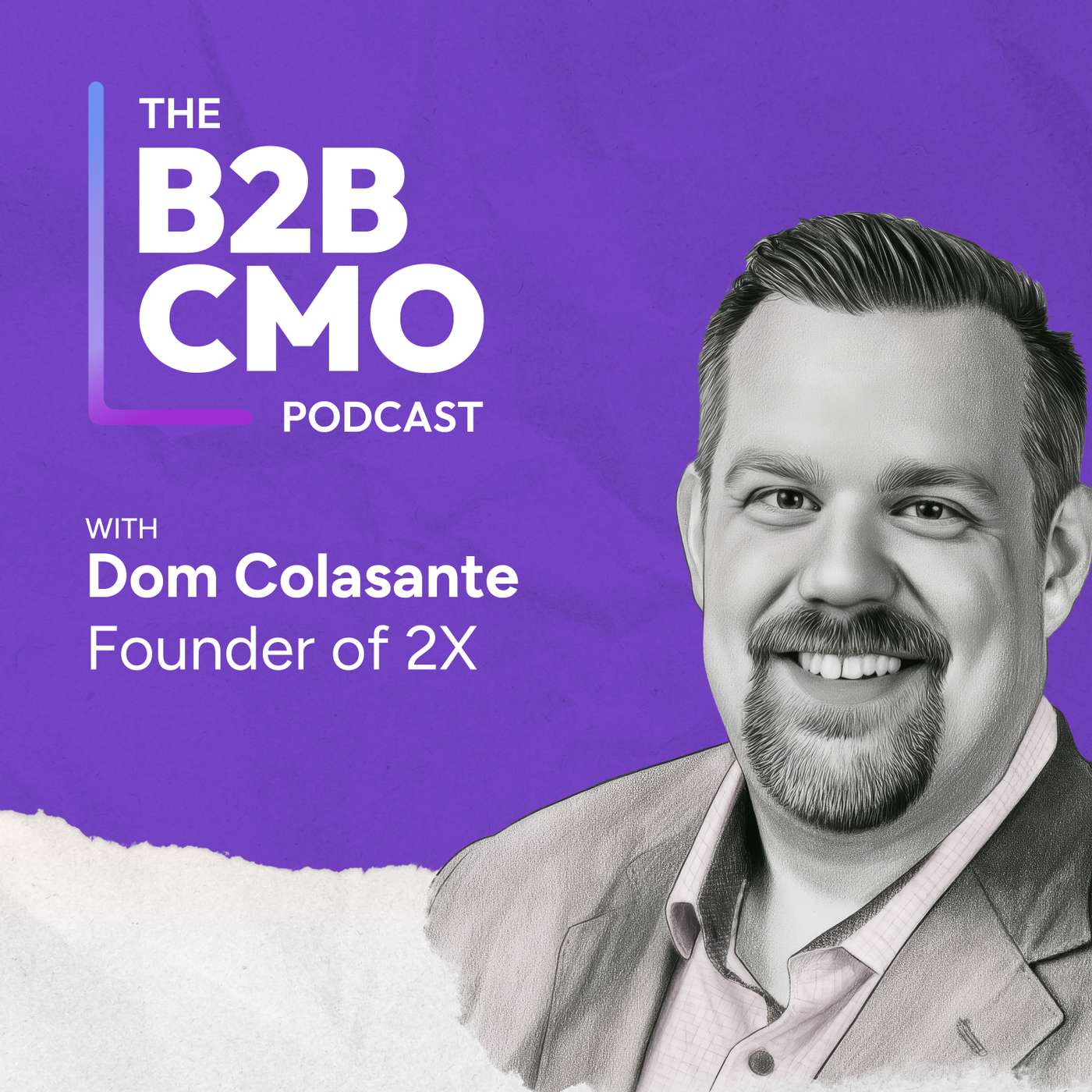
Most CMOs are trying to solve an operating model problem with a job posting. Dom Colasante is the founder of 2X, and he has spent the better part of a decade helping B2B companies run marketing, sales, and customer success as one system. Following 2X's acquisition of KnownWell, he is betting the company on what he calls the human agentic go-to-market model. This model involves expert teams and AI agents fused so tightly you cannot tell which is which.In this rapid-fire conversation, Dom joins Sydney Sloan to explain why asking the same people to own both strategy and execution suboptimizes both, how to sort every piece of go-to-market work into three buckets, and why the single most common mistake he sees right now is a CMO hoping one expensive hire will rewire the whole function.This episode is part of a partnership between The B2B CMO Project and 2X. Jump Into the Conversation:(00:00) Why 2X is betting on human agentic go-to-market(01:57) Why the go-to-market org chart is finally breaking down(02:36) What happens when one team owns both strategy and execution(05:46) Inside the human agentic operating model and the KnownWell acquisition(07:52) Why every workflow should have both human and AI in it(09:22) Door one versus door two and why growth beats efficiency(12:13) The three buckets of go-to-market work(15:14) Where to start and the honest talent conversation(17:46) The mistake CMOs are making with the single go-to-market engineerKey TakeawaysOne team owning both strategy and execution suboptimizes both. Strategy shrinks to what that team can personally execute, and execution never gets the full best practice treatment because the same people are busy thinking. Dom's fix is specialization of labor, with the two groups still on one team and the integration point on collaboration rather than day-to-day work.Once you split them, the marketing, sales, and CS silos stop mattering as much. Execution across all three is largely the same motion, and so is strategy across all three. Find a buyer, activate a buyer, or get a buyer to love the product more. That is what makes the converged org chart workable.Deconstruct the work into three buckets before you touch the org chart. To succeed, you need to divide your work into three different categories: what you must be the best in the world at, what you delegate to a partner to execute using best practices, and what you automate through systems. The work you personally own should account for only 10% to 20% of your total workload, and mastering that critical slice is what creates leverage and drives the success of everything else.The efficiency framing is the wrong ask. Given a choice between halving cost for the same output and holding cost while doubling output, Dom's read is that nearly every CEO takes the second door. Pitch the human agentic model as a growth argument, not a cost argument.An agentic operating model is a discipline, not a person. Hiring one go-to-market engineer runs a six-month search, produces someone who needs a team around them, and often ends in turnover a year later with the goal unmet. The same $250K buys tech, partners, expertise, and projects together.Standout Quote"When the same group of people, the same individuals, the same department is doing both strategy and execution at the same time, it sub-optimizes both." - Dom Colasante Guest LinksLinkedIn: https://www.linkedin.com/in/domeniccolasante/2X website: https://2x.com/Mentioned in This EpisodeKnownWell (acquired by 2X): https://knownwell.com/Lisa Cole: https://www.linkedin.com/in/lisacole01/More from The B2B CMO ProjectWebsite: https://www.b2bcmoproject.com/ LinkedIn: https://www.linkedin.com/company/b2bcmoproject/ Jon Miller: https://www.linkedin.com/in/jonmiller2/ Sydney Sloan: https://www.linkedin.com/in/sydsloan/ More Episodes: https://www.b2bcmoproject.com/podcasts
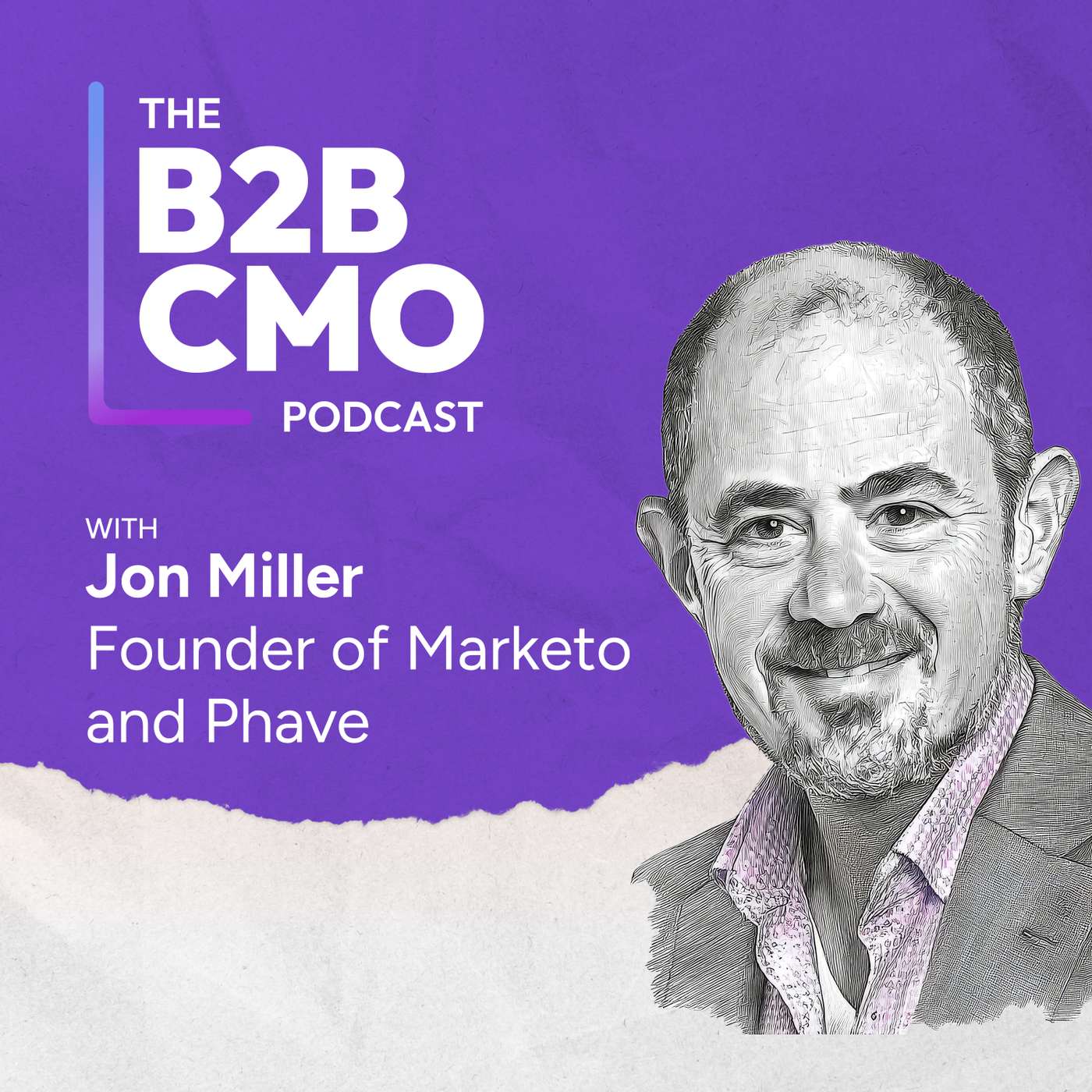
Jon Miller is the co-founder of Marketo, where he helped invent the marketing automation category and take the company public. He later co-founded Engagio, which was acquired by Demandbase, where he served as CMO. He's now the founder and CEO of Phave, an AI-native marketing automation platform built to replace the very category he created.In this partner episode, Sydney talks to Jon about what's actually broken in the marketing automation playbook he wrote fifteen years ago. They look at why B2B buying committees now make most of their decision before a seller ever gets involved, what real personalization looks like when it's built on AI context instead of more content, and how his customers are migrating off legacy platforms like Marketo without flipping a switch overnight.Jump Into the Conversation(00:00) Why the marketing automation playbook Jon built doesn't work anymore(02:08) The blind spots baked into legacy marketing automation systems(04:10) The assumption in "marketing automation" that has to go(05:04) Real personalization starts with context, not more content(07:47) Moving from industry-level segmentation to person-level context(09:05) Why speed became marketing's biggest constraint(10:18) Replacing the Marketo "high priest" with a CMO who can build campaigns directly(12:19) How Phave customers migrate off Marketo without flipping a switch overnight(14:07) Using AI agents to make platform migration painlessEpisode TakeawaysRetire the marketing automation model built for a linear funnel. Jon argues the core assumption baked into platforms like Marketo (capture the lead, score it, nurture it, hand it to sales) breaks down against buying committees of 6 to 16 people who've made most of their decision before anyone raises a hand.Real personalization is about timing and offer, not content polish. Getting the right offer in front of the right person at the right time is roughly 80% of the job. Personalizing the actual content is the last 20%, and AI should be used to reason the first, not just generate more of the second.Treat platform migration as a trust dial rather than a cliff-edge switch. Jon's team avoids forcing an all-or-nothing cutover by letting customers transition at their own pace. Moving off Marketo, users can continue running campaigns the traditional way, go fully autonomous, or land anywhere in between based on their comfort level.AI should remove operational bottlenecks, not replace marketing judgment. Freeing CMOs from needing a dedicated platform specialist to translate every campaign idea gives marketers back the time for the creative, human work AI still can't do.Standout Quote"It's ironic, almost, that AI is actually going to make our marketing more human, not less." — Jon MillerGuest LinksLinkedIn: https://www.linkedin.com/in/jonmiller2/More from The B2B CMO ProjectWebsite: https://www.b2bcmoproject.com/ LinkedIn: https://www.linkedin.com/company/b2bcmoproject/ Jon Miller: https://www.linkedin.com/in/jonmiller2/ Sydney Sloan: https://www.linkedin.com/in/sydsloan/ More Episodes: https://www.b2bcmoproject.com/podcasts

Lena Waters is a marketing executive and advisor who specializes in the inflection point where product-led growth meets enterprise scale. She has built and led global marketing teams across growth, demand, and brand at companies including Grammarly, DocuSign, Responses, and Lookout, and most recently served as CMO at Notion. Across those roles, she's operated both enterprise and product-led growth motions and developed a point of view on how the two can reinforce each other rather than compete.Lena joins Jon Miller and Sydney Sloan to share her controversial take: stop trying to persuade your buyers and start giving them proof instead. In this episode, she breaks down why she'd rather put a marketing dollar into product experience than a brand campaign, and how that thinking took her from DocuSign to Grammarly to running go-to-market at Notion.Lena walks through how she merged product-led growth with enterprise sales without treating them as competing motions, why she thinks MQLs are measuring the wrong thing, and the three blunt questions every CMO should ask their CEO before taking the job. We also get into why she thinks the AI-native marketing team problem isn't a talent problem at all.Jump Into the Conversation:(00:00) Where PLG meets enterprise scale(01:40) The CMO who resisted becoming a CMO(03:51) Selling the pony: An origin story in positioning(07:54) What "strategic" actually means in the AI era(10:06) Repositioning Notion from note-taking to context platform(12:44) MQL vs. MQA and letting the data kill the old metric(15:00) When brand spend is just rented attention(20:47) Community compounds, awareness evaporates(23:14) How Notion measured a narrative change(25:51) Three questions every CMO should ask their CEO(33:13) The AI-native team is a permissions problem, not a talent problem(36:24)Why speed beats consensusKey TakeawaysReplace persuasion with proof. Lena argues that much of traditional B2B marketing has been designed to persuade prospects before they have meaningful experience with the product. MQLs often measure whether someone consumed a whitepaper, webinar, guide, or event and then translate that behavior into assumed buying intent. Product experience provides a different signal: someone has used the product, experienced its impact, and potentially built a dependency on it. The strategic question becomes how much value you can let customers experience before asking them to buy.PLG and enterprise don't have to be competing motions. Lena's experience owning both enterprise and product-led targets changed how she thought about growth. Individual product users can build durable brand affinity, while small teams and developers can become a front door to the enterprise pipeline. She doesn't argue that every company needs a traditional PLG model. Instead, she asks how wide a company can open its front door—through a free experience, API access, a usage-based tier, hands-on proof of concept, or another way for customers to experience value before the contract. Build brand assets that compound. Lena distinguishes between attention that disappears when spending stops and evidence that keeps working for the company. Community, original research, customer advocacy, and the stories customers tell about a product can create value long after the initial investment. Rather than asking a CFO to simply “fund brand,” her approach is to show how those assets keep returning value and use a combination of quantitative and anecdotal evidence to demonstrate whether the company's narrative is actually changing.AI-native marketing starts with permission, not the org chart. Lena pushes back on the idea that AI transformation is primarily a talent problem. Before debating new roles or hiring more generalists, she asks whether marketers actually have access to the CRM and product data they need to execute. She also argues for moving away from teams organized around individual channels and toward one shared department outcome. AI can dramatically increase production, but that advantage disappears if the company keeps the same slow approval structures around the work.Standout Quote“If you can help somebody experience the product before they buy and they already know what you are before they arrive, then the funnel stops doing the persuading that we've been trying to do all this time. And the product and your company reputation do it first.” — Lena WatersGuest LinksLinkedIn: https://www.linkedin.com/in/lenawaters/ Mentioned in this EpisodeScott Olrich: https://www.linkedin.com/in/scottolrich/ More from The B2B CMO ProjectWebsite: https://www.b2bcmoproject.com/LinkedIn: https://www.linkedin.com/company/b2bcmoproject/Jon Miller: https://www.linkedin.com/in/jonmiller2/Sydney Sloan: https://www.linkedin.com/in/sydsloan/More Episodes: https://www.b2bcmoproject.com/podcast
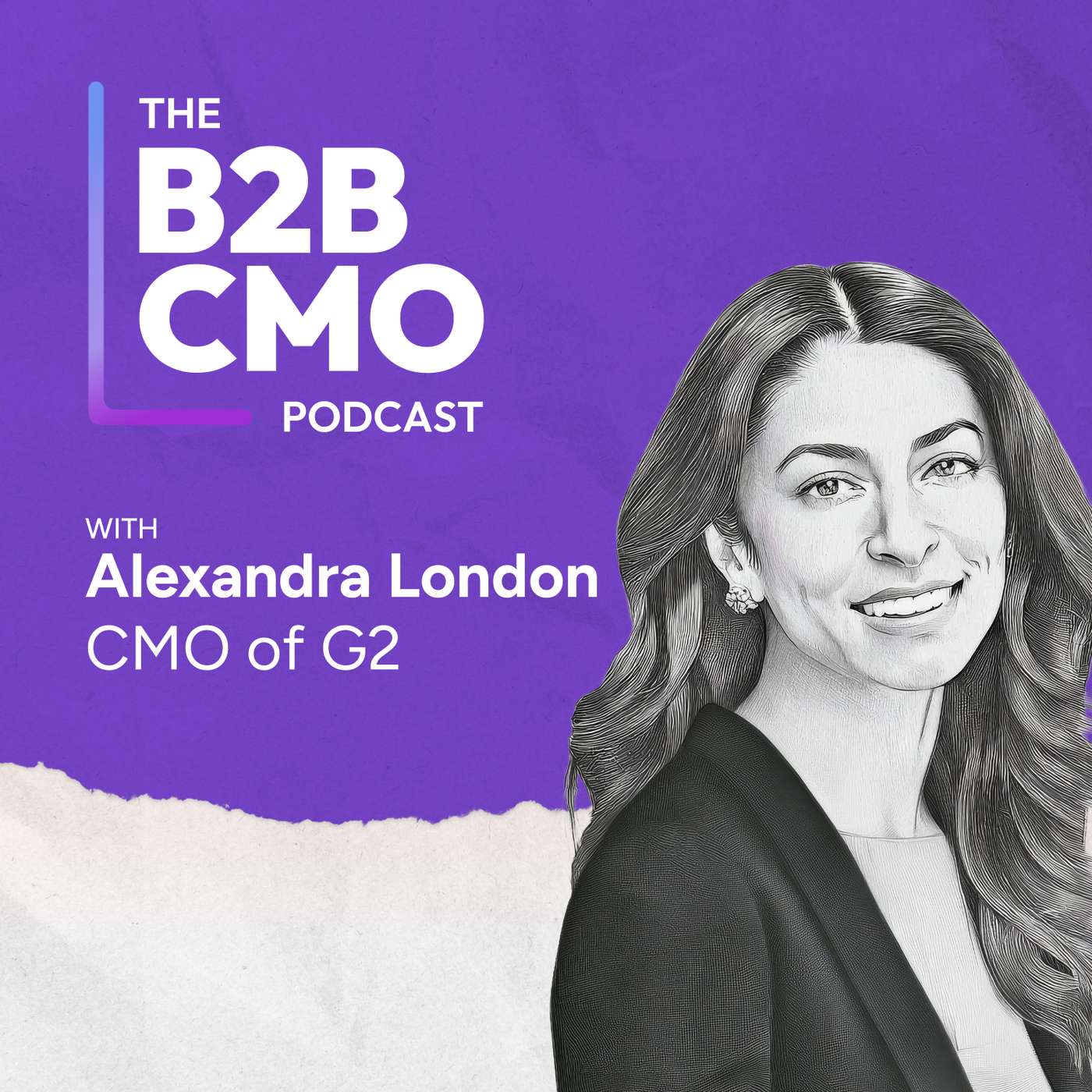
Alexandra London is the Chief Marketing Officer at G2, the world's largest and most trusted data source in B2B software, serving more than 200 million annual software buyers. She joined G2 to lead marketing into the AI era, building growth engines designed for acceleration, accountability, and long-term value creation. Alexandra joins Sydney Sloan to unpack the findings of G2's 2026 Buyer Behavior Report: The Evaluation Maze: how 82% of buyers have sourced a software recommendation from an AI chatbot, what separates getting cited from winning the answer, and why 49% of buyers had a CFO veto a software purchase that had already been approved.This episode is part of a partnership between The B2B CMO Project and G2. Jump Into the Conversation:(00:00) Meet Alexandra London(01:28) Why the Buyer Behavior Report matters to CMOs(03:57) The new research timeline only takes hours instead of weeks (05:20) How to win the answer, not just get cited(06:02) Marketing to the human and the agent at the same time(08:57) The new data point: 49% of CFOs vetoed an approved purchase(10:27) Why nobody wants to sign a three-year deal anymore(12:27) Token maxing and bringing the CFO along the journey Episode TakeawaysThe shortlist is now built before you know the buyer exists. 82% of buyers sourced a software recommendation from an AI chatbot in the last 24 months, and review sites and AI chatbots are now the top sources influencing which vendors make that shortlist. Research that used to take weeks to months is now happening in hours.Getting cited is not the same as winning the answer. Being mentioned is table stakes. What matters is whether your brand is the recommendation the buyer acts on, and whether your own content is what shaped how the model describes you.Your content has two readers now, and one of them recrawls every 90 days. The models recrawl, re-understand, and repopulate on roughly a 90-day cycle, which means stale content quietly becomes a stale answer. Open your site and content to be crawled, and run an AEO tool that benchmarks prompts, citations and performance at scale rather than treating it as a one-time optimization pass.Awareness is not the finish line, evaluation is the bottleneck. Discovery compressed, evaluation did not. Buyers still have to compare and validate, and they need first-party comparison content alongside third-party reviews to build the internal business case they are the ones defending.49% of buyers had a CFO veto a purchase that was already approved. CFOs are scrutinizing tooling ROI, watching AI consumption costs, and pushing back on multi-year contracts. If the CFO is not your financial buyer, add them to the buying group anyway through late-stage brand and paid social, so they recognize your name before the contract reaches their desk.Standout Quote"Now you have to speak to both the human and the agent, because they're both crawling and they're both understanding your site and pulling data in real time." — Alexandra LondonGuest LinksLinkedIn: https://www.linkedin.com/in/alexandralondon/G2 Website: https://www.g2.com/Mentioned in this EpisodeG2 2026 Buyer Behavior Report, The Evaluation Maze: https://sell.g2.com/2026-buyer-behavior-reportG2's announcement of the report findings: https://company.g2.com/news/buyer-behavior-2026G2's acquisition of Capterra, Software Advice and GetApp from Gartner: https://www.prnewswire.com/news-releases/g2-to-acquire-capterra-software-advice-and-getapp-from-gartner-302673901.htmlKim Storin: https://www.linkedin.com/in/kimberlystorin/More from The B2B CMO ProjectWebsite: https://www.b2bcmoproject.com/ LinkedIn: https://www.linkedin.com/company/b2bcmoproject/ Jon Miller: https://www.linkedin.com/in/jonmiller2/ Sydney Sloan: https://www.linkedin.com/in/sydsloan/ More Episodes: https://www.b2bcmoproject.com/podcasts

Comments

Download from Google Play

Download from App Store
 United States